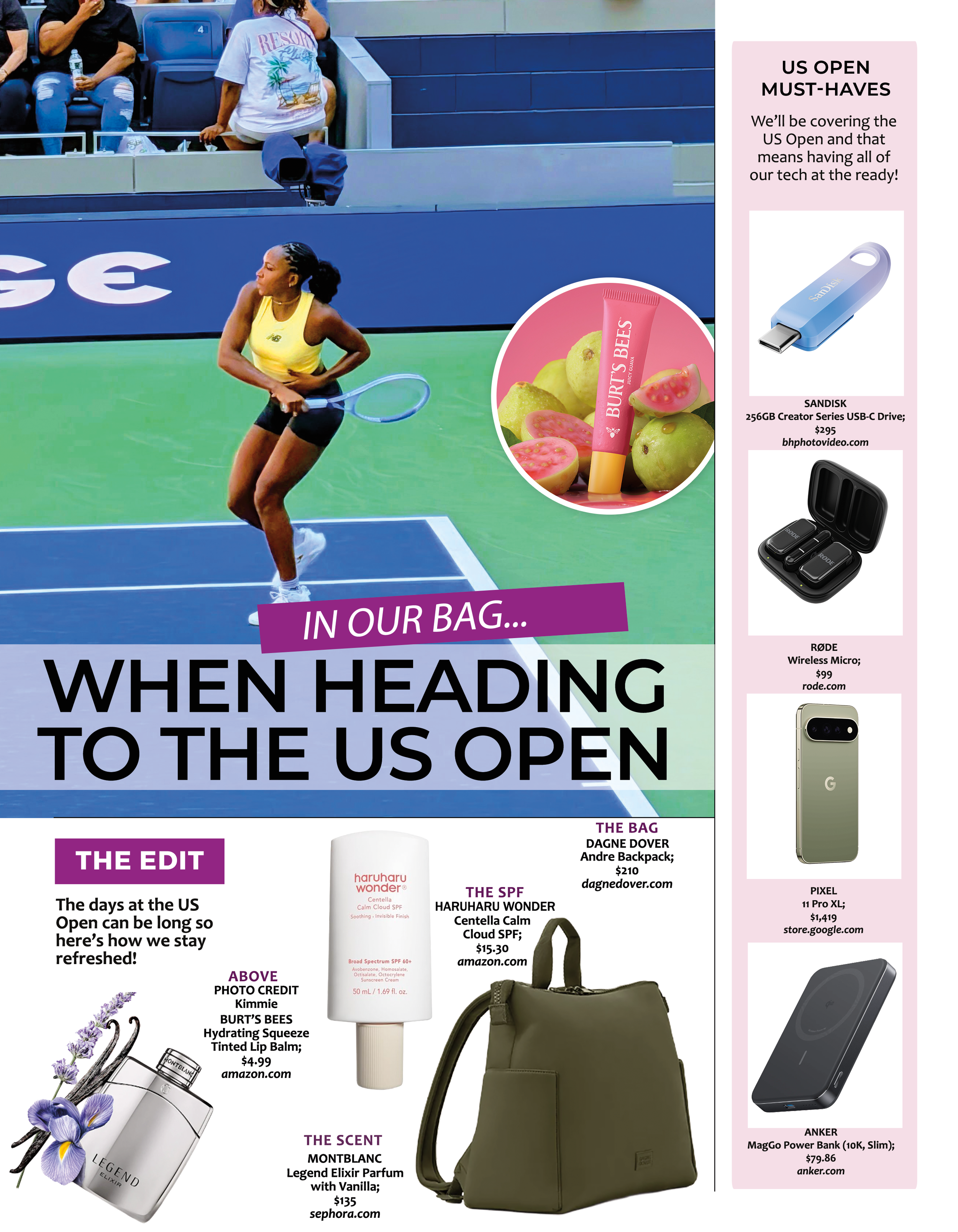
Read the JUL ISSUE #127 of Athleisure Mag and see ATHLEISURE BEAUTY in mag.
The Latest
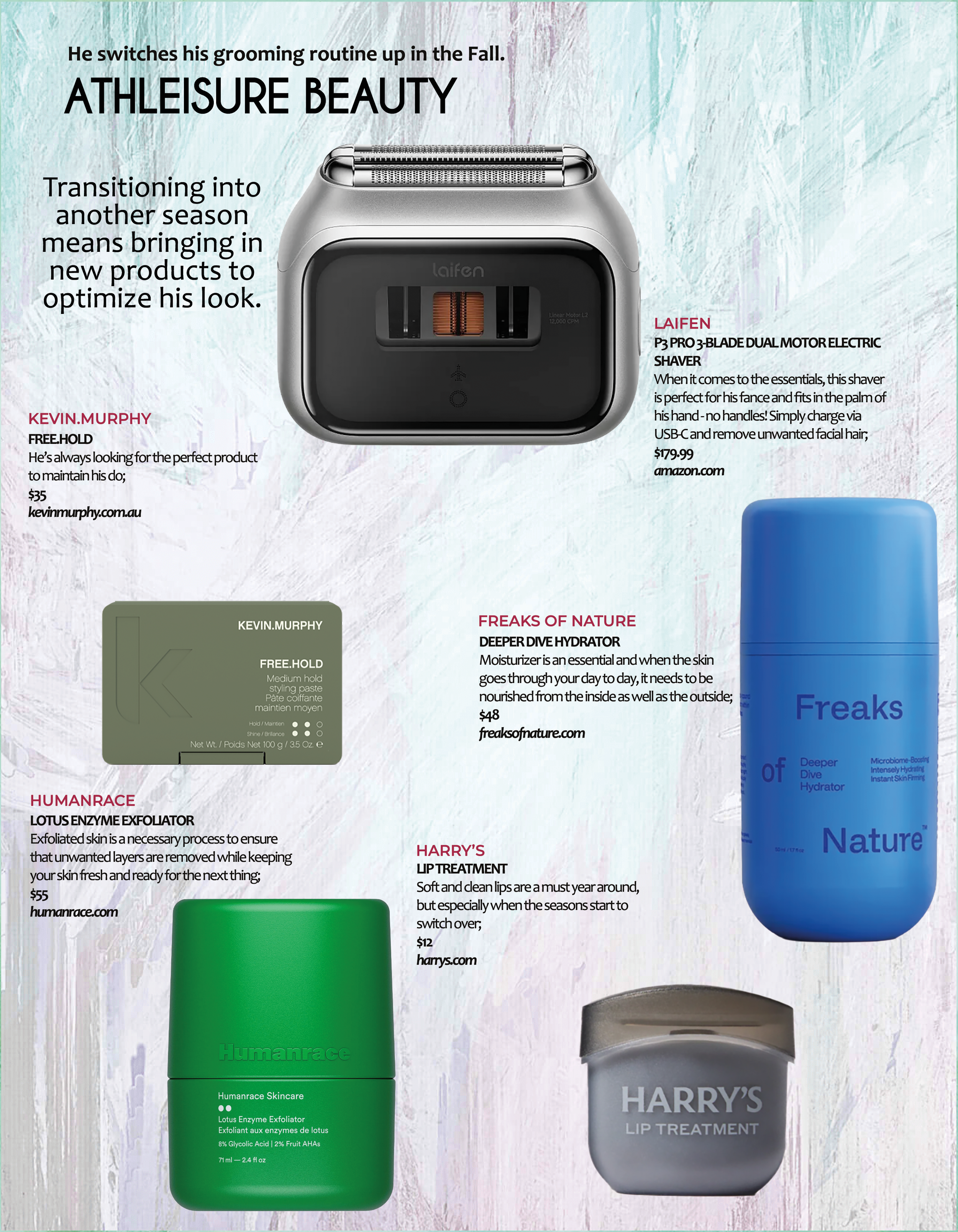



Read the JUL ISSUE #127 of Athleisure Mag and see ATHLEISURE BEAUTY in mag.

In this month’s issue, our front and back cover story is with the Restaurateur and TV Personality/Host Chef Antonia Lofaso who just premiered her Food Network series, Kitchen Undercover which airs new episodes on Tues at 9pm ET. We talk about her phenomenal career, culinary competitions, her passion for cooking, her 3 restaurants and her upcoming shows! We also did a virtual shoot with her, which took place in her home in Las Vegas.
We made our way to Jazz at Lincoln Center to see the premiere of the first episode of STARZ Fightland which focuses on the world of British boxing. Executive Produced by 50 Cent and G-Unit Film and Television, he shared a few remarks about why he is passionate about this project and its inclusion in the 50 Cent Universe. After the episode, he also performed a number of songs along with members of G-Unit. We all continued on to the after party at PH Live at Planet Hollywood in Times Square.
Ahead of JAŸ-Z 's 3 NYC concerts at Yankees Stadium in the Bronx, we attended a listening party with Armand de Brignac aka Ace of Spades at Eavesdrop, a vinyl listening lounge based in Brooklyn. Hosted by the Wolf of Wine, Jermaine Stone a wine and hip-hop educator, he curated songs that pair well with the wine that are part of the iconic artist's discography.
We're midway the baseball season and we sat down with Cleveland Guardian's Shortstop, Brayan Rocchio to share his love for the game, how he trains during the season and how important eye health is to him and his game!
We took a moment with Peloton instructor, Emma Lovewell to talk about her love for working out, how we can prepped for a cycling class if it is your first time, the importance of gum health, and how she takes time for herself.
This month's The Art of the Snack takes us to Thailand at the Mai Restaurant and Bar located at the Meli Hotel!
We made our way to Hell's Kitchen's Tavola to enjoy Italian and Sicilian cuisine as well as a number of phenomenal spritzes that are perfect for this itme of year! We learn about the history of the building, great items we should continue to enjoy when we come back on future visits, and more!
This month's Athleisure List comes from NY's The Cloud One Wine Bar and Lounge a FiDi destination that is know for great cocktails and a luxurious vibe above the city at the Cloud One Hotel. We also head to Midtown East to enjoy phenomenal Italian and Sicilian cuisine at Audace.
It is an honor that our enhanced 9PLAYLIST comes from Iconic rapper, JAŸ-Z as well as the legendary The Rolling Stones as they share 9 songs on their playlist right now. Our THE 9LIST 9M3NU comes from Chef Billy of Mai Restaurant and Bar, Francesco Gava of Luccialo in Hong Kong, and Mixologist Niko Imbert of Bon Vivants in the Bahamas. Our 9CH3F ROUTIN3S comes from our cover star, Chef Antonia Lofaso.
Read the JUL ISSUE #127 of Athleisure Mag.

PHOTO CREDIT | Unsplash/Ambitious Studio* | Rick Barrett
Walk into a busy gym on a Monday evening and one coach is usually watching ten or twelve athletes at once. Someone is grinding a heavy clean, someone else is rushing their squats, and a third person is quietly working around a stiff shoulder they never mentioned at check-in. A good coach catches a lot of this by eye. No coach catches all of it, on every rep, for every athlete. That gap is why smart fitness training is moving toward objective performance testing: platforms like Output Sports, built as athletic performance assessment tools, now let a coach measure movement, mobility and stability instead of guessing at them, so the same call holds up whether it is the first athlete of the night or the last.
The shift is not limited to how someone moves. It shows up in speed and power too, where sports performance testing equipment from platforms like Output Sports can capture acceleration and explosive output that the eye can only estimate. None of this replaces the coaching eye. Objective numbers support it, giving your judgment a consistent reference point across a full floor. This article walks through why the industry is trending this way and how coaches can use a few simple measurements without turning every class into a lab test.
Visual coaching is a real skill, and it matters. But the eye has limits, especially when attention is split across a full room. Fatigue, day-to-day readiness, a small loss of range of motion, or a drop in movement intent can all hide inside reps that still look fine.
The research on visual judgment is sobering. When clinicians estimate joint range of motion by eye, standardized measurement is generally more reliable than visual estimation, especially for less experienced raters. If trained professionals drift when eyeballing a single angle, the same surely happens to a coach tracking a dozen athletes mid-class. Data does not make you a better coach by itself. It gives your judgment something steady to check against.
Mobility is where coaching by feel breaks down fastest. "His squat looks tighter than last month" is a hunch. It is hard to act on and harder to explain to the athlete. Measuring range of motion, joint control, balance and stability turns that hunch into something you can track.
The point is not a one-time score. It is the trend. A single measurement tells you where an athlete is today. Repeating the same test on a schedule with a movement testing device shows you the direction of travel, which matters far more for programming. Standardized measurement is also better than visual estimation when you need to detect small changes, so a real shift in ankle or shoulder range is less likely to slip past you. Consistent testing does not diagnose anything, and it does not predict injury. It gives you objective movement data to bring into the conversation, and it makes progress easier to explain.
Bar speed is one of the most practical numbers a strength coach can use. The idea is simple: for a given load, the speed of the bar reflects how much effort and readiness an athlete is bringing that day. Faster than usual at a working weight often means a fresh, primed athlete. Slower than usual can flag accumulated fatigue, a load that is too heavy for the goal of the set, or a drop in intent.
This is the basis of velocity-based training. Movement velocity relates closely to loading intensity in resistance training, which lets coaches use speed as an objective check on effort and load selection. A 2022 meta-analysis in the Journal of Sports Sciences found that adjusting load from bar velocity produced strength and power outcomes equal to or better than fixed percentage-based programs across the trials reviewed. That is not a promise of results for any one athlete. It does suggest bar speed is a credible input for everyday programming decisions, tracked in real time so you can see whether an athlete is moving with the intent and quality the session calls for.
Objective testing does not stop at the bar. Sprint acceleration, jump output and rotational power all describe qualities the eye struggles to grade rep by rep, and they are central to most sports performance testing. An explosive power test or an explosive strength test gives you a number for how quickly an athlete produces force, not just an impression of it.
You do not need a full lab to do this. Portable power training equipment can measure acceleration, jump metrics and med-ball or rotational output in the same session an athlete already trains in. As with mobility and bar speed, the value is in comparing an athlete to their own baseline over time, not to the strongest person in the room. Objective speed and power data supports readiness and progress conversations. It does not guarantee a sport outcome, and it does not name a problem on its own.
The fastest way to kill a good idea is to over-build it. High performance testing does not require a battery of assessments or a separate lab session. It needs a few useful numbers, collected the same way every time.
● Build short testing blocks into the warm-up or a dedicated slot, not a separate session.
● Keep protocols consistent: same setup, same cues, same order, every time.
● Test the same movements over time so the data is comparable.
● Pick only a few metrics that actually change a decision.
A few traps are worth sidestepping. Do not overreact to one bad test, since an off day is noise, not a trend. Do not treat a number as a diagnosis; it flags something to look at, it does not name a problem or predict an injury. Do not let the metric replace the call you still have to make. And stop tracking anything that never changes a decision. A coach who measures three things reliably will out-coach one who measures fifteen things sloppily.
The move toward objective performance testing is really a move toward consistency. Numbers change the tone of a coaching conversation: "trust me, ease off today" is an instruction, while "your squat speed is down fifteen percent at your usual weight, let's adjust" is a shared observation the athlete can see for themselves. That shift builds buy-in, and it makes progress visible over weeks instead of leaving it to memory.
Keep it small enough to actually use. Choose a few reliable measurements, collect them the same way every time, and tie every number back to a real programming decision. Platforms like Output Sports let coaches capture strength, movement and speed data in one workflow, so the numbers live next to the training instead of in a forgotten spreadsheet. Start with one metric that would genuinely change a call you make each week, and build from there.
We love that the Summer is all about the unexpected! Whether it’s impromptu gatherings, great food, and just being able to work with the heat! As a number of people and brands continue to celebrate and honor America’s 250 celebration, they are adding their RTD drink and hot dogs into the historical record! On Aug 1st, Smirnoff Ice is bringing the festivities to Put-In-Bay, OH where they will be making 2 attempts at securing the record. This community is known in the midwest as an iconic party destination. They will try to achieve the Largest Display of Hot Dogs as well as the Largest Hot Dog Party. If you want to find out more about how you can participate in the GUINNESS WORLD RECORDS, fans 21+ click here to learn more.
We were sent their Doggie Bag which is a Smirnoff Ice Holder, a not to dog couture, and a fun quirky accessory. For fans that are 21+, they can try to get a Doggie Bag which only has 250 that were created. This started on July 15th! While you’re trying to be part of this history, fans that are 21+ will enjoy Smirnoff Ice samples, branded giveaways, and of course, hot dogs! As a reminder, National Hot Dog Day took place on Jul 15th!
"America's 250th is a rare cultural moment, and it's bigger than one day. We wanted Smirnoff Ice to show up in a way that felt true to the brand: playful, a little unexpected and built for summer," said Fergus McCarthy, Director of Smirnoff Ice. "Red, White & Berry already owns a place in summer celebrations, so pairing it with the hot dog lets us tap into an unmistakably American ritual and give fans a fun reason to keep the party going."
**NO PURCHASE NECESSARY. Must be 21+ to enter. Free Instagram account required to enter. Winners selected by random drawing. Alcohol NOT part of prize. Each Sweepstakes is separate with its own prizes and Official Rules available at @smirnoffusa. 1st Sweepstakes begins 7/15 on or after 12:00 p .m. ET & ends 7/18 at 11:59:59 p.m. ET and is open to legal U.S. residents except for MD, ME, NJ, VA and where prohibited. Sponsor: Diageo Beer Company USA, New York, NY. This promotion is in no way sponsored, endorsed or administered by, or associated with, Instagram.


PHOTO CREDIT | WWE
It’s that time of year again - WWE Summer Slam and although there are a number of matches we will be excited to see this weekend, the one between CM Punk and Cody Rhodes is our favorite! It’s all going down in Minnesota and there’s bound to be a number of storylines that will be made from this powerhouse weekend! You can check out on ESPN as well as check out the latest S3 of their docuseries, WWE: Unreal on Netflix!

PHOTO CREDIT | UnSplash/Peter Miranda
Driving across the USA is a different experience altogether. From the towering Rocky Mountains and sprawling Great Plains to bustling metropolitan highways and scenic coastal routes, a cross-country road trip gives unmatched freedom and adventure. Thousands of Americans and international visitors drive across America every year. It is for vacations, relocations, work, or simply to experience the country's diverse landscapes.
However, today's roads are more demanding than it was a decade ago. Higher traffic volumes, distracted driving, changing weather conditions, unfamiliar road systems, and increasingly complex vehicles all need drivers to be better prepared before going on long journeys.
Whether you're planning your first cross-country adventure or you're an experienced traveler, investing in proper preparation is key to having a safe travel in the USA. Driving simulator training is one way to be extra prepared for the unexpected.
The United States has one of the world's largest highway systems. It has more than four million miles of public roads connecting cities, towns, and rural communities. While this extensive network makes travel convenient, it also comes with its own challenges.
Drivers can end up in a:
Heavy interstate traffic
Mountain roads with steep grades
High-speed rural highways
Congested urban freeways
Construction zones
Extreme weather conditions
Wildlife crossings
Long stretches with limited services
A journey that starts on a sunny California freeway can quickly transition into mountain passes, desert highways, thunderstorms in the Midwest, or snow-covered roads in higher elevations. Every region comes with its own driving conditions that require adaptability and sound decision-making.
During long-distance road trips, fatigue is one of the biggest problems.
According to the National Highway Traffic Safety Administration (NHTSA), drowsy driving contributes to thousands of crashes each year. Fatigue slows reaction times, reduces awareness, and affects judgment in ways that closely resemble alcohol impairment.
Long periods behind the wheel can also create "highway hypnosis," where drivers become less attentive despite being awake.
To reduce fatigue:
Get a full night's sleep before departing.
Take breaks every two hours or roughly every 100 miles.
Share driving responsibilities whenever possible.
Avoid driving late at night when alertness naturally declines.
Stay hydrated and eat balanced meals instead of relying on caffeine alone.
Planning realistic daily driving distances is safer than trying to cover excessive mileage in a single day.
Technology has made navigation much easier. But it has also led to new distractions.
Smartphones, infotainment systems, messaging apps, and even wearable devices can divert a person’s attention from the road.
Before beginning a long trip:
Set your GPS before driving.
Activate hands-free functions.
Silence unnecessary notifications.
Secure loose items inside the vehicle.
Assign navigation duties to passengers whenever possible.
Remaining fully focused behind the wheel is important. Especially during unfamiliar highway interchanges and busy metropolitan traffic.
Successful cross-country travel depends heavily on preparation long before departure.
Drivers should do a comprehensive vehicle inspection that includes:
Tire pressure and tread depth
Engine oil levels
Coolant
Brake condition
Windshield washer fluid
Battery health
Exterior lights
Emergency equipment
Packing an emergency kit with water, snacks, flashlights, jumper cables, first aid supplies, and phone chargers can be helpful on a long journey.
Checking weather forecasts and planned road closures ahead of time also helps drivers avoid unnecessary risks.
Many people get their driver's license and never take additional training.
Today, vehicles include advanced driver assistance systems such as adaptive cruise control, lane-keeping assist, automatic emergency braking, and blind-spot monitoring. While these technologies improve safety, they cannot replace an attentive and well-trained driver.
Continuing education helps drivers to refresh defensive driving skills, improve hazard recognition, and better understand how modern vehicle systems operate in real-world conditions.
Traditional driver education has changed significantly in recent years.
Modern driver training simulator technology allows drivers to experience realistic road conditions without the risks related to live traffic. These advanced systems can recreate heavy rain, snow, nighttime driving, freeway congestion, emergency braking scenarios, and unexpected hazards that may be difficult during conventional lessons.
Simulation also provides immediate feedback while allowing drivers to practice repeatedly until they develop greater confidence.
For commercial fleets, driving schools, emergency services, and even everyday motorists, driving simulator training has become an increasingly valuable supplement to on-road instruction.
By exposing drivers to challenging scenarios in a controlled environment, simulation helps build better decision-making skills before those situations take place in real life.
Cross-country trips can involve unfamiliar roads, unpredictable traffic patterns, and varying speed limits. Defensive driving techniques help motorists anticipate potential hazards.
Good defensive driving includes:
Maintaining safe following distances
Scanning well ahead for developing hazards
Avoiding aggressive driving
Adjusting speed for weather conditions
Anticipating the actions of other motorists
Staying visible to surrounding traffic
These habits significantly reduce the likelihood of collisions during long-distance travel.
One unique challenge of driving across the USA is experiencing multiple climate zones.
Drivers may encounter:
Desert heat in the Southwest
Heavy rain in the Southeast
Strong crosswinds across the Plains
Dense fog along coastal regions
Snow in mountainous areas—even during warmer months
It is important to understand how the weather affects stopping distances, visibility, and vehicle handling.
Reducing speed, increasing following distance, and avoiding sudden steering or braking inputs can dramatically improve safety when conditions deteriorate.
Modern vehicles offer numerous safety features. But overreliance can create a false sense of security.
Lane departure warnings, adaptive cruise control, and collision avoidance systems are designed to assist—not replace—the driver.
The safest motorists continue scanning mirrors, checking blind spots and maintaining proper following distances. They also remain fully engaged behind the wheel regardless of the technology available.
Driver preparation remains the single most important safety factor.
Every successful road trip starts with thoughtful planning and responsible driving habits.
Whether your goal is to visit national parks, relocate across the country, or simply enjoy the adventure of a cross-country vacation, taking time to prepare can make the journey safer and much less stressful.
Planning of traveling? It is also good to invest in updated driving knowledge, practical experience, and modern training methods, which become increasingly worthwhile.
Combining route planning, vehicle maintenance, defensive driving techniques, and innovative tools like driver training simulator technology and driving simulator training creates more confident drivers who are better equipped for today's roads.
The appeal of driving across the United States remains as strong as ever. It not only offers freedom and flexibility but also the opportunity to experience the country's incredible diversity firsthand. Yet modern roads come with challenges that require more preparation than previous generations of drivers may have faced.
By understanding current road risks, maintaining vehicles properly, practicing defensive driving, and embracing modern training technologies, drivers can significantly improve their safety and confidence.

PHOTO CREDIT | Johnnie Walker
Johnnie Walker Blue Label, the iconic luxury Scotch Whisky, has announced that acclaimed actor and style icon, Callum Turner (One Night Only, Fantastic Beasts franchise, Eternity), as Global Ambassador. This will be a year-long partnership celebrating progress, craftsmanship and the moments that matter, the collaboration will help attract new audiences for the whisky, while cementing it in global pop culture.
Recognised for his quietly magnetic screen presence and effortless style, the Johnnie Walker Blue Label partnership shows Callum taking fans into the celebrations, rituals and reflections that mark the moments that matter - echoing the rarity and refinement that characterise Johnnie Walker Blue Label itself.
With three summer films and a television series on the horizon, Callum's rise is impressive. Callum can currently be seen on the big screen in the independent features, Rose Bush Pruning and Rose of Nevada and will star in the upcoming, highly anticipated romantic comedy, One Night Only. Next year, he will be seen as the male lead in the Apple TV+ adaptation of Neuromancer - a career trajectory that aligns with the kind of progress Johnnie Walker has been championing for over two centuries.
The collaboration celebrates him in a series of videos and intimate portraits as he raises a glass, putting Johnnie Walker Blue Label at the heart of every celebration, big or small.
Callum will travel to Scotland on a trip of discovery as he uncovers a remarkable whisky shaped by rarity, craft and taste, revealing the extraordinary lengths the Master Blender goes to in sourcing whiskies of sufficient depth and character. The trip and other moments across the year demonstrate why Johnnie Walker Blue Label is the ultimate toast for the moments that matter.
He shares that, “The ethos of Johnnie Walker Blue Label is one that I've always admired. With only one in ten thousand casks ever making it in, that level of care is what sets it apart. Blue Label is the first bottle I reach for when celebrating with my mates, and now to officially be in partnership is a real honour."
The landscape of college football defense is increasingly shaped by cornerbacks who can match up with larger, faster receivers while limiting explosive passing plays. As offenses continue relying on high-tempo, pass-heavy attacks, experienced perimeter defenders have become some of the sport's most valuable players. Entering the 2026 season, Notre Dame cornerback Leonard Moore has emerged as one of the leading names in discussions about the nation's top defensive backs.
Standing six-foot-two and weighing nearly 200 pounds, Moore possesses the size and athletic profile that modern defensive coordinators value against a wide range of receivers. Those physical traits are supported by strong instincts, fluid movement, and a willingness to play physically, helping explain why expectations for another outstanding season remain high.
When Leonard Moore first arrived in South Bend from Round Rock, Texas, he was not draped in the hype of a consensus five-star ranking. Most national recruiting services pegged him as a high three-star or low four-star prospect, overlooking his sheer upside in favor of more refined early-entry talents. Yet, Notre Dame defensive backs coach Mike Mickens and head coach Marcus Freeman saw a high-ceiling athlete with the rare ability to transition fluidly in space despite his longer frame. His rapid development has also drawn attention from college football fans following matchups and player trends through the FanDuel sportsbook.
That vision paid immediate dividends during Moore's true freshman campaign in 2024. Originally slated for a developmental backup role behind veteran cornerstone Benjamin Morrison, Moore was thrust into the fire when Morrison suffered a season-ending injury. Making his first career start against Louisville, Moore looked like anything but an inexperienced rookie. He went on to rack up 48 tackles, 11 pass deflections, two interceptions, and two forced fumbles on the year, earning FWAA Freshman Defensive Player of the Year and Freshman All-American honors. His baptism by fire demonstrated that he could compete immediately against top-level college competition.
What separates Leonard Moore from almost every other boundary cornerback in the country is his exceptional combination of length, fluidity, and recovery speed. Taller cornerbacks often struggle with hip stiffness or slow transitions when receivers break across their face. Moore, by contrast, displays elite change-of-direction skills that allow him to mirror shifty slot-type receivers just as effectively as he handles physical, six-foot-four boundary targets.
His press-man coverage execution is already considered elite by advanced scouting standards. Using his long wingspan, Moore disrupts receiver timing right at the line of scrimmage, throwing off rhythm-based passing attacks before quarterbacks can finish their dropbacks. In off-man and zone concepts, his route recognition and closing speed allow him to erase throw windows in a heartbeat. Beyond his physical traits, his disciplined style keeps him clean in the eyes of officials; despite playing aggressive coverage against top-tier wideouts, he rarely draws costly penalty flags.
Moore followed up his stellar freshman debut with an even more imposing sophomore campaign in 2025. Despite battling a minor ankle injury that sidelined him for two contests, Moore logged five interceptions, seven pass breakups, and a defensive touchdown while recording the highest coverage grade among all Power Four cornerbacks, according to Pro Football Focus. Teams quickly realized that throwing in Moore's direction was a statistically dangerous proposition, forcing quarterbacks to look elsewhere for answers.
His outstanding performance yielded unanimous All-American selection and finalist honors for both the Bronko Nagurski Trophy and the Jim Thorpe Award. By averaging multiple ball disruptions per game and cementing himself as a shutdown island corner, Moore proved that his freshman breakout was no fluke. Entering 2026, he stands as the top returning defensive player in the entire nation, carrying the standard for Notre Dame's elite defensive unit.
An elite defensive back is measured not only by pass breakups and interception returns, but also by film-room study, consistency, and leadership inside the locker room. Moore's work ethic has earned continuous praise from Marcus Freeman and the Irish coaching staff. He sets a high standard for younger defensive backs, modeling the preparation and film study required to consistently win one-on-one battles at the highest level.
His impact extends well beyond football fields as well. Nominated for the 2026 Allstate AFCA Good Works Team, Moore leads community initiatives like Tackle Attendance South Bend to mentor local students and combat chronic absenteeism. His leadership and consistency have also made him a frequent topic in Weekly College Football Game Analysis, reflecting both his on-field impact and off-field influence. Furthermore, his philanthropic efforts include fully funding a basketball court facility in Dakar, Senegal, highlighting a high-character athlete whose poise under pressure transfers directly into his performance.
As the 2026 season unfolds, attention will remain on how Leonard Moore continues building on his rapid development. Opposing offenses are likely to test him carefully, making his influence evident not only through interceptions and pass breakups but also through the opportunities quarterbacks choose not to take. If he delivers another strong season, Moore will strengthen his case as one of Notre Dame's outstanding modern defensive backs while positioning himself among the leading cornerback prospects for the 2027 NFL Draft.

PHOTO COURTESY | Mubadala DC Open 2026
From Jul 25th - Aug 2nd, we can continue to enjoy watching our favorite tennis stars at The Mubadala Citi DC Open which is a hardcourt tennis tournament that features an ATP 500 event for men and a WTA 500 event for women. Held annually at the William H.G. FitzGerald Tennis Center in Rock Creek Park, Washington, D.C., it was founded in 1969 by tennis legend Arthur Ashe, Donald Dell, and John A. Harris. If you can’t be in DC to watch it, you can see the schedule and watch it exclusively on the Tennis Channel and the Tennis Channel App.
I realised something recently. I don't actually buy things online anymore. At least, not straight away.
Whether it's a pair of running shoes, a meal delivery app or a new streaming service, I almost always end up opening five more tabs before I spend a penny. Somewhere along the line that became normal. I don't even think about it now.
Maybe you've noticed yourself doing exactly the same thing.
The internet has made choosing easier and harder at the same time. Easier because almost everything is available in seconds. Harder because every company promises to be the best, every advert claims there's an exclusive deal waiting, and every landing page somehow looks almost identical.
After a while you stop believing headlines. You start looking for people who have already been there.
When did that happen? Somehow we've got into the habit of opening the reviews before anything else. The company's website can say whatever it likes. What we're really looking for is someone who's already used the product and isn't trying to sell it to us.
But there's a reason. Those people usually mention the things businesses don't.
Maybe customer support disappeared after payment. Maybe cancelling took forever. Maybe the bonus looked fantastic until they actually read the small print.
Those aren't dramatic stories. They're just useful. And useful is what most people are looking for.
I don't know anyone who enjoys comparing twenty different websites on a Tuesday evening.
Most of us just want somebody to do the boring part first.
That's why comparison platforms have become so popular over the last few years. They save people from opening endless tabs and trying to work out which information actually matters.
CasinosAnalyzer does exactly that for online casinos. It isn't trying to persuade anyone to gamble. It's a comparison platform that looks at licensing, payment methods, bonus conditions and other details that are surprisingly easy to miss if you're only reading promotional pages.
Sometimes having everything explained in one place is all you really need.
Let's be honest. Big bonus banners work. They catch your attention because they're supposed to. The problem is that the interesting information usually isn't written in the biggest font.
Australian players comparing welcome bonuses quickly discover that the real questions come afterwards. How many times do you need to wager the bonus? Are all games included? Is there a maximum withdrawal? How long do you actually have before the offer expires?
Those details completely change how valuable a promotion really is.
That's why many people prefer to see the current code and offer details before opening an account. CasinosAnalyzer's Joe Fortune guide explains how the Australian welcome offer works in plain English, walks through the important conditions and makes it much easier to compare it with similar bonuses without jumping from one website to another.
Honestly, reading those details takes a few minutes. Fixing a rushed decision usually takes much longer.
I don't think people have become cynical. I think we've simply become experienced.
Almost everyone has signed up for something they regretted later. Maybe it was an app you never used again. Maybe a subscription you forgot to cancel. Maybe an online service that sounded brilliant until you actually became a customer.
Those little mistakes change your habits.
You read one extra review.
Then another.
You compare before you click.
These days, I rarely decide on the first visit.
I'll read a bit, close the tab and carry on with my day. Sometimes I don't come back until the evening. Sometimes not until the next day. Oddly enough, that tiny pause has saved me from plenty of bad decisions.
The internet doesn't really encourage that.
Everything is "today only", "almost gone" or "ending soon". After a while it all starts sounding the same. So I stopped treating every countdown like an emergency. If I miss one offer, there'll be another one. There always is.
Read one more review. Come back with a clearer head. More often than not, you'll either feel much better about your choice—or realise it wasn't such a great deal after all.
Make another coffee. Open one more review. See what people are saying when nobody's trying to sell you something. You won't always make the perfect choice.
But you'll probably make a better one.
I've stopped thinking of online research as extra work.
It's just part of using the internet now.
Whether I'm choosing trainers, downloading a fitness app or looking at Australian casino bonuses, the routine barely changes. Read a little. Compare a little. Slow down before clicking.
It's not exactly the most exciting part of being online.
But if spending ten extra minutes today saves me from an hour of frustration tomorrow, I'll take that trade every single time.

PHOTO CREDIT | Unsplash/Keghan Crossland
A hot drink leaves an impression before the first sip. Customers notice the cup’s feel, the warmth against their fingers, and the ease of carrying it from the counter. That small detail can shape how they judge a café’s care.
For coffee shops, packaging has to protect flavor, support speed, and look polished during every rush. A cup that feels too hot or needs an added sleeve can slow the line. Double-wall construction solves those concerns with a simple, customer-friendly design. To learn more, please read the article.
The double walled paper coffee cups use two layers of paperboard with a small air space between them, so heat transfers more slowly to the outer surface. That structure helps guests hold cappuccinos, teas, mochas, and Americanos without reaching for a sleeve at every order. The benefit feels clear for takeaway service. Customers may carry drinks through offices or transit stops, and a cooler outer wall makes that trip easier. Staff also spend less time adding sleeves, which keeps service smooth.
Coffee shops choose double-wall cups because drink quality matters after the cup leaves the counter.
● The air gap between paper layers acts as insulation and helps maintain serving temperature for longer.
● Lattes, brewed coffee, tea, and hot chocolate stay pleasant during commutes or desk-side sips.
● Better temperature control supports consistency for shops that depend on takeaway orders.
● A warm drink that arrives in good condition protects the customer’s view of the brand.
This makes the cup part of the product, rather than a disposable afterthought.
Custom print on a double-wall cup gives coffee shops a neat canvas for logos, colours, taglines, and seasonal artwork. Since the cup already has insulation, branding can sit directly on the outer wall instead of being split between a plain cup and a sleeve. This matters for cafés that use takeaway orders as moving advertisements. A cup with sharp graphics looks better in hand, on a desk, and in customer photos. The same packaging can support loyalty campaigns and event promotions.
Double-wall cups suit a wide beverage menu because they come in the sizes coffee shops use most.
● 8 oz cups work well for small coffees and espresso-based drinks.
● 12 oz cups fit regular takeaway coffee and remain a popular choice for daily service.
● 16 oz cups support larger lattes, chai, tea, and hot chocolate orders.
● 20 oz cups help cafés serve extra-large drinks during busy morning demand.
This range lets shops match cup size to menu strategy without changing the customer experience.
A single insulated cup can reduce the need for separate sleeves in standard hot drink service. Fewer loose components mean less stock to count, reorder, and store behind the counter. For small cafés, food trucks, roasters, and mobile carts, less clutter can make daily operations feel controlled.
Double walled paper coffee cups also create a more premium handoff at the register. The customer receives one finished package with a secure lid, clear branding, and a comfortable grip. That polished moment helps coffee shops turn a routine takeaway order into a better brand experience.
Good coffee deserves packaging that protects the drink and respects the customer’s hands. Double-wall cups give cafés comfort, insulation, branding value, and counter efficiency in one choice. For hot drinks, that practical upgrade can make every takeaway order feel more thoughtful.

PHOTO CREDIT | Unsplash/Courtney Cook
Elite athletes spend much of their lives chasing tiny improvements in a world of marginal gains. Training and competition leave very little room for switching off – that is exactly why downtime matters so much. Even the most dedicated professionals need hobbies that help them relax and get away from the pressure and expectation.
Those hobbies vary enormously and some people can surprise with the sort of things they get up to away from the spotlight (did you know that Mike Tyson raises pigeons?).
But there are some patterns and hobbies we see crop up time and time again when athletes discuss their lives away from competition…
Gaming has become one of the most common hobbies among professional athletes.
Video games have long been popular in dressing rooms and team hotels. Athletes from many sports regularly talk about gaming as a way to unwind between competitions. Online gaming also makes it easy for teammates to stay connected while travelling across different countries during a busy season.
Casino gaming has attracted plenty of well-known sports stars over the years. People were heading to casinos long before console gaming was a big thing.
Card games and other classic casino favorites have become familiar parts of the entertainment scene in places visited by athletes around the world. Some famous competitors have openly discussed enjoying the occasional visit to a casino. There are even those who have appeared at charity gaming events or celebrity tournaments.
Part of the appeal may be that these games feel completely different from elite sport.
Athletes spend their careers trying to control every possible variable. Hours are devoted to improving technique and finding tiny performance gains. Casino games can sometimes offer something almost opposite. There is no training plan that guarantees success. The randomness is something that plenty of people enjoy about casino games of chance.
Players of roulette games online know that everything depends on chance rather than years of preparation. That contrast can feel refreshing after living in an environment built around constant discipline and precision.
The attraction is not necessarily about competition at all. Sometimes it is simply about enjoying an activity where the outcome remains outside personal control. Elite athletes and sportspeople like Michael Jordan have made no secret of being drawn to these sorts of games.
It may seem odd that a sport makes the list. Yet golf has become one of the most popular hobbies among retired and active athletes alike.
Soccer players regularly organize friendly rounds together during the off-season. Many Formula One drivers and NBA players have also developed a passion for the sport. Stephen Curry is even a scratch golfer. This means he usually scores par or better when playing a course.
The pace feels completely different to many other sports. Perhaps that is the charm.
There is time to talk and spend several hours outdoors without the intensity that comes with elite competition. It offers a chance to stay active while slowing everything else down.
That balance explains why golf remains a favorite long after sporting careers have ended.
Not every athlete wants excitement during time away from competition.
Fishing has become a surprisingly common pastime because it encourages patience rather than constant action.
Many soccer stars and combat sports athletes have all spoken about enjoying quiet days beside lakes or rivers. Global sporting superstar Cristiano Ronaldo has also been known to go fishing to wind down. After performing in front of thousands of spectators, the peaceful surroundings can feel like a welcome change.
Many professional athletes also enjoy making music. It is incredibly common to see that athletes and sportspeople try their hand at making some form of music.
Perhaps it is the creativity or the relaxing properties of music that athletes love. It also provides something that can continue long after retirement from professional sport. F1 star Charles Leclerc is one example of a hugely talented musician. He releases music in the neo-classical genre.
Creative hobbies often offer valuable freedom and another form of expression.
Professional athletes travel constantly. Much of it happens according to carefully planned schedules and strict ideas of what needs to be achieved. That makes leisure travel feel completely different. It definitely helps being able to go to some of the nicest parts of the world.
You’re likely to see top level sportspeople and athletes head to the world’s most luxurious locations. The Caribbean is one of the top examples of travel destinations enjoyed by many high-performing athletes.
Elite athletes are often seen as people who live entirely for competition. Sometimes their downtime tells a different story. The hobbies can differ hugely. They do tend to share the same characteristics in that they offer a chance to step away from training schedules and performance targets for a while. Learning how to relax has become another important skill for elite athletes. They need to return refreshed and ready for whatever challenge comes next.

PHOTO CREDIT | Pexels/ThisIsEngineering
For people with a passion for aviation and the amazing aircraft we’ve seen over the years, piloting a plane in the virtual world is an enticing opportunity. Throughout recent history, we’ve been exposed to some truly iconic flight sims, many of which will never be forgotten by both aviation enthusiasts and dedicated gamers alike.
Providing people with a stunning gaming offering from up in the clouds, flight sims contain technical elements that are a challenge to master, they possess eye-catching graphics that are a feast for the eyes, and they enable players to escape from the trials and tribulations of everyday life, given their relaxing packages. Alongside games from other areas, such as live roulette titles and sports-themed favorites like NBA 2K26, there has always been an appetite for flight sims for this exact reason.
In fact, some of the most iconic gaming releases ever have been flight sims, with many games being accessible on classic consoles and PC machines from back in the day. Sure, they’ve been improved even further in the modern world, given the power modern-day gaming consoles possess, but many of the classics helped to shape the enticing genre we see today. With that in mind, below we highlight some of the most iconic flight sims ever, some of which you might’ve even sampled yourself.
Microsoft Flight Simulator 2020
We’ve seen a number of versions from this much-loved series of Microsoft simulator products, but the 2020 instalment of the game is the finest of the lot for many players. In Microsoft Flight Simulator 2020, players tucked into one of the most visually pleasing games of its kind. Also boasting some mightily impressive technical features as players soared through the sky, this immersive masterpiece will never be forgotten. Simply put, Microsoft Flight Simulator 2020 is faultless.
Digital Combat Simulator
Of course, not every game in this category involves flying around with ease and enjoying freedom up high in the sky. In fact, some games come with combat elements as players pilot iconic aircraft from previous times. In Digital Combat Simulator, gamers could experience exactly that, with aircraft from World War 2 to the Cold War being on show. A game you’ll be able to track down today, Digital Combat Simulator is worth sampling.
IL‑2 Sturmovik
Another war-themed simulator, IL‑2 Sturmovik is the one to beat for many gamers. With its tense WWII fighting aspect and its huge roster of aircrafts, IL‑2 Sturmovik really is a superb title.
Star Wars: X-Wing series
A slightly different inclusion to the rest, the Star Wars: X-Wing series is based on one of the most impactful media franchises we’ve ever seen. Star Wars is massive anyway, but the Star Wars: X-Wing series caters for both fans of the American space opera production and flight sim fanatics. Be it through Star Wars: X-Wing Alliance or Star Wars: X-Wing Vs. TIE Fighter - Balance of Power, players become real-time pilots while taking on epic combat scenarios in space. If you’re a fan of Star Wars and you’re keen to sample one of the most historically significant space combat simulators the gaming category has ever seen, then opting to play a Star Wars: X-Wing sim is worth it.
X-Plane

PHOTO CREDIT | Unsplash/Angry. .Kat
If realism is what you’re after, then look no further than X-Plane. Thanks to a series of updates and a loyal player community, X-Plane remains relevant in 2026. You can learn how to fly a plane in this one thanks to its realistic mechanics, the game’s visuals are glorious, and it’s an all-around engrossing release you’ll struggle to put down.

PHOTO CREDIT | Unsplash/Eyestetix Studio
The casino night has quietly taken over the private events calendar this summer. Planners in New York, Miami and Los Angeles describe the same brief landing in their inboxes on repeat: a card table, a bar cart, and a dress code somewhere between Monte Carlo and midnight. Milestone birthdays, charity fundraisers and Friday-night home games are all being staged with the same visual grammar of green baize, low lamplight and guests who have clearly thought about what they are wearing. What almost none of those invitations includes is an actual rulebook.
Part of the shift is about where the games themselves now live. Card-table culture has moved onto phones and living-room screens through free-to-play and sweepstakes casino formats, a market tracked by review and comparison sites such as Betiton, and the aesthetic has followed the format home. A night that once meant a flight to Nevada is now a Thursday at a friend’s apartment. The wardrobe has had to adapt with it: less costume, more considered, and built to survive four hours at a folding table under a kitchen pendant light.
The most common casino night fashion mistake is leading with shine. Stylists working the circuit describe the same correction: choose the shape first and let the surface be the second decision. A column dress, a wide-leg trouser with a fitted shell, a tuxedo jacket thrown over a bias slip. These read across a crowded room in a way a heavily embellished mini does not, and they hold up far better in the warm, uneven light most of these rooms have.
Tailoring is having its institutional moment, which helps. The Metropolitan Museum of Art’s Costume Institute is currently showing Costume Art, its spring 2026 exhibition, on view through January 10, 2027, which sets garments beside artworks to make its case about the dressed body. The takeaway for a party wardrobe is not academic. Construction is what people register first, before colour and long before embellishment. It is the same principle running through our style conversation with June Ambrose: build from the frame outward.
Three silhouettes are doing most of the work this season:
The single-breasted tuxedo jacket, sleeves pushed, over a slip dress or a silk tank and trouser.
The bias-cut column in a deep jewel tone, cut to skim rather than cling.
The high-waisted wide-leg trouser with a fitted knit or a structured top, which handles two hours of sitting down far better than a mini.
Casino rooms are lit badly on purpose. Pendants, table lamps and the occasional string of bulbs make flattering light for skin and unforgiving light for cheap cloth. Matte satin, silk crepe, crushed velvet and heavy jersey all hold their shape and catch that light softly. Stiff polyester satin and dense all-over sequin do the opposite, flaring under a phone flash and falling flat everywhere else.
If you want shine, scale it down. A small, tight sequin, a metallic thread woven through a knit, or a single lamé accessory gives you the reference without the costume. Keep the palette tight while you are at it: emerald, oxblood, ink navy, black and ivory are the colours that photograph cleanly against a green table and a dark room. Tonal dressing, one colour worked across two or three textures, is the shortcut to looking styled rather than assembled.
Casino night is a standing, sitting, dealing, refilling kind of evening. Accessories earn their place by surviving all four.
|
Piece |
What to look for |
Why it works at the table |
|
Shoes |
Block heel, kitten heel or a polished loafer |
You will be on your feet between hands; a stiletto on a rug is a long night |
|
Bag |
Small structured clutch with a chain or top handle |
Sits on a table edge without collapsing and keeps your hands free |
|
Jewellery |
One statement piece: a cuff, a drop earring, a collar |
Reads across a table; stacked bangles clatter on a felt surface |
|
Watch or cufflinks |
Slim case, low-profile links |
Nothing that snags a sleeve when you reach across the table |
|
Hair and eyewear |
A sculpted clip or a tinted lens, used once |
One playful reference always beats a full costume |
The fastest way to get casino night wrong is to dress for the theme instead of the venue. A dealer’s visor at a black-tie fundraiser reads as a joke. A floor-length gown at a six-person home game reads as a misunderstanding. Match the format first.
|
The night |
What it actually means |
Signature move |
|
Home game night |
Elevated casual, nothing floor-length |
Silk shirt, tailored trouser, a very good loafer |
|
Bar or rooftop takeover |
Cocktail, with movement built in |
Slip dress under a tuxedo jacket, hem above the ankle |
|
Ballroom fundraiser |
Black tie or black-tie optional |
Column gown or dinner jacket; save the deco jewellery for this one |
|
Destination party |
Full glamour, heat-proof |
Lightweight satin, hair up, second-skin makeup |
Everything you put on your face at 8 p.m. has to still be there at 1 a.m., usually after a drink, a slice of something and a lot of talking. Long-wear matte formulas hold a red lip in place; a satin finish will not. If a red lip feels like too much next to a strong dress, a graphic liner delivers the same drama and takes less maintenance.
Hair off the face is the practical call and, conveniently, the more editorial one: a low chignon, a slicked centre part, or a deep side wave that stays out of your cards. Go light on fragrance. These rooms are small, warm and crowded, and a heavy scent travels further than you think.
The room has become half the outfit. Hosts are dressing tables with green baize runners, brass lamps and chip trays instead of full-scale casino rentals, then building the evening around a single signature cocktail rather than an open bar. Lighting is the detail most people skip and the one guests notice: warm bulbs low to the table, nothing overhead.
The games have changed too. Plenty of hosts now run the night through free-to-play and sweepstakes-style platforms, where guests play with Gold Coins for entertainment and Sweeps Coins for prize entries rather than staking cash across the table. Betiton, which reviews and compares sweepstakes casinos and sets out how the dual-currency model and state availability actually work, is one of the sites people check before choosing a format. For a casino-themed party, the practical effect is a lighter room, longer sessions and guests who dress for a social evening rather than a serious game. However you run it, keep it in the entertainment column: age minimums vary by state, and the National Council on Problem Gambling runs a free, confidential helpline at 1-800-MY-RESET.
Full costume. A visor, a garter and dealer sleeves in one look is a theme party, not a dress code.
Head-to-toe sequin in a low-ceilinged room, unless you want to be the light source.
Brand-new shoes. Casino night is a four-hour night.
Anything that needs both hands to manage. You will be holding cards, a glass, or both.
A casino-themed party is one of the few dress codes that rewards restraint, because the room is already doing the theatrics. The best casino night fashion ideas all follow the same order: get the silhouette right, keep the palette tight, choose one thing that glitters, and let everyone else work out whether you dressed for the theme or simply dressed well. The best-dressed person at the table is almost never the one wearing the most.

PHOTO CREDIT | Unsplash/Ruben Ramirez
If you work from home, your internet connection is no longer just a convenience. It's the infrastructure your entire job runs on. Every video call, every file upload, every cloud-based tool, every deadline, flows through it. And yet a lot of remote workers are still running their workdays on the same basic cable or DSL connection they had before remote work became a full-time reality.
Fiber internet is a type of connection that transmits data using light signals through fiber-optic cables, rather than the copper wires used by older technologies. It's faster, more stable, and handles heavy usage differently than cable or DSL.
For remote workers in New York and across the country, the question isn't really whether fiber is technically better. It's whether the difference is noticeable enough to matter in a real workday. The short answer is yes, and here's why.
This is the most immediate and obvious difference most remote workers notice after switching to fiber. Video calls on cable internet are vulnerable to instability, especially during peak hours when the shared infrastructure in your neighborhood gets congested. Fiber internet runs on dedicated lines, so the connection isn't affected by how many of your neighbors are online at the same time.
The result is calls that hold quality consistently, without the freeze, pixelation, or audio drop that disrupts conversations at the worst moments. For anyone who spends a significant part of their day on video calls, that stability alone tends to justify the switch.
Most people focus on download speed when comparing internet plans, but remote work relies heavily on upload speed too. Sending large files, sharing your screen, contributing to real-time collaborative documents, backing up to cloud storage, all of these depend on how fast data moves from your device outward.
Cable and DSL connections are built asymmetrically, meaning download speeds are prioritized and upload speeds are often a fraction of what you get going down. Fiber delivers symmetrical speeds, so what you get uploading matches what you get downloading. For remote workers who have learned to schedule large file transfers for off-peak hours or avoid screen sharing because it slows everything else down, symmetrical speeds remove a problem they may not have even named yet.
Remote work is data-intensive. A full day of video calls, file sharing, cloud syncing, software updates, and general browsing adds up fast, and that's before anything personal in the evenings. Data caps force remote workers into a position where they're monitoring usage rather than just working, and overage charges can turn a month of heavy deadlines into an unexpected bill.
Providers offering fiber internet in New York without data caps are worth paying attention to if this is a real concern for your setup. Frontier, for example, includes unlimited data with no overage charges across their fiber plans, which removes the mental overhead of tracking usage entirely. That might sound like a small thing until you've had a month where a cap made you think twice about joining an optional video call.
A home during working hours is rarely just one person on one device. A partner working remotely, kids on tablets, smart home devices, phones syncing in the background, it all adds up. On a cable connection with a shared node, that simultaneous demand shows up as slowdowns and inconsistency that everyone feels.
Fiber handles that kind of concurrent usage without meaningful degradation. Plans typically start at 500 Mbps and go well beyond 1 Gbps, giving a household enough headroom that no single activity has to compete with everything else. In practice, the difference between a household on fiber and one on cable becomes most obvious on busy mornings when everyone is online at the same time.
Cable internet speeds are advertised as "up to" a certain number, which gives providers a lot of flexibility in what they actually deliver. During peak hours, that number can drop significantly. Fiber speeds are more consistent because the technology doesn't degrade under load the same way cable does.
For remote workers, consistency matters more than peak speed. A connection that reliably delivers 500 Mbps all day is more useful than one that hits 1 Gbps at 6 AM and slows to 150 Mbps by midday when you actually need it most.
For occasional remote workers who spend a few hours a week on calls and light tasks, the difference might not be dramatic enough to justify switching. But for anyone working from home five days a week, managing a full schedule of calls, handling large files, or sharing a connection with other active users, fiber isn't really an upgrade. It's the appropriate tool for the job.
The workday runs better when the connection doesn't become something you have to work around. That's what fiber actually deliver

PHOTO CREDIT | Unsplash/Peter Glaser
Not many arguments in football ignite as much passion as the greatest player of all time (GOAT) debate.
Every generation believes it has witnessed the greatest player to ever step onto a pitch, yet every era produces another superstar capable of challenging that claim.
The GOAT debate started with Pele and Diego Maradona. Football then entered a new era as Lionel Messi and Cristiano Ronaldo dominated the sport for nearly two decades.
With Messi and Ronaldo now moving toward the final chapters of their legendary careers, football is preparing for another changing of the guard.
Pele became a global superstar as a teenager after helping Brazil win the 1958 World Cup. He later won two more World Cups, making him the only player in history to lift the trophy three times.
He was the youngest player to appear in a World Cup, the youngest scorer, the youngest player to score in a final and the youngest to score a World Cup hat-trick.
Pele also helped make football one of the most popular sports in the world. Even though he spent almost all of his club career in Brazil rather than Europe, he became an international icon.
Maradona's greatness came from his extraordinary ability to take control of games on his own.
His defining moment came at the 1986 World Cup, where he inspired Argentina to victory with a series of unforgettable performances.
He scored the infamous ‘Hand of God’ goal against England and one of the greatest solo goals ever seen. Argentina fans loved him – English supporters loathed him.
Pele was renowned for sustained excellence over many years, but Maradona was admired for moments of brilliance that seemed almost impossible to reproduce.
The debate became even more intense in 2000 when FIFA introduced its Player of the Century award.
Maradona won almost two-thirds of the public vote while football experts and FIFA Magazine readers chose Pele. FIFA declared them joint recipients of the award.
Messi and Ronaldo completely changed what people expected from modern football.
Their rivalry started in 2007 when Kaka won the FIFA Player of the Year award, while Messi and Ronaldo finished behind him in second and third, respectively.
During the ceremony, there was a brief mix-up where Ronaldo was accidentally handed Messi's award before it was corrected.
No one realised that both players would go on to dominate world football for nearly two decades.
They constantly pushed each other to improve. Every season became a race to score more goals, win more trophies, break more records and claim the biggest individual awards.
Their rivalry became more intense when Ronaldo joined Real Madrid while Messi played for Barcelona.
Their achievements were remarkable. Between them, they have scored nearly 2,000 career goals, won more than 80 major trophies and claimed 13 Ballon d’Or awards.
The debate still rages on even as they reach the pinnacle of their glittering careers, with Messi playing for Inter Miami and Ronaldo in Saudi Arabia’s Al-Nassr.
The Portuguese icon has been a central figure in Al-Nassr’s recent success. His exploits have made him incredibly popular within the betting industry.
Fans regularly back Ronaldo to score goals and his presence continues to influence Al-Nassr’s odds of success on betting sites in Saudi Arabia and further afield.
Ronaldo delivered a winning return for bettors when he led Al-Nassr to the Saudi Pro League title last season. will hope to pick up where he left off next term.
The 2026 World Cup gave both players a chance to bid farewell to the international stage, sparking conversations about which players could take their places as the faces of world football.
The most likely candidates are Lamine Yamal, Kylian Mbappe and Erling Braut Haaland.
Mbappe is already on his way to GOAT status. He won the World Cup with France in 2018 and came close to making it back-to-back titles in 2022.
The 27-year-old has scored nearly 500 goals across his career. He also boasts a stunning trophy cabinet filled with individual awards, although he’s yet to add the Champions League to his collection.
Haaland has been hugely successful with Manchester City, winning a plethora of trophies including the Champions League, Premier League, Club World Cup and UEFA Super Cup.
The Norwegian marksman is already considered one of the most lethal goalscorers of his generation and is on his way to establishing himself in the GOAT conversation.
Yamal has been crowned as Messi’s heir. The Spanish winger has turned the football world on its head since coming through Barcelona’s La Masia academy.
Winning the World Cup with Spain further solidifies his claims as the prince of football, although it’s far too early to know whether he can maintain the consistency needed to be in the GOAT conversation.

We’re always adding to our playlists and soundtracks of our lives. This month’s cover of Athleisure Mag is Sơn Tùng M-TP who is a singer/songwriter, actor, and is the King of V-Pop. He recently launched his latest single, Come My Way with trap artist Tyga (Rack City, Ayo, Taste). This song blends Pop Rap, Afrobeats, and Amapiano with traditional Vietnamese folk music which makes it all its own!
We sat down with Sơn Tùng M-TP to talk about being an artist, where he looks for inspiration, his sound, and V-Pop’s landscape.
ATHLEISURE MAG: You are a singer/songwriter and actor. When did you realize that you wanted to be an entertainer?
SON TUNG M-TP: I think it started when I was around 13. I got really into underground rap and hip-hop, and I would spend hours on YouTube listening to beats and just making up melodies and lyrics for fun. I wasn’t thinking about becoming an artist back then—I just genuinely loved doing it.
When I was in 11th grade, I asked my mom to buy me a computer so I could start recording my songs, but she was afraid I would slack off on my studies so she didn’t buy it no matter how many times I begged (laughs). My uncle eventually bought me an old desktop PC instead. It was slow, noisy, and about as basic as it could get, but to me, it was everything. That’s where I recorded my very first songs. They were rough and pretty naive, but that was the moment everything became real for me. Once I started creating my own music, I knew this was what I wanted to do for the rest of my life.
AM: What is the music scene like in Vietnam?
ST M-TP: I think Vietnamese music is in a really fun place right now. There are so many talented artists with their own sound, and everyone’s pushing things in different directions. That’s exciting to see.
For me, the most important thing is staying true to who you are. I’ve been doing this for over 13 years, and I’ve learned that trends come and go, but your identity is what lasts. The more authentic we are as artists, the more people will connect with our music, no matter where we come from.
AM: Where do you look for inspiration when it comes to creating your music?
ST M-TP: Honestly, inspiration can come from anything. It doesn’t always have to be something I’ve personally been through. Sometimes I’ll hear someone else’s story and it’ll really stay with me. Other times, it’s just my imagination. I’ll start picturing myself in a certain situation, thinking about how I’d feel, and that’s where a melody or a lyric starts.
I think I just naturally imagine a lot. Even random little moments can inspire me. I could eat something really good and suddenly hear a melody in my head. The other day, I was just sitting in the waiting room on set, drinking a typical Vietnamese iced coffee while waiting for the next setup, and a melody popped into my head out of nowhere. That’s kind of how it works for me. You never really know when an idea is going to show up.
AM: How do you define the Sơn Tùng M-TP sound?
ST M-TP: I don’t think I could define my sound in one sentence, because it keeps changing. Every stage of my life comes with different music that I’m drawn to, and I like giving myself the freedom to explore. I don’t really put limits on genres.
For me, it’s actually pretty simple. If a song moves me, if I think it’s good, then I want to share it with people. I don’t really stop and think, “Does this sound like Sơn Tùng M-TP?” I just follow what feels right at that moment. I guess I’ll leave it to the listeners to define my sound.





AM: You’re known for reshaping the V-Pop landscape through your sound, creative vision and international appeal. What does it mean to you to be one of the most influential figures in your genre!
ST M-TP: It’s honestly a little overwhelming to hear that. I don’t really see myself that way. I just make the kind of music I love and keep challenging myself with everyday.
If my journey gives another young artist in Vietnam a little more confidence to chase their own dream, then that means a lot to me. That’s probably the biggest compliment I could ask for.
AM: You have released 33 songs and built quite a catalog as well as collaborating with artists such as Snoop Dogg - what is your process when it comes to creating your music?
ST M-TP: Everything starts with a feeling, not a plan. Sometimes I’ll sit with an idea for weeks before I record anything. I never want to rush a song just because it’s finished. I’d rather wait until it really feels right.
Looking back, working with Snoop Dogg was one of the biggest moments in my journey and really changed the way I thought about everything. Seeing how people connected with that song made me start asking myself, “What if my music could reach even more people around the world?”
That question stayed with me for a long time. Eventually, I realized I didn’t want it to stay a question anymore. I wanted to find the answer, and that’s really what led me to where I am today.
AM: We’ve been enjoying the song and video of Come My Way. Can you tell us a bit of background about the song, why you wanted to blend Hip-Hop, Afrobeats, and V-Pop together?
ST M-TP: Come My Way wasn’t built around the idea of mixing genres. It was really about following what felt right to me.
People describe it as Hip-Hop, Afrobeats, and V-Pop, but I don’t really think about it that way. I don’t think V-Pop is a sound you can add to a song. It’s something you carry with you. The moment I write a melody and sing it in my own way, that’s already my identity.
As for Afrobeats, I fell in love with it because of the feeling of freedom and the energy it gives me. At the same time, there’s something about the melodies and the way people sing that reminds me of the Quan họ folk songs I grew up hearing as a kid in Northern Vietnam. Those are two completely different worlds, but somehow they connect emotionally for me. Come My Way is really just all of those feelings coming together naturally.
AM: How did Tyga become part of this song?
ST M-TP: Tyga and I have known each other for quite a while, and we’ve talked about making music together more than once. This year, everything finally lined up, and it just felt like the right time.
What made it even more meaningful is that he has Vietnamese roots. I think that gave the collaboration an extra layer of meaning for both of us. It wasn’t just about putting two artists on the same track. It felt like we shared something beyond the music, and I think that made the whole collaboration feel really natural.


AM: The video is amazing! Why did you want to approach it in this way?
ST M-TP: I wanted the video to feel like two worlds coming together. You have the energy of Los Angeles, but at the same time, you keep seeing pieces of Vietnam all the way through it.
We added things that are really close to me, like the Chim Lạc, the jade water buffalo, the Xuân Phả folk masks, and the landscapes of Tràng An. Even a lot of my outfits were designed with Vietnamese-inspired materials and details. One of my favorite moments is seeing the Chim Lạc parked right next to the DeLorean DMC, with Tyga and me standing there. I just thought it was a really cool image—almost like we each showed up in our own cultural icon.
Since the song is in English, I wanted the visuals to do the talking. Hopefully people watch the video, enjoy the music, and at the same time get curious about Vietnam because there’s so much beauty there.
AM: Tell us about your upcoming tour and what we can expect!
ST M-TP: I’m not really the type to talk much before doing something. What I can say is that I’m pushing myself in ways I have never before, and I think people are going to see a different version of me. Beyond that... you’ll have to wait and see. I’d rather let the stage and the music do the talking.
AM: When you’re not creating your music, how do you take time for yourself?
ST M-TP: My life is pretty simple. I think people expect me to have some crazy answer, but I actually enjoy really normal things.
Most mornings, I’ll go for a drive, grab a bánh mì and a Vietnamese iced coffee, then sit in the park with my dog, Chiko, and just enjoy the quiet. Later I’ll hit the gym or go for a run, and at night I’ll usually watch a good movie before going to bed.
That’s honestly enough for me. Those quiet moments really help me slow down and recharge before I start creating again.
AM: What are 3 workouts that you do to stay in shape?
ST M-TP: Lately, I’ve been challenging myself with pull-ups. They look a lot easier than they actually are. (laughs). I’m pretty proud that I can do around 10 in a row now with good form, but I’m still trying to get better.
I also spend a lot of time strength training, especially my upper body, because it makes me look good in tank tops (laughs).
And running has become a big part of my routine. I used to struggle to run for even 15 minutes. Now I can run for about 45 minutes straight without stopping, so that’s something I’m really happy about.
IG @sontungmtp
PHOTOGRAPHY COURTESY | Son Tung M-TP



Read the JUN ISSUE #126 of Athleisure Mag and see SON TUNG M-TP | TOP OF V-POP in mag.

PHOTO CREDIT | Pexels/Pavel Danilyuk
For a long time, real-money slots sat in a cultural category of their own, somewhere between a Vegas weekend and a guilty secret, kept well away from the language of wellness, recovery, and intentional downtime. That separation is starting to look dated. As legal online casino play has spread across a handful of US states and moved onto the same phone that holds a workout log and a meditation app, a share of the audience that tracks sleep and plans recovery has quietly folded a few spins into the evening the way they might fold in a streaming episode or a long bath. The question is no longer whether people do it. It is whether they do it with the same deliberateness they bring to everything else in the routine.
Treated carelessly, paid play is the leak in an otherwise well-run leisure budget. Treated deliberately, it behaves like any other bought entertainment, a fixed cost for a defined stretch of enjoyment. The difference is entirely in how it is set up before the first spin, and that setup rests on understanding one thing that slots do not share with a training block or a skincare regimen. Bonus.com, a gambling data and guides publisher rather than a casino operator, keeps a Bonus.com real money slots analysis that lays out how return-to-player percentages function as long-run averages measured across millions of spins rather than as a forecast for any single evening, and that distinction is the one most people get backwards when they file real-money slots alongside the rest of their leisure.
Two things happened at once. Legal, regulated online casino play arrived in a growing set of US states, and the wellness audience finished migrating almost its entire discretionary life onto the phone. When the same device holds your recovery data, your grocery order, and a licensed casino app, the wall between categories thins out. A slot session stopped requiring a flight, a hotel, or a dedicated night. It became something you could do for eleven minutes on the sofa, which is exactly the format the modern leisure block is built around.
That accessibility is the real change, and it cuts both ways. The friction that once limited paid play to occasional trips is gone, which means the discipline that trips used to impose has to come from the player instead. Convenience is neutral. It rewards a plan and punishes the absence of one.
Before slots can be a lifestyle line item, they have to be legal where you are standing, and for most of the country they are not. Real-money online casino play is licensed in eight US states as of July 2026, the newest of them having been approved but not yet launched at that point, with each of several tribal operators expected to run a site during the year. Everywhere else, there is no regulated real-money option, and the deciding factor is your physical location at the moment of play, not the state on your driver's license.
The minimum age is 21 for real-money online casino play in the US. Sweepstakes and social casino apps, which run on virtual coins rather than cash and are sometimes pitched as a nationwide substitute, are a separate model that several states have moved to restrict or ban outright, including California from the start of 2026. None of that makes real-money slots exotic or forbidden. It makes them a regulated activity with real boundaries, which is worth knowing before you slot them next to activities that have none.
Nearly everything else in a wellness routine is built on a skill curve. You add weight to the bar, shave seconds off the 5K, cook the dish a fourth time and it comes out better than the first. Contrast therapy and cold exposure reward frequency, which is why the bathing clubs that Athleisure Mag has covered in its recent recovery roundups sell memberships rather than day passes and nudge members toward two to four visits a week. The entire architecture of a lifestyle routine assumes that repetition pays.
Real-money slots have no skill curve at all. Outcomes are determined by chance on every spin, and a spin has no memory of the one before it. The return-to-player percentage attached to a game is a long-run average calculated across an enormous number of results, not a promise about your session, your night, or your month. There is no technique that shifts it, no practice effect, no equivalent of learning to breathe through the cold plunge. Even in casino games where decisions genuinely matter, sound play can reduce a built-in house edge without ever erasing it. On slots specifically, there are no decisions to get right, because there are no decisions at all beyond how much to stake and when to stop.
This is not an argument that nobody should play. It is an argument against the reflex, common in this corner of culture, to treat every pursuit as a discipline to be optimized. Some entertainment is bought, not earned. A concert ticket does not get cheaper because you have been to more concerts, and a slot session does not get better because you have played more of them. Understanding that is what keeps the category healthy rather than corrosive.
Return-to-player gets quoted like a personal forecast, and it is nothing of the kind. A game listed at 96 percent RTP is expected to return about 96 cents per dollar wagered averaged across millions of spins pooled from every player, which tells you almost nothing about what happens in your forty minutes. Over a short session the actual result swings wildly in both directions, and that swing is the product, not a flaw in it.
Volatility describes the shape of that swing. High-volatility slots pay less often but in larger bursts, so long dry stretches are normal and expected. Low-volatility slots pay smaller amounts more frequently and drift down more gently. Neither changes the long-run math or the house edge. What they change is how a fixed budget feels while it lasts, and choosing between them is a preference about texture, the same way you might pick a long steady walk over a short hard interval. It is not a lever on the outcome.
If paid play is going in the leisure budget, budget it like a ticket and not like a training block. Decide the number before the session, treat it as spent the moment you decide, and let the result be whatever it turns out to be. The number is the plan. Anything you win is not a return on investment, and anything you lose is not a deficit to make up next week.
| Leisure category | Rewards repetition? | How to bound it |
| Strength or cardio training | Yes, on a skill curve | Progressive and planned |
| Structured recovery, sauna or cold plunge | Yes, on a frequency | A set cadence, two to four times a week |
| Streaming and television | No, past the hour itself | Choose the program before you sit down |
| Social time with others | Yes, relationships compound | Protect it first |
| Real-money slots | No, each spin is independent | A fixed sum written off before you start |
Four of those five rows behave the way the rest of your life behaves: effort in, something out, with the return improving as you get better at the thing. The fifth does not, and the honest version of that fact is more useful than any lecture about moderation. The tell that a slot session has stopped being leisure is simple. You are still playing because of what already happened, a loss you want back or a win you want to extend, rather than because you wanted the next stretch of entertainment for its own sake. Chasing is the exact point where a fixed cost turns into an open one.
Deliberate leisure tends to have edges. A sauna session runs a defined length, a workout has a plan and an end, a bath ends when the water cools. Real-money slots have no natural stopping point built in, which is precisely why the edge has to be imported. A time box works better than a spin count, because it removes the negotiation entirely. When the timer ends, the session ends, regardless of whether the last few spins were good or bad.
That framing also settles where slots belong in the wellness stack, which is nowhere near recovery. Recovery has a target and a felt result. You down-regulate on purpose and you can tell when it worked. A slot session is stimulation, not restoration, closer to a fast video game or a competitive round than to a cold plunge. Filing it honestly as entertainment rather than as self-care is part of keeping the routine clean, because a category mislabeled is a category that quietly grows past its bounds.
The regulated side of the industry has converged on a small set of tools that make deliberate play easier, and they are worth using precisely because they externalize the decision you already made. Deposit limits cap what can go in over a day, week, or month. Session reminders surface how long you have been playing. Time-outs and self-exclusion let a player step back for a defined stretch or longer. None of these are admissions of a problem. They are the same logic as scheduling a rest day, a structure that protects the plan from the mood of the moment.
Used together, they turn the setup work into something automatic. You set the deposit limit once, and the number you chose in a clear moment governs the session even when the timer is tempting you to reload. That is the whole game with slots as leisure. The decision that matters is made before you play, and everything after it is just letting that decision hold.
None of this argues for or against having slots in the routine at all. Plenty of people will read this and decide the category is not for them, and that is a complete answer. The point is narrower. If real-money slots are going to sit in a modern leisure and lifestyle routine, they belong in the column where the price is fixed before the hour begins, next to the concert ticket and the streaming subscription, rather than in the column where getting better is the whole idea. The ACSM's list of the year's dominant fitness formats, published as the 2026 worldwide fitness trends survey in October 2025, is a good map of the routine's compounding rows, from strength training to structured recovery and adult sport clubs. Paid play can live in the same ledger. It just belongs in a different column, and knowing which one is the difference between a leisure choice and a leak.
Only in states that license online casino play, which numbered eight as of July 2026, with the newest approved but not yet launched at that point. What decides your access is your physical location when you play, not your home state, and the minimum age is 21. Most of the country still has no regulated real-money option, so the first step is confirming a licensed platform actually operates where you are.
No. Slot outcomes are chance-based and each spin is independent of the last, so there is no practice effect and no strategy that changes the underlying math. The return-to-player figure is a long-run average pooled across a very large number of spins, not a prediction for your session. This is the one leisure category where repetition buys you nothing except more entertainment.
It tells you how much a game is expected to pay back per dollar wagered averaged across millions of spins, not what will happen in your forty minutes. A 96 percent RTP does not mean you will get back 96 cents of every dollar tonight. Over a short session the real result swings widely in both directions, and that swing is the nature of the product rather than a defect in it.
Sweepstakes and social casino apps run on virtual coins rather than cash and operate under a promotional model, not a real-money gambling license. They are sometimes marketed as a nationwide alternative, but several states have moved to restrict or ban them, including California from the start of 2026. They are a separate legal category, and availability is shrinking and state-dependent, so a banned state cannot simply switch to them.
Decide the amount before you play, treat it as already spent, and use a time box instead of a spin count so the session has a hard end. Lean on the deposit limits, session reminders, and time-out tools that regulated platforms provide, since they lock in the decision you made in a clear moment. The warning sign is playing because of a previous result rather than for the next stretch of entertainment, and that is the point to stop.
People who lose money to a crypto scam often blame themselves. They replay the warning signs they missed and conclude they should have known better. That reaction is common, but it misjudges what these operations are: they are run by organized teams who rehearse their methods on thousands of people and refine each step to sound convincing. Being deceived by a professional operation built for exactly that purpose is not a personal failing.
The more useful question is not how you were scammed but what can be done now. A cryptocurrency scam attorney can review how the money moved and assess whether any of it can be recovered. This often depends on whether the funds can be traced to assets that authorities have frozen, which is why preserving your records and reporting the fraud quickly matters. Shame keeps many victims from ever asking, and that silence only helps the people who took the money.
Many schemes begin with casual outreach through social apps, text messages, or email. A steady “helper” persona lowers the target’s guard and encourages them to continue communicating. New investors may receive cropped screenshots of profits, staged voice notes, or planted success stories from fake peers. After a short warm-up, the tone changes. Advice turns into instructions, and urgency is created by framing the opportunity as a limited-time offer that must be acted upon immediately.
Fraud sites often mimic the design of legitimate exchanges, with familiar charts, balances, and trade buttons. A polished dashboard can hide fabricated numbers. Some pages display “verification pending” banners to justify blocked withdrawals. When users try to cash out, the site demands another deposit first. That pay-to-withdraw step is a major warning sign, since real services deduct fees from available funds instead of requiring new transfers.
Pressure tends to spike right after a small “gain” appears on screen. Deadlines may get linked to a bonus, a “risk review,” or a required account tier. Timers and repeated alerts can elevate heart rates and narrow focus. Under that strain, new investors may act without checking basic details. Reviewing domain history and contacting an exchange through confirmed channels is a more cautious approach.
One common tactic involves claiming that withdrawals need identity checks, tax prepayment, or insurance. Each payment supposedly clears the next gate, but access is never granted. The loop is intentional. Explanations often cite vague rules, then switch the reasoning once money is sent. Legitimate compliance procedures do not require repeated transfers to unrelated wallet addresses, especially not to “release” a hold.
Criminals often impersonate customer support using copied logos, familiar email templates, and scripted ticket numbers. Some imitate a friend’s tone, or adopt a public figure’s voice, to reduce suspicion. Another tactic is a fake bank call warning about “fraud,” then directing victims to make a “safe” transfer that is actually theft. To mitigate this risk, it’s advisable to make independent callbacks to known numbers, thereby disrupting the scammer's script.
Some scammers ask targets to share their screen so they can “fix” an account or guide a purchase. That access can expose passwords, recovery phrases, and email inboxes within minutes. Even a short session can allow them to take over later. Refusing remote tools and changing credentials if any access occurred is a safer approach. Hardware-based security keys and a separate email account add another layer of protection.
Longer cons often use daily conversations to build emotional reliance. Victims are nudged to keep the “strategy” private, which prevents them from seeking reality checks from family. Early gains may be displayed to build trust. The loss usually occurs after larger deposits, often during a staged “price swing.” This isolation perpetuates the cycle when doubts begin to arise.
Replies may dodge direct questions about licensing, physical address, or withdrawal rules. Screenshots sometimes crop out dates, full links, or account identifiers. Another clue is inconsistent names across messages, along with time-zone mismatches in call schedules. A quick search of wallet strings and platform reviews can uncover repeated complaints tied to the same operation.
Crypto scams aimed at new investors follow repeat scripts: establish trust, build pressure, and create barriers to withdrawals. Fake platforms, endless fee demands, and impersonation are designed to keep victims paying while stress clouds their judgment. Protective habits help: verify identities through independent contact methods, refuse screen sharing, and document every step when something feels off.
PHOTOGRAPHY COURTESY | Suitsupply
The modern wardrobe is undergoing a quiet but definitive shift away from the rigid structures of the past. For generations, dressing for warm weather meant navigating a strict division between formal office wear and completely unstructured weekend clothing. The high street routinely flooded the market with synthetic, bright shirts and graphic tees that offered very little longevity, while traditional tailoring felt far too stifling to wear comfortably outside an air-conditioned office. Today, men are rejecting this binary choice in favor of a more cohesive, practical, and highly tactile approach to daily style. The focus has moved toward clothing that simplifies the morning routine while offering a sophisticated, relaxed aesthetic.
This evolution is fundamentally connected to how we perceive personal comfort. True luxury is no longer defined by heavy construction, stiff linings, or conspicuous logos. Instead, it is found in the weight of a natural fiber, the soft roll of a collar, and the freedom to move seamlessly through a busy day. As professional and personal environments continue to blend, the clothes we wear must be versatile enough to keep up. An outfit must look just as appropriate during an afternoon business meeting as it does during an impromptu dinner on a sunlit patio, all without requiring a trip home to change.
When we think of summer style, the immediate instinct is often to focus on color. However, the most stylish wardrobes of the season rely on a much more subtle element: texture. By incorporating fabrics with physical depth, a simple monochrome or neutral outfit instantly feels richer, more deliberate, and incredibly sophisticated. This textured approach allows men to look polished without having to rely on loud patterns, busy prints, or bright hues that quickly go out of style.
Linen has naturally emerged as a frontrunner in this tactile movement. While men once avoided the fabric due to its tendency to crease, those natural wrinkles are now celebrated as a hallmark of relaxed, Mediterranean elegance. Alongside linen, we are seeing a massive appreciation for lightweight seersucker, open-weave cotton knits, and delicate silk-blend fabrics. These materials are engineered to let the air circulate freely, keeping the body cool while catching the natural light in a way that flatters the wearer. When your clothes have physical texture, even the most basic combination of a shirt and trousers feels like a conscious style choice.
Achieving this effortless balance requires focusing on high-quality foundational layers. The most successful summer wardrobes are built around versatile pieces that can be dressed up with a unstructured blazer or dressed down with a simple pair of tailored trousers. Cultivating a smart and adaptable style relies heavily on choosing garments made from premium natural fibers. The design team at Suitsupply specializes in this exact balance, crafting contemporary menswear collections that prioritize impeccable fits and rich, tactile fabrics. Their approach ensures that looking sharp in warm weather feels completely intuitive.
The true cornerstone of this modern foundation is a top that bridges the formal gap. If you want to elevate your daily style, introducing a few premium polos for men is the most effective way to upgrade your wardrobe. Far removed from the stiff, heavy pique shirts of the past, today’s knit polos are incredibly soft, lightweight, and drape beautifully on the body. Crafted from high-end materials like silk-cotton blends or extra-fine merino wool, they feature clean lines and refined collars that look exceptionally smart under a summer suit or paired simply with tailored linen shorts.
By keeping the color palette grounded in earth tones, rich navy, warm sand, and off-white, you create a modular wardrobe. This means every piece works in harmony with everything else in your closet. It removes the friction of decision-making, allowing you to get dressed quickly while ensuring you always look entirely put together.
In the warmer months, when layering is no longer a practical option, the minor details of your outfit carry a much greater significance. Accessories are the tools that prevent a simple outfit from looking plain or unfinished. However, the secret to mastering accessories in a modern wardrobe is absolute restraint. Overloading a clean look with flashy items can easily disrupt the sophisticated aesthetic you are trying to achieve.
A classic pair of sunglasses is the perfect place to start. This season, the focus is shifting away from sporty, futuristic designs in favor of timeless, mid-century silhouettes. Think rich tortoiseshell frames, warm amber lenses, and subtle hardware that gently catches the sun. On the wrist, swapping a heavy metal dive watch for a timepiece with a breathable woven leather or canvas strap instantly aligns your styling with the ease of the season. Even your choice of bag makes a statement; replacing a synthetic backpack with a structured canvas tote or a soft suede holdall shows a genuine appreciation for craftsmanship and design.
The same philosophy of restraint applies to belts and jewelry. A simple braided leather belt or a subtle silver cuff adds just enough personality to an outfit without clamoring for attention. The goal is always to let the quality of your clothes and your natural confidence do the talking.
No look is truly complete without considering what you wear on your feet. While a clean, minimalist white leather sneaker remains a reliable staple for casual outings, men are increasingly leaning toward footwear that offers a bit more sartorial polish. Suede loafers have quickly claimed their spot as the ultimate warm-weather shoe. Because they are often unlined, they offer the soft comfort of a slipper while maintaining a highly sophisticated silhouette that is suitable for everything from garden weddings to casual weekend brunches.
When the temperature peaks, moving away from cheap rubber flip-flops is another easy way to elevate your look. Opting for woven leather sandals, refined espadrilles, or high-quality leather slides keeps your feet cool while ensuring your outfit remains cohesive from head to toe. By shifting the focus to natural materials, relaxed shapes, and thoughtful details, you can easily navigate the warmest days of the year with confidence, comfort, and style.