THE SCIENCE OF TRIATHALON PACING: MASTERING MULTI-SPORT RACE STRATEGY

Most fitness enthusiasts underestimate the complexity of multi-sport racing by nearly half. Athletes often obsess over swim splits or bike speed while ignoring the silent time killer lurking between disciplines. Research from the 2022 IRONMAN World Championships reveals that transition inefficiencies alone can cost competitors several minutes regardless of fitness level. Those precious seconds add up faster than lactic acid in your quads.

Smart athletes know that preparation begins long before the starting horn. Every race demands precise calculations across three distinct disciplines plus two critical transition zones. This complexity explains why experienced competitors rely on specialized tools like SwimBikeRun.rocks to map their race day strategy with mathematical precision. The platform helps athletes predict their splits and optimize pacing across all five segments of the event.
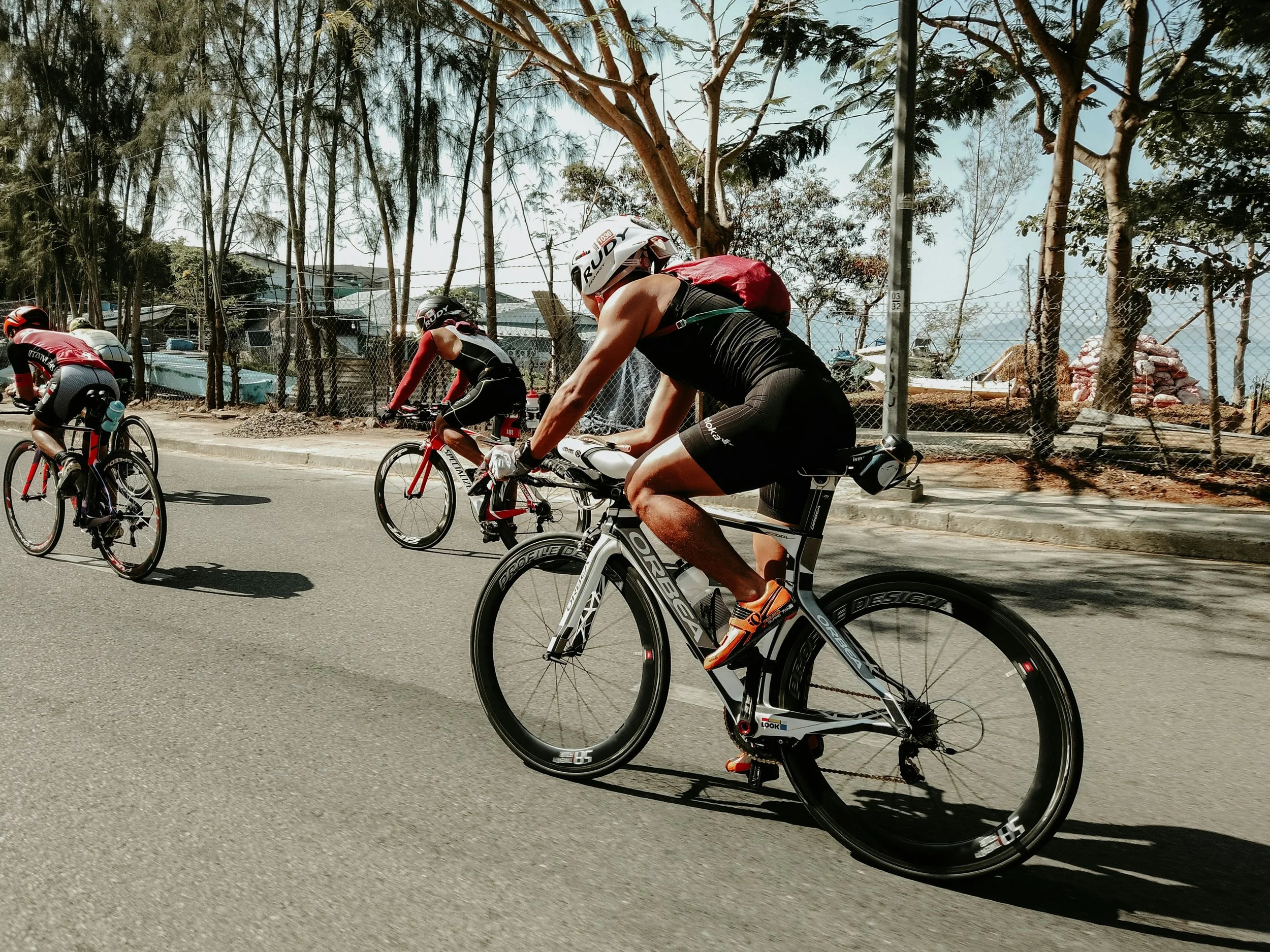
PHOTO CREDIT | UnSplash/Tony Pham

The Math Behind Multi-Sport Racing

Triathlon success requires understanding how energy systems interact across different movement patterns. Your body switches from horizontal swimming to vertical cycling to upright running. Each transition demands different muscle recruitment and cardiovascular demands. Smart pacing accounts for these physiological shifts.

Understanding Your Split Times

Elite performers treat each segment as a distinct equation. Swimming demands controlled aggression to establish position without draining reserves. Cycling requires steady power output management. Running mandates careful conservation after the bike leg's fatigue accumulation.

A 2023 study published in Scientific Reports examined professional IRONMAN athletes and found that running performance predicted overall success better than cycling or swimming metrics. The top ten finishers maintained remarkably even pacing throughout the marathon portion. Their speed variation stayed within tight parameters while slower competitors showed erratic pace fluctuations. This research suggests that bike pacing directly impacts run performance through accumulated fatigue mechanisms.

Transition Efficiency Matters

Transition zones represent the fourth discipline in triathlon racing. T1 moves you from water to wheels. T2 shifts you from pedals to pavement. Each requires distinct physical and mental adjustments.

Smooth transitions demand rehearsal. Lay out your gear in precise order. Practice removing wetsuits quickly without losing balance. Mount your bike efficiently without breaking stride. These movements should feel automatic through repetition. Fat fingers and shaky legs make simple tasks complicated after intense exertion.

Training Smarter, Not Harder

Volume alone does not guarantee multi-sport success. Strategic intensity distribution produces better results than random hard efforts. Your training must mirror race demands through specific periodization.

Pacing Science From Research

Academic research reveals counterintuitive truths about endurance pacing. A comprehensive review published by the National Institutes of Health examined factors influencing triathlon performance. The analysis showed that even pacing strategies generally outperform aggressive starts for overall race times.

Drafting plays a huge role in sustainable speed. During swimming, drafting behind faster swimmers reduces drag significantly. This position can save substantial energy for later stages. On the bike, legal drafting zones allow energy conservation through reduced wind resistance. These tactics require practice to execute safely at speed.

The concept of "variable pacing" applies differently across disciplines. Uphill cycling segments demand power increases while downhills allow brief recovery. Running requires steady cadence maintenance despite terrain changes. Understanding these nuances separates pack finishers from podium contenders.

Balancing the Three Disciplines

Weakness in one sport disproportionately affects overall performance. Many athletes enter triathlon from single-sport backgrounds. Runners struggle with swim technique. Cyclists fight the running economy. Swimmers battle bike fit issues.

Cross-training provides injury prevention benefits alongside performance gains. Smart athletes integrate complementary activities into their weekly schedules. Tools like e-bikes for conditioning offer low-impact aerobic maintenance between intense training blocks. These devices allow active recovery without the joint stress of pounding pavement daily.

Your weekly schedule should reflect your limiting factors. Identify your weakest discipline. Allocate specific training time to address technique and efficiency gaps. Avoid the temptation to only train your strengths because they feel satisfying.

Gear and Preparation

Equipment choices impact race day comfort and speed significantly. Decisions made months before race day determine your transition speed and energy conservation.

What to Wear Between Stages

Kit selection requires compromise between swim hydrodynamics and cycling comfort. Many athletes choose trisuits that function across all three disciplines. These garments dry quickly and eliminate change time between segments.

Practice swimming in your race kit before competition day. Feel how the fabric moves against your skin when wet. Notice any chafing points during longer efforts. The chlorine smell should trigger muscle memory through repeated training exposure.

Bike fit adjustments can improve both power output and running performance post-ride. Small saddle height changes affect muscle recruitment patterns. Handlebar position impacts aerodynamics and breathing efficiency. Professional bike fitting services prove worthwhile investments for serious competitors.

Nutrition Timing Basics

Fuel represents another calculation requiring precision. Depletion hits suddenly during multi-sport efforts. Gastric distress from poor timing ruins races faster than fitness gaps.

Practice your nutrition strategy during training. Determine what foods settle well at race intensity. Calculate carbohydrate intake per hour based on your body weight and sweat rate. The physical activity guidelines from Health.gov suggest that endurance athletes require careful energy management beyond standard recommendations.

Hydration needs vary with environmental conditions. Hot races demand electrolyte replacement alongside fluid intake. Cooler events might require less aggressive drinking strategies. Your urine color provides immediate feedback on hydration status during taper weeks.

Recovery and Adaptation

Endurance gains happen during rest periods, not just training sessions. Sleep quality directly impacts your ability to absorb hard workouts. Stress management plays a crucial role in consistent performance.

Post-workout nutrition should include protein alongside carbohydrates. This combination supports muscle repair and glycogen replenishment simultaneously. Consider exploring mood-supporting supplements that help manage the psychological stress of intense training blocks. Mental fatigue impairs physical performance through complex neurological pathways.

Active recovery sessions should feel almost embarrassingly easy. These workouts promote blood flow without adding training stress. Walking, gentle swimming, or easy spinning all serve this purpose. Respect these sessions as training components rather than skipped workouts.

Wrapping Up Your Preparation

Triathlon rewards those who respect its complexity. Every detail matters when margins separate finishers. Your training, equipment, nutrition, and pacing calculations all integrate into a cohesive race day experience.

Start your preparation with an honest assessment. Calculate your current fitness across all three disciplines. Build your training plan around your specific limiters. Practice transitions until they feel automatic. Test your nutrition repeatedly. And utilize specialized calculators to remove guesswork from your pacing strategy.

The finish line awaits those who prepare intelligently. Your fitness lifestyle has already built the foundation. Now apply these specific strategies to conquer the multi-sport challenge ahead.

HOW CAN MEDICAL TREATMENT AFFECT THE OUTCOME OF YOUR INJURY CASE?

If you've been injured in an accident, you're probably focused on getting better and rightfully so. But here's something that might surprise you: the medical treatment you receive can dramatically impact the outcome of your injury case. In fact, your medical records often become the most powerful evidence in proving your claim.

Your injury case isn't just about what happened during the accident. It's about proving how that accident affected your life. Medical treatment creates a documented trail that tells your story in a way courts and insurance companies understand. Understanding how your medical care connects to your legal case is important to protect both your health and your right to fair compensation.

PHOTO CREDIT | Freepik

Why Is There a Direct Link Between Medical Care and Case Value?

According to the Insurance Research Council, injured parties who seek legal representation receive settlements that are 3.5 times larger on average than those who don't. But even with an attorney, your medical records are what truly strengthen your claim. Comprehending the connection between medical documentation and legal outcomes can feel tiring when you're already dealing with injuries and recovery.

In states like South Carolina, where personal injury claims must be filed within three years, and damages are reduced under the state’s modified comparative negligence rule, clear medical documentation and strong supporting evidence often play a decisive role in case outcomes. Understanding how medical documentation is interpreted from a legal standpoint can also make a meaningful difference in the direction of your claim. Many injury victims who are facing such conditions choose to speak with a Rock Hill personal injury lawyer, such as professionals at  Stewart Law Offices, to better understand how treatment records are evaluated by a court and how small gaps or inconsistencies might affect case outcomes. Having clarity early on may help keep your medical care and legal strategy aligned during recovery.

If you are facing such circumstances in Rock Hill, SC, you can visit the Stewart Law Offices at 1242 Ebenezer Road, just 4 minutes drive from Miracle Park of Rock Hill, or you can directly call 803-328-5600 to speak with a personal injury attorney and can discuss your case.

What Makes Documentation So Important?

Think of your medical records as the foundation of your case. Every doctor's visit, diagnosis, treatment plan, and prescription creates evidence that:

●       Establishes the severity of your injuries

●       Links your injuries directly to the accident

●       Demonstrates the impact on your daily life

●       Shows your commitment to recovery

Without this documentation, you're asking the insurance company to take your word for it. And unfortunately, that rarely works in your favor.

How Does Treatment Timing Affect Your Case?

One of the biggest mistakes people make after an accident is delaying medical care. Maybe you felt okay initially, or you wanted to see if the pain would go away on its own. Perhaps you were worried about medical bills or simply didn't have time. Whatever the reason, gaps in treatment send red flags to insurance adjusters.

Seek Immediate Medical Attention

Insurance companies exploit treatment delays to argue your injuries either weren't caused by the accident, aren't as severe as claimed, or stem from another source. While many legitimate injuries like whiplash, soft tissue damage, or traumatic brain injuries don't show immediate symptoms, explaining delayed onset after the fact is much harder than having early medical documentation.

Visiting a doctor promptly helps create documentation that may support the connection between the accident and your injuries.

How Does Consistent Treatment Strengthen Your Claim?

Getting that initial exam is just the first step. Following through with your treatment plan is equally important. Follow your doctor's orders. When you skip appointments, stop physical therapy early, or ignore your doctor's recommendations, insurance companies interpret this as evidence that you weren't really hurt. Here's what consistent treatment demonstrates:

●       You're genuinely injured and not exaggerating.

●       You're taking reasonable steps to recover

●       The injury requires ongoing care

●       Consistent treatment may support claims for continued medical care costs.

According to the National Safety Council, the total cost of work injuries in 2023 was $176.5 billion, which included medical expenses of $36.8 billion. Making proper documentation of these medical expenses important to recovering compensation for your case.

Which Treatments Increase Settlement Value?

Not all medical treatment carries the same weight in an injury case. While you should always follow your doctor's recommendations for your health, understanding how different treatments are viewed can help you make informed decisions.

Conservative vs. Aggressive Treatment

Insurance companies generally expect injured parties to start with conservative treatments before moving to more aggressive interventions. This progression might look like:

Conservative approaches:

●       Rest and activity modification

●       Over-the-counter pain medication

●       Physical therapy

●       Chiropractic care

More aggressive interventions:

●       Prescription medications

●       Injections

●       Surgery

●       Long-term pain management

Following a logical treatment progression strengthens your case by showing you exhausted reasonable options before pursuing costly interventions.

Specialist Care Adds Weight

Seeing specialists demonstrates the seriousness of your injuries. A referral from your primary care doctor to an orthopedist, neurologist, or pain management specialist shows that your condition requires definitive evaluation and treatment. These specialist reports carry significant weight because they provide professional medical opinions about not only the nature and extent of your injuries, the expected recovery timeline, but also potential long-term complications and necessary future medical care.

Do Future Medical Needs Increase Your Settlement?

Your settlement should cover both current and future medical costs. If you'll need ongoing treatment, future surgery, or long-term medication, include these expenses. Medical specialists can project future treatment needs, ongoing care costs, potential complications, and permanent limitations requiring assistive devices. Complete medical documentation is essential to support these future cost projections.

Are You Hurting Your Own Case?

Here are some key points to keep in mind to avoid diminishing the value of your own case.

●       Don't use only attorney-referred doctors - Mix in your own established physicians for added credibility.

●       Don't rely solely on alternative medicine - Supplement chiropractors/acupuncturists with traditional MDs for comprehensive documentation.

●       Don't discuss case details in medical settings - Stick to medical facts; avoid speculating about fault or settlement value in medical records.

PHOTO CREDIT | Freepik

Frequently Asked Questions

What happens if I can't afford medical treatment after my accident?

Don't skip treatment due to cost. Many doctors work on a lien basis (payment after settlement), and you can use health insurance, auto insurance, medical coverage, or payment plans. Skipping treatment will hurt your case more than the expense.

Can I still win my case if I missed some doctor appointments?

Yes, but missed appointments weaken your case. Insurance companies view gaps as evidence that you weren't seriously injured. Resume treatment immediately and document any legitimate reasons for missed visits.

Do I need to see a specialist, or will my regular doctor be sufficient?

For serious injuries like broken bones, back/neck pain, or head trauma, see a specialist. Specialist opinions carry more weight with insurance companies. Always follow through if your doctor recommends a referral.

8 ACCESSORIES TEENAGERS WILL BE OBSESSED WITH IN 2026

Have you had a look at the outfits teenagers are wearing these days? You might have noticed that they’re always wearing some type of accessory. In 2026, they’re not only wearing accessories. They’re curating them. Broadcasting their personalities. Dropping hints about what their passions are, who they are, and which corner of the internet raised them. For this generation, accessories have officially transformed from cute extras to full-blown identity statements. Kind of ironic, right?

We checked the trends for accessories for 2026, and we can tell you that they feel more playful, louder, and intentional than before. Nothing seems random. Every piece, from bags to clips, chains, and charms, has a story behind it. In this article, we’ll discuss what’s actually trending among teens and why they are gravitating toward particular pieces.

  1. Statement Bags That Carry the Whole Personality

  2. Layered Jewelry That Looks Effortless (But Isn’t)

  3. Hair Accessories That Refuse to Be Subtle

  4. Phone Accessories That Are Basically Fashion

  5. Belts That Do More Than Hold Things Up

  6. Socks That Demand Attention

  7. Pins, Patches, and Micro-Decor for Everything

  8. Sunglasses That Feel Playful, Not Serious

PHOTO CREDIT | Unsplash/zai Dan

1.    Statement Bags That Carry the Whole Personality

This is clearly a non-negotiable because teens in 2026 use bags for more than carrying stuff. Bags complete their outfits. They are leaning into accessories with bold designs and pop-culture references. They are wearing crossbodies, backpacks, bags and more that feel rather collectible than practical.  Think bright colors, character-inspired designs, textured finishes, and shapes that immediately stand out in a hallway or on a bus seat. This is where a platform like Loungefly comes into the conversation, as it sells bags directly inspired by fandom culture, nostalgia, and ideas that feel personal rather than generic. These are bags you don’t just match with an outfit, you build the outfit around them. What’s interesting is how bags have become emotional accessories. They signal what a teen loves without them having to say a word. Gaming references, animation, cult movies, fantasy worlds, all of it lives right there on their shoulder.

2.    Layered Jewelry That Looks Effortless (But Isn’t)

Jewelry h these days is all about layering, stacking, and mixing things that shouldn’t mix well, but somehow they look great together. Teenagers are mixing metals, wearing multiple necklaces at once, adding beads, initials, charms, and tiny lockets. They don’t want to achieve perfection but showcase their personality, which often is a little sentimental, chaotic, and very expressive. Brands and platforms like Etsy creators, Claire’s, and small independent jewelry sellers are thriving here because teens want pieces that feel unique, not mass-produced. One necklace might be a gift, another a thrifted find, another something bought at a concert or pop-up shop. The overall look says: “I threw this on,” while secretly meaning: “I curated this carefully.”

3.    Hair Accessories That Refuse to Be Subtle

You might wonder, is anything subtle with this generation? Hair accessories are having a main-character moment in 2026, and teens encourage subtlety to leave the building. Claw clips in oversized shapes, pastel colors, marbled finishes, and even novelty designs are everywhere. So are ribbon ties, embellished headbands, and decorative hair pins that feel halfway between cute and rebellious. Retailers like Urban Outfitters, ASOS Accessories, and independent Instagram shops are pushing this trend forward with playful designs that feel very online, very expressive, and very teen-coded. Hair accessories are no longer an afterthought. They’re part of the outfit’s personality, sometimes the boldest part of it.

4.    Phone Accessories That Are Basically Fashion

Did you think for a minute that phone accessories are boring? A teenager will strongly disagree because they use phone cases layered with chains, straps, charms, and stickers.  Wrist lanyards double as jewelry. Beaded phone straps swing from pockets like fashion statements. Even wireless earbuds are accessorized with cases that match outfits. Platforms like Casetify and Society6 are popular reference points here, offering customizable designs. Phones aren’t hidden anymore. They’re styled.

5.    Belts That Do More Than Hold Things Up

A couple of years ago, the only purpose of a belt was to hold your pants up, but now it does several other things.  Teenagers are wearing belts in different combinations, with low-rise jeans, oversized hoodies, dresses, and skirts. Chain belts, studded belts, fabric belts with graphic buckles, all of them are fair game. This trend is being fueled by retailers like Pull&Bear and Bershka, as well as vintage resellers specializing in early-2000s aesthetics. Belts are no longer practical. They’re decorative punctuation marks for an outfit.

6.    Socks That Demand Attention

Yes, you read it right, we’re talking about socks that became accessories over the last couple of years. Stay with us. This year, socks are more deliberately loud and visible. You will see teens wearing pastel socks, graphic socks, mismatched socks, ribbed textures with tiny illustrations or logos. And they are styled with all kinds of shoes, from sneakers to loafers and sandals. Teens are buying statement socks from places like Happy Socks, Uniqlo, and independent streetwear brands, using them as a low-commitment way to experiment with color and identity. It’s a small detail, but it carries big personality.

7.    Pins, Patches, and Micro-Decor for Everything

You might have seen these microelements around you and didn’t know what to think about them. For teens, everything that can be decorated will be. From pencil cases to backpacks, jackets, headphones, and tote bags, they cover everything with small decorative add-ons like patches, pins, and similar items. Platforms like Redbubble and independent artist shops are popular sources, letting teens support creators while building a visual language that’s entirely their own. This is customization culture at its purest.

8.    Sunglasses That Feel Playful, Not Serious

During the summer, sunglasses are essential for comfort, but they can be worn year-round. Teenagers opt for colored lenses, tiny frames, exaggerated silhouettes, heart designs, and other similar bold models in 2026.  Teens wear them indoors, outdoors, in selfies, and sometimes just because they match the outfit. Retailers like Quay Australia and fast-fashion accessory sections (carefully chosen, of course) are feeding this trend.

Why Accessories Matter More Than Ever

Accessories in 2026 aren’t just trends. They’re tools. Tools for identity, creativity, and belonging. For teenagers navigating a hyper-connected world, these small items offer control, expression, and comfort. A bag can signal fandom. A necklace can hold meaning. A phone charm can say, “This is me,” without having to explain anything at all. And that’s why these trends stick. They’re not about following rules. They’re about rewriting them, one accessory at a time.

6 WAYS TO KEEP YOUR INSTRUMENTS SAFE WHILE TRAVELING

A hard case bumps a door frame faster than most people expect, especially in a crowded terminal line. A violin can be fine at home, yet feel exposed once bags start stacking and shifting.

Travel also adds heat, cold, and rushed handling, which can stress wood and hardware in quiet ways. Many players learn this after one tight connection, one packed overhead bin, or one rainy curbside pickup.

A protective case is the first layer, and it matters more than a stylish cover or a clever strap. Resources like Great Violin Cases help players compare case styles by instrument type and travel needs. The goal is simple, reduce movement, reduce impact, and keep the instrument stable through long hours.

PHOTO CREDIT | Pexels/Rene Terp

Pick A Case That Stops Shifts

A travel ready case should stop the instrument from shifting, even when the case tilts or lands awkwardly. Look for a snug suspension fit, firm padding, and strong latches that stay closed under pressure. If the case has a neck support, it should feel steady without forcing the instrument into a bend.

Shell strength matters, yet interior design matters just as much during real travel. A rigid shell can still fail if the instrument rattles inside during a long ride. Before you leave, place the instrument inside and gently shake the case, then listen for any movement.

Airport rules also shape what protection makes sense, since handling is not always predictable. The TSA shares guidance on instruments and screening, which helps you plan what may be opened during checks. After that read, label your case clearly and keep the interior neat, so inspection stays quick.

Pack Accessories To Prevent Rattle

Many travel dents come from small items inside the case, not from a big external hit. Loose rosin can crack, shoulder rests can pry, and metal mutes can mark varnish during vibration. Treat every accessory as a potential projectile once the case starts moving.

Use a simple rule, nothing hard should touch the instrument at any angle. If your case has compartments, close them fully and confirm the lids do not sag. If it does not, use a soft pouch and place it away from the top plate.

A short packing routine helps, since it stays the same before every trip. Put spare strings in a flat sleeve, and keep them away from the bridge area. Add a small cloth between the instrument and any strap hardware, so nothing scrapes during carry.

Manage Heat And Humidity

Wood responds to air changes, and travel exposes instruments to fast swings in both moisture and heat. A cold cargo hold, a hot car trunk, or a dry hotel room can pull moisture out quickly. That stress can loosen seams, shift pegs, and change how the instrument speaks.

The best defense is slow change, not perfect control in every place. Keep the instrument with you whenever possible, and avoid leaving it in a parked vehicle. If you must step away, bring the case inside first and let it sit closed for a short time.

A few simple items cover most trips without adding bulk to your bag.

●       A small case hygrometer that fits inside a pocket compartment

●       A humidity pack made for string instruments, replaced on schedule

●       A clean microfiber cloth for sweat, dust, and quick wipe downs

These tools are not fancy, yet they reduce the risk of quiet damage building over days.

Keep It In The Cabin

If you can keep the instrument in the cabin, you reduce exposure to heavy handling and stacked luggage. Airlines vary, though a plan helps you avoid surprises at the gate. Check your carrier’s instrument policy before booking, and save a screenshot for travel day.

Boarding order also matters more than many people admit. Early boarding gives you a better chance at safe overhead space, with less pressure from other bags. If you are offered a gate check, ask about closet storage first, since some crews can help.

The FAA offers consumer guidance on carry on baggage and airline responsibilities, which helps set expectations. Use that information to ask calm, clear questions at the counter, and keep your case within reach until you are seated.

Confirm Coverage And Document Condition

Travel risk is not only drops and dents, it is also cost and timing if repairs are needed away from home. Before the trip, confirm your policy covers travel, baggage handling, and out of town repairs. Keep the policy number and claim steps saved offline, since airports and stations can be spotty for service.

Take three quick photos, full instrument front and back, plus the case exterior. Note the serial number or maker label in your phone, and pack one simple repair contact in your destination area. If something goes wrong, you have proof of condition and a faster path to help.

Label The Case And Handle With Care

A case that looks plain can travel better than one that looks expensive and attention grabbing. Use a durable luggage tag with your name and a working phone number, then place a second card inside. If the outer tag tears off, the inside card still helps recovery.

Handling habits matter, since most damage happens during rushed moments. Carry the case with two hands when moving through tight spaces, and avoid swinging it at knee height. When you set it down, place it on its side or back in a stable position, not upright on a crowded floor.

If you travel often, take photos before departure and keep them in your phone. Include the instrument, the case exterior, and any existing marks you can point out later. That record helps if you need a repair estimate or an insurance claim.

Keep A Simple Travel Routine

Your instrument does best on the road when the basics stay consistent and repeatable. A case that prevents shifting, plus smart accessory packing, cuts most avoidable damage. Simple humidity control and a calm carry on plan protect the wood from fast climate swings and rough handling. Add clear ID, careful set downs, and a quick photo record, then travel feels less risky and more predictable.