
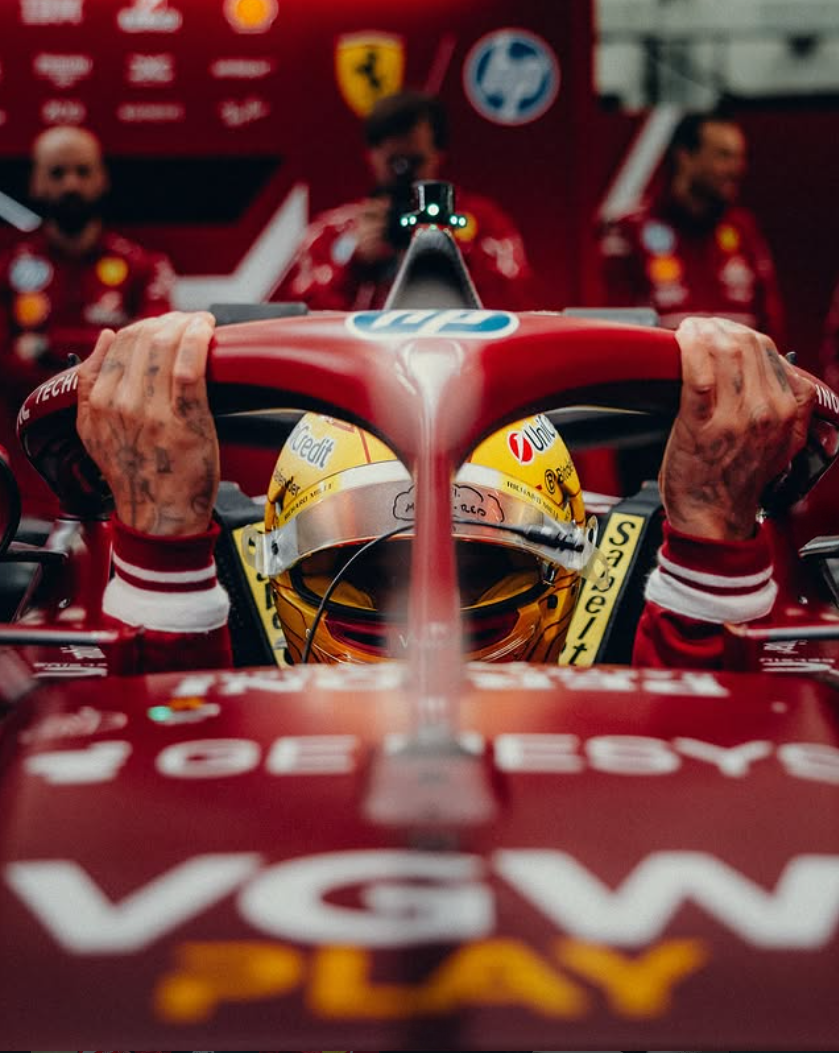
Lewis Hamilton’s move to Ferrari shocked the Formula 1 (F1) world, but his first season in red raised the most uncomfortable question of his career. Without a podium finish for the first time in nearly two decades, Hamilton enters 2026 facing doubts that would have seemed unthinkable only a few years ago. His debut campaign with Ferrari ended with sixth place in the standings, leaving the team fourth in the constructors’ championship and searching for direction.
F1 rarely offers neat endings, but the sport’s biggest regulation reset in a generation has handed Hamilton one final opportunity to rewrite the script. Early testing in Barcelona has provided cautious optimism, with Hamilton topping the unofficial timing charts with a 1:16.348. He subsequently described Ferrari’s new car as ‘more enjoyable and responsive’ than the ground-effect cars that have undermined him since 2022. However, the sportsbooks featured on comparison platform www.bettingtop10.com were unimpressed, rating Hamilton as a 20/1 shot to win the title this season. Read on to hear about how the oddsmakers have underestimated Hamilton’s chances of winning a record-breaking eighth world championship.
A Brutal First Year in Red
Hamilton’s first season at Maranello stripped away the romance that accompanied his arrival. The Ferrari never offered consistent race-winning pace, but Hamilton also struggled to extract maximum performance, particularly over one lap. Teammate Charles Leclerc out-qualified him 22 times across the season and regularly converted marginal advantages into strong results. More concerning was the absence of signature Hamilton moments, with only a sprint win in China standing out in an otherwise subdued campaign. The frustrations spilled into public view as Hamilton labelled the season his ‘worst ever’ and openly questioned his own performances. Ferrari endured their first winless year since 2020, reinforcing the sense that the partnership was misfiring. The narrative shifted from fairytale reunion to genuine uncertainty.
A Regulation Reset Potentially Changes Everything
The 2026 regulations represent the biggest technical upheaval Hamilton has experienced, reshaping cars, power units and the role of the driver. Downforce has been reduced, active aerodynamics introduced, and energy management elevated to a central race skill. That shift could prove decisive for Hamilton. He has repeatedly stated that the new generation of cars is more fun to drive, more intuitive and better aligned with his natural style. Ferrari’s decision to halt 2025 development early and commit fully to this year reflects how seriously they view this opportunity. Hamilton and Leclerc have both been heavily involved in the car’s development, providing feedback on everything from energy deployment to steering wheel layout. Ferrari’s early testing mileage suggests a cleaner start than in previous years, with reliability holding up across long runs. That foundation matters more than lap times at this stage.
Experience Versus Time
Hamilton’s experience remains his greatest asset, particularly in a season defined by unknowns. He thrived during the last major regulation reset in 2014 and understands how quickly competitive orders can shift. His ability to guide development, interpret data and adapt race strategies gives Ferrari a reference point that few teams possess. However, age is an unavoidable factor. Hamilton has been outscored by younger teammates in three of the past four seasons, and the margins that once fell his way now seem less forgiving. While Fernando Alonso continues to defy expectations into his forties, F1 offers no guarantees of longevity. This season may ultimately reveal whether Hamilton’s struggles were car-specific or the first signs of irreversible decline.
The Bookies’ Verdict & the Reality
Bookmakers remain unconvinced by the early optimism. Odds of 20/1 on the sportsbooks listed on BettingTop10 highlight the size of the task he faces in the title race. Ferrari must not only close the gap to the front but do so faster than teams who appear better positioned at the start of the new cycle. Hamilton must reverse recent trends and outperform a teammate entering his prime. That combination is rare, but not unprecedented. Whether Hamilton succeeds at Ferrari will not be decided by testing headlines or the latest odds. It will hinge on development pace, operational clarity and Hamilton’s ability to rediscover his edge. While the season ahead will not necessarily impact the British star’s legacy in F1, he will be desperate to prove that he is no back number.