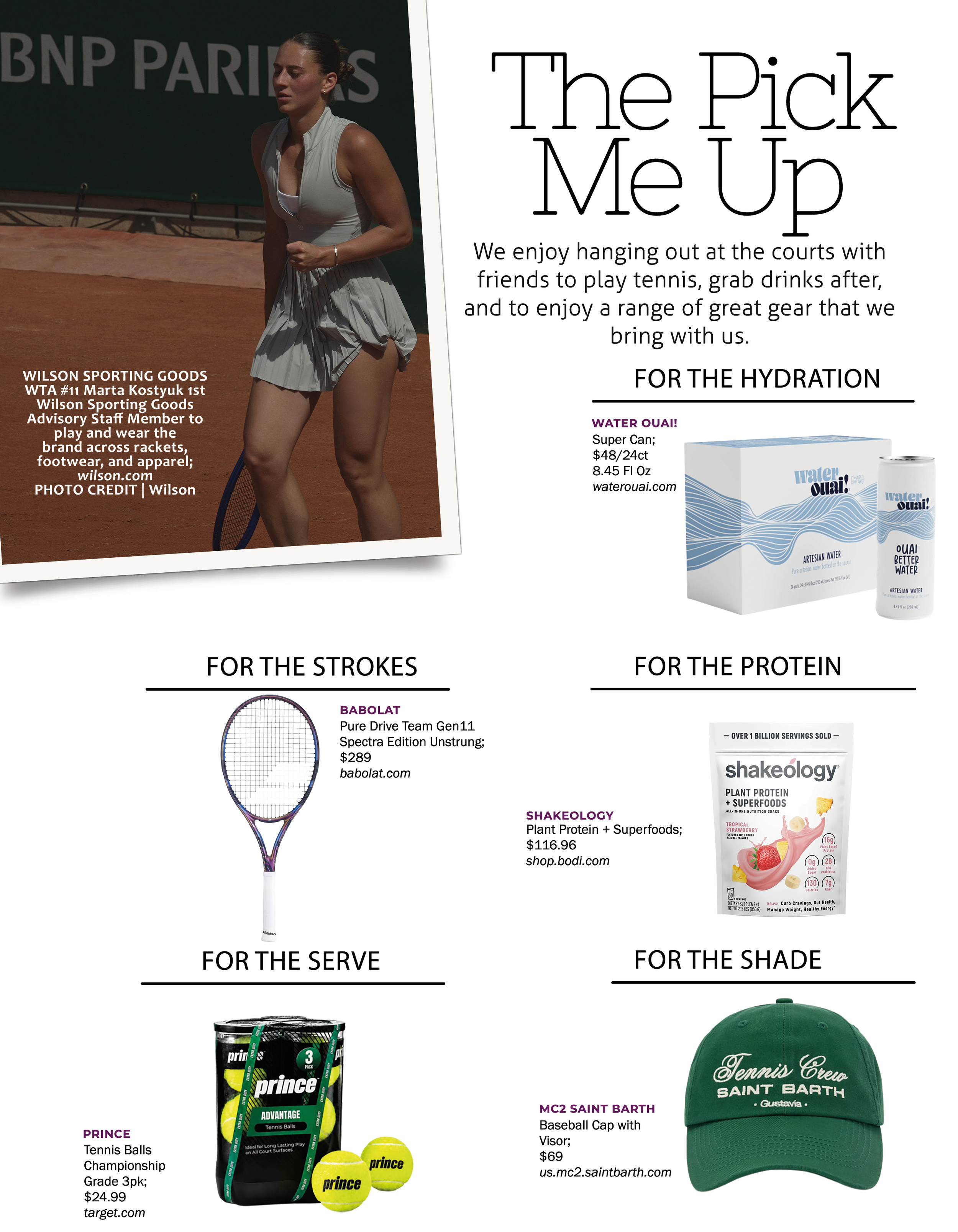
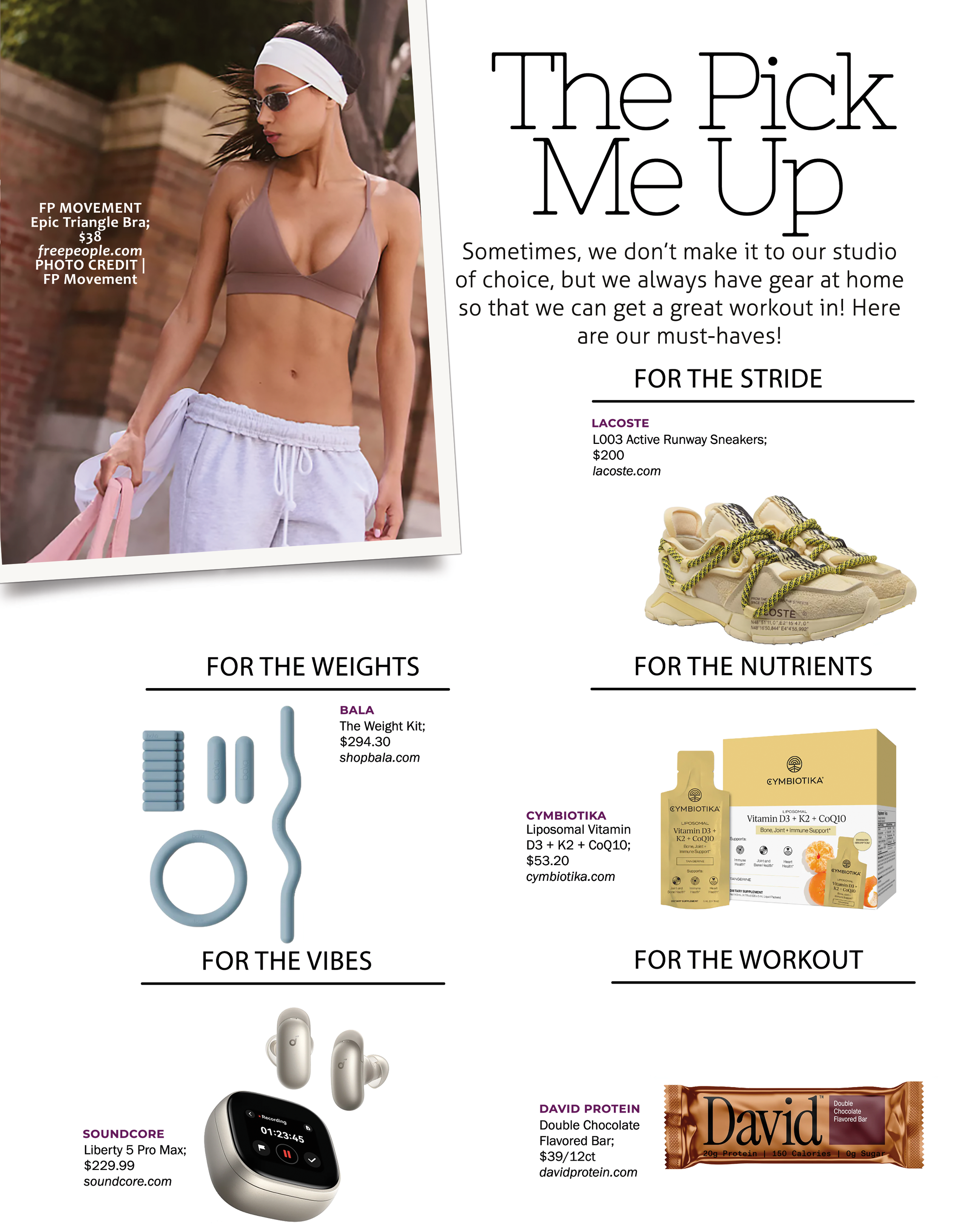
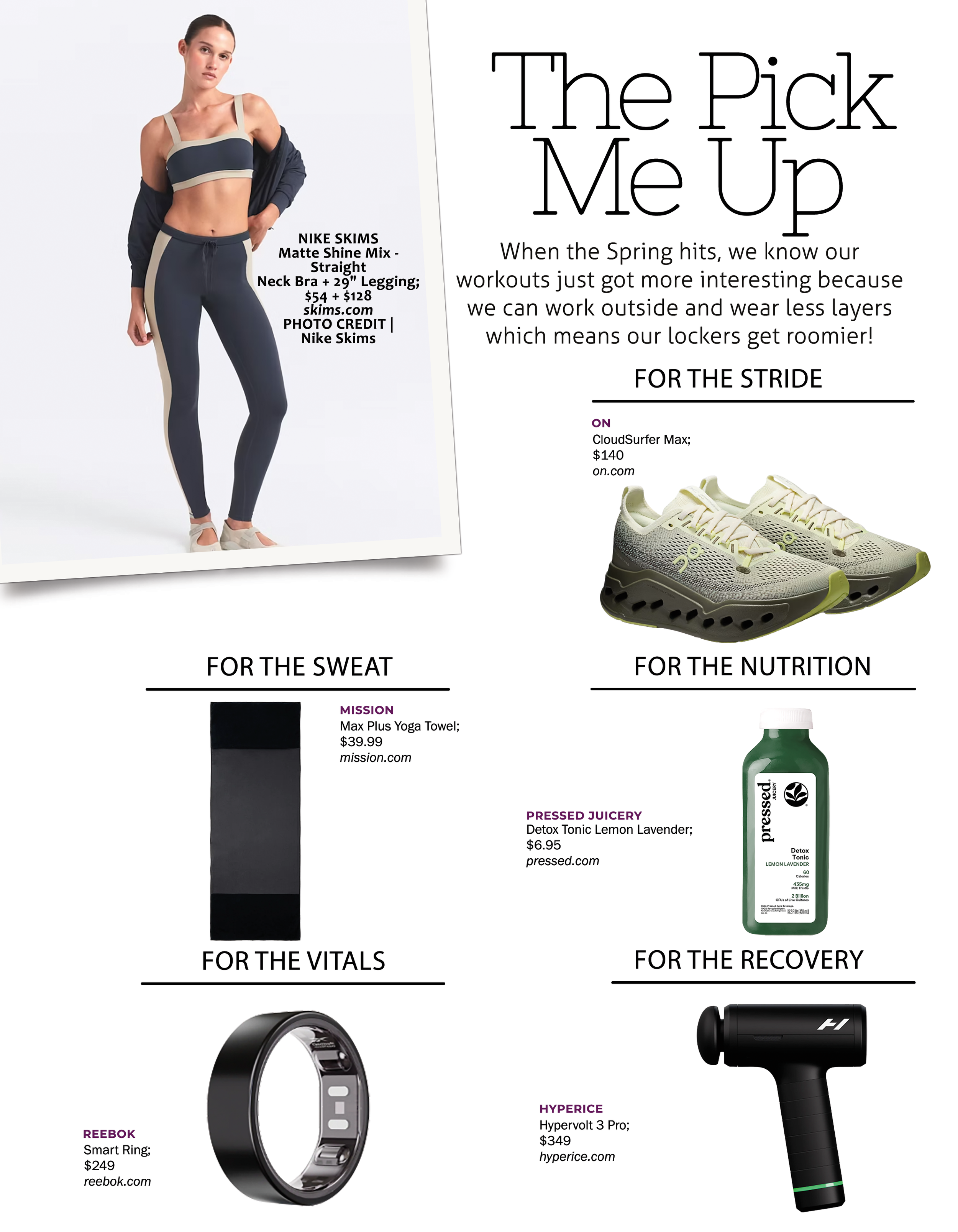
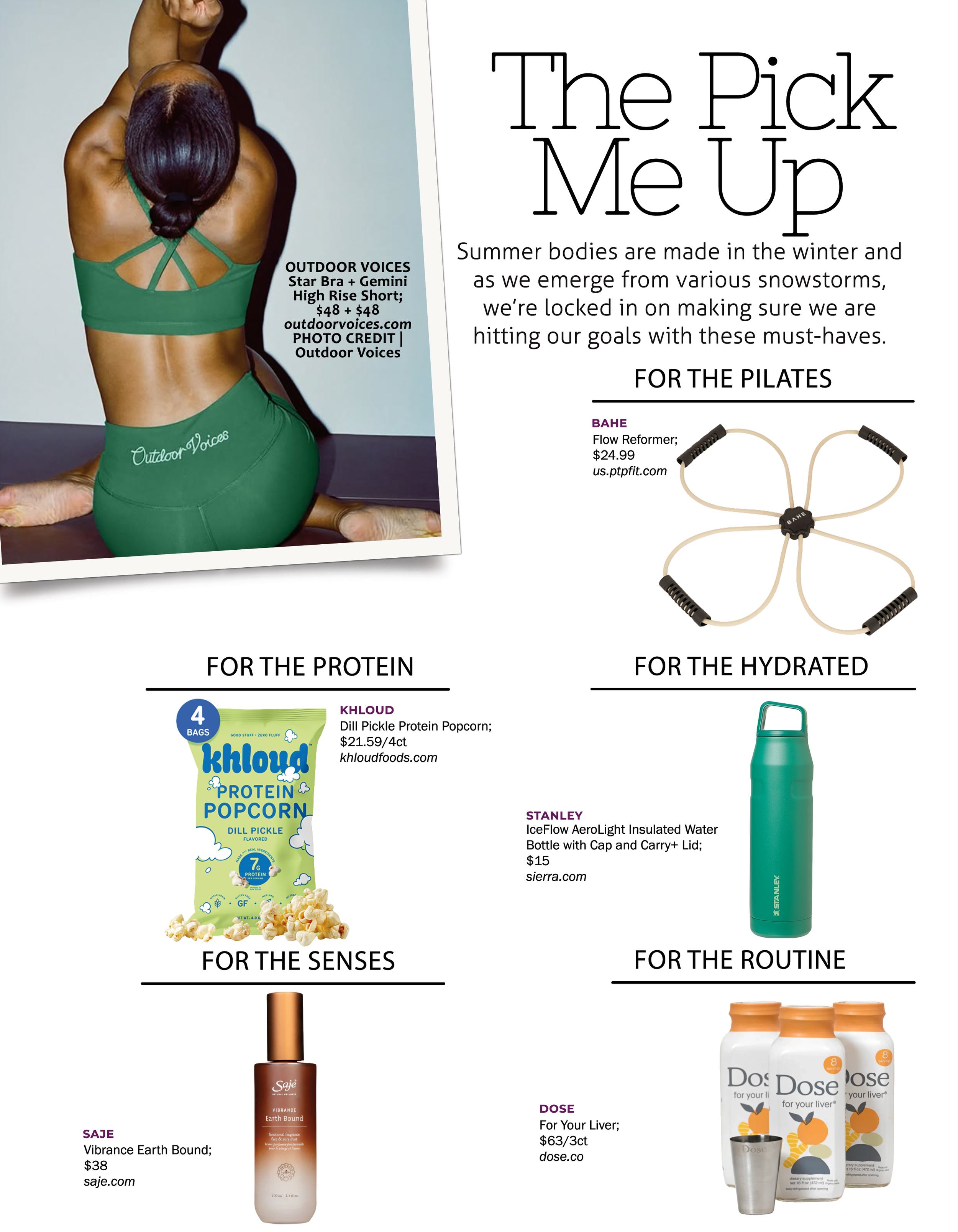
Read the April Issue of Athleisure Mag and see #TRIBEGOALS in mag.
Featured #TRIEBGOALS



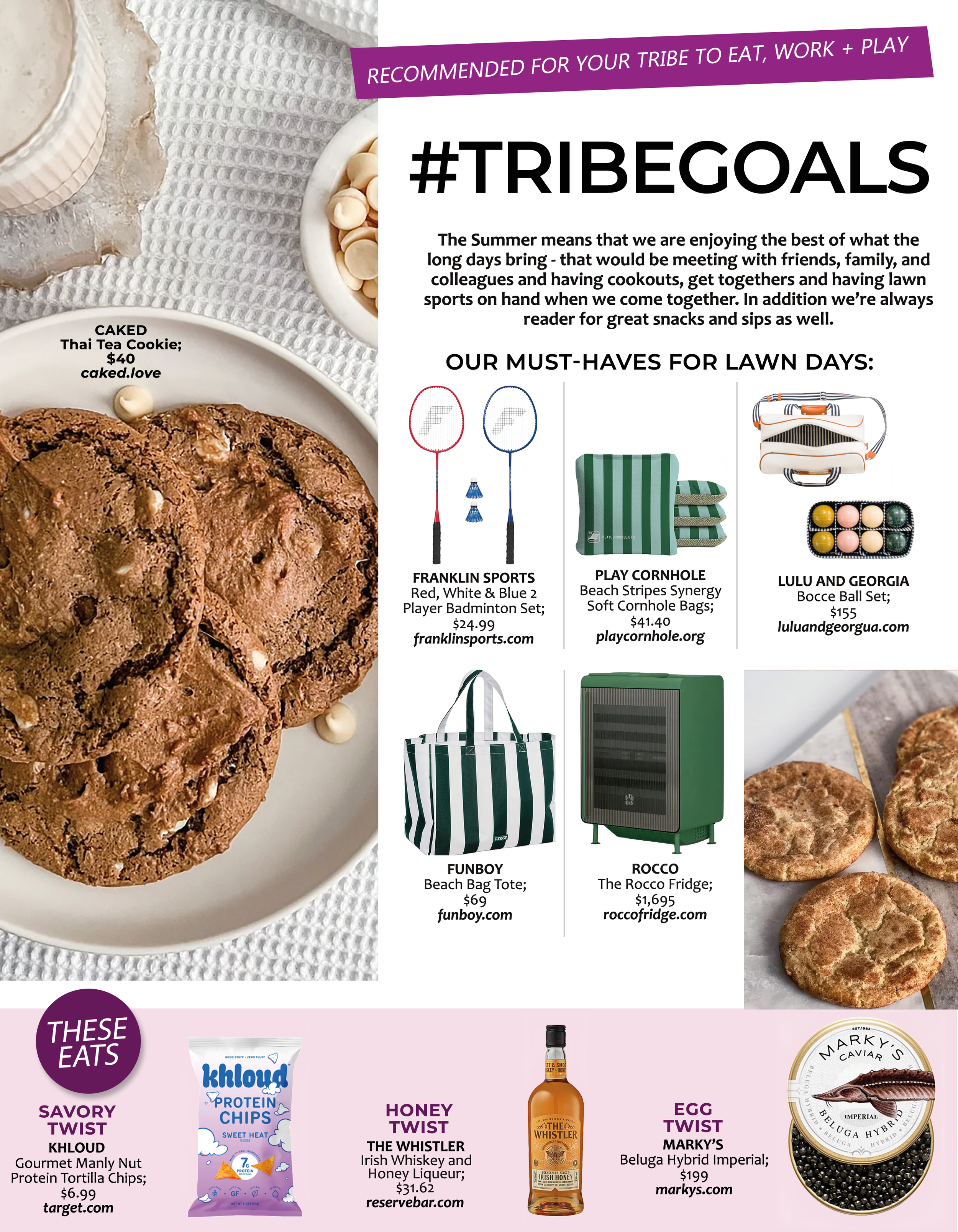








Read the April Issue of Athleisure Mag and see #TRIBEGOALS in mag.

We’ve been hearing stories across the world of how people are coming together to support one another as we all navigate COVID-19. .Throughout this time, businesses have also stepped in to do so whether it’s staying open for pick up and delivery, shipping items to those in need and more. We chatted with McDonald’s Franchisee who owns and operates a number of these restaurants, Tanya Lawrence, to see about their initiative that they are doing during this time. From now through May 5th, participating franchisees are providing Thank You Meals to frontline workers which include first responders, health care workers, etc. Here’s what you need to know.
ATHLEISURE MAG: Why is McDonald’s offering Thank You Meals from now through May 5th to first responders, health care workers and those on the frontlines?
TANYA LAWRENCE: McDonald’s has been inspired by the diligent work that our first responders and health care workers have been doing to keep our community safe and healthy during this time. So this is our way of showing gratitude to them for everything that they are doing.
AM: What was the decision behind deciding to offer this for breakfast, lunch and dinner?
TL: We saw a lot of owner/operators doing a lot of things in our different communities and we wanted to get together collectively as a country as a national brand and to be able to offer something to all of our first responders and health care workers.
AM: What McDonald’s locations are offering Thank You Meals and how many times can qualifying frontline guests obtain them?
TL: It’s all McDonald’s restaurants across the nation. Meals are available through our drive throughs or our front counters for pick up orders. It’s one meal per day - breakfast, lunch or dinner whatever time of day is convenient.
AM: What does a frontline guest need to present in order to obtain Thank You Meals?
TL: They just simply need to come in uniform or they can show and ID or badge. They will then get the meal free of charge.
AM: Prior to the Thank You Meal program and after the conclusion of it – how have the franchisees supported COVID efforts with first responders, health care workers and even those that are just living in their community.
TL: We have a lot of great franchisees and a great company where we have been delivering meals to hospitals, fire houses and police stations. We have been working with school districts to provide meals for kids that are underserved. We have been doing it from the beginning and we will continue to do it as long as needed.
Read the latest issue of Athleisure Mag.


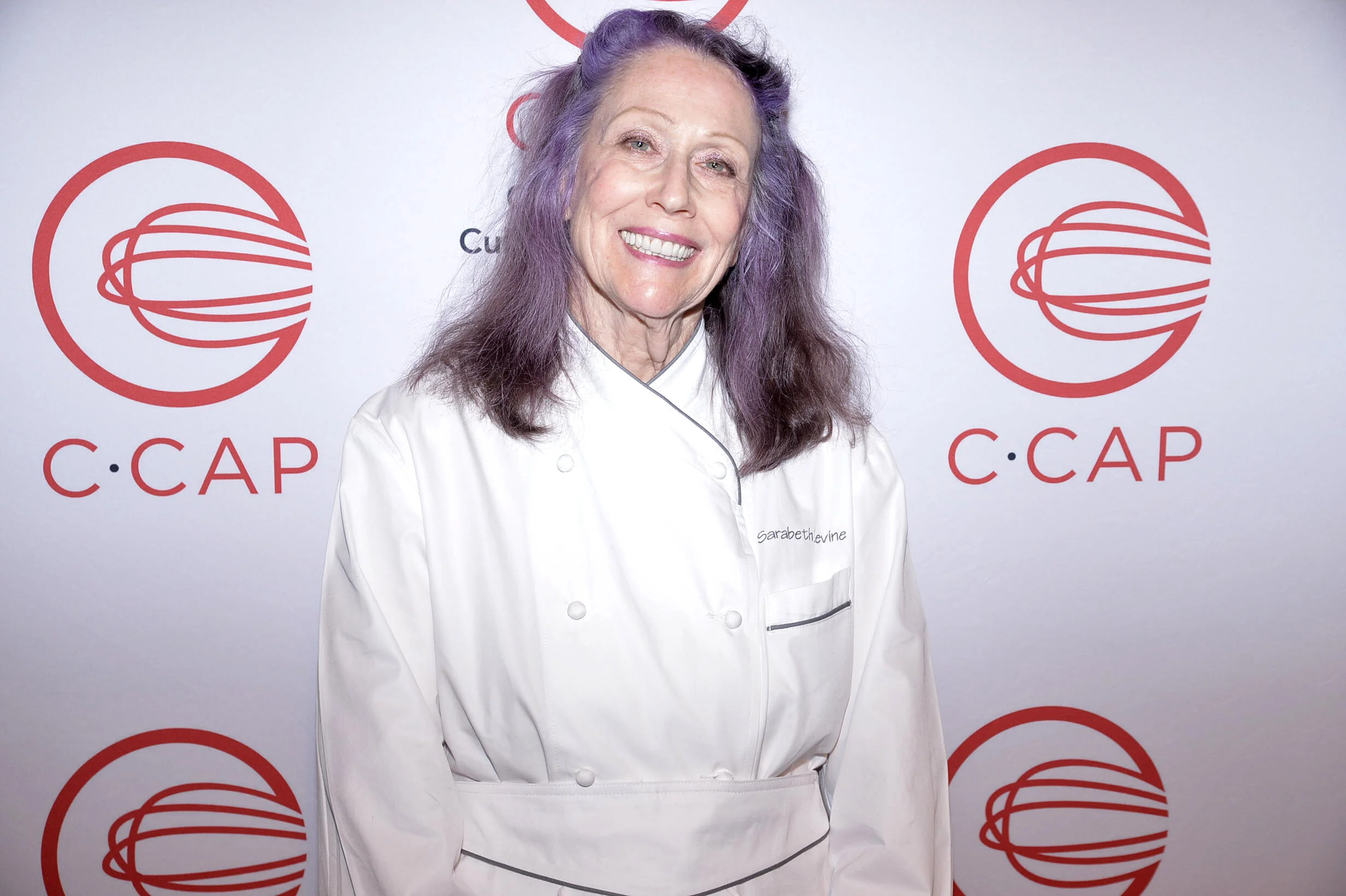
A few weeks ago, we headed to Chelsea Piers to the Careers Through Culinary Arts Program's 30th Anniversary Benefit to enjoy a staggering amount of top chefs that included David Bouley, Marcus Samuelsson, Jonathan Waxman, Eric Ripert, Maria Loi and Sarabeth Levine. They were joined by students from C-CAP who showcased their skills to guests who enjoyed some of the top restaurants in NYC.
We wanted to know more about C-CAP and the founder, Richard Grausman who took classes with James Beard. He trained and graduated with the Grand Diplôme from Le Cordon Bleu, Ecole de Cuisine. He was also the first exclusive representative of the school who trained people across the US and Canada in order to make them proficient.
We headed to the offices of C-CAP to find out about how his career, how this organization was created, the programs that were launched and how he works with chefs and other partners.
ATHLEISURE MAG: We have had the pleasure in talking with various voices in the culinary community from Chef Marcus Samuelsson to Will Blunt of StarChefs who have shared their work and support of C-CAP. We were so pleased to see how you have ensured that the culinary community continues to thrive by attending your 30th annual event a few weeks ago and it’s so fitting that we finally get to chat with you to find out more.
RICHARD GRAUSMAN: It was a wonderful event and we have had 21 events and that was an unusual one. 2 years ago, Jose Andres was our honoree and that was unique in its style because the room was filled with appreciation for what he has done philanthropically around the world. At our benefit this year, I felt the love and warmth for the program and the guests that were coming up with appreciation when my daughter’s video (PRESSURE COOKER Directed by Jennifer Grausman and Mark Becker, an Emmy nominated documentary about one of the C-CAP teachers Wilma Stephenson) ran and with the alumni expressing themselves. And after that video, there were alumni that were in the room that I have known for years. I know what the program has done for them, but they had never expressed it to me and they came up to me empowered by what they had seen and they just opened up to me. It was just so heartwarming.
AM: You have had a phenomenal background and prior to launching C-CAP, can you tell us what you were doing prior to launching this organization?
RG: I had been the representative of Le Cordon Bleu Paris for 15 years. I had originally gone to Paris to study cooking and become a chef – hopefully in a small mountain restaurant as I love to ski. I’ve always enjoyed skiing and cooking in my life. But I found while I was in Paris that I was too slow to become a chef and I was single-minded. I wasn’t a multitasker. In the process, I taught myself skills that I saw that chefs needed and I realized that I could teach others. I told that to the school that instead of being a chef of a restaurant, I wanted to teach.
Timing is everything and when I came back from a ski trip, I was almost finished with the program and Madame Elizabeth Brassart (owner of Le Cordon Bleu) asked me if I wanted to go to Cleveland to teach a course for her. This was because the Vice President of the Higbee department store had asked for them to send a chef; however, they couldn’t send one since the chef didn’t speak English and she knew I was interested in teaching and the chef thought that I was very good. It started 15 years of teaching French cooking around the country and Canada. I never thought that I wanted to do anything else. It was so gratifying to teach and to have students – men and women, come up to me saying that their spouse loved them more because of their tartar tine or their kids ate carrots for the first time. But then I left the school and wrote a cookbook and I was traveling around the country promoting the book and a vision of what America ate, really hit me. It was fried chicken, hamburgers and pizza. I thought that I could perhaps expand that palette and thinking about the best way to do it, I felt that I had to get in with the schools and get children while they were young and to broaden their palettes, broaden their minds. Because if they leave school, I found that the average adult that if they didn’t like something, they wouldn’t try it.
I wanted to start in elementary school, and I wanted to teach sensory evaluation, and nothing is better to do that with than food, because you use all of your senses. Once you start doing that, you can teach nutrition, then in middle school I thought that you could use foods from around the world to teach geography, history and social studies and in high school, if you had a student with a palette and a passion, it would be easy to train them for the industry. I had a book that I thought was readable at the high school level and I knew that Home Economics was in terrible shape and I thought that by teaching the teachers some of the recipes in my book, to expose their students before they left high school that that would be my goal before I went into my first classroom.
I went to the Board of Education, they liked my idea and they said, “we don’t have any money.” I asked if I could go into one of their classes and they said certainly. I went into one of the classes and that day I saw that half the class was making bread and the other half were Haitian students learning English. I went around the classroom opening drawers and cabinets and they were empty. So I knew it was what the school system had said, they didn’t have any money. I talked to the teacher and said that I had been teaching French cooking for the last 15 years and asked if there was something that I could do for them, what it would be? He laughed and said, “I spent my own money just to buy the flour today for the bread.” So I knew that they needed a lot of help. That day, I went home and I called up many of the manufacturers that I had been dealing with for 15 years. I let them know that I wanted to help the schools and asked if they could help me and they said yes. They donated products, pots and pans, spices – all sorts of things.
I brought the teachers together and I taught them in the morning and then I watched them cook in the afternoon. It showed me the level of proficiency of the teachers. A few were quite competent, but the majority were not. I went to the French Culinary Institute which is now the International Culinary Center and I asked them if they would provide a training program for the teachers, which they did. I went into the classroom and started to demonstrate for the students and when I saw looking at the students – some of them were sleeping, zoning out and there were a couple of people who were bright eyed, attentive and watching me. I watched them cook and a few were very excited and would come up with their tart asking me how I liked it. I let them know it was good, asked how their parents liked it (they did) and then I would ask them what they wanted to do after they graduated and that’s when I found out that the students who were in these classes were the students that the system had failed. Most of them had D’s and F’s at best. They had no preparation for college or a career. I asked them if they had ever thought about cooking and they said, “no – can I?”. I went to a dinner at a small French restaurant on Lexington Ave and I asked the owner about jobs for high school graduates and what the opportunity would be. He laughed at me and told me to look at his kitchen. He was importing labor from South America and Asia and he’d much prefer to have a NY kid that spoke English. I asked what he needed. He said that he needed people that showed up on time and that he would teach them. I asked about knife skills. He said that if he had knife skills, he wouldn’t have to start him on the dishwasher. So that was the beginning of C-CAP.

Within the next 3 years, during the summer time, I would send a student out and a chef would say, “yes the student shows up on time, but when he gets through what I have asked to do, he goes out for a smoke and sits down. I need him to come up to me and say, ‘what’s next chef?’” They needed them to be eager to work. So I built that into the program. Then I would hear, “yes, they show up on time, they are very eager and asks what’s next, but they’re not thinking. He’s got to be inquisitive and to ask why I am using one thing versus another – he has to want to learn.” So I built that into the program. Third year, we were in Chicago. I always went to the competitions that we would have. We would have chefs as the judges and I would take them out to dinner. One night, I took out one chef that was a judge with a director from the high school program and Martha said to Richard, “why don’t you take our kids as you used to take them in the summer?” and he said, “well you’re teaching them the wrong things.” He explained that he had a boy the previous summer that there was a mess and he asked him to get a mop to clean it up. The student said that he didn’t do floors and Martha said, that he shouldn’t have to. That’s when I saw the disconnect between the school and the industry.
The next day, I was handing out scholarships and I was saying that one of the biggest complaints in the industry was that people were coming out of Culinary Institute of America and Johnson & Wales University and they didn’t want to peel carrots or chop onions – they just wanted to be a chef. I let the students know that I knew that they wanted to be Executive Chefs and own their own restaurants and even chains. I told them that if you have your own restaurant and the dishwasher doesn’t show up, then you will be doing the dishes. If your janitor doesn’t show up, you will be cleaning toilets. I let them know that if they didn’t know how to wash dishes or clean toilets, that they needed to go home that night and have their parents show them how. I wanted them to be able to be prepared for anything that would come up. Well, I was shocked that a school board member, a minister, a parent and a teacher all came to me after the scholarship breakfast and thanking me for telling the kids what I did. I asked them what they were talking about and they said, “you are telling them what life is about.” I asked why they didn’t do that. They said they were afraid to. I didn’t know what they were afraid of and I investigated it. Because of the drop out rate in Chicago and DC at that time was so high, parents and administrators were telling their kids that if they stayed in high school, they wouldn’t have to do what they did. The administration would agree with this line of thinking and tell them that they would be paid more. So students were coming out – and this is still true today as I heard about this in Chicago, they’re telling and expecting students that come from their culinary programs to have managerial jobs and not entry-level jobs. Students come out saying that they’re not going to take minimum wage, don’t want to wash dishes or chop vegetables. They want to manage. If you’re not prepared to enter the industry, you’re not going to go anywhere. So that’s the essence of what we do. We work with the teachers to train them in the few skills necessary to get started. Where the school system wants them to teach A-Z, lobster, steak, fish, eggs, salad – everything. They only need to know how to chop, dice, slice, keep things clean and neat, be safe at the workplace, show up on time, want to work, want to learn and have basic knowledge of ingredients and equipment. We try to get the teachers focused on that. They have the students from 1 – 3 years so they can work on that. They can reinforce wearing your apron, watching your hands and other things that take time for them to learn.

We see them when they come to our competitions or for our job training for summer jobs, job shadows to expose them to the industry. We have a student that is already eager, interested and inquisitive. When they leave us and go into the industry, the industry is saying wow – send us more. When Marcus came in and I encouraged him to take on the Co-Chairmanship of the program of the organization. His view was to expand upon what I started and he wanted to reach and train more students as the industry is in need of this. That’s where we are now. We’re trying to figure out how to expand on what we already do and we do well.
AM: How many people are currently in this program?
RG: It depends on how you look at it. I look at it as we have 200 teachers, each teacher has 50 students. That’s 10,000 students. I think the organization uses the number of 17,000 which may be when we’re thinking of the upper level including the 4 years. Those are 10,000 students that the teachers have and the teachers range from poor to excellent so the effect that they have on their student varies. But they all have an effect on their students. Out of that, we see the students that have expressed an interest in knowing more beyond the classroom – shadows, summer training, internships, college advice or our competitions. You go from 10,000 down to a couple of thousand to a couple hundred that get scholarships. There are many hundreds that go into the industry for summer jobs. It’s on the level of interest, focus – but we have worked with over 300,000 students in the 30 years and probably have given $60 million dollars in scholarships and then an untold number of jobs! Then we follow those students if they stay in touch with us, if they have a problem and want to change jobs or they haven’t had a raise in 3 years – what do I do? They tell us if they want to go to Spain and learn something. All of those things, we have the ability to help them with.
AM: How do you assess which high schools you go into?
RG: Initially, I had 3 areas that I was interested in. NY, Chicago and San Francisco. I started in NY and then people heard about what we were doing. I was on NBC for the first time about our program and the next night, I got a call from Washington, DC from the head of Home Economics and they wanted the program. I asked them how many schools that they had and I was looking to go to a community with at least 14-15 schools. For the manufacturers to be able to give the equipment, one school wouldn’t be enough. I went to DC next and then I heard from a teacher in Arizona and another in Norfolk, VA who had been at a teacher’s conference and had heard about it. They wanted it. As long as the school number was sufficient, I went and taught the teachers, I brought the chefs in local areas in and we started the program. It was very easy within 5 years. I had 7 programs, but it was very hard to maintain and grow the program because when I put it all together it worked. To keep it going, I needed volunteers and eventually to keep it going, the volunteers needed to be paid and then we needed a staff and then needed an office. So, the numbers that we effect year after year didn’t change much, the scholarships grew – the degree that we worked with the students improved. The level of services that we gave them grew. Initially, I thought that if I gave a scholarship to a student to CIA would change their lives. In some cases it didn’t change it for the better. I took a student out of their community and threw them into a new community, they had no way to adjust, understand, they didn’t know how to get help with their schoolwork – they’re grades dropped and they lost their scholarship. I had to find ways to mitigate that. I had students going to community college before going to the CIA because their reading and math was at a level that they couldn’t do the work easily.

I’ve had people on campus where they were the only black student that walked onto the campus. So once I had a number of students that were on campus, I got them to form a club to greet the others to work with the campus. So C-CAP students got a name and they were proud to be C-CAP students. Finding what the problem is and finding a solution for it is how my mind worked. The program has grown organically because of that. I saw a problem, I would address it and try to solve it and by solving it, I was able to move people.
AM: So who are groups or services that you work or partner with frequently?
RG: There are a number of organizations that do similar work. We’re not actively working with them. I did work with the American Culinary Federation for a number of years in the beginning because their chefs and association needed credits for them to continue in that group. One of the ways that they were able to get that credit was to provide their time in their schools and I took advantage of that and their members loved it as they were able to be judges. The organization itself, I tried to work with and I became their School to Work Chairman – I wasn’t able to get them to move in the direction that I saw necessary. So I haven’t been active with the organization for 15 years. The National Restaurant Association also wanted to work with us years ago, but they wanted us to work for them. The partnership wasn’t in the way that they saw things. They saw it their way and wanted us to work with them. They did a lot of good, their programs both the ACF and the NRA affect schools and students, but I don’t see them working with the populations that we work with. Many of them saw how effective competitions were so they did it too. When you offer nationwide competitions and you have affluent schools and affluent students in those areas, they’re competing against our students from poor schools and poor backgrounds, our students don’t make it to the top. In our competitions, our students make it to the top and beyond. We can focus on a certain population to what I think is doing important work and I don’t concern myself with the whole country, where they do.

AM: It’s an interesting point about how C-CAP focuses on the skills needed and that you serve a specific community in order to have them excel in the culinary industry. When we were at your 30th Anniversary Benefit, it was a pleasure to see C-CAP students working side by side with some of the most esteemed chefs who own their restaurants as well as being food TV personalities. Seeing the pride and how inspired they were was amazing. It had to be a boost to their confidence to see people enjoying their food and being in that environment. That’s a resume builder.
RG: Yes, I learned very early when I was teaching. The importance of teaching is to empower others. I found ways to empower housewives so that they could talk to their butcher and all of a sudden relationships were being built! They would come to me and say, “oh Mr. Grausman, what you told me about that leg of lamb – I went to my butcher and told him and he looks at me like I am a professional!” I told them just a few words and it made all the difference! That’s the same thing that I did at C-CAP. By teaching the students certain techniques, that when a professional chef saw them accomplish those things, they were impressed at their capability.
One example at a competition was that I had the Executive Chef of the Four Seasons Hotel in NY as a judge and she came to me and said, “Richard, that young man is really great! Do you think that I can have him work for me?” I told her to give me her card and we gave him a scholarship to go to the French Culinary and she hired him. He would call me everyday and say, “Mr. Grausman, I have to make a salad today and I don’t know how to do it.” I told him that in my book, there are 3 great salads and to make one of those. This went on for months and then the chef called me up and said that she had to let him go. Since they had a union, other people were complaining that he wasn’t doing what everyone else was and that was because when I knew Damien in highs school, he was taking care of 2 younger siblings and one parent had died and one was ill. He was working at Kentucky Fried Chicken closing it at 2am and mopping the floors and his teacher had taught him the skills that were involved in our competitions and he was spectacular at it. That’s why the chef wanted him and I empowered our students to impress these chefs to get into the kitchens with the exception of him because of the unions.
Every kitchen that our kids went into even though they weren’t up to the standards that the chefs thought they were after seeing them. They were capable of learning and being trained. I got them into the kitchen. Those were the little secrets that I used to focus on because you want teachers to be able to effectively teach their students these skills. You can’t ask them to do more than what is realistically achievable and that is what is the problem with our education today.
They set goals and standards that aren’t achievable because what happened before they got into the 9th, 10th and 11th grade wasn’t achieved. So, if you are reading at a 3rd grade level in the 9th grade and you’re supposed to be reading at a 10th grade by the time you’re out – kids drop out because they can’t do it.
AM: It becomes frustrating!
RG: Exactly, unless you go back down, and solve those problems at the time, you’re not going to reach them. The first year that I was doing this, I was asked to be on a council as an advisor for the Board of Ed and I ran into a situation where a student in their junior year was given a scholarship to the Natural Gourmet School here in NY. I followed up in the summer and asked how he was doing. I was told, “Richard it was very strange. In the first class, he was fantastic. I had him come up because his knife skills were so good that I had him demonstrate for the rest of the class. But then he didn’t show up the next day.” I asked what she said to the rest of the class when she let them go. She explained that she had asked them to read chapters 1-5 and that they would work on it the next day. I called his high school teacher and asked why she thought that the student didn’t show and relayed what happen at the NGS and she said, “oh that’s it. He doesn’t read.” A junior in high school doesn’t read. I wanted to know how he was able to be a junior unable to read. His teacher explained that he was able to maneuver around reading by opting out. So as I sat on this council, I asked how they could allow a student to get that far and not read. They explained that I didn’t understand how they have kids attending the schools who have various language problems and they have to move them on. I believe that after 3rd grade, if they don’t read, then before they move on you have to make sure that they do. Those on the council said that that is tough because you have to keep them with their age group and they felt that because they have to teach them math and history, it was better to continue with them moving on from grade to grade. But the answer is if they can’t read you need to keep them reading, reading, reading because they can’t learn anything regardless of the subject. I don’t know what the situation is like today – if they’re still dropping out because they can’t read. But this was back in 1990 and to me, that’s the major problem and you solve it. How do you solve it? You find all different ways that you can teach them – there’s Sesame Street – education is something that I am very interested and passionate about. I am frustrated because I don’t often see the imagination and creativity in solving problems. They identify problems and identify solutions but when those solutions don’t work, they will find another solution – find out the root of the problem and why those solutions don’t work.
Hopefully, one of the reasons why I established competitions was that teachers weren’t teaching the skills necessary to get the jobs. The curriculum was so vast, they couldn’t repeat something. You can’t learn knife skills without repeating. You can’t learn how to make a sauce properly without repeating it. There are certain things that you need in cooking competitions. Teachers that go through our competitions will tell me, “Richard, thank you so much. I never thought that I could get one of my kids a scholarship to Johnson and Wales and you gave me the other opportunity – but it was hard. I had to work with them after school." I asked why they didn’t work with them during class, and why don’t you work with all of your students and not just 1 or 2 of them? They explained that they couldn’t give knives to some of the students or that they weren’t interested. So they take the ones that are and train them. For years, I have worked on ways to get teachers to be able to focus on hard skills and soft skills. The only way that I could get them to do it is through the competitions. I have now been working on something that I called, C-CAP Approved. It’s an assessment, skills that I first gave to the teachers that they should work on. I have found that the teachers would like to do that, but the administration won’t let them. So we’re working on NY now and we’ve evaluated their benchmarks and in doing that, we cut down the things that students need to learn. Now they want us to do an assessment test and if that goes through, we’ll have the piece that I’ve been visualizing for 15 years which will be mandated to the teachers as what has to be taught. These few skills that will be meaningful to the industry. If I can pull that in NY, I can roll that out. When I look at the students that are in those classrooms now, if the teachers said we’re all chopping and who will be the fastest and to develop a bit of the sport of it by getting them excited to perfect their knife skills. Americans in today’s youth, if they don’t get it right away, they drop it. If you come to a competition, we do a dish that has turned potatoes. Chefs would ask me why I would teach it because they don’t do that anymore and if they do, they get them from Mexico. I said it was there because the average teenager will try to do something and then quit. But if they stick with it long enough to turn a potato, there is nothing that you can give them that will take more time and patience so I’m not afraid of them quitting on you. They will work. It’s a vehicle to achieve a certain result. It’s to teach repetition and willingness to do something. I have been using the same recipes for competition for a while. We changed from salmon and beurre blanc to poached chicken to a sautéed chicken that we use now. The dessert was always crepes pastry cream and chocolate sauce – it still is. The teachers will say, “Oh Richard, can’t we change the competition recipes. We’re so sick of it.” I tell them that you can’t get sick of it because the students can’t get sick of it. If they’re a chef in a restaurant and they’re making this chicken dish on their menu, It has to be made good or better each time that they make it. They can’t get tired of making it and they have to find something in it that drives them on.
When all of your students are making the chicken perfectly or the crepes perfectly, I will consider changing it. Some years the teachers focus on the crepes and they come out thin and beautiful and I’ll begin to think about changing it and then the next year, they’re coming out thick. The chefs that come to judge they see the techniques that the students have to do to create these dishes and they appreciate it. They say, “you’re old-time but it’s good because they are learning their basics.” In time, I won’t be here and somebody else will come and the skills may change because the industry is changing all the time. There may be skills that we should be teaching for those that are going into Fast Casual to other ends of the business. I want to know what those are and if they are teachable at the high school level then we should do that. Basically, what we’re doing is teaching discipline, attention, focus, sanitation safety and you can’t teach this overnight.

AM: It has to be a habit and routine.
RG: Exactly! Knock on wood, we've been lucky and our kids who have those basics and put them in the hands of a good chef who is interested in mentoring, they go from dishwasher to sous chef very quickly. Some chefs just told me that they have some of our kids and one of them is the youngest female sous chef and their corporation. They learn quickly and they’re not interested in looking at their watch. Even when they’re leaving, they’re asking if there is anything that they can do as they’re eager. That attitude and interest is golden.
AM: Clearly, you have been a mentor to a number of chefs, who are 3 people that you feel were your mentors that have shaped you?
RG: Well, I think of 2 or 3 people that come to mind and there are a lot of chefs that I respect in this industry. But Jacques Pépin when I was a teacher, he was a teacher also who taught all over the country. We would teach in the same cities, but never met each other until 10 years later. When I got to see him work and saw his books, he is one of the finest teachers that I have ever met. His ability to make things look easy is something that I use and learn to pass onto my students.
Daniel Boulud is a chef that is very dedicated to French cooking but he has adapted techniques to American tastes but has kept a level of excellence that in my mind is very important. He is a wonderful mentor. What he has done with Ment’or a non profit organization of chefs to help younger chefs – I commend him immensely on that. We have worked with him and Ment’or on a number of their projects and many of our students have gotten scholarships.
Marcus – when I first met Marcus, I saw a potential as a role model for many of our students mainly because he is African Swedish, but he has the ability to be a mentor to a number of people. He has a personality and way to inspire young people. I am hopeful that as he gets more time to focus on this that that will translate immensely.
I am on Facebook until 2 o’clock at night and my wife gets upset and will ask if I’m still on it. I let her know that I am talking to a student that I haven’t spoken to in 20 years. I have a relationship where they talk to me as an equal. I sort of try to advise them on a level that is meaningful to them and they open up to me. I am white and they may be black or Hispanic and I know what they have gone through because I read their essays and I hear about the difficult childhood that they have had and the way that they have been mistreated in their lives. I understand what they have gone through but I can’t understand exactly what they have gone through. I can picture it, I can see it many many times in many ways. I don’t know if I could have gone through what they went through. For them it was life, they survived life and when I have been able to open the door, make an introduction or point them in the right direction – it has been life-changing to them and easy for me. They have gone through the hard things and I am using things that are easy for me to do for them and it changes lives. That’s a great combination. When I thought that there was nothing else that I could do in life but to teach and get enjoyment there, what I have been doing for the last 30 years has been life-changing and is really powerful. I wish more people who get wealthy and retire would not retire from life but would use their expertise to find a way to give back. At all levels – banking, stocks, football – mentorship can change lives and if you have gone through it yourself, you have a lot to give and it’s not hard for you to do. You’re an expert at it. It’s hard to get people to that point sometimes.
I was fortunate to win the President’s Service Award and I met a lot of people and I saw a lot of people who aren’t doing much with their expertise and their money besides playing golf and that’s a shame. The gratification that one gets is better to help then to take. It’s a simple truth. But unless you do it, you won’t know.
PHOTOGRAPHY CREDITS
IG @RGrausman
Read the March Issue of Athleisure Mag and read Fueling the Culinary Arts with Richard Grausman in mag.

WHEN IT'S TIME FOR COMFORT
This month's The Art of the Snack takes us to Astoria Queens to VIA VAI which is known for their Italian cuisine. We had to find out about a number of their signature dishes, cocktails and more. We sat down with chef and owner, Antonio Morichini to give us the inside scoop.
ATHLEISURE MAG: Tell us about your culinary background and how you came up with the idea of opening Via Vai in Astoria?
ANTONIO MORICHINI: After cooking at home my entire life and realizing my passion was in creating wonderful meals that satisfied family and friends alike, I decided to change my career and attend culinary school in Italy, in the Piedmont region in the north, the home of truffles and Barolo wine. From there I began my culinary journey back to Rome, after working at a seaside town in Liguria where fisherman would row up to the restaurant with their freshest catch of the day, then on to Venice and Brescia where I attended several advanced training courses at the prestigious professional-level culinary institute, delving deeper into a variety of Italian culinary techniques. Upon returning to Rome, I started working with Chef Angelo Troiani at the Michelin-starred Il Convivio Troiani, near the Piazza Navona, Chef Cristina Bowerman, where I helped her open and run the Michelin-starred Glass Hostaria for several years, and with Chef Giulio Terrinoni at the Michelin starred, all fish restaurant, Acquolina. When my wife and I decided to move to the New York, I began working as Executive Chef for several restaurants in Manhattan, Brooklyn and Westchester, but the desire to open my own place, to express my culinary soul in its fullest, led me to open VIA VAI in Astoria in 2014.
AM: What can guests expect when they come to dine at VIA VAI?
AM: Our goal is to make our guests feel as though they were transported to Italy and are savoring the ambiance and flavors of my homeland. Guests can expect to be welcomed and enjoy their meals in a casual manner, with a balanced variety of dishes that remain one step ahead of tradition and a step behind innovation. We only serve Italian wines as they come from the same earth as many of our ingredients and marry with the dishes that are inspired by the tradition of the place where the vines grow.
AM: When creating this menu, can you tell us about where the inspiration for your dishes came from?
AM: I am inspired by my instincts and senses when handling ingredients. I envision in my mind and on my palate the flavors that I would like to taste in my mouth and express on the plate at the end of the cooking process. It is a sort of coming home for the ingredient -- I never bury the main ingredient but rather work around it, to exalt its features and its flavors. This is very central to true Italian cuisine and to my philosophy.

AM: What are 3 signature dishes that you suggest?
AM: That's a hard question, yet simple as well. Each of our pastas are stand outs, from the more light bodied -- such as our shrimp ravioli with orange zest and thyme, our tagliolini al branzino with olives, capers, cherry tomatoes and basil, or our black ink tagliolini with shrimp, fresh mint, asparagus and pecorino cheese – to our more full bodied options, such as bucatini all’amatriciana or spaghetti carbonara. I would highlight the Roman pastas in particular as those are the ones that I grew up eating and that formed me as a chef, but of course I have refined them with the development of my skills. What I would call my other "signature" dish, is a simple freshly caught branzino, baked in our pasta dough that steams that fish and imbues it with the herbs and lemon that it is baked with; it is finished with exceptional EVOO from the Sabina region of northern Lazio. My third signature dish, that is by far our top seller, are our all-beef meatballs; they are served with our tomato sauce that enhances, rather than buries, the flavor of the meatballs.
AM: What are 3 wines that you suggest?
AM: The wines usually depend of the dishes being eaten. My favorite wines from our wine list, are: Sagrantino, from the Umbria region, a wine that is not very well known in the US but a very well-known mid-level cost wine in Italy. It reminds me of our travels in that region, one of my favorite in all of Italy. The wine is full bodied and pairs well red meats and more robust pasta.
Soave, from the Veneto region. It is crisp, and is wonderful with fish, including our branzino baked in pizza dough.
Gewürztraminer, a medium-full bodied aromatic white wine from Alto-Adige, a mountainous region in northeast Italy.
AM: Right now, we’re in a situation where the community is coming together as we navigate staying indoors and although we are unable to come into restaurant to dine, you still offer delivery and curbside pickup – can you tell us more about this?
AM: Thanks for this question. We are all suffering and have had to limit our staffing because of the situation, but are offering our staff the ability to pick up food from us to get them through this difficult period. We are doing what we can to bring the pleasure of good food to our home-bound guests. We are open every day from 1-8pm, and offer curb side pickup and delivery. Curbside pick up has no minimum. Both direct orders and curbside pick up the order will receive a free dessert (pannacotta). We are available by phone at (347) 612-4334 and our limited menu can be found on their website here: https://www.viavai-ny.com
PHOTO COURTESY | Anna Frumenti
IG @VIAVAINYC

Read the March Issue of Athleisure Mag and see The Art of the Snack | Via Vai in mag.

We have been fans of Fruit Slabs for quite some time. Whether we had been out and about on the town, enjoying nature, hanging with friends, or staying at home - for us it is like opening a little bag of sunshine. It was fun catching up with Roxanne Dennant, co-founder and CEO of Fruit Slabs, to hear about how the brand started, developed and grew to become a leading clean edible brand and role-model for female entrepreneurship, wellness and community spirit.
ATHLEISURE MAG: How did Fruit Slabs come to be?
ROXANNE DENNANT: 5 years ago the landscape was very different - there was not an array of products to choose from, things were not beautifully packaged and there was no mandatory testing so you did not know what you were really getting yourself into! There were no regulations in how to grow your crop and things like that.
So for me, I have been a vegetarian for 13 years and extremely conscious about what I put in my body. I don't like really heavy sugar products and things like that. At the time i was eating vegan because i was having a really hard time digesting dairy products in general. I felt a calling to build a brand for people like myself would enjoy eating and seeing on the shelf. And also trying to create that would be different and sophisticate the space in a way - so like the soccer moms and the women that were out there that were too scared to go into the shop or get into cannabis would feel a little more comfortable to taking a package of Fruit Slabs off of the shelf. Not only is it more beautifully packaged and feels more comfortable than a cellophane wrapped "rice crispie bar" thing in their hand, but we make our product with all organic ingredients - it's all real fruit, there is no added sugar, it is vegan, it is gluten free and super low calorie. We are one of the only edibles that has only 5 ingredients. So we were just trying to make a clean product, and advance the industry with a great carrier for cannabis. That's part of what inspired us to make Fruit Slabs. and on top of that, they happen to be very delicious, so we found a recipe, wanted to be involved and went for it!
AM: What were your first flavors?
RD: We launched with two flavors, the OG Mango and it actually comes out looking like shatter, like a slab of shatter, but literally it is a slab of fruit. It is OG mango - it's literally just mango and THC. Our Mango Maui Wowie is the mango with added fresh coconut into it and fresh coconut flakes on top of it. So it kind of takes you to the beach and smells like that epic, freshest bottle of sunscreen, like coconut like - almost feeling like you are travelling. And then we launched our Tropical Haze flavor, which is a mango base with tropical notes mixed into it like papaya, acerola cherry, and kiwi and topped with hemp seed which is really fun texture to it, but also one of the most complete proteins we can add into our diet. So we felt it was a very good way to add to the diet, and that happens to be my personal flavor because I love the crunchiness of the seeds. Then we launched our Grape Ape, which is a banana grape blend, which is great for sleaping because both banana and grapes both boast high levels of Melatonin, and bananas are high in L-tryptophan, the same chemical found in turkey that makes you exhausted after Thanksgiving dinner. And so we promote that one under the marking campaign - 'Get The Grapist Sleep Of Your Life.'
And our last flavor, which we launched last year with drag queen know as Laganja Estranga, is our Pride Passion flavor, it is a single serve 10mg dose, and it's a mango base with passion fruit mixed into it. It was really special for us, because Laganja has always been a really big supporter of our product even though she hates edibles for the most part. She just found a natural love for our product and we became very close friends on a life level, and now she is one of best and biggest brand amabssadors. She was on RuPaul’s Drag Race and been on Heidi Klum's German drag show, so it is really cool we have her as a part of our team!
Yeah it was really cool because it was really organic. It was like women supporting each other - we always feel compelled to support the underdogs in life, because that's kinda how we feel coming up as underdogs in the space. We didn't want to put out a product during the month of Pride to capitalize on that nature and on that community. We feel LBGQT+ was a community that needed some extra special love. So it's a year long product, its beautifully packaged on the shelves - it's rainbow and has Laganja's signature on it. So we felt really proud to put out a product around Pride that would last in the market. That comes in a single 10mg dose. The other flavors come in 10 square, 100mg total packages.
AM: How long does it generally take to feel effects for people?
RD: It depends, that's the thing about edibles, they are not a one size fits all In model - it's very much up to your body chemistry, what you've eaten that day, what other vitamins you've taken, all things like that. But in general we usually see effects in about 30-45 minutes, the latest its likely going to hit you is probably an hour into things. And Fruit Slabs are really interesting because we are using all natural real fruit which has natural compounds and terpines and compounds. I always say, "I didn't invent the wheel - i just took two of Mother Nature's superpowers and combined them!"

AM: Tell us about the different activities people do when enjoying Fruit Slabs.
RD: There is a conversation in the cannabis community, that eating a mango when smoking or engaging in cannabis use - that it heightens the THC and high due to a terpene present called nyrcene, that can help to kick the cannabinoid activity up. So people will say we took Fruit Slab to kick up the next notch of life. I am a very active person, I do a lot of hiking, was big in surfing and want to get back into it. I love being on the beach and playing the water. It's good for anybody with an active lifestyle using cannabis to heighten their workouts or post-workout to relax their muscles a bit, Fruits Slabs is going to fit that regimen, It is a perfect combination because no added or artificial sugar, no empty calories and its nutrients fit your body needs and can work with it very easily. The Grape Ape is the banana-blend that fits more on the nighttime sleep side as well?
AM: Sounds like this a great fit for active, creative and chill people..
RD: I received so many beautiful messages that 'this is the best edible;' 'this has changed my life;' 'I'm never buying another thing.' We are actually helping people have better lives and enjoy it a bit more freely. There are no better things than that.
AM: And listening and enjoying to music right?
RD: Epic - me and my business partner actually met at Lightning in a Bottle, we love that crew a lot. Our other business partner is also very involved with them, but we met at a different music event. We also share a common love for being in nature, being hippies at heart, but professional on forefront, enjoying music, dancing, camping, being out in nature and things like that!
AM: To us, it feels like opening up a bag and letting some sunshine comes out. I guess it's thanks to you and Mother Nature, huh?!
RD: There is a common thing in the cannabis community - 'Quality In, Quality Out.' We are not going to make a quality product with crabby cannabis going into it.
When we first started, this was with the backdrop of the black market very much raging; this is pre Prop 264. These are the old days where it was up to us and our moral compass to guide us in a way and a fashion that felt good. My business partner, Brian Cona, I call him my 'weed guy,' and we have different skill sets, and it was up to us to find partners where we can go their farms and trust what they were doing. In 2016, about a year after we launched, testing facilities started coming on-line. By year two, we had the tests to put out there and it was really important us to make sure we were finding pesticide-free cannabis. We actually have laboratory tests for all of the THC and CBD that goes into the product and after we make a fruit slab it goes to testing again, so not only do you know of the cleanliness, but the precision of the dosage is there.
AM: How many stores is it carried in?
RD: Were carried in over 100 stores in CA, and this year we'll see more numbers and be more available state-wide with our distribution partners. We are working on Washington and in the final stages and hopeful for end of summer. We are in conversations with a great company in Boston, Massachusetts as well. We are looking to expand the brand and being available in more legal states, and will have the CBD line available in every state.
AM: Do you have anything exciting in development you can tell us about?
RD: We are in the process in putting together our hemp-based CBD line, which is really exciting! Some CA laws are being re-adjusted and we don't cut corners in finding partners and it took us some time to find the right CBD partners and making sure we have all the information that they are growing the hemp as sustainably and clean as possible, there are COAs for it, etc.
IG @FruitSlabs
Read the March Issue of Athleisure Mag and see Something You Should Know | Clean Edibles in mag.

On today's episode of Athleisure Kitchen, we sit down with Richard Grausman, founder of C-CAP - Careers through Culinary Arts Program which trains students to have careers in the culinary industry. We talk about how he trained at the Le Cordon Bleu, how he trained others to become proficient in cooking which ultimately led to his focus on hands on education. We also talk about how the organization that he founded just celebrated their 30th Anniversary as well as how people such as Chef Marcus Samuelsson are committed to the growth of this institution.

Each one of us has wished for their favorite dish to be prepared in a jiffy when it comes to hunger pangs. All of us have had significant food cravings at unseemly hours of the day, and the only solution to it has been either completely give up on the hunger or get up and start cooking. Not everyone wants to cook in the middle of the night, but then again, how do you curb your cravings.
You cannot always have unhealthy snacks to keep your cravings in place. Sometimes the last resort can do more harm than good. The delivery services do deliver food at all times of the day, but in dire circumstances, it is better to cook a decent meal than have one of those take-outs. Since these platters are loaded with fats, it turns into a big question to continue with them without piling up on extra calories.
Hence, technology can come to your rescue to a large extent, with the smart tools being used in the kitchen. These inventive gadgets, as seen on the DFYdaily website: https://www.dfydaily.com, can put your cooking woes away and set a trail of happy faces at the dinner table. Let us have a closer look at these gadgets:
1)Microwave oven: All of us have tried our hands at the conventional ovens at some point in their lives. The ovens have indeed revolutionized the style of cooking for people of all ages. With the smart ovens, they can be monitored with an application on your smartphone or tablet. The temperature and cooking mode can be determined and adjusted through the app so that cooking is a cakewalk. Through the comfort of your homes, you can control how much time needs to be set aside for boiling, grilling, or roasting. You will be able to fix some of the recipes as your favorites and quickly apply them whenever needed.
2) Juicers and blenders: The smart juicers in the market today are a dream come true for every novice in the kitchen. These machines can help you get your favorite juice type from the comfort of your kitchen. The juices obtained can be dispensed in an instant and consumed comfortably. The whole process is managed in a hands-free mode and can be controlled through an application on your smartphone or the tablet from which you control the ways depending on the types of fruits used. The most significant advantage is that there is no spillage and no residue which needs to be cleaned up later to avoid unnecessary waste.
3) Auto recycling machines: There are recycling machines that can automatically convert the kitchen waste into much-needed soil-based fertilizers, which can enhance the nutritional feed for the plants. These fertilizers are upcycled kitchen waste, which is generated daily.
These machines are lifesavers for the people who are plant lovers and would love to maintain a kitchen garden. At the same time, they would like to keep their wastes to a bare minimum, and this problem is also handled with the gadgets which give a complete profile of the debris being fed in and the yield of fertilizer obtained.
4)Smart filters: Every house requires an intelligent water filter, which can make the water safe for drinking, especially in areas where hard water is more common than soft water. The water is also rendered free of impurities and any materials which can be harmful to the person drinking it. These filters are connected remotely through applications that are indeed as smart as expected since a real-time report of the safety and efficacy of the screen is maintained. You can quickly login to the application and monitor the filtering process even while you are not in the kitchen. The flow of the water and level can also be maintained efficiently.
5)Convection machines: There are various smart grills in the market which work on an active connection being established with the smartphone or the tablet being used to control the same. The grills are used by the tap of a button on the device connected to it. Further, one can easily decide the cooking time, the type of cooking, type of food, etc. being used at any given point of time. This particular gadget saves a lot of time and boosts the quality of cooking for beginners and experts alike.
Read the latest issue of Athleisure Mag.

Although we have been enjoying warm temperatures, there is something about being able to enjoy hot chocolate during the winter. We found ourselves this month at The Wonderbon Chocolate Co. which opened on Feb 1st of this year as a pop up to mark the Hot Chocolate Festival that Hot Chocolate Maker Maury Rubin created and ran for 28 years each February at City Bakery.
This pop-up shop is meant to announce the creation of The Wonderbon Chocolate Co., a brand new chocolate company based primarily on hot chocolate. For the next 3 months, guests will be able to enjoy the treats offered here and there is a chance that it will continue as a location beyond this time period.
Two sizes are available as a 4oz. "Shot" for $4 and an 8oz. "Regular" for $5.50. We enjoyed their Hot Chocolate Happy Hour which takes place Monday - Friday from 5-7pm. They serve a rotational flight menu. We enjoyed Mezcal-Spiked Hot Chocolate with an Onyx Cocoa-Salted Rim, White Chocolate Hot Chocolate with Walnut Liquor, Bourbon Hot Chocolate with Chocolate Whipped Cream and a regular hot chocolate without alcohol. These all come in the shot sizes.
The one of a kind menu of hot chocolates by Maury Rubin has been a longtime evolving work. Some of his best-known concoctions throughout the years include Vanilla Bean Hot Chocolate, Ginger Hot Chocolate, Tropical Hot Chocolate, and Sunken Treasure Hot Chocolate. New flavors include White Miso Hot Chocolate, Brown Sugar Hot Chocolate and White Chocolate with Plum Jam, Coriander, and Cinnamon.
There are new flavors being created each day. The shop serves four to eight flavors daily, with a rotating menu. This is definitely a great way to pop in to see what new flavors are available as the pop-up continues.
The bigger plan for Wonderbon Chocolate is to create a line-up of ready to drink hot chocolates for the home, with a level of quality and creativity that customers will enjoy.
THE WONDERBON CHOCOLATE CO
257 Bleecker St NY, NY 10014
Read the Feb Issue of Athleisure Mag and see Athleisure List | The Wonderbon Chocolate Co in mag.

Collagen is essential to general health and wellness. Collagen, which is considered a structural protein, is found in the body’s connective tissues such as cartilage, bones, tendons, ligaments, and skin. Blood vessels and digestive tract organs also have an abundance of collagen.
Considering its uses all across the body, it’s no wonder many people use collagen supplements to help maintain their overall health. While the body naturally produces collagen on its own, production slows with age, starting when you hit your mid-twenties. Also, lifestyle habits such as smoking and having a high-sugar diet can lower collagen levels in the body.
Collagen Explained
To understand the importance of collagen, you can think of it like a glue that holds the body together. Scientists have identified 28 types of collagen that each have different molecular structures. However, the first three types are most important:
● Type 1 – Makes up the majority of collagen in the body, primarily found in bones, tendons, cartilage, skin, and teeth.
● Type 2 – Composed of loosely packed fibers and thus found in tissues like elastic cartilage.
● Type 3 – Provides structure to arteries, organs, and muscles.
5 Health Benefits of Collagen Protein
Now that you know what collagen is and wherein the body it’s found, you may be wondering what the concrete health benefits of collagen protein are. If you’re thinking about adding more collagen to your diet or taking is as a supplement, consider the following possible benefits and talk to your doctor about proper usage.
1. Better Skin, Hair, and Nails – As you age, you’ll likely start to see wrinkles form and notice drier, sagging skin. This results from the body’s slowed production of collagen. Studies show that both short-term and long-term collagen use can help hydrate your skin and maintain its elasticity. Collagen also promotes hair and nail growth and strength.
2. Stronger Bones and Joints – If your bones and joints give you grief, increasing your collagen intake can offer relief. Because collagen intake can help accumulate cartilage, it has shown promise for the treatment of osteoarthritis and other joint disorders. Collagen also helps increase bone density, making collagen supplementation a great way to help treat osteoporosis.
3. Heart Health – Studies suggest that collagen helps to prevent the accumulation of plaque in your arteries. Type 1 and Type 2 collagen significantly contribute to the strength and elasticity of arterial walls.
4. Digestive Health – The villi that line your intestinal wall are largely made of collagen. Collagen provides the amino acids needed to repair and rebuild the intestinal wall. Also, glycine, the main amino acid in collagen, can help treat inflammatory diseases.
5. Brain Benefits – While more studies need to be conducted, research has shown that collagen may help slow down the onset of Alzheimer’s disease by protecting the brain from amyloid-beta proteins. This kind of amino acid has been found to attack neurons in Alzheimer’s disease patients.
Incorporate Collagen Into Your Daily Routine
The benefits of increasing collagen in your body are numerous, and so are the many different ways you can add supplemental collagen intake to your everyday life. You can consume collagen as a powder that easily mixes with the food and drinks you already consume. Or, you can alter your diet to include more collagen-rich foods like bone broth, chicken, and egg whites. However you decide to add collagen use to your daily routine, you’ll likely start to see great improvements to your overall health.
Read the latest issue of Athleisure Mag.
We have compiled a list of places that are offering pickup and/or delivery. We will keep this list updated and suggest that you should also call/check in socially to see if there are any updates to menus, times etc prior to ordering.

Aqua Boil is a Cajun-inspired restaurant located in Hell's Kitchen that offers their dinner menu for takeout and delivery. Customers can order through the website,
Aqua Boil is also offering 15 percent off the first online order. Menu highlights include their seafood boils of shrimp, crab legs or combos of different seafood specialties, Mac and Cheese, Gumbo and more.
IG @AquaBoilNYC
AQUA BOIL
750 9th Avenue
NY, NY 10019

Bottino, the art world Italian dining destination that has been serving the Chelsea community for two decades, is offering lunch and dinner delivery and takeout from their takeout store, which can be ordered through GrubHub or their website.
The menu features pasta favorites like Bavette Cacio e Pepe with grana, pecorino, olive oil and black pepper, and Cavatelli Norma with eggplant, tomato, mint and smoked ricotta. They will deliver within a one mile radius (Up to the following: 14th street downtown, 38th street uptown, eleventh avenue on the west and 6th Ave. on the East.) They also have gift cards available for purchase for future use.
IG @BottinoNYC
BOTTINO NYC
246 10th Ave
NY, NY 10001
212-206-6766

Hortus NYC, a Michelin-recognized contemporary Asian fusion restaurant in NoMad, is offering lunch and dinner for delivery and takeout, plus the lunch menu will be available at dinner as well. It is free delivery over $50 (from 6th ave to Lexington Ave from 25th to 35th street) and can be ordered on their website and UberEats.
Hortus NYC recently just added some spring specials to their dinner menu that is available for takeout/delivery.
IG @HortusNYC
HORTUS NYC
271 5th Ave,
NY, NY 10016
646-858-3784

HYUN, a Korean barbecue restaurant that spotlights Japanese A5 Wagyu just launched delivery with their Build Your Own Dosirak, which means bento in Korean.
Step 1 - Gogi: Choose from Ganjang Bulgogi, soy sauce marinated thinly sliced A5 brisket point; Gochujang Bulgogi, gochujang marinated thinly sliced A5 brisket point; and Galbi, marinated short rib.
Step 2 - Banchan: Choose three items with selections such as Kimchi; Mechurial-Jangjorin, soy sauce braised quail eggs; Ojinguh Jinmichae, stir-fried dried shredded squid seasoned with gochujang; and Yeongeun-Jorim, soy sauce braised lotus roots.
Step 3 - Appetizers: Choose two items with selections such as Jeon, Korean style fritter; Gogi-Mandoo, dumpling filling wrapped in A5 top round; and Japchae, stir-fried glass noodles with assorted vegetables.
Step 4 - Rice: Choose between Bap, white rice; Bibimbap without fried egg or Bibimbap with fried egg.
Step 5 - Soup: Choose between dashi soup or soup of the day.
The Build Your Own Dosirak starts at $53 is perfect for two people. It is available for delivery on GrubHub and UberEats from 11am - 10:30pm.
IG @ _HYUNNYC
HYUN
10 E 33rd St,
NY, NY 10016
917-261-6217
Masti Indian Grill and Chaat Bar is the recently opened Williamsburg restaurant whose concept hails from across the pond and channels The Famous Curry Bazaar, a local London, England restaurant making masterful Indian cuisine with a specifically British spin. The restaurant specializes in a variety of British curries as well as small, savory, elevated forms of Indian street food known as chaats. The star of the show is the Bhel Puri, beautifully presented in a cylindrical tower with puffed rice, onions, potatoes, chutneys, tamarin and savory crunchies on top for a surprisingly textured bite. The restaurant will deliver to a two-mile radius but not Manhattan and will be offering its full menu on GrubHub, Seamless, DoorDash, Caviar, Delivery.com, Postmates, etc.
MASTI INDIAN GRILL AND CHAAT BAR
184 Havemeyer St
Brooklyn, NY 11211
MIFUNE New York, the Michelin-recognized Japanese restaurant that showcases Washoku cuisine in midtown, will be offering lunch and dinner delivery through Seamless and pick ups by phone at 212-986-2800. Executive Chef tag team Yuu Shimano (Guy Savoy’s eponymous three Michelin-starred restaurant in Paris) and Tomohiro Urata (three Michelin-starred La Maison Troisgros in Roanne) serve up dishes such Braised Pork Belly with Kakuni sauce, Chicken Yu-An, grilled chicken with a savory soy sauce and Foie Gras Hatcho Miso Terrine with lemon ginger marmalade and brioche toast. They also offer a selection of sushi and sashimi as well as lunch sets and have gift certificates for future use are available.
MIFUNE New York
245 E 44th St,
NY, NY 10017
212-986-2800


THEP, a traditional and modern Thai Restaurant located in the Upper East Side, offers their full menu for lunch and dinner for takeout and delivery. Customers can order through their direct website.
Right now THEP is offering 15 percent off first online order and 10 percent off future online orders. Highlights include their Pineapple Fried Rice, Pork Belly, Volcano Chicken and more.
IG @ThepNewYork
THEP Thai Restaurant
1439 2nd Ave
NY, NY 10021
212-899-9995

VIA VAI, the Michelin-recognized, authentic meets contemporary, Italian pasta destination in Astoria offers delivery services and curbside pick up daily from 1-9 pm. They will be working with delivery service providers shortly, but for now, they will be delivering within a one-mile radius, for orders of $30 or more. Curbside pick up has no minimum. Both direct orders and curbside pick up the order will receive a free dessert (pannacotta). The restaurant can be contacted by phone at (347) 612-4334 and their limited menu can be found on their website. The restaurant offers a variety of artisanal pasta dishes like Tagliolini al Nero Con Gamberi - House-made black ink tagliolini with shrimp, asparagus, fresh mint and pecorino romano.
IG @VIAVAINYC
VIA VAI
31-09 23rd Ave
Astoria, NY 11105
347-612-4334
Read the latest issue of Athleisure Mag.

FOR THE TASTE OF HOME
We headed to the East Village to Gnocco which was started 20 years ago by Gian Luca Giovanetti who has created a menu of sweet and savory dishes that come from his favorite foods and recipes of his home in Modena, Italy. We enjoyed hearing the stories that these meals came from as well as how he identifies with the East Village. We were introduced to a menu that had wine pairings associated with signature dishes, a restaurant that had an array of areas that allowed you to enjoy your meal in environments that fit your mood and of course we left full with an appreciation of his Italian cuisine.
ATHLEISURE MAG: Tell us about your culinary background and how you came up with the idea of opening Gnocco in the East Village?
GIAN LUCA GIOVANETTI: My culinary experience started in Modena, Italy in my own restaurant where I ran the kitchen solo for several years. I came up with the idea of opening Gnocco because I was sure that the formula I had was a winner and it would work well for a larger city and audience. I shot for the moon, fell in love with New York City, and knew it was the place for my restaurant. The East Village was the only neighborhood we could afford back then because it was up and coming but it turned into the perfect spot for Gnocco.
AM: What can guests expect when they come to dine at Gnocco?
GLG: Guests who visit can expect, authentic Emilia-Romagna food in a casual, neighborhood favorite and go-to spot. We serve the best of Italian comfort food and stick to our motto of moderate prices and offerings that appeal to everybody especially the local crowd. The recipes mirror the true tastes of Italy and the atmosphere makes our guests feel at home.
AM: We love that there are different areas that one can enjoy, can you share these 3 spaces with us?
GLG: The front room of the restaurant features a pizzeria that guests must enter through and our front dining room. The front room offers views of 10th Street, Tompkins Square Park and is decorated with the work of local photographers and East Village artists. The main room or veranda faces our outdoor garden and in the summertime, the double doors open merging the two rooms giving an outdoor dinner feel. Our garden is enclosed all year round and includes air conditioning and heat for the wintertime. The space is lush with plants, lights, and decorations giving the room an intimate and cozy feeling at night. On top of the enclosure is a cherry tree that will surprise guests in the spring with the occasional “plunk” of falling fruit. AM: When creating this menu, can you tell us about where the inspiration for your dishes came from? GLG: The inspiration for the plates at Gnocco comes from my childhood. My goal when opening the restaurant was to replicate the exact tastes of my home in Italy. In this way, we pay homage to the culinary tradition by perfectly recreating the flavors and experiences of true Italian cuisine. For example, our namesake dish, Gnocco, is an afterschool snack from Italy made from lightly fried bread and Italian cold cuts – it’s the perfect symbol of time-honored tradition and authentic Italian flavor.

AM: We enjoyed a number of the dishes with suggested wine pairings at Gnocco, what are 3 signature dishes that you suggest that we should enjoy on our next visit?
GLG: Gnocco (A unique specialty) – Homemade deep-fried dough with a selection of typical northern Italian cold cuts.
Tartufata Pizza – A mouthwatering pie made with fresh mozzarella, truffle sauce, mushrooms and Speck.
Maialino Al Latte - Oven roasted pork loin, slow cooked in a milk sauce with rosemary and garlic served with mashed potatoes and sautéed spinach.
AM: What are 3 cocktails that you suggest we should have when visiting?
GLG: Juicy Secrets – Gin, lemon juice, pineapple juice, honey ginger syrup, and turmeric.
Gian’s Dilemma – Mezcal, grapefruit juice, simple syrup and jalapeño with Himalayan salt and a cayenne pepper rim.
Royal Degenerale – Early grey infused vodka, lime juice, and honey ginger syrup.

AM: In addition to the restaurant, you have created a sense of community. We enjoyed hearing about how you are teaching children in the area to grow their own food, making pasta and more. Please share these programs and how you continue to make yourself a fixture in the community.
GLG: Gnocco enjoys hosting local school groups for activities like growing their own food and pizza/pasta making classes to help enrich their traditional education with culinary arts and traditions. We pride ourselves on being active in the community.
As a 20-year-old mainstay of the East Village, the community is very important to us. We always participate in events that allow us to contribute and lift up our neighbors. Some of these initiatives include Slice Out Hunger, a pizza-related charity that supports American hunger relief and prevention initiatives through pizza-related events and campaigns as well as the Art Loisaida Foundation, an artistic non-profit for the Lower East Side that seeks to expand the venues for local artists and provide more opportunities for artists in the community.
IG @GnoccoNY

Read the Feb Issue of Athleisure Mag and see The Art of the Snack | Gnocco in mag.

Read the Feb Issue #50 of Athleisure Mag and see #TRIBEGOALS in mag.

Full of protein and other vital nutrients such as iron and B vitamins, steak is no longer considered an unhealthy entree. Steak can be a flavorful part of a healthy diet, especially when you cook it in a healthy way and serve it with plenty of vegetables. Different cooking methods have an effect on the quality and healthiness of steak, which is why you need to choose a method that not only gives you a flavorful meal to enjoy but also minimizes nutrient loss and produces the lowest amount of harmful chemicals.
Gas grilling
Grilling is one of the oldest and easiest ways to cook a steak; you only need to place your steak on the grill and turn it once or twice until it's cooked. However, the type of grill you use matters. Charcoal grills are the most commonly used, but the smoke from the charcoal can leave cancer-causing materials on your steak. For a much healthier steak, use a gas grill instead. Make sure you preheat your grill before placing your steak down and brush it lightly with oil to prevent sticking.
Pan-searing
There's plenty of debate on whether pan-searing steak is healthy or not. However, what determines how healthy a pan-seared steak ends up being is the type and amount of oil you use, the type of pan you use, and the cooking temperature. The first thing you need to do pick a good pan, which can be a stainless steel pan or a cast iron pan. Next, you need to pick a healthy oil that can withstand temperatures of up to 500 degrees, such as avocado oil, canola oil or extra light olive oil. For uniform cooking, try to maintain a temperature of up to 325F.
Sous vide
Although it's a fairly new method that not many people know about, sous vide is probably the healthiest way to cook a steak. When cooking a steak sous vide, you simply need to vacuum-seal it in a bag and dip it in a water bath until it slowly cooks to a precise temperature. You can finish by gently searing or grilling the steak to add a crispy exterior layer but you don't have to. Due to the enhanced flavor of sous vide steak, little or no added fat or salt is needed, making it healthier than other options. Plus, vacuum-sealing steak means that vital minerals and vitamins are not lost during the cooking process.
Steak is not only delicious, but it can also provide you with vital nutrients to keep you healthy and strong. But, to enjoy these benefits, you must ensure that you always use healthy cooking methods.
Read the latest issue of Athleisure Mag.

FOR THE ULTIMATE MEAL
We enjoyed a fantastic A5 Wagyu experience here in NYC at HYUN. Whether you're enjoying their fantastic meat selection, cocktails or just the overall ambiance, we suggest making your way to this culinary destination.
ATHLEISURE MAG: Can you tell us about HYUN and what guests can expect when they come in to dine?
HYUN: Hyun specializes in Japanese A5 Wagyu, offering high quality ingredients such as S-grade sea urchin and seasonal truffle mushroom. Our menu is well balanced and focuses on specific pairings with the A5 Wagyu, so our guests can get the best flavors of the beef.
AM: Can you tell us the background of Chef Jae Kim?
H: The name of our chef is Jae Kim. He is from South Korea and has three businesses in Korea including K-BBQ restaurant. Chef Kim moved to New York City from Korea three years ago to finish his PhD, but when he became homesick, he decided to bring a piece of home to New Yorkers, crafting the idea for HYUN to showcase the traditional time-honored Korean flavors of his homeland.
AM: Can you tell our readers what Wagyu is, what A5 means and the kinds that you offer?
H: Wagyu is Japanese cattle. Japan has a strict rule to grade A5 Wagyu. Wagyu can be graded by A (highest) to C and 5 (highest) to 1. “A to C” is the yield grade (A is above standard, B is standard, and C is below standard). How to grade “5 to 1” depends on marbling scale, color and the brightness and texture of the meat. So A5 is the highest grade given only to the finest Japanese cattle.
AM: The tasting menu that we had was amazing and a great way to enjoy the progression of tastes, seasoning, Wagyu and vegetables – can you share with us 3 signature dishes that you would suggest that we enjoy on our next visit.
H: We have three signature dishes which are A5 Chef’s Cuts, Sot-bap and Chadol-jjim. We have whole A5 cattle shipped from Japan, butchered and trimmed in house. So, we can have these special cuts that you cannot see in the regular market and different BBQ restaurants. We pick the best part of the cattle and serve it as Chef’s Cut. For example, we can divide Ribeye cap, Ribeye roll and Ribeye side strap in Rib loin. Even though we call it ribeye, every cut has a different texture and flavor. We want our guests to experi ence another level of the BBQ experience with Chef’s Cut. Our second dish is Sot-bap, which is clay pot cooked rice with seasonal truffle mushroom and S-grade sea urchin from Japan Hokkaido. It is one of our best-selling dishes. We always use the best selection of sea urchin and truffle mushroom. Sot-bap has well-balanced flavors and great umami taste. Our third one is Chadol-jjim, which is our signature appetizer that comes with a wooden box. It is all steamed A5 beef brisket with perilla leaf and enoki mushrooms with a side of shitake mushroom and king oyster mushroom. We have three different dipping sauces (1. Yuzu ponzu: soy sauce, dashi, dried fish skin, lemon and orange. 2. Honey Soybean: honey, soybean paste. 3. Chili grape: White grape, serrano pepper, and apple vinegar.)

AM: The salts, soy, wasabi and various sauces that you offered really allowed you to taste the dishes in a different way. We’re major fans of the wine salt – what are 3 seasonings that you suggest that those dining should try?
H: We are trying to serve sauces or salts that pair best with each dish, especially the A5 wagyu. As you know, Japanese A5 wagyu is expensive. We want our guests to experience the best flavor of the A5 wagyu with our house made salts. I will suggest a sauce or salt for A5 wagyu such as wild wasabi and house made wine salt.
For lean beef, I would suggest black truffle salt. For any beefy flavor cuts, I will recommend our house made chaya sauce which has cabbage, chive, and soy sauce.
AM: The cocktail menu had a number of sweet and savory options, what are 3 beverages that you suggest that we should try.
H: We have three cocktails that are best sellers. The first one is called “From Jeju.” We use orange from Jeju island in Korea, and it has a refreshing and fruity flavor. The second is called “Mountain Water.” We use Hakkaisan ginjo sake and its flavor is citrusy and pairs well with our food. The third one is called “Cloud Remedy.” It is a smoky and earthy cocktail and has a little bit of citrus flavor. I personally think that it pairs very well with A5 wagyu beef.
AM: We were told that you have plans to include an Omakase within your offerings. When will that take place and what can we expect to see offered?
H: We are launching an A5 Wagyu Omakase soon. Like I mentioned, we get the whole A5 cattle from Japan so we can have main cuts and also secondary cuts. We are going to offer one appetizer soup, wagyu tartare, 11 different cuts of Japanese A5 wagyu, a savory accompaniment (rice bowl and soup) and a homemade dessert. We are also trying to give a new upscale Asian cultural experience to our guests with the Omakase service.
AM: With Valentine’s Day taking place next month, are there any specials you will be offering that our readers should know about?
H: We are going to have a Valentine’s Day special tasting menu with Rose pairing.
We also have a few private dining rooms, which are cozy and romantic. It should be a truly special Valentine’s Day experience at HYUN this year!
IG @_HYUNNYC


Read the Jan Issue of Athleisure Mag and see The Art of the Snack | HYUN in mag.

On today's episode of Athleisure Kitchen, we sit down with Athleisure Mag's Dec cover, Cat Cora, the first female Iron Chef, Restaurateur and TV Personality. We talked about Cat's phenomenal career, great advice that she received from her mentor, Julia Child, how she goes about deciding on what her next projects will be, her wife Nicole and family life, and of course, she gives us the scoop on some of her favorite dishes from her restaurants. This episode as well as our photoshoot for the 48th issue of Athleisure Mag took place at 498 West End Ave #12A, via our friends at the Louise Phillips Forbes Halstead team.
You can stay in the loop on who future guests are by visiting us at AthleisureStudio.com/AthleisureKitchen and on Instagram at @AthleisureKitchen and @AthleisureStudio. Athleisure Kitchen is hosted by Kimmie Smith and is Executive Produced by Paul Farkas and Kimmie Smith. It is mixed by the team at Athleisure Studio. Our theme music is "This Boy" performed by Ilya Truhanov. Our ad segment music is EQUALS performed by Dural.
Read the latest issue of Athleisure Mag.

On today's episode of Athleisure Kitchen, we head to one of our favorite whiskey destinations, The Flatiron Room. We sat down with its owner, Tommy Tardie to find out what drove him to opening this restaurant and whiskey enthusiast venue, what they are up to this holiday season and how they continue to satiate their guests' tastes with their whiskey curation. In addition, we talk with Darron Foy, head bartender to find out some tricks that we can use when making our next drinks and how he stays inspired in this fast-paced industry. This episode was recorded in the Flatiron Room in the Flatiron District of New York. You can also read this interview in the Dec Issue #48 of Athleisure Mag.
You can stay in the loop on who future guests are by visiting us at AthleisureStudio.com/AthleisureKitchen and on Instagram at @AthleisureKitchen and @AthleisureStudio. Athleisure Kitchen is hosted by Kimmie Smith and is Executive Produced by Paul Farkas and Kimmie Smith. It is mixed by the team at Athleisure Studio. Our theme music is "This Boy" performed by Ilya Truhanov. Our ad segment music is EQUALS performed by Dural.
Read the latest issue of Athleisure Mag.

When you're focused on working out, it's important to optimize your hard work with your method of choice, recovery and proper nutrition. Ladders is a sports nutrition brand that offers premium supplements that is co-founded by LeBron James and Arnold Schwarzenegger. Ladder's Chief Nutrition Officer, Adam Bornstein tells us about Ladder and their new challenge Rituals>Resolutions.
ATHLEISURE MAG: LeBron James, his trainer Mike Mancias and Arnold Schwarzenegger coming together to create Ladder is a powerful combination. What led you to Ladder?
ADAM BORNSTEIN: Ladder was one of those opportunities you get where you have no idea what it will become but it's worth all of the time and effort. I was a part of Ladder long before it was ever a brand and growing business. Years ago, after LeBron's cramping game - and Mike’s quest to find better supplements - I was contacted by Arnold Schwarzenegger to help formulate the initial Ladder products that were designed for LeBron. I’d known Arnold for years, and he had seen my approach to nutrition, which is one backed by quality, safety, and results. So, when the opportunity came to formulate something for LeBron, it was one of those projects that are incredibly exciting. When someone puts faith in you to create a supplement that will be used by one of the greatest athletes ever, you not only have to rise to the occasion, but you need to go above and beyond and make what you create so much better than anyone’s expectations. That was the original mission and continues to be what drives me every day at Ladder.
AM: Tell us Ladder’s leading shakes and products? What’s the science behind it?
AB: One of the best aspects of Ladder is we only create products that we know work. So, every single ingredient and every amount needs to be backed up by numerous studies (on people, not animals), to say with confidence that it delivers results for the people that use the products. That means we don't have many products because only a few ingredients are undeniably effective. We have 2 protein powders (whey and plant), a Superfood Greens, and our Pre-workout (energy) product.
With the protein, we tried to examine what makes protein effective, which is the amino acids. In order to unlock all of the benefits of protein - everything from muscle gain and fat loss, to even qualities like better hair, skin, and nails - you need a complete protein that is high in essential amino acids and BCAAs. Many proteins might look good on a label with how much protein it has, but it's using a low-grade protein that won’t deliver all of those benefits.
For our Pre-Workout, we were very interested in a position paper by the International Olympic Committee that examined the most powerful performance supplements. Three ingredients stood out: caffeine, beta-alanine, and creatine. So, we built a product around that core and then added elements to help improve focus and ensure that the caffeine would cause a crash or jitters.
And our Superfood Greens focuses more on the essential nutrients in your body - things like magnesium or Vitamin D - that are very hard to get in your diet.

AM: The Rituals>Resolutions Campaign sounds exciting and productive! What does it emphasize and focus on?
AB: The Rituals>Resolutions campaign is designed to solve the age-old question of why it’s so hard for people to stick to their resolutions and see success. It's not that a resolution is a bad intention, but - by design - it’s set up to fail. Goals without systems can’t succeed. And the best way to build a system is to have a habit. And the best way to create habits that stick is to create a ritual that makes it easier for you to repeatedly do behaviors that will lead to desired outcomes.
Instead of having people do the same thing over and over again, we wanted to celebrate the rituals that create habits. Our goal at Ladder is to help anyone level up and better their best, and this is an important component of sharing how so many successful people are able to experience success at the highest level.
AM: Tell us about the featured Challenge led by master trainer Mike Mancias.
AB: We’re lucky at Ladder to have access to some of the best fitness pros in the world. And for the challenge, Mike Mancias worked with Alex Toussaint - a senior instructor at Peloton - to design a challenge that will improve all aspects of fitness. Together, Mike and Alex designed a workout that is a combination of strength and cardiovascular conditioning, requires minimal equipment, and is flexible so that anyone can fit the plan into their busy schedule. We know that after January, people start falling off with their goals. We wanted to make sure that we provided a challenging workout to keep people on track and offer the support of Mike and Alex to keep people motivated, working hard, and seeing results.
AM: What’s the hashtag to get involved, support and follow along?
AB: The Ladder Challenge really is for everyone. A big part of what Ladder does is it brings people together and builds a community so that people are not alone in their pursuit of living healthier and being more active. And the best part is it is driven by one of the best trainers in the world – who has worked with two of the most successful athletes in history – who are sharing insights and access to a wealth of information with anyone that wants it. Everyone can join the Ladder Challenge and engage with others taking the challenge socially using #LadderChallenge.

Read the Jan Issue of Athleisure Mag and see Something You Should Know | Rituals > Resolutions in mag.

Read the Jan Issue of Athleisure Mag and see The Pick Me Up in mag.

While there is a lot of controversy surrounding fats and carbohydrates, most people agree that protein is a highly important part of the diet. There are numerous health benefits associated with consuming a high-protein diet, from increased muscle mass to lowering the blood pressure.
Let’s take a look at more reasons why you need to consume a high-protein lunch:
1. More Muscle Mass and Less Fat
Proteins are the building blocks of our bodies. Thus, consuming a protein-rich diet helps maintain your current muscle mass. Furthermore, when you incorporate strength training into your routine, the protein will consequently help increase muscle mass.
Secondly, people who want to shed some fat but do not want to lose muscle can benefit from eating a high-protein diet.
For physically active people, protein is a crucial part of their diet as it helps in tissue repair and recovery.
2. Lowers Your Appetite
Everybody knows that we need fats, carbs, and protein in our diet. Of these three macronutrients, protein tends to be the most filling and the most satisfying.
There are two main reasons why you feel full quicker after eating a high protein lunch. Firstly, protein lowers the production of ghrelin, which is the hunger hormone, while simultaneously increasing the production of peptide YY, which makes you feel full.
Studies have shown that by increasing the protein intake, people feel full faster for longer, causing them to consume less food through the course of the day. Therefore, if you are planning on losing some weight around your midsection, consider replacing those potatoes with fish or bacon.
3. Higher Metabolism and More Fat Burning
The food we consume has a thermic effect. This is where our body's metabolism increases for a short time as the body burns energy for digestion.
That said, different types of food have different thermic effects. Between the macronutrients, protein has the highest thermic effect at up to 35%. Compare this to fat or carbs, which can have anywhere between 5% and 15%.
In fact, research shows that you can burn as much as a hundred calories a day only through eating a high-protein diet. Other studies have even shown that people can lose up to 260 calories a day. This is equivalent to an hour's training.
4. Healthier Bone Structure
There is the misconception that protein causes weaker bones. The idea stems from the belief that too much protein, especially from animals, results in a high acid load to the body. Consequently, this causes calcium to leak from the bones to neutralize the acid.
However, more recent studies have proven that people who consume a high-protein diet develop much healthier bones. Furthermore, they significantly reduce the chances of fractures or osteoporosis when they get older. Check out why organic meat is the future of protein.
Women are especially prone to osteoporosis after they hit menopause. Therefore, it is important to at least consume a high-protein lunch.
5. Lowers Blood Pressure
Are you concerned about your blood pressure skyrocketing after eating a high-protein lunch? Don’t be! Research shows that high levels of protein in our diet lowers both the systolic and diastolic blood pressures by 1.76mm and 1.15mm respectively.
Furthermore, a high-protein diet will also lower triglycerides, as well as the bad cholesterol low-density lipoprotein (LDL).
High blood pressure causes heart disease, kidney problems, and stroke. Therefore, consuming a high-protein lunch regularly can help reduce the likelihood of developing these health issues.

6. Not Harmful to Kidneys
Contrary to popular belief, more protein in your diet doesn’t cause your kidneys to overwork, resulting in damage.
Granted, people with existing kidney issues should avoid too much protein as the situation can quickly become life-threatening. On the other hand, studies have shown that people with healthy kidneys need not worry about consuming a high-protein meal.
In fact, they can reap many health benefits associated with a high-protein diet.
7. Helps in the Healing Process After an Injury
You can speed up your body’s recovery with a high-protein diet. This is not surprising as proteins form the building blocks of our muscles and tissues.
8. Stay Strong as You Grow Older
Our muscles naturally become weaker as we grow older. Consequently, a leading cause of reduced quality of life is sarcopenia. It is associated with frailty, including weak bones that fracture easily.
The simplest way to reduce muscle and bone loss is with a high-protein diet. This, combined with physical activity, can slow down and even build more muscle mass as you get older. Consider adding high protein plant-based foods to your diet.
9. Reduces Late-Night Cravings
You might think those late-night cravings are caused by hunger. However, they are more about providing satisfaction to your brain in the middle of the night.
Late-night eating causes us to consume more calories than we need, resulting in weight and fat gain. Consequently, it becomes extremely difficult to lose body fat.
A high-protein lunch will keep you full for the rest of the day. Moreover, it is shown to significantly reduce cravings in teenage girls who are overweight. A study done on men showed that increasing the amount of protein consumed reduced the rate of late-night cravings by up to 60%.
10. Helps You Maintain a Low Weight
We’ve already seen that a high-protein diet increases the metabolism of our bodies while simultaneously causing us to feel fuller for longer. Consequently, we consume less throughout the day, resulting in weight loss.
However, while losing weight is one thing, keeping the weight down is a whole different challenge in itself. Research has also shown that increasing the amount of protein consumed by just 15% is enough to prevent further weight gain.
Conclusion
There is no denying that protein is an important part of our diet. However, many people are not aware of the many proven health benefits of following a high-protein diet. If your food mostly consists of fats and carbs, perhaps it is time you started cooking and regularly consuming a high-protein lunch.
Read the latest issue of Athleisure Mag.

On today's episode of Athleisure Kitchen, we share an organization that we have covered a number of times over at Athleisure Mag and is in the Nov issue. We have enjoyed sharing initiatives that No Kid Hungry creates in order to ensure that childhood hunger is not an issue that has to be a concern in this country. In the past, we have interviewed Bryan Voltaggio and Duff Goldman, both who have participated in a fundraising event known as Chefs Cycle. We have also covered the spatulas that include the creativity of various celebs, food personalities and chefs that are sold at Williams-Sonoma. Right before the holidays, we caught up with No Kid Hungry's Jenny Dirksen who is the National Director of Champion Engagement and Chef Elizabeth Falkner and talked about a variety of programs that No Kid Hungry is involved in throughout the year. Of course, with Holiday festivities underway, we delved into what we will find on their dinner tables this year! This episode was recorded at one of Athleisure Kitchen's favorite whiskey destinations, The Flatiron Room here in NYC.
Read the latest issue of Athleisure Mag.