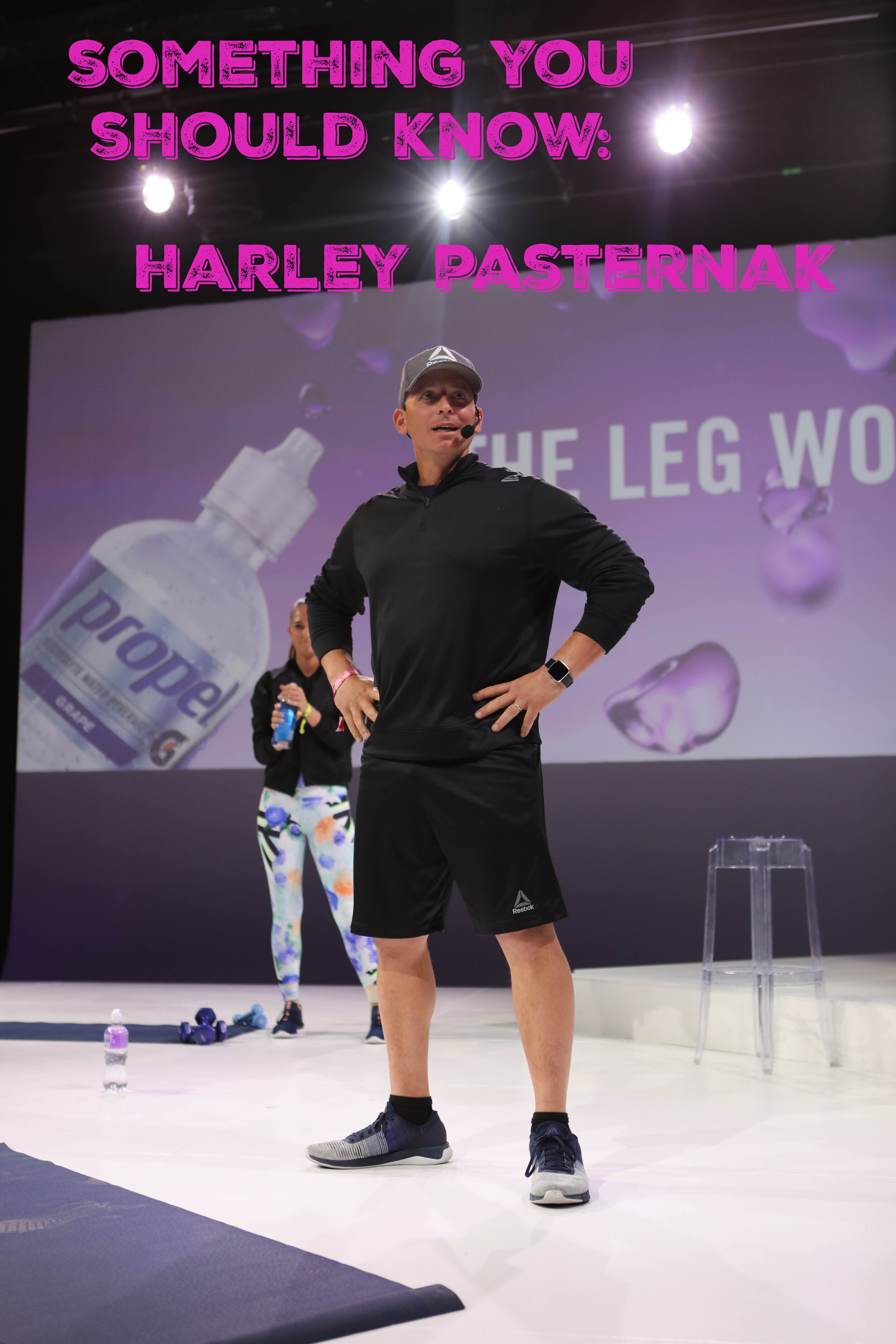
COVID-19 has effected every aspect of our lives from our routines, our work, how we interact with one another and more. When it comes to working out at your favorite studios, the impact is felt here as well. We took some time to catch up with one of our favorite Celebrity Fitness Trainers and Nutritionists, Harley Pasternak who has trained Kim Kardashian, Charlie Puth and Ariana Grande to name a few. He shares how we can build our home studios, advice he has given his clients as well as what to expect (as well as what to bring) when we return to gyms and studios.
ATHLEISURE MAG: Here in NY our team began staying at home March 13th and we quickly got our equipment as we had no idea how long we would be staying home due to COVID-19. What did you suggest for your clients in terms of equipment that they should have on hand?
HARLEY PASTERNAK: Home fitness equipment has become a real scarcity in our new normal. The first thing I tell people to do, especially since the weather is nice, is to walk. Walking does not require any equipment and will definitely help you keep track of how much and how intensely you move. Next, I would opt for TRX suspension straps because they are fantastic for training and the posterior chain. Dumbbells are also great, if you can get them, since they are so versatile and don’t take up too much room. A bench, preferably an adjustable bench, also allows for countless strength moves. Otherwise, some sliders, a hip band and a glute ham roller would be high on my list of things that would make working out at home even better and more efficient. On top of that, recovery tools like foam rollers would be great to implement.
AM: Although we were fortunate to get our dumbbells, weight plates and bands - many have not been able to get those items. What would be substitutes for these items to have a productive workout?
HP: Cans of soup and water bottles are great substitutes for dumbbells, and large jugs of water or laundry detergent could work for kettle bells.
AM: What are 3 workouts for abs, 3 for legs and 3 for butts, 3 for arms that we should include within our routine?
HP: Pike planks, bicycle crunches, and twist planks are great to work your abdominals and fire up your entire core. For legs, walk lunges, lateral lunges, and hamstring curls with either sliders or a TRX band are great to do on a consistent basis. To work your glutes, I recommend single leg bridges, hip thrusts, and lower body Supermans.
AM: For those with families, how important is it to incorporate movement with their children and what do you suggest to keep them engaged?
HP: Now more than ever, it is critical to keep kids moving as much as possible since we are spending so much time indoors. Kids are really a product of their environments and respond well to behavior modeled by their parents. If your kids see you working out, working out becomes natural to them. Incorporating them into your workouts is even better and it makes it a real family affair. My family and I go on walks together which is a great way to stay connected and get some moves into our day. My wife and I also do strength circuits together with our four and six year olds. We even let our kids earn credits through doing exercise that allow them to have screen time.
AM: We follow your IG and we like your series on the #2fer. Can you tell our readers about this and why you created these posts?
HP: I created these posts because when COVID-19 hit and people started to quarantine, a lot of people felt frustrated that they could not access a gym or their favorite fitness instructor. Therefore, many fitness professionals created overly complicated fitness programs online and some even charged for it. After seeing this, I thought it would be nice to create a program with just two simple moves every day that require no equipment and are completely free and accessible for everybody to do. The feedback was incredibly positive, and it felt good to help people during a very difficult time. I emphatically believe working out should be accessible for everyone.
AM: We also love your posts that show you and your kids trying different fast foods as a means to show balance. Why is this important and in your tastings, have you found brands in this category that are healthy?
HP: The idea for these posts started with a client of mine ordering fast food to our house. My kids have never tried McDonald’s before, and I wanted to capture it on film. It was a really funny experience and when I posted it, it very quickly got over 40,000 views. I thought it was important to show people that there’s many sides to somebody who lives and teaches a healthy lifestyle. It’s important to allow us adults, and especially kids, a chance to taste everything in this world as well as to practice both indulgence and balance. The problem arises when we indulge too often and it becomes part of routine. We do these fast food experiences once a week and have a lot of fun with them. By allowing my children to try everything, they no longer yearn for these “forbidden” foods because they realize they are not forbidden, and often, they are not that delicious, and often give them a tummy ache.
AM: What are 3 power foods or snacks that you suggest that we enjoy pre/post workout?
HP: I’m not really a fan of pre-or post-workout meals. That’s really more having to do with bodybuilder or high-level athletes dealing with performance. I mainly focus on health and physical transformation. Other than having some caffeine 60 to 90 minutes prior to a workout, I focus more on creating three meals and two snacks a day, and then decide where to fit in my workout rather than the other way around.
AM: What are 3 healthy indulgences that we can enjoy?
HP: I think healthy indulgence is often an oxymoron. Most of the things that I find indulgent are really not healthy. Chocolate chip cookies and french fries are indulgent, but not healthy. However, I do think it’s healthy to indulge sometimes and not think about having to be healthy. I try to live by the 85 to 15 method: 85% of the time I eat clean and 15% of the time I eat what I want.