
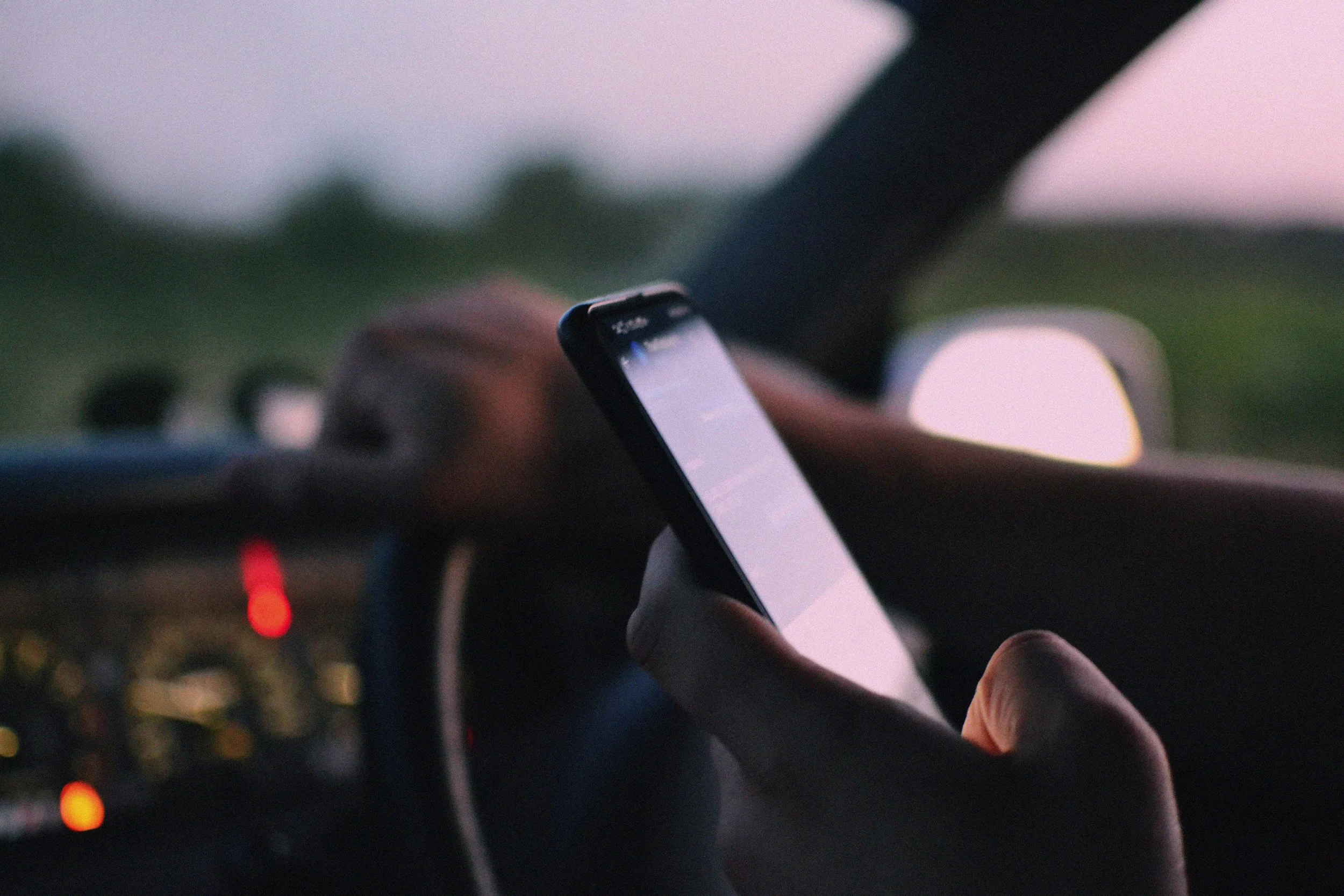
The phone buzzes while you're driving, and suddenly there's a tiny mystery sitting beside you. Who sent the message? Is it important? Maybe you'll just glance down long enough to see the name. It feels harmless because checking a text takes far less time than actually answering one.
But the road doesn't pause while you're looking at the screen. Traffic ahead can slow, a car can enter from a side street, or someone can step into a crosswalk. By the time your eyes return to the windshield, the situation you were watching a moment earlier may already be completely different.
That's what makes texting and driving such a dangerous combination. The distraction may last only a few seconds, but those seconds happen while the vehicle continues moving and the driver temporarily stops seeing the full picture.
One Text Can Steal More Than Your Eyes
Reading a message obviously requires looking away from traffic, but that's only one part of the distraction. Holding a phone, tapping the screen, or typing a response can also take a hand away from the steering wheel when it may suddenly be needed.
Then there's the mental side. A surprising message can keep someone's attention long after the phone goes back down. Maybe it's an argument, a work problem, or something exciting. The driver's eyes may technically be facing forward again while part of their attention is still focused on the conversation.
That combination is what makes texting especially difficult to mix with driving. It can involve visual, manual, and cognitive attention at the same time. A driver isn't simply looking somewhere else. They're temporarily dividing several of the abilities needed to control the vehicle and respond to whatever happens next.
The Car Covers Ground While You're Looking Down
A quick glance feels quick because people measure it in seconds. Cars experience those same seconds as distance. At highway speeds, a vehicle can travel a substantial stretch of roadway while the person behind the wheel is reading a message instead of watching where they're going.
A lot can change across that distance. Brake lights can appear ahead. Traffic can merge into the lane. A motorcycle can move into a blind spot, or a pedestrian can enter the roadway. Even a gentle curve becomes more important when nobody is actively watching the vehicle's position.
The problem continues when the driver looks back up. The brain still needs to recognize what changed and decide how to respond. Braking or steering then takes additional time and distance. Those missing seconds aren't recovered simply because the phone is back on the seat. The road has already moved on.
A Phone Can Leave a Trail After the Crash
When distraction is suspected after a collision, investigators may look beyond what the drivers remember. People involved in a sudden crash can have incomplete or conflicting recollections, especially when everything happened within a few confusing seconds.
Depending on the circumstances, phone-related records may help establish whether certain activity occurred around the time of the collision. Nearby surveillance cameras, traffic cameras, or dashcams might capture a vehicle drifting, reacting late, or failing to slow when surrounding traffic did.
Witnesses can provide another perspective. Someone in a nearby vehicle may have noticed a driver looking downward or handling a phone before impact. Physical evidence and vehicle data may add context about braking, speed, or movement. No single clue automatically explains what happened, but several pieces of information can sometimes turn a vague suspicion into a much clearer timeline.
Make the Message Harder to Reach
Willpower isn't the only way to avoid checking a phone. A better approach is to make the distraction inconvenient before the vehicle starts moving. A phone sitting in a bag or somewhere out of reach is much harder to check impulsively than one glowing in the cup holder.
Notifications can be silenced before leaving. Many phones also offer driving modes that limit alerts or automatically respond to incoming messages. Navigation can be entered while parked so there's less reason to handle the device once the trip begins.
If a message genuinely needs immediate attention, there's a simple solution that doesn't require reading it at a red light or sneaking a glance on an empty road. Find a safe place to park and check it there. Most messages can wait. The few that truly can't still don't require the car to be moving while they're answered.
Conclusion
Texting feels manageable behind the wheel because each individual action seems so small. A glance takes seconds. Reading one sentence doesn't feel like abandoning the road, and sending a short response can seem even less significant when traffic appears calm.
The danger comes from everything that can happen during those ordinary seconds. The vehicle continues moving while attention shifts somewhere else, and road conditions can change before the driver realizes there's a problem. By then, the comfortable amount of time available to react may be gone.
Preventing that situation doesn't require anything complicated. Silence the notifications, put the phone somewhere inconvenient, set navigation before leaving, and pull over when something genuinely needs attention. A message waiting a few extra minutes is usually forgettable. The consequences of looking at it during the wrong few seconds may be anything but.