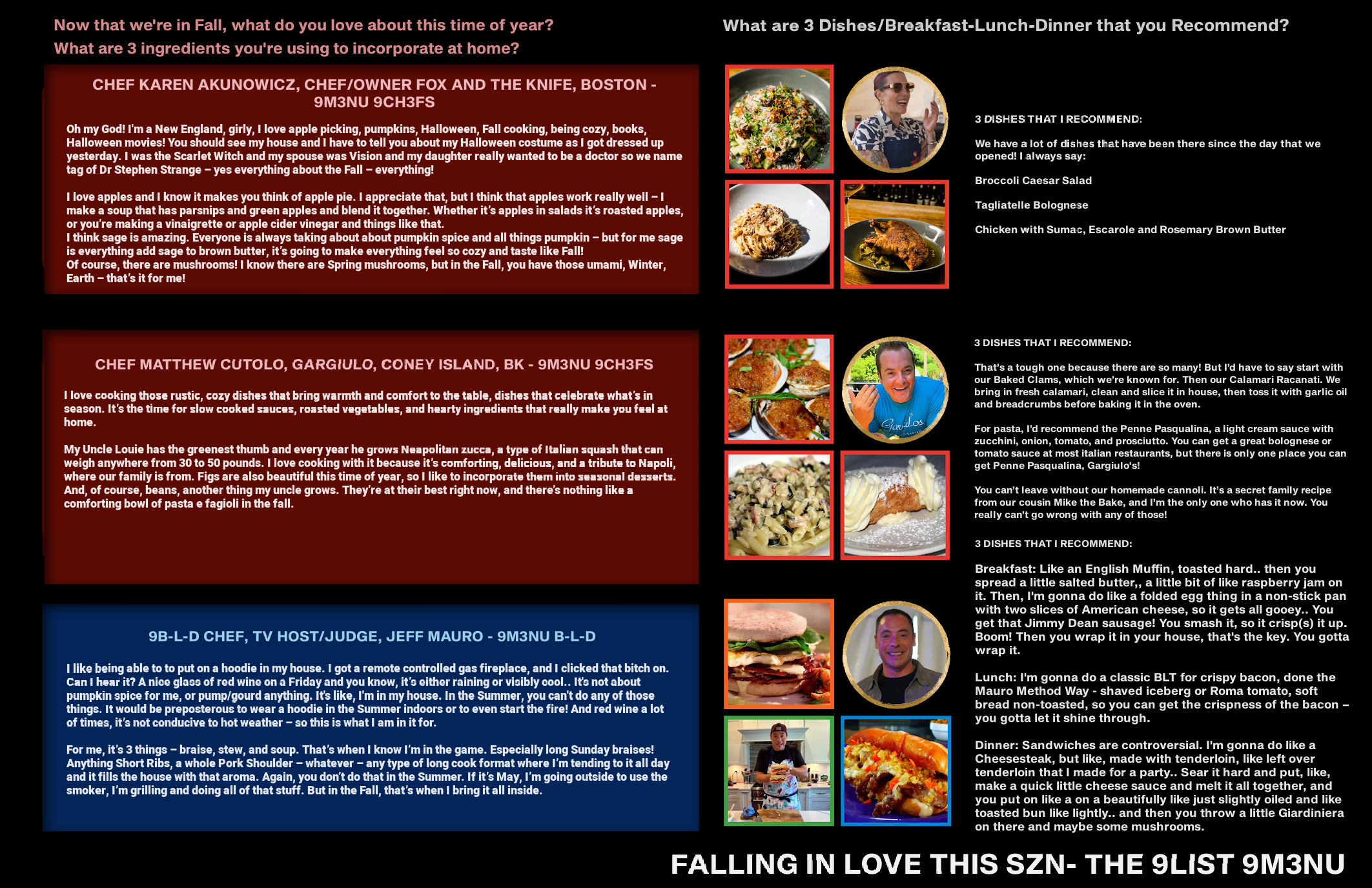
Read the NOV ISSUE #107 of Athleisure Mag and see 9CH3F ROUTIN3S | Chef Alexandre Mazzia in mag.
Featured


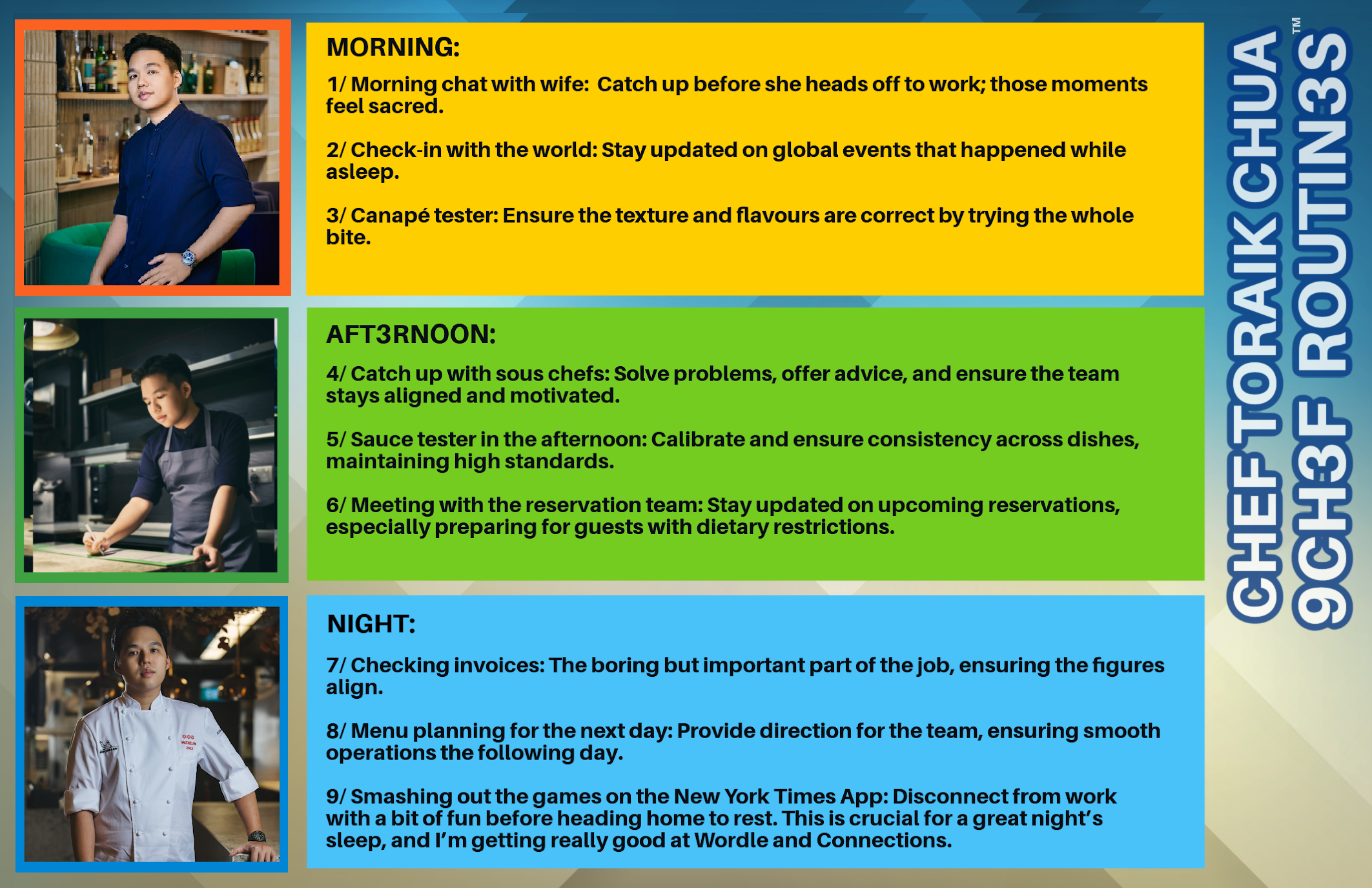

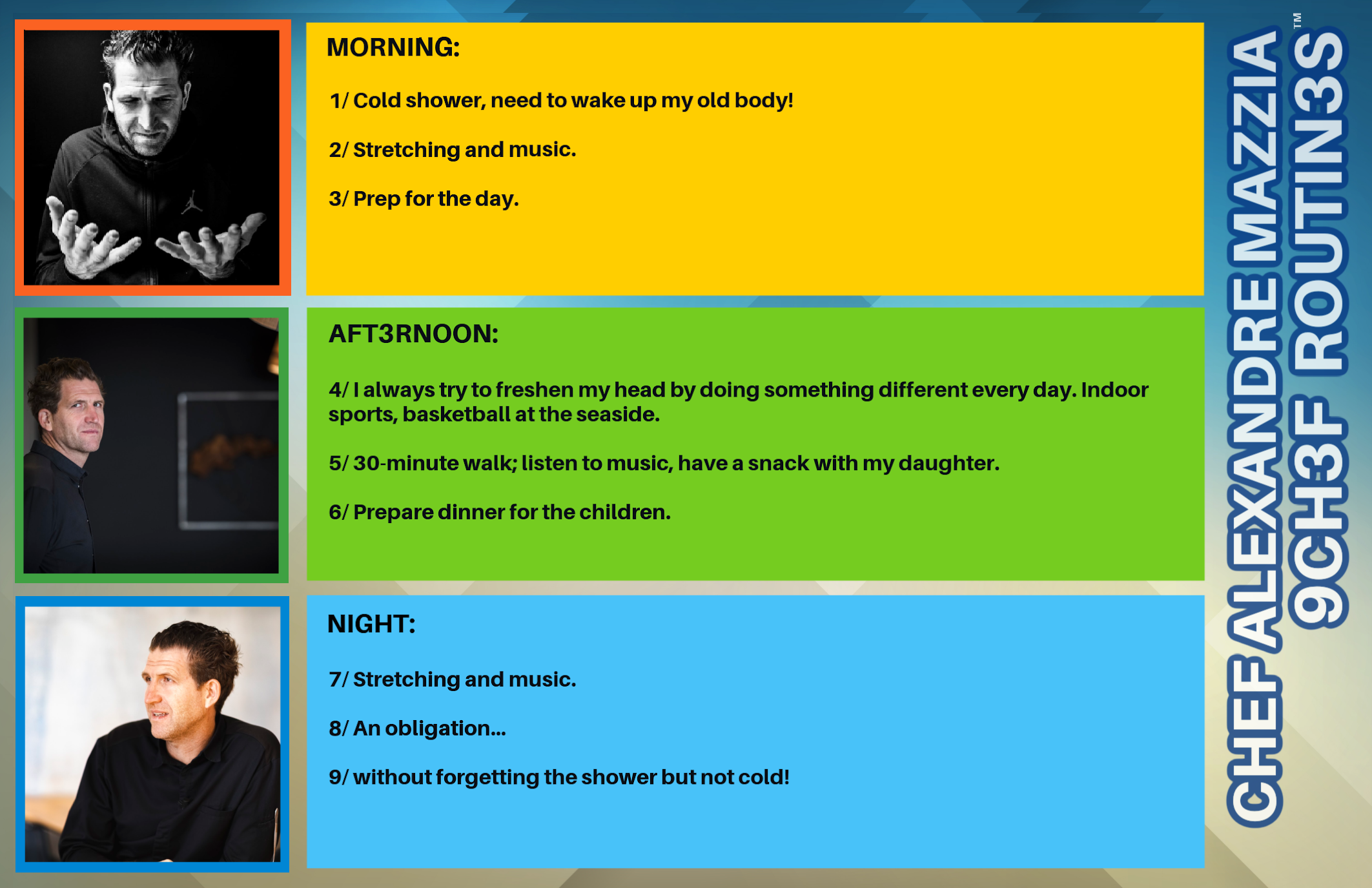
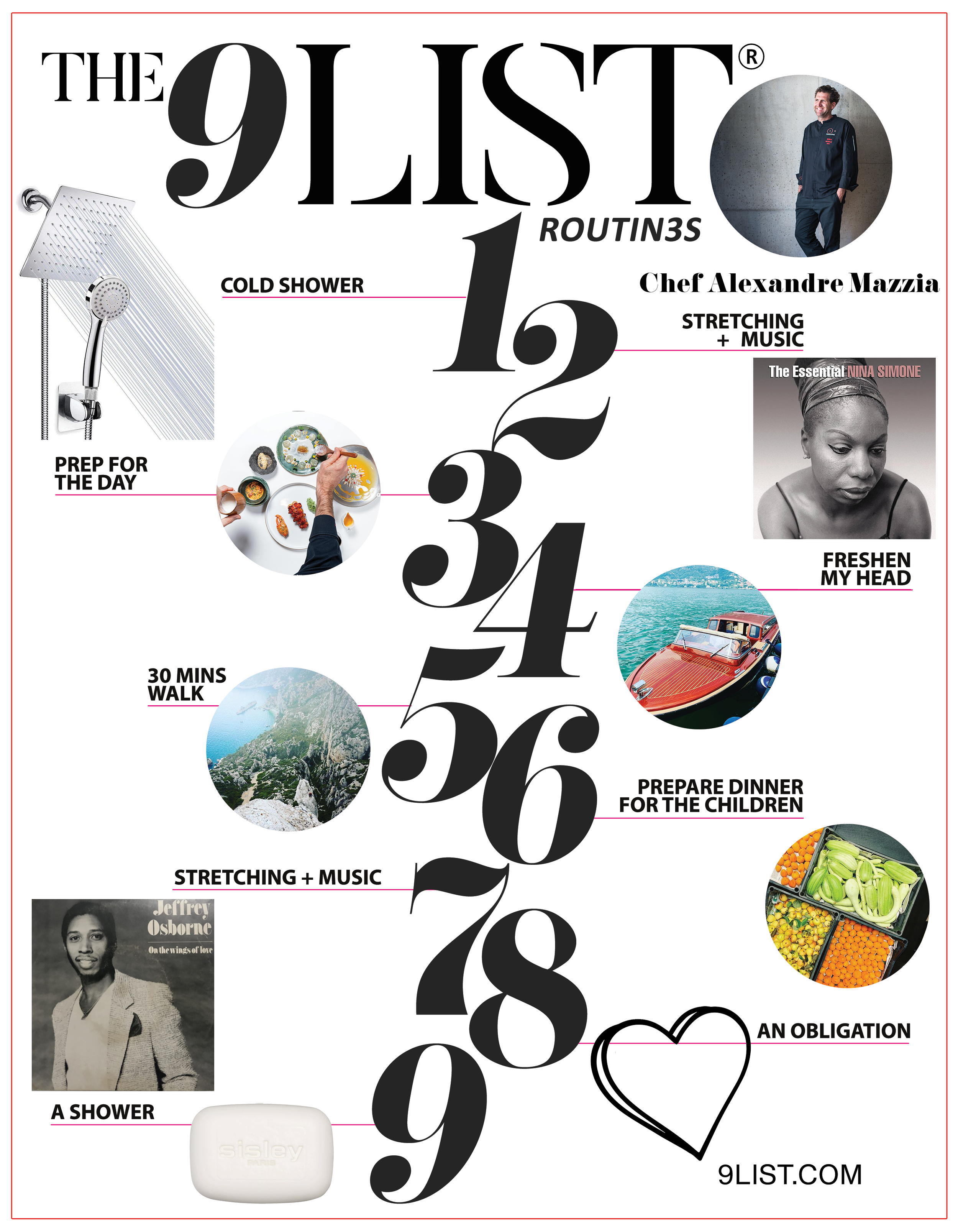
Read the NOV ISSUE #107 of Athleisure Mag and see 9CH3F ROUTIN3S | Chef Alexandre Mazzia in mag.


There are so many elements that surround the Olympics, each time the world's best athletes showcase their passion, dedication, and commitment to their sport. With a range of activities that take place, we love finding out more. We had the pleasure to chat with Chef Alexandre Mazzia who is the chef/owner of AM Par Alexandre Mazzia the hottest 3 MICHELIN Star restaurant in Marseille and a former professional basketball player, and he will be one of 3 top French chefs who will be preparing 40,000 meals in the Olympic Village during Paris 2024!
We wanted to find out more about his days as an athlete, his continued love of basketball, how he got into the culinary industry, AM Par, being at the Olympic Games and even being able to take part in running with the Olympic flame as a Torchbearer!
ATHLEISURE MAG: You spent your childhood in the Republic of Congo. What was that like and what about living there shaped the way that you looked at the world?
CHEF ALEXANDRE MAZZIA: I was born in Pointe-Noire in the Congo, at the Clinique des Manguiers. My cooking is neither Congolese nor Marseillaise, but it is inevitably somehow influenced by its environment, with most of the products coming from the Marseillaise environment. It's this Marseillaise and Congolese luminosity that is imprinted.
Spices and chilli are things that are now part of French cuisine that weren't there a few years ago (6-7 years ago). Today, people are a bit more assertive. I leaned on my roots, on the person I was, because it's true that I can't go against who I am. So it was important for me, in a natural way, to transcribe my cooking. And my cooking is described through the roasting, through the chillies, through the spices that are fundamentally who I am.
So, I'd say that my cooking is sparkling, distinctive, sincere, transparent, but yes, it's influenced by my childhood, my entire career, and, above all, by a great intensity.
AM: You graduated with a science degree, but for a time, you were a professional basketball player while you were navigating working in the culinary industry! When did you realize that you wanted to be a chef?
CHEF AM: My journey into the culinary world isn't as straightforward as many might think. Initially, I pursued a science degree, which was a completely different path. Interestingly, during that time, I also had a stint as a professional basketball player. It was a unique period when I was balancing my passion for sports with an emerging interest in the culinary arts. The transition from being on the basketball court to standing behind a kitchen counter wasn't immediate. It evolved over time as I became more immersed in cooking, discovering it as my true calling.
My realization that I wanted to be a chef dawned on me gradually rather than as a sudden epiphany. While playing basketball, I started to explore cooking more seriously. It wasn't just a hobby; it was a passion that kept growing, compelling me to delve deeper into the culinary world. Despite the stark differences between the two fields, I found that both required a similar level of dedication, creativity, and perseverance.
AM: Where did you train and what were some of the kitchens that you worked in prior to opening AM Par Alexandre Mazzia?
CHEF AM: My career path is one that can be called atypical. Immediately after my baccalaureate, I was lucky to attend a cooking school where I learnt the basics of cooking and general knowledge of the Hospitality industry. It gave me a chance to master the practical skills of cooking. After that, I acquired several diplomas and certifications, with a specialisation in pastry, chocolate and candy manufacturing. I got those diplomas while alternating school classes and work. It allowed me to build experience very quickly while discovering a world I felt I belonged to.
From that time on, I started accepting myself more. Since I came from abroad and only arrived in France at the age of 15, in the beginning, I used to be very independent. Cooking allowed me to travel a lot and open up. And then my passion became more than a passion. It became the source of my inspiration and motivation from which I learnt all my knowledge - practical and theoretical. It helped me learn about general culture, people, and Chefs and understand better the different cultures present around the world. Not just on a country level but regionally too. I also got to understand a great deal about “savoir-faire” (know-how) varieties making the base of French cuisine. It allowed me to have a strong knowledge foundation on the matter. As I travelled, I got to discover new flavours and become more aware of the importance of textures in cooking.
AM: How do you define your style of cooking and what influences it?
CHEF AM: My cooking blends spice, smoke, and chilli, linking to my childhood in Pointe-Noir, Congo, to my life in Marseille. My signature spice mix includes galangal, ginger, and cumin, enhancing the flavour and depth of each dish. Smokey aromas from burnt woods like vine shoots and olive tree add complexity, while my knowledge of over 45 types of chillies introduces a dynamic tension and variety in heat and flavour. I wanted this culinary approach to celebrate a fusion of oceanic and smoky elements with a vibrant chilli kick.
AM: You opened AM Par Alexandre Mazzia in 2014 in Marseille. What do you love about Marseille and why did you want to open your own restaurant?
CHEF AM: AM Par Alexandre Mazzia is a glimpse of my soul. It is about discovering myself through my cuisine. There is a wordplay in the name of my restaurant, in all subtlety, is a display of transparency and authenticity. It is a place where I give the best of myself, as I am devoted to its guests.
AM: What does it mean to you to have received your first Michelin star in 2015 after your restaurant was open for a year, your second in 2019, and your third star in 2021 for AM Par Alexandre Mazzia?
CHEF AM: All awards that my restaurant has won are equally important to me. Each award represents a recognition of our hard work, dedication, and commitment to providing the best dining experience to our guests. The awards have also motivated my team to perform at their best and maintain the high standards that we have set for ourselves.
There's no real success here. It's just a continuation of work that's been going on for many years. And I think that the way of looking at things was a bit different before, or the way of operating was different before. Today it's part of a collective vision, in other words, we've opened doors. We've given the keys to a way of working, but also to a totally personal way of operating.

I'd say that success is the fact of being, of doing just what you are with complete transparency, but with passion. It's a unique cuisine, my cuisine. It's so personal that I don't think anyone else can do it. So that's why people from all over the world want to discover it, why we've won all these awards, and why these awards represent our know-how.


AM: For those that have yet to dine at your restaurant, tell us about the ambiance that we can expect when we walk through the doors?
CHEF AM: At our restaurant, we offer a unique and memorable experience with 8 tables that seat up to 22 people and a team of 26 dedicated individuals. Our cuisine is "transversal," bringing together the best of local produce from fishermen, farmers, and tableware designers. Our dishes are created using a personal "alphabet of taste" developed from my own experiences. It is an extraordinary experience that many guests have never experienced before.
AM: You believe in the Triangle of Tastes - tell us more about this and how it weaves into your dishes.
CHEF AM: My cooking blends spice, smoke, and chilli, linking to my childhood in Pointe-Noir, Congo, to my life in Marseille. My signature spice mix includes galangal, ginger, and cumin, enhancing the flavour and depth of each dish. Smoky aromas from burnt woods like vine shoots and olive tree add complexity, while my knowledge of over 45 types of chillies introduces a dynamic tension and variety in heat and flavour. I wanted this culinary approach to celebrate a fusion of oceanic and smoky elements with a vibrant chilli kick.
AM: You are 1 of 3 French Chefs that will be catering the Paris 2024 Olympic Games - this is such an honor, but as someone who has been an athlete, what does it mean to you to be able to serve your country and the world in this way?
CHEF AM: I think it's a source of pride, pride for me, for my family, pride for the people, to represent France for the duration of the Olympic Games. It's a way of showcasing expertise, a signature, and a career. I think that I'm always thinking of people transmitting everything that I've done, which showcases a whole range of skills that are, I would say, quite simply unique.
AM: How long have you been planning what you will make and can you tell us some of the items that you plan on cooking? When it comes to meeting the neuro-nutritional challenge of feeding athletes, what have you been keeping in mind?
CHEF AM: I'm first and foremost a chef, so our unique know-how is our ability to adapt. We adapt on a daily basis, we're there to serve our customers, it's our daily job to adapt to the allergies of diners who don't eat this or that product. But beyond that, when they came looking for me to take part in the Olympic Games, of course, I knew very well that I was going to be working for the athletes, so I needed all my work over the years with the nutritionist, sports doctor, physical trainer, mental trainer and a certain federation of different disciplines so that I could have as many skills as possible to satisfy the demands I was going to have. So it's true that I worked for the athletes. It wasn't necessarily more complicated. All I had to do was concentrate on the tastes and flavours and simply be myself, just as I am in my everyday life. What I think and what the OCOG and Sodexo Live! wanted to achieve was to find someone who represented their region and, above all, who had a sporting background and who was bound to be able to adapt in a simple way. It's about putting our expertise at the service of athletes, for their performance and recovery. It also means playing for a team, playing for the "Olympic Games" that are taking place in France.
PHOTOGRAPHY COURTESY | Chef Alexandre Mazzia
Read the JUN ISSUE #102 of Athleisure Mag and see COOKING FOR CHAMPIONS | Chef Alexandre Mazzia in mag.