Today, the Television Academy announced this year’s nominees for the 78th Primetime Emmys which will take place on Sep 14th on NBC at 8pm ET and will be streamed on Peacock which will be hosted by Law & Order SVU’s Mariska Hargitay Nate Bargatze. We all know that there have been a number of shows we have enjoyed and we’ll see what ends up walking away with a statue. As we do throughout Awards Season, we share our predictions in bold, the ones we correctly identified as winners are in bold italics and winners that we didn’t predict are in italics. On the night of the event, we will share who we predicted correctly as well as those we didn’t that won.
Outstanding Drama Series
The Diplomat • Netflix • A Netflix Series
Debora Cahn, Executive Producer
Janice Williams, Executive Producer
Keri Russell, Executive Producer
Alex Graves, Executive Producer
Peter Noah, Executive Producer
Eli Attie, Executive Producer
Peter Ackerman, Co-Executive Producer
Jessica Brickman, Co-Executive Producer
Pam Roberts, Producer
Brad Carpenter, Producer
Melissa Gelernter, Produced by
The Gilded Age • HBO Max • HBO in association with Universal Television and Neamo Film and Television
Julian Fellowes, Executive Producer
Gareth Neame, Executive Producer
David Crockett, Executive Producer
Michael Engler, Executive Producer
Sonja Warfield, Executive Producer
Salli Richardson-Whitfield, Executive Producer
Robert Greenblatt, Executive Producer
Erica Armstrong Dunbar, Co-Executive Producer
Claire M. Shanley, Producer
Luke Harlan, Producer
Holly Rymon, Produced by
A Knight Of The Seven Kingdoms • HBO Max • HBO in association with GRRM and Friendly Wolf Pictures
Ira Parker, Executive Producer
George R.R. Martin, Executive Producer
Sarah Bradshaw, Executive Producer
Ryan Condal, Executive Producer
Owen Harris, Executive Producer
Vince Gerardis, Executive Producer
Aziza Barnes, Co-Executive Producer
Hiram Martinez, Co-Executive Producer
Annie Julia Wyman, Co-Executive Producer
Sarah Adina Smith, Co-Executive Producer
Layla Blackman, Producer
Lisa Byrne, Produced by
Paradise • Hulu • 20th Television
Dan Fogelman, Executive Producer
Jess Rosenthal, Executive Producer
John Hoberg, Executive Producer
Sterling K. Brown, Executive Producer
Steve Beers, Executive Producer
Glenn Ficarra, Executive Producer
John Requa, Executive Producer
Jason Wilborn, Co-Executive Producer
Scott Weinger, Co-Executive Producer
Melissa Glenn, Co-Executive Producer
Chris Nguyen-Gia, Producer
Randol Perelman-Taylor, Produced by
The Pitt • HBO Max • HBO Max in association with John Wells Productions, R. Scott Gemmill Productions, and Warner Bros. Television
R. Scott Gemmill, Executive Producer
John Wells, Executive Producer
Noah Wyle, Executive Producer
Michael Hissrich, Executive Producer
Erin Jontow, Executive Producer
Simran Baidwan, Executive Producer
Joe Sachs, Executive Producer
Terri Murphy, Co-Executive Producer
Damian Marcano, Co-Executive Producer
Uta Briesewitz, Co-Executive Producer
Cynthia Adarkwa, Supervising Producer
Michelle Lankwarden, Produced by
Pluribus • Apple TV • Sony Pictures Television in association with Apple
Vince Gilligan, Executive Producer
Jeff Frost, Executive Producer
Gordon Smith, Executive Producer
Alison Tatlock, Executive Producer
Diane Mercer, Executive Producer
Jenn Carroll, Co-Executive Producer
Trina Siopy, Co-Executive Producer
Julie Hartley, Producer
Chris Smirnoff, Produced by
Slow Horses • Apple TV • See-Saw Films in association with Apple
Will Smith, Executive Producer
Jamie Laurenson, Executive Producer
Hakan Kousetta, Executive Producer
Julian Stevens, Executive Producer
Iain Canning, Executive Producer
Emile Sherman, Executive Producer
Douglas Urbanski, Executive Producer
Gail Mutrux, Executive Producer
Graham Yost, Executive Producer
Simon Gillis, Co-Executive Producer
Your Friends & Neighbors • Apple TV • Apple Studios / Tropper Ink
Craig Gillespie, Executive Producer
Stephanie Laing, Executive Producer
Lori Keith Douglas, Executive Producer
Jamie Rosengard, Executive Producer
Jon Hamm, Executive Producer
Connie Tavel, Executive Producer
Jonathan Tropper, Executive Producer
Chris Arruda, Producer
Outstanding Lead Actress in a Drama Series
The Gilded Age • HBO Max • HBO in association with Universal Television and Neamo Film and Television
Carrie Coon as Bertha Russell
The Testaments • Hulu • MGM Television, White Oak Pictures, The Littlefield Company, Love & Squalor Pictures, Toluca Pictures
Chase Infiniti as Agnes
The Diplomat • Netflix • A Netflix Series
Keri Russell as Kate Wyler
Pluribus • Apple TV • Sony Pictures Television in association with Apple
Rhea Seehorn as Carol Sturka
Euphoria • HBO Max • HBO in association with The Reasonable Bunch, A24, Tiny Goat, Dream Crew, ADD, HOT and TCDY Productions
Zendaya as Rue
Outstanding Lead Actor in a Drama Series
Paradise • Hulu • 20th Television
Sterling K. Brown as Xavier Collins
Slow Horses • Apple TV • See-Saw Films in association with Apple
Gary Oldman as Jackson Lamb
Task • HBO Max • HBO in association with wiip, The Low Dweller Productions Inc., and Public Record
Mark Ruffalo as Tom Brandis
The Diplomat • Netflix • A Netflix Series
Rufus Sewell as Hal Wyler
The Pitt • HBO Max • HBO Max in association with John Wells Productions, R. Scott Gemmill Productions, and Warner Bros. Television
Noah Wyle as Dr. Michael “Robby” Robinavitch
Outstanding Comedy Series
Abbott Elementary • ABC • Delicious Non-Sequitur Productions and Fifth Chance in association with Warner Bros. Television and 20th Television
Quinta Brunson, Executive Producer
Justin Halpern, Executive Producer
Patrick Schumacker, Executive Producer
Randall Einhorn, Executive Producer
Brian Rubenstein, Executive Producer
Brittani Nichols, Executive Producer
Ava Coleman, Supervising Producer
Josh Greene, Supervising Producer
Justin Tan, Producer
Kate Peterman, Producer
Joya McCrory, Producer
Richie Edelson, Producer
Scott Sites, Produced by
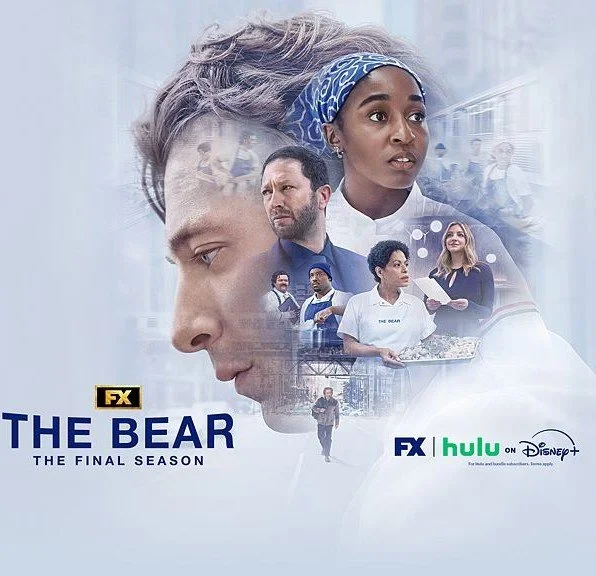
The Bear • FX/Hulu • FX Productions
Josh Senior, Executive Producer
Joanna Calo, Executive Producer
Christopher Storer, Executive Producer
Tyson Bidner, Executive Producer
Matty Matheson, Executive Producer
Cooper Wehde, Executive Producer
Rene Gube, Executive Producer
Courtney Storer, Co-Executive Producer
Carrie Holt de Lama, Producer
David Woods, Producer
Hacks • HBO Max • Universal Television in association with Paulilu, First Thought Productions, Fremulon Productions, 3 Arts Entertainment
Jen Statsky, Executive Producer
Paul W. Downs, Executive Producer
Lucia Aniello, Executive Producer
Michael Schur, Executive Producer
David Miner, Executive Producer
Morgan Sackett, Executive Producer
Joe Mande, Executive Producer
Aisha Muharrar, Executive Producer
Nate Young, Executive Producer
Ashley Glazier, Executive Producer
Guy Branum, Co-Executive Producer
Andrew Law, Co-Executive Producer
Pat Regan, Co-Executive Producer
Samantha Riley, Co-Executive Producer
Ariel Karlin, Producer
Adam Bricker, Producer
Jeff Rosenberg, Producer
Nicholas Perez, Producer
Margo’s Got Money Troubles • Apple TV • A24 in association with Apple
Sam French, Executive Producer
Phoebe Zimmer, Executive Producer
Alli Reich, Executive Producer
Boo Killebrew, Executive Producer
Rufi Thorpe, Executive Producer
Brittany Kahan-Ward, Executive Producer
Matthew Tinker, Executive Producer
Nicole Kidman, Executive Producer
Per Saari, Executive Producer
Elle Fanning, Executive Producer
Dakota Fanning, Executive Producer
Michelle Pfeiffer, Executive Producer
Dearbhla Walsh, Executive Producer
Eva Anderson, Executive Producer
David E. Kelley, Executive Producer
Briar McQuilkin, Co-Executive Producer
Jes Anderson, Producer
Caroline James, Produced by
Nobody Wants This • Netflix • 20th Television in association with Steven Levitan Productions for Netflix
Erin Foster, Executive Producer
Jenni Konner, Executive Producer
Bruce Eric Kaplan, Executive Producer
Kristen Bell, Executive Producer
Nora Silver, Executive Producer
Jeff Morton, Executive Producer
Oly Obst, Executive Producer
Sara Foster, Executive Producer
Danielle Stokdyk, Executive Producer
Steven Levitan, Executive Producer
Sarah Heyward, Co-Executive Producer
Lindsay Golder, Co-Executive Producer
Michael C. Bolton, Producer
Andrew Brooks, Producer
Only Murders In The Building • Hulu • 20th Television
Dan Fogelman, Executive Producer
Jess Rosenthal, Executive Producer
Ben Smith, Executive Producer
J.J. Philbin, Executive Producer
Steve Martin, Executive Producer
Martin Short, Executive Producer
Selena Gomez, Executive Producer
John Hoffman, Executive Producer
Kristin Bernstein, Co-Executive Producer
Kristin Newman, Co-Executive Producer
Taylor Cox, Co-Executive Producer
John Enbom, Co-Executive Producer
Max Searle, Co-Executive Producer
Jill Risk Wolfe, Producer
Shrinking • Apple TV • Warner Bros. Television in association with Apple
Bill Lawrence, Executive Producer
Jason Segel, Executive Producer
Brett Goldstein, Executive Producer
Neil Goldman, Executive Producer
Jeff Ingold, Executive Producer
Liza Katzer, Executive Producer
Randall Keenan Winston, Executive Producer
James Ponsoldt, Executive Producer
Rachna Fruchbom, Executive Producer
Brian Gallivan, Executive Producer
Bill Posley, Executive Producer
Ashley Nicole Black, Executive Producer
Kip Kroeger, Co-Executive Producer
Emily Wilson, Co-Executive Producer
Widow’s Bay • Apple TV • Apple Studios / Chum Films
Katie Dippold, Executive Producer
Hiro Murai, Executive Producer
Carver Karaszewski, Executive Producer
Claudia Shin, Executive Producer
Matthew Rhys, Executive Producer
Joanne Toll, Co-Executive Producer
Kelly Galuska, Co-Executive Producer
Mackenzie Dohr, Co-Executive Producer
Neil Casey, Supervising Producer
Colton Dunn, Supervising Producer
Kaitlin Waldron, Producer
Christian Sprenger, Producer
Outstanding Lead Actress in a Comedy Series
Abbott Elementary • ABC • Delicious Non-Sequitur Productions and Fifth Chance in association with Warner Bros. Television and 20th Television
Quinta Brunson as Janine Teagues
The Bear • FX/Hulu • FX Productions
Ayo Edebiri as Sydney Adamu
Margo’s Got Money Troubles • Apple TV • A24 in association with Apple
Elle Fanning as Margo Millet
The Comeback • HBO Max • HBO in association with Rialto Films, Michael Patrick King Productions, Lisa Kudrow, and Warner Bros. Television
Lisa Kudrow as Valerie Cherish
Hacks • HBO Max • Universal Television in association with Paulilu, First Thought Productions, Fremulon Productions, 3 Arts Entertainment
Jean Smart as Deborah Vance
Outstanding Lead Actor in a Comedy Series
Wonder Man • Disney+ • Marvel Television
Yahya Abdul-Mateen II as Simon Williams
Rooster • HBO Max • HBO in association with Two Soups Productions, Doozer Productions, and Warner Bros. Television
Steve Carell as Greg Russo
Widow’s Bay • Apple TV • Apple Studios / Chum Films
Matthew Rhys as Mayor Tom Loftis
Shrinking • Apple TV • Warner Bros. Television in association with Apple
Jason Segel as Jimmy
Only Murders In The Building • Hulu • 20th Television
Martin Short as Oliver Putnam
Outstanding Limited or Anthology Series
All Her Fault • Peacock • Peacock Original, Universal International Studios, Carnival Films
Christine Sacani, Executive Producer
Nigel Marchant, Executive Producer
Gareth Neame, Executive Producer
Joanna Strevens, Executive Producer
Megan Gallagher, Executive Producer
Minkie Spiro, Executive Producer
Sarah Snook, Executive Producer
Jennifer Gabler Rawlings, Executive Producer
Terry Gould, Produced by
The Beast In Me • Netflix • 20th Television for Netflix
Howard Gordon, Executive Producer
Daniel Pearle, Executive Producer
Antonio Campos, Executive Producer
Gabe Rotter, Executive Producer
Claire Danes, Executive Producer
Conan O’Brien, Executive Producer
David Kissinger, Executive Producer
Jeff Ross, Executive Producer
Caroline Baron, Executive Producer
Jodie Foster, Executive Producer
Ali Liebegott, Co-Executive Producer
C.A. Johnson, Supervising Producer
Sean Sforza, Producer
Sean Fogel, Produced by
Beef • Netflix • A24 for Netflix
Lee Sung Jin, Executive Producer
Oscar Isaac, Executive Producer
Carey Mulligan, Executive Producer
Cailee Spaeny, Executive Producer
Charles Melton, Executive Producer
Jake Schreier, Executive Producer
Anna Ouyang Moench, Executive Producer
Kitao Sakurai, Executive Producer
Steven Yeun, Executive Producer
Ali Wong, Executive Producer
Ravi Nandan, Executive Producer
Sam French, Executive Producer
Alli Reich, Executive Producer
Ethan Kuperberg, Executive Producer
Alex Russell, Co-Executive Producer
Carrie Kemper, Co-Executive Producer
Dana Scott, Co-Executive Producer
Gene Hong, Producer
Sabrina Mahfouz, Producer
Joshua Gonzales, Producer
Jes Anderson, Producer
Reuben Lim, Producer
DTF St. Louis • HBO Max • HBO in association with Elephant Pictures, Bravo Axolotl, Aggregate, Escape Artists and MGM Television
Jason Bateman, Executive Producer
Michael Costigan, Executive Producer
David Harbour, Executive Producer
KC Wenson, Executive Producer
Steven Conrad, Executive Producer
Todd Black, Executive Producer
Molly Allen, Executive Producer
Jason Blumenthal, Executive Producer
Steve Tisch, Executive Producer
Bruce Terris, Executive Producer
Jennifer Scher, Executive Producer
Michael Nelson, Executive Producer
James Lasdun, Executive Producer
Taylor Latham, Co-Executive Producer
Christina M. Fitzgerald, Producer
Love Story: John F. Kennedy Jr. & Carolyn Bessette • FX/Hulu • 20th Television
Ryan Murphy, Executive Producer
Nina Jacobson, Executive Producer
Brad Simpson, Executive Producer
Connor Hines, Executive Producer
Eric Kovtun, Executive Producer
Nissa Diederich, Executive Producer
Scott Robertson, Executive Producer
Monica Levinson, Executive Producer
Kim Rosenstock, Executive Producer
Tanase Popa, Executive Producer
Karl Frankenfield, Co-Executive Producer
Todd Kubrak, Co-Executive Producer
Sara Stelwagen, Co-Executive Producer
Todd Nenninger, Co-Executive Producer
Lou Eyrich, Co-Executive Producer
Checka Propper, Co-Executive Producer
Juli Weiner, Supervising Producer
Adam Penn, Producer
Outstanding Lead Actress in a Limited or Anthology Series or Movie
The Beast In Me • Netflix • 20th Television for Netflix
Claire Danes as Agatha Wiggs
Remarkably Bright Creatures • Netflix • Netflix Presents An Anonymous Content / Night Owl Stories Production
Sally Field as Tova Sullivan
Beef • Netflix • A24 for Netflix
Carey Mulligan as Lindsay
Love Story: John F. Kennedy Jr. & Carolyn Bessette • FX/Hulu • 20th Television
Sarah Pidgeon as Carolyn Bessette
All Her Fault • Peacock • Peacock Original, Universal International Studios, Carnival Films
Sarah Snook as Marissa Irvine
Outstanding Lead Actor in a Limited or Anthology Series or Movie
Bait • Prime Video • Jax Media, Amazon MGM Studios
Riz Ahmed as Shah Latif
Black Rabbit • Netflix • Netflix / Aggregate Films / Riff Raff Entertainment / Youngblood Pictures / Automatik
Jason Bateman as Vince Friedkin
Monster: The Ed Gein Story • Netflix • Ryan Murphy Productions for Netflix
Charlie Hunnam as Ed Gein
Beef • Netflix • A24 for Netflix
Oscar Isaac as Josh
The Beast In Me • Netflix • 20th Television for Netflix
Matthew Rhys as Nile Jarvis
Outstanding Supporting Actress in a Drama Series
The Pitt • HBO Max • HBO Max in association with John Wells Productions, R. Scott Gemmill Productions, and Warner Bros. Television
Taylor Dearden as Dr. Mel King
The Pitt • HBO Max • HBO Max in association with John Wells Productions, R. Scott Gemmill Productions, and Warner Bros. Television
Fiona Dourif as Dr. Cassie McKay
The Diplomat • Netflix • A Netflix Series
Allison Janney as President Grace Penn
The Pitt • HBO Max • HBO Max in association with John Wells Productions, R. Scott Gemmill Productions, and Warner Bros. Television
Katherine LaNasa as Charge Nurse Dana Evans
The Pitt • HBO Max • HBO Max in association with John Wells Productions, R. Scott Gemmill Productions, and Warner Bros. Television
Sepideh Moafi as Dr. Baran Al-Hashimi
Paradise • Hulu • 20th Television
Julianne Nicholson as Sinatra
Pluribus • Apple TV • Sony Pictures Television in association with Apple
Karolina Wydra as Zosia
Outstanding Supporting Actor in a Drama Series
The Pitt • HBO Max • HBO Max in association with John Wells Productions, R. Scott Gemmill Productions, and Warner Bros. Television
Patrick Ball as Dr. Frank Langdon
The Morning Show • Apple TV • Media Res in association with Apple
Billy Crudup as Cory Ellison
The Pitt • HBO Max • HBO Max in association with John Wells Productions, R. Scott Gemmill Productions, and Warner Bros. Television
Shawn Hatosy as Dr. Jack Abbot
The Pitt • HBO Max • HBO Max in association with John Wells Productions, R. Scott Gemmill Productions, and Warner Bros. Television
Gerran Howell as Dr. Dennis Whitaker
Slow Horses • Apple TV • See-Saw Films in association with Apple
Jack Lowden as River Cartwright
Task • HBO Max • HBO in association with wiip, The Low Dweller Productions Inc., and Public Record
Tom Pelphrey as Robbie Prendergrast
Pluribus • Apple TV • Sony Pictures Television in association with Apple
Carlos-Manuel Vesga as Manousos
Outstanding Supporting Actress in a Comedy Series
Widow’s Bay • Apple TV • Apple Studios / Chum Films
Dale Dickey as Rosemary
Hacks • HBO Max • Universal Television in association with Paulilu, First Thought Productions, Fremulon Productions, 3 Arts Entertainment
Hannah Einbinder as Ava Daniels
Abbott Elementary • ABC • Delicious Non-Sequitur Productions and Fifth Chance in association with Warner Bros. Television and 20th Television
Janelle James as Ava Coleman
Widow’s Bay • Apple TV • Apple Studios / Chum Films
Kate O’Flynn as Patricia
Margo’s Got Money Troubles • Apple TV • A24 in association with Apple
Michelle Pfeiffer as Shyanne Millet
Hacks • HBO Max • Universal Television in association with Paulilu, First Thought Productions, Fremulon Productions, 3 Arts Entertainment
Megan Stalter as Kayla Schaeffer
Shrinking • Apple TV • Warner Bros. Television in association with Apple
Jessica Williams as Gaby
Outstanding Supporting Actor in a Comedy Series
The Four Seasons • Netflix • Universal Television, Little Stranger, Inc. for Netflix
Colman Domingo as Danny
Hacks • HBO Max • Universal Television in association with Paulilu, First Thought Productions, Fremulon Productions, 3 Arts Entertainment
Paul W. Downs as Jimmy Lusaque, Jr.
Shrinking • Apple TV • Warner Bros. Television in association with Apple
Harrison Ford as Paul
Margo’s Got Money Troubles • Apple TV • A24 in association with Apple
Nick Offerman as Jinx Millet
Widow’s Bay • Apple TV • Apple Studios / Chum Films
Stephen Root as Wyck
Shrinking • Apple TV • Warner Bros. Television in association with Apple
Michael Urie as Brian
Abbott Elementary • ABC • Delicious Non-Sequitur Productions and Fifth Chance in association with Warner Bros. Television and 20th Television
Tyler James Williams as Gregory Eddie
Outstanding Supporting Actress in a Limited or Anthology Series or Movie
DTF St. Louis • HBO Max • HBO in association with Elephant Pictures, Bravo Axolotl, Aggregate, Escape Artists and MGM Television
Linda Cardellini as Carol Love-Smernitch
All Her Fault • Peacock • Peacock Original, Universal International Studios, Carnival Films
Dakota Fanning as Jenny Kaminski
Monster: The Ed Gein Story • Netflix • Ryan Murphy Productions for Netflix
Laurie Metcalf as Augusta Gein
DTF St. Louis • HBO Max • HBO in association with Elephant Pictures, Bravo Axolotl, Aggregate, Escape Artists and MGM Television
Joy Sunday as Detective Jodie Plumb
Beef • Netflix • A24 for Netflix
Youn Yuh-jung as Chairwoman Park
Love Story: John F. Kennedy Jr. & Carolyn Bessette • FX/Hulu • 20th Television
Constance Zimmer as Ann Marie Messina
Outstanding Supporting Actor in a Limited or Anthology Series or Movie
DTF St. Louis • HBO Max • HBO in association with Elephant Pictures, Bravo Axolotl, Aggregate, Escape Artists and MGM Television
Jason Bateman as Clark Forrest
Half Man • HBO Max • HBO and BBC in association with Mam Tor Productions, Banijay Entertainment and Thistledown Productions
Richard Gadd as Ruben
DTF St. Louis • HBO Max • HBO in association with Elephant Pictures, Bravo Axolotl, Aggregate, Escape Artists and MGM Television
David Harbour as Floyd Smernitch
DTF St. Louis • HBO Max • HBO in association with Elephant Pictures, Bravo Axolotl, Aggregate, Escape Artists and MGM Television
Richard Jenkins as Detective Donoghue Homer
Beef • Netflix • A24 for Netflix
Charles Melton as Austin
Death By Lightning • Netflix • A Netflix Series / Bighead Littlehead
Nick Offerman as Chester Arthur
Outstanding Variety Series
The Daily Show • Comedy Central • Hello Doggie, Inc.
Jon Stewart, Executive Producer/Host Jennifer Flanz, Executive Producer
James “Baby Doll” Dixon, Executive Producer Ramin Hedayati, Co-Executive Producer Justin Melkmann, Co-Executive Producer Zhubin Parang, Co-Executive Producer
Elise Terrell, Co-Executive Producer Dan Amira, Supervising Producer Ian Berger, Supervising Producer Max Browning, Supervising Producer Sushil Dayal, Supervising Producer
Pamela DePace, Supervising Producer David Kibuuka, Supervising Producer David Paul Meyer, Supervising Producer Jocelyn Conn, Producer
Jeff Gussow, Producer Matt O’Brien, Producer
Brittany Radocha, Producer Daniel Radosh, Producer Shawna Shepherd, Producer Beth Shorr, Producer
Fiona Wozniak, Producer Lisa Cortez, Line Producer Ronny Chieng, Host
Josh Johnson, Host Jordan Klepper, Host Michael Kosta, Host Desi Lydic, Host
Jimmy Kimmel Live! • ABC • 20th Television in association with Kimmelot
Jimmy Kimmel, Executive Producer/Host Erin Irwin, Executive Producer
Jennifer Sharron, Executive Producer David Craig, Executive Producer Molly McNearney, Executive Producer
Douglas DeLuca, Co-Executive Producer Danny Ricker, Co-Executive Producer Gary Greenberg, Supervising Producer Josh Halloway, Supervising Producer Rory Albanese, Supervising Producer Tony Romero, Supervising Producer Seth Weidner, Supervising Producer Josh Weintraub, Supervising Producer Ken Crosby, Producer
Craig Powell, Producer Nancy Fowkes, Producer Patrick Friend, Producer Sarah Robe, Producer Max Schadler, Producer Claire Daniels, Producer Hara Shapiro, Producer
Matt Musgrave, Line Producer
Last Week Tonight With John Oliver • HBO Max • HBO in association with Peyance Productions and Avalon Television
John Oliver, Executive Producer/Host Tim Carvell, Executive Producer
Liz Stanton, Executive Producer
Jeremy Tchaban, Co-Executive Producer Catherine Owens, Supervising Producer Nicole Franza, Line Producer
Rebecca Etchberger, Producer Kaye Foley, Producer
Laura L. Griffin, Producer Anita Hassan, Producer Farrah Lopez, Producer
Christopher McDaniel, Producer Kate Mullaney, Producer
Matt Passet, Producer Meghan Rhoad, Producer Wynn Van Dusen, Producer Marian Wang, Producer Charles Wilson, Producer
The Late Show With Stephen Colbert • CBS • CBS Studios
Stephen T. Colbert, Executive Producer/Host Tom Purcell, Executive Producer
Jon Stewart, Executive Producer
Tanya Michnevich Bracco, Co-Executive Producer Barry Julien, Co-Executive Producer
Matt Lappin, Co-Executive Producer Opus Moreschi, Co-Executive Producer Aaron Cohen, Supervising Producer Paul Dinello, Supervising Producer Ariel Dumas, Supervising Producer Emily Gertler, Supervising Producer Jay Katsir, Supervising Producer Bjoern Stejskal, Supervising Producer
Sara Vilkomerson, Supervising Producer Adam Wager, Supervising Producer Ballard C. Boyd, Producer
Michael Brumm, Producer Megan Gearheart, Producer Gabe Gronli, Producer Paige Kendig, Producer
Brandon Marianacci, Producer Jake Plunkett, Producer
Louis J. Grieci, Line Producer
Saturday Night Live • NBC • SNL Studios in association with Universal Television and Broadway Video
Lorne Michaels, Executive Producer Ken Aymong, Supervising Producer Tom Broecker, Producer
Caroline Maroney, Producer Steve Higgins, Produced by Erik Kenward, Produced by Erin Doyle, Produced by
Outstanding Reality Competition
Dancing With The Stars • ABC • BBC Studios
RuPaul’s Drag Race • MTV • World of Wonder
Survivor • CBS • Amazon MGM Studios
Top Chef • Bravo • Magical Elves
The Traitors • Peacock • Peacock Original, Studio Lambert
Creative Arts Emmy Nominations
Outstanding Animated Program
Bob’s Burgers • Grand Pre Pre Pre Opening • FOX • 20th Television Animation
Loren Bouchard, Executive Producer/Written by Nora Smith, Executive Producer/Written by Holly Schlesinger, Executive Producer
Janelle Momary-Neely, Executive Producer Dan Fybel, Executive Producer
Rich Rinaldi, Executive Producer Jon Schroeder, Executive Producer Scott Jacobson, Executive Producer Steven Davis, Executive Producer
Lindsey Stoddart, Co-Executive Producer Katie Crown, Co-Executive Producer Bernard Derriman, Producer
Brett Coker, Animation Executive Producer
Dana Tafoya-Cameron, Animation Executive Producer Chris Song, Directed by
Tony Gennaro, Supervising Director Simon Chong, Supervising Director Ryan Shaw, Assistant Director Steven Theis, Assistant Director Patrick Gleeson, Timing Supervisor
Rick And Morty • There’s Something About Morty • Adult Swim • Rick and Morty LLC, Williams Street
Dan Harmon, Executive Producer Justin Roiland, Executive Producer Scott Marder, Executive Producer
Heather Anne Campbell, Executive Producer Steve Levy, Executive Producer
Albro Lundy, Executive Producer/Written by Monica Mitchell, Executive Producer
Nick Rutherford, Executive Producer Rob Schrab, Executive Producer James Siciliano, Executive Producer Kelly Crews, Executive Producer Cameron Tang, Executive Producer Jess Lacher, Co-Executive Producer Anthony Alfonso, Producer
Suzanne Belk, Producer Garrick Bernard, Producer Lee Harting, Producer Jonathan Brock, Producer Deirdre Brenner, Produced by
Douglas Einar Olsen, Directed by Jacob Hair, Supervising Director
The Simpsons • Homer? A Cracker Bro? • FOX • A Gracie Films Production in association with 20th Television Animation
James L. Brooks, Executive Producer Matt Groening, Executive Producer Matt Selman, Executive Producer John Frink, Executive Producer
Tim Long, Co-Executive Producer Rob LaZebnik, Co-Executive Producer Brian Kelley, Co-Executive Producer
J. Stewart Burns, Co-Executive Producer Michael Price, Co-Executive Producer Jeff Westbrook, Co-Executive Producer
Cesar Mazariegos, Co-Executive Producer Jessica Conrad, Co-Executive Producer
Loni Steele Sosthand, Co-Executive Producer Broti Gupta, Co-Executive Producer
Richard K. Chung, Producer Tom Klein, Animation Producer Ryan Koh, Written by
Chris Clements, Directed by
Mike B. Anderson, Supervising Director Matthew Faughnan, Assistant Director Scott Brutz, Lead Animation Timer
Smiling Friends • Le Voyage Incroyable De Monsieur Grenouille • Adult Swim • Williams Street
Zach Hadel, Executive Producer/Written by/Directed by Michael Cusack, Executive Producer/Written by/Directed by Kelly Crews, Executive Producer
Cameron Tang, Executive Producer Brent Tanner, Supervising Producer Scott Malchus, Producer
David Hootselle, Directed by
South Park • Sermon On The ‘Mount • Comedy Central • Comedy Central
Trey Parker, Executive Producer Matt Stone, Executive Producer Anne Garefino, Executive Producer
Frank C. Agnone II, Executive Producer Daryl Sancton, Supervising Producer Eric Stough, Producer
Bruce Howell, Producer Adrien Beard, Producer Vernon Chatman, Producer Jenny Shin, Producer Wonnie Ro, Producer
Greg Postma, Producer Keo Thongkham, Producer Lydia Quidilla, Producer John Hansen, Producer David List, Producer
Mark Munley, Producer Nate Pellettieri, Producer
Andrew B. Rhoades, Producer Gary Martinez, Producer
Star Wars: Visions • Black • Disney+ • Lucasfilm Ltd. Shinya Ohira, Directed by/Animation Director/Written by James Waugh, Executive Producer
Josh Rimes, Executive Producer Jacqui Lopez, Executive Producer Shuichiro Tanaka, Executive Producer Justin Leach, Co-Executive Producer Flannery Huntley, Producer
Kanako Shirasaki, Producer Tsutomu Fujio, Producer Jacob Ayres, Producer
Outstanding Production Design For A Narrative Contemporary Program (One Hour Or More)
Euphoria • This Little Piggy • HBO Max • HBO in association with The Reasonable Bunch, A24, Tiny Goat, Dream Crew, ADD, HOT and TCDY Productions
François Audouy, Production Designer
A. Todd Holland, Supervising Art Director Anthony Carlino, Set Decorator
The Pitt • 9:00 P.M. • HBO Max • HBO Max in association with John Wells Productions, R. Scott Gemmill Productions, and Warner Bros. Television
Nina Ruscio, Production Designer Josh Lusby, Art Director
Matt Callahan, Set Decorator
Pluribus • Grenade • Apple TV • Sony Pictures Television in association with Apple
Denise Pizzini, Production Designer
Dins Danielsen, Supervising Art Director Ashley Michelle Marsh, Set Decorator
Slow Horses • Incommunicado • Apple TV • See-Saw Films in association with Apple
Choi Ho Man, Production Designer
Oskars Vilnitis-Pantelejevs, Supervising Art Director Kamlan Man, Set Decorator
Wednesday • If These Woes Could Talk • Netflix • A Netflix Series / An MGM Television Production
Mark Scruton, Production Designer Shane McEnroe, Supervising Art Director David Morison, Set Decorator
Outstanding Production Design For A Narrative Period Or Fantasy Program (One Hour Or More)
Fallout • The Wrangler • Prime Video • Amazon MGM Studios and Kilter Films in association with Bethesda Game Studios and Bethesda Softworks
Howard Cummings, Production Designer David Lazan, Supervising Art Director Julie Ochipinti, Set Decorator
The Gilded Age • If You Want To Cook An Omelette • HBO Max • HBO in association with Universal Television and Neamo Film and Television
Bob Shaw, Production Designer
Larry W. Brown, Supervising Art Director Jennifer Alex Nickason, Set Decorator
Palm Royale • Maxine Does Something Good • Apple TV • Apple Studios
Jon Carlos, Production Designer Rachel Aguirre, Art Director Amelia Brooke, Art Director Mark Robert Taylor, Art Director Ellen Reede, Set Decorator
Spider-Noir • Step Into My Office • MGM+/Prime Video • Sony Pictures Television, Amazon MGM Studios, Marvel Studios
Warren Alan Young, Production Designer Mark Larkin, Supervising Art Director Halina Siwolop, Set Decorator
Stranger Things • Chapter Four: Sorcerer • Netflix • Upside Down Pictures & 21 Laps Entertainment for Netflix
Chris Trujillo, Production Designer Sean Brennan, Supervising Art Director Jess Royal, Set Decorator
Outstanding Production Design For A Narrative Program (Half-Hour)
Hacks • Who’s Making Dinner? • HBO Max • Universal Television in association with Paulilu, First Thought Productions, Fremulon Productions, 3 Arts Entertainment
Rob Tokarz, Production Designer Jeanine Ringer, Art Director Jennifer Lukehart, Set Decorator
A Knight Of The Seven Kingdoms • Seven • HBO Max • HBO in association with GRRM and Friendly Wolf Pictures
Tom McCullagh, Production Designer John Merry, Supervising Art Director Stephanie Rea, Set Decorator
Leanne • Please Be A Lizard • Netflix • Chuck Lorre Productions, Inc. in association with Warner Bros. Television for Netflix
Francoise Cherry-Cohen, Production Designer Gail Russell, Assistant Art Director
Ann Shea, Set Decorator
Only Murders In The Building • The House Always… • Hulu • 20th Television
Patrick Howe, Production Designer Casey Smith, Art Director
Mila Khalevich, Set Decorator
Widow’s Bay • Lodging • Apple TV • Apple Studios / Chum Films
Steve Arnold, Production Designer Peter Borck, Supervising Art Director Jennifer Engel, Set Decorator
Outstanding Production Design For A Variety Or Reality Series
Jimmy Kimmel Live! • Guests: Stephen Colbert, Seth Meyers, Kumail Nanjiani, Josh Meyers, and Musical Guest Reneé Rapp • ABC • 20th Television in association with Kimmelot
David Ellis, Production Designer Hillarie Brigode, Art Director Heidi Miller, Set Decorator
The Late Show With Stephen Colbert • Guests: John Krasinski, and Special Appearances • CBS • CBS Studios
Jim Fenhagen, Production Designer Larry Hartman, Production Designer Brendan Hurley, Scenic Designer (NY) Riley Mellon, Scenic Designer (NY)
RuPaul’s Drag Race • RDR Live Returns! • MTV • World of Wonder
Jen Chu, Production Designer Tyler Stone, Art Director Melissa Arcaro, Set Decorator
Saturday Night Live • Host: Jack Black • NBC • SNL Studios in association with Universal Television and Broadway Video
Keith Ian Raywood, Production Designer Akira Yoshimura, Production Designer
N. Joseph DeTullio, Production Designer Ken MacLeod, Production Designer Melissa Shakun, Art Director
Kimberly Kachougian, Set Decorator
The Traitors • The Black Banquet • Peacock • Peacock Original, Studio Lambert
Stuart Frossell, Production Designer Luke Fuller, Art Director
Georgia Picton, Art Director Alex Robertson, Art Director Rosie Westwood, Art Director Celina Hodge, Set Decorator
Outstanding Production Design For A Variety Special
The Apple Music Super Bowl LX Halftime Show Starring Bad Bunny • NBC • Roc Nation, Rimas, Jesse Collins Entertainment and DPS
Bruce Rodgers, Production Designer Shelley Rodgers, Supervising Art Director Lily Rodgers, Art Director
Julio Himede, Production Designer Leticia Leon, Art Director
68th Annual Grammy Awards • CBS • A Fulwell Entertainment production in association with the Recording Academy
Julio Himede, Production Designer Kristen Merlino, Art Director Gloria Lamb, Art Director
Ellen Jaworski, Art Director Scott Welborn, Art Director Kaydee Lavorin, Set Decorator
The Muppet Show • Disney+ • 20th Television, Disney Branded Television, The Muppets Studio, Point Grey Pictures
Denise Pizzini, Production Designer Chet Maxwell, Art Director
Robert Aguirre, Art Director Bethany Barton, Set Decorator
The Oscars • ABC • Academy of Motion Picture Arts and Sciences
Misty Buckley, Production Designer Alana Billingsley, Production Designer John Zuiker, Art Director
Jonathan Stoller-Schoff, Art Director
78th Annual Tony Awards • CBS • White Cherry Entertainment
Steve Bass, Production Designer Star Theodos Kahn, Art Director Aaron Black, Art Director
Outstanding Casting For A Comedy Series
Abbott Elementary • ABC • Delicious Non-Sequitur Productions and Fifth Chance in association with Warner Bros. Television and 20th Television
Wendy O’Brien, Casting by Chris Gehrt, Casting by
Hacks • HBO Max • Universal Television in association with Paulilu, First Thought Productions, Fremulon Productions, 3 Arts Entertainment
Linda Lowy, CSA, Casting by Morgan Smith, CSA, Casting by
Lily Trotter, CSA, Associate Casting Director
Only Murders In The Building • Hulu • 20th Television
Bernard Telsey, CSA, Casting by Tiffany Little Canfield, CSA, Casting by Destiny Lilly, CSA, Casting by
Shrinking • Apple TV • Warner Bros. Television in association with Apple
Brett Benner, CSA, Casting by Debby Romano, CSA, Casting by
Daniel Schwab, Associate Casting Director
Widow’s Bay • Apple TV • Apple Studios / Chum Films
Allison Jones, Casting by Emily Buntyn, Casting by
Lisa Lobel, CSA, Location Casting Angela Peri, CSA, Location Casting
Outstanding Casting For A Drama Series
The Diplomat • Netflix • A Netflix Series
Julie Schubert, Casting by
Lain Kunin, Associate Casting Director Ellinor Isherwood, Associate Casting Director Lucinda Syson, CSA, CDG, Location Casting
Natasha Vincent, CSA, CDG, Location Casting
Paradise • Hulu • 20th Television Tiffany Little Canfield, CSA, Casting by Josh Einsohn, CSA, Casting by
Brian Sutow, Associate Casting Director
The Pitt • HBO Max • HBO Max in association with John Wells Productions, R. Scott Gemmill Productions, and Warner Bros. Television
Cathy Sandrich Gelfond, CSA, Casting by Erica Berger, Casting by
Seth Caskey, CSA, Associate Casting Director
Pluribus • Apple TV • Sony Pictures Television in association with Apple
Sharon Bialy, CSA, Casting by Sherry Thomas, CSA, Casting by Russell Scott, CSA, Casting by
Marie A.K. McMaster, CSA, Location Casting
Slow Horses • Apple TV • See-Saw Films in association with Apple
Nina Gold, Casting by
Melissa Gethin Clarke, Casting by
Outstanding Casting For A Limited Or Anthology Series Or Movie
All Her Fault • Peacock • Peacock Original, Universal International Studios, Carnival Films
David Rubin, Casting by Matt Lander, Casting by
Djinous Rowling, Associate Casting Director Jane Norris, Location Casting
The Beast In Me • Netflix • 20th Television for Netflix
Julie Tucker, CSA, Casting by Kim Krakauer, Casting by
Beef • Netflix • A24 for Netflix
Jeanie Bacharach, CSA, Casting by
DTF St. Louis • HBO Max • HBO in association with Elephant Pictures, Bravo Axolotl, Aggregate, Escape Artists and MGM Television
Francine Maisler, CSA, Casting by Amber Wakefield, CSA, Casting by
Love Story: John F. Kennedy Jr. & Carolyn Bessette • FX/Hulu • 20th Television
Courtney Bright, CSA, Casting by Nicole Daniels, CSA, Casting by
Jennifer Brooks, CSA, Associate Casting Director
Outstanding Casting For A Reality Program
The Amazing Race • CBS • WorldRace Productions, Inc.
Jesse Tannenbaum, Casting by Kayla Kellerbauer, Casting by Alex Stiner, Casting by
Love On The Spectrum • Netflix • Northern Pictures for Netflix
Cian O’Clery, Casting by Sean Bowman, Casting by Ashley Morgan, Casting by Emily Frisbie, Casting by
RuPaul’s Drag Race • MTV • World of Wonder
Goloka Bolte, CSA, Casting by Adam Cook, Casting by Michelle Redwine, Casting by
Survivor • CBS • Amazon MGM Studios
Jesse Tannenbaum, Casting by Penni Lane Clifton, Casting by Caitlin Moore, Casting by
Heidi Hill, Casting by
Top Chef • Bravo • Magical Elves
Ron Mare, Casting by Heather Allyn, Casting by Joy Barrett, Casting by Anna Sturgeon, Casting by Sena Rich, Casting by
Outstanding Choreography For Variety Or Reality Programming
The Apple Music Super Bowl LX Halftime Show Starring Bad Bunny • Casita Medley / EoO / Nuevayol • NBC • Roc Nation, Rimas, Jesse Collins Entertainment and DPS
Charm La’Donna, Choreographer Karina Ortiz, Choreographer
2025 MTV Video Music Awards • Tate McRae Performance • CBS • Gunpowder & Sky, Den of Thieves
Robbie Blue, Choreographer
The Oscars • Golden • ABC • Academy of Motion Picture Arts and Sciences
Mandy Moore, Choreographer
RuPaul’s Drag Race • Versatile / Stimulate / What’s In A Ball? • MTV • World of Wonder
Jamal Sims, Choreographer
Wicked: One Wonderful Night • Wizard And I • NBC • Fulwell Entertainment
Christopher Scott, Choreographer
Outstanding Choreography For Scripted Programming
Bridgerton • Pink / Full Circle / Recital / Masquerade / Stag • Netflix • A Netflix Original Series in association with shondalandmedia
Sean “Jack” Murphy, Choreographer
Noah’s Arc: The Movie • Love Is A Contact Sport / Next Caller • Paramount+with Showtime • MTV Entertainment Studios
Christian John-Devi Vincent, Choreographer
Palm Royale • Comin’ Home Baby / I Want To Be A Cowboy’s Sweetheart / I Had A Ball • Apple TV • Apple Studios
Brooke Lipton, Choreographer
Stumble • Media Day Routine / Bring It On Routine / Truck Routine / Elite Cheer Routine / Car Wash Routine / SDSJC Daytona Routine / Buttons Daytona Routine • NBC • Universal Television in association with Defining Eve Productions Dahlston Delgado, Choreographer
Wednesday • The Dead Dance • Netflix • A Netflix Series / An MGM Television Production
Corey Baker, Choreographer
Will Trent • NuevaYol • ABC • A 20th Television Production in association with 3 Arts Entertainment and Selfish Mermaid
Lance Guillermo, Choreographer Danielle Sten, Choreographer
Outstanding Cinematography For A Series (Half-Hour)
The Bear • Scallop • FX/Hulu • FX Productions
Andrew Wehde, Director of Photography
Hacks • The Garden • HBO Max • Universal Television in association with Paulilu, First Thought Productions, Fremulon Productions, 3 Arts Entertainment
Adam Bricker, ASC, Director of Photography
A Knight Of The Seven Kingdoms • In The Name Of The Mother • HBO Max • HBO in association with GRRM and Friendly Wolf Pictures
Gustav Danielsson, FSF, Director of Photography
The Upshaws • Indy Streets • Netflix • Savannah Sweet Productions and Push It Productions for Netflix
Chuck Ozeas, Director of Photography
Widow’s Bay • Our History • Apple TV • Apple Studios / Chum Films
Christian Sprenger, ASC, Director of Photography
Outstanding Cinematography For A Series (One Hour)
Alien: Earth • Neverland • FX/Hulu • FX Productions
Dana Gonzales, ASC, Director of Photography
Euphoria • In God We Trust • HBO Max • HBO in association with The Reasonable Bunch, A24, Tiny Goat, Dream Crew, ADD, HOT and TCDY Productions
Marcell Rév, ASC, HCA, Director of Photography
Margo’s Got Money Troubles • Flamingos • Apple TV • A24 in association with Apple
Tari Segal, ASC, Director of Photography
Pluribus • We Is Us • Apple TV • Sony Pictures Television in association with Apple
Marshall Adams, ASC, Director of Photography
Spider-Noir • Step Into My Office • MGM+/Prime Video • Sony Pictures Television, Amazon MGM Studios, Marvel Studios
Darran Tiernan, ISC, Director of Photography
Task • Crossings • HBO Max • HBO in association with wiip, The Low Dweller Productions Inc., and Public Record
Alex Disenhof, ASC, Director of Photography
Outstanding Cinematography For A Limited Or Anthology Series Or Movie
Beef • It Will Stay This Way And You Will Obey • Netflix • A24 for Netflix
James Laxton, ASC, Director of Photography
Black Rabbit • Isle Of Joy • Netflix • Netflix / Aggregate Films / Riff Raff Entertainment / Youngblood Pictures / Automatik
Peter Konczal, ASC, Director of Photography
Death By Lightning • Destiny Of The Republic • Netflix • A Netflix Series / Bighead Littlehead
Adriano Goldman, ASC, BSC, ABC, Director of Photography
DTF St. Louis • Cornhole • HBO Max • HBO in association with Elephant Pictures, Bravo Axolotl, Aggregate, Escape Artists and MGM Television
James Whitaker, ASC, Director of Photography
Monster: The Ed Gein Story • Buxom Bird • Netflix • Ryan Murphy Productions for Netflix
Michael Bauman, Director of Photography
Outstanding Cinematography For A Nonfiction Program
My Mom Jayne: A Film By Mariska Hargitay • HBO Max • HBO Documentary Films presents a Mighty Entertainment Production
Tony Hardmon, Cinematography by
Ocean With David Attenborough • National Geographic • National Geographic Presents a Silverback Films & Open Planet Studios Production in association with Altitude, All3Media International and Minderoo Pictures, co-produced with Arksen & 10% For The Ocean, Don Quixote Foundation, National Geographic Society and Pristine Seas, Prince Albert II of Monaco Foundation, Revive Our Ocean
Doug Anderson, Director of Photography Toby Strong, Cinematography by
The Tale Of Silyan • National Geographic • National Geographic Documentary Films Presents a Ciconia Production with Concordia Studio and The Corner Shop
Jean Dakar, Cinematography by
Tucci In Italy • Le Marche • National Geographic • BBC Studios Specialist Factual Productions and Salt Productions for National Geographic
Matt Ball, Director of Photography
The Yogurt Shop Murders • The End Of Wondering • HBO Max • HBO Documentary Films presents an A24 Production, A Fruit Tree and Pig Village Production
Justin Zweifach, Director of Photography Christoper LaMarca, Cinematography by
Outstanding Cinematography For A Reality Program
The Amazing Race • Series Body Of Work • CBS • WorldRace Productions, Inc.
Joshua Gitersonke, Director of Photography Bryan T. Adams, Camera
Kathryn Barrows, Camera Kurt Carpenter, Camera Petr Cikhart, Camera Stephen Coleman, Camera David DAngelo, Camera
Matthew Di Girolamo, Camera Chris Ellison, Camera
Adam Haisinger, Camera Jamie Holland, Camera Kevin R. Johnson, Camera Tim Laks, Camera
Regan Letourneau, Camera Daniel Long, Camera
Lucas Kenna Mertes, Camera Will Shipp, Camera
Alan Weeks, Camera Scott Shelley, Camera Holly Thompson, Camera Jay Kaufman, Camera
Love On The Spectrum • Episode 4 • Netflix • Northern Pictures for Netflix
Geoff Thomas, ACS, Cinematography by Cian O’Clery, Cinematography by
Survivor • Series Body Of Work • CBS • Amazon MGM Studios
Scott Duncan, Director of Photography Peter Wery, Director of Photography Russ Fill, Director of Photography Granger Scholtz, Director of Photography
Christopher Barker, Director of Photography Cullum Andrews, Camera
Tim Barker, Camera Marc Bennett, Camera James Boon, Camera Rory Boon, Camera Paulo Castillo, Camera Rodney Chauvin, Camera Lanza Coffin, Camera Bong Conde, Camera Luke Cormack, Camera Chris Ellison, Camera Ben Gamble, Camera Nixon George, Camera
Marcus Hebbelmann, Camera Derek Hoffman, Camera Matthias Hoffman, Camera Kenny Hoffman, Camera Toby Hogan, Camera
Derek Holt, Camera Jude Jatau, Camera Dionne Jones, Camera
Efrain “Mofi” Laguna, Camera Kyle Mcauley, Camera
Ian Miller, Camera Nico Nyoni, Camera
Jojo Oducayen, Camera Paul Peddinghaus, Camera Jeff Phillips, Camera
Nejc Poberaj, Camera Louis Powell, Camera Jovan Sales, Camera Erick Sarmiento, Camera Dirk Steyn, Camera John Tattersall, Camera
Holly Thompson, Camera
Nic Van Der Westhuizen, Camera Paulo Velozo, Camera
Dwight Winston, Camera
The Traitors • Series Body Of Work • Peacock • Peacock Original, Studio Lambert
Siggi Rosen-Rawlings, Director of Photography Matt Wright, Director of Photography
Will Antill, Camera Jack Booth, Camera Alex Bruno, Camera Ollie Green, Camera Quin Jessop, Camera Guy Linton, Camera Scott McKee, Camera
Joshua Montague, Camera Hazel Palmer, Camera Steve Peters, Camera Paul Rudge, Camera James Spencer, Camera Matt Thomson, Camera Alex Took, Camera
Melvin Wright, Camera
Welcome To Wrexham • Do A Wrexham • FX/Hulu • More Better Productions, Maximum Effort, 3 Arts Entertainment and Boardwalk Pictures
Leighton Cox, Director of Photography Ed Edwards, Director of Photography Verdy Oliver, Director of Photography Tom Reece, Director of Photography Kieren Startup, Director of Photography
Outstanding Commercial
Backstory – Levi’s
TBWA\Chiat\Day LA, Ad agency
Somesuch Los Angeles, Production company
Backyard Legends – adidas World Cup
Lola USA, Ad agency Smuggler, Production company
A Critter Carol – Apple TBWA\Media Arts Lab, Ad agency Smuggler, Production company
I’m Not Remarkable – Apple
Apple, Ad agency
Somesuch, Production company
Why Do It – Nike
Wieden + Kennedy, Ad agency Iconoclast, Production company
Your Way Out – Coinbase
Isle of Any, Ad agency MJZ, Production company
Outstanding Period Costumes
Bridgerton • Dance In The Country • Netflix • A Netflix Original Series in association with shondalandmedia
John Walter Glaser III, Costume Designer Dougie Hawkes, Associate Costume Designer George Sayer, Assistant Costume Designer Anthony Brookman, Assistant Costume Designer Amanda McLaughlan, Costume Supervisor Pascha Hanaway, Costume Supervisor
The Gilded Age • Marriage Is A Gamble • HBO Max • HBO in association with Universal Television and Neamo Film and Television
Kasia Walicka Maimone, Costume Designer Denise Andres, Costume Supervisor Rebecca Levin, Costume Supervisor
Isabelle Simone, Associate Costume Designer Rebecca Freund, Associate Costume Designer Sue Bakula, Head of Workroom
Love Story: John F. Kennedy Jr. & Carolyn Bessette • The Wedding • FX/Hulu • 20th Television
Rudy Mance, Costume Designer
Natalie Turturro Mettouchi, Assistant Costume Designer Brittany Griffin, Assistant Costume Designer
Moria Clinton, Assistant Costume Designer Liz Samuels, Costume Supervisor
Monster: The Ed Gein Story • Mother! • Netflix • Ryan Murphy Productions for Netflix
Joshua J. Marsh, Costume Designer
Serrita Coleman, Assistant Costume Designer Sharon Sampson, Costume Supervisor Latrese Wright, Costume Supervisor
Erin Fabian, Key Costumer
Palm Royale • Maxine Is Ready To Single Mingle • Apple TV • Apple Studios
Alix Friedberg, Costume Designer Leigh Bell, Co-Costume Designer
Samantha Schwartz, Assistant Costume Designer Carolyn Dessert, Costume Supervisor
Jennifer Wolf, Key Background Costumer Valerie Keiser, Head of Workroom
Outstanding Fantasy/Sci-Fi Costumes
Alien: Earth • Neverland • FX/Hulu • FX Productions
Suttirat Larlarb, Costume Designer Pashelle Latino, Wardrobe Supervisor
Srirattana “Bew” Wattanavitkul, Wardrobe Supervisor Ampa “Tiew” Bunruaeng, Head of Workroom
The Boys • The Frenchman, The Female, And The Man Called Mother’s Milk • Prime Video • Amazon MGM Studios, Sony Pictures Television with Kripke Enterprises, Original Film, and Point Grey Pictures
Michael Ground, Costume Designer
Laura Jean Shannon, Specialty Costume Designer Kim Harkness, Co-Costume Designer
Emily McHugh, Assistant Costume Designer
Sarah Mgeni, Associate Supersuits Costume Designer Michelle Margolis Hallam, Supersuits Costume Supervisor
Fallout • The Strip • Prime Video • Amazon MGM Studios and Kilter Films in association with Bethesda Game Studios and Bethesda Softworks
Dayna Pink, Costume Designer
Conan Castro Jr., Costume Supervisor Annie Jewell, Assistant Costume Designer Imogene Chayes, Costume Illustrator Christopher Lawrence, Key Costumer
A Knight Of The Seven Kingdoms • Seven • HBO Max • HBO in association with GRRM and Friendly Wolf Pictures
Lorna Ó Ríordáin, Costume Designer
Libby Dempster, Assistant Costume Designer Kyle Callanan, Assistant Costume Designer Rachael W. Crozier, Costume Supervisor Stephen O Rawe, Costume Supervisor
Outstanding Contemporary Costumes For A Series
Emily In Paris • Veni, Vidi, Venezia • Netflix • MTV Entertainment Studios, Darren Star Productions, and Jax Media for Netflix
Marylin Fitoussi, Costume Designer Chloé Bartonio, Costume Supervisor
Herehau Ragonneau, Assistant Costume Designer Daniela Telle, Associate Costume Designer
Hacks • No New Tricks • HBO Max • Universal Television in association with Paulilu, First Thought Productions, Fremulon Productions, 3 Arts Entertainment
Kathleen Felix-Hager, Costume Designer Keely Crum, Costume Supervisor
Colleen Washington, Assistant Costume Designer Shannon Felix, Key Costumer
Rory Cunningham, Head of Workroom
Margo’s Got Money Troubles • Grudge Match • Apple TV • A24 in association with Apple
Mirren Gordon-Crozier, Costume Designer Tracy Jarvis, Assistant Costume Designer Brooke Thatawat, Costume Supervisor Mallory Bradley, Key Costumer
Tara White, Head of Workroom
Only Murders In The Building • After You • Hulu • 20th Television
Dana Covarrubias, Costume Designer Amy Bert, Wardrobe Supervisor
Abigail Geoghegan, Assistant Costume Designer Liana John, Assistant Costume Designer
Wednesday • Woe Me The Money • Netflix • A Netflix Series / An MGM Television Production
Colleen Atwood, Costume Designer Mark Sutherland, Costume Designer Tom Hornsby, Costume Supervisor
Robin Soutar, Assistant Costume Designer Connor Dalton, Assistant Costume Designer Charlotte Child, Assistant Costume Designer
Outstanding Contemporary Costumes For A Limited Or Anthology Series Or Movie
The Beast In Me • Elephant In The Room • Netflix • 20th Television for Netflix
Arjun Bhasin, Costume Designer
Emmanuelle Martin, Assistant Costume Designer Alyssa Avellino-Faivre, Costume Supervisor
Beef • All The Things We’re Never Going To Have • Netflix • A24 for Netflix
Olga Mill, Costume Designer
Bailey Gardner, Assistant Costume Designer Sarah Basta, Costume Supervisor
Kellie Ishisaki, Key Costumer
Black Rabbit • The Black Rabbits • Netflix • Netflix / Aggregate Films / Riff Raff Entertainment / Youngblood Pictures / Automatik
Amy Westcott, Costume Designer
Jessica Trejos, Assistant Costume Designer Min Ji Kim, Assistant Costume Designer Amy Burt, Costume Supervisor
DTF St. Louis • Cornhole • HBO Max • HBO in association with Elephant Pictures, Bravo Axolotl, Aggregate, Escape Artists and MGM Television
Molly Maginnis, Costume Designer
Nadia Durham, Assistant Costume Designer Brenda Maben, Wardrobe Supervisor
Remarkably Bright Creatures • Netflix • Netflix Presents An Anonymous Content / Night Owl Stories Production
Carla Hetland, Costume Designer Laura Zydervelt, Costume Supervisor
Margaret Schliessler, Assistant Costume Designer
Outstanding Directing For A Comedy Series
Abbott Elementary • Ballgame • ABC • Delicious Non-Sequitur Productions and Fifth Chance in association with Warner Bros. Television and 20th Television
Randall Einhorn, Directed by
The Bear • Bears • FX/Hulu • FX Productions
Christopher Storer, Directed by
The Chair Company • Life Goes By Too F**king Fast, It Really Does. • HBO Max • HBO in association with HyperObject Industries and Zanin Corp
Andrew DeYoung, Directed by
Hacks • Hacks (Finale) • HBO Max • Universal Television in association with Paulilu, First Thought Productions, Fremulon Productions, 3 Arts Entertainment
Lucia Aniello, Directed by
The Ms. Pat Show • Give It Arrest • BET+ • Imagine Entertainment, Lee Daniels Entertainment, DAE Light Media, and Cookout Entertainment
Mary Lou Belli, Directed by
Widow’s Bay • Welcome To Widow’s Bay! • Apple TV • Apple Studios / Chum Films
Hiro Murai, Directed by
Outstanding Directing For A Drama Series
The Gilded Age • My Mind Is Made Up • HBO Max • HBO in association with Universal Television and Neamo Film and Television
Salli Richardson Whitfield, Directed by
Paradise • Exodus • Hulu • 20th Television
Hanelle M. Culpepper, Directed by
The Pitt • 12:00 P.M. • HBO Max • HBO Max in association with John Wells Productions, R. Scott Gemmill Productions, and Warner Bros. Television
Noah Wyle, Directed by
Pluribus • We Is Us • Apple TV • Sony Pictures Television in association with Apple
Vince Gilligan, Directed by
Slow Horses • Scars • Apple TV • See-Saw Films in association with Apple
Saul Metzstein, Directed by
Task • Out Beyond Ideas Of Wrongdoing And Rightdoing, There Is A River. • HBO Max • HBO in association with wiip, The Low Dweller Productions Inc., and Public Record
Salli Richardson Whitfield, Directed by
Outstanding Directing For A Limited Or Anthology Series Or Movie
Beef • It Will Stay This Way And You Will Obey • Netflix • A24 for Netflix
Jake Schreier, Directed by
Beef • Oh, The Comfort, The Inexpressible Comfort • Netflix • A24 for Netflix
Lee Sung Jin, Directed by
Black Rabbit • The Black Rabbits • Netflix • Netflix / Aggregate Films / Riff Raff Entertainment / Youngblood Pictures / Automatik
Jason Bateman, Directed by
DTF St. Louis • HBO Max • HBO in association with Elephant Pictures, Bravo Axolotl, Aggregate, Escape Artists and MGM Television
Steven Conrad, Directed by
Outstanding Directing For A Variety Series
Jimmy Kimmel Live! • Guests: Robert De Niro as The New FCC Chair, Glen Powell, and Musical Guest Sarah McLachlan • ABC • 20th Television in association with Kimmelot
Andy Fisher, Directed by
The Late Show With Stephen Colbert • The Late Show with Stephen Colbert Series Finale • CBS • CBS Studios
Yvonne De Mare, Directed by
Saturday Night Live • Host: Olivia Rodrigo • NBC • SNL Studios in association with Universal Television and Broadway Video
Liz Patrick, Directed by
Outstanding Directing For A Variety Special
The Apple Music Super Bowl LX Halftime Show Starring Bad Bunny • NBC • Roc Nation, Rimas, Jesse Collins Entertainment and DPS
Hamish Hamilton, Directed by
Dave Chappelle: The Unstoppable… • Netflix • Netflix / Pilot Boy
Rikki Hughes, Directed by
Taylor Swift | The Eras Tour | The Final Show • Disney+ • Taylor Swift Productions in association with Silent House Productions
Glenn Weiss, Directed by
78th Annual Tony Awards • CBS • White Cherry Entertainment
Glenn Weiss, Directed by
Wanda Sykes: Legacy • Netflix • Push It Productions for Netflix
Julie Dash, Directed by
Outstanding Directing For A Documentary/Nonfiction Program
Marty, Life Is Short • Netflix • A Netflix Documentary Presentation / An Imagine Documentaries Production
Lawrence Kasdan, Directed by
Mel Brooks: The 99 Year Old Man! • HBO Max • HBO Documentary Films presents an Apatow Production
Judd Apatow, Directed by Michael Bonfiglio, Directed by
Mr. Scorsese • All This Filming Isn’t Healthy • Apple TV • Apple / Expanded Media / Round Films / LBI Entertainment Production / Moxie Pictures
Rebecca Miller, Directed by
My Mom Jayne: A Film By Mariska Hargitay • HBO Max • HBO Documentary Films presents a Mighty Entertainment Production
Mariska Hargitay, Directed by
Sean Combs: The Reckoning • Pain Vs Love • Netflix • House of Nonfiction, G-Unit Film & Television, Texas Crew Productions for Netflix
Alexandria Stapleton, Directed by
Outstanding Directing For A Reality Program
The Amazing Race • I’m Not A Big Fan Of Olives • CBS • WorldRace Productions, Inc.
Bertram van Munster, Directed by
Love On The Spectrum • Episode 1 • Netflix • Northern Pictures for Netflix
Cian O’Clery, Directed by
RuPaul’s Drag Race • Grand Finale • MTV • World of Wonder
Nick Murray, Directed by
Top Chef • Carolina Roots • Bravo • Magical Elves
Anna Moulaison, Directed by
The Traitors • Let The Cards Fall As They Will • Peacock • Peacock Original, Studio Lambert
Ben Archard, Directed by
Outstanding Picture Editing For A Drama Series
Euphoria • In God We Trust • HBO Max • HBO in association with The Reasonable Bunch, A24, Tiny Goat, Dream Crew, ADD, HOT and TCDY Productions
Nikola Boyanov, Editor Aleshka Ferrero, Editor Aaron I. Butler, ACE, Editor Julio C. Perez IV, ACE, Editor
Kristin Valentine, Additional Editor
The Pitt • 1:00 P.M. • HBO Max • HBO Max in association with John Wells Productions, R. Scott Gemmill Productions, and Warner Bros. Television
Tamara Luciano, Editor
The Pitt • 9:00 P.M. • HBO Max • HBO Max in association with John Wells Productions, R. Scott Gemmill Productions, and Warner Bros. Television
Mark Strand, ACE, Editor
Pluribus • Got Milk • Apple TV • Sony Pictures Television in association with Apple
Joey Liew, Editor
Pluribus • Grenade • Apple TV • Sony Pictures Television in association with Apple
Chris McCaleb, ACE, Editor
Pluribus • We Is Us • Apple TV • Sony Pictures Television in association with Apple
Skip Macdonald, ACE, Editor
Task • A Still Small Voice • HBO Max • HBO in association with wiip, The Low Dweller Productions Inc., and Public Record
Keiko Deguchi, ACE, Editor Amy E. Duddleston, ACE, Editor
Outstanding Picture Editing For A Single-Camera Comedy Series
The Bear • Bears • FX/Hulu • FX Productions
Joanna Naugle, ACE, Editor
Hacks • The Cube • HBO Max • Universal Television in association with Paulilu, First Thought Productions, Fremulon Productions, 3 Arts Entertainment
Peggy Tachdjian, ACE, Editor
Hacks • Hacks (Finale) • HBO Max • Universal Television in association with Paulilu, First Thought Productions, Fremulon Productions, 3 Arts Entertainment
Jon Philpot, Editor
Widow’s Bay • Our History • Apple TV • Apple Studios / Chum Films
Isaac Hagy, ACE, Editor
Widow’s Bay • Welcome To Widow’s Bay! • Apple TV • Apple Studios / Chum Films
Kyle Reiter, ACE, Editor
Widow’s Bay • What To Expect On Your Trip • Apple TV • Apple Studios / Chum Films
Jen Bryson, Editor
Outstanding Picture Editing For A Multi-Camera Comedy Series
Leanne • Having Big Feelings • Netflix • Chuck Lorre Productions, Inc. in association with Warner Bros. Television for Netflix
Russell Griffin, ACE, Editor
The Neighborhood • Welcome To The Zhuzh • CBS • CBS Studios
Chris Poulos, ACE, Editor Tim DeLone, Editor
Shifting Gears • Nutcracker • ABC • 20th Television
Pamela Marshall, Editor
Tyler Perry’s Assisted Living • A Rolling Stone • BET Networks • Tyler Perry Studios
Jennifer Viola, MPEG, Editor
The Upshaws • Election Day • Netflix • Savannah Sweet Productions and Push It Productions for Netflix
Angel Gamboa Bryant, ACE, Editor
Outstanding Picture Editing For A Limited Or Anthology Series Or Movie
Beef • All The Things We’re Never Going To Have • Netflix • A24 for Netflix
Laura Zempel, ACE, Editor
Beef • The Increasing Flimsiness Of Any Certainties About The Future • Netflix • A24 for Netflix
Lauren Connelly, ACE, Editor
Black Rabbit • Isle Of Joy • Netflix • Netflix / Aggregate Films / Riff Raff Entertainment / Youngblood Pictures / Automatik
Vikash Patel, Editor
Death By Lightning • The Man From Ohio • Netflix • A Netflix Series / Bighead Littlehead
Joseph Krings, ACE, Editor Anna Hauger, ACE, Editor Michael Ruscio, ACE, Editor Joe Leonard, ACE, Editor Bridget Case, Additional Editor
Derek Desmond, Additional Editor
DTF St. Louis • No One’s Normal. It Just Looks That Way From Across The Street • HBO Max • HBO in association with Elephant Pictures, Bravo Axolotl, Aggregate, Escape Artists and MGM Television
Kevin D. Ross, ACE, Editor Max Koepke, Editor
Outstanding Picture Editing For Variety Programming
The Muppet Show • Disney+ • 20th Television, Disney Branded Television, The Muppets Studio, Point Grey Pictures
Kelly Lyon, ACE, Editor
Nikki Glaser: Good Girl • Hulu • Done+Dusted
Guy Harding, ACE, Editor
Ramy Youssef: In Love • HBO Max • HBO in association with Cairo Cowboy, American Light & Fixture, and TBiddy, Inc.
Joanna Naugle, ACE, Editor
Taylor Swift | The Eras Tour | The Final Show • Disney+ • Taylor Swift Productions in association with Silent House Productions
Dom Whitworth, ACE, Film Lead Editor Rupa Rathod, Film Editor
Benjamin Wainwright-Pearce, Film Editor Michael Heubel, Film Editor
Hamish Lyons, Film Editor
Wanda Sykes: Legacy • Netflix • Push It Productions for Netflix
Angel Gamboa Bryant, ACE, Editor
Outstanding Picture Editing For Variety Programming (Segment)
The Daily Show • RFK Hospital: An Original Series Inspired by the Medical Advice of RFK Jr. • Comedy Central • Hello Doggie, Inc.
Nikolai Johnson, Editor
Last Week Tonight With John Oliver • Moon Mammoths Game Documentary • HBO Max • HBO in association with Peyance Productions and Avalon Television
Ryan Barger, Senior Editor
The Late Show With Stephen Colbert • The Late Show closes out its storied run at the Ed Sullivan Theater with help from Paul McCartney and Elvis Costello • CBS • CBS Studios
Andrew Matheson, Editor Amanda Sprecher, Editor
Saturday Night Live • Home Alone • NBC • SNL Studios in association with Universal Television and Broadway Video
Ryan Spears, ACE, Editor
Saturday Night Live • MAHAspital (The New Pitt) • NBC • SNL Studios in association with Universal Television and Broadway Video
Christopher Salerno, Editor Mak Makower, Editor
Outstanding Picture Editing For A Nonfiction Program
John Candy: I Like Me • Prime Video • Amazon MGM Studios, El Bear Productions
Shane Reid, Editor Darrin Roberts, Editor
Dominick Rolandelli, Additional Editor
Marty, Life Is Short • Netflix • A Netflix Documentary Presentation / An Imagine Documentaries Production
Sierra Neal, ACE, Editor
Bennett Piscitelli, Additional Editor
Mel Brooks: The 99 Year Old Man! • HBO Max • HBO Documentary Films presents an Apatow Production
Joe Beshenkovsky, ACE, Editor
Mr. Scorsese • Stranger In A Strange Land • Apple TV • Apple / Expanded Media / Round Films / LBI Entertainment Production / Moxie Pictures
David Bartner, Editor
George O’Donnell, Additional Editor
Sean Combs: The Reckoning • Blink Again • Netflix • House of Nonfiction, G-Unit Film & Television, Texas Crew Productions for Netflix
Charles Divak, ACE, Supervising Editor Evan Wise, ACE, Supervising Editor Jack Gravina, Lead Editor
Benji Kast, ACE, Editor Adam Goldstein, Editor Jonathan Miller, Editor Jeremy Siefer, Editor
Outstanding Picture Editing For A Structured Reality Or Competition Program
The Amazing Race • Series Body Of Work • CBS • WorldRace Productions, Inc.
Eric Beetner, Editor Kevin Blum, Editor Kellen Cruden, Editor Christina Fontana, Editor Jay Gammill, Editor
Eric Goldfarb, Editor Katherine Griffin, Editor Darrick Lazo, Editor Ryan Leamy, Editor Josh Lowry, Editor Steve Mellon, Editor
Michelle Ivan Messina, Editor Jennifer Nelson, Editor
Paul Nielsen, Editor Steven Urrutia, Editor
RuPaul’s Drag Race • You Can’t Keep A Good Drag Queen Down • MTV • World of Wonder
Jamie Martin, ACE, Lead Editor Paul Cross, Editor
Ryan Mallick, Editor Michael Roha, Editor
Survivor • Series Body Of Work • CBS • Amazon MGM Studios
David Armstrong, Supervising Editor Brian Barefoot, Supervising Editor Chad Bertalotto, Supervising Editor Bill Bowden, Supervising Editor Evan Mediuch, Supervising Editor
Plowden Schumacher, Supervising Editor Andrew Bolhuis, Editor
Andy Castor, Editor James Ciccarello, Editor Michael Greer, Editor
Frederick Hawthorne, Editor Arek Hope, Editor
Catherine M. Johnson, Editor Finian Shea Johnson, Editor Raz Karakashian, Editor Josh Lowry, Editor
Bob Mathews, Editor Joubin Mortazavi, Editor
Tori Rodman-Geuthier, Editor Francisco Santa Maria, Editor Eric Shanks, Editor
Jacob Teixeira, Editor
The Traitors • The Death Conga • Peacock • Peacock Original, Studio Lambert
David Moon, Editor Patrick Owen, Editor Matt Pratt, Editor
James Seddon-Brown, Editor
The Voice • Series Body Of Work • NBC • MGM Television and Warner Bros. Unscripted Television in association with Warner Horizon and ITV Studios The Voice USA, Inc.
Sean Basaman, Supervising Editor
John M. Larson, ACE, Supervising Editor
Robert M. Malachowski Jr., ACE, BFE, Supervising Editor Matt Antell, Editor
John Baldino, Editor Matthew Blair, Editor Melissa Silva Borden, Editor
William Fabian Castro, Editor Michael Chaskes, ACE, Editor Norwood Cheek, Editor Andrew Ciancia, Editor
Glen Ebesu, Editor Rick Enrique, Editor
Greg Fitzsimmons, Editor Stephen Frederick, Editor Brian Freundlich, Editor Noel A. Guerra, ACE, Editor John Homesley, Editor Omega Hsu, ACE, Editor Niki Hunter, Editor
Ryan P. James, Editor Lise Kearney, Editor
Alyssa Dressman Lehner, Editor Terri Maloney, Editor
James J. Munoz, Editor Rich Remis, Editor Barry Murphy, Editor
Robby Thompson, Editor Matt Wafaie, Editor
Eric Wise, Editor
Outstanding Picture Editing For An Unstructured Reality Program
America’s Sweethearts: Dallas Cowboys Cheerleaders • Series Body Of Work • Netflix • One Potato Productions and Boardwalk Pictures in association with Campfire Studios for Netflix
Zachary Fuhrer, Editor M Brennan, Editor
Stefanie Maridueña, ACE, Supervising Editor Noah DeBonis, Editor
James Atkinson, Editor Kate Hackett, ACE, Editor Deijah Lee-Carroll, Editor
Susie Maridueña Barrett, Editor Sharon Weaver, Editor
Helen Yum, Editor
Deadliest Catch • Kings Of The Frozen North • Discovery Channel • Original Productions, LLC for Discovery Channel
Isaiah Camp, ACE, Supervising Editor Hugh Elliott, ACE, Supervising Editor Rob Butler, ACE, Supervising Editor Josh Stockero, Editor
Alexander Rubinow, ACE, Additional Editor Nico Natale, Editor
Don Pollard, Additional Editor
Love On The Spectrum • Episode 4 • Netflix • Northern Pictures for Netflix
Marcus Kjellberg, Editor Leanne Cole, Editor Kim Lloyd, Editor
John Rosser, Editor
RuPaul’s Drag Race: Untucked • Red Carpet Mash-ups • MTV • World of Wonder
Miguel Siqueiros, Lead Editor Jimmy Bazan, Editor
Welcome To Wrexham • Do A Wrexham • FX/Hulu • More Better Productions, Maximum Effort, 3 Arts Entertainment and Boardwalk Pictures
Michael Oliver, ACE, BFE, Lead Editor Matt Wafaie, ACE, BFE, Lead Editor Thomas Czupryna, Editor
Asher Glaser, Editor
Jenny Krochmal, ACE, BFE, Editor Mohamed El Manasterly, Editor Stacie Schwarz, Editor
Steve Welch, ACE, Editor
Outstanding Emerging Media Program
Blumhouse Enhanced Cinema • Meta Quest • NBCUniversal, Blumhouse, Meta, Nexus Studios
NBC Universal Blumhouse Meta
Nexus Studios
Uncanny Alley: A New Day • VR Chat • Ferryman Collective + Virtual Worlds Company
Ferryman Collective + Virtual Worlds Company
The World Of Fallout • Prime Video • Magnopus
Amazon MGM Studios Kilter Films Magnopus
Bethesda Game Studios
Outstanding Contemporary Hairstyling
All’s Fair • Oh, Jesus! • Hulu • 20th Television in association with Ryan Murphy Television
Valerie Jackson, Department Head Hairstylist Linda Flowers, Personal Hairstylist
Sharif Poston, Personal Hairstylist Dimitris Giannetos, Personal Hairstylist Michelle Ceglia, Personal Hairstylist
Emily In Paris • Veni, Vidi, Venezia • Netflix • MTV Entertainment Studios, Darren Star Productions, and Jax Media for Netflix
Carole Nicolas, Department Head Hairstylist Mike Desir, Personal Hairstylist
Julien Parizet, Personal Hairstylist Jay Durimel, Hairstylist
Miharu Oshima, Key Hairstylist
Euphoria • The Ballad Of Paladin • HBO Max • HBO in association with The Reasonable Bunch, A24, Tiny Goat, Dream Crew, ADD, HOT and TCDY Productions
Kimberly Kimble, Department Head Hairstylist
Kendra Garvey, Assistant Department Head Hairstylist Kase Glenn, Barber
Marquita Lynch, Hairstylist Stacy Schneiderman, Hairstylist
Hacks • No New Tricks • HBO Max • Universal Television in association with Paulilu, First Thought Productions, Fremulon Productions, 3 Arts Entertainment
Jennifer Bell, Personal Hairstylist
Margo’s Got Money Troubles • Buddies • Apple TV • A24 in association with Apple
Jaime Leigh McIntosh, Department Head Hairstylist Ahou Mofid, Co-Department Head Hairstylist Celeste Gonzalez, Hairstylist
Kim Santantonio, Personal Hairstylist R’riyana Kilne, Additional Hairstylist
Wednesday • Woe Me The Money • Netflix • A Netflix Series / An MGM Television Production
Francesco Pegoretti, Hair Designer Sevlene Roddy, Key Hairstylist Marica Falso, Hairstylist
Peter Burke, Hairstylist
Nirvana Jalalvand, Personal Hairstylist
Outstanding Period Or Fantasy/Sci-Fi Hairstyling
Bridgerton • The Waltz • Netflix • A Netflix Original Series in association with shondalandmedia
Nic Collins, Department Head Hairstylist
Giorgio Galliero, Assistant Department Head Hairstylist Jade Clarke, Background Supervisor
Valentina Nesti, Hairstylist Katharine Scott, Hairstylist Laura Hartney, Hairstylist
Fallout • The Strip • Prime Video • Amazon MGM Studios and Kilter Films in association with Bethesda Game Studios and Bethesda Softworks
Dennis Bailey, Department Head Hairstylist
April Schuller, Assistant Department Head Hairstylist Katy McClintock, Assistant Department Head Hairstylist George Wilson, Hairstylist
Raquel Bianchini, Additional Hairstylist Roma Goddard, Additional Hairstylist
The Gilded Age • My Mind Is Made Up • HBO Max • HBO in association with Universal Television and Neamo Film and Television
Sean Flanigan, Department Head Hairstylist
Christine Fennell Harlan, Co-Department Head Hairstylist Jonathan David Zane-Sharpless, Key Hairstylist
Tim Harvey, Key Hairstylist Aaron M. Kinchen, Key Hairstylist Anika Seitu, Hairstylist
A Knight Of The Seven Kingdoms • The Morrow • HBO Max • HBO in association with GRRM and Friendly Wolf Pictures
Pippa Woods, Department Head Hairstylist Lucille Harding, Hair Supervisor
Tamara-May Richards, Assistant Department Head Hairstylist Anna Knight, Hairstylist
Cat Coogan, Hairstylist Lauren Appleby, Hairstylist
Palm Royale • Maxine Drinks Martinis Now • Apple TV • Apple Studios
Karen Bartek, Department Head Hairstylist
Brittany Madrigal, Assistant Department Head Hairstylist Tiffany Bloom, Key Hairstylist
Anna Quinn, Key Hairstylist Jill Crosby, Personal Hairstylist
Frida Aradottir, Personal Hairstylist
Outstanding Hairstyling For A Variety, Nonfiction Or Reality Program
The Apple Music Super Bowl LX Halftime Show Starring Bad Bunny • NBC • Roc Nation, Rimas, Jesse Collins Entertainment and DPS
Brian Steven Banks, Department Head Hairstylist Mariah Montes, Key Hairstylist
Shian Banks, Hairstylist
Maaliq Amadeus Elliott, Hairstylist Yvette Shelton, Hairstylist
Iraina Crenshaw, Hairstylist Nikki Wright, Hairstylist Paula Ashby, Hairstylist
Dancing With The Stars • Disney Night • ABC • BBC Studios
Kimi Messina, Department Head Hairstylist Marion Rogers, Key Hairstylist
Joe Matke, Hairstylist
Florence Witherspoon, Hairstylist Jerilynn Stephens, Hairstylist Amber Nicholle Maher, Hairstylist Brittany Spaulding, Hairstylist Regina Rodriguez, Hairstylist
RuPaul’s Drag Race • Rate-A-Queen Talent Show, Part 2 • MTV • World of Wonder
Suzette Boozer, Department Head Hairstylist Henry Sanchez, Hairstylist
Saturday Night Live • Host: Glen Powell • NBC • SNL Studios in association with Universal Television and Broadway Video
Jodi Mancuso, Department Head Hairstylist Cara Hannah, Key Hairstylist
Inga Thrasher, Hairstylist Amanda Duffy Evans, Hairstylist Chad Harlow, Hairstylist
Gina Ferrucci, Hairstylist Jennifer Serio, Hairstylist Katie Beatty, Hairstylist
Wicked: One Wonderful Night • NBC • Fulwell Entertainment
Edward Morrison, Department Head Hairstylist R’riyana Kline, Co-Department Head Hairstylist Tiffany Bloom, Key Hairstylist
Lillie Frierson, Hairstylist Cyndra Dunn, Hairstylist Sharif Poston, Hairstylist Lisa Long, Hairstylist Deborah Pierce, Hairstylist
Outstanding Lighting Design/Lighting Direction For A Series
Dancing With The Stars • 20th Birthday Party • ABC • BBC Studios
Noah Mitz, Lighting Designer Madigan Stehly, Lighting Director Hannah Kerman, Lighting Director William Gossett, Lighting Director
Patrick Brazil, Moving Light Programmer Joe Holdman, Moving Light Programmer Matt Benson, Gaffer
Matt McAdam, Media Server Programmer Alan Pineda, Video Control
Kevin Faust, Video Control
Jimmy Kimmel Live! • Guests: Stephen Colbert, Seth Meyers, Kumail Nanjiani, Josh Meyers, And Musical Guest Reneé Rapp • ABC • 20th Television in association with Kimmelot
Craig Housenick, Lighting Designer Darien Koop, Lighting Director
James Worman, Moving Light Programmer Ruben Escobar, Chief Lighting Technician Guy Jones, Video Control
The Late Show With Stephen Colbert • Guests: Bruce Springsteen, Special Surprise Guests • CBS • CBS Studios
Michael Scricca, Lighting Director Hillary Knox, Moving Light Programmer
Constantine S. Leonardos, Moving Light Programmer Tom Carroll, Video Control
Saturday Night Live • Host: Ariana Grande • NBC • SNL Studios in association with Universal Television and Broadway Video
Geoffrey Amoral, Lighting Director Rick McGuinness, Lighting Director
Trevor Brown, Moving Light Programmer Tim Stasse, Moving Light Programmer
William McGuinness, Chief Lighting Technician Frank Grisanti, Video Control
Reginald Campbell, Video Control
The Voice • Finale Part 2 • NBC • MGM Television and Warner Bros. Unscripted Television in association with Warner Horizon and ITV Studios The Voice USA, Inc.
Oscar Dominguez, Lighting Designer Johnny Bradley, Lighting Director Ronald Wirsgalla, Lighting Director Erin Anderson, Lighting Director Daniel Boland, Lighting Director
Phillip “Gene” Webber, Moving Light Programmer Andrew Munie, Media Server Programmer Vanessa Arciga, Media Server Programmer
Jeff Shood, Media Server Programmer Terrance Ho, Video Control
Outstanding Lighting Design/Lighting Direction For A Special
The Apple Music Super Bowl LX Halftime Show Starring Bad Bunny • NBC • Roc Nation, Rimas, Jesse Collins Entertainment and DPS
Al Gurdon, Lighting Designer Ben Green, Lighting Director Harry Forster, Lighting Director
Mark Humphrey, Moving Light Programmer Eric Marchwinski, Moving Light Programmer Alen Sisul, Gaffer
Lee Spencer, Gaffer
Jason Rudolph, Media Server Programmer
68th Annual Grammy Awards • CBS • A Fulwell Entertainment production in association with the Recording Academy
Noah Mitz, Lighting Designer Madigan Stehly, Lighting Director William Gossett, Lighting Director Hannah Kerman, Lighting Director
Andy O’Reilly, Moving Light Programmer Patrick Boozer, Moving Light Programmer Ryan Tanker, Moving Light Programmer Erin Anderson, Moving Light Programmer Matt Benson, Gaffer
Matthew Cotter, Media Server Programmer Terrance Ho, Video Control
Guy Jones, Video Control
The Oscars • ABC • Academy of Motion Picture Arts and Sciences
Robert A. Dickinson, Lighting Designer Noah Mitz, Lighting Director
Ryan Tanker, Lighting Director William Gossett, Lighting Director Jeff Behm, Lighting Director Tyler Ericson, Lighting Director
Hannah Kerman, Lighting Director Andy O’Reilly, Lighting Director
Akash Bartlett, Media Server Programmer Guy Jones, Video Control
Kevin Faust, Video Control Terrance Ho, Video Control
78th Annual Tony Awards • CBS • White Cherry Entertainment
Robert A. Dickinson, Lighting Designer Ed McCarthy, Lighting Director
Tyler Ericson, Lighting Director Madigan Stehly, Lighting Director
Harry Sangmeister, Moving Light Programmer Chris Moeller, Gaffer
Jason Rudolph, Media Server Programmer JM Hurley, Video Control
Ka Lai Wong, Video Control
Wicked: One Wonderful Night • NBC • Fulwell Entertainment
Bryan Klunder, Lighting Designer Noah Mitz, Lighting Director Andrew O’Reilly, Lighting Director Patrick Boozer, Lighting Director Ryan Healey, Lighting Director
Alen Sisul, Chief Lighting Technician
Mike Hankowsky, Media Server Programmer Jason Rudolph, Media Server Programmer
Outstanding Title Design
IT: Welcome To Derry • HBO Max • HBO in association with Rideback, Vertigo Entertainment, FiveTen Productions, K Plus Ultra, Double Dream, and Warner Bros. Television
Aaron Becker, Creative Director Seth Kleinberg, Art Director Troy Miller, Editor
Joseph Ahn, Designer Michael Lo, Designer Hsien Lun Su, Designer Li-Yu Chen, Designer Lee Nelson, Animator
Murderbot • Apple TV • Paramount Television Studios in association with Apple
Hazel Baird, Creative Director Rob Cawdery, Creative Director Phil Davies, Designer/Animator Ben Jones, Animator
Ethem Cem, Designer Joe Paniagua, 3D Artist Lance Slaton, Illustrator Mike Zeng, Designer
PONIES • Peacock • Universal Television, Pacesetter Productions, Magical Thinking Pictures, Big Adventure, 6107 Productions, Exaggerated Pictures
Ronnie Koff, Creative Director Kathy Liang, Designer
Fernando Lazzari, Animator/Designer Charles Khoury, Animator/Designer Christoph Gabathuler, Animator/Designer Jeffrey Su, Animator/Designer
Min Shi, 3D Artist
Lexi Gunvaldson, Editor
Smoke • Apple TV • truth.media / Crime Story Media / Imperative Entertainment / EDEN Productions / Hans Bubby in association with Apple
Mason Nicoll, Director Peter Pak, Art Director
Rachel Brickel, Cinematographer Ana Criado, Designer
Simon Chan, Animator Justin West, Editor
Spider-Noir • MGM+/Prime Video • Sony Pictures Television, Amazon MGM Studios, Marvel Studios
Mason Nicoll, Director Andrew Julien, Editor Arik Weiss, Designer Peter Pak, Art Director John Van Unen, 3D Artist Daniel Duda, Animator
Christian Arnsparger, Animator Rachel Brickel, Cinematographer
Young Sherlock • Prime Video • Amazon MGM Studios, Marc Resteghini Productions, Inspirational Entertainment, Motive Pictures
Ronnie Koff, Creative Director Elizabeth Steinberg, Designer Min Shi, 3D Artist
Scott Bell, Lead Animator Henry Chang, Animator Christoph Gabathuler, Animator Charlie Proctor, Animator
Lexi Gunvaldson, Editor
Outstanding Contemporary Makeup (Non-Prosthetic)
All’s Fair • Oh, Jesus! • Hulu • 20th Television in association with Ryan Murphy Television
Kate Biscoe, Department Head Makeup Artist
Tierra Richards, Assistant Department Head Makeup Artist Victor Del Castillo, Key Makeup Artist
Chloe Sens, Personal Makeup Artist Naima Jamal, Personal Makeup Artist Diana Shin, Personal Makeup Artist
Euphoria • Kitty Likes To Dance • HBO Max • HBO in association with The Reasonable Bunch, A24, Tiny Goat, Dream Crew, ADD, HOT and TCDY Productions
Doniella Davy, Department Head Makeup Artist
Tara Lang Shah, Assistant Department Head Makeup Artist Mara Rouse, 3rd Makeup
Leah Rial Sappington, Personal Makeup Artist
Hacks • Hacks (Finale) • HBO Max • Universal Television in association with Paulilu, First Thought Productions, Fremulon Productions, 3 Arts Entertainment
Brittany White, Department Head Makeup Artist Keith Sayer, Personal Makeup Artist
Erin Blinn, Key Makeup Artist Veronica Rodarte, Makeup Artist
Margo’s Got Money Troubles • Grudge Match • Apple TV • A24 in association with Apple
Erin Ayanian Monroe, Department Head Makeup Artist Michele Teleis, Assistant Department Head Makeup Artist Bonni Flowers, Key Makeup Artist
Valli O’Reilly, Personal Makeup Artist Angela Levin, Personal Makeup Artist
The Pitt • 1:00 P.M. • HBO Max • HBO Max in association with John Wells Productions, R. Scott Gemmill Productions, and Warner Bros. Television
Merry Lee Traum, Key Makeup Artist Marie Flore “Ri” Beaubien, Makeup Artist Leesa Simone, Makeup Artist
Wednesday • Woe Me The Money • Netflix • A Netflix Series / An MGM Television Production
Lynn Johnston, Makeup Designer Elaine Hopkins, Key Makeup Artist Helen Bailey, Makeup Artist Dorothy Campbell, Makeup Artist
Outstanding Period Or Fantasy/Sci-Fi Makeup (Non-Prosthetic)
Fallout • The Strip • Prime Video • Amazon MGM Studios and Kilter Films in association with Bethesda Game Studios and Bethesda Softworks
Elisa Marsh, Department Head Makeup Artist
John Damiani, Assistant Department Head Makeup Artist Jennifer Aspinall, Makeup Artist
Cynthia Hernandez, Additional Makeup Artist Kenneth Calhoun, Additional Makeup Artist Lisa Rocco, Additional Makeup Artist
Sabine Roller Taylor, Additional Makeup Artist Josh Foster, Additional Makeup Artist
The Gilded Age • My Mind Is Made Up • HBO Max • HBO in association with Universal Television and Neamo Film and Television
Nicki Ledermann, Department Head Makeup Artist Anette Lian-Williams, Key Makeup Artist
Jane DiPersio, Key Makeup Artist
Emily Maitland Marroquin, Key Makeup Artist Mareike Mohmand, Key Makeup Artist
Love Story: John F. Kennedy Jr. & Carolyn Bessette • The Pools Party • FX/Hulu • 20th Television
Milagros Medina-Cerdeira, Department Head Makeup Artist Blair Aycock, Key Makeup Artist
D’angelo Thompson, Makeup Artist Jill Karol, Additional Makeup Artist
Monster: The Ed Gein Story • The Babysitter • Netflix • Ryan Murphy Productions for Netflix
Heather Koontz, Assistant Department Head Makeup Artist
Palm Royale • Maxine Drinks Martinis Now • Apple TV • Apple Studios
Tricia Sawyer, Department Head Makeup Artist
Marissa Lafayette, Assistant Department Head Makeup Artist Marie DelPrete, Key Makeup Artist
Rory Gaudio, Makeup Artist Alyssa Goldberg, Makeup Artist
Marja Webster, Personal Makeup Artist
Simone Almekias-Siegl, Personal Makeup Artist
Outstanding Makeup For A Variety, Nonfiction Or Reality Program
Dancing With The Stars • Disney Night • ABC • BBC Studios
Julie Socash, Key Makeup Artist Angela Moos, 3rd Makeup
Brian Sipe, Special Makeup Effects Artist Vance Hartwell, Special Makeup Effects Artist Josh Foster, Special Makeup Effects Artist Alison Gladieux, Makeup Artist
Sarah Benjamin Hall, Makeup Artist Donna Bard, Makeup Artist
The Oscars • ABC • Academy of Motion Picture Arts and Sciences
Bruce Grayson, Department Head Makeup Artist Brielle McKenna, Key Makeup Artist
Rochelle Uribe, Makeup Artist Julie Hassett, Makeup Artist
Jeong-Hwa Kim Fonkalsrud, Makeup Artist Schuron Womack, Makeup Artist
Jill Cady, Makeup Artist
Michelle deMilt, Personal Makeup Artist
Saturday Night Live • Host: Bad Bunny • NBC • SNL Studios in association with Universal Television and Broadway Video
Louie Zakarian, Department Head Makeup Artist Jason Milani, Key Makeup Artist
Amy Tagliamonti, Key Makeup Artist Young Bek, Makeup Artist
Joanna Pisani, Makeup Artist Madison Bermudez, Makeup Artist Waltaya Culmer, Makeup Artist
Outstanding Prosthetic Makeup
Fallout • The Demon In The Snow • Prime Video • Amazon MGM Studios and Kilter Films in association with Bethesda Game Studios and Bethesda Softworks
Jake Garber, Special Makeup Effects Department Head Greg Funk, Special Makeup Effects Department Head Gregory Nicotero, Prosthetic Designer
Carey Jones, Prosthetic Designer Vincent Van Dyke, Prosthetic Designer
Gabriel De Cunto, Prosthetic Makeup Artist Kevin Wasner, Prosthetic Makeup Artist Scott Stoddard, Prosthetic Makeup Artist
Monster: The Ed Gein Story • The Godfather • Netflix • Ryan Murphy Productions for Netflix
Leo Corey Castellano, Department Head Makeup Artist Mark Nieman, Makeup Artist
Joseph Badiali, Special Makeup Effects Artist
The Pitt • 9:00 P.M. • HBO Max • HBO Max in association with John Wells Productions, R. Scott Gemmill Productions, and Warner Bros. Television
Myriam Arougheti, Department Head Makeup Artist Arjen Tuiten, Prosthetic Designer
Thom Floutz, Special Makeup Effects Artist Chris Burgoyne, Special Makeup Effects Artist Martina Sykes, Special Makeup Effects Artist Hanny Tjan, Special Makeup Effects Artist
Spider-Noir • Betrayal • MGM+/Prime Video • Sony Pictures Television, Amazon MGM Studios, Marvel Studios
Vincent Van Dyke, Prosthetic Designer
Ken Niederbaumer, Key Prosthetic Makeup Artist Gabriel De Cunto, Special Makeup Effects Artist Stephen Prouty, Special Makeup Effects Artist Dave Snyder, Special Makeup Effects Artist Chris Gallaher, Special Makeup Effects Artist Jamie Kelman, Special Makeup Effects Artist Gary J. Tunnicliffe, Special Makeup Effects Artist
Stranger Things • Chapter Four: Sorcerer • Netflix • Upside Down Pictures & 21 Laps Entertainment for Netflix
Barrie Gower, Special Makeup Effects Department Head
Duncan Jarman, Special Makeup Effects Assistant Department Head Michael Mekash, Special Makeup Effects Assistant Department Head Emma Faulkes, Key Prosthetic Makeup Artist
Outstanding Music Composition For A Series (Original Dramatic Score)
A Knight Of The Seven Kingdoms • In The Name Of The Mother • HBO Max • HBO in association with GRRM and Friendly Wolf Pictures
Dan Romer, Composer
Palm Royale • Maxine Drinks Martinis Now • Apple TV • Apple Studios
Jeff Toyne, Composer
Pluribus • We Is Us • Apple TV • Sony Pictures Television in association with Apple
Dave Porter, Composer
Slow Horses • Missiles • Apple TV • See-Saw Films in association with Apple
Daniel Pemberton, Composer Toydrum, Composer
Spider-Noir • Step Into My Office • MGM+/Prime Video • Sony Pictures Television, Amazon MGM Studios, Marvel Studios
Kris Bowers, Composer
Michael Dean Parsons, Composer
Widow’s Bay • Our History • Apple TV • Apple Studios / Chum Films
David Fleming, Composer
Outstanding Music Composition For A Limited Or Anthology Series, Movie Or Special (Original Dramatic Score)
All Her Fault • Episode 7 • Peacock • Peacock Original, Universal International Studios, Carnival Films
Jeff Beal, Composer
The Beast In Me • The Beast And Me • Netflix • 20th Television for Netflix
Sean Callery, Composer Sara Barone, Composer
Black Rabbit • Isle Of Joy • Netflix • Netflix / Aggregate Films / Riff Raff Entertainment / Youngblood Pictures / Automatik
Danny Bensi, Composer Saunder Jurriaans, Composer
In The Blink Of An Eye • Hulu • Mighty Engine, Searchlight Pictures
Thomas Newman, Composer
Washington Black • If You See My Mama, Whisper Her This… • Hulu • 20th Television
Cameron Moody, Composer
Outstanding Music Composition For A Documentary/Nonfiction Or Reality Program (Original Dramatic Score)
High Horse: The Black Cowboy • F*ck Westerns • Peacock • Peacock Original, Universal Television Alternative Studio, Resurgent Pictures, Monkeypaw Productions
Raphael Saadiq, Composer
John Candy: I Like Me • Prime Video • Amazon MGM Studios, El Bear Productions
Tyler Strickland, Composer
Kingdom • Episode 2 • BBC America • A BBC Studios Natural History Unit production co-produced with BBC America
Segun Akinola, Composer
Mel Brooks: The 99 Year Old Man! • HBO Max • HBO Documentary Films presents an Apatow Production
Jeff Morrow, Composer
Ocean With David Attenborough • National Geographic • National Geographic Presents a Silverback Films & Open Planet Studios Production in association with Altitude, All3Media International and Minderoo Pictures, co-produced with Arksen & 10% For The Ocean, Don Quixote Foundation, National Geographic Society and Pristine Seas, Prince Albert II of Monaco Foundation, Revive Our Ocean
Steven Price, Composer
Prehistoric Planet: Ice Age • The Big Freeze • Apple TV • BBC Studios in association with Apple
Kara Talve, Composer Anže Rozman, Composer Hans Zimmer, Composer
Outstanding Music Direction
The Apple Music Super Bowl LX Halftime Show Starring Bad Bunny • NBC • Roc Nation, Rimas, Jesse Collins Entertainment and DPS
Miguel Gandelman, Music Director
The Late Show With Stephen Colbert • The Late Show With Stephen Colbert Series Finale • CBS • CBS Studios
Louis Cato, Music Director
The Oscars • ABC • Academy of Motion Picture Arts and Sciences
Michael Bearden, Music Director
Saturday Night Live • Host: Jack Black • NBC • SNL Studios in association with Universal Television and Broadway Video
Lenny Pickett, Music Director Leon Pendarvis, Music Director Eli Brueggemann, Music Director Maddie Rice, Music Director
Wicked: One Wonderful Night • NBC • Fulwell Entertainment
Stephen Oremus, Music Director
Outstanding Original Music And Lyrics
The Boys • The Frenchman, The Female, And The Man Called Mother’s Milk / Song Title: Raise Him Up • Prime Video • Amazon MGM Studios, Sony Pictures Television with Kripke Enterprises, Original Film, and Point Grey Pictures
Christopher Lennertz, Music & Lyrics Daveed Diggs, Lyrics
Hacks • EGOT / Song Title: Mis Figuritas • HBO Max • Universal Television in association with Paulilu, First Thought Productions, Fremulon Productions, 3 Arts Entertainment
Carlos Rafael Rivera, Music & Lyrics David Stal, Music & Lyrics
The Pitt • 12:00 P.M. / Song Title: Need Someone • HBO Max • HBO Max in association with John Wells Productions, R. Scott Gemmill Productions, and Warner Bros. Television
Gavin Brivik, Music
Andrew Bird, Music & Lyrics
South Park • The Crap Out / Song Title: Christian Woman • Comedy Central • Comedy Central
Trey Parker, Music & Lyrics
Spider-Noir • A Mistake I’ll Never Make Again / Song Title: The Devil You Know • MGM+/Prime Video • Sony Pictures Television, Amazon MGM Studios, Marvel Studios
Warren Oak Felder, Music & Lyrics Sebastian Kole, Music & Lyrics Daniel Pemberton, Music & Lyrics
Wednesday • Woe Me The Money / Song Title: The Dead Dance • Netflix • A Netflix Series / An MGM Television Production
Lady Gaga, Music & Lyrics Andrew Watt, Music & Lyrics
Henry Walter Russell, Music & Lyrics
Outstanding Original Main Title Theme Music
All Her Fault • Peacock • Peacock Original, Universal International Studios, Carnival Films
Jeff Beal, Composer
The Beast In Me • Netflix • 20th Television for Netflix
Sean Callery, Composer
The ‘Burbs • Peacock • Peacock Original, UCP, Imagine Entertainment, Out of the Blue Productions, Fuzzy Door
Michael Abels, Composer
Murderbot • Apple TV • Paramount Television Studios in association with Apple
Amanda Jones, Composer
Pluribus • Apple TV • Sony Pictures Television in association with Apple
Dave Porter, Composer
Outstanding Music Supervision
The Boys • Blood And Bone • Prime Video • Amazon MGM Studios, Sony Pictures Television with Kripke Enterprises, Original Film, and Point Grey Pictures
Michelle Johnson, Music Supervisor Yvette Metoyer, Music Supervisor
Hacks • Hacks (Finale) • HBO Max • Universal Television in association with Paulilu, First Thought Productions, Fremulon Productions, 3 Arts Entertainment
Matt Biffa, Music Supervisor
Nobody Wants This • When Noah Met Joanne • Netflix • 20th Television in association with Steven Levitan Productions for Netflix
Manish Raval, Music Supervisor Tom Wolfe, Music Supervisor Jonathan Leahy, Music Supervisor
Pluribus • We Is Us • Apple TV • Sony Pictures Television in association with Apple
Thomas Golubić, Music Supervisor
Stranger Things • Chapter Eight: The Rightside Up • Netflix • Upside Down Pictures & 21 Laps Entertainment for Netflix
Nora Felder, Music Supervisor
Widow’s Bay • Beach Reads • Apple TV • Apple Studios / Chum Films
Toko Nagata, Music Supervisor
Outstanding Guest Actor In A Comedy Series
Shrinking • The Field • Apple TV • Warner Bros. Television in association with Apple
Michael J. Fox as Gerry
Shrinking • Happiness Mission • Apple TV • Warner Bros. Television in association with Apple
Brett Goldstein as Louis
Widow’s Bay • Seasickness • Apple TV • Apple Studios / Chum Films
Hamish Linklater as Richard Warren
Hacks • No New Tricks • HBO Max • Universal Television in association with Paulilu, First Thought Productions, Fremulon Productions, 3 Arts Entertainment
Christopher McDonald as Marty Ghilain
The Bear • Tonnato • FX/Hulu • FX Productions
Rob Reiner as Albert
Saturday Night Live • Host: Connor Storrie • NBC • SNL Studios in association with Universal Television and Broadway Video
Connor Storrie as Host
Outstanding Guest Actor In A Drama Series
Euphoria • In God We Trust • HBO Max • HBO in association with The Reasonable Bunch, A24, Tiny Goat, Dream Crew, ADD, HOT and TCDY Productions
Colman Domingo as Ali
The Pitt • 7:00 A.M. • HBO Max • HBO Max in association with John Wells Productions, R. Scott Gemmill Productions, and Warner Bros. Television
Ernest Harden Jr. as Louie Cloverfield
Pluribus • Please, Carol • Apple TV • Sony Pictures Television in association with Apple
Jeff Hiller as Larry
The Pitt • 8:00 P.M. • HBO Max • HBO Max in association with John Wells Productions, R. Scott Gemmill Productions, and Warner Bros. Television
Jeff Kober as Duke Ekins
Slow Horses • Scars • Apple TV • See-Saw Films in association with Apple
Jonathan Pryce as David Cartwright
The Diplomat • Amagansett • Netflix • A Netflix Series
Bradley Whitford as First Gentleman Todd Penn
Outstanding Guest Actress In A Comedy Series
Hacks • Montecito • HBO Max • Universal Television in association with Paulilu, First Thought Productions, Fremulon Productions, 3 Arts Entertainment
Leslie Bibb as Monica
The Bear • Tonnato • FX/Hulu • FX Productions
Jamie Lee Curtis as Donna Berzatto
Widow’s Bay • Our History • Apple TV • Apple Studios / Chum Films
Betty Gilpin as Sarah Westcott Warren
Hacks • Montecito • HBO Max • Universal Television in association with Paulilu, First Thought Productions, Fremulon Productions, 3 Arts Entertainment
Cherry Jones as Kelly
Hacks • The Garden • HBO Max • Universal Television in association with Paulilu, First Thought Productions, Fremulon Productions, 3 Arts Entertainment
Laurie Metcalf as Weed
Hacks • D’Amazing Race • HBO Max • Universal Television in association with Paulilu, First Thought Productions, Fremulon Productions, 3 Arts Entertainment
Kaitlin Olson as DJ Vance
Hacks • The Cube • HBO Max • Universal Television in association with Paulilu, First Thought Productions, Fremulon Productions, 3 Arts Entertainment
Lauren Weedman as Mayor Jo Pezzimenti
Outstanding Guest Actress In A Drama Series
The Pitt • 3:00 P.M. • HBO Max • HBO Max in association with John Wells Productions, R. Scott Gemmill Productions, and Warner Bros. Television
Brittany Allen as Roxie Hamler
The Pitt • 5:00 P.M. • HBO Max • HBO Max in association with John Wells Productions, R. Scott Gemmill Productions, and Warner Bros. Television
Tal Anderson as Becca King
The Pitt • 1:00 P.M. • HBO Max • HBO Max in association with John Wells Productions, R. Scott Gemmill Productions, and Warner Bros. Television
Tina Ivlev as Ilana Miller
Pluribus • We Is Us • Apple TV • Sony Pictures Television in association with Apple
Miriam Shor as Helen
The Gilded Age • Marriage Is A Gamble • HBO Max • HBO in association with Universal Television and Neamo Film and Television
Merritt Wever as Monica O’Brien
Paradise • Graceland • Hulu • 20th Television
Shailene Woodley as Annie
Outstanding Performer In A Short Form Comedy Or Drama Series
Big Law • Vimeo • R7 Films LLC / Big Law Productions LLC
Kim Estes as Boyd Bennett
The Daily Show: Desi Lydic Foxsplains • YouTube • Hello Doggie, Inc.
Desi Lydic as Desi Lydic
The Randy Rainbow Show • YouTube • 4 Irene Productions, Inc.
Randy Rainbow as Randy Rainbow
Outstanding Character Voice-Over Performance
King Of The Hill • Any Given Hill-day • Hulu • 20th Television Animation
Pamela Adlon as Bobby Hill
Bridgerton • The Waltz • Netflix • A Netflix Original Series in association with shondalandmedia
Julie Andrews as Lady Whistledown
The Simpsons • Keep Chalm And Gary On • FOX • A Gracie Films Production in association with 20th Television Animation
Hank Azaria as Gary Chalmers
South Park • Sermon On The ‘Mount • Comedy Central • Comedy Central
Trey Parker as Satan
The Muppet Show • Disney+ • 20th Television, Disney Branded Television, The Muppets Studio, Point Grey Pictures
Matt Vogel as Kermit the Frog
Invincible • Don’t Leave Me Hanging Here • Prime Video • Amazon MGM Studios, Skybound Animation
Steven Yeun as Mark Grayson/Invincible
Outstanding Narrator
A Gorilla Story: Told By David Attenborough • Netflix • A Netflix Documentary / A Silverback Films Production
David Attenborough, Narrator
Ocean With David Attenborough • National Geographic • National Geographic Presents a Silverback Films & Open Planet Studios Production in association with Altitude, All3Media International and Minderoo Pictures, co-produced with Arksen & 10% For The Ocean, Don Quixote Foundation, National Geographic Society and Pristine Seas, Prince Albert II of Monaco Foundation, Revive Our Ocean
David Attenborough, Narrator
Breakdown: 1975 • Netflix • A Netflix Documentary / A Tremolo Production
Jodie Foster, Narrator
Ghost Elephants • National Geographic • Sobey Road Entertainment, Skellig Rock, Inc., The Roots Production Service
Werner Herzog, Narrator
Lost Women Of Alaska • The Missing • Investigation Discovery • October Films Ltd in association with ORIT Entertainment and Momentum Content
Octavia Spencer, Narrator
Outstanding Host For A Reality Or Reality Competition Program
RuPaul’s Drag Race • MTV • World of Wonder
RuPaul Charles, Host
The Traitors • Peacock • Peacock Original, Studio Lambert
Alan Cumming, Host
Top Chef • Bravo • Magical Elves
Kristen Kish, Host
Love Island USA • Peacock • ITV America
Ariana Madix, Host
Survivor • CBS • Amazon MGM Studios
Jeff Probst, Host
Outstanding Host For A Game Show
Celebrity Family Feud • ABC • Fremantle
Steve Harvey, Host
Jeopardy! • ABC/Syndicated • Quadra Productions in association with Sony Pictures Television
Ken Jennings, Host
Pop Culture Jeopardy! • Netflix • Sony Pictures Television for Netflix
Colin Jost, Host
Who Wants To Be A Millionaire • ABC • Sony Pictures Television’s Embassy Row and Kimmelot
Jimmy Kimmel, Host
Match Game • ABC • Fremantle
Martin Short, Host
Outstanding Movie
Heads Of State • Prime Video • Amazon MGM Studios, The Safran Company, Big Indie Pictures
Marcus Viscidi, Executive Producer Josh Appelbaum, Executive Producer André Nemec, Executive Producer John Cena, Executive Producer
Idris Elba, Executive Producer Peter Safran, Produced by John Rickard, Produced by
Miss You, Love You • HBO Max • HBO Films presents in association with Madison Wells, a Madison Wells Production, a Walsh Company Production, and a Faxon/Rash Production
Mike Bowes, Executive Producer Gigi Pritzker, Produced by Rachel Shane, Produced by Kevin J Walsh, Produced by
Nat Faxon, Produced by
People We Meet On Vacation • Netflix • Netflix Presents from 3000 Pictures in association with HarperCollins Publishers / A Temple Hill Production
Laura Quicksilver, Executive Producer Ted Gidlow, Executive Producer
Emily Henry, Executive Producer Wyck Godfrey, Produced by Marty Bowen, Produced by Isaac Klausner, Produced by
Remarkably Bright Creatures • Netflix • Netflix Presents An Anonymous Content / Night Owl Stories Production
Alyssa Rodrigues, Executive Producer Erika Hampson, Executive Producer Olivia Newman, Executive Producer Shelby Van Pelt, Executive Producer Tony Lipp, Executive Producer
Alisa Tager, Executive Producer Bryan Unkeless, Produced by Peter Craig, Produced by
David Levine, Produced by
Tom Clancy’s Jack Ryan: Ghost War • Prime Video • Amazon MGM Studios, Paramount Pictures, Sunday Night Productions
Alexa Ginsburg, Executive Producer Carlton Cuse, Executive Producer John J. Kelly, Executive Producer Tom Clancy, Executive Producer John Krasinski, Produced by Allyson Seeger, Produced by Andrew Form, Produced by
Outstanding Variety Special (Live)
The Apple Music Super Bowl LX Halftime Show Starring Bad Bunny • NBC • Roc Nation, Rimas, Jesse Collins Entertainment and DPS
Shawn Carter, Executive Producer Desiree Perez, Executive Producer Jesse Collins, Executive Producer Noah Assad, Executive Producer Dave Meyers, Co-Executive Producer Jody Kolozsvari, Supervising Producer
Benito Antonio Martinez Ocasio, Producer Jana Fleishman, Producer
Darren Pfeffer, Producer
Chelsea Gonnering, Line Producer John Kilgore, Line Producer
Bad Bunny, Performer
83rd Annual Golden Globes • CBS • Dick Clark Productions
Ricky Kirshner, Executive Producer Glenn Weiss, Executive Producer Jay Penske, Executive Producer Barry Adelman, Executive Producer Helen Hoehne, Executive Producer Derek Browell, Line Producer
Nikki Glaser, Host
68th Annual Grammy Awards • CBS • A Fulwell Entertainment production in association with the Recording Academy
Ben Winston, Executive Producer Raj Kapoor, Executive Producer Jesse Collins, Executive Producer
Trevor Noah, Executive Producer/Host Eric Cook, Co-Executive Producer Patrick Menton, Co-Executive Producer
Jeannae Rouzan-Clay, Co-Executive Producer Tabitha Dumo, Co-Executive Producer
Hilary Gladstein, Supervising Producer Hamish Hamilton, Producer
David Wild, Producer
Rita Maye Bland, Producer Dave Piendak, Producer Eboni Nichols, Producer
The Oscars • ABC • Academy of Motion Picture Arts and Sciences
Raj Kapoor, Executive Producer Katy Mullan, Executive Producer Rob Paine, Co-Executive Producer Taryn Hurd, Producer
Sarah Levine Hall, Producer Hamish Hamilton, Producer Jeff Ross, Producer
Mike Sweeney, Producer Stefani Ramirez, Line Producer Shelby Sundling, Line Producer Conan O’Brien, Host
78th Annual Tony Awards • CBS • White Cherry Entertainment
Ricky Kirshner, Executive Producer Glenn Weiss, Executive Producer Cynthia Erivo, Producer/Host
Gillian Appleby, Supervising Producer Allison Roithinger, Supervising Producer Amanda McDonough, Line Producer
Outstanding Variety Special (Pre-Recorded)
Dave Chappelle: The Unstoppable… • Netflix • Netflix / Pilot Boy
Dave Chappelle, Executive Producer/Performer Rikki Hughes, Executive Producer
Sina Sadighi, Producer
The Muppet Show • Disney+ • 20th Television, Disney Branded Television, The Muppets Studio, Point Grey Pictures
David Lightbody, Executive Producer Leigh Slaughter, Executive Producer Michael Steinbach, Executive Producer Seth Rogen, Executive Producer
Evan Goldberg, Executive Producer James Weaver, Executive Producer Alex McAtee, Executive Producer Matt Vogel, Executive Producer Eric Jacobson, Executive Producer Albertina Rizzo, Executive Producer Alex Timbers, Executive Producer
Sabrina Carpenter, Executive Producer/Performer Ryan Janata, Co-Executive Producer
Dani Iglesias, Producer
Nikki Glaser: Good Girl • Hulu • Done+Dusted
Nikki Glaser, Executive Producer/Performer David Jammy, Executive Producer
Chris Convy, Executive Producer Hamish Hamilton, Executive Producer Alex Murray, Executive Producer
Samantha R. Sullivan, Supervising Producer Renee Pyne, Producer
Brian Frange, Producer Sean O’Connor, Producer Phil Rosenberg, Producer Justin Grider, Line Producer
Taylor Swift | The Eras Tour | The Final Show • Disney+ • Taylor Swift Productions in association with Silent House Productions
Baz Halpin, Executive Producer Mark Bracco, Executive Producer Linda Gierahn, Executive Producer
Rose-Ellen Galluzzo, Supervising Producer Taylor Swift, Produced by/Performer Bradley Stein, Line Producer
Wicked: One Wonderful Night • NBC • Fulwell Entertainment
Ben Winston, Executive Producer Raj Kapoor, Executive Producer
Paul Dugdale, Co-Executive Producer Lou Fox, Co-Executive Producer Patrick Menton, Co-Executive Producer Rob Paine, Co-Executive Producer
Bex Hampson, Supervising Producer Christopher Scott, Producer
Siena Castillo, Producer Rita Maye-Bland, Producer Dave Piendak, Producer
Chelsea Gonnering, Line Producer Penny Le Vesconte, Line Producer
Outstanding Short Form Comedy, Drama Or Variety Series
Bad Thoughts • Netflix • Your Mom’s House for Netflix
Tom Segura, Executive Producer Ryan P. Hall, Executive Producer Jeremy Konner, Executive Producer Rami Hachache, Executive Producer Molly Mandel, Executive Producer Jason Korstad, Executive Producer
Colbert Before Air • YouTube • CBS Studios
Stephen T. Colbert, Executive Producer Alisha Zafar, Produced by
Willa Yeh, Produced by
Maite Elias-Nava, Produced by Ashley Ioveno, Produced by Claire Tadokoro, Produced by
The Daily Show: Desi Lydic Foxsplains • YouTube • Hello Doggie, Inc.
Desi Lydic, Executive Producer Jennifer Flanz, Executive Producer
Ramin Hedayati, Co-Executive Producer Jocelyn Conn, Producer
Jason Gilbert, Produced by Matt Negrin, Produced by
The Randy Rainbow Show • YouTube • 4 Irene Productions, Inc.
Randy Rainbow, Executive Producer Michael J. Moritz Jr., Producer Victoria Varela, Producer
SubwayTakes With Kareem Rahma • YouTube
Kareem Rahma, Executive Producer/Host Andrew Kuo, Executive Producer
Outstanding Short Form Nonfiction Or Reality Series
Hacks: Bit By Bit • HBO Max • HBO Max
Eric Butler, Executive Producer
Yuki Yoshiike, Co-Executive Producer Kenan Hunter, Co-Executive Producer Aliya Carter, Produced by
Erin Denniston, Senior Producer Pablo Herrero, Senior Producer
Inside The Pitt • HBO Max • HBO Marketing AV and HBO Max
Jeremy Scripter, Executive Producer Jim Weiner, Executive Producer George Carty, Executive Producer Candice Song, Executive Producer Chris Harnick, Executive Producer Aliya Carter, Line Producer
Love Story: John F. Kennedy Jr. & Carolyn Bessette – A Love Untold • FX/Hulu • FX Networks in association with Intermission Films
Ryan Murphy, Executive Producer Tanase Popa, Executive Producer Stephanie Gibbons, Executive Producer Sally Daws, Executive Producer
Kenna McCabe, Executive Producer Melanie Pimentel, Supervising Producer
Shrinking – In It Together • Apple TV • Doozer / Warner Bros. / Apple
Bill Lawrence, Executive Producer Jeff Ingold, Executive Producer Liza Katzer, Executive Producer Jason Segel, Executive Producer Neil Goldman, Executive Producer Brett Goldstein, Executive Producer
This Is A Gardening Show • Netflix • A Netflix Series / A RadicalMedia Production in association with Billios Productions
Frank Scherma, Executive Producer Jon Kamen, Executive Producer
Zach Galifianakis, Executive Producer/Host Chris Kim, Producer
David Ferguson, Producer Christopher Raby, Series Producer
Outstanding Documentary Or Nonfiction Special
John Candy: I Like Me • Prime Video • Amazon MGM Studios, El Bear Productions
Colin Hanks, Produced by Sean Stuart, Produced by Glen Zipper, Produced by Ryan Reynolds, Produced by George Dewey, Produced by Johnny Pariseau, Produced by Shane Reid, Produced by
Marty, Life Is Short • Netflix • A Netflix Documentary Presentation / An Imagine Documentaries Production
Sara Bernstein, Produced by Meredith Kaulfers, Produced by Christopher St. John, Produced by Justin Wilkes, Produced by Lawrence Kasdan, Produced by Blair Foster, Produced by
Ryan Carli, Line Producer
Mel Brooks: The 99 Year Old Man! • HBO Max • HBO Documentary Films presents an Apatow Production
Judd Apatow, Executive Producer Michael Bonfiglio, Executive Producer Kevin Salter, Executive Producer
Joe Beshenkovsky, Co-Executive Producer Amanda Rohlke, Co-Executive Producer James A. Smith, Supervising Producer Miranda Soto, Supervising Producer
My Mom Jayne: A Film By Mariska Hargitay • HBO Max • HBO Documentary Films presents a Mighty Entertainment Production
Mariska Hargitay, Produced by Trish Adlesic, Produced by
Nancy Abraham, Executive Producer Lisa Heller, Executive Producer Lauran Bromley, Executive Producer Anna Klein, Senior Producer
Steven Bennett, Line Producer
Ocean With David Attenborough • National Geographic • National Geographic Presents a Silverback Films & Open Planet Studios Production in association with Altitude, All3Media International and Minderoo Pictures, co-produced with Arksen & 10% For The Ocean, Don Quixote Foundation, National Geographic Society and Pristine Seas, Prince Albert II of Monaco Foundation, Revive Our Ocean
Toby Nowlan, Producer
Janet Han Vissering, Executive Producer Tom McDonald, Executive Producer Colin Butfield, Executive Producer
Keith Scholey, Executive Producer
Outstanding Documentary Or Nonfiction Series
The American Revolution • PBS • Florentine Films & WETA-TV
Sarah Botstein, Produced by David Schmidt, Produced by Salimah El-Amin, Produced by Ken Burns, Produced by
Mr. Scorsese • Apple TV • Apple / Expanded Media / Round Films / LBI Entertainment Production / Moxie Pictures
Damon Cardasis, Executive Producer Cindy Tolan, Executive Producer Rebecca Miller, Executive Producer Rick Yorn, Executive Producer
Christopher Donnelly, Executive Producer Julie Yorn, Executive Producer
Robert Fernandez, Co-Executive Producer Patrick Walmsley, Co-Executive Producer Ron Burkle, Producer
Rafa • Netflix • A Netflix Sports Series / Skydance Sports Presents in association with Ex-Lion Tamer
Andrew Helms, Producer Timothy Moran, Producer Connie Honeycutt, Producer
Zach Heinzerling, Executive Producer David Ellison, Executive Producer Jesse Sisgold, Executive Producer Jon Weinbach, Executive Producer
Benito Perez-Barbadillo, Executive Producer Dan Marks, Executive Producer
Tamara Rosenberg, Co-Executive Producer
Sean Combs: The Reckoning • Netflix • House of Nonfiction, G-Unit Film & Television, Texas Crew Productions for Netflix
Curtis “50 Cent” Jackson, Executive Producer Alexandria Stapleton, Executive Producer Stacy Scripter, Executive Producer
David Karabinas, Executive Producer Ariel Brozell, Executive Producer Brad Bernstein, Executive Producer
Megan Goedewaagen, Co-Executive Producer Vanessa Sanchez, Supervising Producer
The Yogurt Shop Murders • HBO Max • HBO Documentary Films presents an A24 Production, A Fruit Tree and Pig Village Production
Alice Henty, Produced by Michael Bloch, Producer
Margaret Brown, Executive Producer Nicole Stott, Executive Producer Emily Osborne, Executive Producer Emma Stone, Executive Producer Dave McCary, Executive Producer Mickey Stanley, Executive Producer Beth Garrabrant, Executive Producer Ali Herting, Executive Producer Avi Belkin, Executive Producer Limor Gott Ronen
Outstanding Hosted Nonfiction Series Or Special
The Daily Show Presents: Jordan Klepper Fingers The Pulse: Give The Man A Prize • Comedy Central • Hello Doggie, Inc.
Abby Arora, Producer Jessie Kanevsky, Producer
Jordan Klepper, Executive Producer/Host Ian Berger, Executive Producer
Jennifer Flanz, Executive Producer Zhubin Parang, Co-Executive Producer Sushil Dayal, Supervising Producer
Finding Your Roots With Henry Louis Gates, Jr. • PBS • McGee Media, Inkwell Media, and Kunhardt Films
Kevin Burke, Producer
Henry Louis Gates Jr., Executive Producer/Host Dyllan McGee, Executive Producer
Peter Kunhardt, Executive Producer Sabin Streeter, Senior Producer Natalia Warchol, Series Producer
Deborah Clancy Porfido, Supervising Producer Robert L. Yacyshyn, Supervising Producer Sam Hartley, Supervising Producer
My Next Guest Needs No Introduction With David Letterman • Netflix • Jax Media/Imagine Entertainment and Worldwide Pants, Inc. for Netflix
Tommy Alter, Producer John Nemeth, Producer Hunter Speese, Producer
Tom Keaney, Executive Producer Mary Barclay, Executive Producer Michael Steed, Executive Producer Isabel Richardson, Executive Producer Justin Wilkes, Executive Producer
Yolanda T. Cochran, Executive Producer Adam Donnelly, Line Producer
The Reluctant Traveler With Eugene Levy • Apple TV • Twofour in association with Apple
Kate McLernon-Billows, Producer Eugene Levy, Executive Producer/Host David Brindley, Executive Producer Nic Patten, Executive Producer
Lily Fitzpatrick, Executive Producer Iain Peckham, Executive Producer Sara Brailsford, Executive Producer Amy Browning, Line Producer
Tucci In Italy • National Geographic • BBC Studios Specialist Factual Productions and Salt Productions for National Geographic
Francesco Ficarra, Producer
Stanley Tucci, Executive Producer/Host Lottie Birmingham, Executive Producer Amanda Lyon, Executive Producer
Ben Jessop, Co-Executive Producer Simon Raikes, Executive Producer Alana Moreno, Senior Producer Yari Lorenzo, Senior Producer Stephanie Stoltzfus, Line Producer Mandy Weller, Line Producer
Exceptional Merit In Documentary Filmmaking
The Librarians • PBS • KA Snyder Productions, Cuomo Cole Productions, Ideal Partners in association with ITVS, World of HA Productions, Things in Motion Productions, Good Gravy Films, Two Chairs Productions, Indikate Productions, Pretty Matches Productions
Kim A. Snyder, Produced by Janique L. Robillard, Produced by Maria Cuomo Cole, Produced by Jana Edelbaum, Produced by Lois Vossen, Executive Producer
The Tale Of Silyan • National Geographic • National Geographic Documentary Films Presents a Ciconia Production with Concordia Studio and The Corner Shop
Tamara Kotevska, Producer Jean Dakar, Producer
Anna Hashmi, Producer
Davis Guggenheim, Executive Producer Casey Meurer, Executive Producer Carolyn Bernstein, Executive Producer Tim Horsburgh, Executive Producer
Outstanding Structured Reality Program
Antiques Roadshow • PBS • GBH
Diners, Drive-ins And Dives • Food Network • Knuckle Sandwich and Citizen Pictures
Love Is Blind • Netflix • Kinetic Content for Netflix
Queer Eye • Netflix • Scout Productions Inc. and ITV Entertainment LLC for Netflix
Shark Tank • ABC • MGM Television in association with Sony Pictures Television
Outstanding Unstructured Reality Program
America’s Sweethearts: Dallas Cowboys Cheerleaders • Netflix • One Potato Productions and Boardwalk Pictures in association with Campfire Studios for Netflix
Love On The Spectrum • Netflix • Northern Pictures for Netflix
RuPaul’s Drag Race: Untucked • MTV • World of Wonder
Summer House • Bravo • Truly Original
Welcome To Wrexham • FX/Hulu • More Better Productions, Maximum Effort, 3 Arts Entertainment and Boardwalk Pictures
Outstanding Game Show
Celebrity Family Feud • ABC • Fremantle
Jeopardy! • ABC/Syndicated • Quadra Productions in association with Sony Pictures Television
The Price Is Right • CBS • Fremantle
Wheel Of Fortune • ABC • Quadra Productions, Inc. / Sony Pictures Studios
Who Wants To Be A Millionaire • ABC • Sony Pictures Television’s Embassy Row and Kimmelot
Outstanding Sound Editing For A Comedy Or Drama Series (One Hour)
Alien: Earth • Neverland • FX/Hulu • FX Productions
Lee Gilmore, MPSE, Co-Supervising Sound Editor Bradley North, MPSE, Co-Supervising Sound Editor Chris Terhune, MPSE, Sound Designer
Nolan McNaughton, MPSE, Sound Designer Justin M. Davey, MPSE, Sound Designer Byron Wilson, MPSE, Dialogue Editor
Tim Walston, MPSE, Sound Effects Editor Matt “Smokey” Cloud, MPSE, Sound Editor
Beso Kacharava, MPSE, Supervising Foley Editor Ben Schor, MPSE, Music Editor
Biko Gogaladze, Foley Artist
The Boys • Blood And Bone • Prime Video • Amazon MGM Studios, Sony Pictures Television with Kripke Enterprises, Original Film, and Point Grey Pictures
Wade Barnett, MPSE, Supervising Sound Editor Ryan Briley, Dialogue Editor
Russell Topal, MPSE, Sound Effects Editor/Sound Designer Luis Galdames, MPSE, Sound Effects Editor
Lisle Engle, Foley Editor Christopher Brooks, Music Editor Joe Sabella, Foley Artist
Jesi Ruppel, Foley Artist
Fallout • The Strip • Prime Video • Amazon MGM Studios and Kilter Films in association with Bethesda Game Studios and Bethesda Softworks
Sue Gamsaragan Cahill, Co-Supervising Sound Editor Daniel Colman, MPSE, Co-Supervising Sound Editor Joseph Fraioli, MPSE, Sound Designer
Jane Boegel-Koch, Dialogue Editor Sara Bencivenga, ADR Editor
James Parnell, MPSE, Sound Effects Editor Randall Guth, Foley Editor
Christopher Kaller, Music Editor Pamela Kahn, MPSE, Foley Artist Dominique Decaudain, Foley Artist Alex Ullrich, MPSE, Foley Artist
Spider-Noir • The Man In The Mask • MGM+/Prime Video • Sony Pictures Television, Amazon MGM Studios, Marvel Studios
Ethan Beigel, MPSE, Co-Supervising Sound Editor
Andy Sisul, Co-Supervising Sound Editor/Sound Designer Will Digby, MPSE, Sound Designer
Ryan Collins, Sound Designer Arielle McGrail, Dialogue Editor
Caitlin Lutenske, Sound Effects Editor DeVaughn Watts, MPSE, Music Editor Sanaa Kelley, MPSE, Foley Artist Matt Salib, Foley Artist
Stranger Things • Chapter Eight: The Rightside Up • Netflix • Upside Down Pictures & 21 Laps Entertainment for Netflix
Craig Henighan, Co-Supervising Sound Editor William Files, MPSE, Co-Supervising Sound Editor Dave Grimaldi, Sound Designer
Lee Gilmore, MPSE, Sound Designer
Ryan Cole, Supervising Dialogue/ADR Editor Polly McKinnon, Dialogue Editor
Emma Present, Dialogue Editor Angelo Palazzo, Sound Effects Editor Katie Halliday, Sound Effects Editor
Christopher Bonis, Sound Effects Editor Nick Interlandi, Sound Effects Editor
Matt “Smokey” Cloud, MPSE, Sound Editor Gina Wark, Foley Editor
Lena Glikson, Music Editor David Klotz, Music Editor Steve Baine, Foley Artist
Outstanding Sound Editing For A Comedy Or Drama Series (Half-Hour) And Animation
A Knight Of The Seven Kingdoms • In The Name Of The Mother • HBO Max • HBO in association with GRRM and Friendly Wolf Pictures
Alastair Sirkett, MPSE, Supervising Sound Editor Martin Cantwell, Sound Designer
Michele Woods, MPSE, Dialogue Editor Adéle Fletcher, ADR Editor
Ruth Knight, Sound Effects Editor Neil Stemp, Music Editor
Barnaby Smyth, Foley Artist Rebecca Glover, Foley Artist
Murderbot • All Systems Red • Apple TV • Paramount Television Studios in association with Apple
Tyler Whitham, MPSE, Co-Supervising Sound Editor Danielle McBride, MPSE, Co-Supervising Sound Editor Ève Corrêa-Guedes, Dialogue Editor
Craig MacLellan, Sound Effects Editor Marcelle Simpson, Music Editor Nicholas Fitzgerald, Music Editor John Elliot, Foley Artist
Predator: Killer Of Killers • Hulu • 20th Century Studios
Chris Terhune, MPSE, Co-Supervising Sound Editor William Files, MPSE, Co-Supervising Sound Editor James Miller, Sound Designer
Justin M. Davey, MPSE, Sound Designer Lee Gilmore, MPSE, Sound Designer
Jessie Spense, Supervising Dialogue/ADR Editor Daniel DiPrima, Music Editor
Stephen Perone, Music Editor Adam DeCoster, Foley Artist Noel Vought, Foley Artist
Star Wars: Maul – Shadow Lord • Chapter 10: The Dark Lord • Disney+ • Lucasfilm Ltd.
David W. Collins, Supervising Sound Editor Kevin Bolen, Sound Effects Editor
Bill Rudolph, Sound Effects Editor Michael Brinkman, Sound Effects Editor Frank Rinella, Foley Editor
Kimberly Patrick, Foley Editor
Widow’s Bay • What To Expect On Your Trip • Apple TV • Apple Studios / Chum Films
Matt Yocum, MPSE, Co-Supervising Sound Editor Sang Kim, Co-Supervising Sound Editor
Goeun Everett, Sound Effects Editor Ryan Sullivan, Sound Effects Editor Nate Underkuffler, Music Editor Leslie Bloome, Foley Artist
Shaun Brennan, Foley Artist
Outstanding Sound Editing For A Limited Or Anthology Series, Movie Or Special
The Beast In Me • Sick Puppy • Netflix • 20th Television for Netflix
Ruy Garcia, Supervising Sound Editor Marcello Dubaz, Dialogue Editor Marissa Littlefield, ADR Editor
Isaac Derfel, Sound Effects Editor Otis Streeter, Sound Editor
Jo Caron, Foley Editor
James Sizemore, Music Editor Guy Francoeur, Foley Artist
Beef • It Will Stay This Way And You Will Obey • Netflix • A24 for Netflix
Christopher Gomez, MPSE, Supervising Sound Editor Danika Wikke, Dialogue Editor
Jerry Lafuente, Sound Effects Editor Yurii Kerelius, Foley Editor
Luke Dennis, Music Editor Danylo Gomlez, Foley Artist
Lord Of The Flies • Piggy • Netflix • An Eleven and One Shoe Films production in association with Sony Pictures Television for Netflix
Niv Adiri, Supervising Sound Editor Tom Sayers, Sound Designer
Linda Forsén, Supervising Dialogue/ADR Editor Phil Freudenfeld, Dialogue Editor
Kirsty Graham, Foley Editor Paolo Pavesi, Foley Editor Zoe Freed, Foley Artist
Rebecca Heathcote, Foley Artist
The Rip • Netflix • Artists Equity
Daniel Pagan, MPSE, Co-Supervising Sound Editor Craig Mann, Co-Supervising Sound Editor
Chase Keehn, Supervising Dialogue/ADR Editor Jon Title, Sound Effects Editor
Russell Topal, MPSE, Sound Effects Editor Randy Wilson, Supervising Foley Editor Justin Helle, Foley Editor
Sam Zeines, Music Editor Stefan Fraticelli, Foley Artist
Tom Clancy’s Jack Ryan: Ghost War • Prime Video • Amazon MGM Studios, Paramount Pictures, Sunday Night Productions
Lewis Goldstein, MPSE, Supervising Sound Editor Alfred DeGrand, Dialogue/ADR Editor
Tyler Newhouse, Dialogue Editor Rebeca Lindenfeld, ADR Editor Bennett Kerr, Sound Effects Editor Marcello Dubaz, Sound Effects Editor Patrick Cicero, Sound Effects Editor Henry Butler, Sound Effects Editor
Outstanding Sound Editing For A Nonfiction Or Reality Program
Billy Joel: And So It Goes • HBO Max • HBO Documentary Films presents A Pentimento Production, A Playtone – Hazy Mills Production
Gregg Swiatlowski, Supervising Sound Editor Tim Obzud, Sound Effects Editor
Shari Johanson, Supervising Music Editor Debora Lilavois, Music Editor
John Candy: I Like Me • Prime Video • Amazon MGM Studios, El Bear Productions
Jonathan Greber, Supervising Sound Editor Christopher Lafaye, Sound Effects Editor
Mel Brooks: The 99 Year Old Man! • HBO Max • HBO Documentary Films presents an Apatow Production
Bobby Mackston, Supervising Sound Editor Miriam Cole Manselle, Dialogue Editor John Mackston, Dialogue Editor
Matt Temple, Sound Effects Editor Andres Locsey, Music Editor
Ocean With David Attenborough • National Geographic • National Geographic Presents a Silverback Films & Open Planet Studios Production in association with Altitude, All3Media International and Minderoo Pictures, co-produced with Arksen & 10% For The Ocean, Don Quixote Foundation, National Geographic Society and Pristine Seas, Prince Albert II of Monaco Foundation, Revive Our Ocean
George Fry, Sound Editor Roy Noy, Sound Editor Jonathon Cawte, Foley Artist Chris Domaille, Foley Artist
World War II With Tom Hanks • The Beginning • HISTORY • Nutopia and A+E Factual Studios Group in association with Motion Entertainment for The HISTORY Channel
Luke Hatfield, Supervising Sound Editor
Outstanding Sound Mixing For A Comedy Or Drama Series (One Hour)
Fallout • The Strip • Prime Video • Amazon MGM Studios and Kilter Films in association with Bethesda Game Studios and Bethesda Softworks
Keith Rogers, CAS, Re-Recording Mixer Steve Bucino, CAS, Re-Recording Mixer Ed Novick, Production Mixer
Mike Marino, Foley Mixer
The Pitt • 8:00 P.M. • HBO Max • HBO Max in association with John Wells Productions, R. Scott Gemmill Productions, and Warner Bros. Television
Todd M. Grace, CAS, Re-Recording Mixer Edward C. Carr III, CAS, Re-Recording Mixer Von Varga, Production Mixer
Tami Treadwell, ADR Mixer
Alex Jongbloed, CAS, Foley Mixer
Pluribus • We Is Us • Apple TV • Sony Pictures Television in association with Apple
Larry Benjamin, CAS, Re-Recording Mixer Tim Hoogenakker, CAS, Re-Recording Mixer Phillip W. Palmer, CAS, Production Mixer Dave Porter, Scoring Mixer
Ron Mellegers, Foley Mixer Judah Getz, CAS, ADR Mixer
Spider-Noir • Step Into My Office • MGM+/Prime Video • Sony Pictures Television, Amazon MGM Studios, Marvel Studios
Nick Offord, Re-Recording Mixer Ryan Collins, Re-Recording Mixer
Matthew Sanchez, CAS, Production Mixer Jordan McClain, Foley Mixer
Scott Michael Smith, Scoring Mixer Aaron Hasson, ADR Mixer
Stranger Things • Chapter Eight: The Rightside Up • Netflix • Upside Down Pictures & 21 Laps Entertainment for Netflix
Mark Paterson, Re-Recording Mixer William Files, CAS, Re-Recording Mixer Steve Neal, Re-Recording Mixer Michael P. Clark, CAS, Production Mixer Carlos Ramirez, Scoring Mixer
Peter Persaud, Foley Mixer
Outstanding Sound Mixing For A Limited Or Anthology Series Or Movie
Beef • It Will Stay This Way And You Will Obey • Netflix • A24 for Netflix
Penny Harold, CAS, Re-Recording Mixer Andy Lange, CAS, Re-Recording Mixer Devendra Cleary, CAS, Production Mixer Sean O’Malley, CAS, Production Mixer Jongkun Park, Production Mixer
Judah Getz, CAS, ADR Mixer Illia Popel, Foley Mixer
Black Rabbit • Isle Of Joy • Netflix • Netflix / Aggregate Films / Riff Raff Entertainment / Youngblood Pictures / Automatik
Larry Benjamin, CAS, Re-Recording Mixer Tim Hoogenakker, CAS, Re-Recording Mixer James Weidner, Production Mixer
Phillip McGowan, Scoring Mixer Paul Drenning, ADR Mixer
Ron Mellegers, Foley Mixer
DTF St. Louis • Amphezyne • HBO Max • HBO in association with Elephant Pictures, Bravo Axolotl, Aggregate, Escape Artists and MGM Television
John W. Cook II, CAS, Re-Recording Mixer James Parnell, CAS, Re-Recording Mixer Akira Fukasawa, Production Mixer Fernanda Domene, ADR Mixer
James Howe, Foley Mixer Alex Wurman, Scoring Mixer
Lord Of The Flies • Piggy • Netflix • An Eleven and One Shoe Films production in association with Sony Pictures Television for Netflix
Niv Adiri, Re-Recording Mixer Ande Schurr, Production Mixer Glen Gathard, Foley Mixer Tristan Rose, ADR Mixer
Mark Appleby, ADR Mixer James Bishop, ADR Mixer
Monster: The Ed Gein Story • Sick As Your Secrets • Netflix • Ryan Murphy Productions for Netflix
Jamie Hardt, CAS, Re-Recording Mixer Christina “Chuyue” Wen, Re-Recording Mixer Jose Garcia, Production Mixer
Mario M. Coletta, Production Mixer Jamison Rabbe, ADR Mixer
Jacob McNaughton, Foley Mixer
Outstanding Sound Mixing For A Comedy Or Drama Series (Half-Hour) And Animation
The Bear • Scallop • FX/Hulu • FX Productions Steve “Major” Giammaria, CAS, Re-Recording Mixer Scott D. Smith, CAS, Production Mixer
Patrick Christensen, CAS, ADR Mixer Ryan Collison, CAS, Foley Mixer Connor Nagy, CAS, Foley Mixer
Hacks • The Garden • HBO Max • Universal Television in association with Paulilu, First Thought Productions, Fremulon Productions, 3 Arts Entertainment
John W. Cook II, CAS, Re-Recording Mixer James Parnell, CAS, Re-Recording Mixer Jim Lakin, Production Mixer
Fernanda Domene, ADR Mixer David Stal, Scoring Mixer Jacob McNaughton, Foley Mixer
Shrinking • I Will Be Grape • Apple TV • Warner Bros. Television in association with Apple
Earl Martin, Re-Recording Mixer
Anna D. Wilborn, CAS, Production Mixer Jamison Rabbe, ADR Mixer
Tami Treadwell, ADR Mixer Jeff Roy, ADR Mixer
Alex Jongbloed, CAS, Foley Mixer
Tires • The Tri-State Mid Market Tire Expo • Netflix • CP Studios
Brian Bracken, Re-Recording Mixer Jackson Derbish, Production Mixer
Widow’s Bay • What To Expect On Your Trip • Apple TV • Apple Studios / Chum Films
Tim Hoogenakker, CAS, Re-Recording Mixer Larry Benjamin, CAS, Re-Recording Mixer Kevin Parker, Production Mixer
Scott Michael Smith, Scoring Mixer Judah Getz, CAS, ADR Mixer
Leslie Bloome, Foley Mixer
Outstanding Sound Mixing For A Variety Series Or Special
The Apple Music Super Bowl LX Halftime Show Starring Bad Bunny • NBC • Roc Nation, Rimas, Jesse Collins Entertainment and DPS
Thomas Holmes, Production Mixer Pablo Munguia, ProTools Mixer Alex Guessard, FOH Mixer
Dave Natale, FOH Mixer Tom Pesa, Monitor Mixer
Christian Schrader, Supplemental Mixer
The Late Show With Stephen Colbert • The Late Show With Stephen Colbert Series Finale • CBS • CBS Studios
Jim Murray, Production Mixer Harvey Goldberg, Music Mixer Greg Allen, FOH Mixer
Alan Bonomo, Monitor Mixer
The Muppet Show • Disney+ • 20th Television, Disney Branded Television, The Muppets Studio, Point Grey Pictures
John Chamberlin, Re-Recording Mixer Sean Madsen, Re-Recording Mixer Christopher Neely, Production Mixer Jordan McClain, Foley Mixer
Sanaa Kelley, Foley Mixer Sam Sgriccia, ADR Mixer David Michel-Rudy, ADR Mixer
The Oscars • ABC • Academy of Motion Picture Arts and Sciences
Paul Sandweiss, Production Mixer Tommy Vicari, Music Mixer
Biff Dawes, Music Mixer Steve Genewick, Music Mixer
Pablo Munguia, ProTools Mixer Patrick Baltzell, FOH Mixer Mike Parker, Monitor Mixer Tom Pesa, Monitor Mixer
John Perez, VO Mixer
Shane O’Connor, Post Audio Mixer Kristian Pedregon, Post Audio Mixer
Taylor Swift | The Eras Tour | The Final Show • Disney+ • Taylor Swift Productions in association with Silent House Productions
David Payne, Re-Recording Mixer John Ross, Re-Recording Mixer
Outstanding Sound Mixing For A Nonfiction Program
Billy Joel: And So It Goes • HBO Max • HBO Documentary Films presents A Pentimento Production, A Playtone – Hazy Mills Production
Bob Chefalas, Re-Recording Mixer Mark Mandler, Production Mixer David Mitlyng, Production Mixer Michael Stewart, Production Mixer Bradshaw Leigh, Music Mixer Brian Ruggles, Music Mixer
Jay Vicari, Music Mixer
John Candy: I Like Me • Prime Video • Amazon MGM Studios, El Bear Productions
Gary A. Rizzo, CAS, Re-Recording Mixer Brad Dawe, Production Mixer
Michael Kool, Production Mixer Mark Leone, Production Mixer
Thomas Nino Orozco, Production Mixer Donny Tam, Production Mixer
Mel Brooks: The 99 Year Old Man! • HBO Max • HBO Documentary Films presents an Apatow Production
Earl Martin, Re-Recording Mixer Brian Tarlecki, Re-Recording Mixer Brad Bergbom, Production Mixer Dave McJunkin, Production Mixer Alenka Pavlin, Production Mixer Kevin Rosen-Quan, Production Mixer
Ocean With David Attenborough • National Geographic • National Geographic Presents a Silverback Films & Open Planet Studios Production in association with Altitude, All3Media International and Minderoo Pictures, co-produced with Arksen & 10% For The Ocean, Don Quixote Foundation, National Geographic Society and Pristine Seas, Prince Albert II of Monaco Foundation, Revive Our Ocean
Graham Wild, Re-Recording Mixer Oliver Baldwin, Re-Recording Mixer
Tucci In Italy • Naples & Campania • National Geographic • BBC Studios Specialist Factual Productions and Salt Productions for National Geographic
Ben Newth, Re-Recording Mixer Christopher Syner, Production Mixer
Outstanding Sound Mixing For A Reality Program
The Amazing Race • Series Body Of Work • CBS • WorldRace Productions, Inc.
Ryan Gerle, Re-Recording Mixer Troy Smith, Re-Recording Mixer Jim Ursulak, Lead Production Mixer Allie Boettger, Production Mixer Paul Bruno, Production Mixer
John Buchanan, Production Mixer Ryan P. Kelly, Production Mixer
Molefi Jerry Chabane, Production Mixer Dean Gaveau, Production Mixer Marcus Lominy, Production Mixer Mickey McMullen, Production Mixer Sean Milburn, Production Mixer
Simon Paine, Production Mixer John A. Pitron, Production Mixer Jeff Zipp, Production Mixer
Freddie DiPasquale, Production Mixer Chase Mollak, Production Mixer
Jody Stillwater, Production Mixer
Deadliest Catch • Kings Of The Frozen North • Discovery Channel • Original Productions, LLC for Discovery Channel
Jared Robbins, Re-Recording Mixer
RuPaul’s Drag Race • Fannie: The Hard Knock Ball Rusical • MTV • World of Wonder
Erik Valenzuela, Re-Recording Mixer Sal Ojeda, Re-Recording Mixer Ryan Brady, Audio Supervisor David Nolte, Production Mixer Gregory Keslake, Production Mixer
The Voice • The Blind Auditions Premiere • NBC • MGM Television and Warner Bros. Unscripted Television in association with Warner Horizon and ITV Studios The Voice USA, Inc.
Michael Abbott, Production Mixer Jeff Fusting, Production Mixer Randy Faustino, Music Mixer Tim Hatayama, Music Mixer Shaun Sebastian, Monitor Mixer Ryan Young, Post Sound Mixer Phil DeTolve, Post Sound Mixer
Welcome To Wrexham • Do A Wrexham • FX/Hulu • More Better Productions, Maximum Effort, 3 Arts Entertainment and Boardwalk Pictures
Mark Jensen, CAS, Re-Recording Mixer
Outstanding Special Visual Effects In A Season Or A Movie
Alien: Earth • FX/Hulu • FX Productions Jonathan Rothbart, Production VFX Supervisor James Ledwell, Production VFX Producer
Mitchell Callisch, Production VFX Production Manager Woei Lee, Production Associate VFX Supervisor David Fletcher, SFX Supervisor
Jeffrey A. Okun, On-Set VFX Supervisor Chris Ritvo, VFX Supervisor (Untold Studios) Viktor Müller, VFX Supervisor (UPP)
Aladino Debert, VFX Supervisor (Zoic Studios) Will Towle, VFX Supervisor (FIN VFX)
Ryan Freer, VFX Supervisor (Pixomondo) Maksim Došlo, VFX Supervisor (Crafty Apes)
Foundation • Apple TV • Skydance Television in association with Apple
Chris MacLean, Overall Visual Effects Supervisor Jack Geist, Overall Visual Effects Producer Gabriel Sanchez, Post Visual Effects Supervisor Stephan Schaefholz, VFX Supervisor
Arnaud Brisebois, VFX Supervisor Carlos Monzon, VFX Supervisor Mathieu Assemat, VFX Supervisor Stephen Elphick, VFX Supervisor Jindřich Červenka, VFX Supervisor Damien Hurgon, VFX Supervisor Ed Bruce, VFX Supervisor
Jan Rejnuš, Special Effects Supervisor
IT: Welcome To Derry • HBO Max • HBO in association with Rideback, Vertigo Entertainment, FiveTen Productions, K Plus Ultra, Double Dream, and Warner Bros. Television
Daryl Sawchuk, Overall VFX Supervisor Steve Dellerson, Overall VFX Producer Pier Lefebvre, VFX Supervisor
Jordan Schilling, VFX Supervisor Steven Tether, VFX Set Supervisor Darcy Callaghan, SPX Supervisor Zena Bielewicz, VFX Supervisor Eric Withee, VFX Assoc Producer
Maria Sartzetaki, VFX Production Mgr Sebastien Chartier, VFX Supervisor Ben King, VFX Supervisor
Lara Ramirez, VFX Editor
Monarch: Legacy of Monsters • Apple TV • Legendary Television in association with Apple
Sean Konrad, VFX Supervisor Elizabeth Willaman, VFX Producer Bryn Morrow, On-Set VFX Supervisor Marc Varisco, On-Set VFX Supervisor Bryan Hirota, VFX Supervisor
Pier Lefebvre, VFX Supervisor Cody Baker, Colourist
Julian Summers, SFX Supervisor Kelly Redmond, SFX Coordinator
Jeremy Burns, Additional VFX Supervisor Lara Bannister, VFX Production Manager Jourdan Bizou, Visualization Supervisor
Prehistoric Planet: Ice Age • Apple TV • BBC Studios in association with Apple
Russell Dodgson, VFX Supervisor Andrew R. Jones, Animation Director Rupert Smith, VFX Producer
Tracey Gibbons, VFX Producer Benjamin Loch, VFX Supervisor Francois Dumoulin, VFX Supervisor Romain Rico, VFX Supervisor Gavin McKenzie, VFX Supervisor
Brian Fisher, Technical Reference Puppeteer Alvise Avati, Animation Supervisor
Adrien Annesley, Animation Supervisor Liam Russell, Animation Supervisor
Stranger Things • Netflix • Upside Down Pictures & 21 Laps Entertainment for Netflix
Betsy Paterson, Visual Effects Supervisor Michael Maher Jr., VFX Art Director
Sean Ames, Additional VFX Supervisor Craig Seitz, Additional VFX Supervisor Tessa Roehl, VFX Co-Producer
Chloe Lipp, Associate VFX Producer Brad Tobler, Senior VFX Editor
Martin Hill, Senior VFX Supervisor, WĒTĀ FX Limited Richard Thwaites, VFX Producer, WĒTĀ FX Limited Bill Georgiou, VFX Supervisor, ILM
Jessica Smith, VFX Consultant
Mark Hawker, Special Effects Supervisor
Outstanding Special Visual Effects In A Single Episode
Gen V • New Year, New U • Prime Video • Sony Pictures Television and Amazon MGM Studios, Kripke Enterprises, Original Film, Point Grey Pictures
Karen Heston, Visual Effects Supervisor Sean Tompkins, Visual Effects Producer Clara Hill, Visual Effects Production Manager Dane Collier, Visual Effects Editor
Andrew Simmonds, Visual Effects Supervisor (DNEG) Oliver Eikhoff, Visual Effects Producer (DNEG) Matthew Novak, CG Supervisor (EYELINE)
Bhanu Prakash, Sequence FX Lead (DNEG) Hudson Kenny, SPFX Supervisor
A Knight Of The Seven Kingdoms • In The Name Of The Mother • HBO Max • HBO in association with GRRM and Friendly Wolf Pictures
Arron Roebuck, Overall VFX Supervisor Paul Russo, Overall VFX Producer
Luke Dhand, VFX Editor
Angel Rico Riesgo, VFX Supervisor at El Ranchito
Sonsoles L. Aranguren, Additional VFX Supervisor at El Ranchito Rocío Ruiz de Azúa, VFX Producer at El Ranchito
Mike Dawson, SFX Supervisor Tom Lloyd, SFX Floor Supervisor Paul Tuersley, VFX Artist
Paradise • Exodus • Hulu • 20th Television
John Weckworth, VFX Supervisor John Stewart, VFX Supervisor Chapel Folger, VFX Producer
John Brennick, Compositing Supervisor Evan Underwood, CG/FX Supervisor Christian Day, Lead Lighter
Chris Messineo, FX Lead
Scott Gastellu, Compositing Lead Linda Tremblay, Compositing Lead Meliza Fermin, DMP Supervisor Kristofer Cross, Associate Producer Blair Foord, Special FX Coordinator
Spider-Noir • Nightmare On A Gurney • MGM+/Prime Video • Sony Pictures Television, Amazon MGM Studios, Marvel Studios
Hnedel Maximore, VFX Supervisor Brooke Noska, VFX Producer
Adam Rothstein, Additional VFX Supervisor Timothy Hanson, VFX On-Set Supervisor Jorge Macias, Lead VFX Artist
Taylor Faulkinberry, Senior VFX Coordinator Joseph C Bond IV, VFX Editor
Suzie Askham, VFX Supervisor (Cinesite) Tommy Tran, VFX Supervisor (Barnstorm) Cameron Neilson, VFX Supervisor (ILM)
Adam Balentine, VFX Supervisor (Eyeline VFX) Sebastiano D’Aprile, VFX Supervisor (CoSA VFX)
The Walking Dead: Daryl Dixon • Costa Da Morte • AMC • An AMC Studios Production in association with Idiotbox, Skybound, Circle of Confusion, Valhalla Entertainment and Remainder Men
Jao M’Changama, Overall VFX Supervisor Justine Paynat-Sautivet, Senior VFX Producer Sébastien Voisin, VFX Producer
Tim Binmoeller, VFX Editor
Vanya Karamehmedović, VFX Coodinator Xavier Allard, VFX Supervisor (BUF) Cem Olcer, Lead Artist (BUF)
Mathieu Legros, Ocean Sequence Supervisor (MRC) Mathieu Malard, VFX Supervisor (Mathematic)
Pau Costa, SFX Supervisor
Brett Tierney, SFX Floor Supervisor
Keith Pullman, Supervising In-House Artist
Outstanding Stunt Coordination For Comedy Programming
Beef • Netflix • A24 for Netflix Shauna Duggins, Stunt Coordinator Chris O’Hara, Stunt Coordinator
Palm Royale • Apple TV • Apple Studios
Mallory Thompson, Stunt Coordinator
Peacemaker • HBO Max • HBO Max in association with The Safran Company, Troll Court Entertainment, DC Studios and Warner Bros. Television
Hank Amos, Supervising Stunt Coordinator Dave Macomber, Stunt Coordinator
Poker Face • Peacock • Peacock Original, T-Street, MRC, Animal Pictures, No Possum Productions, Zucks
Tom Place, Stunt Coordinator
Spider-Noir • MGM+/Prime Video • Sony Pictures Television, Amazon MGM Studios, Marvel Studios
Freddy Bouciegues, Supervising Stunt Coordinator Hugh Aodh O’Brien, Stunt Coordinator
Tulsa King • Paramount+ • Paramount Television Studios and 101 Studios, Bosque Ranch Productions, Balboa Productions, and Square Head Pictures
Freddie Poole, Stunt Coordinator
Outstanding Stunt Coordination For Drama Programming
The Boys • Prime Video • Amazon MGM Studios, Sony Pictures Television with Kripke Enterprises, Original Film, and Point Grey Pictures
John Koyama, Supervising Stunt Coordinator
Fallout • Prime Video • Amazon MGM Studios and Kilter Films in association with Bethesda Game Studios and Bethesda Softworks
Casey O’Neill, Stunt Coordinator Josh Kemble, Stunt Coordinator
FBI • CBS • Universal Television in association with Wolf Entertainment and CBS Television Studios
Victor Paguia, Stunt Coordinator
The Rookie • ABC • 20th Television and Entertainment One
David Rowden Sr., Stunt Coordinator
Stranger Things • Netflix • Upside Down Pictures & 21 Laps Entertainment for Netflix
Hiro Koda, Supervising Stunt Coordinator Jahnel Curfman, Stunt Coordinator
Outstanding Stunt Performance
Fallout • The Profligate • Prime Video • Amazon MGM Studios and Kilter Films in association with Bethesda Game Studios and Bethesda Softworks
Jeremy Fitzgerald, Stunt Performer Tim Soergel, Stunt Performer
FBI • Crusader • CBS • Universal Television in association with Wolf Entertainment and CBS Television Studios
Adam Shippey, Stunt Performer Hannah Scott, Stunt Performer Bryce Biederman, Stunt Performer Chris Barnes, Stunt Performer
A Knight Of The Seven Kingdoms • In The Name Of The Mother • HBO Max • HBO in association with GRRM and Friendly Wolf Pictures
Zach Roberts, Stunt Performer Gyula Tóth, Stunt Performer Chris Cox, Stunt Performer Jake Cox, Stunt Performer
Palm Royale • Maxine Finds Herself • Apple TV • Apple Studios
Sonja Wajih, Stunt Performer Colby Lemmo, Stunt Performer
Spider-Noir • Tread Lightly • MGM+/Prime Video • Sony Pictures Television, Amazon MGM Studios, Marvel Studios
Solomon Brende, Stunt Performer Jimmy Chhiu, Stunt Performer Micaiah Chau, Stunt Performer Kyle Potter, Stunt Performer
Outstanding Technical Direction and Camerawork For A Series
The Daily Show • Episode 30105 • Comedy Central • Hello Doggie, Inc.
Michael Williams, Technical Director Jeff Latonero, Camera
Matt Muro, Camera Phil Salanto, Camera
Michael Schmehl, Camera Tim Quigley, Camera Rich York, Camera
Dancing With The Stars • 20th Birthday Party • ABC • BBC Studios
Charles Ciup, Technical Director Ron Brasi, Technical Director Daryl Studebaker, Camera Bettina Levesque, Camera
Kary D’Alessandro, Camera Bruce Green, Camera
Rob Palmer, Camera Daniel Schade, Camera
Nathanial Havholm, Camera Mike Carr, Camera
Ed Horton, Camera Easter Xua, Camera Brian Reason, Camera Adam Margolis, Camera Jonas Brueling, Camera Dave Levisohn, Camera Jimmy Garcia, Camera
Damien Tuffereau, Camera Emilie Pesante, Camera Ron Lehman, Camera
Jimmy Kimmel Live! • Guests: Stephen Colbert, Seth Meyers, Kumail Nanjiani, Josh Meyers, And Musical Guest Reneé Rapp • ABC • 20th Television in association with Kimmelot
Ervin Hurd, Technical Director David Fernandez, Camera Tim Farmer, Camera
Steve Garrett, Camera Mark Gonzales, Camera Greg Grouwinkel, Camera Garrett Hurt, Camera Kris Wilson, Camera Bernd Reinhardt, Camera Marc Stumpo, Camera
The Late Show With Stephen Colbert • The Late Show with Stephen Colbert Series Finale • CBS • CBS Studios
Karen Obel Cape, Technical Director Brian Cimino, Camera
Joe Debonis, Camera John Harrison, Camera Wade Latz, Camera Dante Pagano, Camera John Hannel, Camera
Saturday Night Live • Host: Olivia Rodrigo • NBC • SNL Studios in association with Universal Television and Broadway Video
Bill DiGiovanni, Technical Director John Pinto, Camera
Paul Cangialosi, Camera Anthony Tarantino, Camera Dave Driscoll, Camera Brian Phraner, Camera Daniel Erbeck, Camera
Outstanding Technical Direction and Camerawork For A Special
The Apple Music Super Bowl LX Halftime Show Starring Bad Bunny • NBC • Roc Nation, Rimas, Jesse Collins Entertainment and DPS
Rod Wardell, Technical Director Eric Becker, Technical Director
Dylan Sanford, Director of Photography Rob Balton, Camera
Danny Bonilla, Camera Keith Dicker, Camera Sean Flannery, Camera Jeremy Freeman, Camera Kevin French, Camera Helena Jackson, Camera Martin Kitchen, Camera Bettina Levesque, Camera David Plakos, Camera Matt Roe, Camera
Jofre Rosero, Camera Keyan Safyari, Camera Monte Seaborn, Camera Matt Trujillo, Camera Brad Zerbst, Camera Scott Acosta, Camera Santiago Benet, Camera Gilberto Cruz, Camera Robert Smith, Camera Cody Taylor, Camera Kevin Denning, Camera Andrew Moore, Camera Rick Compeau, Camera Su-Jeng Sang, Camera Chris Hill, Video Control
Matt Conrad, Video Control Adam Lighterman, Video Control
The Oscars • ABC • Academy of Motion Picture Arts and Sciences
Eric Becker, Technical Director John Pritchett, Technical Director
Kenneth Shapiro, Technical Director Rod Wardell, Technical Director Shaun Harkins, Camera
Danny Bonilla, Camera Nathanial Havholm, Camera Bobby Del Russo, Camera Helena Jackson, Camera Sean Flannery, Camera Dave Kanehann, Camera Jay Kulick, Camera
Adam Margolis, Camera David Plakos, Camera Jofre Rosero, Camera Keyan Safyari, Camera Dylan Sanford, Camera Matt Trujillo, Camera Suzie Weis, Camera Mark Whitman, Camera Easter Xua, Camera Scott Marshall, Camera Tore Livia, Camera
Rock & Roll Hall Of Fame Induction 2025 • ABC • Tenth Planet Productions
Eric Becker, Technical Director
Dylan Sanford, Director of Photography David Rudd, Camera
Jofre Rosero, Camera Easter Xua, Camera Nathanial Havholm, Camera John Porter, Camera
Sean Flannery, Camera Zachariah Jones, Camera Dave Levisohn, Camera Kary D’Alessandro, Camera Jeff Johnson, Camera
Rob Palmer, Camera David Eastwood, Camera Danny Bonilla, Camera Danny Webb, Camera Keith Dicker, Camera Chad Smith, Camera David Plakos, Camera Jeremy Freeman, Camera
Taylor Swift | The Eras Tour | The Final Show • Disney+ • Taylor Swift Productions in association with Silent House Productions
Eric Becker, Technical Director
Brett Turnbull, Director of Photography Danny Bonilla, Camera
Mike Dinsmore, Camera Chris Ferguson, Camera Josh Fisch, Camera Sean Flannery, Camera
Freddie Frederick, Camera Shane Geddes, Camera Manny Gutierrez, Camera Jonny Harkins, Camera Shaun Harkins, Camera Christopher Johnson, Camera Jeff Johnson, Camera
Ian Kerr, Camera Jay Kulick, Camera Tore Livia, Camera Gallant Ly, Camera
Adam Margolis, Camera Steve Martyniuk, Camera Rob Palmer, Camera Karin Pelloni, Camera David Plakos, Camera Carly Plett, Camera
Tim Quigley, Camera Brian Reason, Camera Paul Sapsis, Camera Kate Smith, Camera Jim van Dijk, Camera Victor Wong, Camera Rich York, Camera
Wicked: One Wonderful Night • NBC • Fulwell Entertainment
Brandon Smith, Technical Director Brett Turnbull, Director of Photography Rob Palmer, Camera
Karin Pelloni, Camera Bobby Del Russo, Camera Cary Symmons, Camera Dean Clish, Camera
Jorge Ferris, Camera Suzanne Ebner, Camera
Andrew Georgeopoulos, Camera Danny Bonilla, Camera
Chad Smith, Camera Jonny Harkins, Camera Alex Hernandez, Camera Rob Vuona, Camera Scott Acosta, Camera
Randy Gomez Jr., Camera Jeremy Freeman, Camera Tim Farmer, Camera
Outstanding Writing For A Comedy Series
Abbott Elementary • Team Building • ABC • Delicious Non-Sequitur Productions and Fifth Chance in association with Warner Bros. Television and 20th Television
Quinta Brunson, Written by
The Chair Company • Life Goes By Too F**king Fast, It Really Does. • HBO Max • HBO in association with HyperObject Industries and Zanin Corp
Tim Robinson, Written by Zach Kanin, Written by
The Comeback • Valerie Does It All • HBO Max • HBO in association with Rialto Films, Michael Patrick King Productions, Lisa Kudrow, and Warner Bros. Television
Michael Patrick King, Written by Lisa Kudrow, Written by
Hacks • Hacks (Finale) • HBO Max • Universal Television in association with Paulilu, First Thought Productions, Fremulon Productions, 3 Arts Entertainment
Lucia Aniello, Written by Paul W. Downs, Written by Jen Statsky, Written by
Jury Duty Presents: Company Retreat • Mergers And Acquisitions • Prime Video • Amazon MGM Studios, Piece of Work, Picrow, Middle Child
Anthony King, Written by
Widow’s Bay • Welcome To Widow’s Bay! • Apple TV • Apple Studios / Chum Films
Katie Dippold, Written by
Outstanding Writing For A Drama Series
The Diplomat • Amagansett • Netflix • A Netflix Series
Peter Ackerman, Written by Debora Cahn, Written by
The Pitt • 1:00 P.M. • HBO Max • HBO Max in association with John Wells Productions, R. Scott Gemmill Productions, and Warner Bros. Television
Kirsten Pierre-Geyfman, Written by
R. Scott Gemmill, Written by
The Pitt • 12:00 P.M. • HBO Max • HBO Max in association with John Wells Productions, R. Scott Gemmill Productions, and Warner Bros. Television
Valerie Chu, Written by
Pluribus • We Is Us • Apple TV • Sony Pictures Television in association with Apple
Vince Gilligan, Written by
Slow Horses • Scars • Apple TV • See-Saw Films in association with Apple
Will Smith, Written by
Task • A Still Small Voice • HBO Max • HBO in association with wiip, The Low Dweller Productions Inc., and Public Record
Brad Ingelsby, Written by
Outstanding Writing For A Limited Or Anthology Series Or Movie
All Her Fault • Episode 8 • Peacock • Peacock Original, Universal International Studios, Carnival Films
Megan Gallagher, Written by
The Beast In Me • Sick Puppy • Netflix • 20th Television for Netflix
Gabe Rotter, Teleplay by & Story by Daniel Pearle, Teleplay by
Beef • All The Things We’re Never Going To Have • Netflix • A24 for Netflix
Lee Sung Jin, Written by
Death By Lightning • Netflix • A Netflix Series / Bighead Littlehead
Mike Makowsky, Written by
DTF St. Louis • HBO Max • HBO in association with Elephant Pictures, Bravo Axolotl, Aggregate, Escape Artists and MGM Television
Steven Conrad, Written by
Outstanding Writing For A Variety Series
Jimmy Kimmel Live! • ABC • 20th Television in association with Kimmelot
Molly McNearney, Head Writer Danny Ricker, Head Writer
Gary Greenberg, Co-Head Writer Josh Halloway, Co-Head Writer Jamie Abrahams, Writer
Rory Albanese, Writer Tony Barbieri, Writer Jonathan Bines, Writer Joelle Boucai, Writer Bryan Cook, Writer Devin Field, Writer
Eric Immerman, Writer Jesse Joyce, Writer Laurie Kilmartin, Writer Jimmy Kimmel, Writer Gregory Martin, Writer Jesse McLaren, Writer Keaton Patti, Writer Louis Virtel, Writer Troy Walker, Writer
Last Week Tonight With John Oliver • HBO Max • HBO in association with Peyance Productions and Avalon Television
Daniel O’Brien, Senior Writer Owen Parsons, Senior Writer Charlie Redd, Senior Writer Joanna Rothkopf, Senior Writer Seena Vali, Senior Writer Johnathan Appel, Writer
Ali Barthwell, Writer Tim Carvell, Writer Liz Hynes, Writer Ryan Ken, Writer Sofía Manfredi, Writer John Oliver, Writer
Taylor Kay Phillips, Writer Chrissy Shackelford, Writer
The Late Show With Stephen Colbert • CBS • CBS Studios
Ariel Dumas, Head Writer Jay Katsir, Head Writer Delmonte Bent, Written by Michael Brumm, Written by Aaron Cohen, Written by
Stephen T. Colbert, Written by Paul Dinello, Written by
Gabe Gronli, Written by Barry Julien, Written by
Michael Cruz Kayne, Written by Eliana Kwartler, Written by Matt Lappin, Written by Caroline Lazar, Written by Pratima Mani, Written by
Felipe Torres Medina, Written by Opus Moreschi, Written by Carley Moseley, Written by Aaron Nemo, Cold Open Writer Asher Perlman, Written by
Tom Purcell, Written by Kate Sidley, Written by Brian Stack, Written by
John Thibodeaux, Written by Steve Waltien, Written by
Outstanding Writing For A Variety Special
Chris Fleming: Live At The Palace • HBO Max • HBO in association with Conaco, Irony Point, and DePiglio
Chris Fleming, Written by
The Muppet Show • Disney+ • 20th Television, Disney Branded Television, The Muppets Studio, Point Grey Pictures
Albertina Rizzo, Written by Gabe Liedman, Written by Nedaa Sweiss, Written by Kelly Younger, Written by Andrew Williams, Written by
Nikki Glaser: Good Girl • Hulu • Done+Dusted
Nikki Glaser, Written by
The Oscars • ABC • Academy of Motion Picture Arts and Sciences
Amberia Allen, Written by Jose Arroyo, Written by Josh Comers, Written by Dan Cronin, Written by Jessie Gaskell, Written by Skyler Higley, Written by Berkley Johnson, Written by Ian Karmel, Written by Brian Kiley, Written by Laurie Kilmartin, Written by Carol Leifer, Written by Todd Levin, Written by
John Macks, Written by Conan O’Brien, Written by Matt O’Brien, Written by Agathe Panaretos, Written by Mike Sweeney, Written by
Levi MacDougall, Special Material Written By Eric Roth, In Memoriam Segment Written By
Wanda Sykes: Legacy • Netflix • Push It Productions for Netflix
Wanda Sykes, Written by
Outstanding Writing For A Nonfiction Program
The American Revolution • Episode One: In Order To Be Free (May 1754 – May 1775) • PBS • Florentine Films & WETA-TV
Geoffrey C. Ward, Written by
The Daily Show Presents: Jordan Klepper Fingers The Pulse: Give The Man A Prize • Comedy Central • Hello Doggie, Inc.
Jennifer Flanz, Writer Ian Berger, Writer Zhubin Parang, Writer Devin Delliquanti, Writer Scott Sherman, Writer Jordan Klepper, Writer
The Reluctant Traveler With Eugene Levy • Living The Royal Life In The UK • Apple TV • Twofour in association with Apple
David Reilly, Written by Christine Rose, Written by
Read the latest issue of Athleisure Mag.