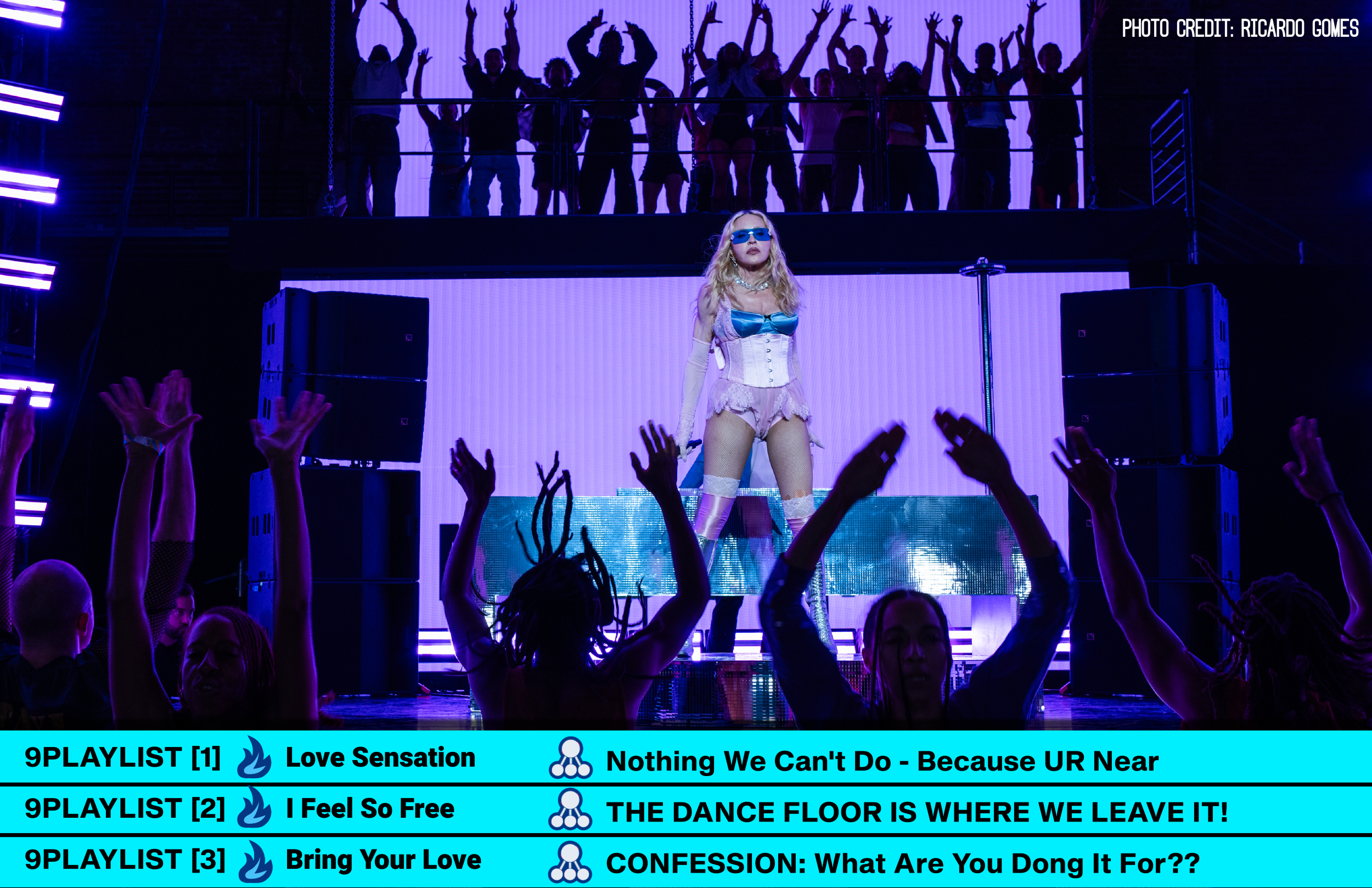
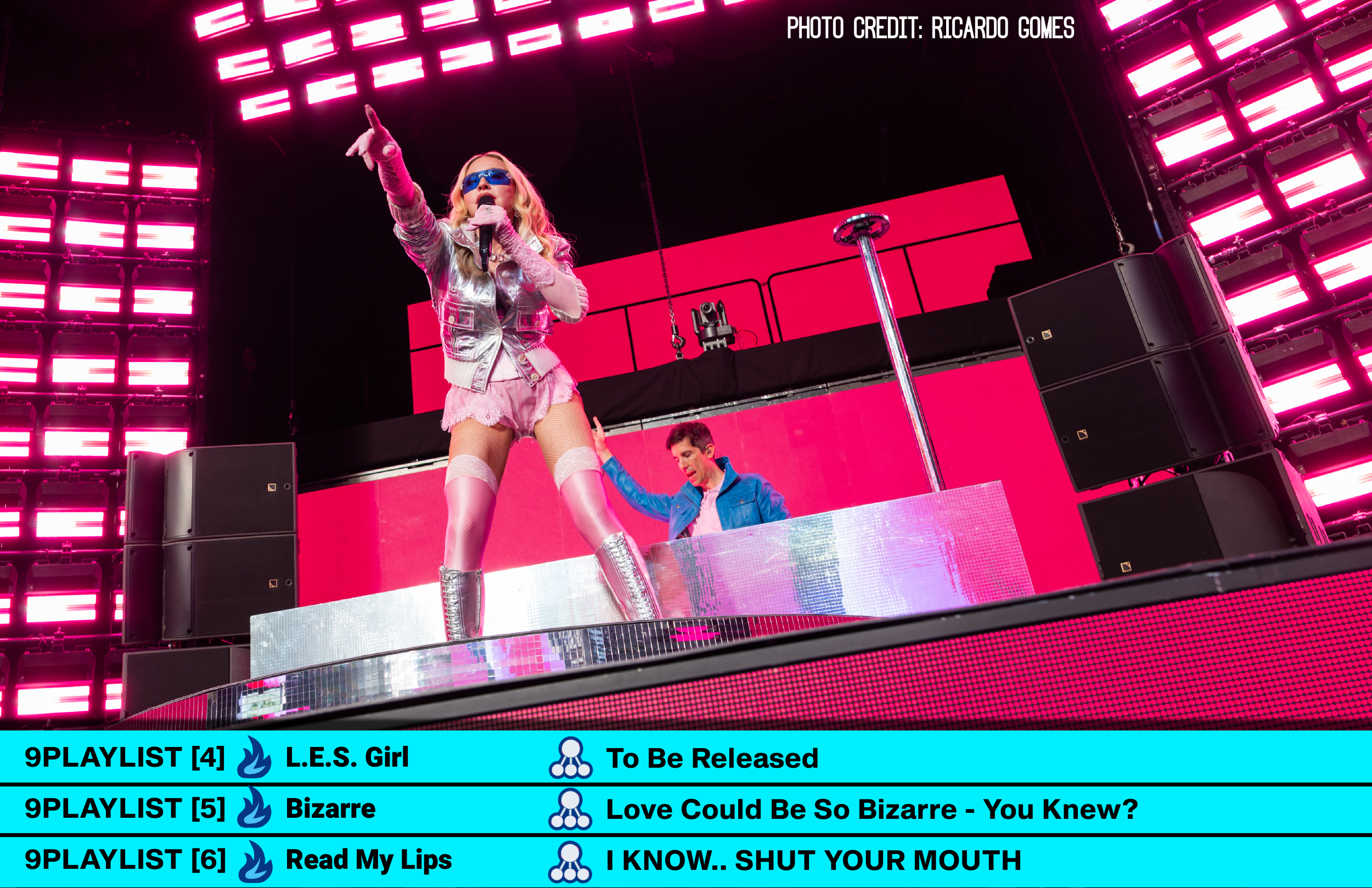
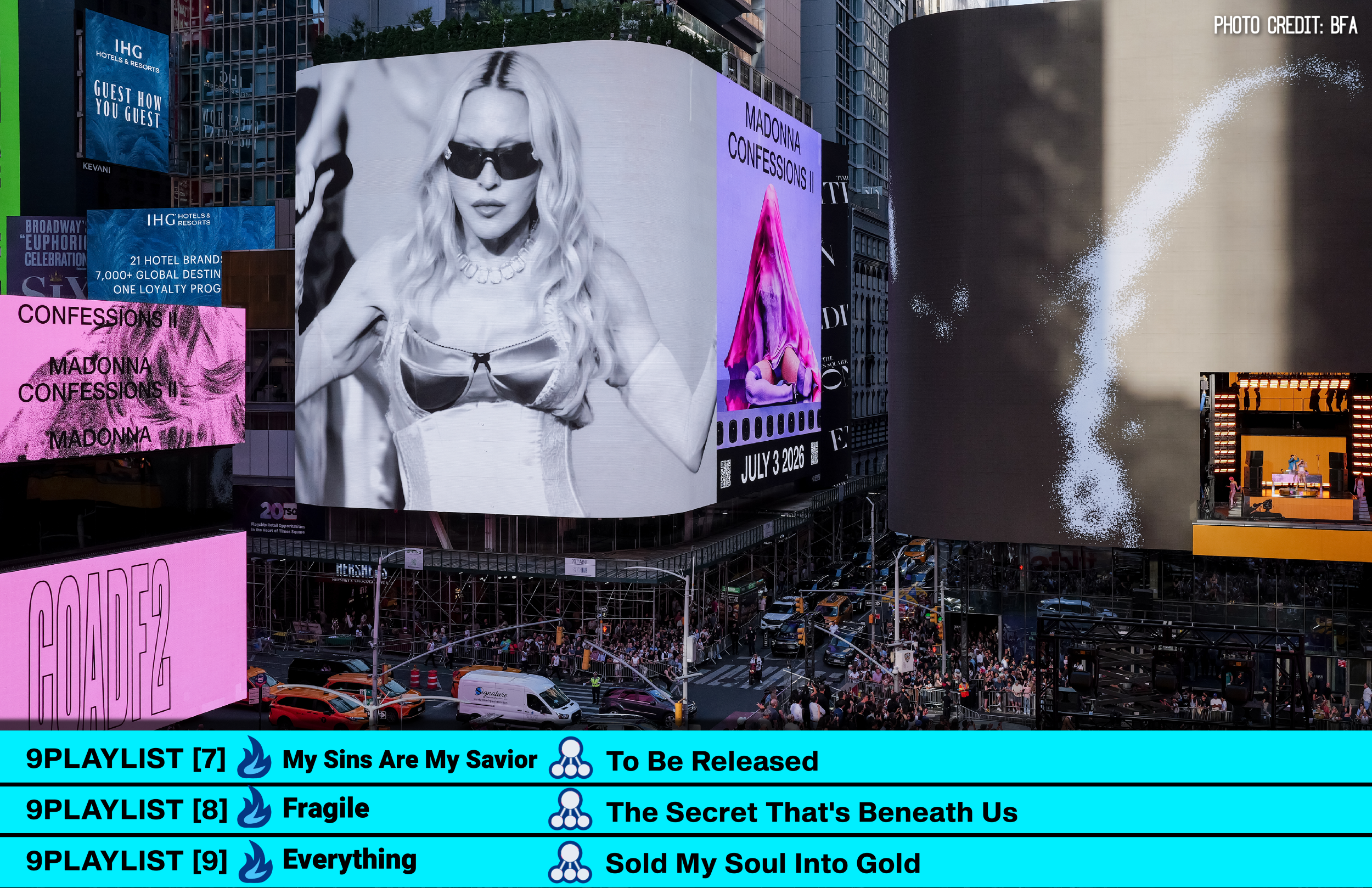
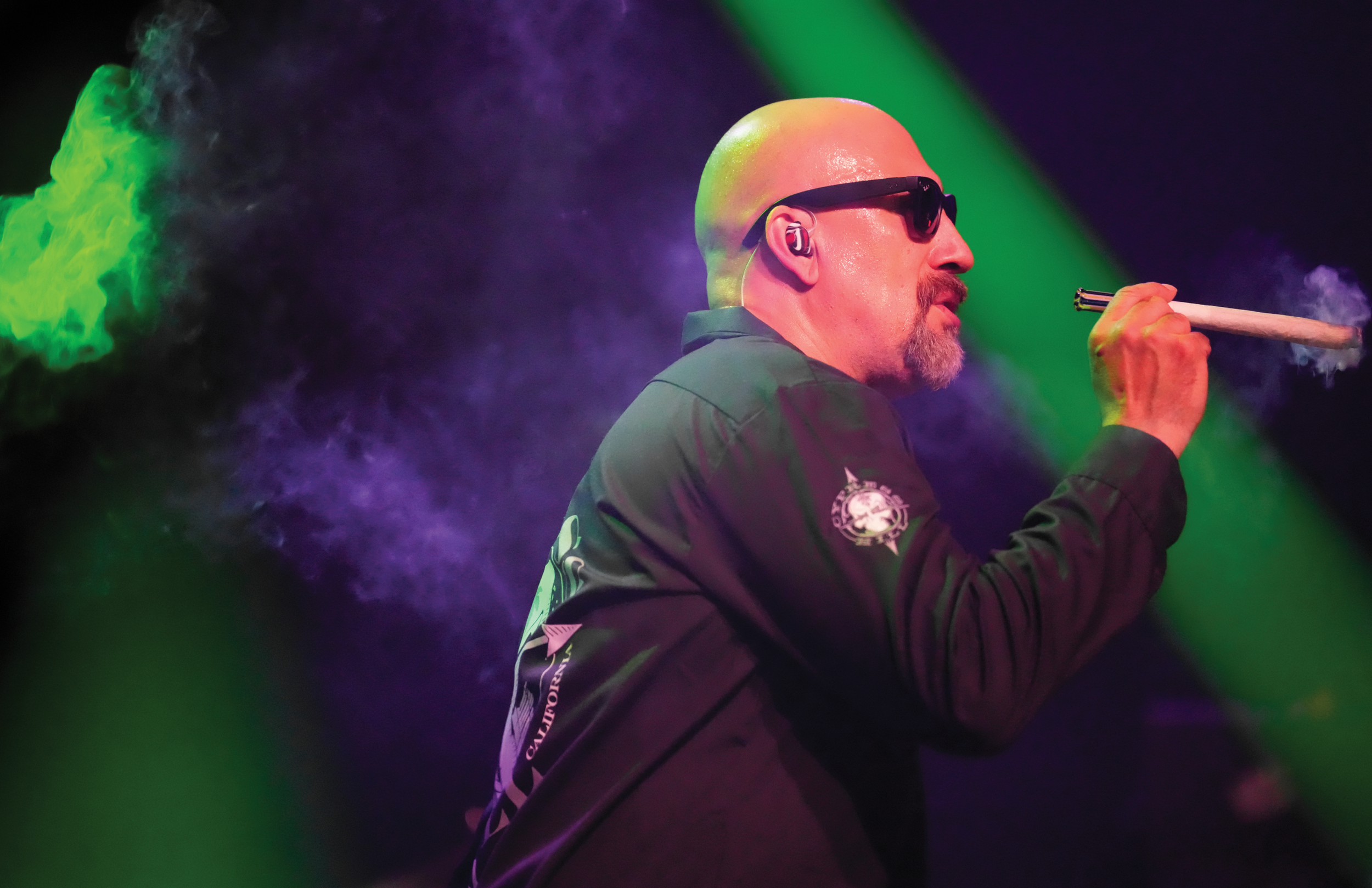
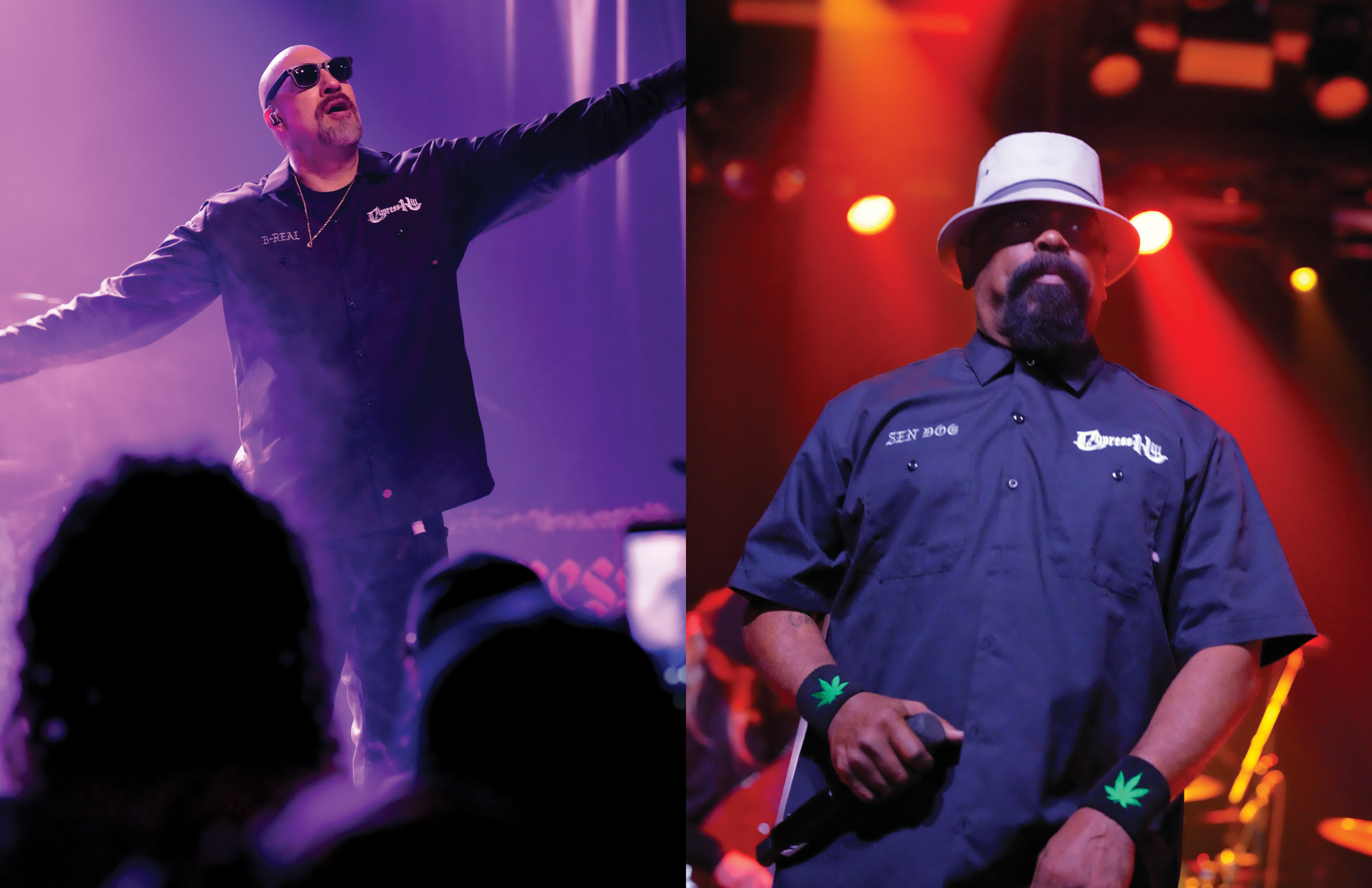
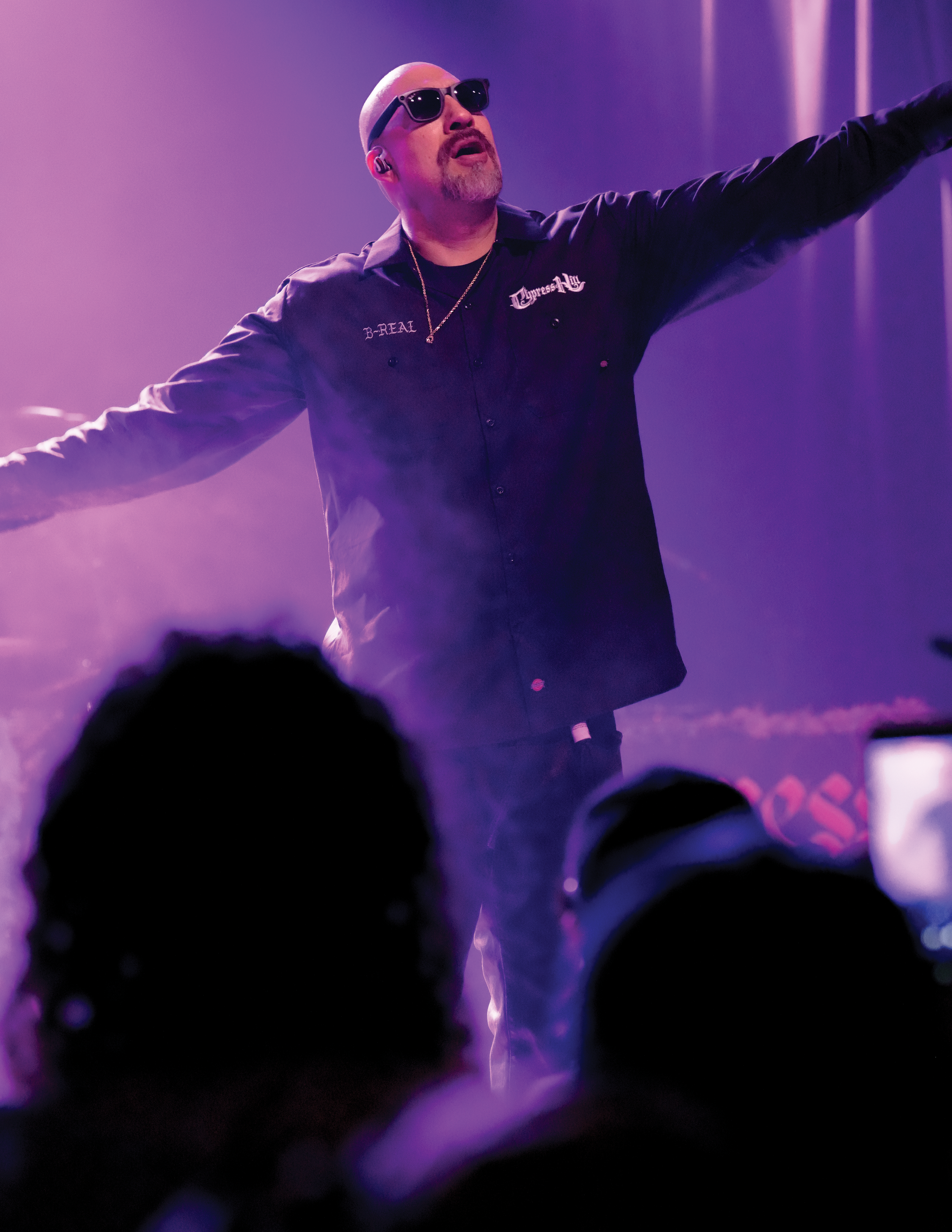
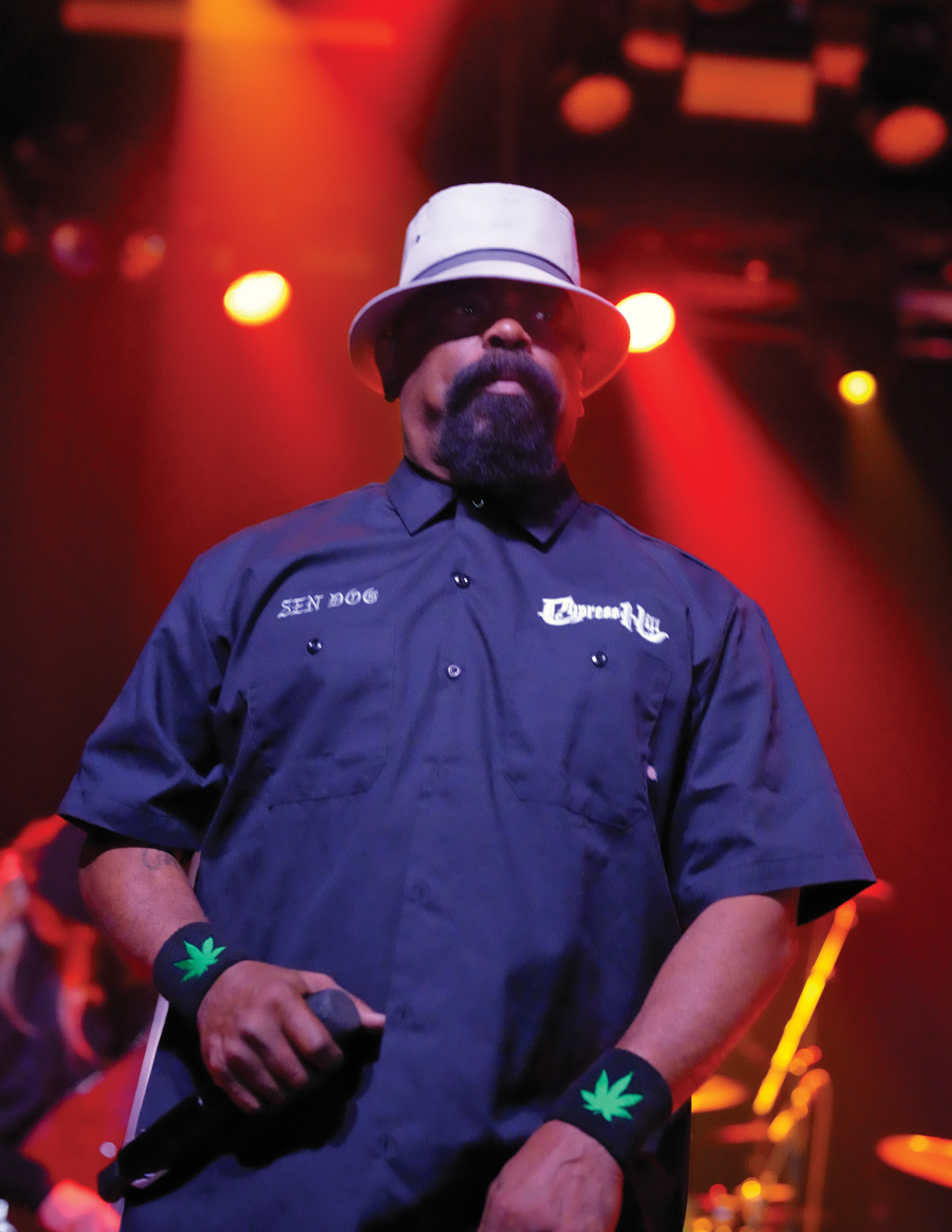
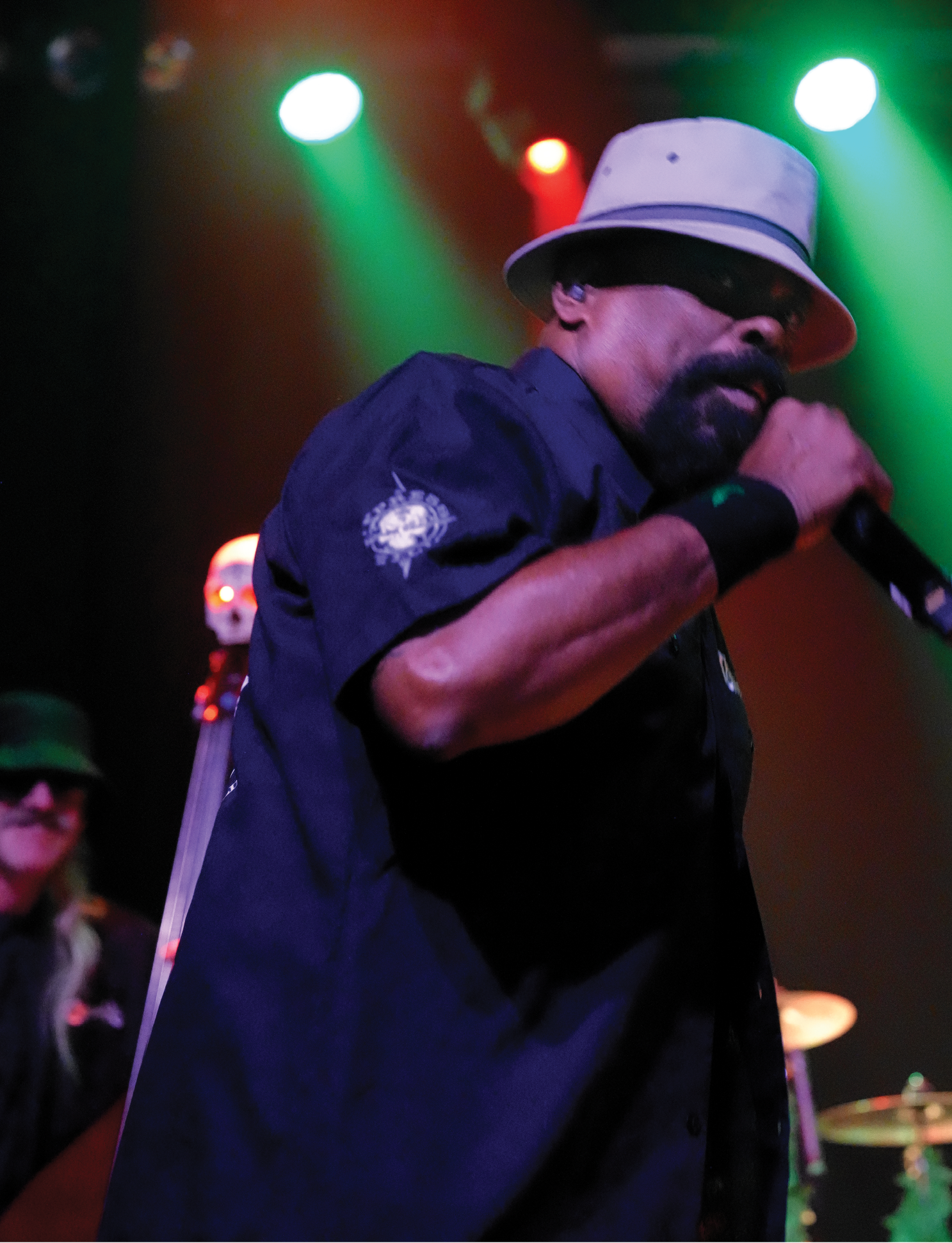
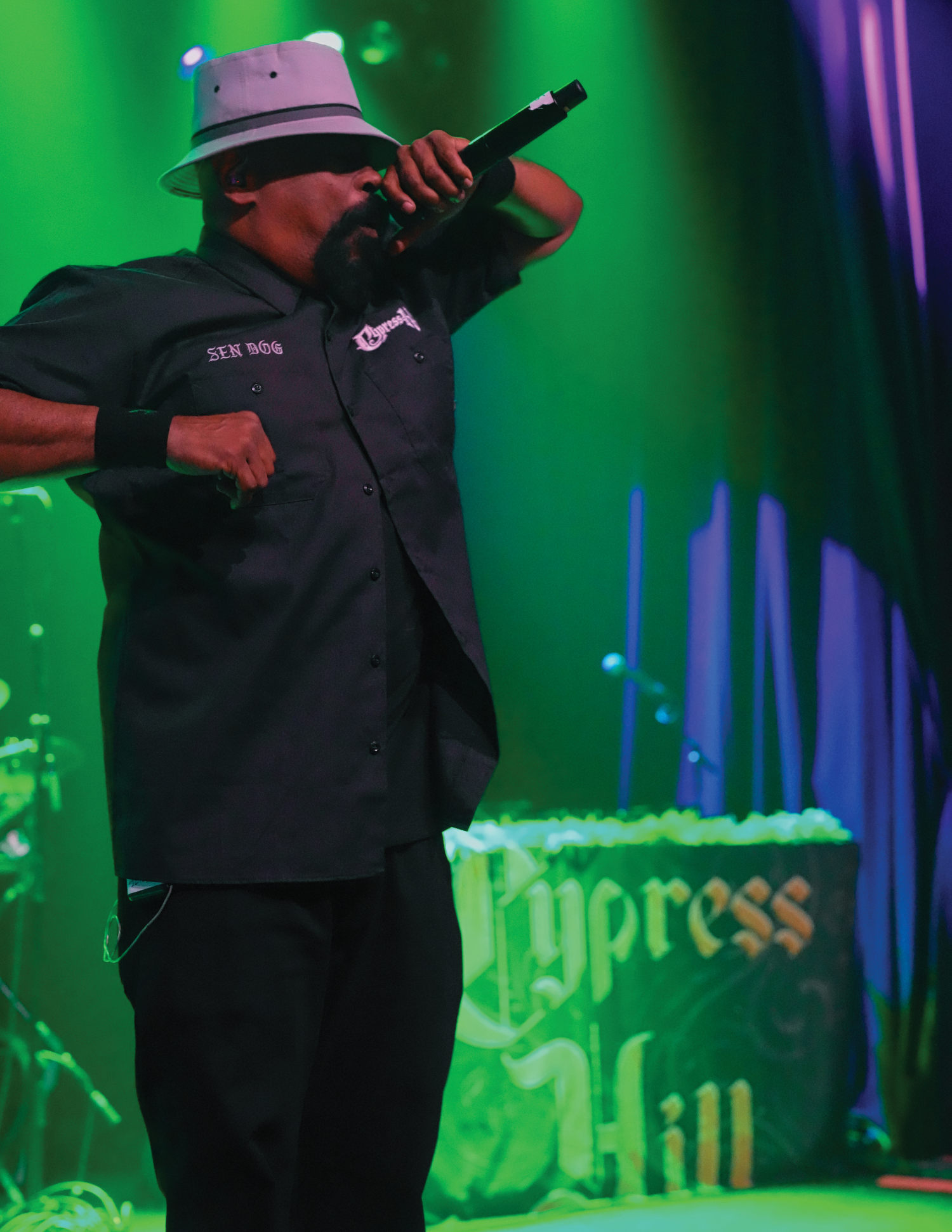
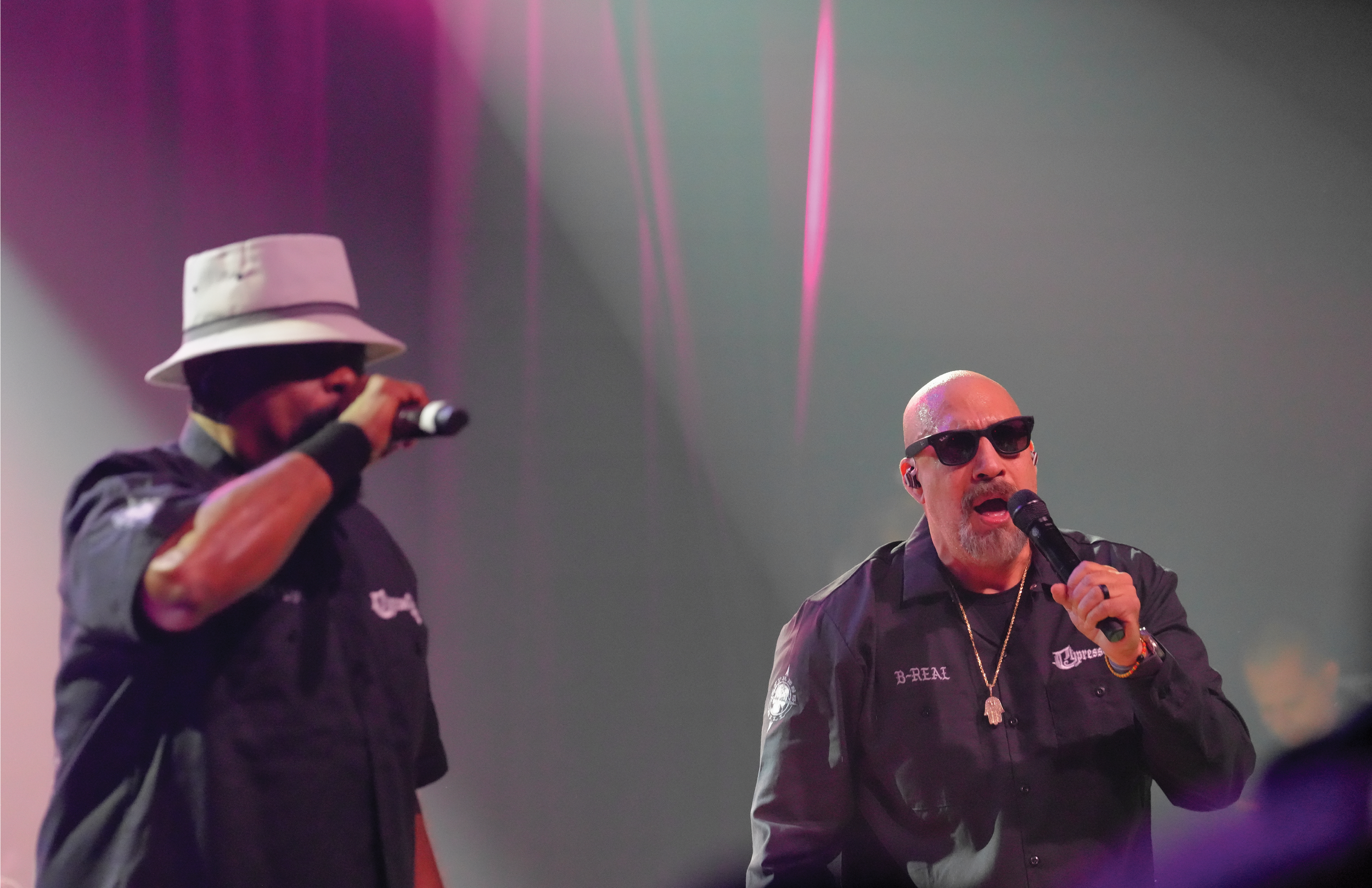
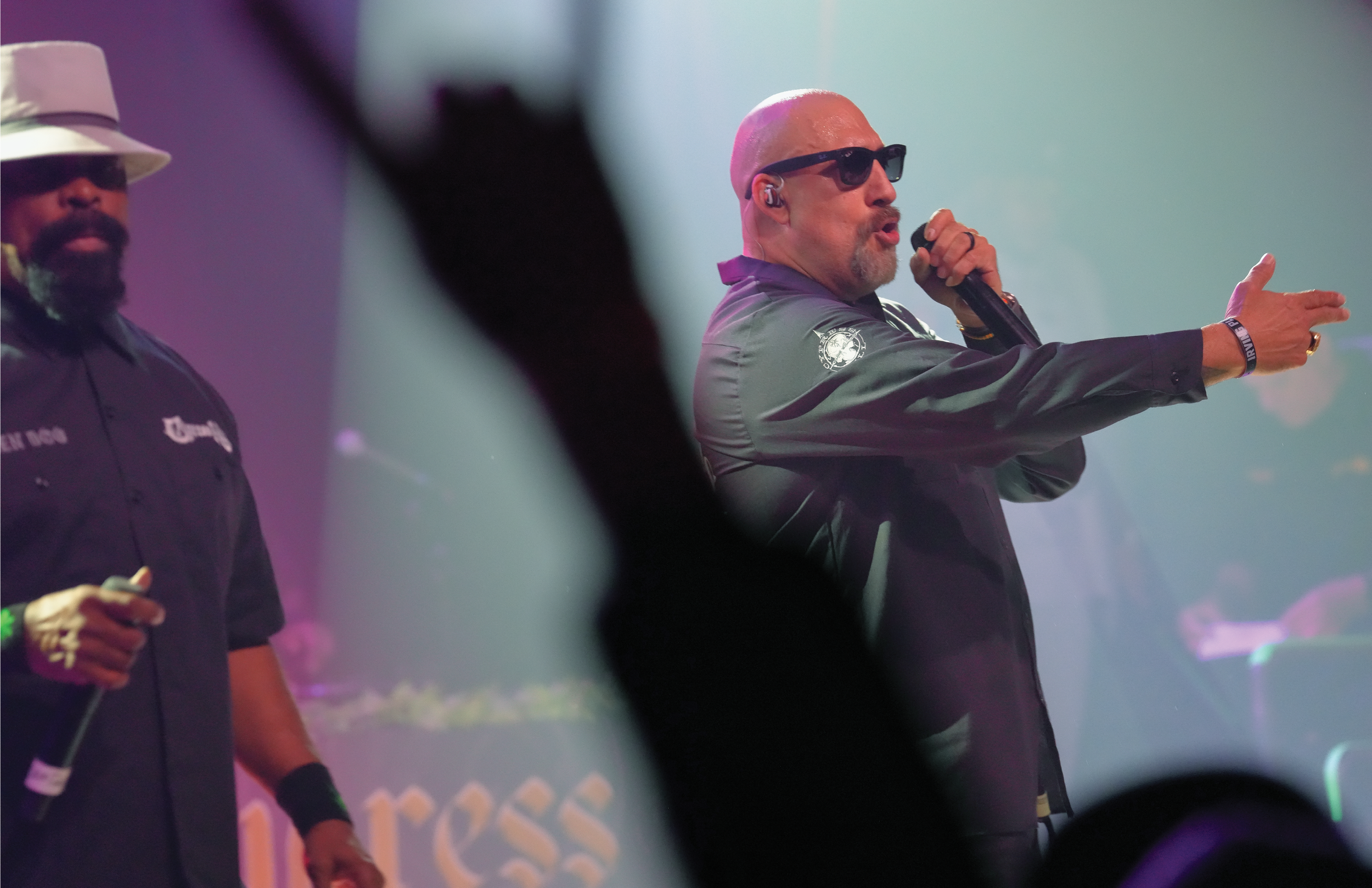
Read the OCT ISSUE #130 of Athleisure Mag and see HAUNTED HILL NYC 2026 | Cypress Hill in mag.
The Latest



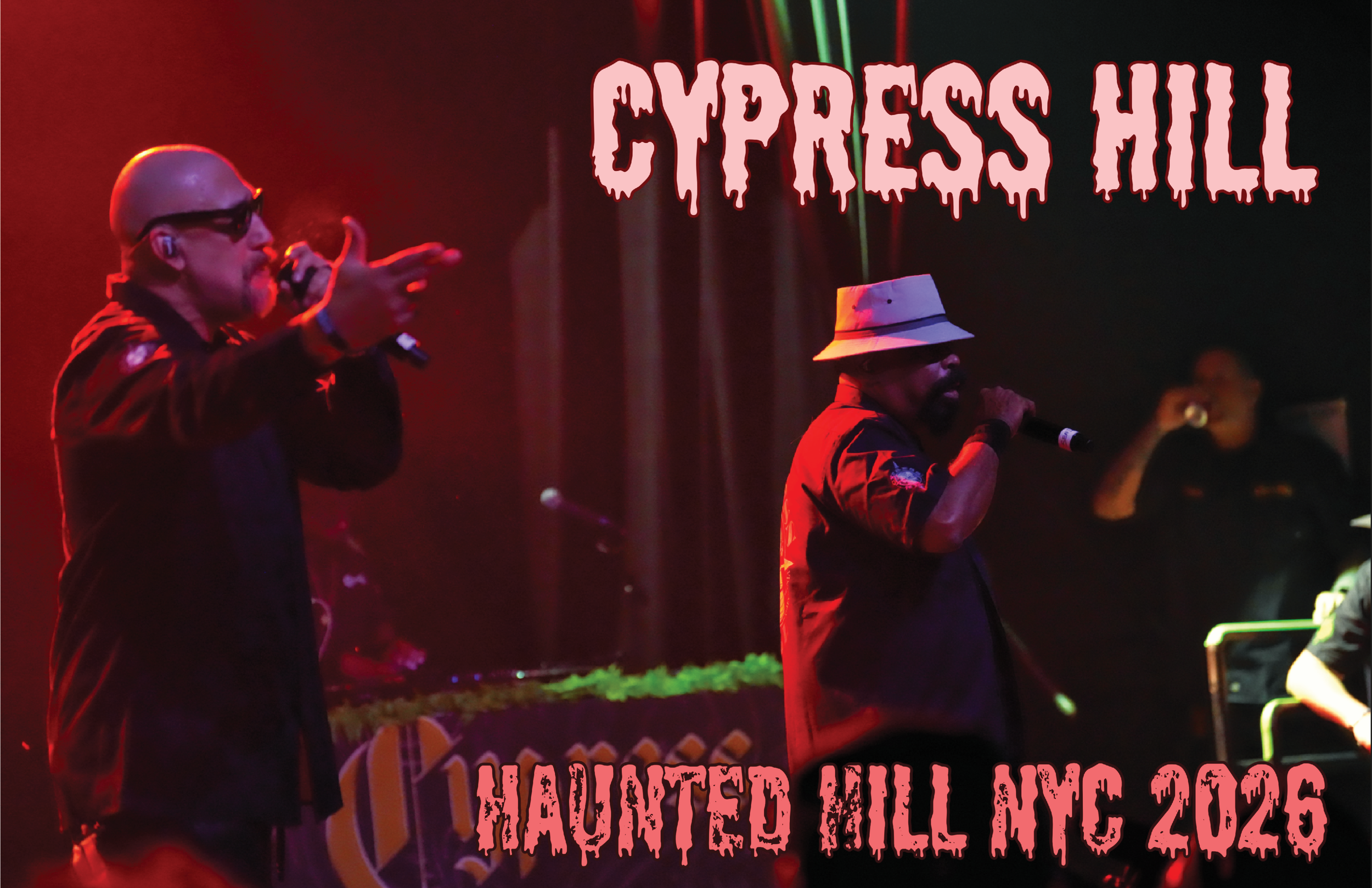
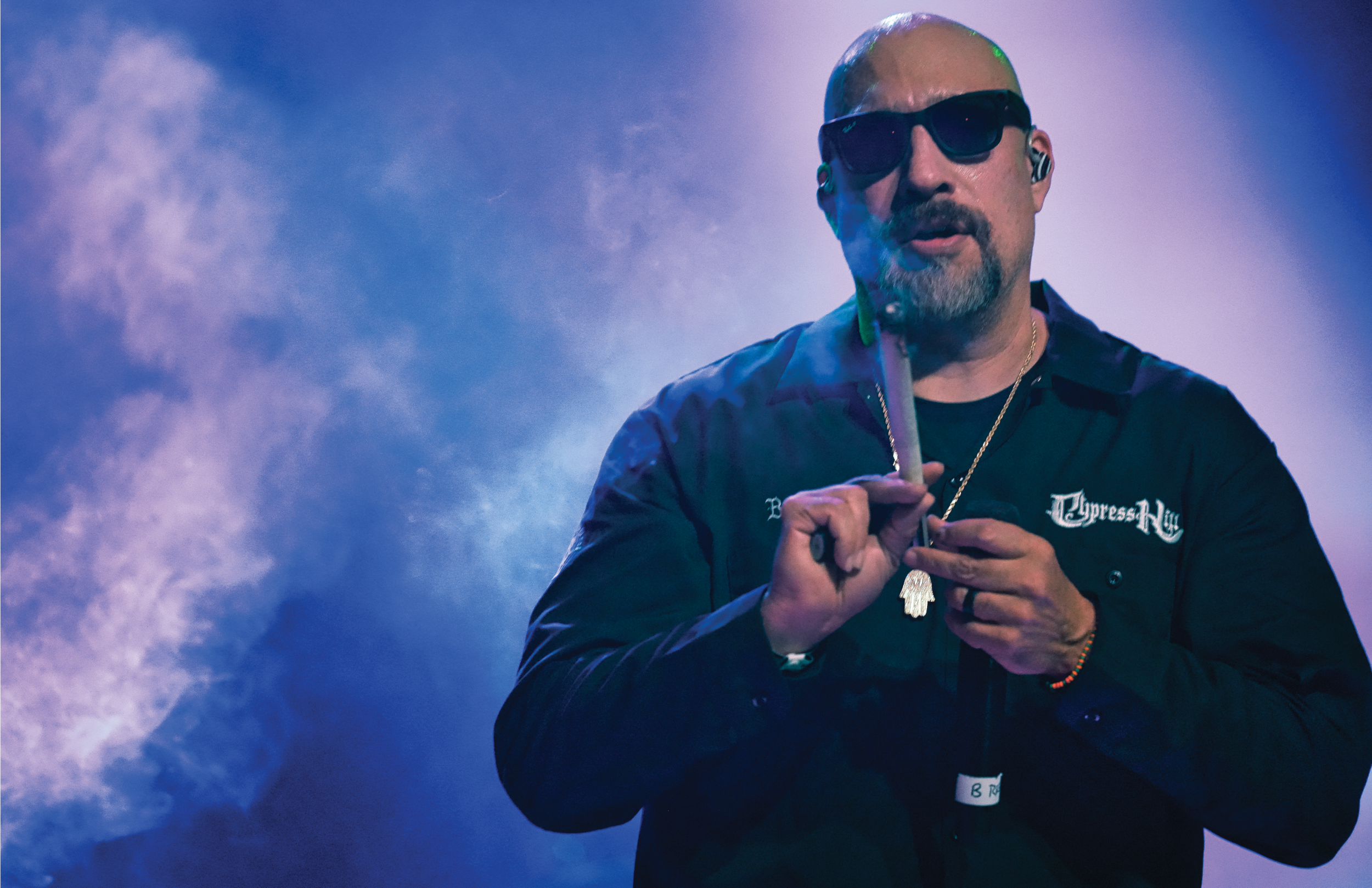
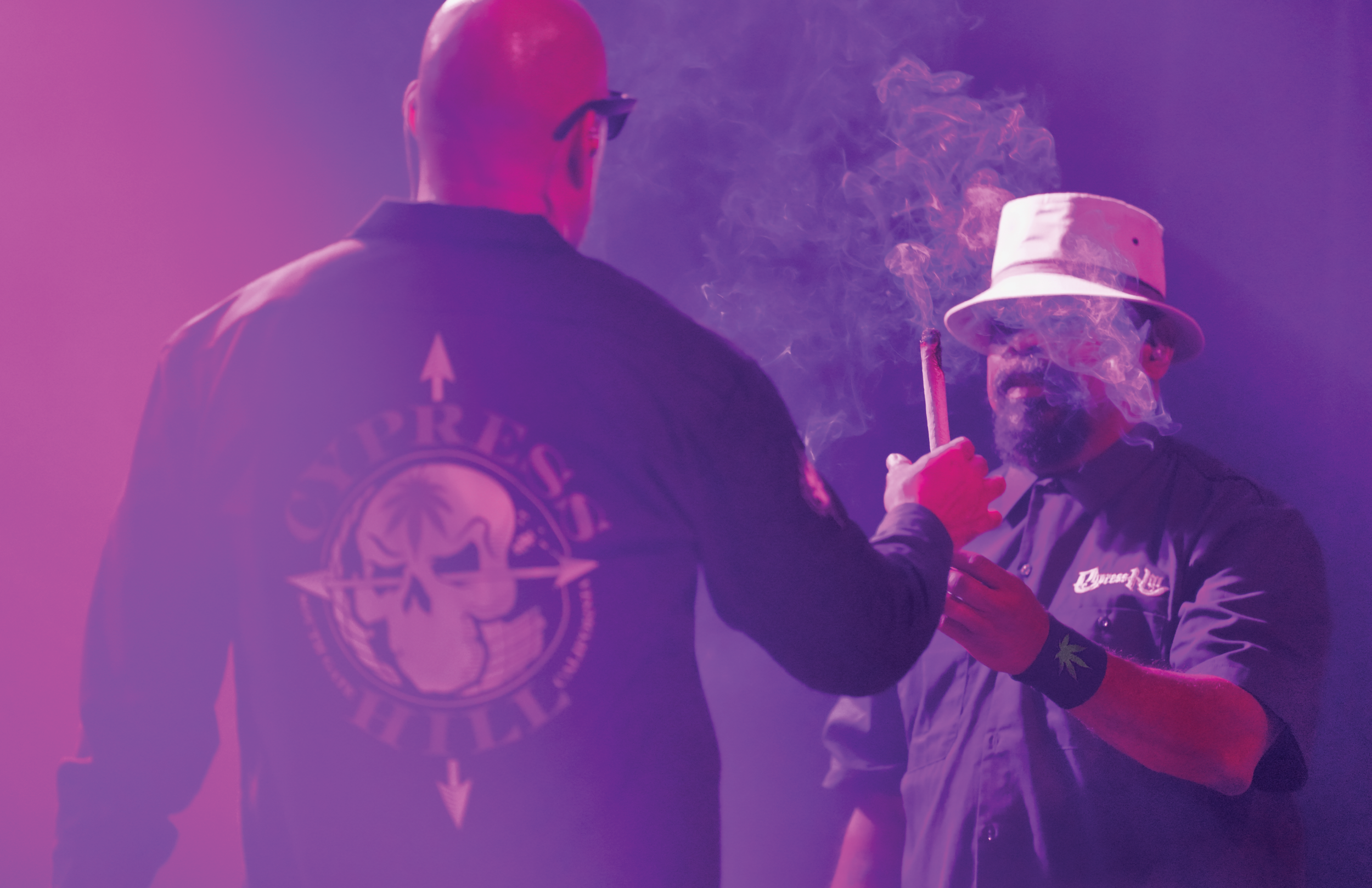
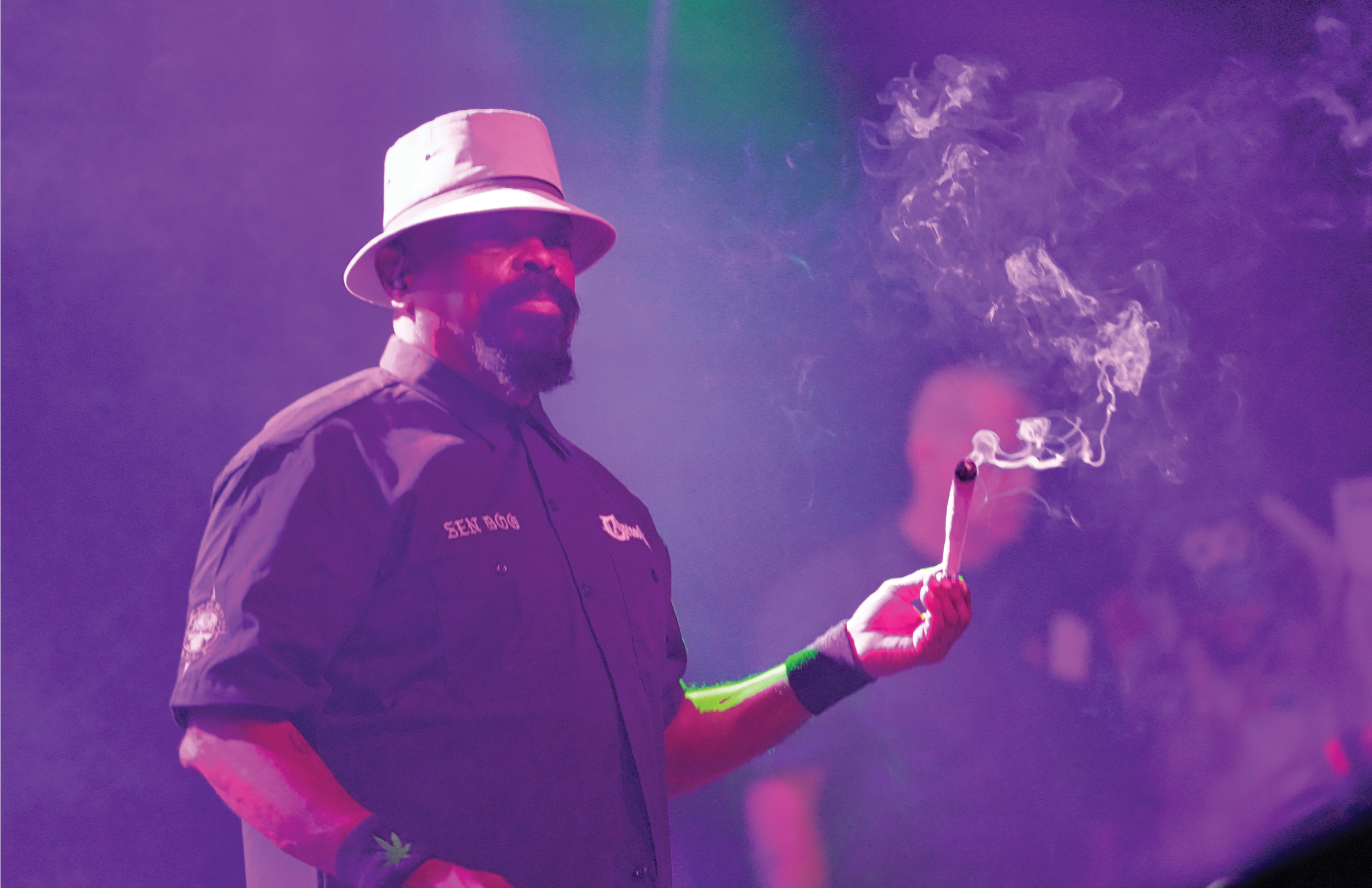
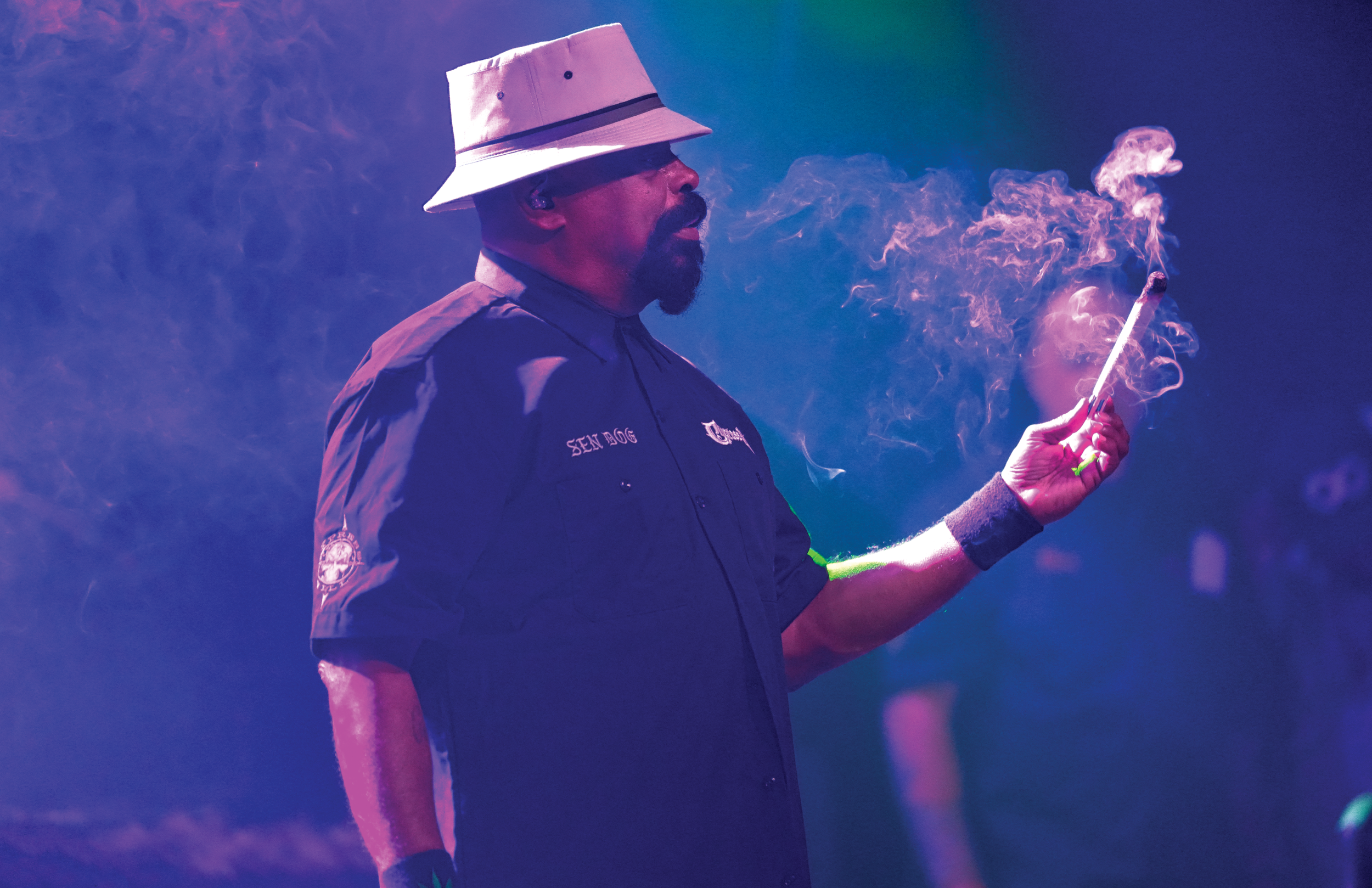
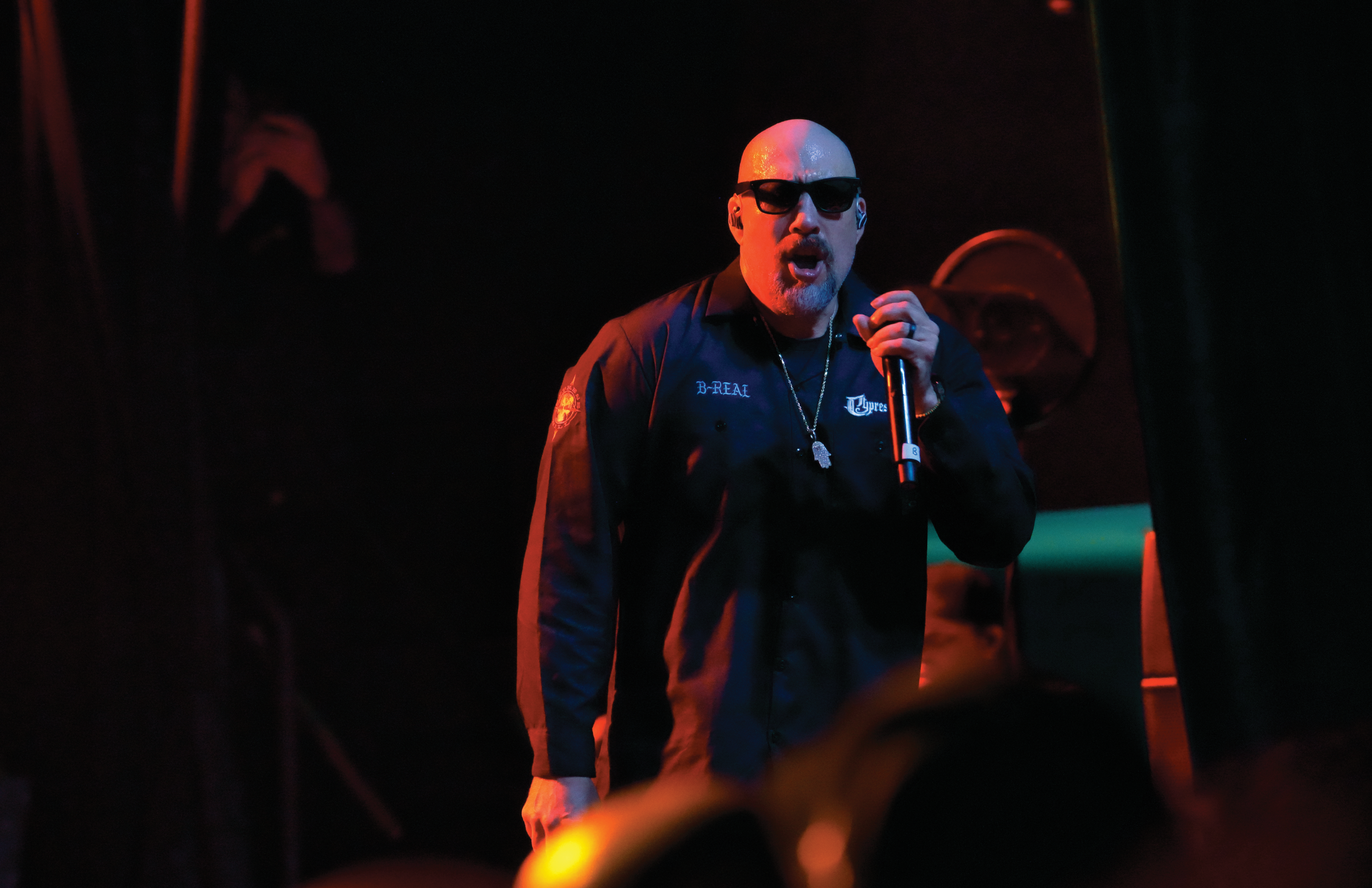
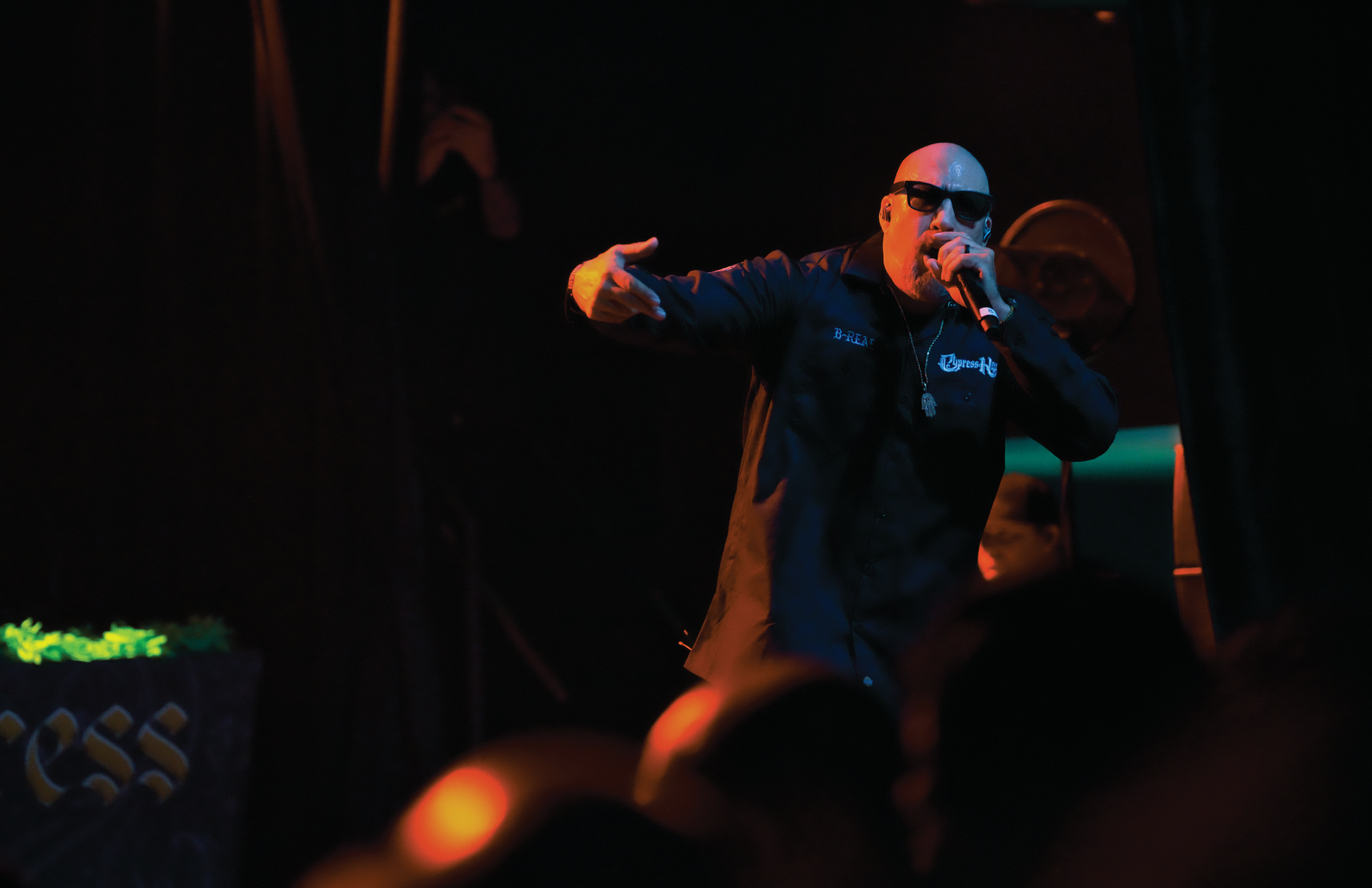
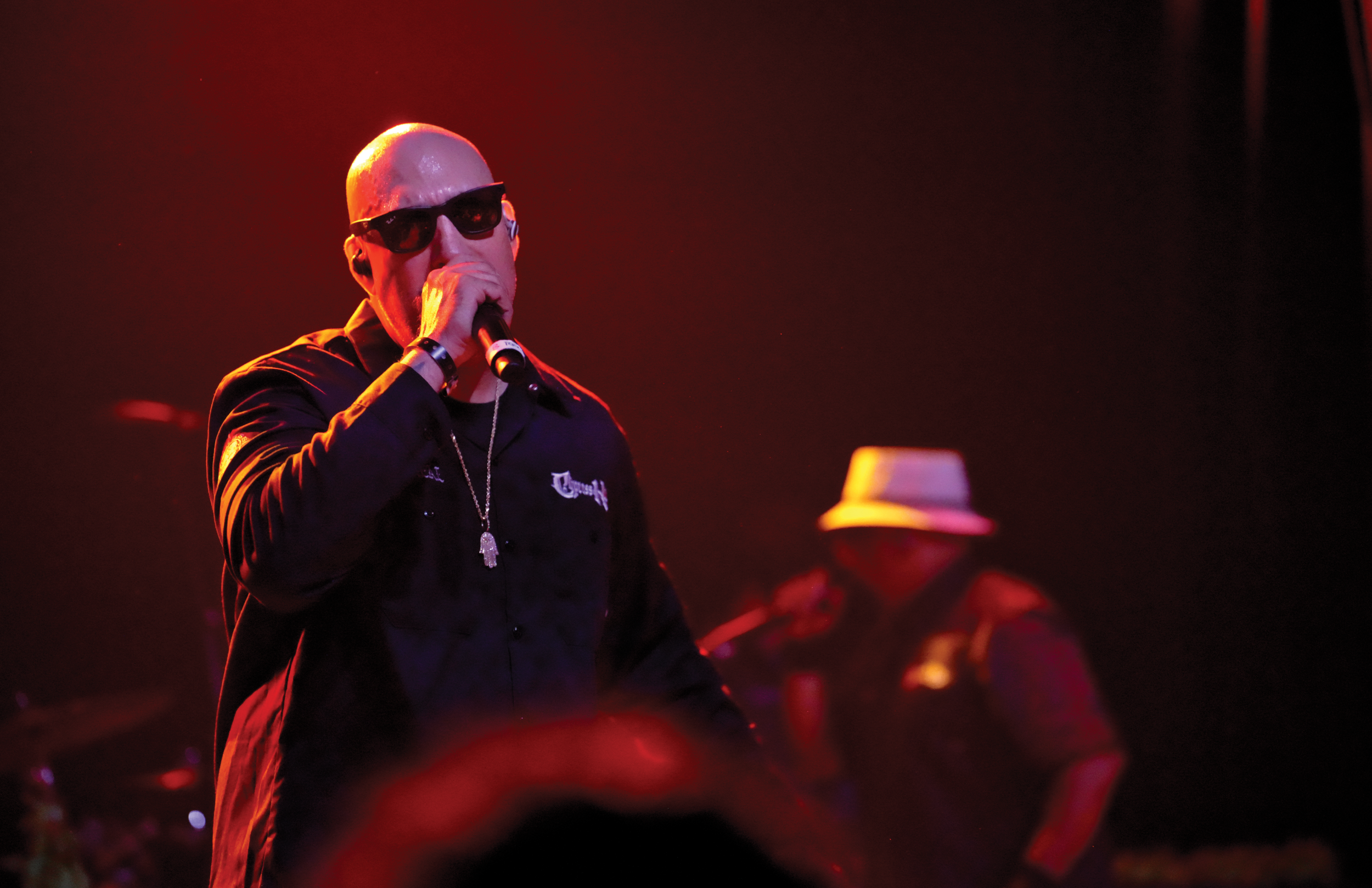
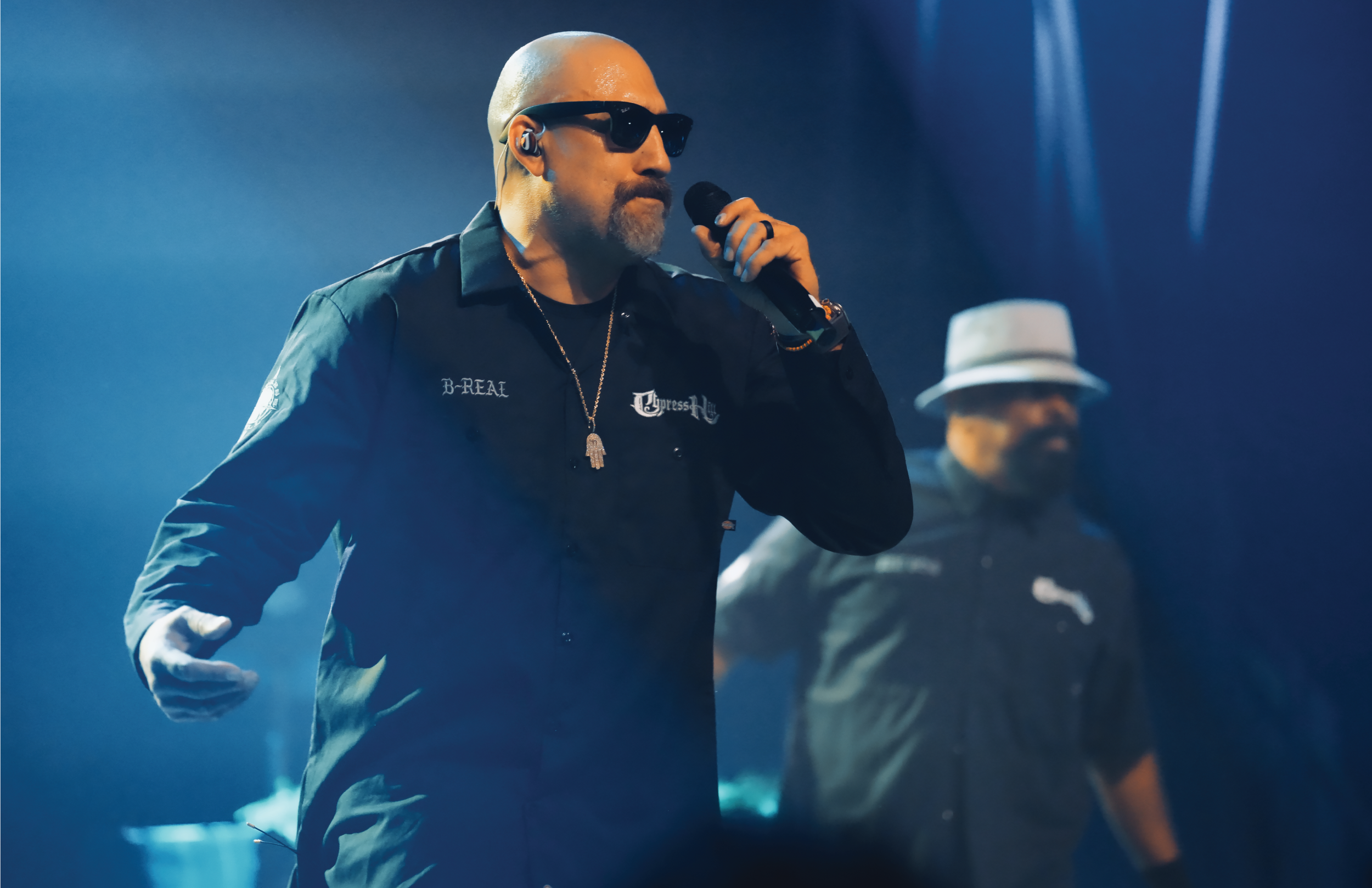
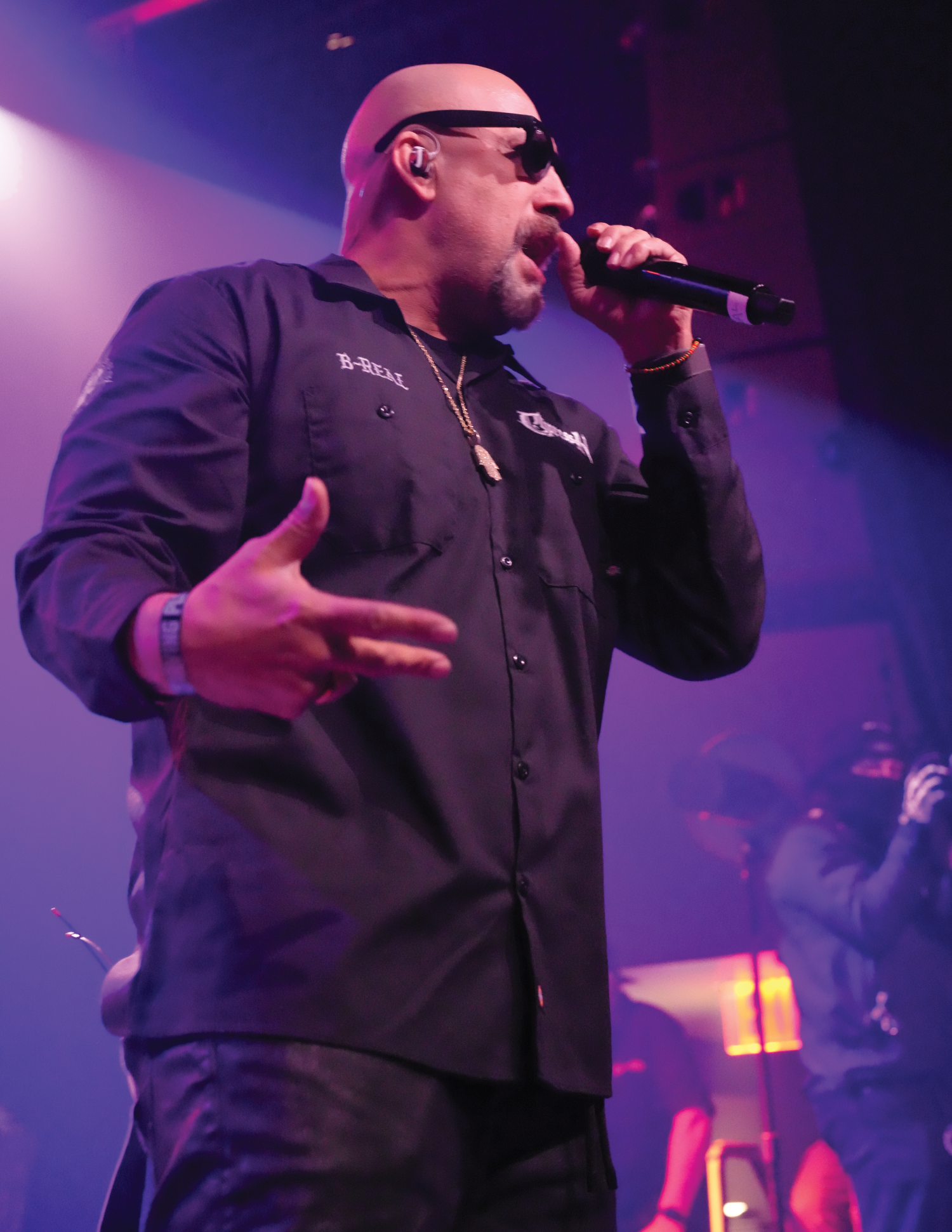
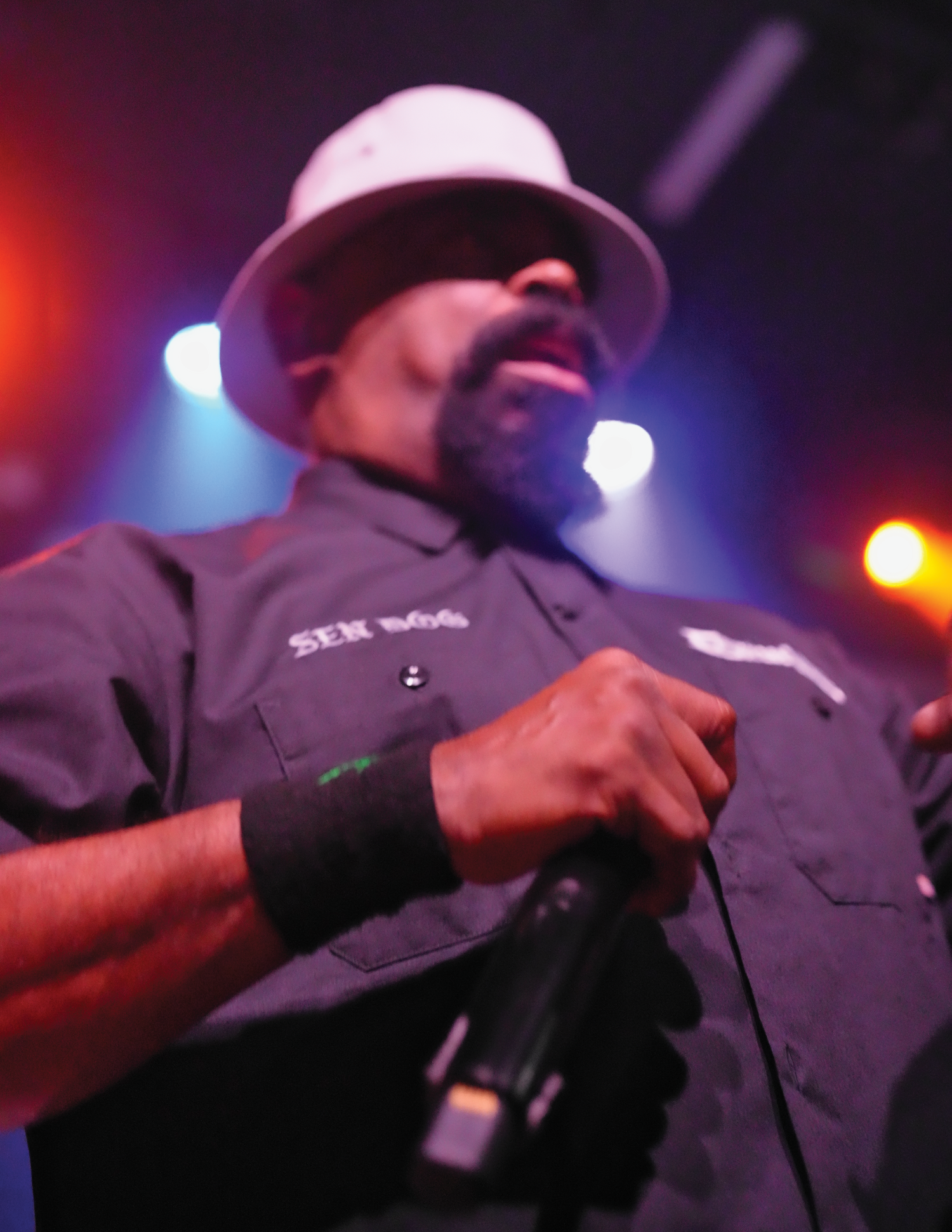
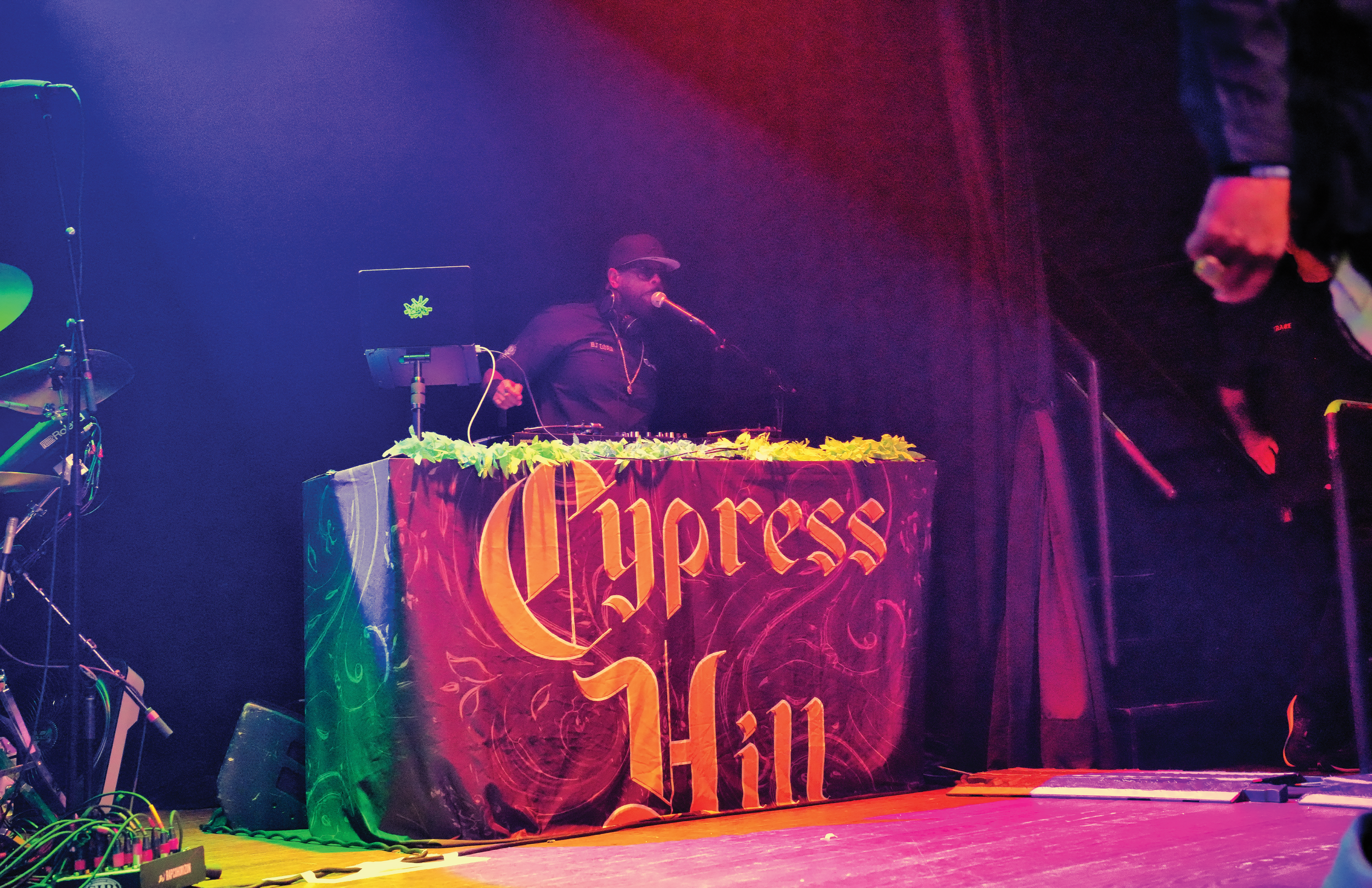
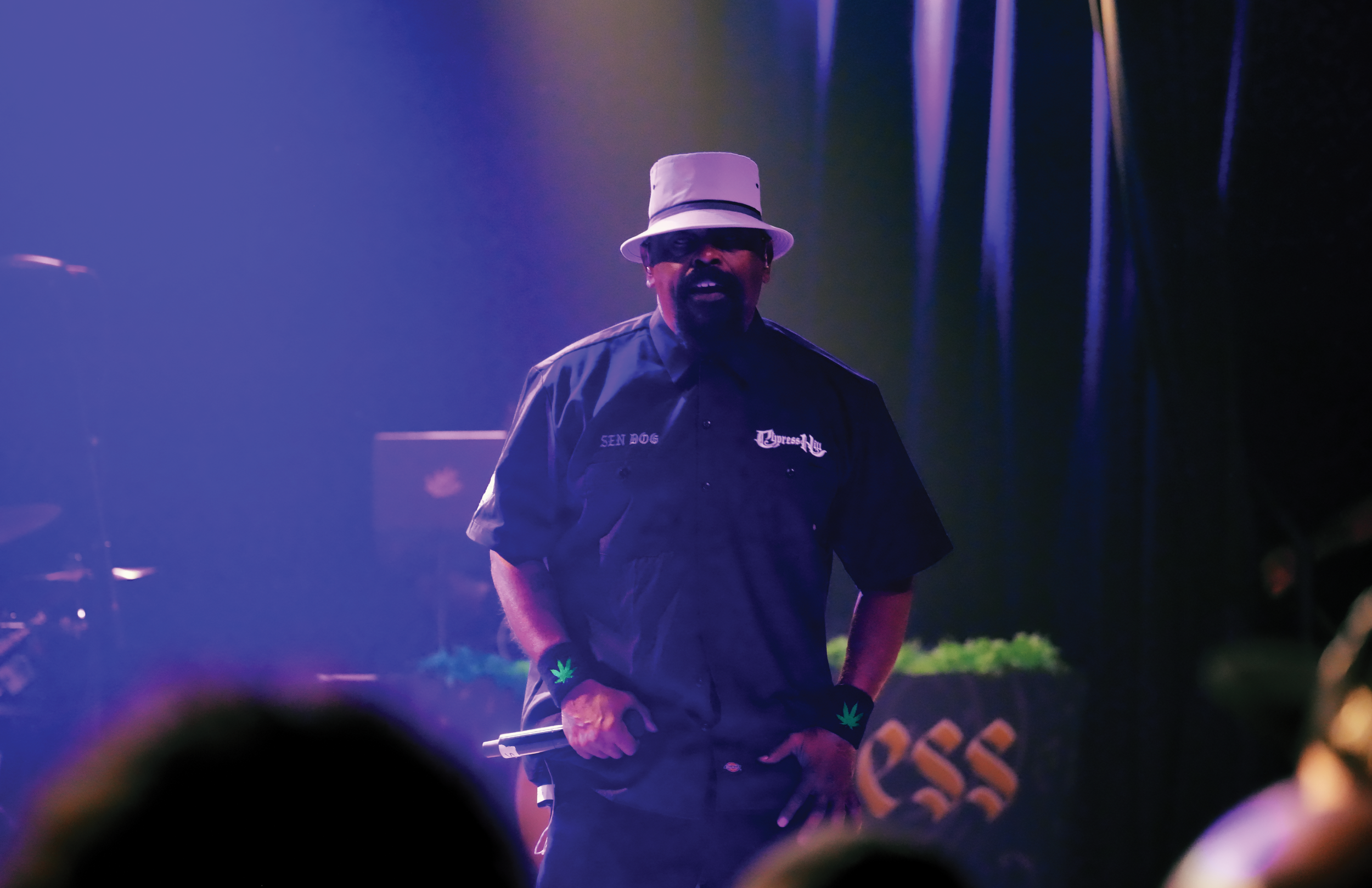
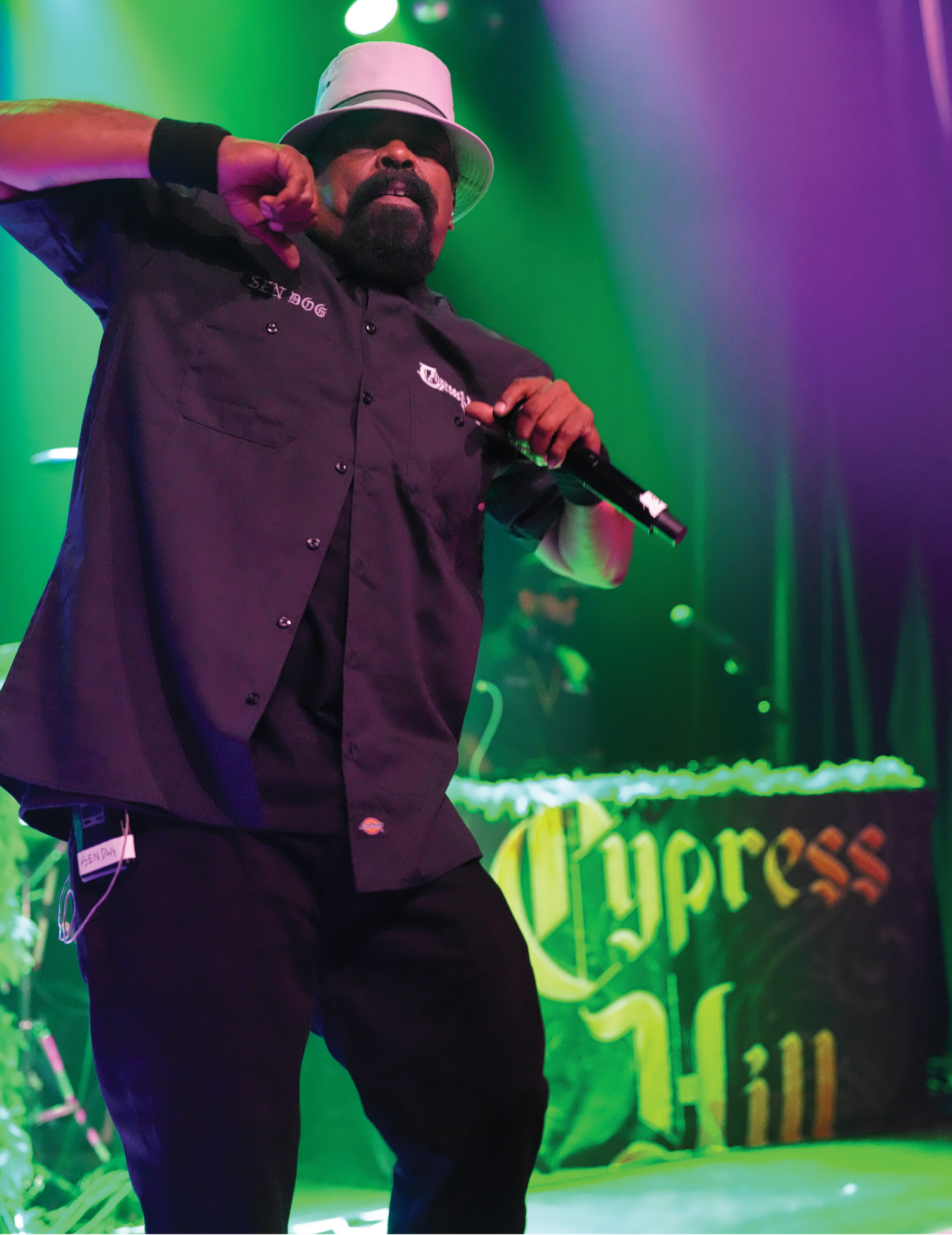
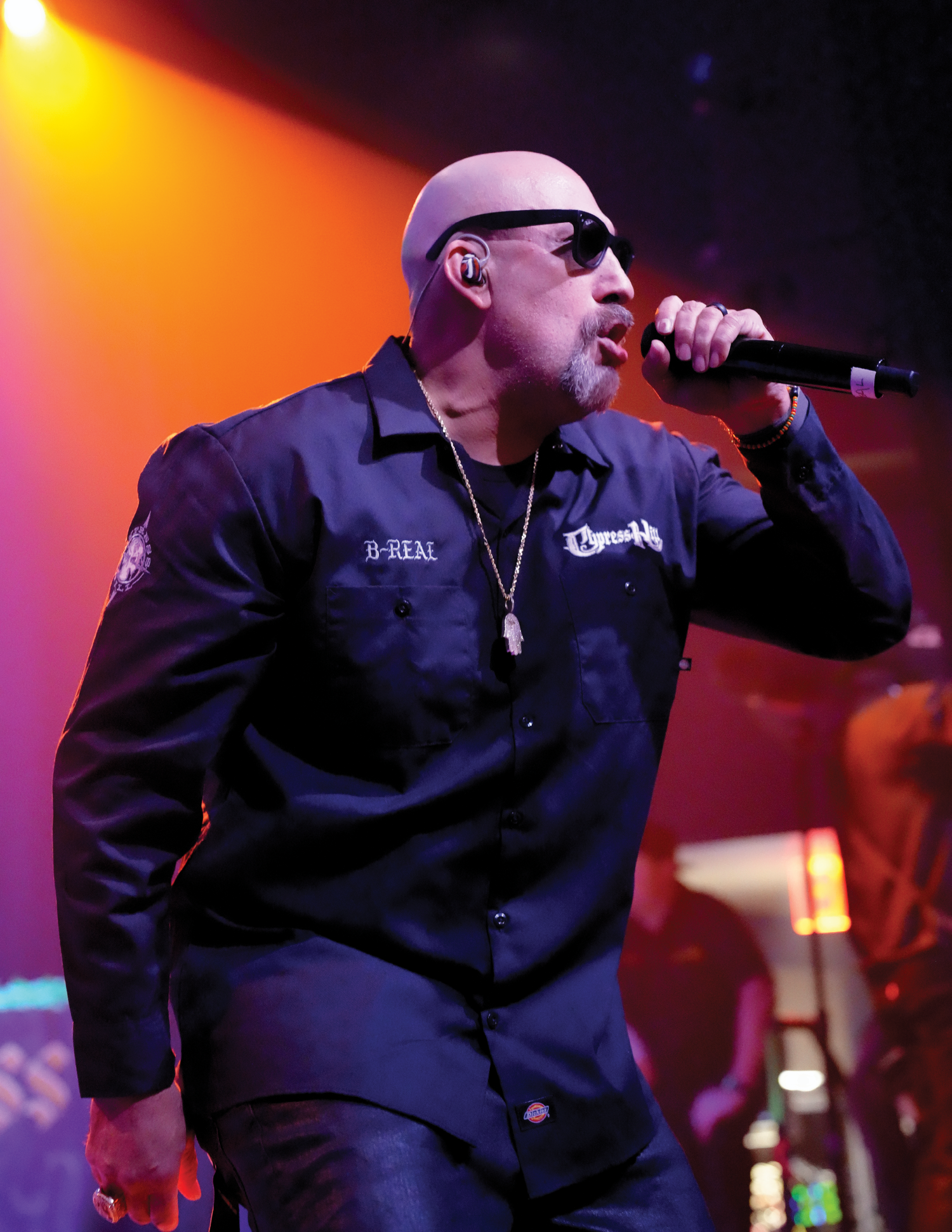
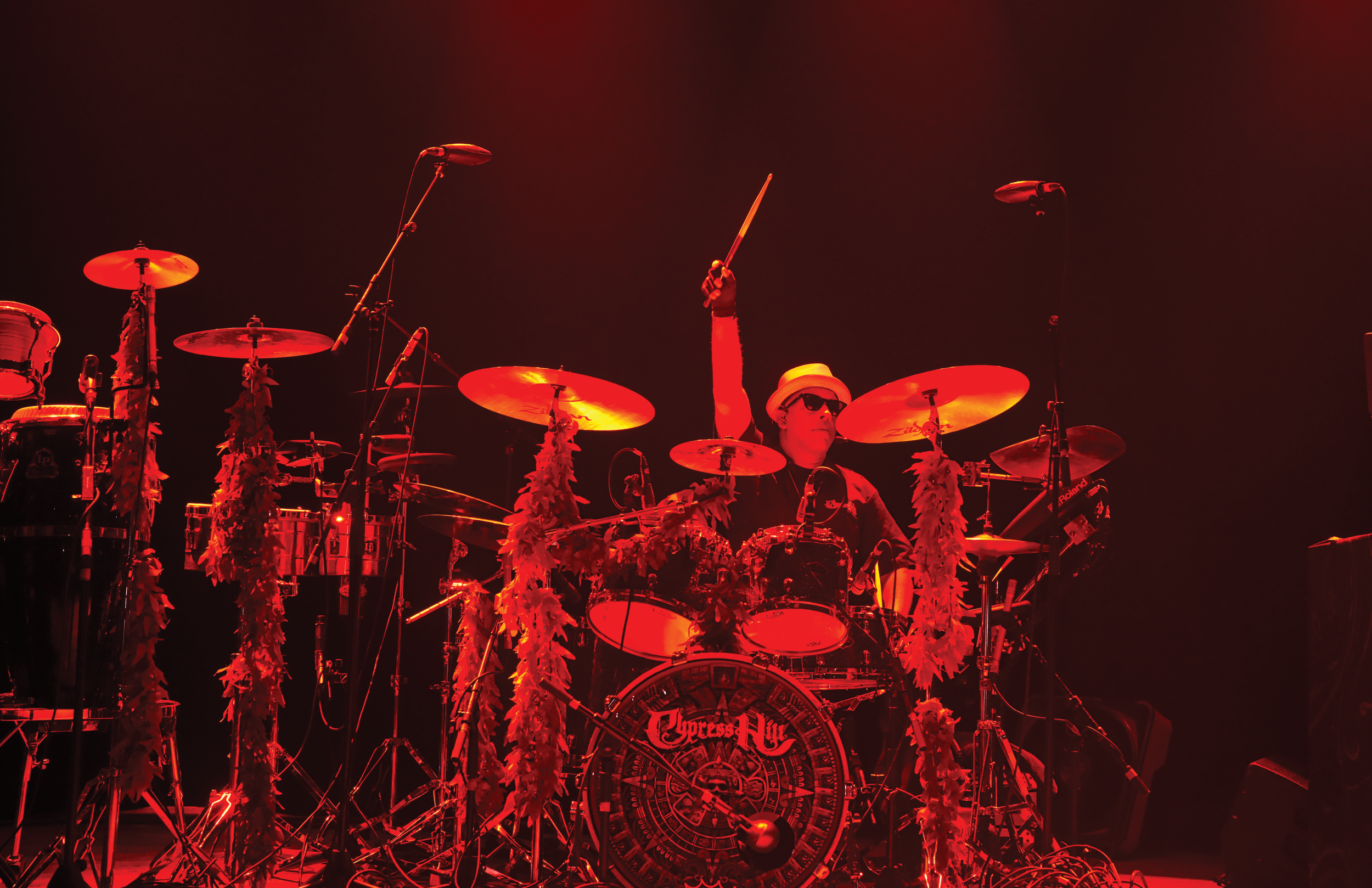
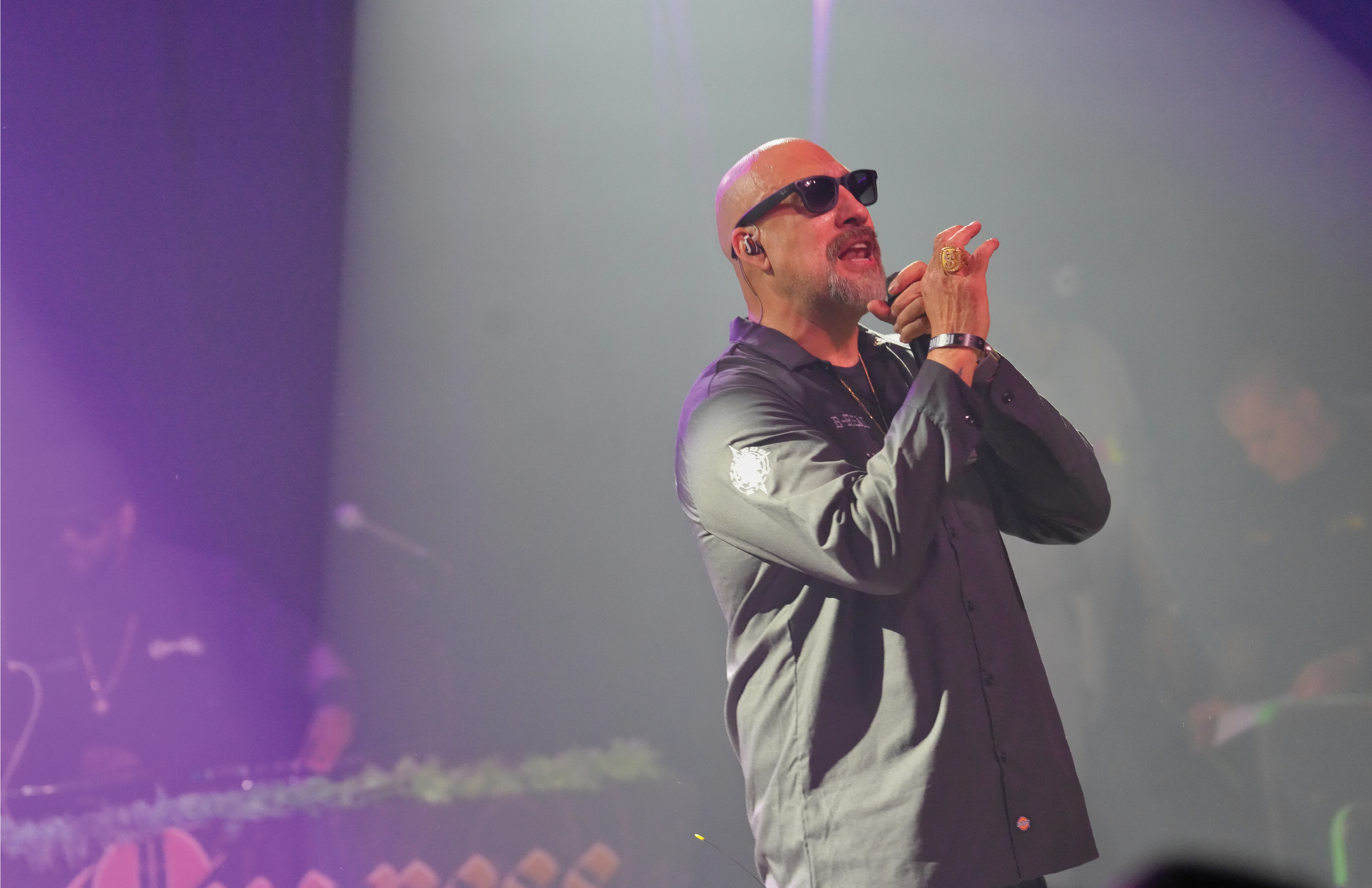
Read the OCT ISSUE #130 of Athleisure Mag and see HAUNTED HILL NYC 2026 | Cypress Hill in mag.
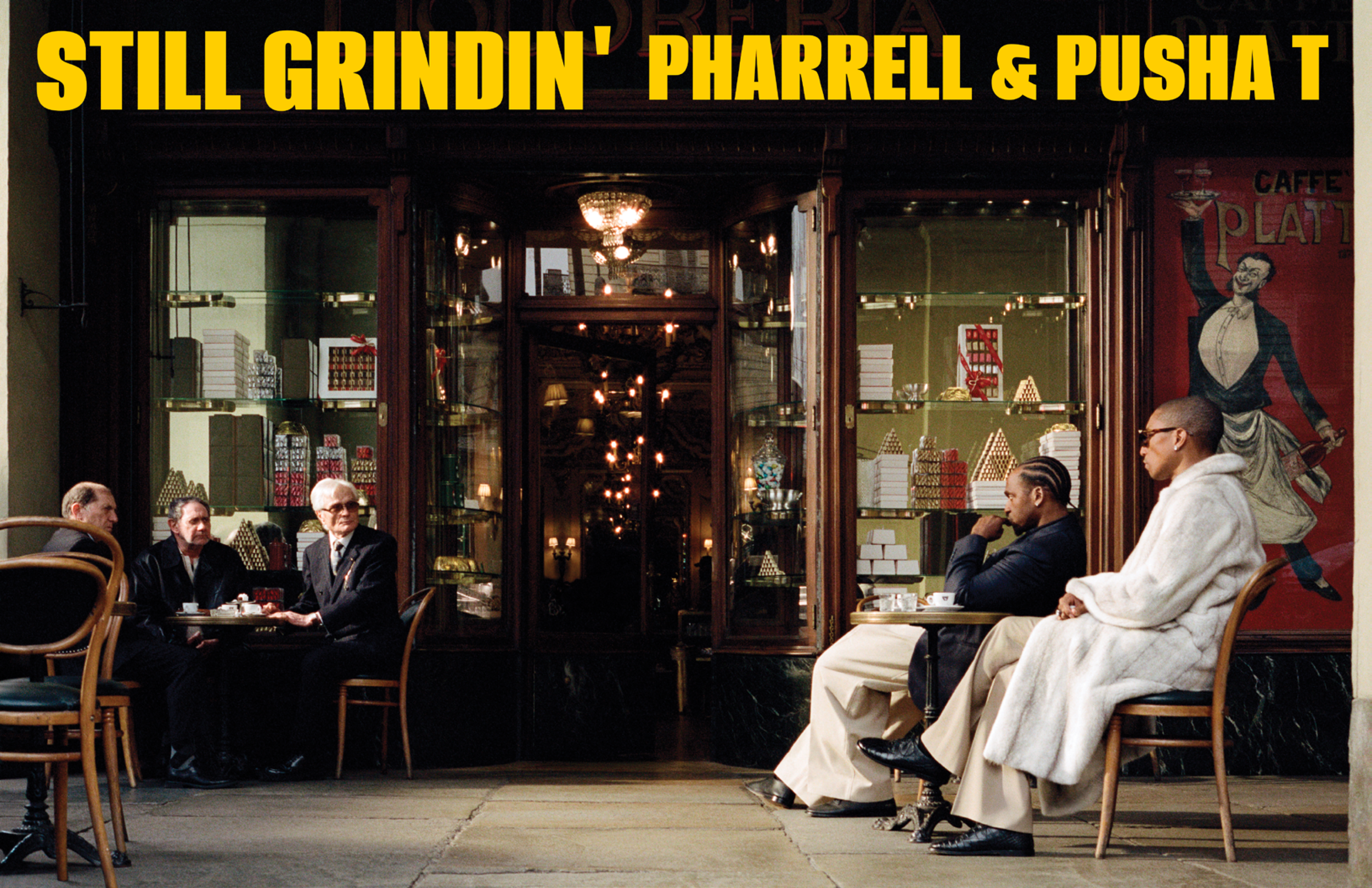
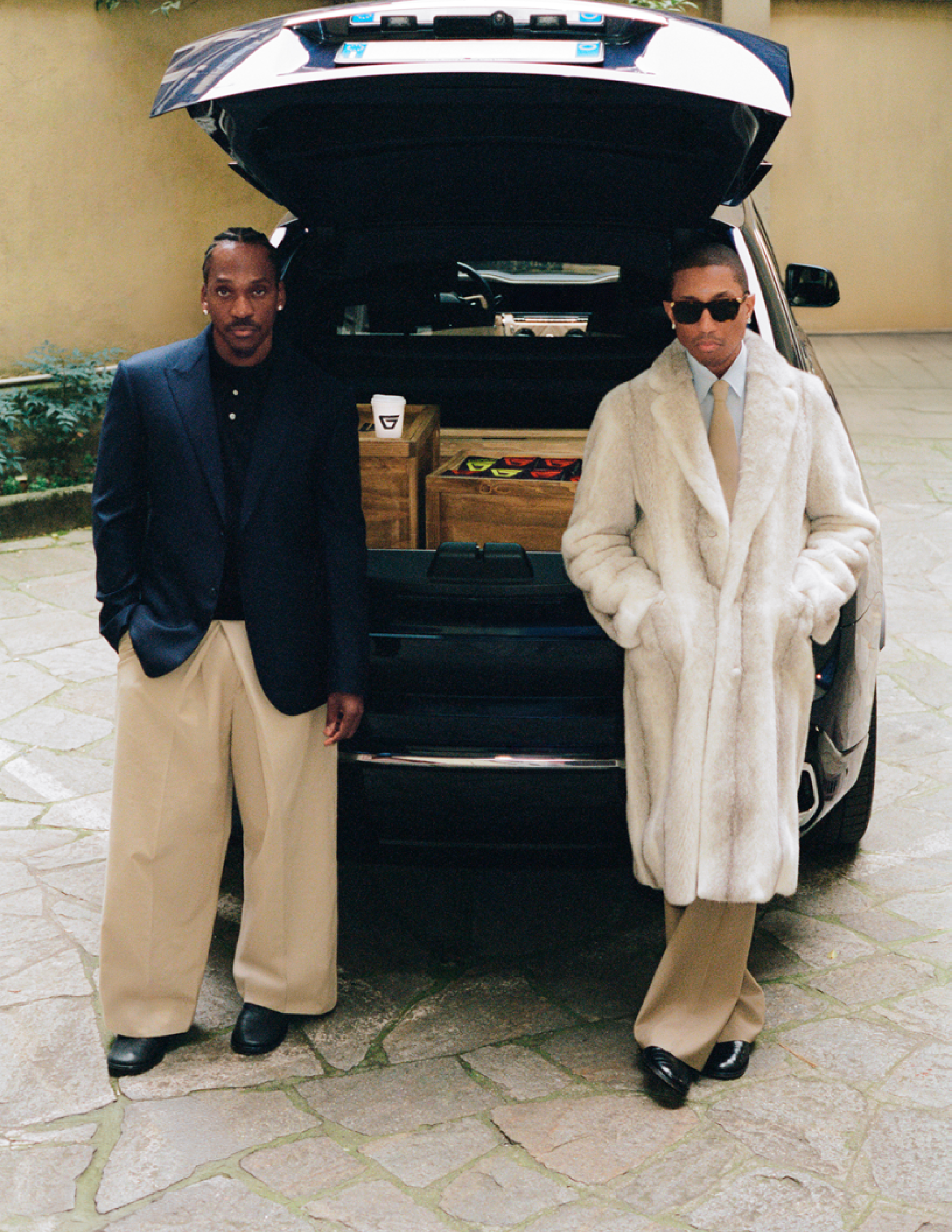
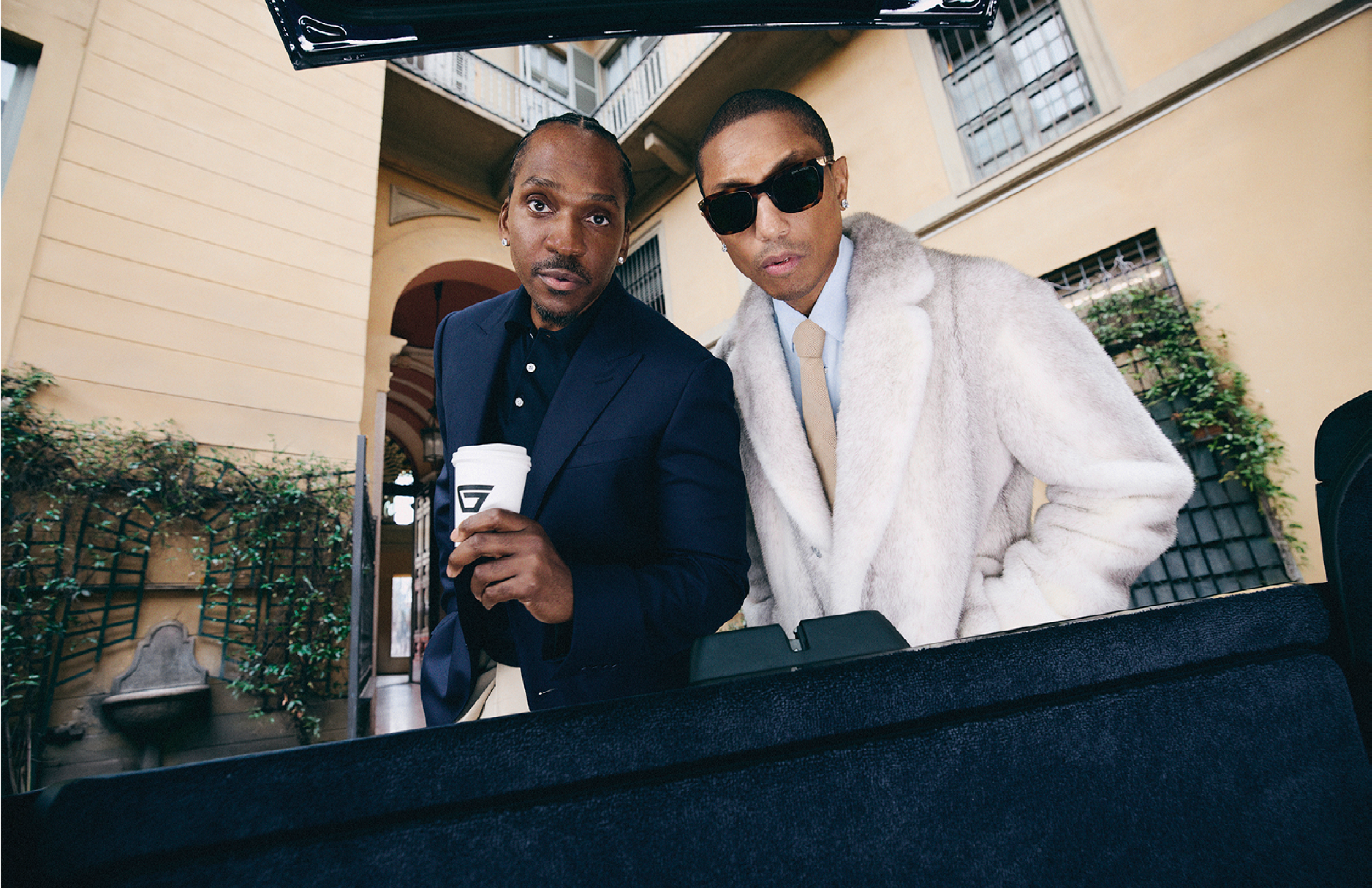
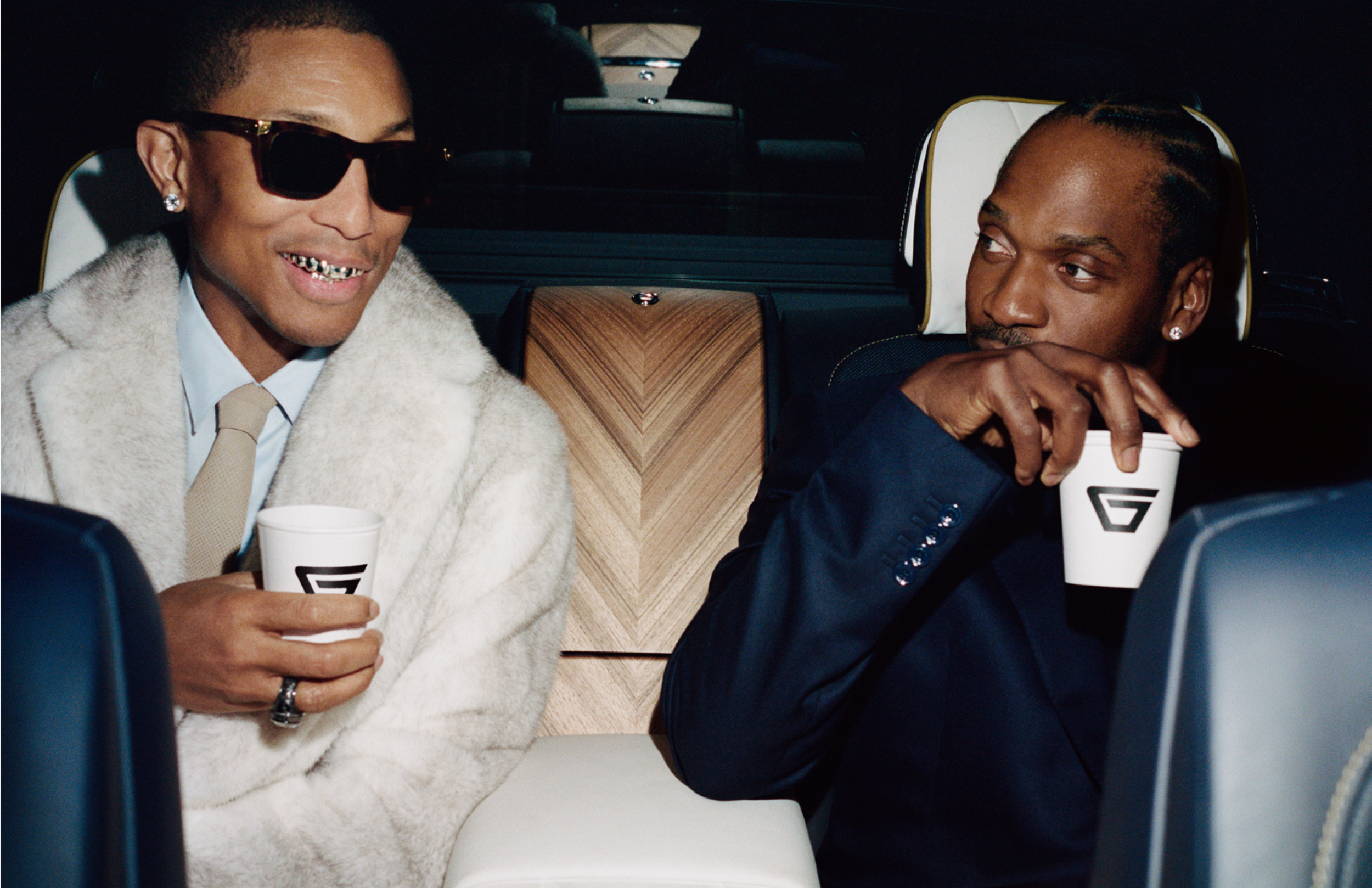
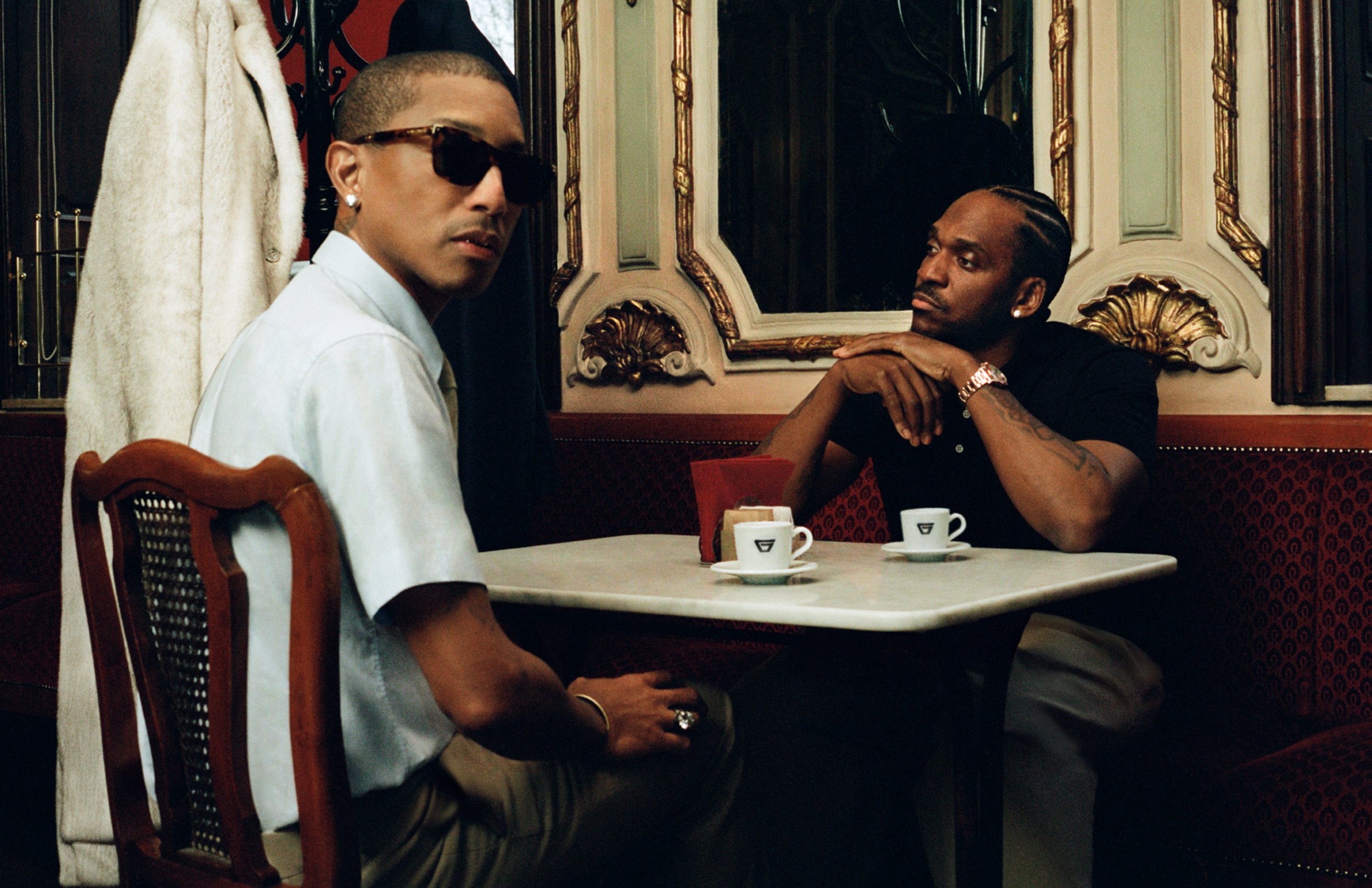
When it comes to tackling your day, a caffeine pick me up is essential for so many people. Pusha T and Pharrell Williams (super-producer, multi platinum artist, entertainer, world renowned designer and entrepreneur) have partnered together this month to launch Grindin, powered by Lavazza and is available in dark and medium roasts for ground and whole beans. Longtime collaborators, Pusha T and Pharrell wanted to create coffee that allows us to enjoy our everyday hustles to work harder whether you’re an early riser, late-night grinders, and don’t simply stick to the storied 9-5. To enhance this partnership, they connected with Lavazza, the legendary Italian roaster whose legacy and heritage in coffee quality and craftsmanship dates back to 1895.
“Pusha and I have been building together since the beginning,” says Pharrell Williams. “From making Grindin back in 2002 to now, it has always been about intention and focus. Coffee has always been part of that discipline. It has been in the room with us when we create. Now it has a name.” Their love for coffee came from working an array of sessions in the recording studio, heading to the gym, being on the road, and creating a sharp contrast to a ritualistic experience.
“P and I were waking up really early. Like 5 a.m. early,” shares Pusha T on the origins of their coffee brand, Grindin. “That was our routine. Alarm goes off at 5, we’re up, and the first thing we’re doing is black coffee or the strongest espresso we can find. That’s how we were working. That was the fuel. We’d be in the studio creating, locked in, just grinding. And then from there we’d go ride 25 miles on the bike. That was the whole rhythm, create, move, create again. Coffee was part of that whole cycle.”
Grindin was roasted for superior taste and quality. The dark roast is sourced in Central and South America as well as in Southeast Asia with tasting notes of cocoa, caramel, and brown spices. The medium roast is sourced in South America and has notes of bittersweet chocolate, caramel, and roasted hazelnut. Whichever blend you choose to enjoy, they are both suitable for filter, espresso, and cold brew methods.
Born from that creative cycle, the hustle continued with a number of great sounds. Pusha’s instant classic, It’s Almost Dry in 2022 was followed by Let God Sort Em Out, which dropped in 2025 and was the first new album in 16 years from Clipse – the iconic and legendary duo that combines the creativity of Pusha and his brother Malice, which produced entirely by Pharrell. This album went on to be nominated for 5 Grammys including Best Rap Album and Album of the Year and ultimately, took home the prize for Best Rap Performance. That same night, Pharrell was honored with 2026 Dr Dre Global Impact Award to recognize his multi-decade influence on music, fashion, and culture.
With an exciting launch ahead with Grindin, Pusha wants us to know that their, “…customer is someone who builds things. The kind of person who wakes up and gets to work, who works out every day, who builds a strong community around them. It’s all about the grind, it’s the first move before you build something. That’s why this brand exists. It’s not about sipping and easing into the morning. It’s about ignition. It’s about the grind – the first move before you build something. That is why this brand exists.”
This belief in ignition has fueled Grammy-winning albums, award winning designs, global tours, runway shows and more. Without question, they understand the business of supply, demand, and hustle!
IG @grindin
PHOTO COURTESY | Grindin Coffee
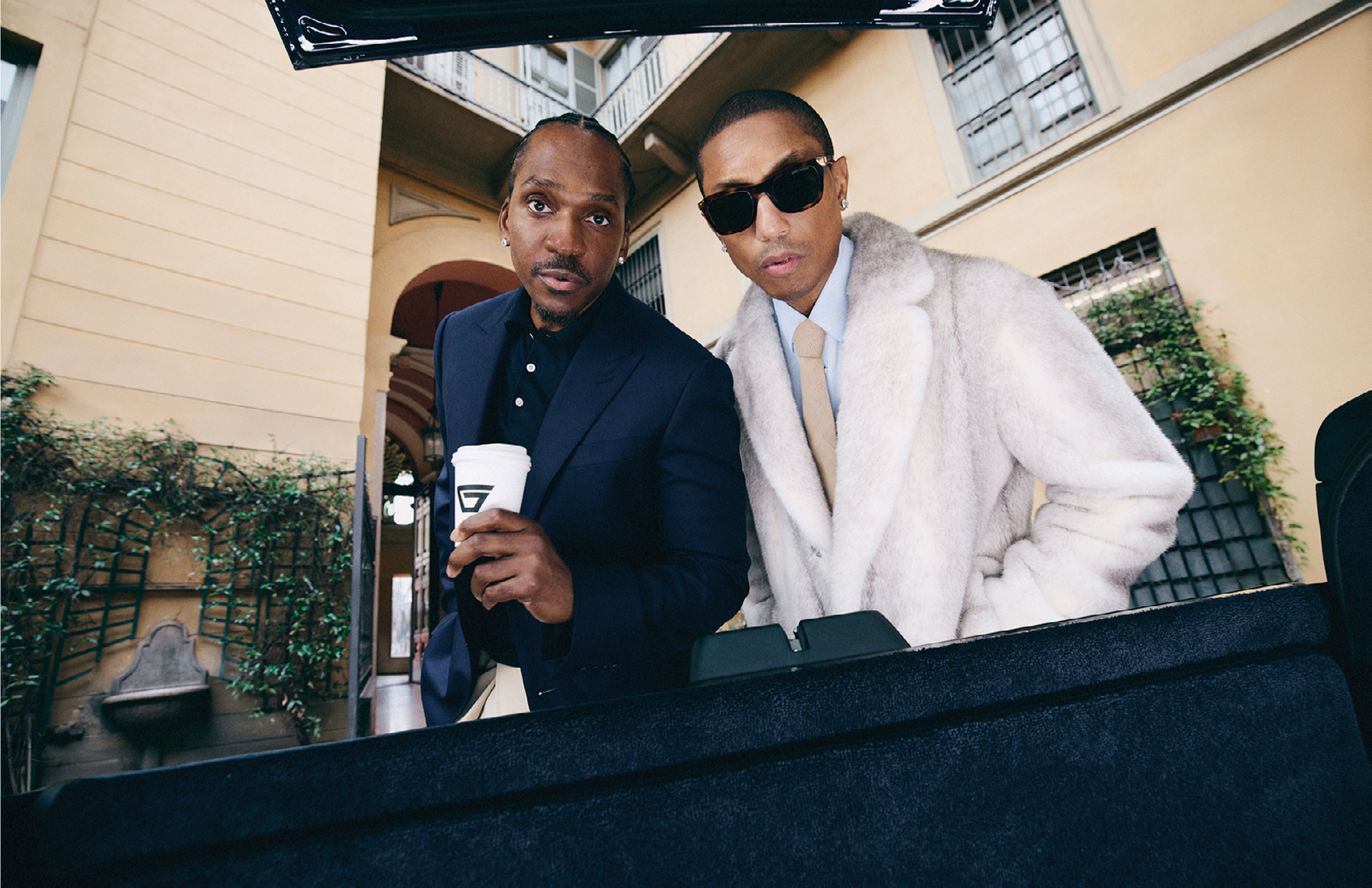
Read the SEP ISSUE #129 of Athleisure Mag and see STILL GRINDIN’ | Pharrell + Pusha T in mag.

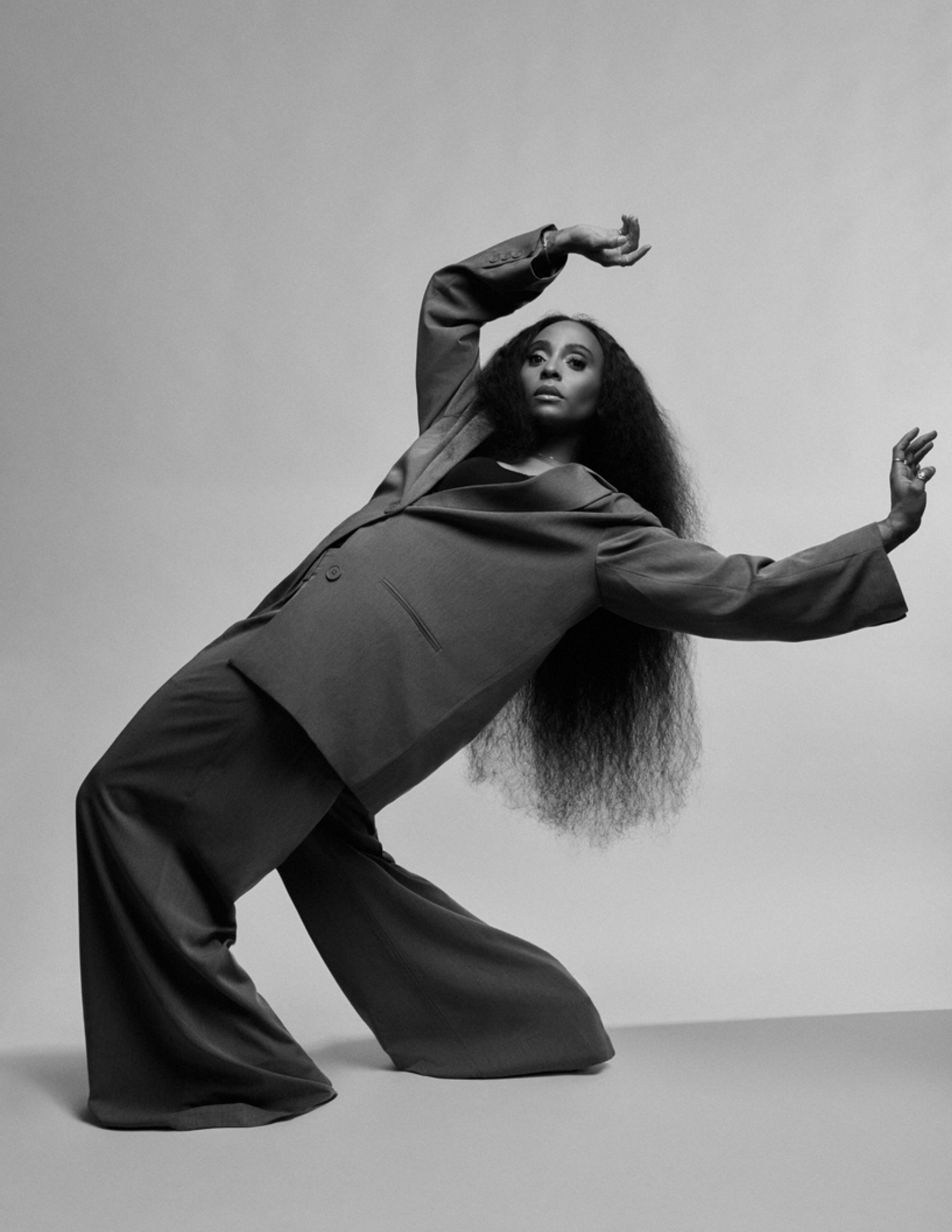
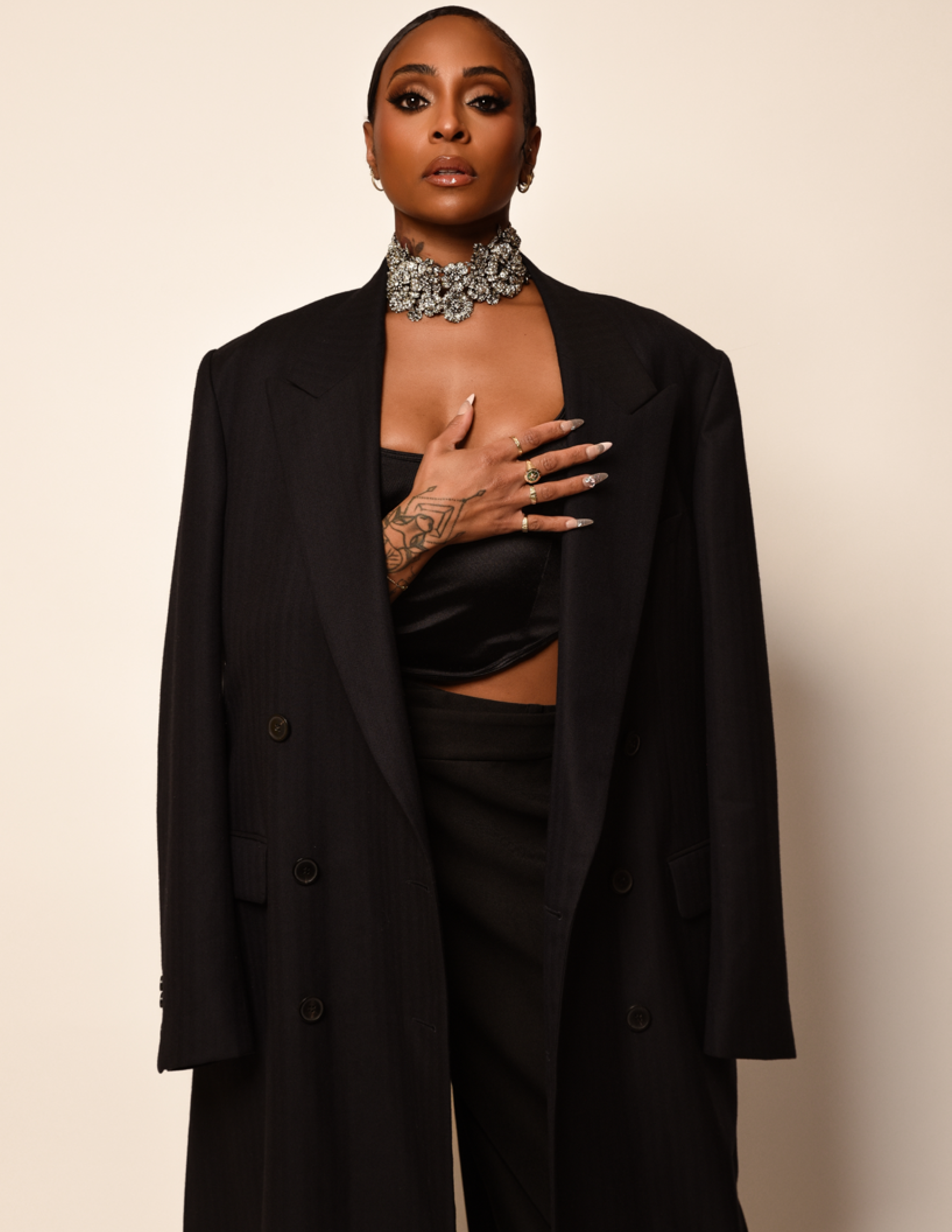
When it comes to watching your favorite entertainer, there are so many components that come together to bring their songs, performance, and personalities to life. Choreography is a major component! We sat down with Jasmine “JB” Badie who has worked with Sabrina Carpenter, Beyoncé, Rihanna, Ariana Grande, and Megan Thee Stallion to name a few!
We sat down with this noted Creative Director and Choreographer to find out about how she got into the industry, the importance of movement, her creative process, and more!
ATHLEISURE MAG: When did you realize that you enjoyed dance and movement?
JASMINE BADIE: I don’t know if there was one exact moment where I realized it. I think I understood the feeling before I understood what I could actually do with it. Music would make me see things — a certain sound could give me an idea, a character, an attitude, a whole visual. Movement eventually became the way I could get those ideas out of my head and make them real.
What’s funny is that I didn’t start out feeling like the strongest dancer in the room. I actually struggled a lot when I first started training. So my relationship with movement wasn’t built from, “Oh, I’m naturally great at this.” I had to find my own confidence in it, and I think that journey is a big part of why I create the way I do now.
AM: At what point did you realize that you wanted to be a choreographer and what do you love about doing it?
JB: I think I realized I had more to offer as a creator when the opportunity just kept knocking at my door. Eventually, I decided to walk in.
I’ve always believed you should wear as many hats as you can, get as much experience as you can and learn everything possible in the field you’re passionate about. Sometimes you’re so focused on one dream coming true that you don’t realize you’re also watering these other inspirations you never even knew you had.
That’s what happened for me. Dance opened the door, but through dancing I was learning so much more — about music, artists, performance, staging, storytelling and eventually what I wanted to create. Choreography became another way for me to use everything I had been picking up along the way.
What I love now is being able to see an idea become something real. Something can start in my head or in a rehearsal room and eventually end up on an arena stage, in a music video, or become a moment people want to recreate themselves. That’s still really special to me.
AM: Can you tell me where you trained and how you would define your style?
JB: My training was a little unconventional. I didn’t grow up in a studio training from the time I was three years old. When I started taking classes, I was actually SUPER insecure. Remembering choreography was hard for me and I would get in my own head about how I looked or what everybody else in the room might be thinking.
Once I moved to LA, I took as many classes as I could from different teachers and went to conventions like Monsters of Hip Hop. I wanted to learn, but eventually I realized part of my training had nothing to do with learning another step. It was learning to trust myself. Once I stopped looking around the room for validation, I realized, “Oh wait, I’m a performer.”
I don’t know that I would define my style by one genre. I think you can definitely feel where I’m from in my movement — Atlanta is always going to be in me — but I’m much more interested in how something feels. I like personality. I like groove. I like a little sauce. And I want the person doing my choreography to still look like themselves.
I also feel like if you have the ear for music and genuinely love the art form, you can do any style you put your mind to. For me, it’s less about putting yourself in a box and more about understanding the music, continuing to learn and being willing to stretch yourself creatively.
AM: Who have been some of the people that you have worked with?
JB: Whew! I’ve been blessed. Between my career as a dancer and my work as a choreographer and creative, I’ve had the opportunity to work with some incredible artists — Beyoncé, Sabrina Carpenter, Pharrell and N.E.R.D., Megan Thee Stallion, Ariana Grande, Missy Elliott, Cardi B, Tate McRae, Victoria Monét, Rihanna and so many others. The list really makes me stop sometimes and say, “Girl… look at your life.” LOL.
And I’ve been fortunate to experience this industry from different sides of the room. Being a dancer first gave me an education that I still use as a choreographer today. Working with so many different kinds of artists also taught me very quickly that there isn’t one formula for being great. I think all of those experiences helped shape the creator I eventually became.
AM: You are a creative director, choreographer, and creative architect behind Sabrina Carpenter’s most talked about performances. How did you connect with her and when you are working with someone, what is your creative process when it comes to bringing your visions to life?
JB: Sabrina and I started working together when I was hired to choreograph Fast Times. We started rehearsing in October 2021, and honestly, it was kismet from there.
We clicked FAST. We’re both Tauruses, so it was very much, “Ohhhh, you get it, get it, got it!” LOL. And she has the same birthday as my sister, which I’ve always found so special. There were just these little connections from the beginning. But beyond that, I saw soooo much for her. I saw possibility. I saw where we could go creatively, and thankfully she trusted me enough to go there with her.
My process now is very instinctual, but it’s also incredibly detailed. I pay attention to the person in front of me. I want to know what makes them comfortable, what makes them uncomfortable, what they naturally do well and what we can pull out of them that maybe they haven’t seen yet.
I’m also a HUGE movie buff, especially old films. I’m obsessed with raw cinematography — when something can be captured so artistically and delicately and then you pair that with good writing? Ugh, it fills me up. I think that naturally affects the way I create. I’m not just thinking about an eight-count. I’m thinking about what you’re seeing, what you’re feeling and what the whole picture is saying.
AM: How do you approach working with someone for a music video, a multi city tour, or an intimate performance?
JB: I think the biggest difference is understanding what each space is asking from you.
With a music video, I have the luxury of the camera. I can make something really small feel huge because I know exactly what you’re going to see. We can do another take. We can change an angle. We can catch that ONE little moment perfectly.
A tour is completely different because whatever we create has to survive. LOL. This person has to do it over and over again, sometimes for months. So now I’m thinking about the whole journey — where we’re giving energy, where we’re conserving it, what happens between songs, how the artist feels physically and whether the person in the very back of the arena is still getting a show.
And intimate performances are fun because you can let people come to you. You don’t always have to yell creatively. Sometimes a whisper is enough.
That’s really the challenge I love: figuring out how big or how small something needs to be without losing its impact.
AM: How important is fitness, endurance, strength, mobility, coordination, and recovery of the body when it comes to preparing women’s bodies for these incredible performances?
JB: EXTREMELY important. LOL.
What people see is the final two or three hours onstage. They don’t see everything the body has already done to get there.
Especially for women, we’re asking the body to do A LOT. Sing, dance, remember choreography, breathe correctly, run around a stage, sometimes do it in heels, change clothes in two minutes and then walk back out like none of that just happened. That’s an athlete to me.
So I don’t look at conditioning as separate from the performance. It is part of the performance. I want to know that when the lights come on, your body already understands the assignment. And recovery has to be respected just as much as training. You can’t constantly ask your body to give without giving something back to it.
AM: Where do you start when it comes to building a dance routine especially one that becomes a storytelling element to an entertainer’s arc that we can enjoy on stage?
JB: I usually sit with the song before I decide what it needs.
I want to know what catches me without forcing myself to find it. Sometimes it’s a lyric. Sometimes it’s something way underneath the track. Sometimes it’s literally a pause. And sometimes the thing that makes the most sense is not dancing at all.
Then I start asking myself what we haven’t seen yet. If we’re three songs into a show and I’ve already given you BIG, BIG, BIG, maybe the next moment needs to pull you in instead. I think choreography becomes storytelling when you stop treating every song like its own little island. Especially in a full show, I want one moment to lead you into the next. By the end, hopefully you didn’t just watch a bunch of dances — you went somewhere with us.
AM: As you have worked with so many people as well as creating iconic moments and dances from Ariana Grande, Beyonce, Megan Thee Stallion, Missy Elliott, Tate McRae, and Pharrell Williams to name a few — what are 3 performances that you are most proud of being part of?
JB: Oh this is MEAN. LOL. There are so many.
But right now, I would say Short n’ Sweet Tour first. Choreographing a sold-out arena tour is something I’m incredibly proud of. The amount of work and detail that goes into creating an entire show is completely different from creating one performance. Watching all of those pieces finally live together in front of thousands of people every night was very special.
Manchild would absolutely be another one. You create something in a room and hope people connect with it, but you can’t manufacture what happens after you let it go. Watching that dance go viral and then seeing it make its way into Fortnite was WILD. LOL. That’s when you realize something you made has officially left the room and belongs to everybody now.
And Sabrina’s Headlong performance at Coachella 2026. I’m just really proud of what we created there. Coachella gives you this huge canvas, and being able to create on that scale while still finding moments that felt specific was exciting.
And listen, I know you said three, but the BRIT Awards is getting an honorable mention because I LOVE that performance. LOL.
AM: How do you keep your body at its peak when it comes to being able to have the physical and mental resources needed to work with your clients?
JB: I play tennis whenever I can. I like that it gets my heart rate up without me standing on a treadmill staring at a wall thinking, “When is this OVER?” LOL. I’m competitive too, so give me a racket and now suddenly cardio is fun.
I also weight train with my trainer Oscar Cayetano. Strength has become really important to me because my work is physical even when I’m not the one performing. I can be on my feet for hours, demonstrating, rehearsing, traveling and then waking up to do it again.
Mentally, I’m still learning balance. I can get VERY locked into the work. So for me, taking care of myself sometimes means remembering that I am a human being outside of whatever I’m creating. Rest, getting quiet, playing tennis, watching a great movie — those things refill me too.
AM: What are 3 workouts that you do that we should consider placing in our fitness routines?
JB: I’m definitely a strength-training girl. I work my legs a lot because I need them! LOL. Squats are always in the mix.
I also focus on my arms and back. Push-ups are simple, but you feel them and you don’t need a bunch of equipment to do them.
And then core. Crunches, core work — all of it. I think having a strong center helps everything else, especially when your day requires you to be on your feet and moving as much as mine does.
So if we’re keeping it simple: squats, push-ups and crunches. You can do all three almost anywhere, so no excuses. LOL.

AM: How can choreography be a form of athletic training as well as building confidence?
JB: Anybody who thinks choreography isn’t athletic should come do a full-out rehearsal and then we’ll talk. LOL.
You’re using your entire body while your brain is doing ten things at once. You’re remembering movement, listening to music, thinking about timing, spacing, the people around you, your breath and what comes next. Then somebody says, “Again!”
But I think movement can do something even bigger for your confidence.
I know that personally because I wasn’t always confident in class. I used to worry so much about forgetting the steps or what somebody else thought about how I looked doing them. Eventually I realized I was giving everybody in the room more power over me than I was giving myself. When I stopped doing that, I found the performer in me.
SO yes, choreography trains the body, but learning to move without constantly judging yourself can train something else too. You start trusting yourself. And that confidence doesn’t have to stay in the dance studio.
IG @mssjb
PHOTOGRAPHY CREDITS | PG 90, 94, 100 Tommy Flannagan | PG 91, 97 Mason Rose | PG 98 COURTESY Jasmine Badie

Read the SEP ISSUE #129 of Athleisure Mag and see ON THE STAGE | Jasmine “JB” Badie in mag.

PHOTO CREDIT | Roc Nation
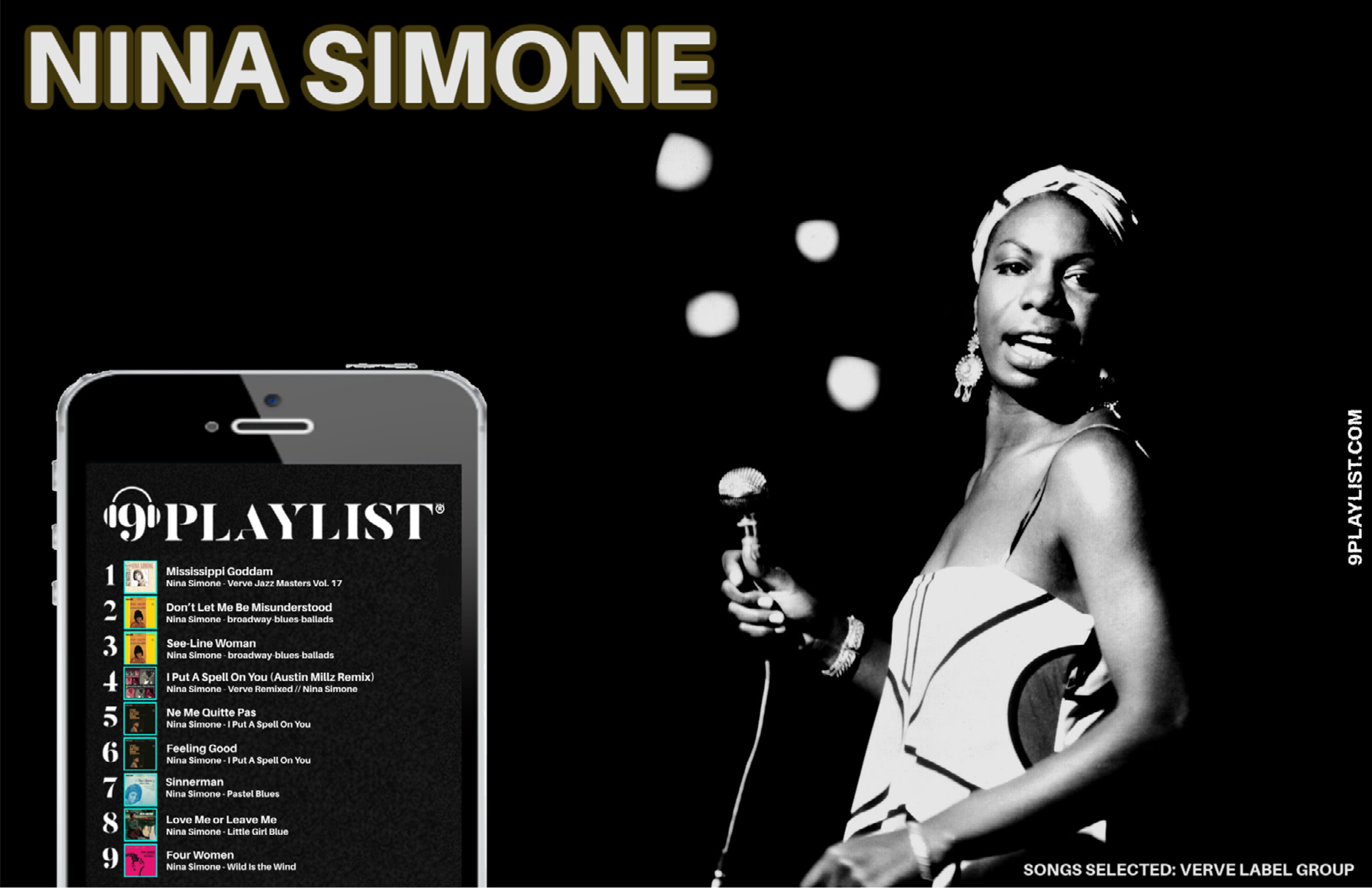
Read the SEP ISSUE #129 of Athleisure Mag and see 9PLAYLIST | JAŸ-Z in mag.
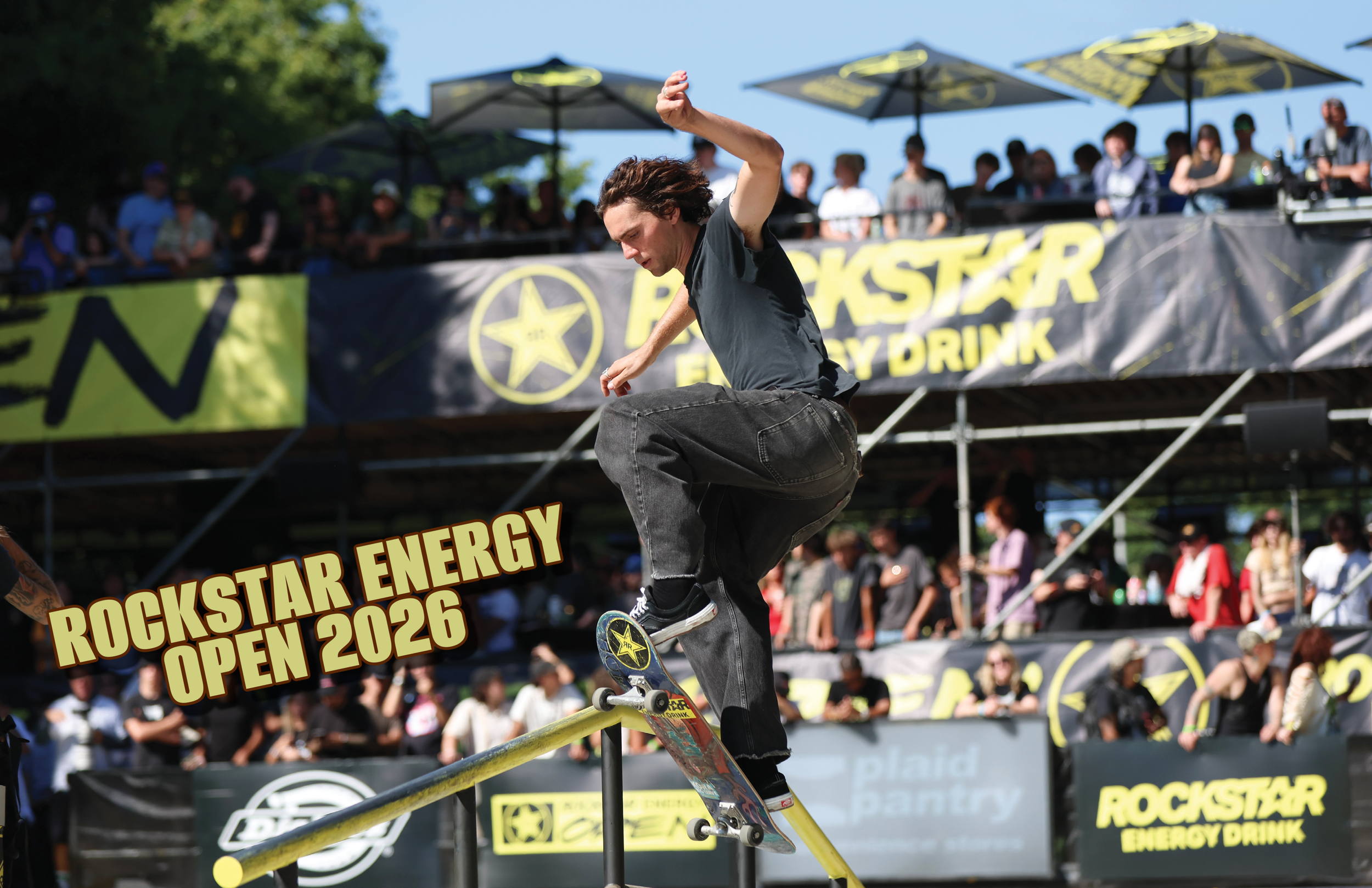
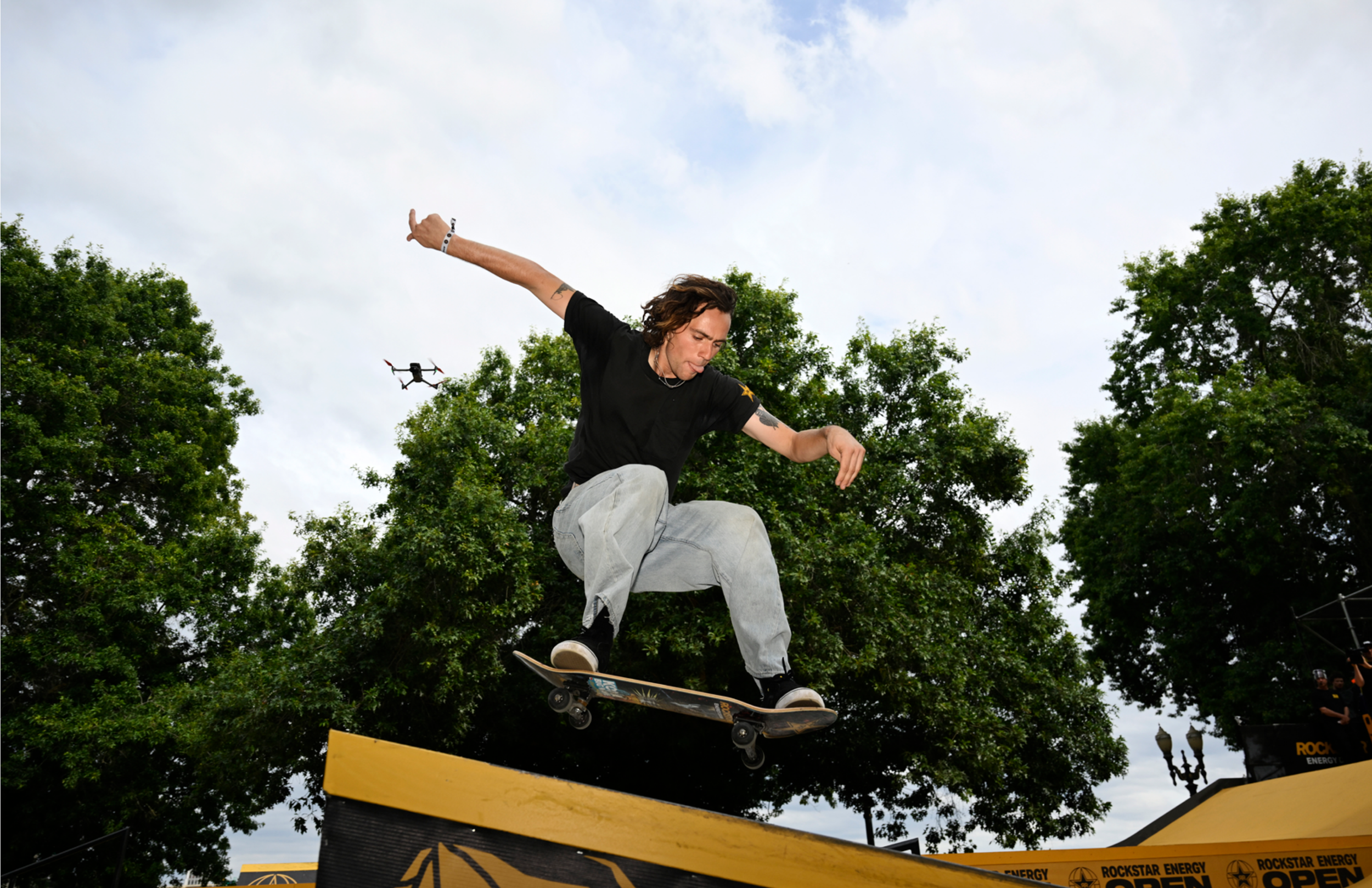
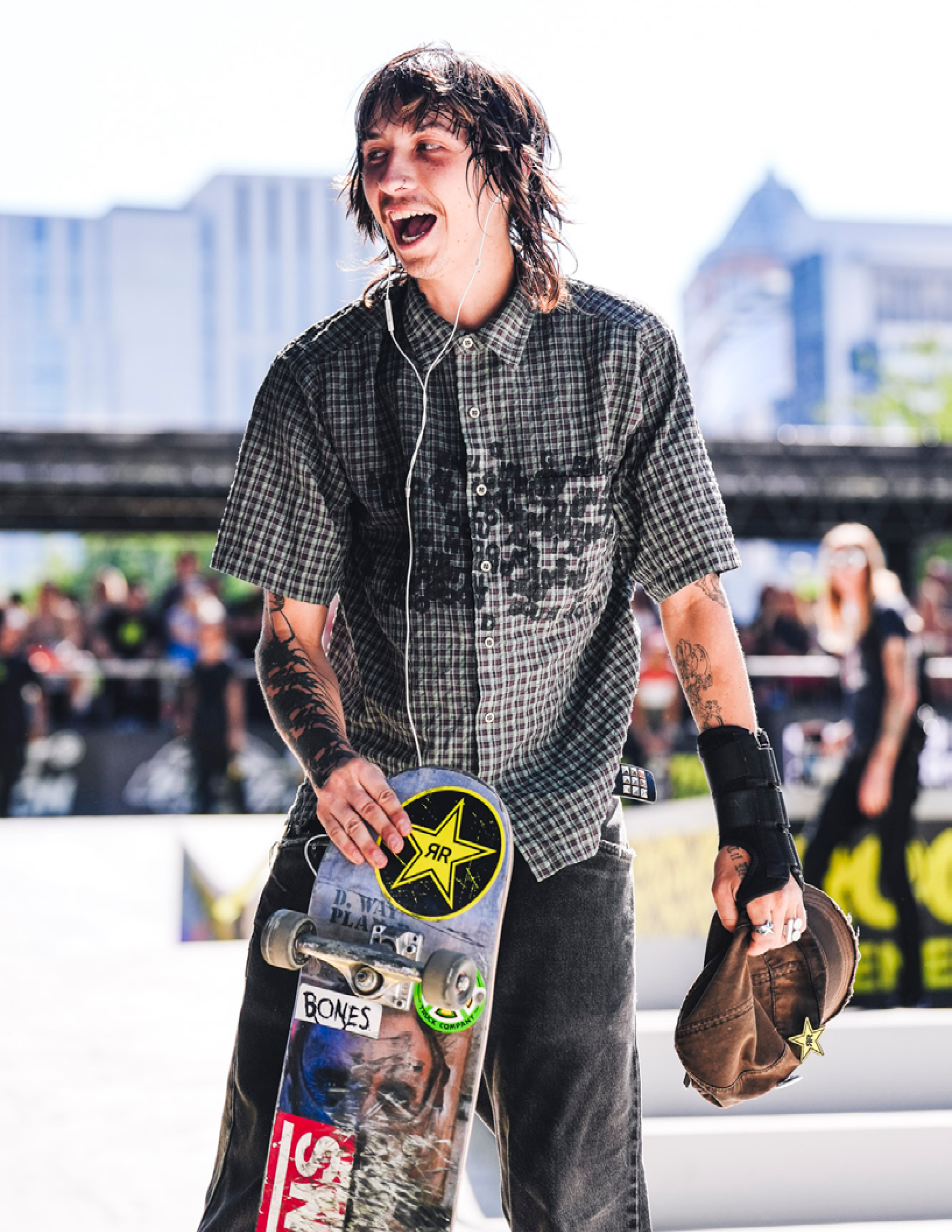
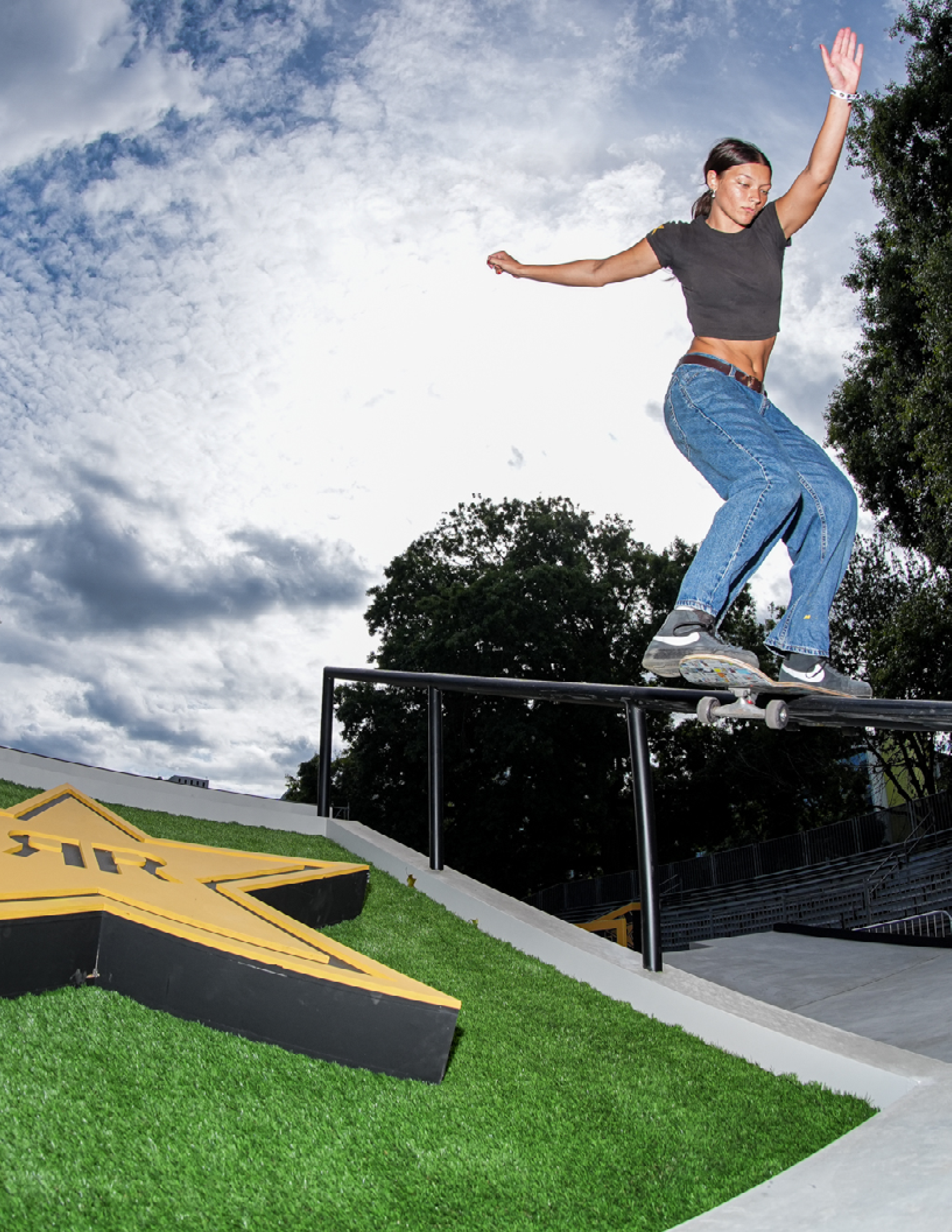
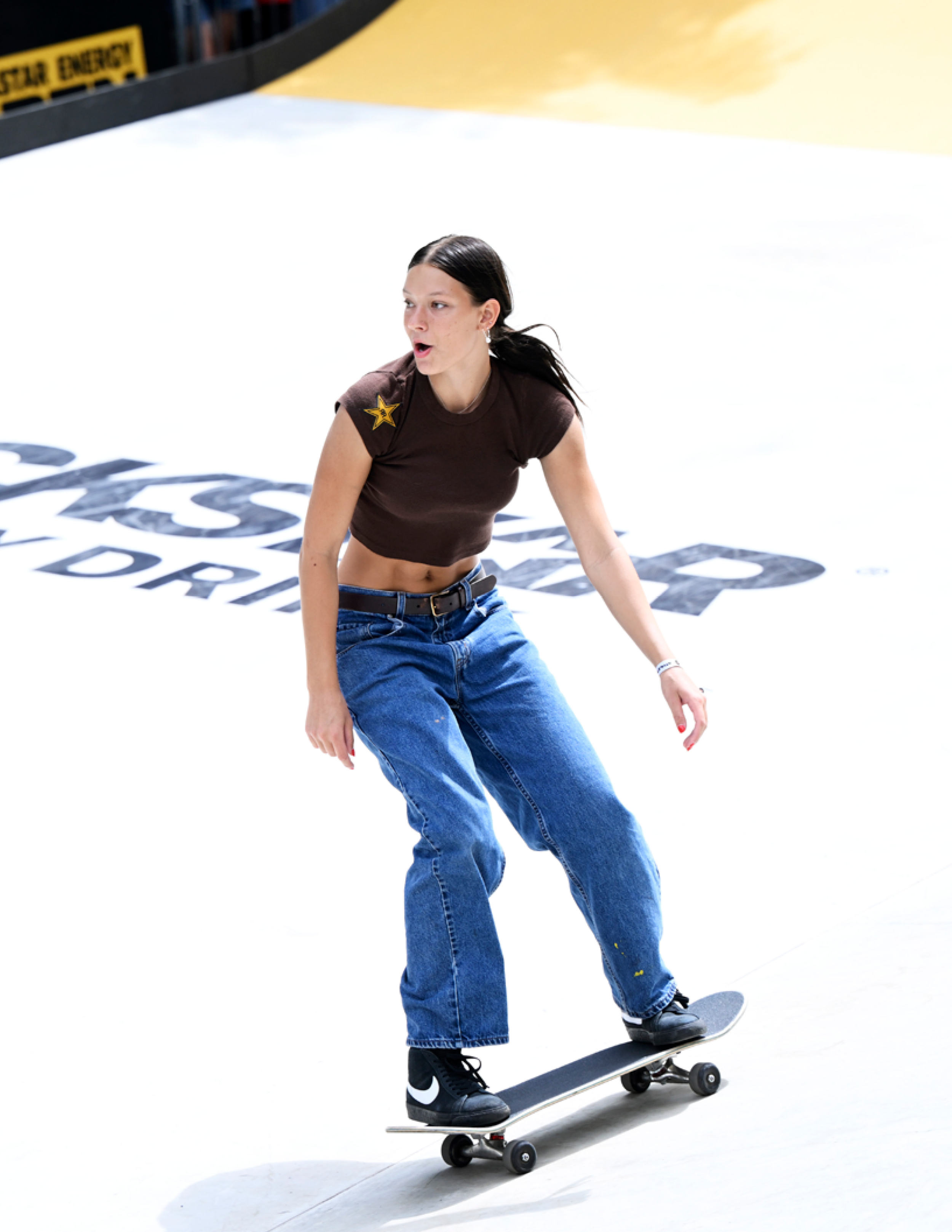
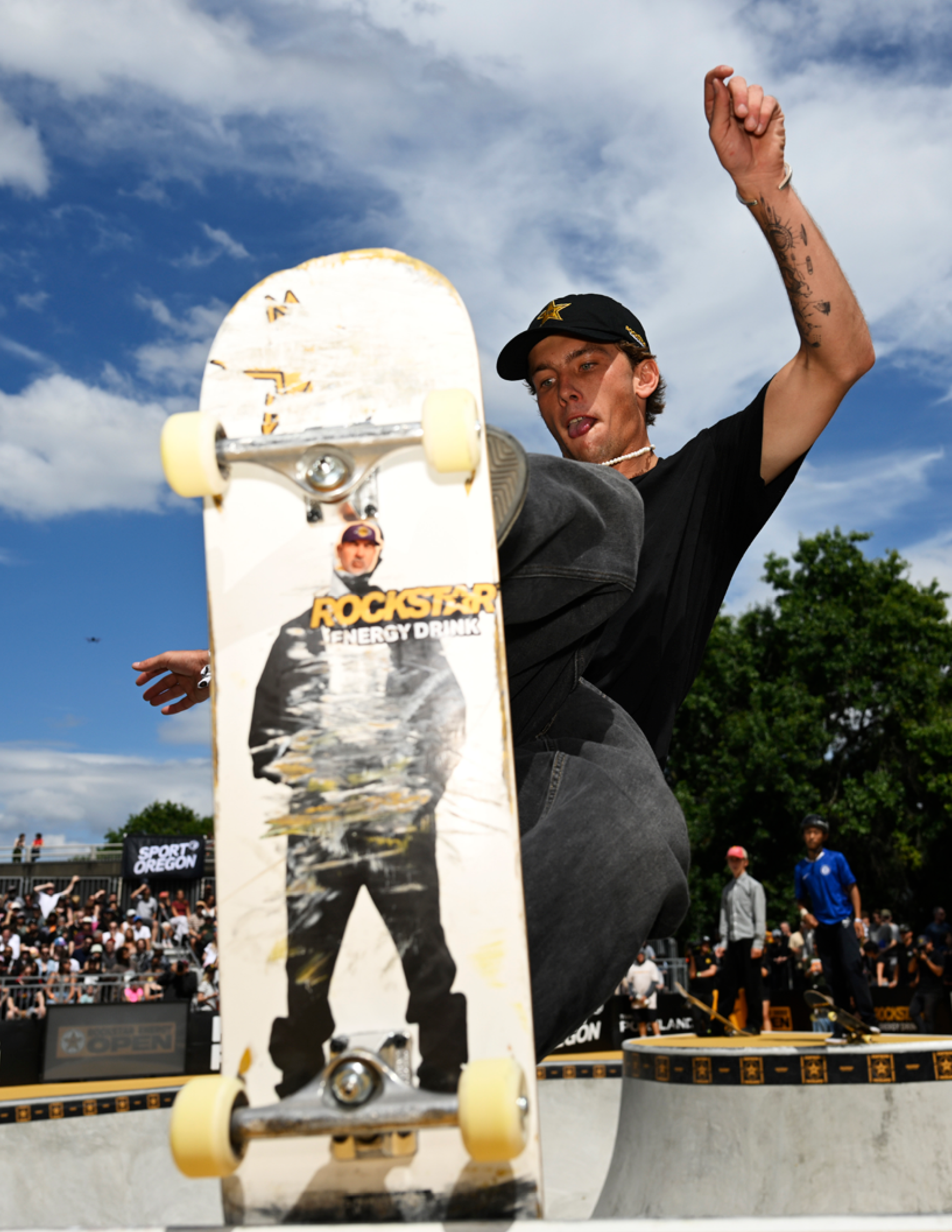
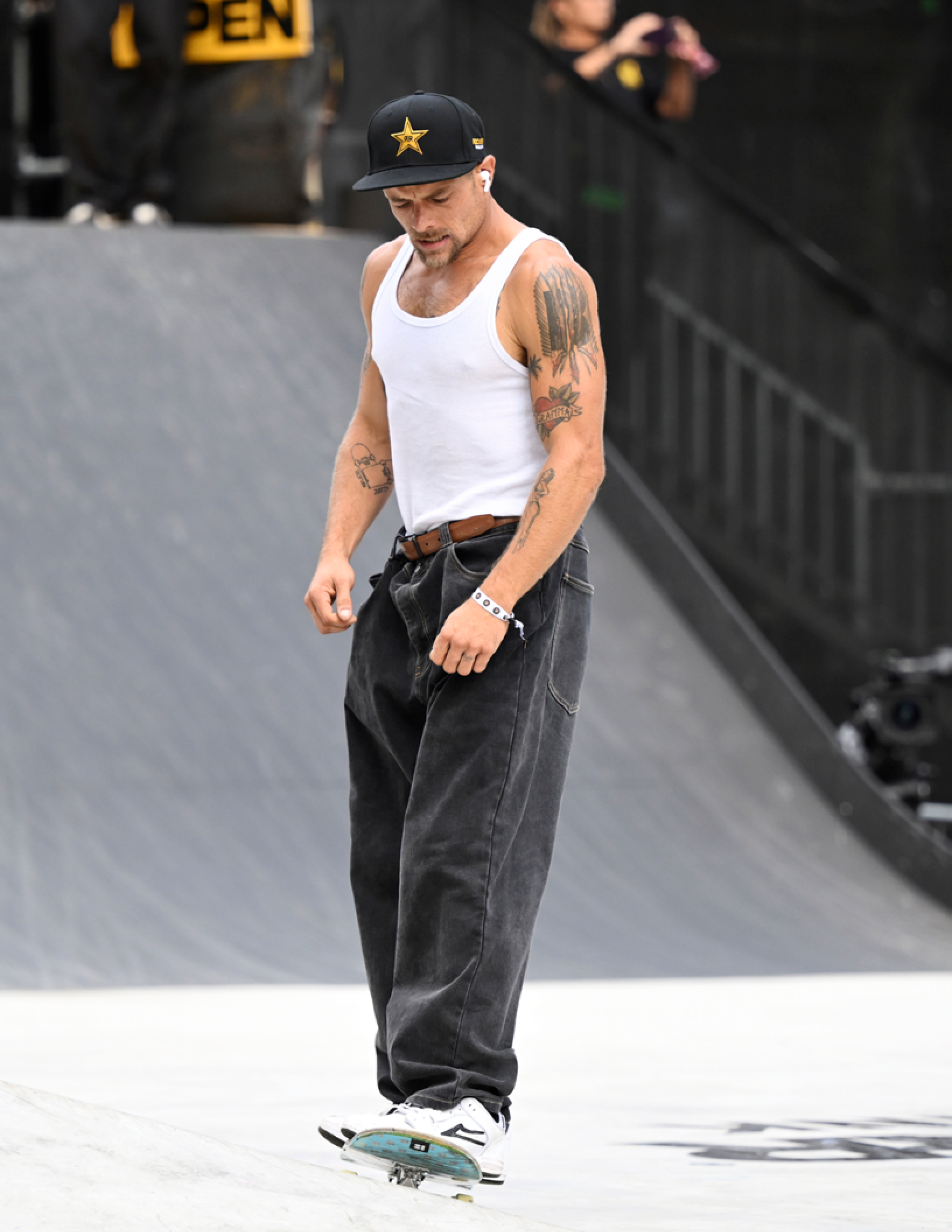
This month, the world of action sports had their eye on the 3rd Annual Rockstar Energy Open which is a 3-day annual skateboarding competition and music festival at Tom McCall Waterfront Park in Portland, Oregon. Over the days of this festival, attendees enjoyed skateboarding contests, live music, and the festival village which included art installations, interactive sponsor setups, and local food trucks.
We sat down to talk with some of the athletes that participated this year which includes: 2X RSEO and 6X X Games Medalist Braden Hoban, 2X RSEO and X Games Bronze Medalist Lazer Crawford, X Games Medalist and Team USA Olympian Paige Heyn, RSEO Bronze Medalist and 2X Team USA Olympian and 2X X Games Bronze Medalist Bryce Wettstein, Team USA Olympian and RSEO Gold and 4X X Games Medalist Chris Joslin, and RSEO Silver and 2X Team Australia Gold and 6X X Games Medalist Keegan Palmer. We talked about their style of skateboarding, how they train, what they were looking forward to with the games, and more.
ATHLEISURE MAG: What drew you to skateboarding and when did you realize you wanted to do it as a pro?
BRADEN HOBAN: What drew me to skating is watching my neighbor skate his half pipe when I was 4 years old. I was obsessed instantly.
LAZER CRAWFORD: I guess I grew up around it cuz my dad was a skater and so were my two older brothers but I remember the day I decided I wanted to skate, X Games was playing on the tv and I went into our garage and grabbed my brothers board and that set it all off.
PAIGE HEYN: My uncle gave me a skateboard when I was younger and I would always kinda mess around on it but when I did my first skate lesson at 8 years old I fell in love and knew I wanted to skate forever after that.
BRYCE WETTSTEIN: My dad introduced me to it. It was fun to be able to see it from his perspective and as I got older, I fell in love with it on my own. There were challenges which are a blessing now, but at age 13, 14, 15, I began to fall in love with it even more. It also helped me love music and my other sports more – like surfing and volleyball.
I love the intimacy and focus you have when you’re skateboarding and how beautiful it is. The passion, grit, beauty and love to create real moments with real friends and family. How to navigate ups and downs, have perseverance. Sometimes you over complicate it and sometimes you don’t over complicate it – and that’s what makes it simply beautiful.
CHRIS JOSLIN: I always loved the freedom skateboarding allowed. No coach, no rules just you and the board.
KEEGAN PALMER: Something that got me really excited while I was a kid was seeing all the pros coming out to skate in Australia. They were really motivating because they showed me that I could make a career out of something I loved and something that was so exciting to me.
AM: For those that compete in street, what do you enjoy about this?
BH: The art of street skateboarding is what I enjoy, so being able to skate contests is great because it gets you sharp for street skating.
LC: Street contests are cool there fun when you can land your tricks haha but at the end of the day I’m a street skater and that’s what makes me happy.
PH: I love all the girls, they’re my best friends.
CJ: I enjoy the fact that skateboarding has taken me all over the world and seen amazing places while getting to ride my skateboard and have fun.
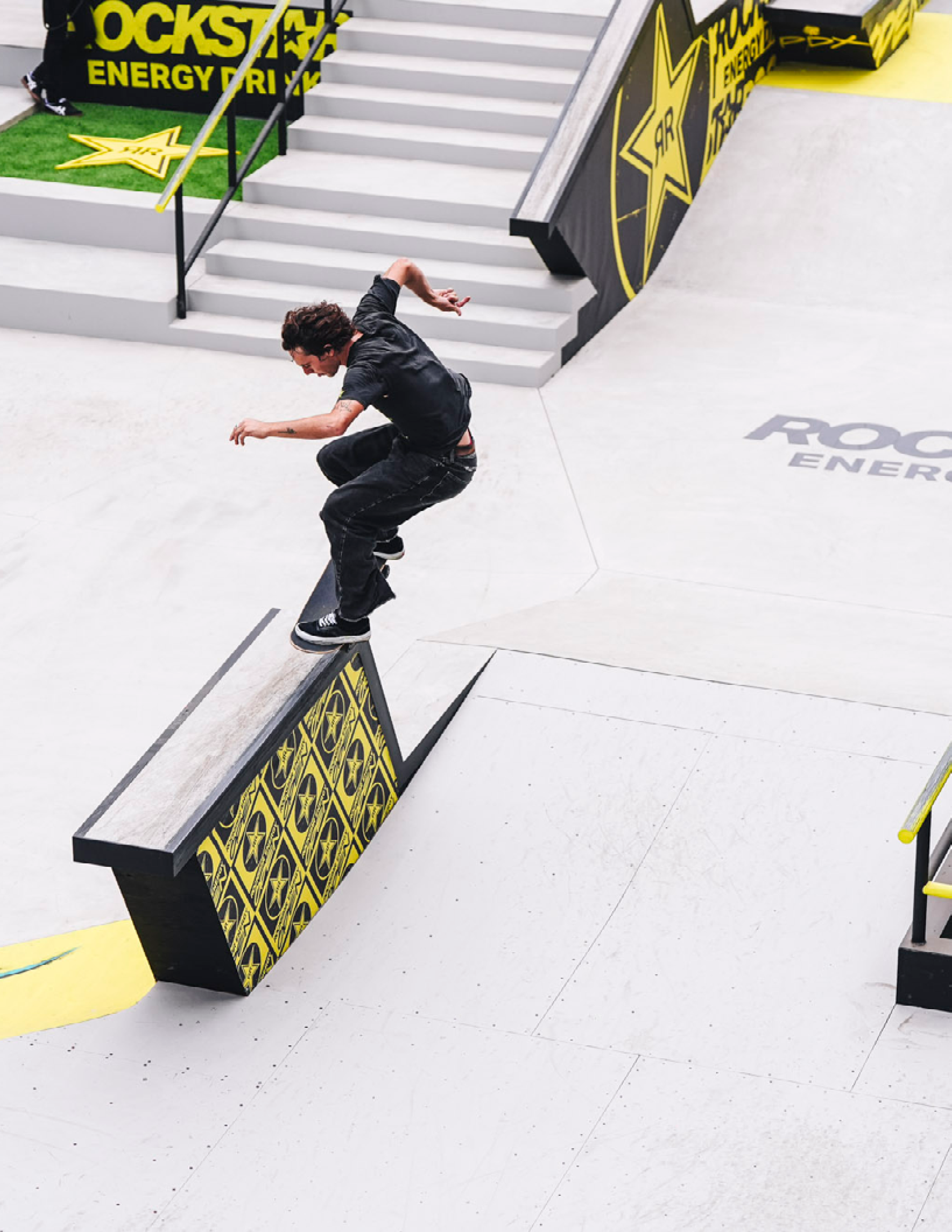
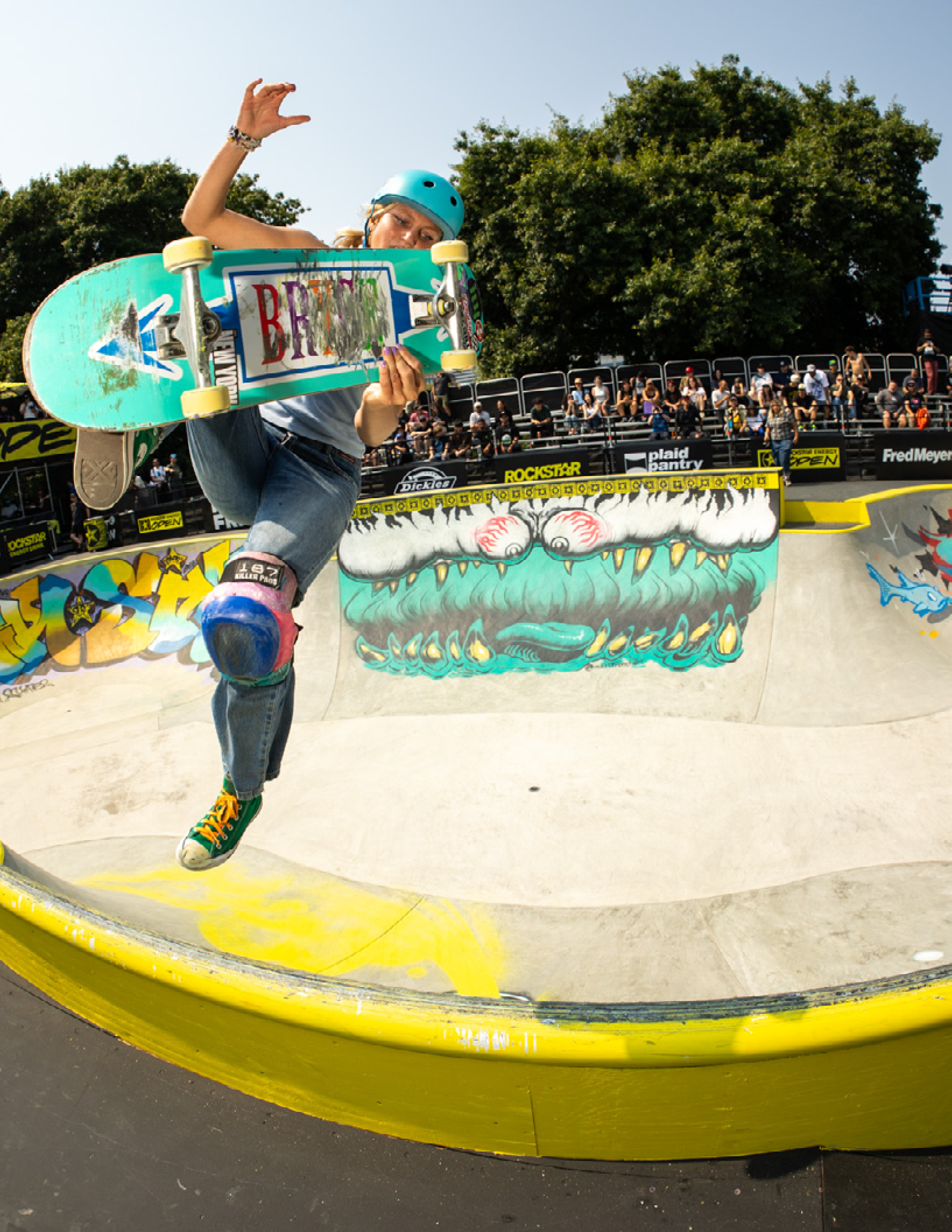
AM: What do you enjoy about competing in park?
BW: I love figuring out the bowl. It’s like a puzzle. You have to intermingle with people in a cohesive environment, like an island. It feels casual yet there’s something brewing and we share our love for skateboarding. After going to the same spot, people see you grow up over a long time and we are all around each other’s progression over time. Your mind is constantly figuring it out new lines for tricks, figuring out rhythm and cadence of the ramp. It’s a surprise to skate the course every time, it’s never the same. The process resembles life - soaring and over coping, having fun, enough for flow state and push past boundaries and not over thinking too hard. Always feels familiar but there’s always room for growth.
KP: Something that really excites me about competing is the nervous feelings I get in the mornings before a contest, and even while I’m at the contest. Going through the process of overcoming those feelings or using them to skate my best is really rewarding for me. I also love that I’m always battling against my homies - we all want to see each other do good but we all want to win as well so that friendly competition gets me motivated to skate my best at any competition. For park specifically, I’ve always been more drawn to the airs and spin tricks versus something like jumping down a stair set in a street contest.
AM: What is an average week like when you are training for upcoming competitions?
BH: As of now, I don’t really workout other than just staying on my board as much as I can. Skating skateparks during the week is essentially working out for the contests.
LC: Honestly, it’s always different I’m usually just out filming with my friends not necessarily training at all. Probably should though.
PH: I’m skating about everyday and taking care of my body and definitely trying to have fun with it all along the way!
BW: The training schedule is what feels right. Nurture your soul so you can be open as can be when you’re skating. As I get older, it’s more about my mindset but also about my physical well being. Treat my body right, go to the gym at Nakoa and have a nutrient dense diet - treating it all more serious with a Fun and serious blend. I am more receptive to people around me when I feel distracted. It’s my fresh take and perspective on skateboarding.
When not competing, I do two sessions per day, I skate about 2-3 hours a day and after X Games, it has made me want to skate more but maybe not quite as intensive.
It’s broken out into 2 hours in the morning and 1 hour in the evening. I squeeze in surfing a lot and I’m also trying to prepare for the upcoming Super Girl Pro, and my music. Sometimes I play two gigs a day. Music is healing. Skate, surf and music is like a deep dive in my soul – updating the new me!
When prepping for comp - I skate 2 hours in the morning and 2 hours in the evening. I do quality training sessions for the first part and the second part in the evening is fun skate. More cruising and soul skating, which is fun. I find joy and recharge for the second sessions after my morning ones.
CJ: I would say an average week of getting ready for upcoming contests would contain 3/4 skate sessions along with multiple stretch/mobility sessions a day.
KP: During the average week before a contest, I always make sure I’m not overworking my body and draining myself too much. So I usually skate for about an hour a day. I’ll hit the gym and do some PT around 3 times a week depending on how my body is feeling.
AM: What workouts do you do to optimize yourself in the sport?
BH: I think skating as much as you can so that you can be comfortable on your board.
LC: I just try to stay on my board as much as possible.
PH: I do a lot of yoga in the morning and at night.
BW: For my workouts at Nakoa, I do everything from plyometrics, lounges, squats, weights, cardio, stretch….just all around training. It’s important to be consistent. I eat avocado toast, eggs, Caesar Salad, broccoli, apples, bananas, oranges and pasta with olive oil!
CJ: A lot of single leg stability stuff to help with balance.
KP: My favorite way to work out off the board is by surfing and golfing. Surfing is so relaxing and nice and it always feels really great to be in the water while getting in a good workout. Golf is peaceful and quiet and I really enjoy being able to use golf as a way to stay outside and move my body while learning a sport without the risk of any injury.
AM: Bryce, you are a 2X Olympian. What does it mean to you to be able to represent your country and sport on such a global stage?
BW: It means everything. It feels like an even bigger chance to connect with the world and myself. The chance to be on a big stage and perform feels bigger than me. It’s a combination of having a lot of courage, inspiring others to have courage because when they have it, they have that strength too. Skating in the Olympics feels like another day in my life…like a treat, joyful, something worn on me not just for me but a chance to share my gift with people. Inspiring people is something I feel more of a blessing and something we can all do. I try not to put that pressure on myself because wherever you are, you’re meant to be. All the emotions. I love talking about this, oh my gosh.
AM: Chris, as an Olympian. What does it mean to you to be able to represent your country and sport on such a global stage?
CJ: The feeling of getting to go to the Olympics and compete for America is still so surreal to me and I’m not sure if that will ever change haha.
AM: Keegan, you are a 2X Gold Medalist Olympian. What does it mean to you to be able to represent your country and sport on such a global stage?
KP: For me, it was a special honor and something I am really proud of. It is a really special moment when you get to see your country’s flag being raised in honor of your sport and country at such a global stage.
AM: You will be competing at this year’s Rockstar Energy Open. Lazer, you won in 2024 at the inaugural event. What are you looking forward to?
BH: I’m excited for this whole week. Each year of the Rockstar Energy Open has topped the last.
LC: I’m looking forward to having fun and seeing a bunch of my friends! Rockstar’s contest is the most fun by far.
PH: I’m super excited, the vibe at the rockstar energy open is amazing and everyone is always so hyped!
BW: I love this event because it’s liberating and leisurely after coming off a big X Games experience, which I love. NYC team support gave me that family vibe. Connecting and having a great time. We showcase skateboarding and have a good time as always jamming with friends and being in the moment. It takes coming to another state literally to see our confidence grow. Experiences are a part of us forever. You push yourself but not over push, thankfully! I think I’ll journal about and write about.
CJ: Looking forward to skating the Rockstar Energy Open course, seeing all the homies and enjoying the good times Portland provides for everyone!
KP: THIS EVENT IS WAY MORE EXCITING than any other event. It’s unique and different from all other park contests and I love that I get to compete against friends that don’t typically compete like Clay Kreiner and Tristan Rennie. I think the overall vibe and energy we’ve felt in Portland is what gets me the most stoked and makes it a really fun event to be a part of.
AM: Are there any upcoming events or projects that you have coming up that you would like us to know about?
BH: Yep I have a Rockstar Energy x Thrasher Magazine video coming out in late November that I’ve been working on. I’m super hyped to put that out to the world.
LC: I got a part dropping next month with Plan B I’m excited about that!
PH: Just a lot of traveling and skating!
BW: Recently, it’s to slow down time. Have all this new wisdom but stay humble. Lately I’ve been writing about staying present with Jessie (London) – both cover songs and originals. We have different versions of mixes of old songs. I have an album with my friend Beebs (Money) coming out. So a lot of music things and hopefully release a book of dreams and poems, and maybe an autobiography later on. I’m also working on a video part in skateboarding. I’m attending Mira Costa College and SDSU majoring in anthropology and psychology.
CJ: Nothing too major planned out right now just trying to stay consistent on the board for as long as I can.
KP: I have the 2nd Olympic qualifier for the LA 2028 games in a little over a month, which is really important to me and anyone else trying to qualify for the Olympics. Right after that event, I’m looking forward to a road trip the Rockstar Energy crew is cooking up. We’re going to do a roadtrip to the Sick New World Music Festival in Texas and skate along the way with the whole team so I’m looking forward to hanging with all the homies. As far as projects go - I can’t really share anything just yet but I have some cool things in the works with Quadrant and F1 that I’m really excited to be a part of.
After talking with the skateboarders, we also talked with some of the bands that kept the vibes going! We sat down with Hot Mulligan, PUP, Angel Dust, and Basement to get to know more about their music as well as why they wanted to perform at this year’s sports festival!
ATHLEISURE MAG: Tell us about your band and how do you define your style?
HOT MULLIGAN: We’re based out of Michigan, even though none of us really live there anymore, except for one. And we reluctantly describe ourselves as post-emo, kind of a pop punk, emo, fusion.
PUP: We are a loud sweaty punk rock band from Canada. We’ve been doing this way longer than we ever expected. I still think this is the funniest thing that anyone ever said about us - it sounds like if Modest Mouse, Weezer and the Dillinger Escape Plan had a threesome.
PUP STEFAN BABCOCK: My fashion is very simple. Right now, I’m wearing one of the only T-shirts I own that is not identical to every other t-shirt I own. I usually find one thing that I like, and I buy it in 10 variations, and that’s it. I believe in comfort and efficiency, and I know what I like, and I’m not that adventurous.
PUP STEVEN SLADKOWSKI: My fashion is very simple. Right now, I’m wearing one of the only T-shirts I own that is not identical to every other t-shirt I own. I usually find one thing that I like, and I buy it in 10 variations, and that’s it. I believe in comfort and efficiency, and I know what I like, and I’m not that adventurous.
PUP SB: Okay, minus the not being adventurous part. I feel like I’m the most adventurous of... sartorically speaking, in the band. Uh, Zach is too. Everyone has cool style. But I do echo some of the trying to not overthink it, especially on tour. I have sort of got to this point on the road. You can get very decision fatigue, choice paralysis, because you’re making so many decisions all the time, and you’re exhausted. So, on the road, I will have, usually a pair of blue jeans and a pair of black jeans. And a series of white shirts. And then I’ll be a little more adventurous on stage. For a long time, I would wear a basketball jersey, A -’ cause it’s like universally cool. And we sweat a lot so it was actually very efficient. It actually cools. At home, I’ve been really into loud pants lately. These are not particularly loud, but patterns, crazy pants lately. I feel it’s evolved. Everyone is like, oh, I wear a crazy shirt with very standard pants. Inverting that has really opens some stuff up a bit. What if I just wear crazy pants and crazy shoes? I like crazy shoes.
BASEMENT DUNCAN STEWART: I would say, at this point, Basement is an alternative rock band, which has been formed through a lot of different influences and a lot of different ideas that we’ve all worked together to give us our own individual sound. And I think our personal style, we all borrow from counterculture, from skateboarding, from punk, from work stuff. We kind of pull from more underground styles.
BASEMENT RONAN CRIX: We were talking about how we’re not really easily definable as one specific genre. Because we’re so individual as people, there is a lot of ground covered in the music we make. Same with us, with our styles. For a long time we didn’t really try and style ourselves. As you grow up, you see your counterculture become more mainstream. It becomes a little bit of a weird cycle of, “oh, the thing that I was into, which wasn’t cool, is now cool.” So I’m dressing cool now by mistake. (band laughs) We’re also constantly evolving. We’re always trying to find inspiration in fashion, art, music. It’s all a nice, beautiful cycle of creativity, really.
HM: We just schedule time and lock ourselves in a room and jam and write songs.
AM: Tell us about your creative process and how you approach your music.
PUP SS: PUP is very much the four of us, and it’s a band that couldn’t exist with the three of us. It needs everyone engaged and going to make the things work, but yeah, my process is that I write every day of my life. At first, it would sometimes seem like a chore, but I’ve reached a point with it where I just love it so much that I feel weird if I don’t do it. I write every single day, and then as a band, we take a lot of those songs, and we... tear them apart and rebuild them, and we fight with each other over... what’s good and what sucks. We are all on the same page, and yet constantly disagree, bicker, argue. And that is a product of the four of us having radically different influences, but also radically different tastes, strengths. And, it is kind of the magic of the band. We all respect each other.
PUP SB: We all want the same thing.
PUP SS: We want the same thing. We respect each other, and the butting heads thing is what, I think, makes these songs.
BASEMENT ANDREW FISHER: Our creative process tends to be that one or 2 of us will have ideas that will bring to each other. We work in little groups first before we bring stuff to the whole. Either I’ll be by myself writing ideas to send to, usually Alex. And he’ll say oh, maybe not, maybe yes, and then we’ll get together, hash a few ideas out. I think we’re all constantly striving to find that spark, that feeling of, where you’re fighting over words to express that you like something, and that’s when you know. Hopefully you’ve got something special. We then bring that to the group, and then everyone puts their own touch on things, and we start to look at, what can we add, what can we take away. How does someone feel about this bit or this bit? That’s when the real magic happens and that’s when we, all 5 of us, find that spark and that excited feeling. And then we record it. And that tends to be how it works. Sometimes someone will come with an entire song, fully formed, and everyone’s like, tick, done, next. The more collaborative elements there are and the more push and pull, that’s when I think the best stuff comes out. So that tends to be my favorite way of doing things, but you just have to let stuff happen.
BASEMENT RC: To underline that last point for the newest record wide, because I feel that it was probably the most collaborative record we’ve done so far. Did the most time over it, putting the most, the most thought into it. It was definitely our most passionate project, today. And it’s reflecting how it sounds, how it looks and our work that went into it. Alex put a lot of work into that, and there’s a lot of too-ing and fro-ing.
AM: You guys are performing at the RSEO. Why did you want to participate here, and what are you most looking forward to?
HM: Well, we got asked just a couple months ago, and I’ve always wanted to go to a pro skating event. So to be able to perform at one and watch some sic skating is just sic. Plus, it’s a free event, so it’s cool. We haven’t played Portland in a minute. So excited to have some of our fans come out and not have to pay to see us.
We have a couple guys in the band who are big skating fans. So just the perfect opportunity to play a show and then also get to see some skaters that we like a lot and we got to meet some of them last night.
PUP SS: Well, they’ve been very nice to us, which goes a long way.
PUP SB: I love skateboarding.
PUP SS: We’ve gone to this point with the band where when opportunities, something like this is totally different than a tour. A tour is all right, you know it’s gonna be several weeks. It has its own rhythm. And you need to do that to survive in this world and keep the band on people’s radar. But for fun stuff like this, we go on a case by case basis, and if it sounds cool, it makes sense for us to do, usually we’ll say yes.
PUP SB: I started skateboarding at the age of 35, and it’s fun. It’s fun to be the band that we used to watch in early 2000s movies, that the punk band that plays the skate events is pretty fucking funny for me. We get a lot of weird opportunities in this band, and this is on of them, and we’re just trying to enjoy it.
PUP SS: Yeah, same. hypnotizing. to watch. The last couple of Olympics was skateboarding were fucking amazing. It was really cool.
ANGEL DUST JUSTICE TRIBE: I am a self-proclaimed poser when it comes to skating! I love Rockstar, particularly the yellow Rockstar Energy lemonade, which we always called that yellow stuff. We would make songs about that yellow stuff. It was our drink of choice touring, and I have a loyalty to Rockstar that attracted me to this event. The merge of the extreme worlds of skate and hard core rock ‘n roll.
ANGEL DUST ZECHARIAH GHOSTTRIBE: I came up skating - I don’t skate anymore but I surf still. And yeah, the natural progression of skate and rock ‘n roll. I mean, I got an album because I saw the cover of it at a skate park. So much of punk rock is absorbed from skate videos.
BASEMENT DS: It’s a free open skateboarding music event, and that very much ticks all the boxes for us. It’s a way of giving art and things back to back to the crowd and it’s in Portland, which is one of our favorite cities in America. We want to be playing to new crowds and new faces, and this seemed to be a perfect opportunity to do that. We’ve never played anything like this before. So, to get the opportunity to do that, it was a no brainer.
AM: Are there upcoming tours, festuvals, etc that you are looking forward to that we should know about?
HM: This year we still have a few. We have shaky knees, and we have, what is it, louder than life. Probably a couple more. I’m missing, but yeah, I’ve still got a couple left to do this year. And then we have not a full U.S. tour, but it’s like a 3 week tour. with one step closer, Riley and Wakeley. that starts at the end of October.
PUP SB: Stefan We’re winding down from a pretty heavy year and a half of touring. We got a tour this fall in the States, so come over and see it if you want.
PUP SS: We’ll play in October. We’re playing Riot Fest, which is always a really fun, exciting time.
PUP SB: We’re playing our second record, front to back, which is exciting for us, because it’s been a while.
PUP SS: 10 year anniversary
PUP SB: It’s the 10 year anniversary of that, so, yeah, Riot Fest will be a great time, and then there’s a tour in October. We’re looking forward to it, and equally looking forward to time off after a couple of years of going hard.
BASEMENT DS: In October and November, we have a full US headline tour. We had all the big stops. We go into a lot of cities, and it will be the biggest tour we’ve ever done, for sure. There is nothing more fun than a full US tour around America, as far as I’m concerned. You get to see amazing cities, you can see the country and the food! Our fans are incredible. They’d be so supportive since day one, since our music’s been accessible from the states, our American fan base has been so supportive. So we take every opportunity with such gratitude to come over and we’re so excited.
PHOTO CREDIT | Rockstar Energy Open
Read the AUG ISSUE #128 of Athleisure Mag and see ROCKSTAR ENERGY OPEN 2026 in mag.
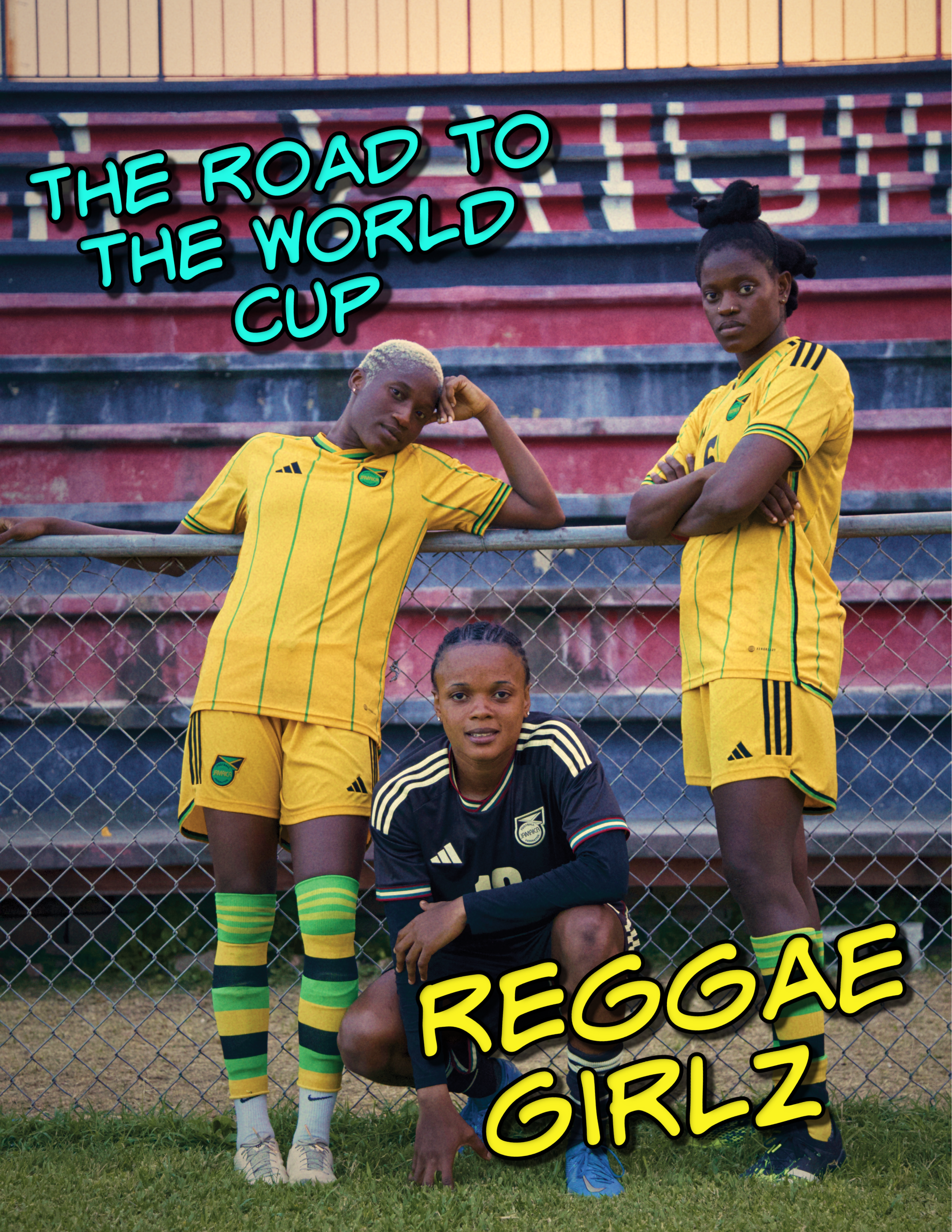
We had the opportunity to screen Reggae Girlz which follows the Women’s National Jamaican Football Team! This documentary film talks about what happened on and off the field as the team prepared for the FIFA Women’s World Cup.
In this feature, we had the pleasure of chatting with one of the filmmakers, Trish Dalton. We wanted to know more about how this project came to light, their creative approach to telling the story of football, capturing the women’s team, the Jamaican Football Federation, and the impact that Cedella Marley and the Bob Marley Foundation’s on providing the resources needed to get these women to the biggest stage in their sport!
ATHLEISURE MAG: Before we delve into Reggae Girlz, what was the first film that you fell in love with that made you feel like you wanted to work in this industry as a filmmaker?
TRISH DALTON: I think I was inspired by films that were telling women stories. There were a lot of independent films and then those about women told by women! It sounds crazy to say, but you know seeing a woman’s voice being shown - it’s a softer voice, and I hesitate to say one director because I feel like it was more about all of them. Many, you know, men, men’s directors as well, were aspiring to me like ones that could make a difference such as Michael Moore. I felt like he was creating a social impact, and I was an activist. I was interested in battling kind of all the things - race rights, class rights, and I was anti-war. I was an activist and making films. I felt like I was always drawn to women’s stories. That was always the thing for me. They needed to be told, and I felt like the best way that I could help women was to amplify their stories.
I fell into documentaries. As somebody who already loves storytelling, I was always into painting, writing scripts, and directing scripture. So, I started out making films. And then it was making plays and art.
When I would watch stories on women, I felt so seen and I knew that this was my world. I also traveled a lot when I was in High School and in University. That’s really when I fell into telling stories.
What did you think about the film?
AM: I have so many thoughts. I remember in prep for this interview I knew it was getting later in the day and as it is about an hour and a half, I knew I had time. As I watched it, I enjoyed seeing the Women’s Jamaican Football team and how they navigated getting to the World Cup, their graciousness, athleticism, etc was so great. But it’s a challenging film as you see how there were complications at every turn and not just related to being on the field. The lack of the friendlies, the federation providing resources, and more was really eye opening. At the same time, seeing how Cedella and the Marley Foundation stepped in and even how Adidas in the Netherlands supported them. There were a lot of dynamics so the film was excellent and very multi-dimensional, but seeing the issues was something that makes you reflect throughout the film.
I’ve also been a fan of you and your creative partner’s work as well as I did see Student Athlete a few years back, but it was the film, Diane von Furstenberg: Woman in Charge was the first film that I saw from you guys which was amazing. DVF is such a blueprint when it comes to being a woman who has created an incredible fashion empire, a classic go-to for our closets, and also being a major beat in the pulse of so many changes and portions of the industry from various sides. Seeing that come together in your film was amazing.
TD: Oh wow, thank you!
AM: Speaking back to the dynamics of my initial thoughts of the film, you get the sense that you were with the team for awhile as we see them at various months.
TD: Laura Smith is a Director/Producer in the UK, and she saw them play in 2019, and she thought that they were incredible. At that time, they were the first ever Caribbean women’s team to go to the FIFA World Cup. She was like, there’s a story here. So, she partnered with Astronaut Films in the UK, and they reached out to Sharmeen Obaid-Chinoy and I because we had made Student Athlete, which is about sports rights, and we had both made a lot of women’s rights stories. So they reached out to us and asked if we were interested.
We met the players during the 2020s over Zoom. I was immediately hooked with these women who were supporting their families. They’re dealing with all of this - just incredible women and great stories. I said, “no matter what happens with the team, I think this is a great story.” So, we started pitching and trying to fundraise. We had some interest, but nobody came in until Red Bull Studios took a chance on us. We were so grateful because when they qualified for the second time, which was the first time that any Caribbean team men or women’s had qualified twice, so it was huge. They agreed to fund our filming so, we filmed leading up to the Cup as you saw.
She says that by participating in this project, it allows not just the Reggae Girlz team, but all the young women in Jamaica, the opportunity to be able to play. It shows the power of one person and the importance of having the resources and the support of Bob Marley Foundation to do that.
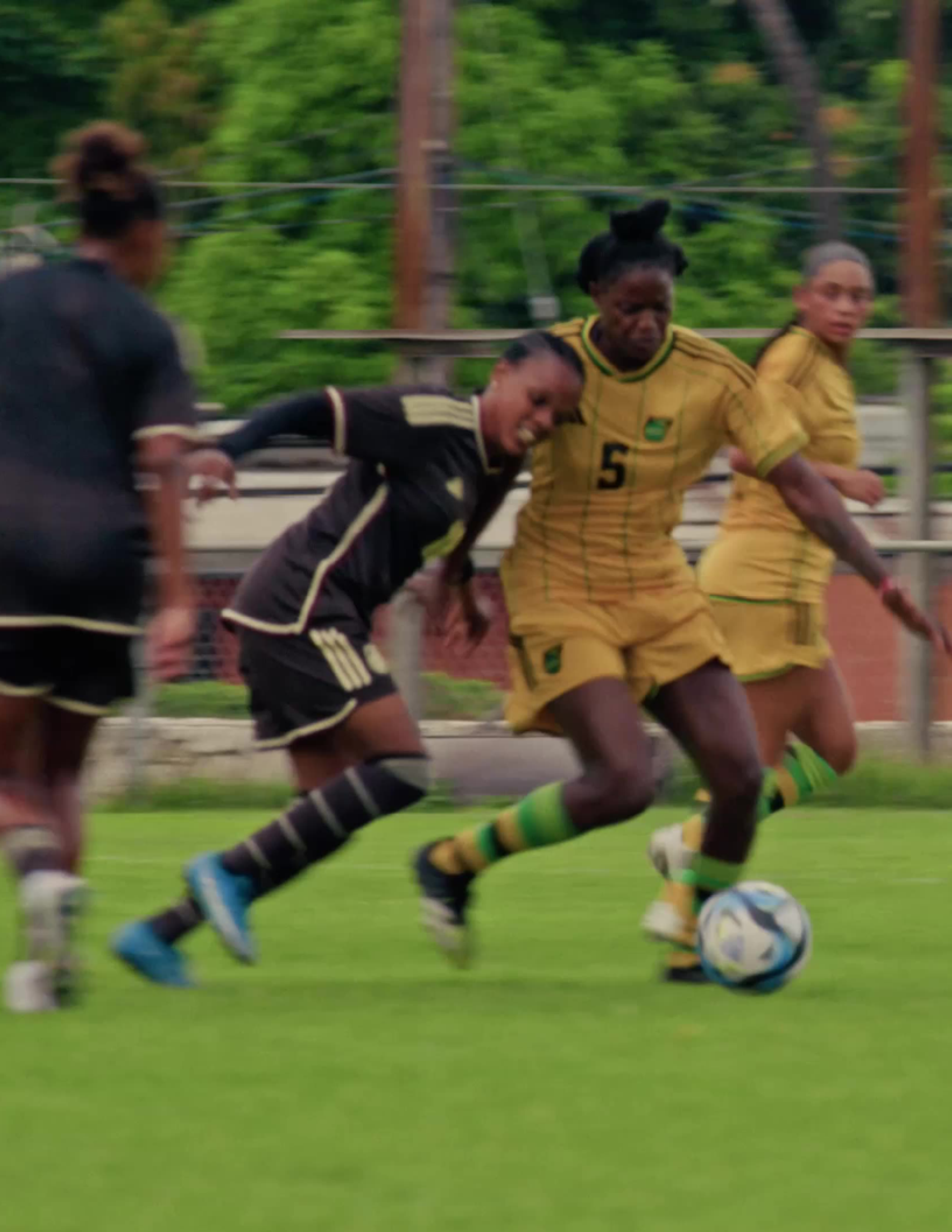
AM: One of the things that I love the most about the film is that there is an intersectionality between seeing them as individuals, team members, being focused on going to the World Cup, and also having to talk to the Jamaican Football Federation to talk about the things that didn’t make sense for them as they prepare to hit the world stage. As a collective they come together to voice their frustrations and to seek accountability as well as solutions. Seeing them in the room with the JFF and asking how their travel accommodations differ so greatly from the executive staff. During this tense but gracious exchange, you have the screenshots of their social media and what was taking place at the time. Hearing the JFF commend the women on voicing concerns and being ok with the push back but really as an audience member being left with the feeling that the resources still won’t be there. How did you balance showing these tense moments along with rounding it out with the fact that this is a cohesive team that is happy to come together to play for their country?
TD: Great question! It was really hard. There was actually a lot more things that happened. We wanted to dance the line of showing what a wonderful place Jamaica is, the community, the amazing humans, and what a really special bond the players had with one another as well as with their coaches. We actually dialed down some of the things that were going wrong, as we know that there was a lot of issues taking place with the JFF, but there was also support and love there as well. It’s kind of like, family. When you want to show someone’s family, you have to be mindful that you’re not just showing the bad things because then you’re not showing the love.
AM: Exactly.
TD: It was really important to me that Jamaica was well represented and that we showed the love and the magic. It was really important to me how we filmed it, how we portrayed it, and I was working very closely with Cedella Marley, because obviously, I’m not Jamaican, and it’s very important to me always in my films to partner with either producers or people on my team who can make sure that I am telling the story properly and speaking truth. It was very important to Cedella. She helped me by saying, we can say this, but let’s be careful about this because this isn’t the end of the story and this is a partnership.
AM: In various parts, I would watch and I had to pause it every 10-15 minutes. I was amazed at how deep the documentary went into some areas while still keeping it where you can see the 2 sides from where the team and Federation were coming from. It was important to voice the issues; however, you knew the women were still active participants in wanting to play for their team and country.
TD: Right, at the end of the day you see how the women never complained or whine. That is not the kind of movie that this is. I wanted the voices to be represented exactly how they were right when they said what they said.
AM: Even in that movie that could have been very tense and highly animated, the women shared their points, illustrated their points by juxtaposing how the same experience such as travel was for them versus the Federation.
TD: Yes, they were very mature on how they managed their situations. I think we wanted to show what they were up against. We also wanted to show their strength!
AM: They had a lot of restraint and I was struck with that level of poise in a situation that was beyond frustrating and also distracting to their efforts to play the game that they love so much!
TD: I think at the end of the day, they just obviously have this extreme strength, but a big part of the story is women helping women.
AM: Seeing how Cedella stepped in and brought the Bob Marley Foundation in to support their goals – this was another element that is powerful in the film.
TD: If you think about women’s sports and where they are in the UK and in the US, it’s only been 5 – 10 years.
AM: 100%!
TD: I’ve developed a lot of sports films, and it has been difficult to get funding for them. One of my friends who lives in LA, told me that she walking into a full stadium for the Los Angeles Angels and she just cried. And that’s how I felt going to the World Cup in Australia, because every stadium was full and filled with such energy! So being able to see that, people can connect with it and ultimately support it.
When you look at the support for women’s US teams, it’s about having that audience, and sponsors come in to spend. Here in the US, that exposure and awareness happened because lawsuits were filed as the women on the team decided to stand up for themselves to ask for more. I think Trudy speaks to this in the film that she’s not asking to be equal to their male counterparts in the same sport, because she gets that it’s different and has a different base, but it is about getting the respect.
The team was aware that there was a climb to be had, but I do feel that the more that people can watch them play, it is my hope that this will allow more sponsors to come. From there, there could be celebrity involvement. When you look at the LA Women’s soccer team, a lot of U.S. celebrities got behind them and that was a part of how they built it. I think it’s a really exciting time for women’s sports in that way that we’ve seen.
I feel like we’re at this tipping point, that now, your women all over the world, have someone to look to. In this film, you see that women in Brazil and Jamaica have these great women to look up to. Young girls in Jamaica can now say, “oh, my gosh. You could do this.”
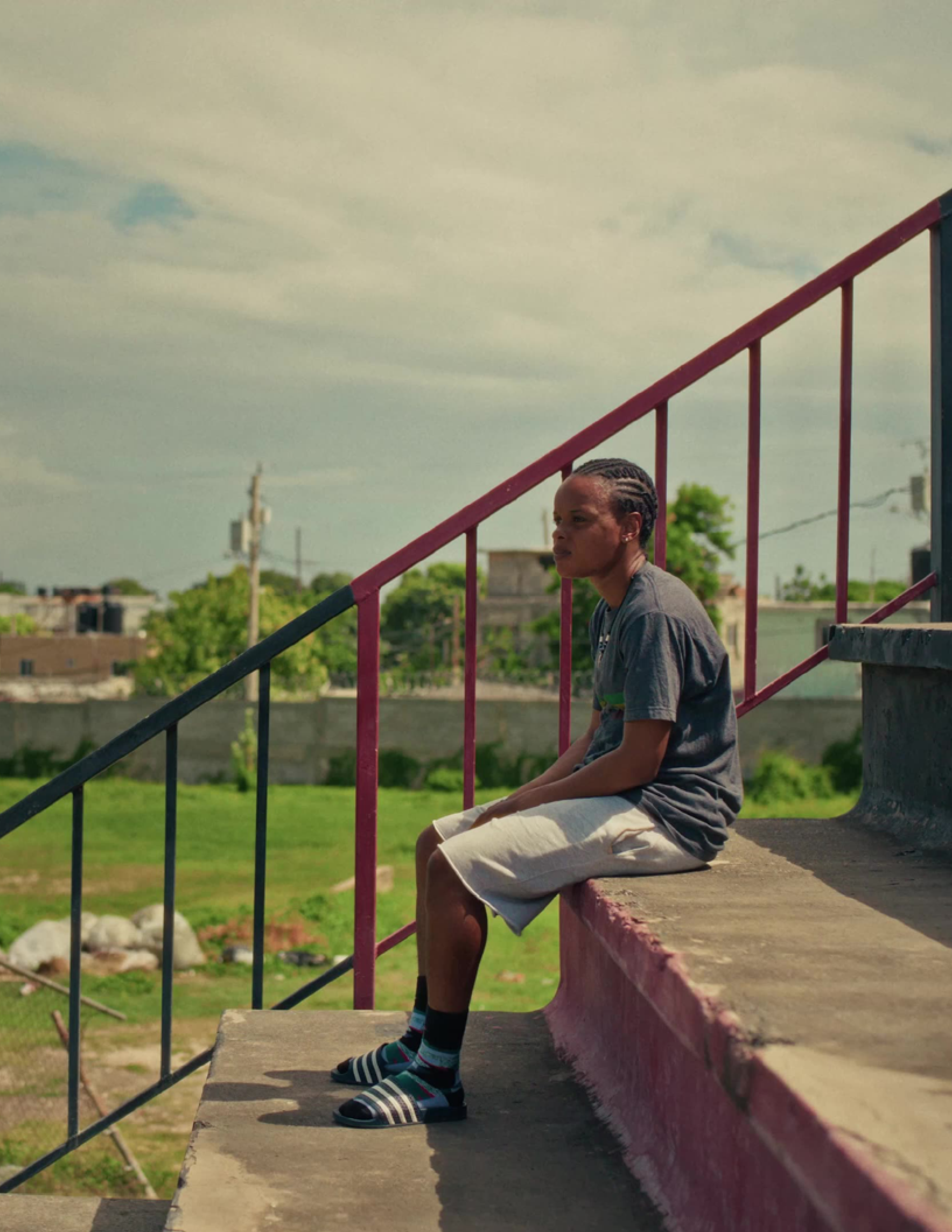
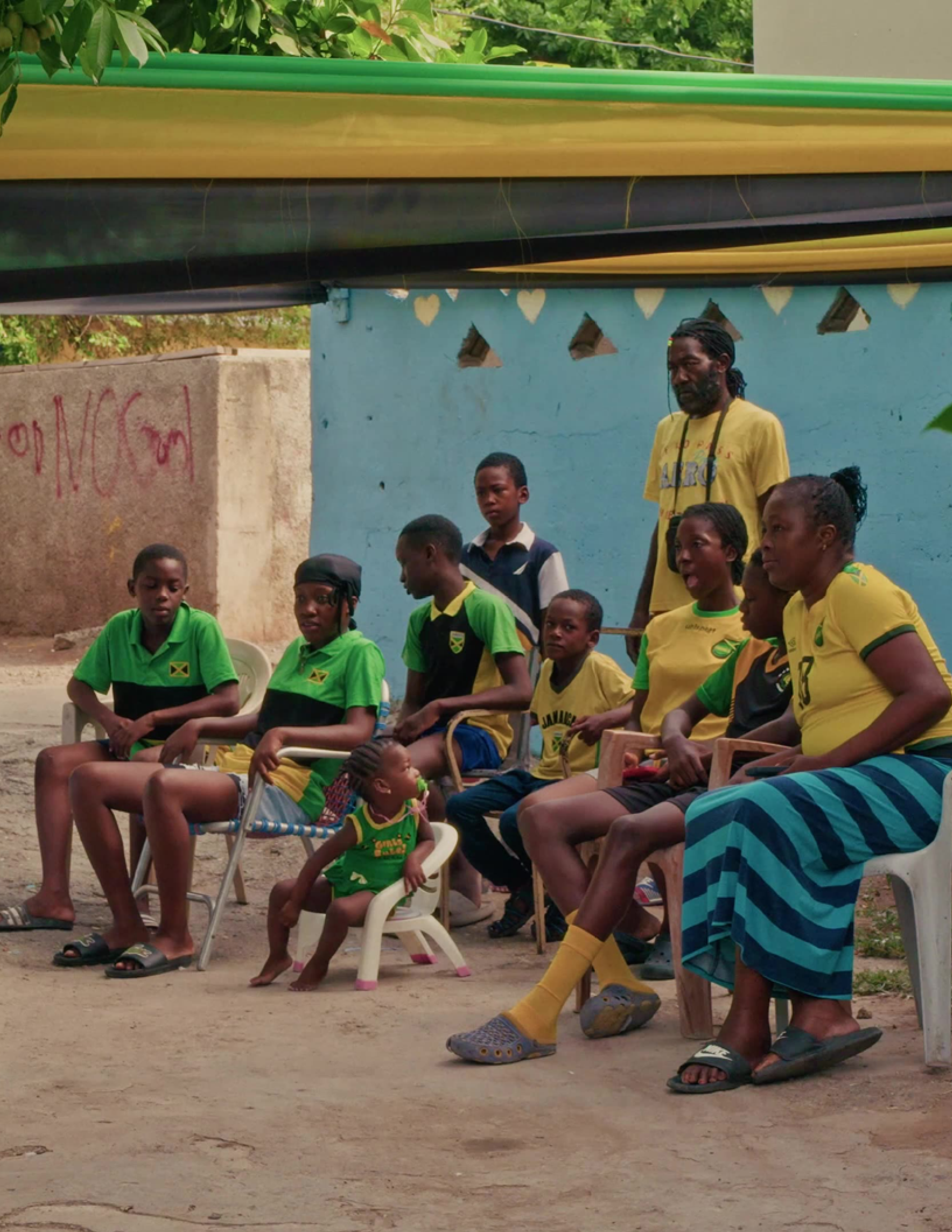
AM: It was good to see that component as well. The juxtaposition of some of these women that play for other around the world whether for their collegiate teams or pro leagues and then seeing them go to Adidas in the Netherlands and having this immersive moment that was just for them. We see their pictures being painted at their headquarters there. They have their teammates model their kits for FIFA World Cup. You could see in their faces, that if they had the opportunity to have their friendlies that would be another component that would make them feel like they were properly prepared. But at least they got that moment where they were honored, embraced, and respected.
Why was it important for you to have that particular moment in there and of course Cedella was also at Adidas in the Netherlands with the team.
TD: We wanted to show what it looks like when they can get respect!
AM: Exactly.
TD: I think that was such a huge difference, and it’s just a little taste of what a lot of the teams from First World countries are like from more developed countries have, yeah, you know?
Yeah, just that those are just basic resources in a lot of countries. And here they were getting that from the Netherlands. It’s pretty special.
AM: Is the plan to do a follow-up with these particular, maybe not those girls per se, but the continuation of this team well?
TD: I mean, that would be great, right? Our hope right now is to get this film out there so that people can root for this team. It would be awesome to have more films made about them and continue sharing their story.
We’re so focused on just getting this out there. It’s premiering with a screening in London with some of the players before It drops on streaming platforms. We’ve been showing it at festivals. We’re also going to keep continuing to screenings as well. We will do them in sports bars across the countries in addition to the festivals. It will kick off on streaming on Joolz. Then there is a bit of delay by a few weeks before it goes to a number of platforms.
We hope that through word of mouth, it will spread. We want people to see it and word of mouth will spread and that people will see it on the platform. We’re living in this sort of brave new world of various streaming platforms. It’s also kind of becoming the new cable television of being able to go on them and to see what is there. It’s sort of a shift from just doing one stream.
AM: Exactly. It’s smart to launch on Jolt Film as an exclusive which is available now to rent or stream and then to have that ability to access it starting on Oct 27th on Prime Video, Apple TV, Google Play, YouTube Movies, Tubi, and Xumo.
TD: I think our goal is just to get it out there.
AM: There is also a companion LP that is dropping in tandem with this film.
TD: Yes, it is so exciting and I love the music. Tuff Gong has curated a number of songs that have Bob Marley of course; however, there are other members of the family as well as up and coming artists that contribute their voices as well! It even includes Tiffany Cameron, one of the players who wrote a song that we used.
AM: Oh wow!
TD: Yeah, it’s probably my favorite song in the film! It’s just because it’s so heartfelt and her music is amazing. She’s a singer/songwriter, and it’s so good. So I’m just super excited for people to get to hear the music and to listen to the tracks from these great up and coming artists along with the Marleys.
IG @trishfilms
After hearing about how the film was produced and the themes that were covered in it, we sat down with Cedella Marley who is not only featured in the film, but also was instrumental in providing support to the Women’s Jamaican Football Team! We wanted to know more about how Cedella became involved, how her father’s legacy and love of the game was instrumental to her decision, and what we can expect from Tuff Gong Collective!
ATHLEISURE MAG: You were the ambassador for the Jamaican Women’s Football Team, how did that come about and what did it mean to you to have that position?
CEDELLA MARLEY: It really came about because my son brought home a flyer about raising funds for the Reggae Girlz. I had no clue Jamaica had a womens football program so i reached out. Captain Horace Burell, who was the president of the JFF at that time asked me and I kinda said ok. I had no idea what I was getting into but I saw these young women fighting for something they deserved a chance to represent Jamaica on the world stage and I felt like I couldn’t just stand on the sidelines and watch.
At the time, the program needed support, visibility, resources, all of it. And once I got involved, it became much more than being an ambassador. It became personal. These girls became my girls.
For me, it was never only about football. It was about opportunity. It was about young Jamaican women being able to dream as big as anybody else and knowing somebody was willing to fight for that dream alongside them.
Watching Reggae Girlz make history and seeing Jamaica represented on that stage was incredibly emotional for me. I was proud of them, but I was also proud of what they represented resilience, determination and that Jamaican spirit that says, “We might be small, but don’t underestimate us.”\
Being their ambassador was an honor, but the real privilege was being able to serve them. They reminded me that sometimes you don’t choose the mission the mission chooses you.
AM: What does Football mean to you?
CM: Football, to me, means possibility. Football is Freedom.
I didn’t grow up thinking football would become such a big part of my life. But through the Reggae Girlz, I learned that the game can be so much bigger than what happens on the field.
Football can give a young girl confidence. It can give her discipline, a family, an education, a way to see the world and most importantly, permission to dream beyond what people may have imagined for her.
I’ve also seen how it brings Jamaica together. When our teams step onto that field wearing the black, green and gold, suddenly we’re not thinking about where we come from or what separates us. We’re just Jamaican.
So for me, football is community, pride and opportunity. It’s another language of One Love. You don’t even have to speak the same language to play together, celebrate together, or understand what that moment means.
And I think that’s the magic of it.
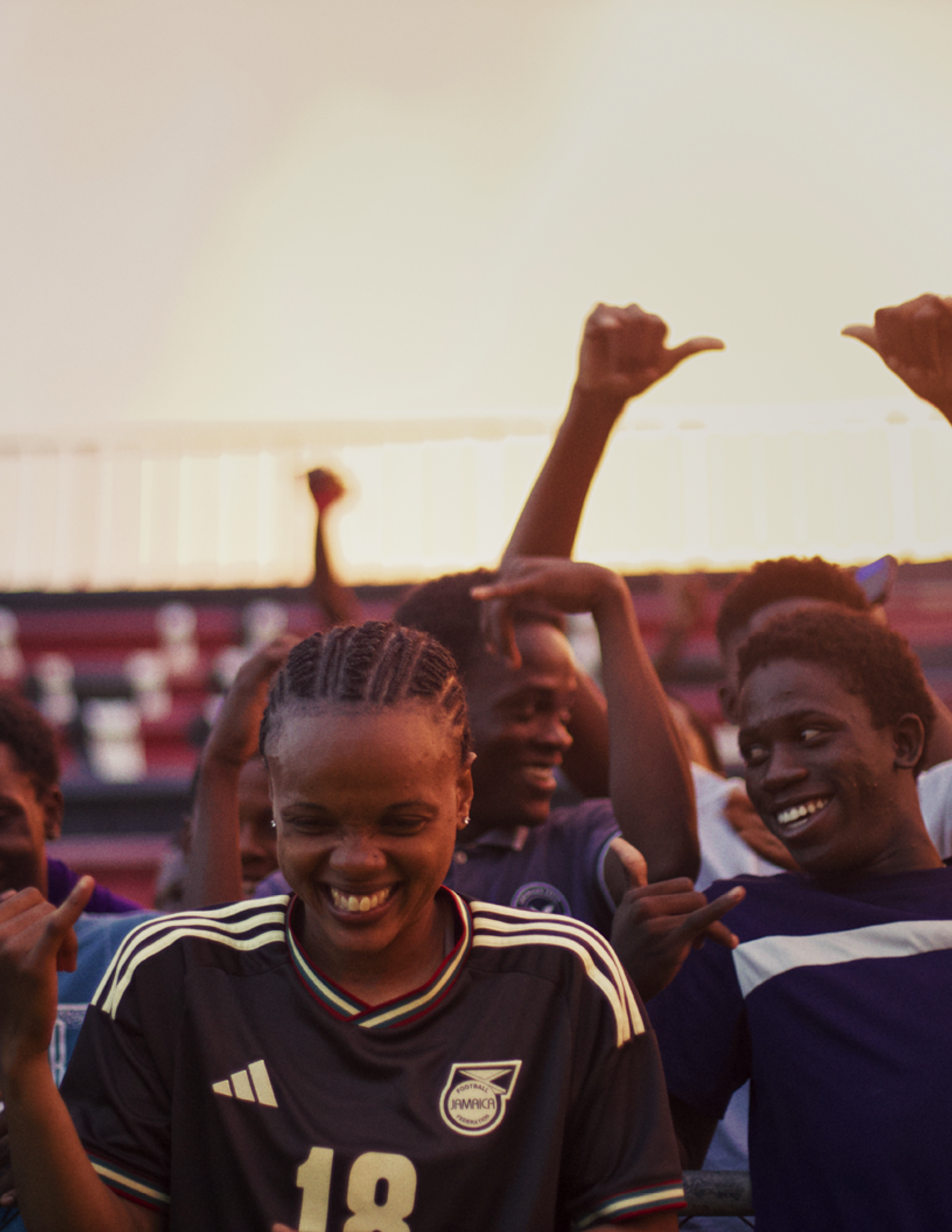
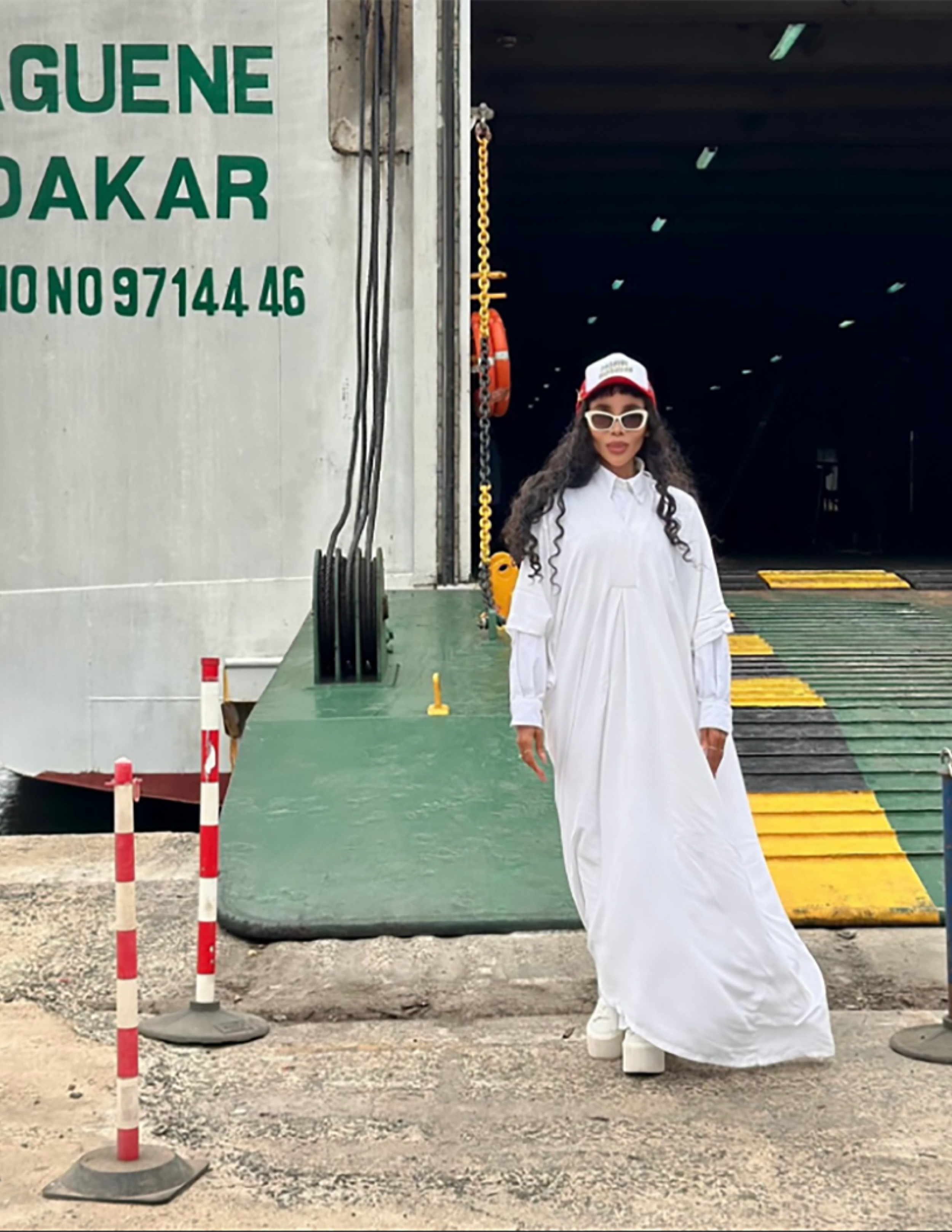
AM: We saw you throughout the film, what did it mean to you be part of it as well as to see the women’s journey close up as they made their way to the World Cup?
CM: Being part of the film was special because it captured something I had been living with these women for years. People see the World Cup, they see the uniforms, the flags, the celebrations but they don’t always see what it took to get there.
I saw the sacrifices. I saw the disappointments, the financial struggles, the injuries, the moments when they questioned whether the dream was ever going to happen. And I also saw them get back up every single time.
So watching that journey unfold so close up was emotional for me because these weren’t just players anymore. These were my girls. I knew their stories, their families, their struggles and how much wearing that Jamaica shirt meant to them.
And then to see them walk onto a World Cup field with JAMAICA across their hearts… that was a moment. I don’t think I can properly explain the feeling. There was pride, relief, joy and probably a few tears too!
The film reminds people that history doesn’t just happen. Somebody has to believe before everybody else believes. Somebody has to keep pushing when the doors are closed.
The Reggae Girlz did that. They didn’t wait for somebody to tell them they belonged on the world stage. They fought their way there.
And I feel blessed that I got to walk a little piece of that journey with them.
AM: What was your favorite moment in the film?
CM: My favorite moment is seeing the girls realize, they did it. They’re going to the World Cup.
Because I knew everything behind that moment. All the struggles, all the fundraising, all the times we heard no, all the moments when it would have been easier to just give up. So when that dream finally became real, it wasn’t just about qualifying for a tournament it was validation for every woman who had fought to keep the program alive.
And seeing the joy on their faces… that got me. Every time.
It reminded me why I got involved in the first place. I knew absolutely nothing about women’s football when this journey started! (laughs) But somehow these girls became my girls, and their dream became my dream.
That moment was pure joy. Pure Jamaica. And proof that when you refuse to give up on something you believe in, sometimes the impossible really does become possible.
AM: We know that your father loved Football and was passionate about the game. It was nice to see that in this film his love and passion was woven within the documentary. Why was this important to have in there?
CM: It was important because football was genuinely part of my father’s life. It wasn’t something added to the film because he was Bob Marley. Daddy really loved the game. If there was a ball around, he wanted to play. Music was his message, but football was one of his freedoms.
And I think there’s something beautiful about that connection. Years later, I found myself involved in football in a way I never could have imagined, fighting alongside these young Jamaican women for their opportunity to play on the biggest stage in the world.
Sometimes I laugh because I think Daddy must have had something to do with it! I certainly didn’t go looking for football - football found me.
But I also think his presence in the film helps people understand something about Jamaica. Football, like music, belongs to everybody. You don’t need much to start - a ball, a little space and somebody to play with. It crosses class, language, race, borders. It gives people a sense of freedom.
That was Daddy. He believed in freedom, he believed in people, and he believed that what you love should bring people together.
So having that part of him woven into the Reggae Girlz story felt natural. It connects generations. His love for the game was his own, and my journey with the Girlz is mine but somewhere in between, there’s this beautiful little thread connecting us.
And I love that.
AM: Tell me about Tuff Gong Collective and your role there.
CM: Tuff Gong Collective is really about taking everything I’ve learned as a family through music, culture, storytelling and building businesses and creating a space where we can carry that forward in our own way.
For me, it’s about protecting the integrity of what Tuff Gong represents while also allowing it to grow. Daddy always believed in ownership and having control of your own work and your own voice. That spirit is still very much at the heart of what we do.
My role is a little bit of everything! (laughs) I’m involved creatively, strategically, and especially in making sure that whatever we put into the world feels authentic. Whether it’s music, fashion, film, partnerships or something completely unexpected, I always ask: Does it have purpose? Does it feel like us?
Because legacy can’t just be something you look back at. You have to keep creating. You have to give the next generation room to bring their own ideas, their own sound and their own interpretation to it.
So I see Tuff Gong Collective as a bridge honoring where we come from, creating for where we are now, and building something meaningful for whoever comes next.
AM: There is also an album that is associated with this film, what can you tell us about this?
CM: Yes, and I’m really excited about that. The Reggae Girlz: Movie Soundtrack is almost another way of telling the story of the film this time through music.
I curated nine songs for the album, and I wanted them to capture that Jamaican spirit you feel throughout the documentary: the strength, the struggle, the joy, the pride and, of course, the freedom. The music crosses generations and genres because that’s Jamaica. Our sound keeps evolving, but there’s a thread that connects all of us.
Daddy always said, “Football is freedom,” and that became a beautiful starting point for the soundtrack.
Football and music have that same ability to bring people together. You don’t necessarily need to speak the same language to feel either one.
And I wanted the album to feel like the Girlz themselves—strong, joyful, fearless and very Jamaican. These women have their own rhythm. They fall, they get back up, they keep moving forward. So the music needed to have that same energy.
The soundtrack is coming through Tuff Gong Collective. It is a limited-edition vinyl record manufactured at Tuff Gong in Kingston, Jamaica. This is the label my parents built, which makes it even more special for me.
For me, the film tells their journey, and the album gives that journey a heartbeat.
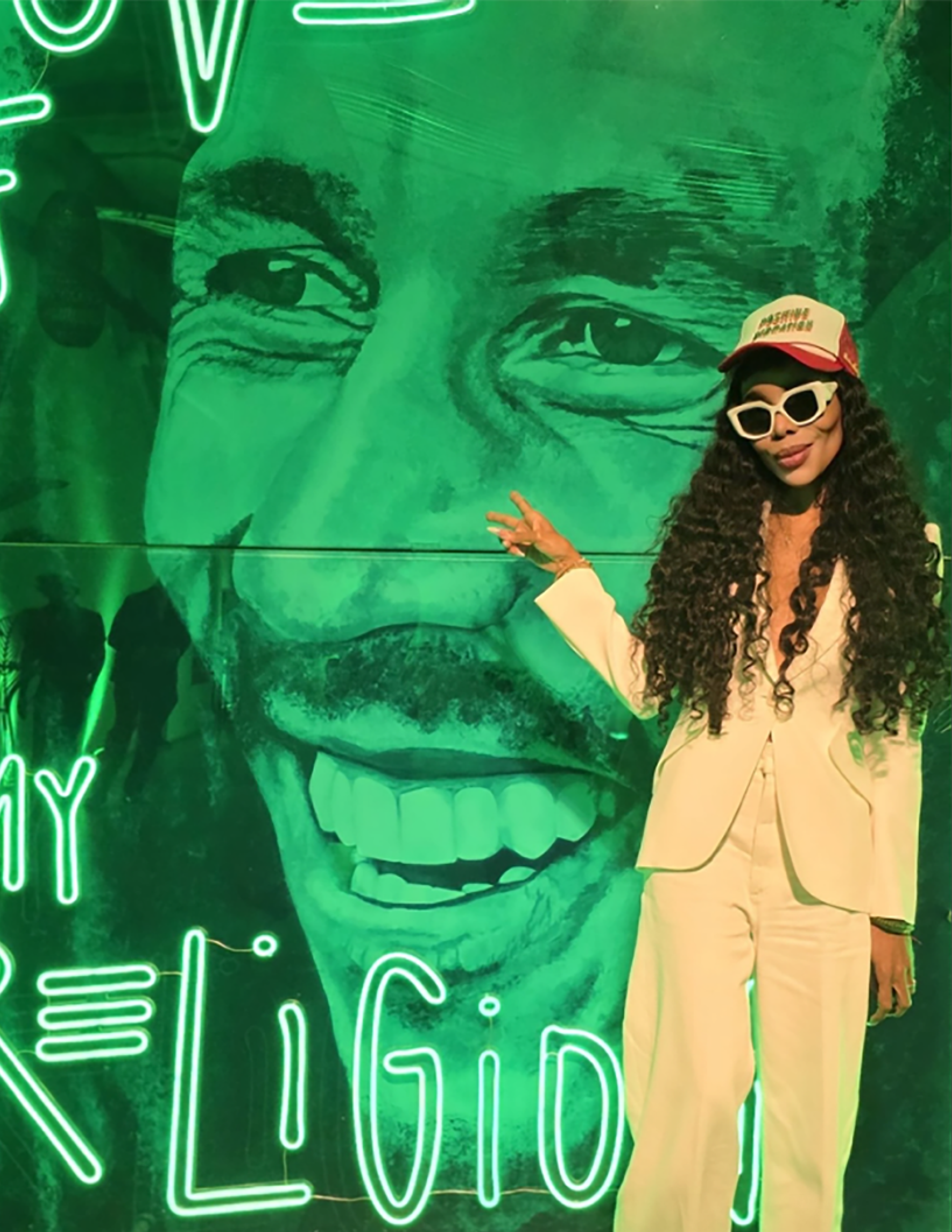
AM: Are there upcoming projects that you want us to keep an eye out for that Tuff Gong Collective will be releasing?
CM: Oh, there’s always something cooking!
We have a few projects coming through Tuff Gong Collective that I’m really excited about, particularly in music, film and storytelling. I can’t give away all the surprises yet, but you’re going to see us continuing to create opportunities for the next generation while also finding new ways to tell Jamaican stories.
For me, that’s really where the Collective is heading. It’s not about trying to recreate what came before us. You can’t recreate that. It’s about taking the foundation that was given to us and building something new on top of it.
And I’m especially excited about what the younger generation is doing. They have their own voices, their own ideas, their own way of seeing the world and I want Tuff Gong Collective to be a place where that creativity can live and grow.
So yes, definitely keep your eyes and ears open. There’s music coming, there are stories coming, and maybe a few things people won’t expect.
After speaking with Cedella, we also wanted to talk to one of the athletes that is featured in this film, to hear about their involvement and why this was important for them to be part of this documentary.
ATHLEISURE MAG: It is so nice to connect with you. I just watched the documentary a couple of nights ago and a number of times it was when you were on screen interacting with the team or the Federation where I would just pause so it’s great to be able to talk with you about Football as well as the film!
DENEISHA “DEN-DEN” BLACKWOOD: Did you enjoy it?
AM: I loved the documentary. I am frustrated by what you guys had to navigate on the road to going to the FIFA World Cup! But, the documentary was great and seeing how as a team between players and coaching staff came together was great!. But, over the course of a 90 min plus film, I had to pause it and say, “my God, this is crazy!” But then I would focus on the powerful and compelling storytelling of how you guys trained together, supported one another especially when talking with the Federation about what going on and trying to get answers – especially as a team. So it was incredible. I’ve been a fan of the Jamaican Football team for years.
I’m excited to talk with you as It will be great to dig into this more and to see it from the vantage point of the players as we have chatted with the filmmakers as well as Cedella.
DDB: I’m really excited. I haven’t done an interview in a long time, but I think this one is something that as you know, is going to help the film! I will allow people to understand more about the film and, as you said, get more insights into how we came together to figure it out.
AM: Before we delve into the film, when did you fall in love with football?
DDB: So I fell in love with football when I was around 15. I started playing at 13 and immediately, I was on the U15 National Team. I didn’t have an idea of what I was doing. Track and field was my thing because I was fast.
AM: I assumed that at one time you were in Track and Field!
DDB: Yes! Track and Field was my thing. So I love track. But my brother told me to go test football out and I did. So at 15, I was on the U-17 team and I didn’t make it one time.
AM: So, what led to your decision that you would go pro?
DDB: So, the decision behind going pro was that much like in the film, Konya Plummer and I were close. I am also close to Bunny Shaw as well. So when we were in college at that time, they had all of these offers and after seeing that, I wanted to be in the mix too. I wanted to be making money as well as being able to keep doing this. I was selected for the 2019 World Cup team and I knew that that would be my best shot. Once I had been in the camaraderie and being able to be a role model in a sense, I knew that this was what I wanted.
AM: That’s amazing.
You play for the Women’s Jamaican National Team and you also play for Toluca Femenil in Mexico. What is it about this game that you just love doing? I mean, you travel around the world for it. So what is it that makes you just so excited about it?
DDB: What makes me excited about playing football and also representing the National team, are the connections you get to have with people from different races, different cultures, and you get to see the world. You get to understand the world and with that, you get to understand yourself. So I am always grateful for that when I am playing. The connections, the people, and just living in different countries, and being able to be part of different cultures.
AM: What is an average week of training like for you when you’re preparing to play for the next match, especially for the World Cup?
DDB: Okay, I’m gonna give the first day of my World Cup game. But what a week of training looks like for me for a World Cup game is that mentally, the first day I’m like, “what are my intentions for training?” Because my intentions for training has to lead to my intentions for the game. So, I set training goals. Maybe I’m on the left side, so maybe that’s being aggressive in my first tackle. So, in training, going against my teammates were so competitive. So, I’m in their skin in the first moment. I’m taking that first tackle, hydrating - drinking water, drinking electrolytes - I’m really a big fan of electrolytes, stretching, rolling out, and physically getting myself ready too because training is hard. Some days are tactical, some days are a little bit more relaxed. The day before training, you do free kicks, corners and, being able to get that feel of what the game is going to be like the next day. Game Day, I love a Game Day. You wake up and go to the mirror in the morning and you give yourself that pep talk. You remember that you’ve worked, you done everything that you can do and needed not accomplish in that week so there is no need to be nervous as the work was already put in! What you did during training will come out in the game! You’ve got to pump yourself up and it’s on you! I also feed off my teammates when we’re in the field. But in order for them to feed off of me, I have to make sure mentally and physically that I’m ready and prepared to play.
AM: Definitely.
As I said at the top, I loved watching this film. I felt it was a compelling story. What is it like to be at the World Cup, playing for your country and having to play when there are other dynamics that are going on, on and off the field that for many people would make it difficult for them to still be focused on that goal of representing their country. What does it mean to you to be part of this documentary?
DDB: For me, what it means to be a part of this documentary is that I feel like not just in football, but in life, people only see the good, which is the outcome. I think people always say, “oh, the Reggae Girlz, they have good spirits, they’re such a good team together.” What nobody really sees is the struggles and the challenges we have to deal with behind the scenes. Truthfully, we don’t feel respected when we are representing Jamaica. We don’t feel respected by the Federation - we performed things got a little bit worse we performed again and then things became a disaster. At some point we’re like, “okay but the bigger teams are performing and their Federations are seeing them.” So why is it so hard for our Federation to see us when we are performing?
AM: Speaking to that, there is a tense moment between the team and Federation as they are looking for answers. Hearing as a collective that the team provided facts, asked questions, and sought accountability while being respectful. With the issues that your team had with friendlies, travel, etc it was amazing to see everyone maintain their composure without doing antics! It couldn’t be me!
DDB: I think that’s what killed them because for the Men’s Team, I don’t know what happens on the Men’s Team the culture is different, but because we’re females, they expected us to just sit back and take everything. But, these are some of the most brilliant women that I’ve ever come across. We document the stuff we need. When we ask them for stuff, we make sure we have it in writing. Because at the end of the day, proof is the only thing that’s going to set us free.
AM: Exactly.
How did you guys come together to decide, you know what? We need to have this conversation. I can imagine that you have a number of people where they agree but they don’t want to put their neck out like that. So how did that process go about?
DDB: I think at some point, we realized that it’s not about how we feel. It’s not about how we feel. It’s not about how people are going to see us. It’s about the truth. We are actually not being treated right. We have to say something or else we won’t make another World Cup because eventually there won’t be a Women’s program if we just keep quiet. I think we had meetings together all the time while we were in camp. We made votes and everybody understood the risk that was at hand. But we were still willing to take it because we want to represent the country. We want younger girls to come and represent this country. We just decided together that like we’ll take the first step. We’ll take a little bit of the bashment from the outside world. So, we had meetings, meetings, and then voting.
AM: That exchange was another time where I had to pause the documentary. I was like, “did that just happen?” To see you as women come together and in the midst of the frustration and search for accountability and a solution, there were only a few side eyes that were done as opposed to really showing the emotions around this! I had a lot of respect for that moment and it just showed the depth of professionalism and how well put together you are.
DDB: No, for real! As you see in the film, when they were having the harder conversation, I personally wasn’t there. I can’t just sit and just like –
AM: I was looking for you because I felt that if there’s one person that I know is going to give more emotions, it was you – ha! I realized that you must not have been there that day.
DDB: My God, I was like, this is this is crazy. How can you just expect to sit and talk to us like that and that we would just be like okay - we’re gonna take whatever you give us?
AM: Well another point that you brought up which I agree with is that I love that there are highs and lows that are shown in this film. So as much as that moment between the team and the Federation was super tense – I can’t even imagine what it would have been like to be in that room with the cameras and the emotions.
I really loved the joy when you guys went to Adidas in Netherlands and you’re modeling the kits that you will wear during the World Cup. You have a place to play and you get that moment where you are receiving the love and the respect for what it is that you guys do as athletes and as a craft.
What did it mean to you to have that element of support and just that moment getting ready to go to the World Cup?
DDB: Adidas plays a big role in the work that we have done over the years. Obviously, Cedella, we can’t thank them and her enough. But from the side of the players, oh my God, we were so appreciative. We literally felt like this is all we ever wanted - people to see us and to give us the things that we need to perform. Once you do, you won’t have to worry because guess what? We are ready to do the job on the field. They literally removed a number of things that we didn’t need ot work about. They took it off of our hands. We had their gym facility and it was just, it was insane. I have personally never experienced anything like that. We would sit in our groups because we’re a very close team. So we’ll sit in our groups and say that we had to go to the round of 60. Like this is not for nothing. Adidas gave us so much and the Federation hadn’t even put a dollar into all of the things that we’ve gotten. We’ve gotten 4 cleats and everybody was able to go to training every day. This is why we do it. We were just so excited.
We were dancing, having conversation with their team, we got to know the Adidas Corporation. They’re all lovely people. And we tell them too, we’re like, this is all we’ve ever wanted. So guess what? You guys give this to us and we’ll take care of business. And that’s exactly what we went and did.
AM: I was so happy for you guys and to see the artwork that they did for you at their HG in the Netherlands.
DDB: The painter was so good. She talked with us. You see the painting, but you also kind of see how she got to know us too in the painting, which was really powerful.
AM: Really, really powerful.
As you mentioned, we have the thread of Cedella through the film as she is an Ambassador of the Women’s Jamaican team. She also provided various levels of support via the Bob Marley Foundation.
What did it mean to you to have her support and were you able to interact with her directly?
DDB: To have Cedella’s support is just, it’s more than the Federation deserves. We deserve it as players, but it’s more than they deserve. I think she’s a woman that lives by her dad’s words that football is freedom. It’s all about peace and love, and giving back. When she talked about her son bringing that flyer to her, she felt the need to get on board. She’s an incredible person. She came when we were in Amsterdam. Every day we would come in at the training facility and you would hear Bob Marley music. She would come, she would chat with us, ask us how it’s training, maybe kick a ball with us, and take some pictures. It felt like somebody that not only wanted to give, but also to understand who we are as people. I think for me, that’s also powerful. She came and she had conversations with everybody. Her energy is so light and that’s the energy we need around us. I think that energy just spread through the team, through the team, through the coaches, everybody that we interacted with - you know, they feel the energy. I think that comes from us being able to be comfortable with her.
AM: I didn’t realize until watching the film that your team is the first Caribbean team to have back-to-back appearances at the World Cup.
What did it mean to you to be on such a global stage like that?
DDB: It means a lot to me to be on a global stage like that, to be honest. I come from a single mom with 5 kids and no dads. The idea of being on a stage where I couldn’t even hear my own heartbeat was never something that I think about on the daily. I think being in the starting 11 in the first World Cup game, hearing my national anthem with over 40,000 people watching – I felt that I had won in life and that that was success for me. I don’t have to reach at the highest level in the world yet, but I’ve had a lot of success. I think when we are on the field and when we’re together, we always talk about how grateful we are because someone my age could have had the same opportunity and didn’t get it. We’re going to do it for the people who can’t do it for themselves or didn’t get the opportunity to do it.
AM: Or need that encouragement.
DDB: Or that encouragement! That’s why I love this documentary because you go through struggles. It’s part of life. If you’re in a 9-5, you’re still going through struggles, you know, but like people don’t underestimate what you see in the good, until they are able to see the other part too.
AM: What was your biggest takeaway after this film, now that it’s coming out in the next few days?
DDB: My biggest takeaway from the film is never underestimate the power of resilience. You have to keep trying. People will see you when you’re supposed to be seen. I’ve been with the national team since I was 13 and I’m 29 now and we’re just getting seen. So, it’s like, stick with that resilience. If you’re with a group of people who believe that they can change the world, stick with that group of people because the ones who are supposed to get the message will get the message.
AM: Will you be going to any of the launch premieres for this film?
DDB: Right now, I am in the middle of my season as it just started.
AM: That’s what I thought.
DDB: I literally was telling my sister that earlier. I wish I could go and meet people and talk to them in person.
AM: Are you thinking about the next World Cup?
DDB: Absolutely. I am so looking forward to be a part of this next World Cup. We had preseason this past Summer because the Summer is ending. This whole preseason, I knew I need to be my best self mentally and physically.
I need to figure out what that looks like because if you have a goal and once I set that goal, there’s going to be challenges throughout the year leading up to it. But the most important thing is, I have the goal, which is to make the team and that’s staying healthy. It’s getting the recovery stuff that I need. So whether that’s the Normatech boots, going to saunas, cold therapy, getting the body right and, getting the mind right. I like to journal a lot and it allows me to understand myself and keep learning.
My team, we have a new coach and it’s just been really good for me. So I think I’m literally counting on myself to be in this one. I got this tattoo. I don’t know if you can see it. (Editor’s Note: Den-Den shows us her tattoo that has both years of her World Cup appearances on her wrist and she has a little space where more years can be included.)
AM: I see it.
DDB: I made an extra space so I can have one more.
AM: You’re making your goal very apparent! Do you have any upcoming projects? We obviously are in the middle of your season right now, but is there anything that you have going on? And obviously we have the film that’s coming out that you want to share with our readers so that we can continue to follow you and support you?
DDB: I want to be more into social media and brand myself. Just look out for the posts that you will see from me. I’m excited for people to see the things that I do and getting to know more about me! You can also watch my games on YouTube and VIX for Toluca FC.
IG @den_den14
PHOTOGRAPHY CREDITS | Reggae Girlz/Red Bull Studios
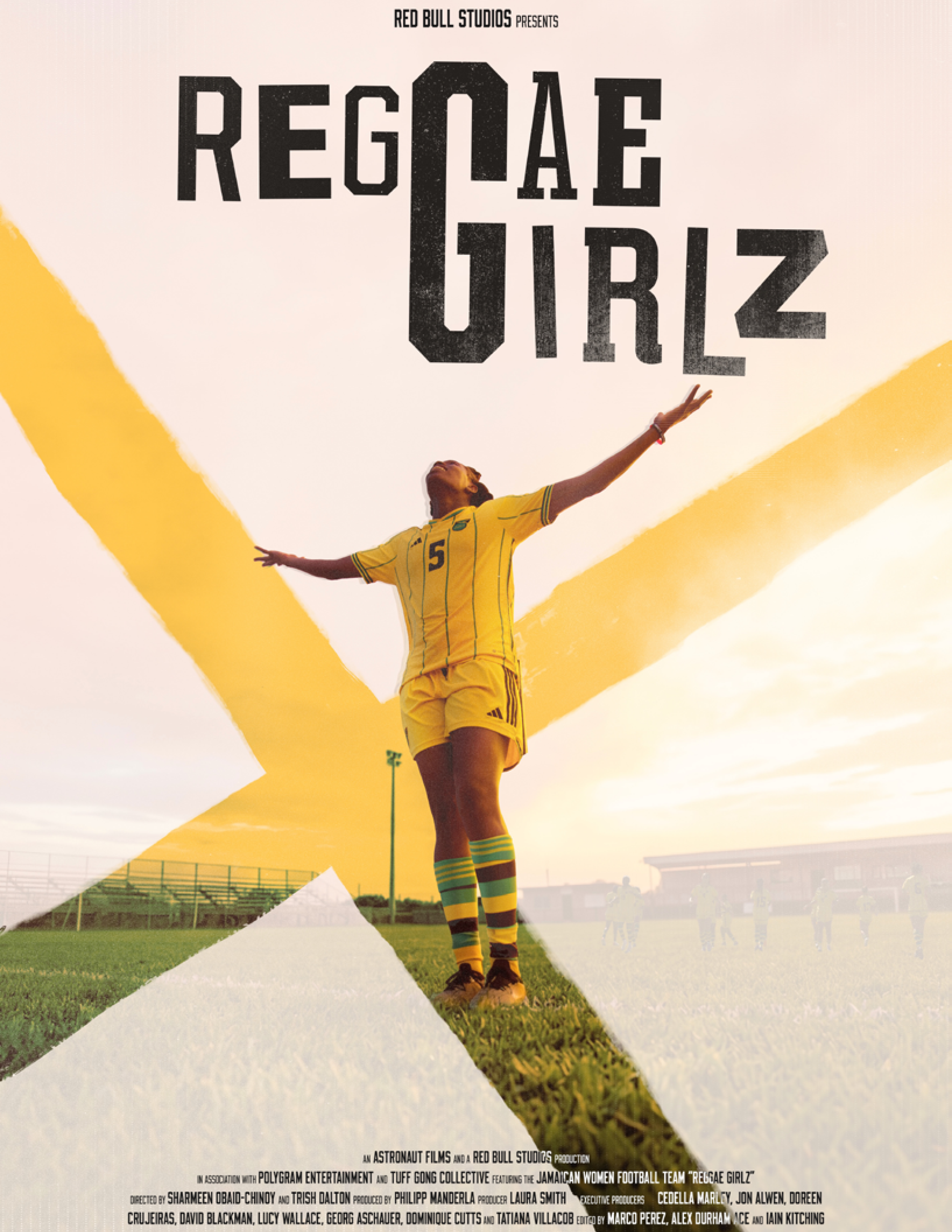
Read the AUG ISSUE #128 of Athleisure Mag and see THE ROAD TO THE WORLD CUP | Reggae Girlz in mag.
The US Open has kicked off here in NYC and when it comes to one of the greats, it’s Novak Djokovic. In the documentary, Novak Djokovic: The Wolf in Winter, we see his iconic rise as he plays tennis. But we also see how he juggles between the tragedies that took place in home country of Serbia, the belief his family had as well as the lengths that they would go to bring him to global stages, and how he has mastered being such a force on the courts for all of these years!
While we attended week 1 of the US Open, he shared in the press room that he would be interested in potentially sharing more of his story in a serialized format. We hope so!

Travis Barker is an incredible drummer and producer that has lent his talents to Blink 182, super bands as well as working across genres. He defintiely showcases how in many ways music and the way he plays it is a sport all of its own!
In Travis Barker: Louder Than Fear, we get to know how he came to music, literally drumming to his own beat, having great voices in music giving their thoughts about him, the highs and lows of his life, his plane accident, and how he has bounced back from it by flying again in the last few years!
We also see aspects of his personal life, kids, and the various businesses that he is involved in.
We love seeing our favorite comic books in a new way and in DC Studios’ Lanterns, they do exactly that! In this series, we get to watch Green Lantern legend Hal Jordan (Kyle Chandler) and fresh recruit John Stewart (Aaron Pierre) as two intergalactic cops that are brought into an immersive and dark, Earth-based mystery.
Whether you follow the comic books or are new to the universe, this series feels like a True Detective vibe while providing Easter Eggs and hat tips to characters that have yet to be revealed who are also known characters in this universe!
In addition to watching this show, we highly suggest that you watch/listen to the companion podcast Lanterns The Official Podcast hosted by Juju Green.
Read the AUG ISSUE #128 of Athleisure Mag and see Bingely TV/Streaming in mag.

PHOTO CREDIT | Pavel Suslov

PHOTO CREDIT | Pavel Suslov

PHOTO CREDIT | Pavel Suslov

PHOTO CREDIT | Pavel Suslov

PHOTO CREDIT | Pavel Suslov

PHOTO CREDIT | Pavel Suslov
Read the AUG ISSUE #128 of Athleisure Mag and see 9PLAYLIST | Red Hot Chili Peppers in mag.
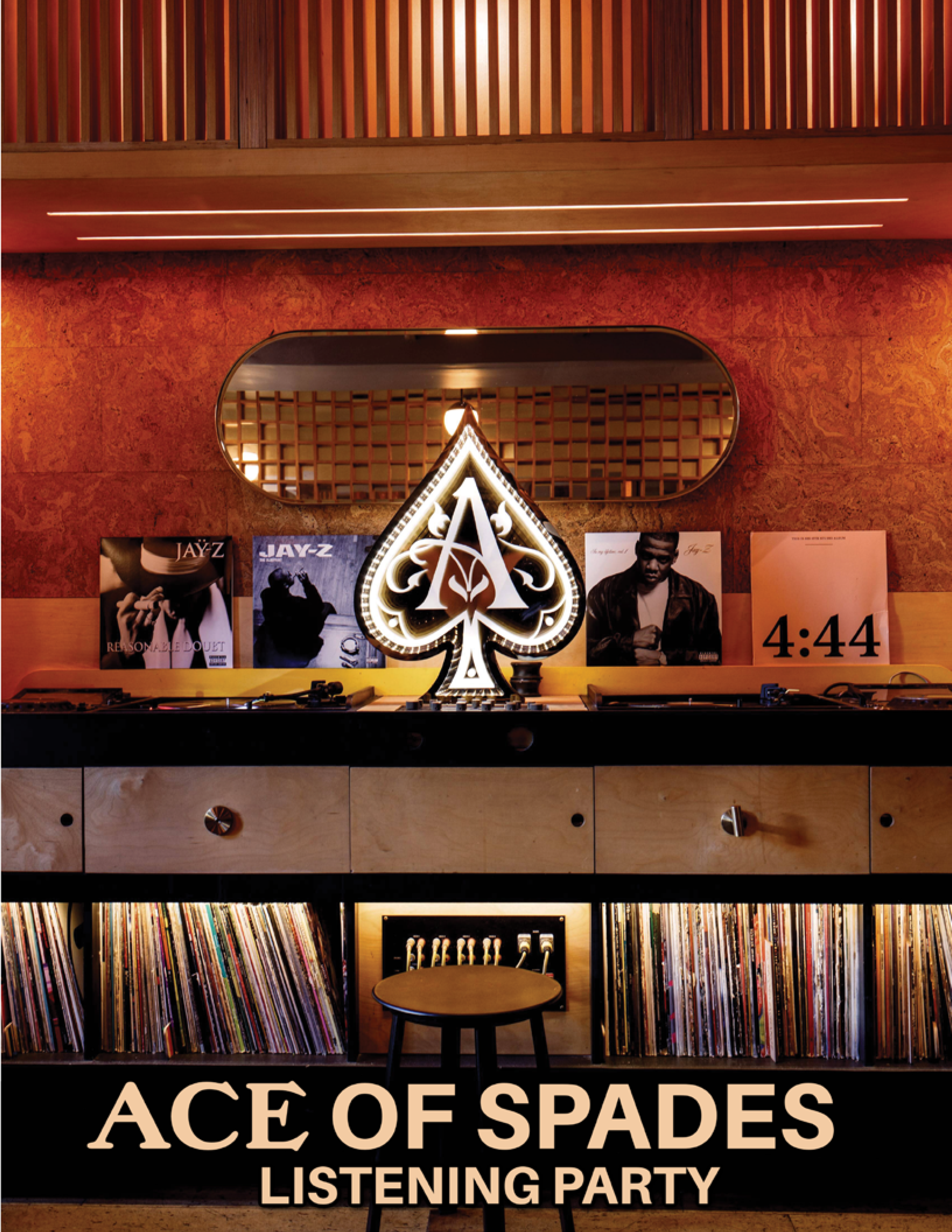
This month has been a busy one and there were a number of events taking place that we navigated between. With JAŸ-Z’s 3 night concert in NYC that took place July 10th - 12th at Yankees Stadium. Leading up to the concert, we were invited to an intimate Armand de Brignac listening party that was hosted by Jermaine Stone (Street Somm, This is Taste, Wine and Hip Hop), a wine expert and hip-hop artist. This listening party celebrated 3 anniversaries of Reasonable Doubt (30 years), The Blueprint (25 years), and Armand de Brignac’s Ace of Spades (20 years).
We assembled at Eavesdrop in Brooklyn where we listened to a curated series of songs as they would pair with Brut Gold, Rosé, Blanc de Blancs, and Demi-Sec.
REASONABLE DOUBT X BLANC DE BLANCS
Reasonable Doubt (July 10th show) introduced a young JAŸ-Z fully in command of his own voice and with a pen game defined by precision. Blanc de Blancs is Armand de Brignac’s most singular cuvée, demanding the same level of discipline in the cellar as he had in the booth. Made entirely from Chardonnay, it leaves zero room for error in the blend, much like an artist’s debut album.
THE BLUEPRINT X BRUT GOLD
The Blueprint (July 11th show) gave an entire generation of rappers a new flow to build from, one that’s been echoed ever since. Brut Gold plays a parallel role inside Armand de Brignac’s own portfolio. It’s the house’s founding cuvée, a tri-varietal blend sourced from grapes grown across Champagne’s top-rated crus, and the standard against which every other bottle in the range is measured.
EXTRA INNINGS X ROSÉ & DEMI-SEC
We enjoyed this listening party on July 8th and didn’t know what songs were being performed for the July 12th show. Jermaine imagined fans would explore all of JAŸ-Z’s career-defining songs.
The 4:44 album was JAŸ-Z at his most exposed, a deliberate departure from the persona he’d spent a career building. Armand de Brignac’s Rosé makes a similar departure within the portfolio, built from Pinot Noir through a different production process that sets it apart in color, character, and mood from the rest of the range.
Vol. 2... Hard Knock Life was JAŸ-Z’s first album to reach no.1 and remains his best-selling record to date. The album pulled in a wider, more mainstream audience, turning casual listeners into fans. Demi-Sec plays a similar role in champagne: it’s Armand de Brignac’s most crowd-pleasing cuvée, with a touch of sweetness that softens the traditionally dry edge and makes it more approachable to drinkers just discovering the category.
PHOTOGRAPHY COURTESY | 9PLAYLIST PG 64 - 76 Roc Nation | Ace of Spades Listening Party PG 79 - 81 Armand de Brignac | 9PLAYLIST PG 86 - 93 The Rolling Stones |
Read the JUL ISSUE #128 of Athleisure Mag and see ACE OF SPADE LISTENING PARTY in mag.

PHOTO CREDITS | Roc Nation

PHOTO CREDITS | Roc Nation

PHOTO CREDITS | Roc Nation

PHOTO CREDITS | Roc Nation

PHOTO CREDITS | Roc Nation

PHOTO CREDITS | Roc Nation

PHOTO CREDITS | Roc Nation
Read the JUL ISSUE #127 of Athleisure Mag and see 9PLAYLIST | JAŸ-Z in mag.
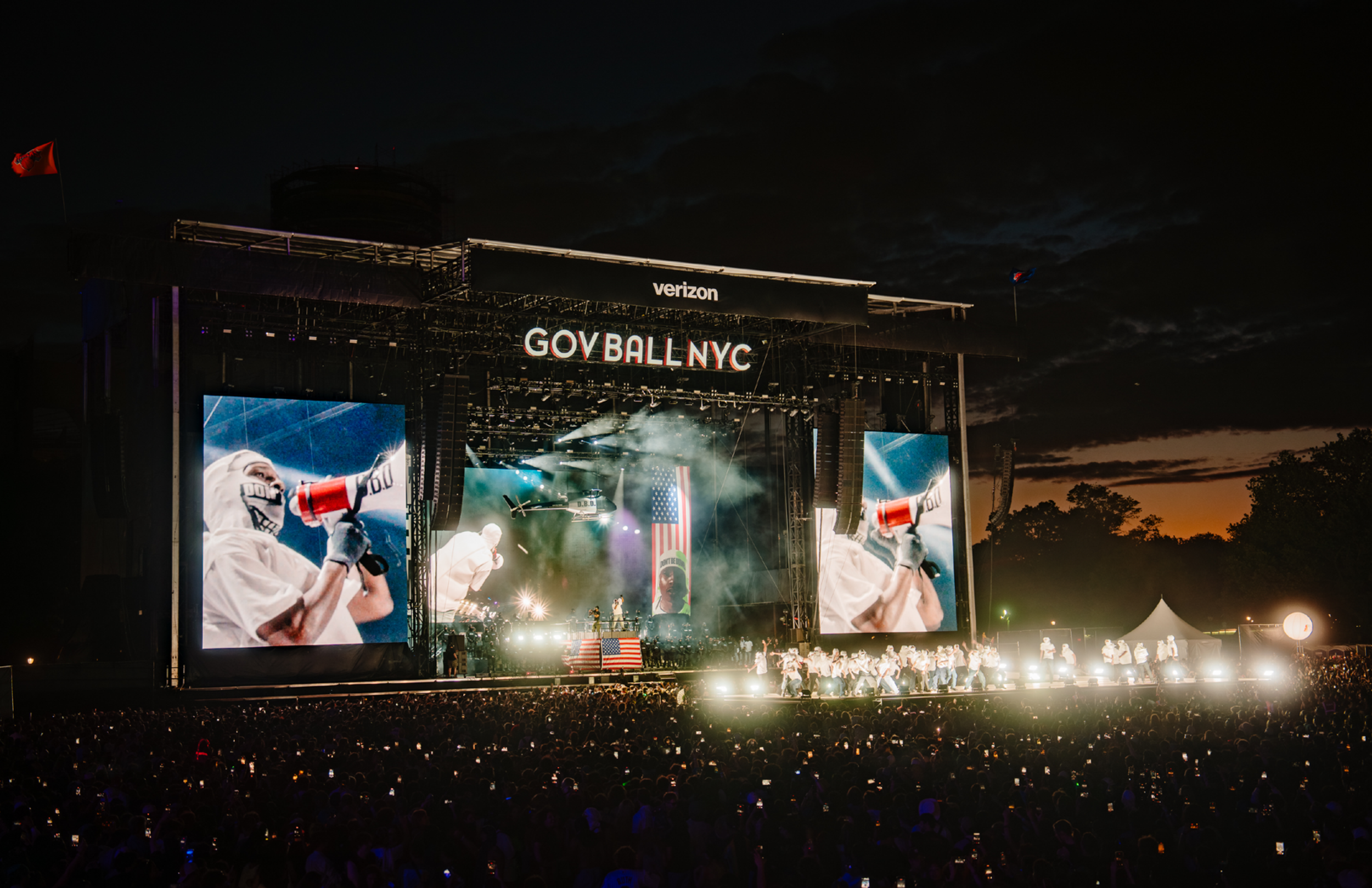
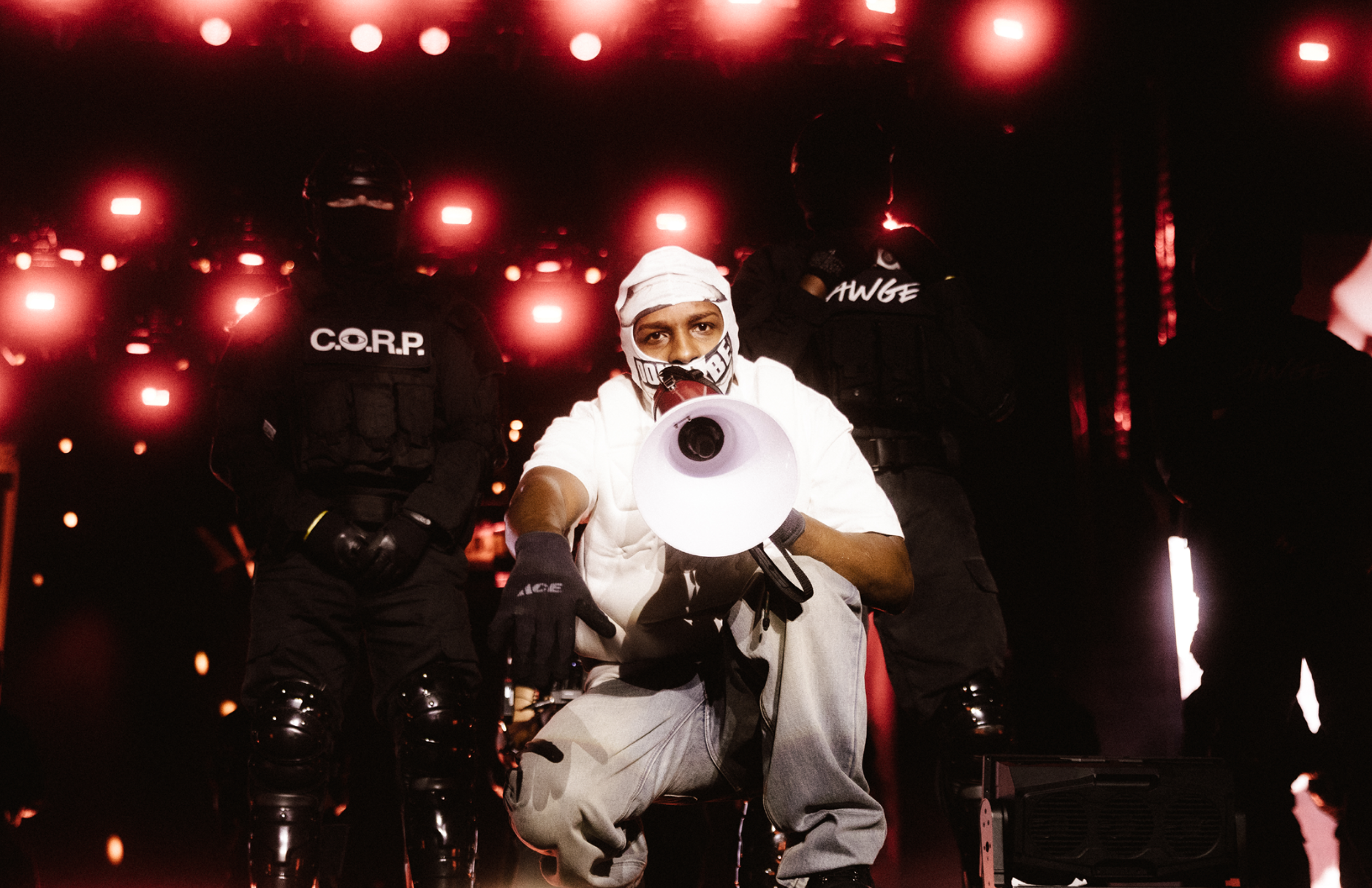
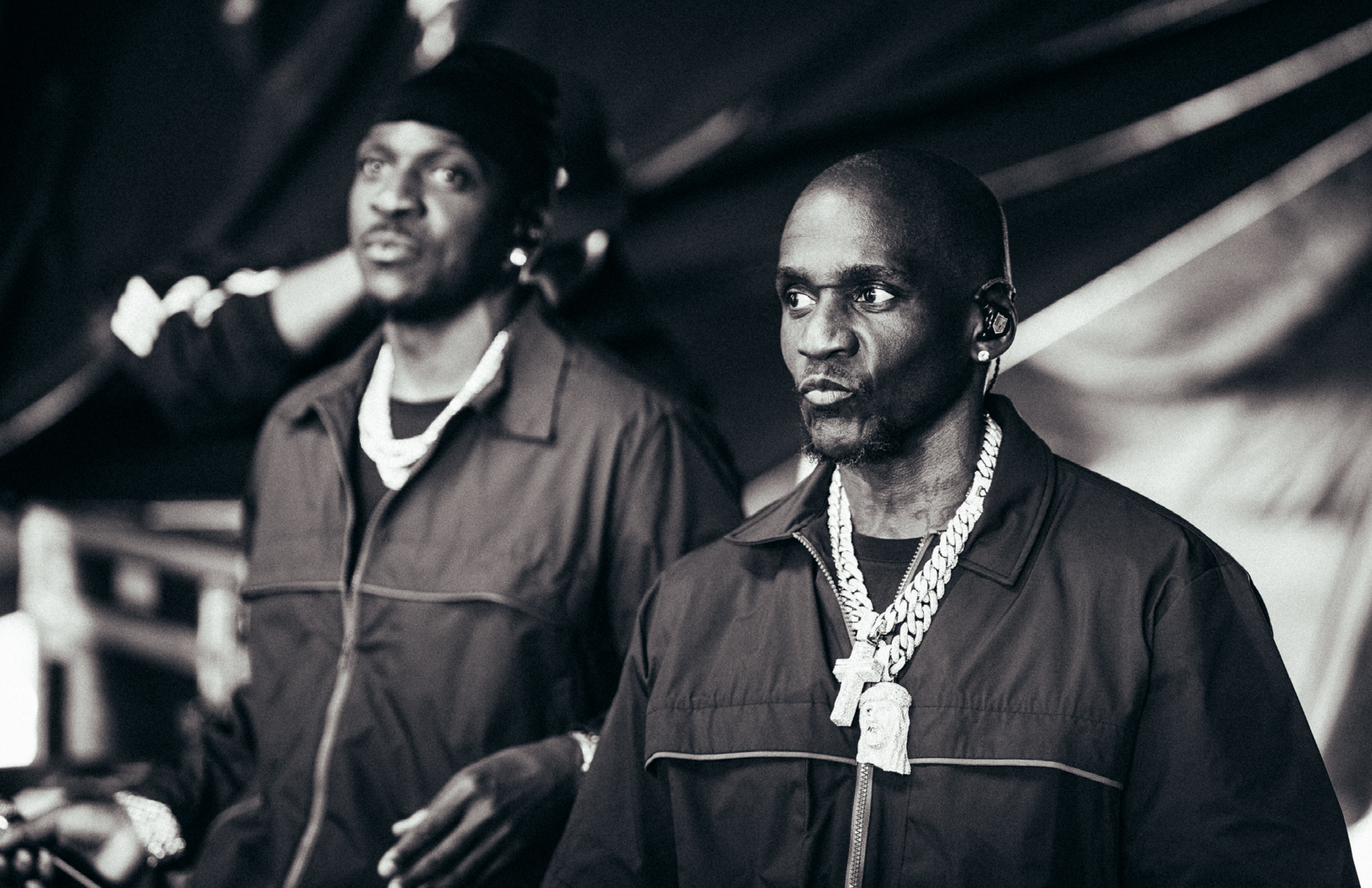
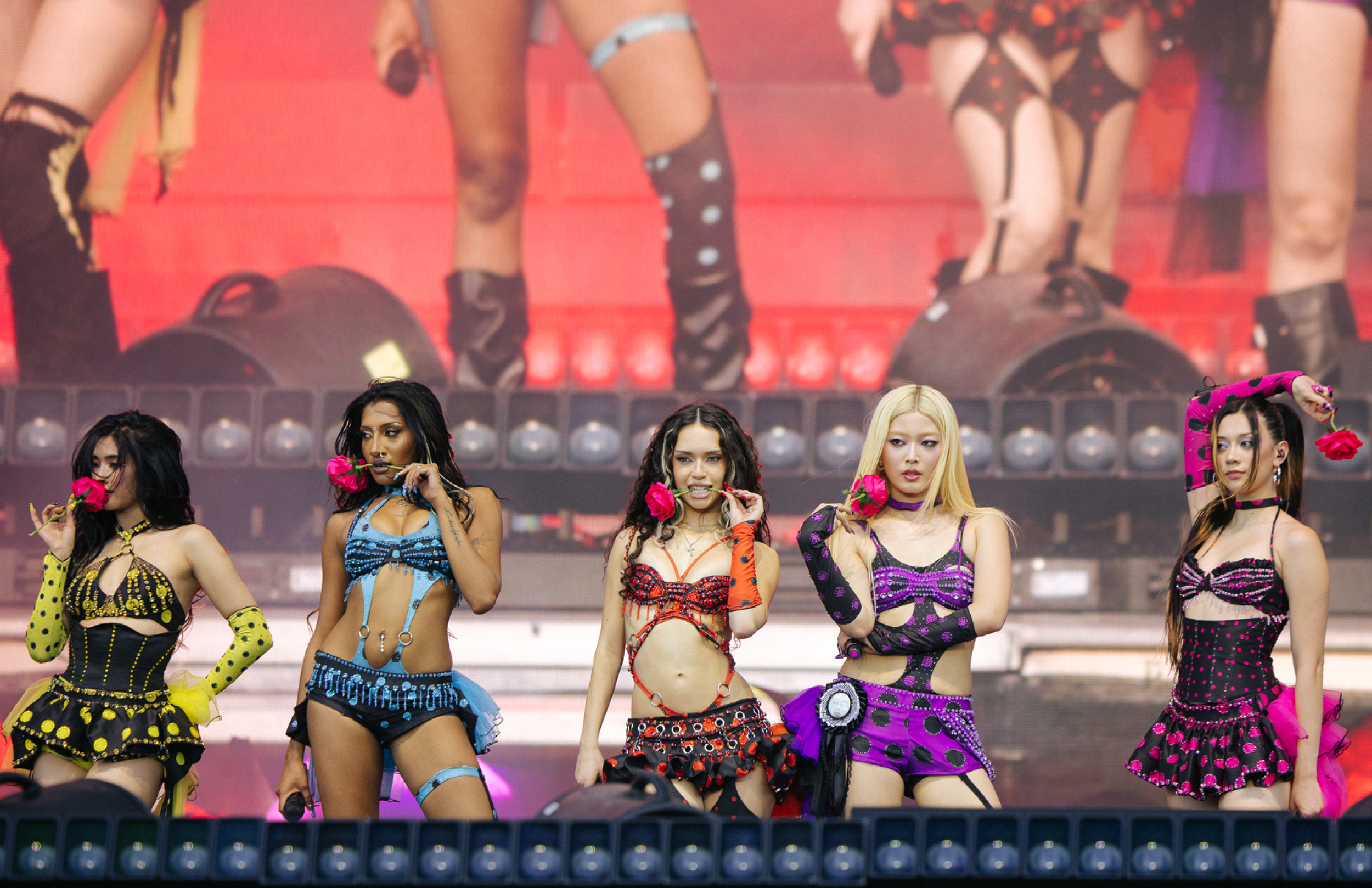
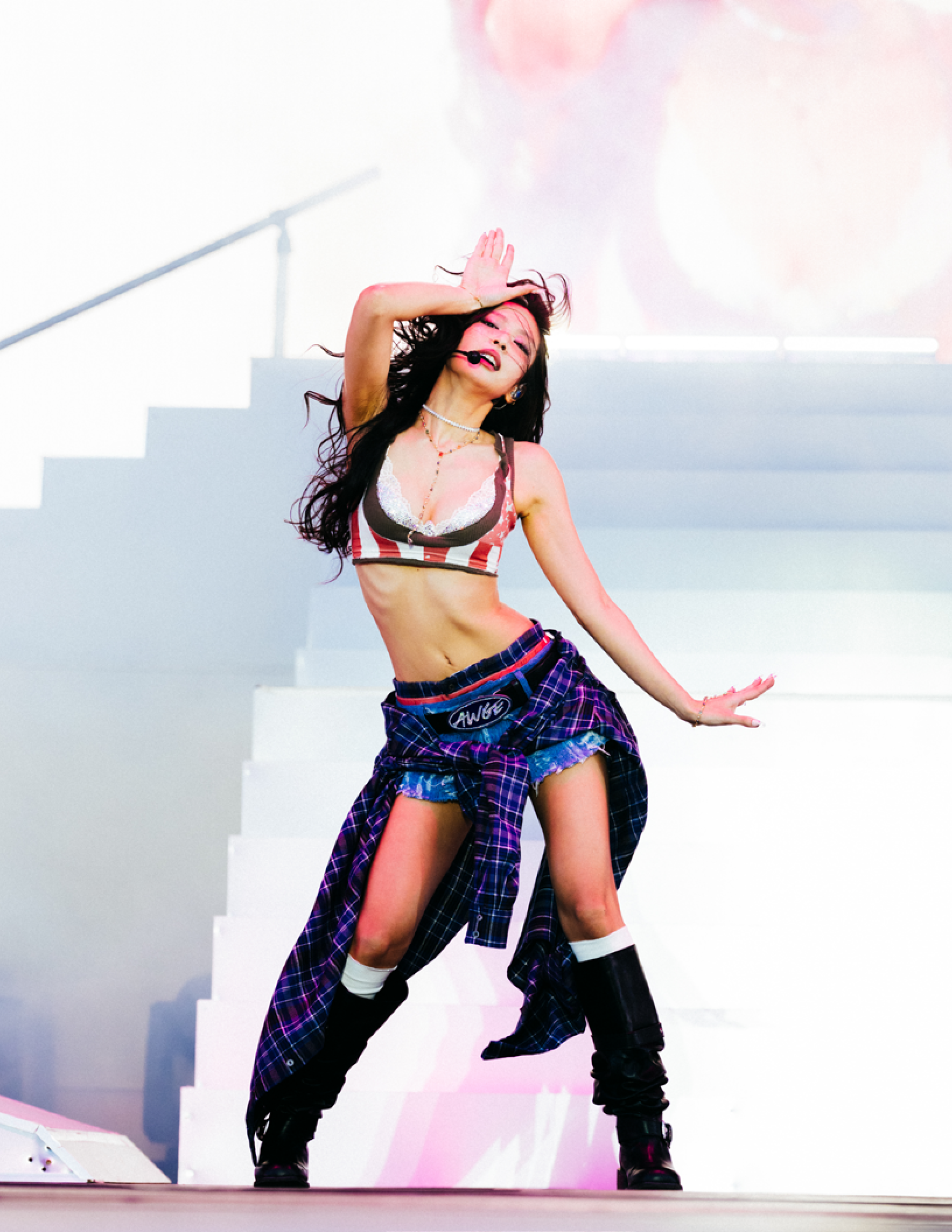
GovBall has always hit a good vibe for us and this year seemed extra special for 2026. We attended Days 1, 2 and 3 and we have fond memories of cool moments, sets and experiences we had!
Day 1 we enjoyed live sets from Mariah The Scientist, KATSEYE, and more. Mariah The Scientist dropped an exquisite R&B performance and sparkled in a custom Gold Dress designed by Kim Shui. She performed classics from her hit album Hearts Sold Separately. KATSEYE blew out a high energy set working the crowd from all sides. Their vibrant vocals hit and choreography entertained.
We hung with Ayrloom and had a 1MG Cannabis Infused Honeycrisp. You can taste their 5th generation family orchard with the juicy and sweet flavors of the honeycrisp apple. It’s naturally sweet, but never heavy, their hemp infused fresh apple cider is the perfect way to cool down. A lower dosed sip than what we’re typically accustomed, we enjoyed the beverage flavor profile.
It was all about Major Lazer on Day 2, who provided us killer BTS content from their set on Snap Stage. Their tribal anthems and fierce dance repertoire always delivers upbeat party vibes and sticky global anthems you’re humming days later.
On Day 3 we enjoyed live sets from Clipse, JENNIE, A$AP Rocky, and more. Still reigning from their Grammy-award win, Clipse welcomed new fans and die hards alike, noting their code at the outside about loyalty and waiting with grace. They rapped their classics and some from their latest album to cheers from the crowd. JENNIE brought a mix of hits and tik tok dancing trends with a strong dance crew. Due to a minor rain delay, ASAP Rocky’s set ultimately was called off a bit early, but he went through about a dozen hits, his Rod Stewart & Miguel track Everyday was teased, and just hearing the intro gave us a smile and chills. He brought out Dominican rapper Tokischa to perform the unreleased collab, FLAKITO JODYE, definitely a massive standout moment of the festival weekend.
When not jamming to the performances, we refreshed in The Patron House; celebrated 7-11 Slurpee Anniversary with tried and true and upcoming flavors and live DJ; and Cabot Farms served up Pimento Grilled Cheese to the crowd on heavy rotation.
IG @govballnyc
GOVERNORS BALL PHOTOGRAPHY COURTESY | PG 48 Roger Ho | PG 52 Okay Nicolita | PG 54 JN Silva | PG 50 Paigge Warton | PG 56 Ismael Quintanilla | PG 58 - 61 Major Lazer | PG 63 Rich Fury |
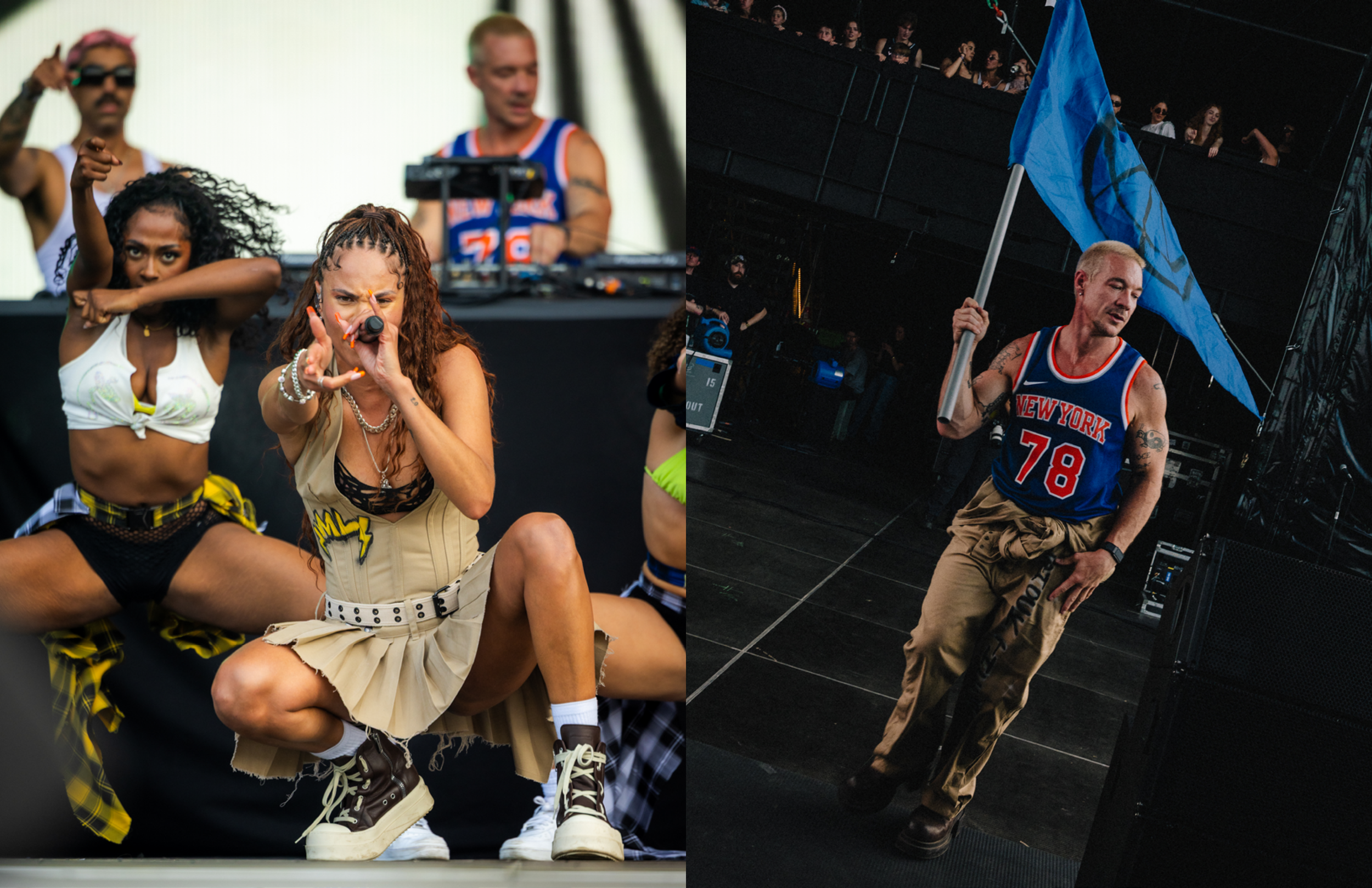
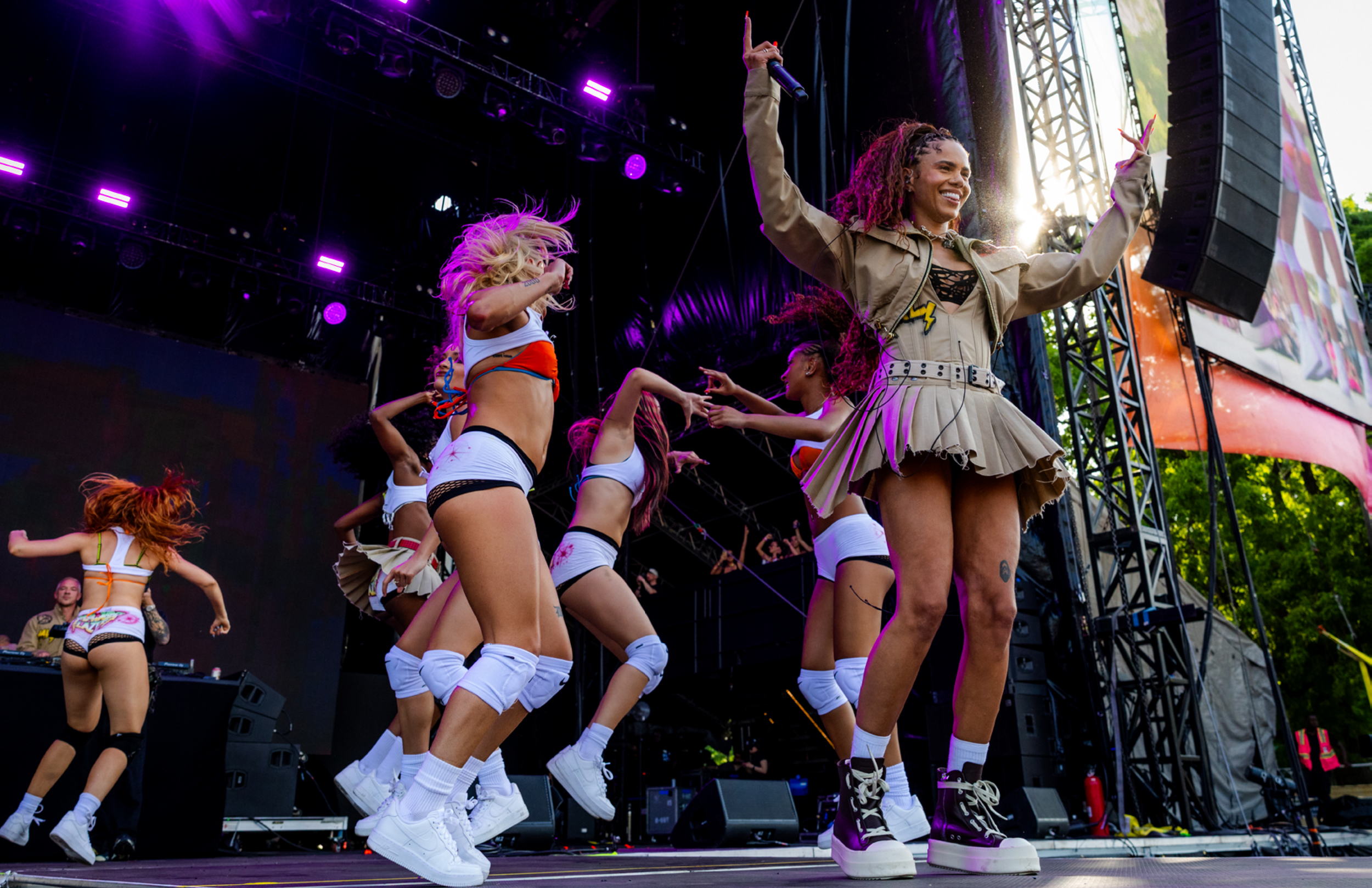
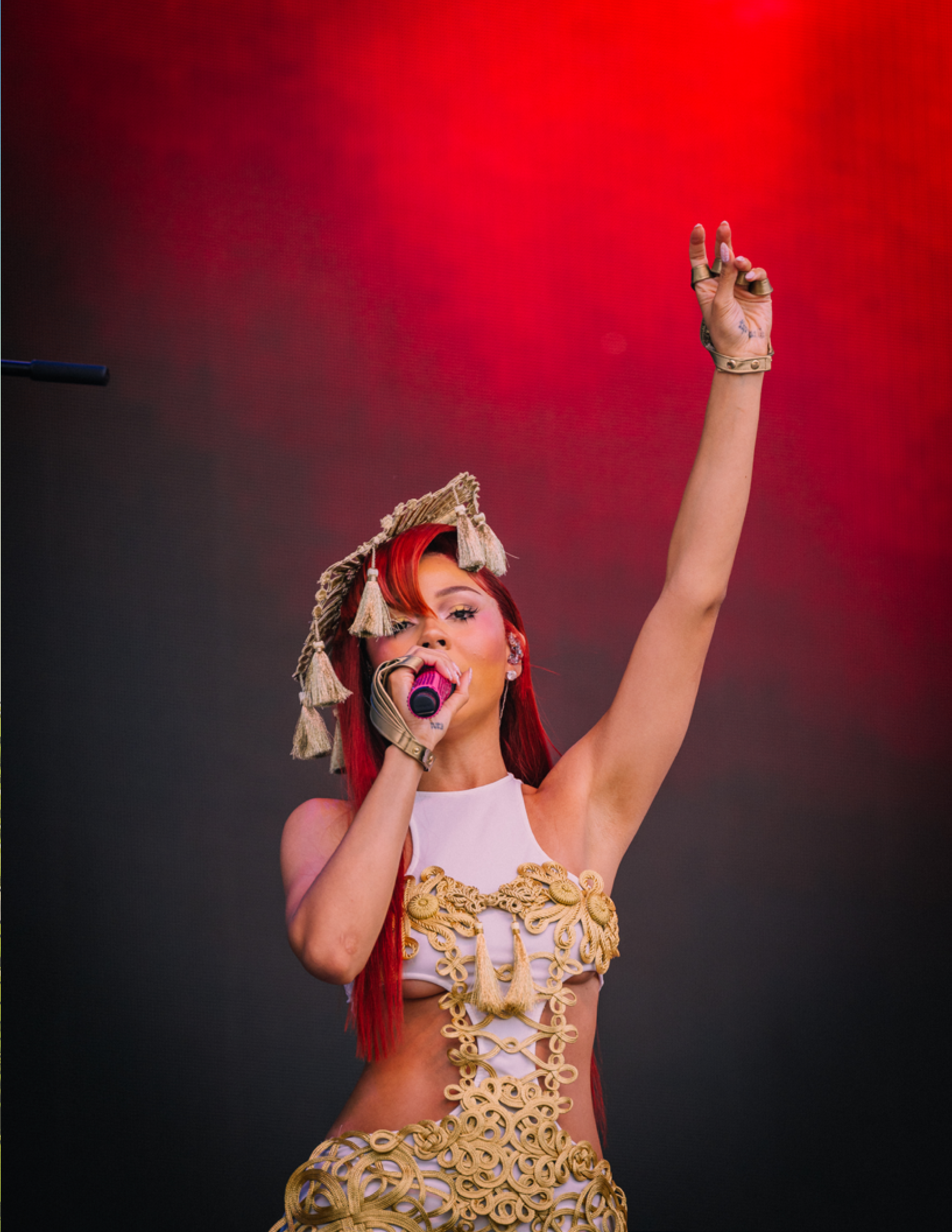
Read the JUN ISSUE #126 of Athleisure Mag and see GOV BALL 2026 in mag.
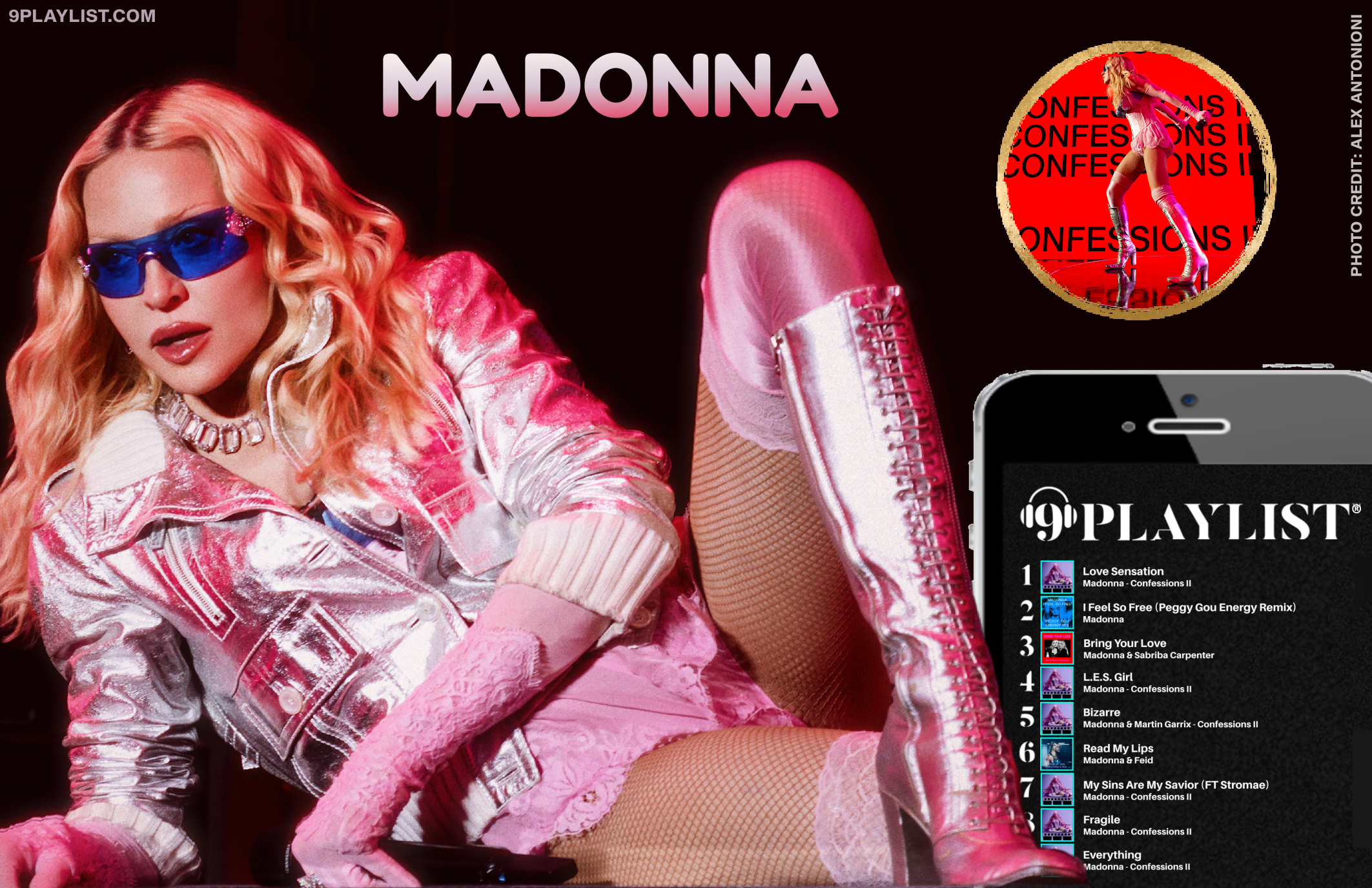
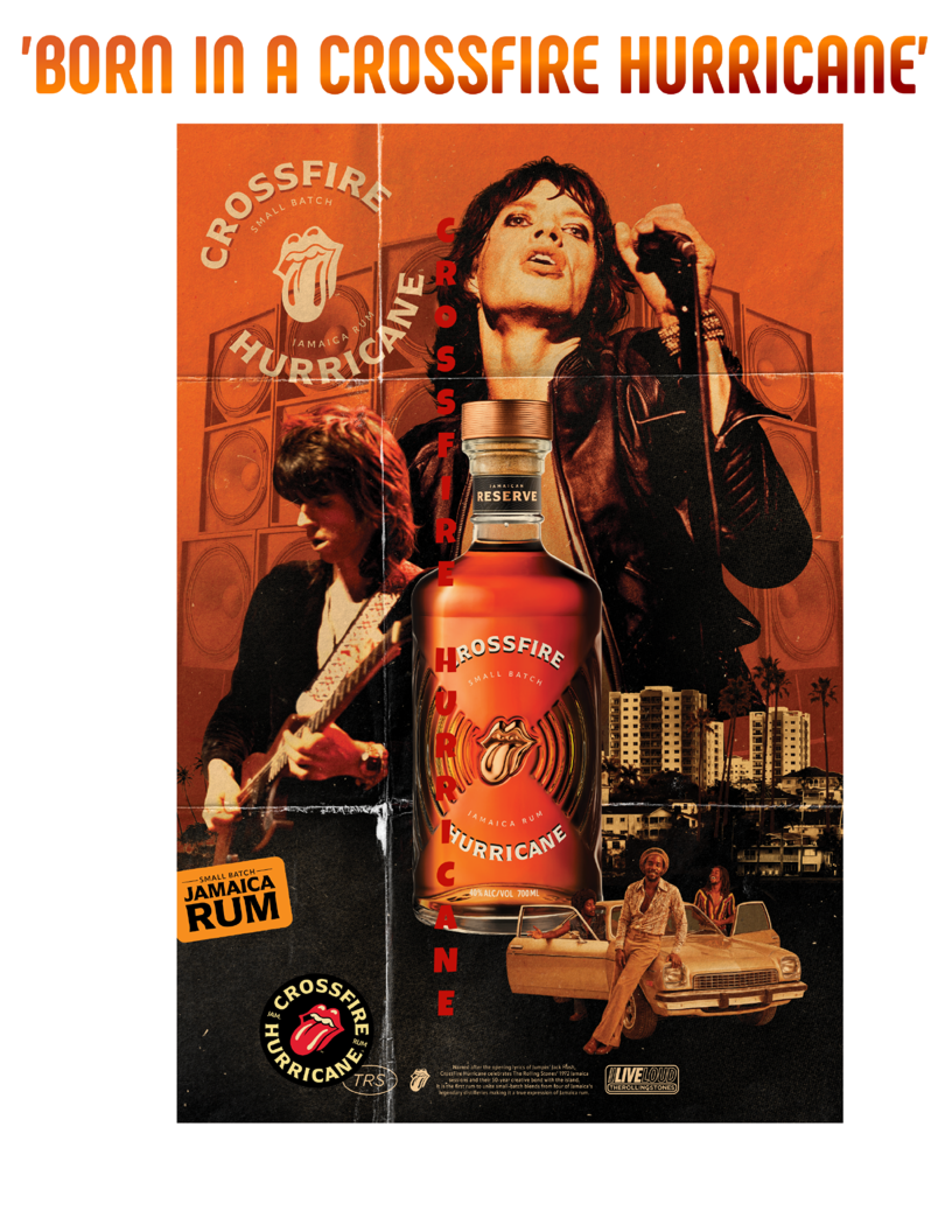
Without a doubt, The Rolling Stones will have an amazing Summer this year! On July 10th, the anticipated 14-track album, Foreign Tongues will drop and they have been releasing tracks and videos; such as In the Stars dropped earlier this month. While we wait for the full album to become available, The Rolling Stones have another launch that is worth noting! This Spring, they debuted Crossfire Hurricane Rum, a super-premium spirit that celebrates the bands connection with Jamaica in a relationship that has spanned more than 5 decades! This launch and product illustrates the band’s music heritage, its Jamaican provenance, and modern craft.
Starting with Jamaica, this is the first brand to utilize rums from 4 of the country’s most respected distilleries - Hampden Estate, Long Pond, Worthy Park, and Clarendon. These 4 styles come together in a single blend that showcases its complexity and the island’s rum-making tradition and is 100% Jamaican with no added sugars.
“Jamaica got into everything we did in the early seventies - the music, the rhythm, the pace of life. Jamaica was one of the few places that would let us all in. The island said come in and we recorded Goats Head Soup. It’s never let us down since. Crossfire Hurricane is a continuation of that story, more than fifty years on,” said The Rolling Stones.
It’s worth noting that prior to The Rolling Stones’ arrival in Jamaica, they had been recording on Main Street in the South of France; as well as touring in the US. When they arrived in Jamaica in 1972, it became a breath of fresh air their label head, Ahmet Ertegun of Atlantic Records knew that this island was the centre of emerging musical influence. By recording Goats Head Soup in Kingston, they were immersed in a new flow that Keith Richards said that the “1970s Jamaica felt a lot like 1960s England when we started out. There was something in the air - a new rhythm, a new imagery.”
The band continued to record at Dynamic Sound Studios where the connected with iconic reggae authors - Sly & Robbie, Peter Tosh, and more. Mick Jagger recorded, “There was something in the air. You could feel it from everybody on the street - a vital thing happening with reggae.”
The rum brand’s name is from the opening lyric of Jumpin’ Jack Flash (Editor’s Note: The opening lyric: I was born in a crossfire hurricane and I howled at the morning drivin’ rain) as a means to capture the raw energy and enduring spirit of one of the world’s most iconic bands.
The Rolling Stones partnered with Ian Burrell, Global Rum Ambassador to be a co-creator due to his expertise in Jamaican run and its cultural significance.
The bottle reflects the band’s iconic lips logo in a prominent way and is surrounded by wave patterns that showcase echo sound. By visiting the website, the storytelling continues by sharing the band’s time in Jamaica in the 70s, along with the recording of Goats Head Soup in Kingston.
Fans of the band and rum should visit the website to see never-before-seen images of the band on the island along with the moments that established their time there from the music as well as the spirit behind the rum. As their global rollout continues, Crossfire Hurricane Rum’s social account will share upcoming drops, collaborations, and new ways to interact with this story.
The portfolio includes Crossfire Hurricane Gold for mixing and Crossfire Hurricane Reserve for sipping.
PHOTOGRAPHY CREDIT | Crossfire Hurricane Rum
Read the MAY ISSUE #125 of Athleisure Mag and see BORN IN A CROSSFIRE HURRICANE | THE ROLLING STONES in mag.
We’ve been fans of EDM DJ/Producer Benny Benassi for years! His songs have been in our playlist and when enjoying his music, it’s all good vibes and energy.
We had the pleasure of having Benny as our DEC ISSUE #60 cover back in 2020, with a virtual shoot that took us all the way to Venice! It was great to connect with him again during the first weekend in May for the drop of his latest album, Feel the Bass! During that weekend, he DJ’d a number of events from radio stations, taking over Times Square, being at Marquee and even DJ’ing while biking the TD Five Boro Bike Tour! As we went to a number of events we had the chance to chat with him at various times to talk about the album, his NYC rollout as well as touring internationally!
ATHLEISURE MAG: Great set last night Benny!
BENNY BENASSI: Oh yes, yes I saw you last night amazing!
AM: I was taking footage with my Meta Glasses so I had to be still, but inside I was dancing!
BB: Thank you for coming!
AM: It was also great to have you as our DEC ISSUE #60 cover during the pandemic as we shot you virtually while you were in Venice!
BB: Oh yes, thank you!
AM: It was cool to be able to be “in your studio” all the way from NY!
You have had a busy weekend promoting this album and you have been all over the city! How excited are you about dropping this album?
BB: I’m super excited! I am doing a lot of DJ sets in different places. Like, Fri Night I was at Marquee and then last night, I was at Marquee Skydeck. Tonight I will be at a little club!
AM: We will see you there tonight!
BB: We will have a little block party! It’s amazing! I’m super excited! The public loves me and I love NY!
AM: It was such a pleasure to attend a number of the dates for Feel the Bass album drop while you were in NYC! What was the inspiration behind Feel the Bass and why did you want to create this album?
BB: I wanted to make a record that returned to bringing some physical energy back into the club, like when I started out with my first album twenty years ago. It’s a time when music has gone back to being very electro, very physical, and I really loved this sensation of feeling the bass in your stomach again. That’s where the whole concept of Feel the Bass came from.
AM: What was your creative process like when you were working on this album?
BB: It was a very instinctive process. I have a wonderful team of people I collaborate with, a lot of young guys, and I also receive a ton of music from emerging producers who send me their tracks to listen to. So, some things were born outside the studio, while others we developed directly in the studio.
It was a very “easy” and laid-back creative process, in the best sense of the word: we took our time. Whenever we received something we really liked, we worked on it without forcing anything. I think this is exactly what gave the album its unified feel.
AM: What are your 3 favorite tracks from this album?
BB: Definitely Feel the Bass, because it’s the track that also gave the album its title. Then there are some that I personally love, others that I adore playing live because they completely change the energy of the room, and others that are a bit more experimental, for example Chicago Baby with my longtime friend Felix Da Housecat and Superstar with Chris Nasty.
AM: What do you want listeners and/or your fans to know about this album and how do you want them to feel?
BB: I hope people feel that energy I was talking about earlier. I’d like whoever listens to the record to feel pushed to turn the volume all the way up... almost to the point of blowing out the speakers. I always say it’s a bit like when you test drive a powerful car on the track: you go full throttle until you hit the limit. Well, I want people to listen to this record like that, giving all the power possible to their sound systems, whether they are in the car, at a club, or at home.
AM: You came to NY and you really connected with so many people to launch your album! What was it like when you took over Times Square?
BB: It was pretty surreal, actually. I remember when I was a kid seeing Times Square in the movies... it seemed like another world. And then I remember the first time I took my dad there: he was completely blown away by all that energy, by all those people. He is no longer with us today, so being there playing inevitably made me think of him. It was truly an incredible emotion.
AM: You performed at Marquee and then you were also at Marquee’s Skydeck which we attended - what did you love about being at these venues and having it as part of your launch weekend?
BB: I really liked the contrast between the two. Marquee represents the more club-oriented, nightlife, and quintessential New York side, and it’s a place I’ve been going to for many years. Skydeck, on the other hand, is almost cinematic.
You are on the 100th floor with all of New York beneath you... it’s incredible. Just talking about it gives you a thrill, let alone actually experiencing it.
AM: Why did you want to be at the TD Five Boro Bike Tour?
BB: Oh, because I love biking and I think I will do something special for this because I enjoy riding a bike with family. But this bike will let me play live while I ride!
AM: The TD Five Boro Bike Tour was such a fun experience! We chatted with you a bit before you led the 2nd Wave of riders to take on the race! What can you tell us about the bike that you rode on as we didn’t realize that you would be riding as well as DJing!
BB: I honestly think no one expected me to ride the whole thing! But I love cycling; it helps me so much to mentally disconnect. Plus, New York on a bike has an incredible charm, because it allows you to take your time to really look at the city. I want to thank Canyon again for putting together that setup for playing and biking. It was a lot of fun. It was a beautiful way to wrap up the weekend in New York.
AM: The last event we went to was at Mi Casa Studios. It was cool to see other DJs play their sets, enjoying slices of pizza and watching you DJ - why did you want the event to have these elements?
BB: I liked the idea of something very closely connected to the people. Anyone who came really got the feeling of stepping into my own home. Sort of like saying, “come over to my place, I’ll make you a pizza and play you some records.” It was the same thing there: you come in, listen to music, maybe even spin a few records with me... and it was beautiful like that.
AM: You left NY and you hit the road to continue releasing your album - what are additional dates or festivals that you will be participating in as we begin to make our Summer plans?
BB: Usually, in the summer, I focus a bit more on Europe. This year I’ve also added a small tour in Canada and a few festivals there. Then there will be Mykonos, some dates in Ibiza which I always love doing, something in Sardinia—where I’ll be going shortly to one of my favorite clubs— and also a couple of festivals in Italy. I always like to combine work with a bit of vacation time.
AM: When you are not DJing, how do you take time for yourself?
BB: I always look for simple moments. I also really love the lifestyle here where we live, in the Apennines, an hour away from my home. I like taking some time out with my mountain bike or going for a drive in my old Jeep. They are simple things, but they really help me disconnect.
PHOTOGRAPHY CREDITS | Paul Farkas via SONY Alpha | PG 85 Kimmie Smith |
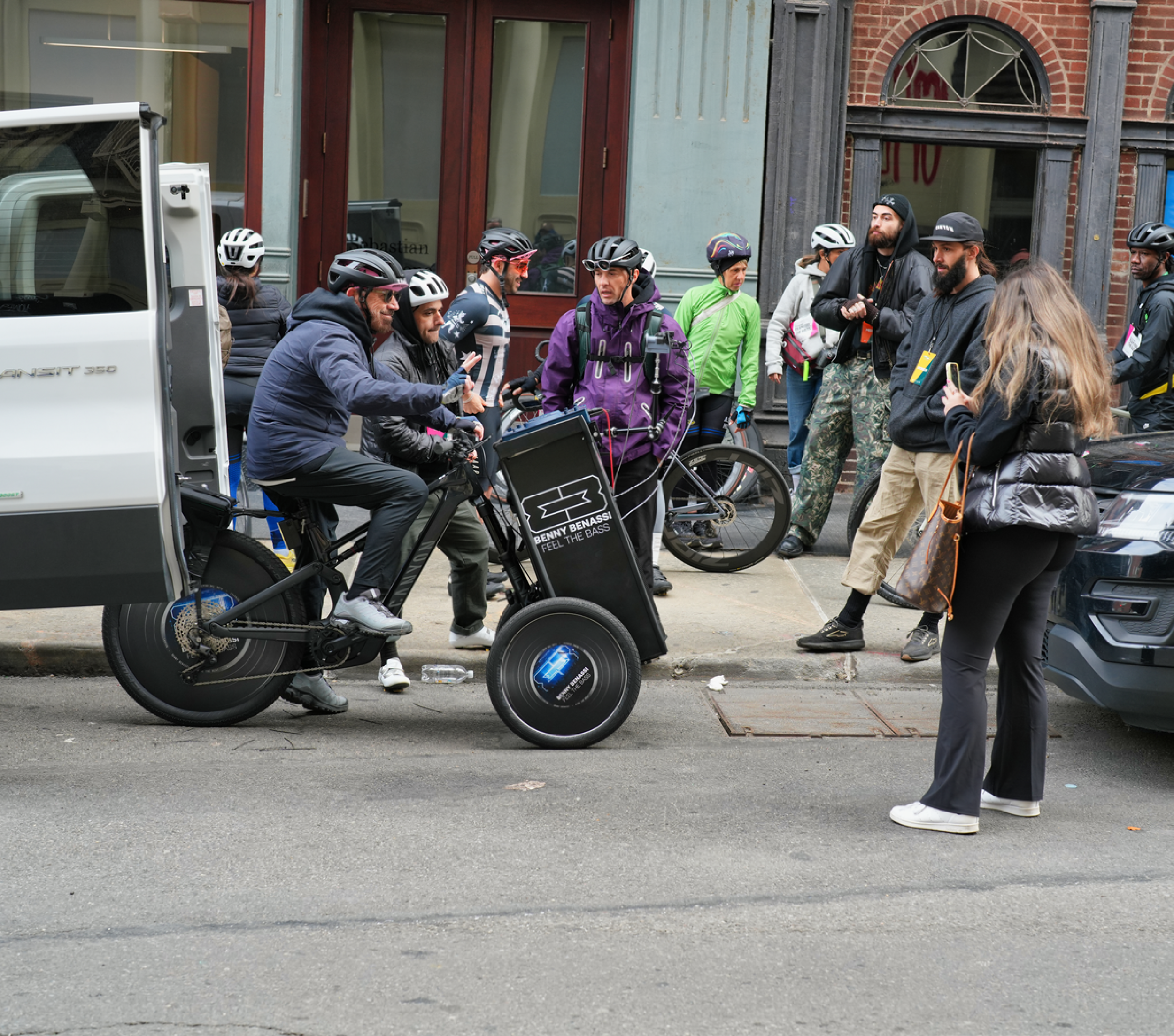
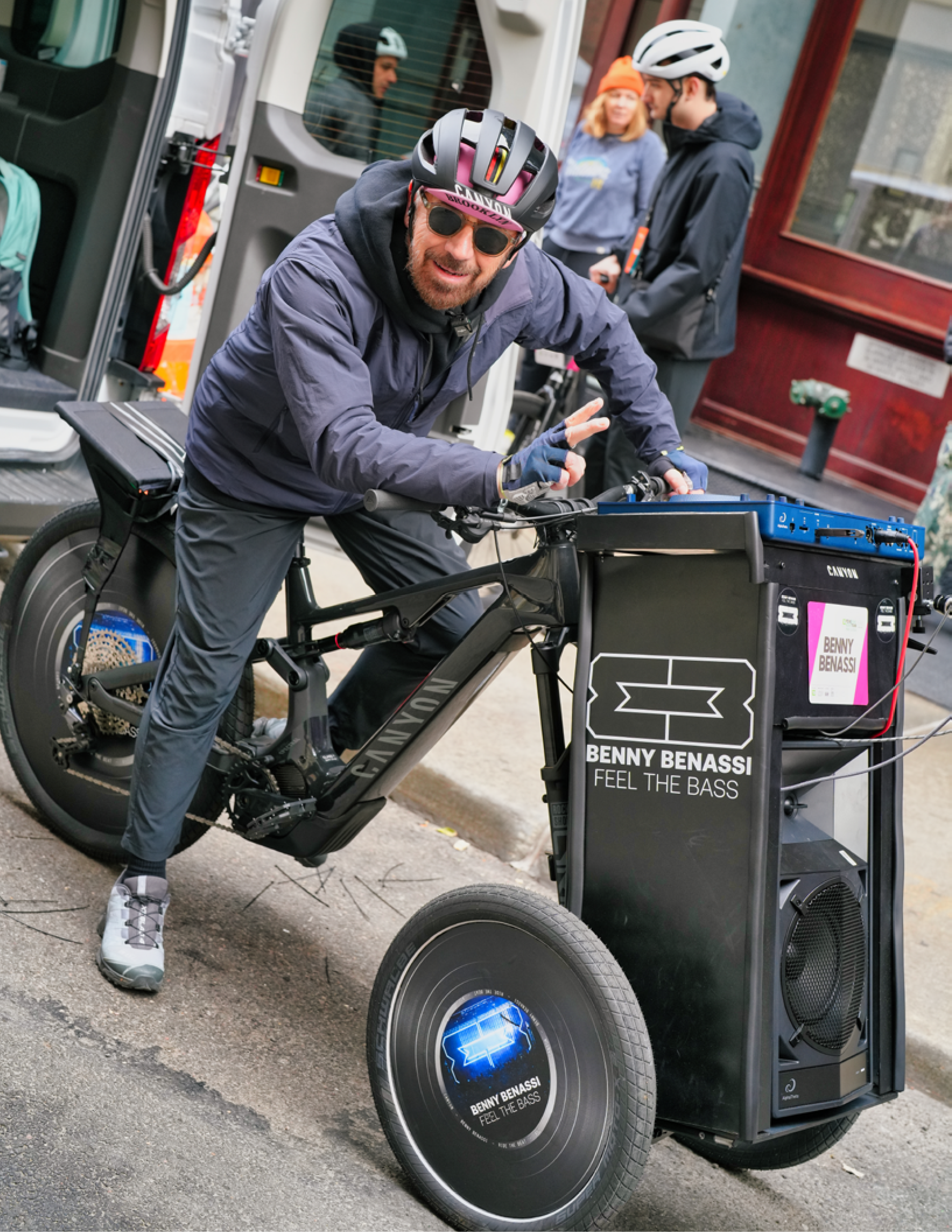
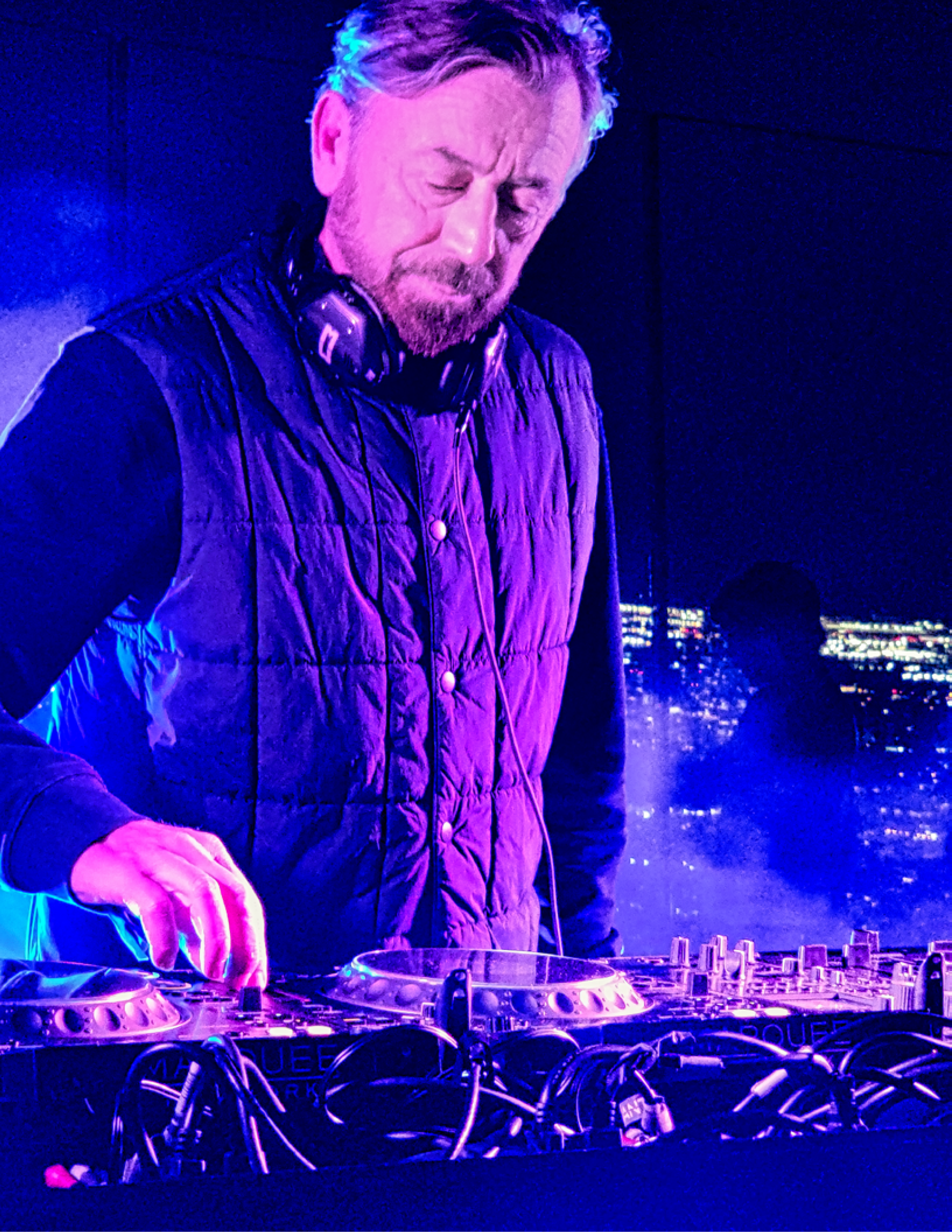
Read the MAY ISSUE #125 of Athleisure Mag and see FEEL THE BASS | Benny Benassi in mag.
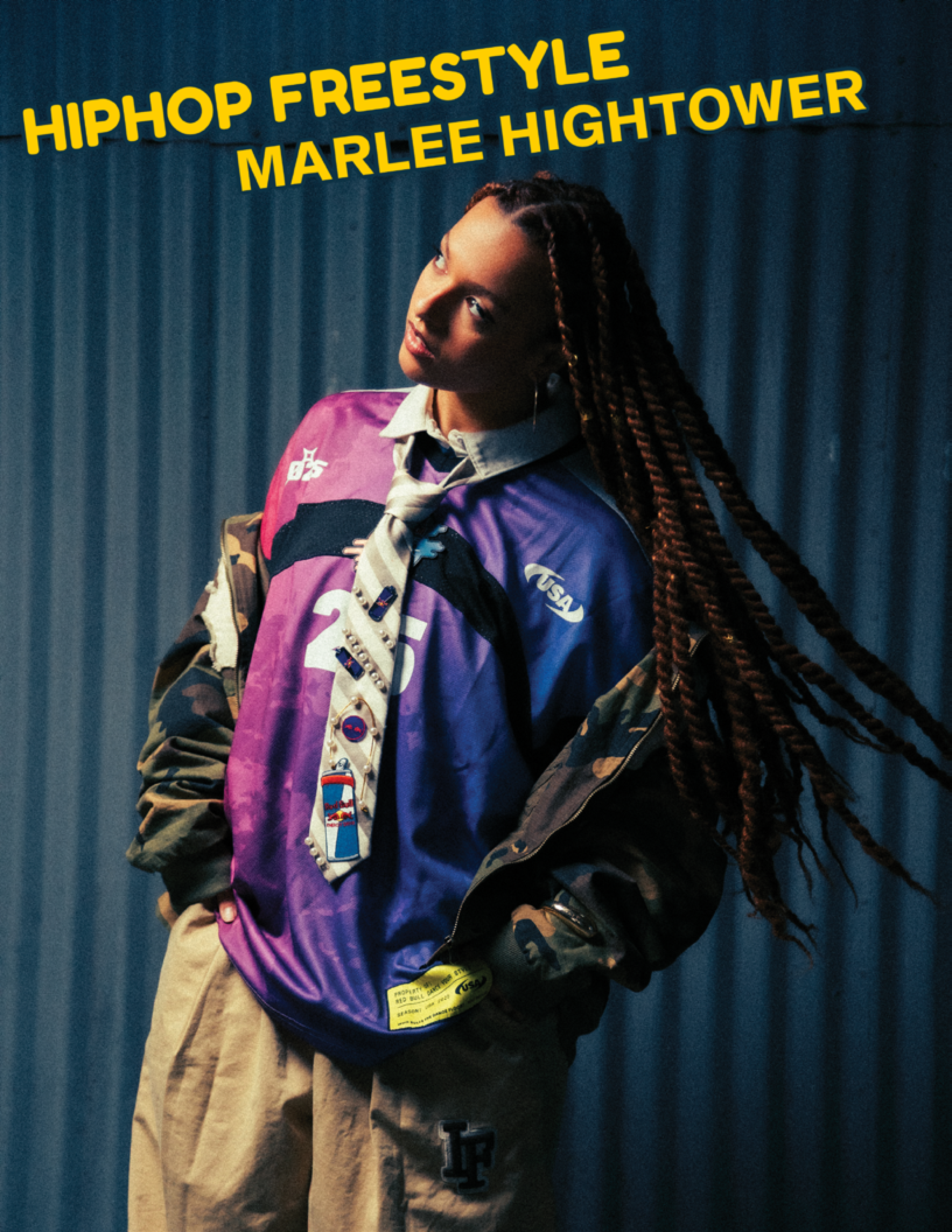
We always enjoy highlighting artists that are focused on what they create and how they make others feel. Red Bull dance athlete, Marlee Hightower has been in a number of competitive dance shows from World of Dance, America’s Got Talent, and more. From a young age, she has been working in the industry as a Choreographer and Movement Director. Her work can be seen among an array of luminaries in the industry that include Coldplay, Janet Jackson, and Pharrell Williams. She also has her MOTIV Dance Studio that she founded as well as her MOTIV Crew that works with her throughout the world. We sat down with Marlee to talk about her love of hip-hop. dance, how she approaches taking on her projects, and much more!
ATHLEISURE MAG: When did you fall in love, you know, with dance?
MARLEE HIGHTOWER: For me, I started dance when I was really little. My mom put me in dance when I was 3. So I kind of grew up into it. I don’t feel like there was this specific moment for me more so that it has just been such a big part of my identity and it’s just been a big part of who I am!
AM: What style of dance did you start with? I started at 3 with tap.
MH: Really? I did hip-hop.
AM: Oh wow so it has always been hiphop?
MH: I started out doing a little bit of everything. But, I took my first hip-hop class when I was 6. And I was like, this is what I want to do.
AM: Who is, the first dancer or show that made you realize that this is something that you wanted to do?
MH: Honestly, Beyoncé.
AM: Nice!
MH: I was, like, I’m gonna be Beyoncé. I was a kid, but I could have sworn it would be her. She was incredible and honestly the Step Ups. I was obsessed with Step Up 2. I was obsessed with the moves, it was my everything.
AM: What drew you to hip-hop and how do you define yourself? Is there a sub style even within hip-hop dance?
MH: I feel like with hip-hop, it’s interesting because there is like a very foundational version of hip-hop.
AM: Right.
MH: I think that over time, especially in the choreography space, like it has evolved and even in freestyle - it has evolved. You know, you have other styles coming into play, even in New York, you have, light feet and stuff like that.
So, yeah, there’s like, umbrellas. For me, I grew up listening to a lot of like old school, hip-hop - A Tribe Called Quest, Slum Village, and Mos Def. That’s like so much a part of who I am and even my family. My dad’s a graffiti artist.
AM: Oh wow!
MH: So hip-hop culture as a whole has been like very much a part of my life, so it just feels natural for it to also showcase itself, in my dance.
AM: When did you realize that this passion for dance should also be a career for you?
MH: I started dancing professionally at a very young. Like my first commercial, I did when I was 7 years old, then I went on America’s Got Talent. I made it to the top 10 when I was 10 years old. So, I’ve been working in the industry for a really, really long time. And then I opened up my dance studio in Orlando with my father when I was around 15. I started teaching consistently then and I think that honestly through that and honing my skills in that regard, I started taking ownership in a way that I hadn’t done before. Whereas before, I was just a kid. I think that through having the studio and running my MOTIV crew and just kind of figuring out what my voice. I realized that, I’m doing something, but I’m also making an impact that’s bigger than just me.
AM: Wow, I mean to be 15 and to decide to open your own studio.
MH: I know – crazy! It was actually my dad’s idea. I used to travel a lot back and forth between Orlando and L.A in order to train, but then also like work as a dancer. Whenever I would come back home, there wouldn’t be anything. There wasn’t really that many opportunities to train and dance at a high level and so he said, “what if we start a studio with a drop in class concept?” People could come in and just learn especially to do that with hiphop dance. A lot of what was offered in the area that I was living in was studios where you could do ballet, tap, jazz, and you had to be part of a company so you didn’t have access.
So, it was his idea, and I remember, initially, I was scared because it felt so ambitious at the time. But I was like, okay, let’s do it, let’s get on board. So my mom, him, and I just all came together to make it something. And I think also, through my traveling, I had a lot of relationships and connections with people, and so a lot of my friends were willing to come and offer classes and kind of help it move along and move forward. It was a process. We are in our 11th year, I can’t believe it.
AM: So, did you envision where you are now, with MOTIV that it would be what it is now?
MH: No, not at all. I honestly thought that this is gonna like be a thing for a couple years!
AM: Right.
MH: Maybe we’ll move on to something else. But like, I had no idea that it would be such a thing and such a staple in the community where I live, but also around the world. To be able to travel around the world, and to hear people tell me, “oh, I want to come to Florida and I want to train there, that’s crazy to hear because growing up, no one really wanted to train in Orlando. I’m really grateful. It’s definitely not what I expected at all.
AM: Do you think you’ll have other studio locations in addition to Orlando?
MH: I don’t think so, at least not right now. Just because our main focus has always been to try to bring the people to Orlando. That was kind of the the whole goal. I don’t know, maybe in the future once things continue and it can run itself potentially. This is also so much of a love letter to Orlando.
AM: You raise a good point about being part of companies and troops when you talk about ballet, tap, jazz etc. What were the types of training that you were doing when you were coming up?
MH: I was a convention kid growing up. I was a big convention kid, so I would go to these traveling conventions, one of them was called Monsters, Monsters of Hip-Hop, and so it’d be all these teachers who would come in and teach for the weekend at 6 classes a day, and I was really big on that, and then I would also travel a lot to take different workshops from different teachers. So sometimes I would go to LA for an intensive and then even for me, now I still am big on my training. If I ever get flown out to teach at a camp or something and a different teacher is there, especially like a foundational or freestyle based teacher - I’m in there. I’m trying to get as much information as I can. Even doing dancer style is a form of training for me, because being someone who started out primarily as a choreographer and with the choreography, background freestyle, and freestyle training is such a different mindset and mentality. And so, like getting to do dancer styles and getting to connect with the different dancers that are a part of that network has been such a huge game changer for me and a game changer in the way that I approach my choreography.
AM: How do you approach the choreography, whether it’s for a show or a troop?
MH: My biggest thing, is balancing feeling and then also the visual aspect of it because It ultimately is something that people are digesting and visually looking at. So, I think when it comes to a group, I love to look at shape, but then I also am really adamant on flow. Flow is super necessary because that also coincides with how I want to approach my freestyle, too. It’s like, I want the worlds to merge as best as I can, but you also in choreography, you have to have that understanding of structure.
AM: It’s like a science, but it’s a fluid science.
MH: It is! It totally is, and some of it is intuition based. Some of it is also mathematical.
AM: When you think about competition shows, I mean, I do remember seeing you on World of Dance. How do you approach the competition show environment? You have these panel of people who have varying levels of knowledge on the styles – how does that work?
MH: Dancing for so long, I feel like I was always in a position where I felt like I needed to prove myself, but I feel like going into those competition shows where you’re given such a huge platform, and the stakes also feel so high. I think that yes, it’s important to aim high, but then also don’t sacrifice who you are in the process of it.
I’ve really been like throughout everything I’ve done, like World of Dance. When I did World of Street Woman Fighter, like every single challenge, I was, like, okay, I’m gonna put my best foot forward, but I cannot shy away from who I am, so I have to dig deeper into who that is because sometimes, like, you’re given challenges where it’s a song you don’t necessarily know. Or it can be a challenge movement wise that you have to incorporate. How can I take all of this, but still remain true to me and that’s always at the forefront of those types of competitions. Ultimately, win or lose, that’s what matters most. Who you are and what you’re trying to say when you’re given that platform.
AM: You just got back from South Korea with Street Woman Fighter. Tell us about that as we hadn’t previously heard of it but it is large!
MH: Wow, it was large. It’s crazy, it was larger than I even expected it to be. Like, I didn’t realize how popular the show was in in South Korea. I feel like I was living a double life, almost like going to South Korea, and like everybody’s stopping their cars and stopping me on the street and stuff like that. The show itself, I think, is really cool because it does give dancers a platform. The fans love dance in a way that is, very unfamiliar to me, at least in the States. People like dance, but, I don’t think they see dancers, as you know this thing!
AM: We were in Tokyo and to see how dance was embraced there, we can see what you’re saying. Whether you were in Roppongi, Shibuya, or Shinagawa you could see people loving it and just breaking out into dance.
MH: Yes and they learn the dances like it is such a thing, and I, so I really, really admired how much they highly revered dance in that way. The show itself was very reality based, so that was really interesting coming to set and immediately putting on a mic, and having cameras everywhere. So I got used to being on all the time, but they also don’t want you to be on at the same time!
AM: Exactly! It’s a happy, medium.
MH: Yes, happy medium because I do know the cameras are rolling.
AM: Look at me. Don’t look at me, but look at me!
MH: We would get different missions over the course, of the competition. I always tell my friends like it felt like a combination between America’s Best Dance Crew and America’s Next Top Model.
AM: Interesting.
MH: Different challenges we were given, and I really appreciated them because it forced us to get really creative with how we are presenting who we were, especially because the show was very like K-pop based, and we’re hip-hop based.
AM: Right.
MH: So we were kind of going against the grain, the entire competition, but that was our edge.
The entire season is out now. You can watch it through Prime Video. It’s attached to the channel Mnet which is like the Korean MTV.
AM: What was your biggest takeaway from doing that show?
MH: I think my biggest takeaway was that you have to fight for artistic integrity when it comes to putting yourself out there in any room - in any space! That fight is on you.
AM: So the crew that you were with there was yours, MOTIV. What is the ethos of people who are on your crew and how do you decide who will be on it?
MH: I think mentality wise, you have to be willing and super open! You need to be kind and adaptable, because I think that even in the industry, even in my process, it’s very much like I come to the studio, and we figure it out as we go, and it’s very like organic the process. So, being malleable and just being open and willing. I love to laugh – we also have to laugh while we do it because it’s a lot of hours. At the same time, you have to strive for that excellence.
AM: Right.
MH: So I’m always trying to instill that in people. And I’m the type of person that sees potential over a perfect dancer! I’m like, no, I see where you could go as long as you see it, too, and you’re willing to get there – then I think that you’re in a good spot.
Doing the show was super special because I brought girls who I had been training over 6 or 7 years. It was incredible to see where they were to how far they have gotten to now! Getting to be able to provide experiences to my team is everything! The concept of bringing the world to Orlando and my people to the world!
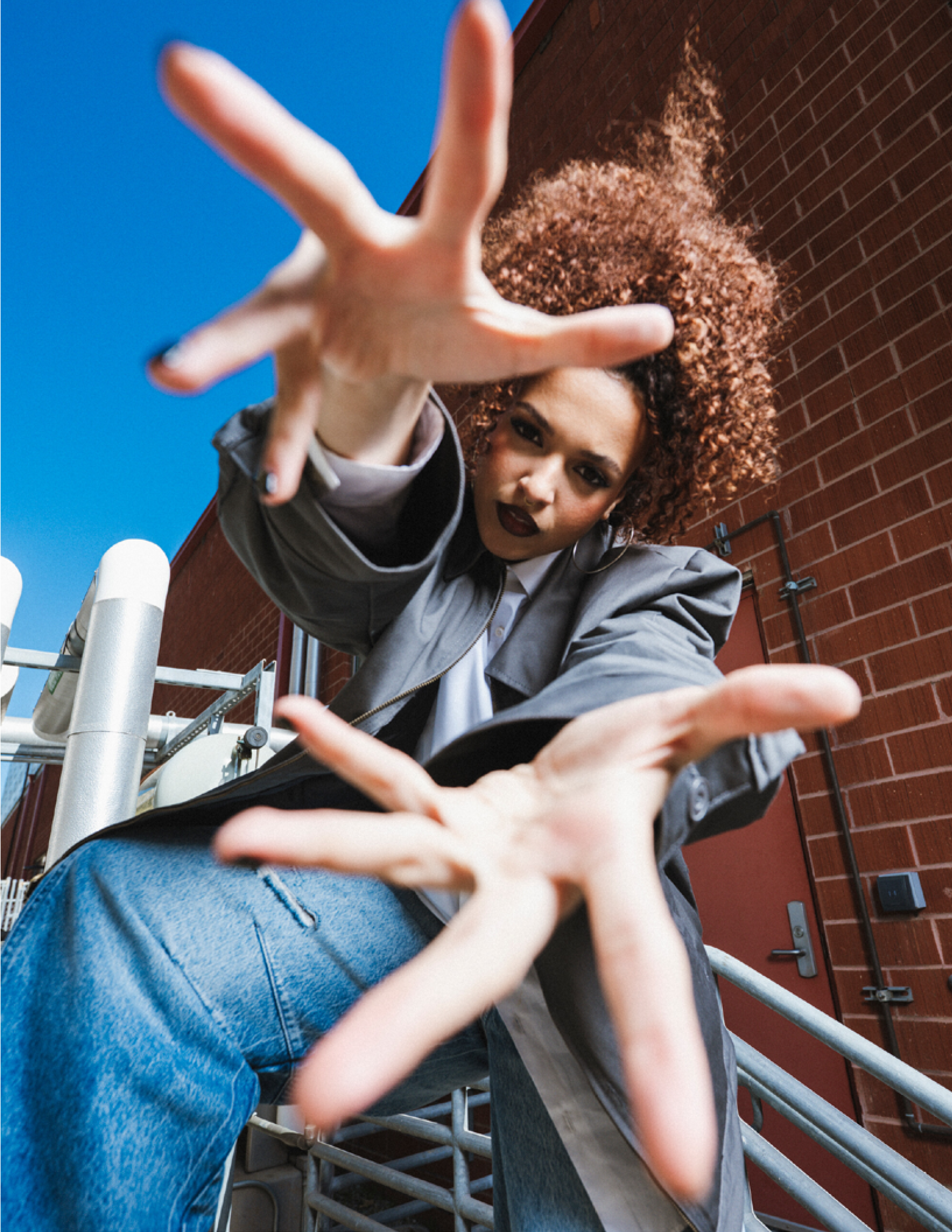
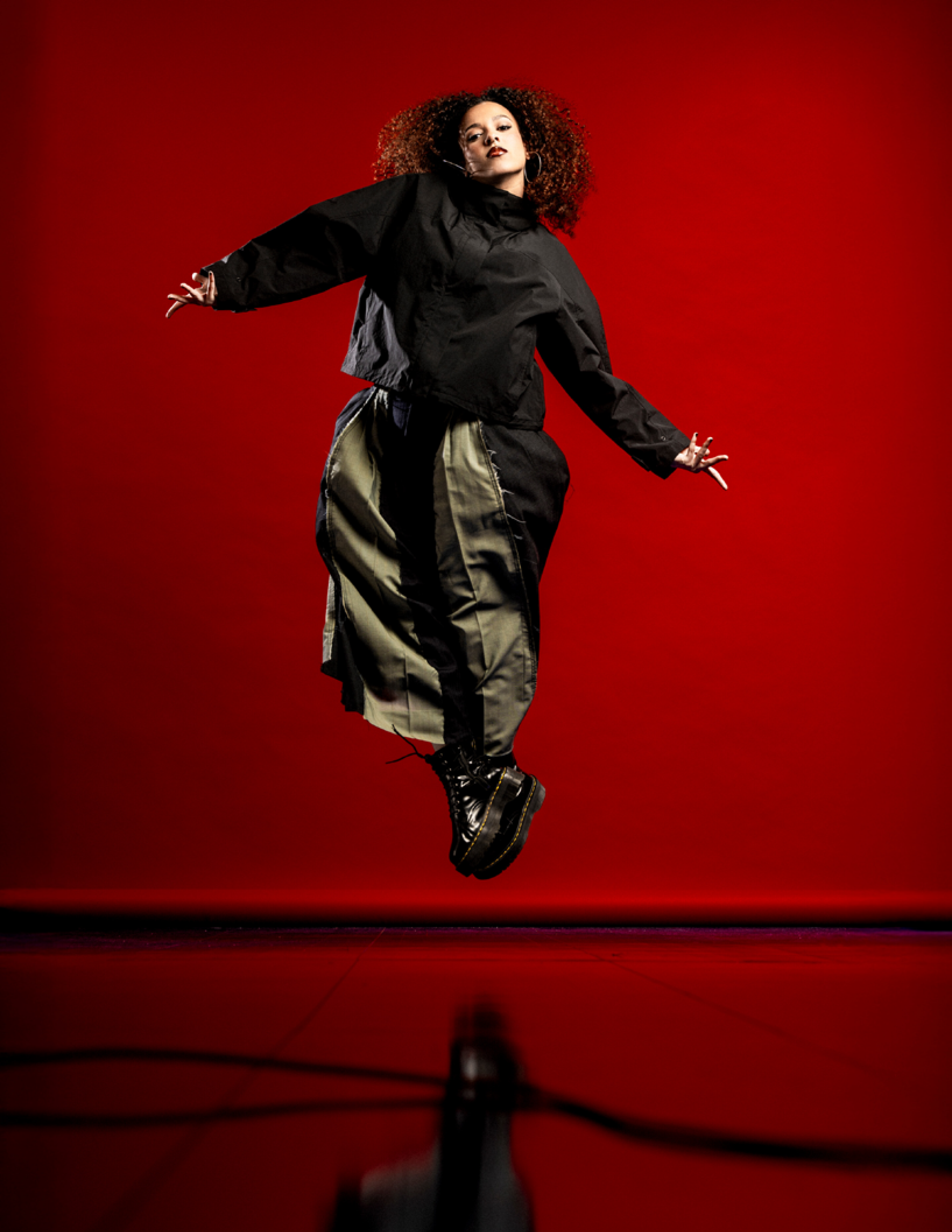
AM: You have such an impressive resume with people that you have worked with Janet Jackson and Pharrell, and Jazmine Sullivan. What have you loved most about that and what artists/talents and projects would you love to be attached to?
MH: I’ve felt really honored to dance with different people and I’ve loved being given the creative voice. I just recently did a short film for Coldplay, which was so fun. I got to be in Malta for 10 days and I mainly did movement direction, rather than full out choreography, that was really, really nice. I’m a really big lover of film. I’m such a film nerd and so anything in that vein, I’m really excited to work on and with because, dance is one thing, that creative process in that regard is another. Getting to do it alongside the DP and even the producer. Watching the way that the gaffer sets everything up!
AM: Looking at all the blocking!
MH: Yeah, I’m so enthralled with the whole process! I would love to work with more film and with more TV. An artist that I would love to work with is James Blake. I think he makes incredible music and very danceable music. But he doesn’t use dancers, I never see that. I think that it would be really interesting to do something with him. That’s my dream artist of all time!
AM: For those that don’t understand the nuance between being a choreographer and a movement coach can you share a bit about that? Only in the last few years did we understand that distinction.
MH: I think that the biggest difference between movement direction and an elaborate piece of choreography would be that for movement, it’s about understanding, shape, understanding, flow. Maybe you’re working with a model who just needs to like, figure out what poses are going to work best. Maybe you’re working with a group of people that need to walk on the street in a certain way. You’re creating things that feel natural oftentimes.
Whereas, with an elaborate piece of choreography, there’s formations and counts. Even the movement itself is dynamic and I would say that those are the biggest differences, but it’s interesting just how much still of planning and understanding your body is needed, even just in movement direction.
When I did the Coldplay job, I was like, actually, I think we might need dancers just in order for them to move their head at the right time.
AM: Right.
MH: It’s still so synchronized and intentional.
AM: How did you come to Red Bull? We’ve had the pleasure of having a number of people from Red Bull that we’ve been able to work with, whether they were athletes in surfing – Carissa Moore, Griffin Colapinto, or Caroline Marks, snowboarding – Mark McMorris etc.
There is a culture in Red Bull of having these great people who are outside of the box but they are doing things that are pushing the envelope and doing dynamic things.
MH: My first Red Bull Dance Your Style was in 2019. I wasn’t even freestyling that much back then. I got brought on board for that and that was my first initial experience with Red Bull. Then I did a Red Bull Dance Your Style in Florida, and that’s when I made the semi-finals. Then from there, I got put on to be a representative for dancer style.
It’s been a really cool Journey for me as someone who’s working to bridge the gap between choreography and freestyle, so it’s like I’m implementing my practice into this new space and getting the platform to do so. And then along the way, I’m like able to meet up with all these different dancers with such different backgrounds as far as how they came to dance and the styles that they do. It’s interesting to be given access to a community, truly. Red Bull is really putting dancers on and more specifically, free stylers are more of an underground thing. They are being a voice in the way that is not really prevalent in the industry. Usually it’s a choreography based dancer or a modern dancer. Now, we’re thinking, street styles - street style based dancers. We’re being given the microphone and that’s what I appreciate the most about being a part of Red Bull.
AM: Are there any projects that are coming up specifically with Red Bull that you’ll be doing that you can share?
MH: Not anything in particular. Obviously, last year, was the release of The Can coming out, which was an incredible experience. It was all in promotion for the World Finals in the US. This year, I have a film project that I’m doing that Red Bull really helps me in terms of any ideas that I have, helping me connect with different artists, not just even the dancers, but there’s also like different artists that they work with that I’ve been able to connect with as well. I have the National Finals coming up in Tampa that I’m gonna be a wild card for, so I’m excited about that, and then hopefully that takes me to the world finals in Zurich!
AM: Oh wow!
MH: Fingers crossed!
AM: What is the dancing schedule of sorts in terms of, if you think of the Olympians right different things that happened there, obviously NBA, they have their season. What is the season for hip-hop/freestyle dancers?
MH: I feel like it depends on the dancer and the person. It depends on their schedule as well, I think. Dance is such a free thing. For me, specifically, I had to really and still have to really be diligent with how I train, because sometimes I don’t have all of the time. I started implementing training practices in the classes I would teach, or the dances I was creating. Even being here, I know that there’s certain dancers here. I’ll give them a message - let’s dance, let’s dance for a few hours. You know, I’m gonna learn stuff from you. You’ll learn stuff from me. So, it’s very much, just a matter of like figuring out what your schedule is and how you train. I know some people are very methodical about it, whereas I think I’m more free and I find it along the way.
AM: What does an average week look like for you?
MH: It changes every single week and I’m grateful. My everyday feels like a different day. But I would say, an average week if I’m lucky, I get Monday off. Maybe I find myself at home in Florida on a Monday and then I’ll teach my weekly class on a Tuesday at MOTIV Dance Studio. I’ll run rehearsal with my crew. Maybe Wednesday, I get off if I’m lucky. I’ll teach Thursday if I’m still in town also at MOTIV. Then the weekends is usually when I’ll go somewhere in the world. Maybe it’ll be an international trip to teach at a dance camp, or maybe it’ll be something like this where I’m making an appearance or judging a competition or doing a battle that weekend. Then I’ll come back home and reset and do it all over again!
AM: In general, are there projects or things that you want us to know about and keep our eye out for.
MH: Later in the year, I’m going to be coming out with another dance film. I’ve done a few. I did a dance film titled Blackbird, and then I did another one, titled We, the People, which was in connection with Street Woman Fighter that Red Bull helped me out with as well. That did really well and made a big impact. I’m just excited to work on a new film, and to bring it out into the world later this year.
AM: That’s amazing.
What do you want your legacy to be known as? You’re bridging a lot of things, the culture of hip-hop, and being a woman that has been trailblazing and the way you’ve done it, giving love to Orlando - it’s not just Disney and Universal.
MH: Yes – Facts!
I ultimately just want to be what I wanted to see growing up. I think representation is really important and I think that growing up as a young black girl, I didn’t see a lot of myself in people in the dance community, but then also on TV and in movies. I think expressing as much of the different facets of myself is important for other people, to know they don’t have to box themselves in to any one thing, whether that be their pursuit within dance or even just their pursuit within art in general. I think that’s the biggest thing is just to be open and honest about my process and to provide inspiration, but then also representation and for people to feel seen and heard in a way that I wanted to feel growing up.
PHOTOGRAPHY COURTESY | PG 108 - PG 112 + PG 122 Digital Branded/Red Bull | PG 115 + PG 116 Little Shao/Red Bull Content Pool | PG 119 Daniel Zullani/Red Bull Content Pool | PG 122 Kien Quan/Red Bull Content Pool |
Read the MAY ISSUE #125 of Athleisure Mag and see HIPHOP FREESTYLE | Marlee Hightower in mag.
Next month Governors Ball makes its way to Flushing Meadows for 3 days of phenomenal performances from Jun 5th - 7th. We’re looking forward to seeing Katseye, Lorde, Major Lazer, A$AP Rocky, Jennie, Clipse, and more! If you have yet to get your tickets, now is the time. Over the past few years we have enjoyed being able to see the biggest acts across genres that make their way to the staycation. Add the activations, vibes, and people watching - it’s a very busy weekend!
In the midst of great music and the early days of Summer, the food offerings are another element that makes this so enjoyable. We enjoyed Gotham Burger Social Club last year and we are looking forward
to their return this year as well! With various culinary options across the board, there is something for everyone including: Lobster Rolls & More, Grumpy Dumpling Co, and Tacombi. For those looking for something for their sweet tooth, Van Leeuwen Ice Cream, John’s Juice, and Fan Fan Donuts will also be options there.
For those that want to continue the party, their After Dark series is concerts and sets taking place outside of this venue throughout the city. To check out who you want to see, make sure to check out that portion of the site in order to obtain tickets which are separate from your passes to Gov Ball.

IG @govballnyc
PHOTOGRAPHY CREDITS | PG 154 Ismael Quintanilla | PG 156 + PG 158 Taylor Regulski |
Read the MAY ISSUE #125 of Athleisure Mag and see Gov Ball 2026 Pre-Coverage in mag.
We had a great time at Prince Street Pizza’s Brooklyn location launch party earlier this month (271 Smith St., Brooklyn NY).
Known for the legendary ‘Soho’ Squares, and as the Original Home of the Spicy Pepperoni, their mission is to deliver happiness in every bite. Indeed, we chowed through many with a smile, including the Spicy Spring, the Naughty Pie, Houston Jalepeno, and the Four Cheese. What a tasty combo!
The launch also featured their sexy new uniform collab with Sergio Tacchini, a cool style that definitely fit the spot well. We were treated to several musical performances, featuring Partner/Actor Nick Tuturro. Check out Nick’s show ‘Delivering Happiness,’ where he used to deliver lines, and now he delivers pizzas. (Brother, Actor Icon John Tuturro was there for a bit, and left on our way in); and beloved recording artist GASHI, who performed several of his hit songs, even to an eclectic group of neighbor pirates next door, who also got some pizza over the fence. We love the song My Year (featuring G-Eazy) - ‘This My Year, This Gonna Be My Year’ for sure!! In between bites and conversation, we snapped some cool pics and took some Oakley Meta HSTN Performance AI videos of the concerts, and were hand-fed tasty mozzarella sticks from Mad Mutz’s Mike Hauke (also Owner, Tony Baloney’s) as we were juggling our gear.
PHOTOGRAPHY CREDITS | Paul Farkas shot on SONY Alpha |
Read the APR ISSUE of Athleisure Mag and see PRINCE STREET PIZZA | Brooklyn Launch in mag.

Read the MAR ISSUE #123 of Athleisure Mag and see 9PLAYLIST | ILLENIUM in mag.

PHOTO CREDIT | Ultra Music Festival/Alive Coverage
We’re looking forward to the DJ (we’re looking forward to Afrojack, Swedish House Mafia, and Major Lazer) sets, warm weather, and food that will be at this year’s Ultra Music Festival (check out who is performing along with their sets times, days, and stages that hey will be at) which kicks off tomorrow and goes through Mar 29th! If you are attending, make sure that you download the app so that you have this information in real time! If you won’t be there this year, make sure you catch their Ultra Livestream to get in on all the action.

PHOTO CREDIT | Ultra Music Festival/Alive Coverage
Read the latest issue of Athleisure Mag.
We sat down this month with Mick Kastenho aka KAAZE who is a DJ/Producer who has created music that keeps the good vibes going, as well as working with a lot of our favorites from Steve Aoki, Calvin Harris, Britney Spears, to name a few! We wanted to know more about his upcoming exciting projects; where we will see him play his next sets; how he approaches creating his music; and how he stays fit!
ATHLEISURE MAG: When did you first fall in love with music?
KAAZE: With music in general? Oh wow, my father is a musician actually. So, it came I think if I remember when I was around between 1 and 2, I grabbed a CD which was a Queen record when I was very young and it was my favorite record. Since then, I was obsessed with music! My mom was also very into disco and groovy music so they fed me a lot of music in the home. So it definitely comes from my parents.
AM: It’s a cool idea to think of you as a 1 year old grabbing that record as we love that band as well.
K: Oh yeah and Queen is still my favorite! Freddie Mercury is still my hero to this day. It’s kind of an odd role model to have in terms of my music choice. But I don’t know, he inspires me so much.
AM: When did you realize that you wanted to be a DJ/Producer?
K: I think I was 15/16, I discovered David Guetta on MTV, and it was definitely when I heard the first records from David Guetta. I was like what is this? I dived right into it and was just like, I think a week later I bought this little CD mixing thing and then it started. So definitely, the answer is David Guetta.
AM: How would you define your sound? You have done the Groovy Electro House, you’ve also done Underground Techno, and you have now pioneered the concept of Hot Teknō. Can you tell us more about what this is and to describe the genre?
K: I mean, Hot Teknō is something that I give credit to my fans. I used that term in a funny way and they caught up on it on my social media. They kind of named it. I would describe Hot Teknō as a more groovier and a little bit more of a touch of mainstream techno, than a traditional techno that we have. It leans more towards the harder side of the techno as opposed to the melodic techno based on higher tempo.
Whatever style I have been doing whether it is Progressive House or Pop, I have always been driven by energy so I love energetic music – something that keeps you going. It was just me a couple of years ago, trying to find something new and at the same time, I was going back to my roots, because I started 18 years ago with a lot of techno. So in finding that balance, between something melodic and fun that’s still way more harder than what I have been doing the last 10 years.
AM: When we think of EDM and what we enjoy listening to regardless of the subgenre, Sweden has had just a number of our favorites in general – Swedish House Mafia, Alesso, Avici, and Galantis! What is the music scene like in Sweden and how do these artists influence your work?
K: I would say that the Swedish artists very much influenced me in the beginning of my career.
I would say that the music scene in Sweden in general – I have not technically performed in Sweden yet.
AM: Oh wow!
K: I’ve had opportunities, but I’m waiting for that perfect moment where I feel that that would suit me.
The export from Sweden is just unbelievable. Everything from obviously, the DJs to even songwriter/producers like Max Martin (Shake it Off/Taylor Swift, Dark Horse/Katy Perry, Problem/Ariana Grande), who is responsible for 90% of the American market. I don’t know what it is but, Swedes are really, really talented at making music, but of course, that inspired me a lot. I’m pretty proud to be Swede because of it without sounding patriotic.
AM: It’s pretty cool. Because in thinking about going to Sweden as we have never been, we have always wondered what it would be like from a music perspective due to how much music comes from there.
K: Especially since it is so small!
AM: Right!
K: It’s such a small country. It’s the size of California, minus all of the people!
AM: What is your creative process like when it comes to working on your music and where do you like to start?
K: Oh, it’s always different. I’m that type of artist that it kind of comes to me. Not all the time, but it comes to me. I hear something on the radio. I love to go over really, really old music on my playlist. I don’t listen to electronic music privately, I only listen to everything else. That’s a lot of times where I find inspiration, whether it is a sample or a melody. It could be a vibe, it doesn’t matter, but I find everything outside of the electronic world. A few times, I do sit down with a clear mind and I don’t know where to start and I will just play around with sounds and sometimes, nothing happens.
The only cool thing I do is sometimes when I start my productions, I have always done this and it works really well for me, I know some other DJs do – such as Fred again.. I put a timer on myself for 35 mins and within those 35 mins, I need to come up with something solid. It can be super rough but as long as it has something to work on, and if after 35 mins I’m still like waa – I delete it and I restart. I reset the alarm and I do it until I find something. It puts a little pressure on really activating every single cell in your brain. I think at least for me. So that’s kind of how I do it, but a lot of times I do have a little idea from some old playlist or some old song and I try to take that idea and put it into 35 mins and see what happens.
AM: In hearing you say that that is your process, you would have so many snippets that if those didn’t go forward, you would have to delete them, but it’s interesting because if you did keep some of them – maybe there would be things that would bud back together again!
K: Yeah you know, obviously, there could be something that is tiny tiny tiny that I’m not sure about so some of them I do save. But if it is too nonsense, then I just let it go. Because if the idea is good and I delete an idea, that idea is most likely going to come back at some point. And that has happened a couple of times where I had an idea, I scratched it and I am sitting down 2 months later, and I was like wait – I have done this melody before and that was a sign that it was better then what I thought.
AM: That’s really cool.
Well you have collaborated with a lot of phenomenal artists from David Guetta to Britney Spears to Steve Aoki, Calvin Harris and more – what do you look for when it comes to doing a collaboration?
K: Not much really! It’s just a song pretty much. The song is the most important. I don’t really mind if it’s David Guetta or a very young up and coming artist. It comes down to the material and the potential of that song. Of course, I am extremely grateful and blessed to have worked, and to have songs coming up, with names like David Guetta and stuff! I would never believe it if I told myself that 18 years ago. So that is really really cool, but in the end, the song is what is most important and it always will be. I just try to always focus on the song and whoever is a part of it, great. It’s about making the best result of the song.
AM: You ended 2025 last year with dropping Head Rush with Steve. Tell us about the project and what was it like working together again with him?
K: We have been working on the project for about a year. We had already planned a year back that we were going to drop an EP together. We were going back and forth between a ton of demos and which ones should we include. Overall, I just love to release music with Steve. Mainly because he is a great, great friend of mine and is the closest friend that I have in the industry in terms of DJs. He is what I call, a proper G. He is such a sweetheart and he cares so much for me and everyone else and it’s very, very rare that someone on his level acts the way that he does. I have never heard anything bad about him. Everyone just loves him and I understand why. So that’s why I love to work with him so much because of the friendship and we have so much fun. He invites me to shows and he really believes in my sound and he believes in my vision with myself. That’s really cool. He’s not trying to take shine, he’s like, I want to KAAZE in this direction and he feels that’s cool and he wants to be part of it. That’s what makes making music with Steve so fun. This is why we have such a great friendship.
AM: This month, you’re dropping Antidote which is also exciting! Tell us about this song!
K: I really, really love Antidote, especially the vocal! The vocal is absolutely phenomenal. It’s 2 guys Mentum. I worked with them before on an album called Mick, so this is our second song together. Amazing songwriters. The cool thing about this song is, I had a demo of a song that I have been playing since 2023 and I have just been playing it on my sets, as a mashup with Travis Scott on a vocal on it or something and then Mentum reached out to me with a ton of new ideas including Antidote. They had the vocal and everything with a rough idea of the track and I heard – this just happens, a few times, but sometimes it happens that I hear that this song could really fit this song and it was very similar in the arrangement, the key, and the overall vibe. So, I literally took parts of that song and I put it on top of my 2023 demo and it was just done so it was like 45 mins and the track was just complete. So that vocal was really just meant for that demo. It was pretty cool that I have just been having it for 3 years laying around and playing it here and there and now we have a full track! So that was really dope and I am looking forward to that track. I think that the coolest thing with that song is that it has that Hot Teknō kind of energy. It’s a techno track and it also has that vocal and melody which is very poppy in a way as well as commercial so it is very hard to pinpoint exactly what type it is if you want to put a genre on it. It’s really really hard. I think that it is really to experiment and you don’t really know what kind of a song that it is. It’s a party and still vocal.
AM: You’re constantly traveling for shows and festivals. Do you have anything scheduled that we should keep an eye out for?
K: Schedule wise, yes a couple of shows. I can’t say just right now. I have some shows that I have dreamed of doing – some festivals which is a dream come true that I am going to do and it will be announced soon. So you should look out for that! I think that people can read between the lines on which ones they are. That’s going to be super dope and I have been waiting for that moment.
I have a lot of cool projects that I have got going on as well. I’m working on my record label SE7EN Records. I have some other really cool side projects as well. I’m working on a big project for KAAZE that’s a bit outside the music world, but still a very strong passion for me which I’m excited to share more info about very soon.1 It’s been a hobby from the beginning.
AM: You just mentioned your record label SE7EN. Tell my why you wanted to do this and what has that process been like?
K: For SE7EN it has been a dream of mine since the beginning to have a record label. Ever since I understood that other DJs had record labels and why, it was always a dream come true. I could have done it earlier, but I wanted to do it the right way at the right time. It takes a lot of effort and things to make it happen. It feels like now is the right time and I have a vision for how I want to go about SE7EN Records. It’s dedicated to my daughter because that is her name. I think it is a really good time to do it. I do it to be free and have fun, to build a community, and to find new talents, especially finding new talents. I would like to finally be that person who helps others because I have been in that position with Tiësto and Hardwell, who have helped me throughout my career. Then I have experience from that and a vision for how I would do it. I really want to give other kids that opportunity as well.
AM: How important is fitness to you? Clearly when we look at your IG, you work out.
K: I’m a gym rat!
AM: It’s quite clear! How important is it to you to incorporate that into your routine?
K: I mean, it’s really important. Of course I love like everyone that you love to look good and you go to the gym. The key reason why I go to the gym is that since I really took it seriously, it really improved my workflow and traveling and DJing in general, it really puts – if I have a hectic work schedule, I go to the gym every day it doesn’t matter if I am in Australia, Tokyo or home in Sweden I go to the gym. I do not drink alcohol. I eat very good and by doing those little things, it really made me look at my career as more of a sport than a party! It’s very easy to fall into the party life of a DJ. Of course, I have responsibilities and I’m a father. I want to be my best for my daughter. So that is kind of the 2 reasons that I work out for my daughter and a stable sporty kind of look at my career.
AM: It’s about longevity!
K: Oh yeah!
AM: Are there 3 workouts that you enjoy doing that you can share with us that our readers and community can consider putting into their routines?
K: Maybe not a workout per se, but what I love to do which I found really, really effective for me is something called a Push-Pull system. This is where on Mon I do all things push. So they are all push movements and then on the next day, I do all pull movements and then on the Wed, I do all legs for example. Then I go back to the days of Push and Pull. So that includes everything that is Push which is chest, shoulders, triceps and so forth. The Pull is back and biceps you know? Then, you split it with a proper leg session and it is up to each individual to think about the break that they want to take. But I love to go jump because I keep the muscles activated and you still let them rest enough where it works. As long as you eat enough, the Push-Pull method has been the best set up for me when working out. I feel like sometimes you have a schedule where you do chest on a Mon but then the next chest is on Fri – for me that is way too long for a rest period between that group!
AM: This is interesting and it makes sense.
K: For me, the Push-Pull Method is a highly recommended for you to try out at least.
AM: When you’re saying it, it totally makes sense, because we’ll do a series of movements that focus on a group on one day, then there are 2 to 3 days before we go back to that group. But in hearing you talk about your workout, the body has just enough time to come up and then goes right back into it which is really smart!
K: It’s also about that the muscles are eventually going to adapt. If people are hearing this and thinking that it is so intense, it’s all about making the body used to a certain weight, a certain time frame, and eventually, your body will adapt to that as well.
AM: Right.
K: Then you can push the envelope even more. The gym is about pushing the envelope. I really recommend this and you should at least try.
AM: Just hearing it makes sense so we’re going to try it. It sounds like a much better flow.
Obviously, you love fragrances and collecting them. What do you love about collecting scents and how did you get into this?
K: It’s actually a very funny story. The reason why I am obsessed and have perfumes and different kinds of them as a little hobby is when I was 16 and I just started making music, my dad helped me get this little studio. I decorated it and I put some IKEA scented candles in there. I was just a guy and I didn’t know a lot about scented candles, but I found a vibe with it. I remember I was smelling cinnamon or something like that, and I was smelling it and it was giving off a great vibe. I was making music and that led me to realize that I loved scents, and then I had a perfume once that I was spraying it on in the studio and I got inspired by it! I was like, “oh shit!”
So I realized that it made total sense because your ear and your nose are connected right? That’s why you can hear something and bring a memory. You can smell something and get a memory. I started an experiment with different scents in terms of what idea or vision that I had. So, if I woke up one day and I wanted to make something super Summery or something that was like Ibiza with all of these ideas in my head like palm trees, I would spray something very citrusy or Summery on my skin or on my hand. I would sit and breathe this in and I would produce and find it. That became really a thing for me and I started to find things to add to my collection, which has everything from citrus to woody. I have the whole shebang just for the sake of finding the right inspiration. So that technically is why I love it, because it really helps me with my music, and then of course, it became an obsession! But in the end, it was for music. I think that it’s pretty cool because some people use pictures or travel, but you can do that with smells as well!
AM: You also enjoy fashion and once again, in looking at your IG, we see that you’re a well put together individual.
K: Thank you!
AM: What is your approach to your style whether you are doing a set or you’re out and about?
K: I don’t think too much about the clothes, I have just loved fashion and clothes since I was a kid. My mom was so good with fashion and she taught me a lot as a kid. So I have always liked to experiment through clothes. If you look at me throughout my career, I have had rock inspired to more sway oversized Balenciaga style to now that I am a little bit older, I’m a father now, I dress a bit more mature which I really love. I just love to experiment with it and I don’t think too much about it. I love that it comes with me along with my personality. I really love it and I always think a little extra about!
For example, my New Years show in Warsaw, I wanted to wear a tuxedo but I wanted it to look a little bit different. So, I customized a tuxedo that was cropped to my belly button and then I had really high waisted pants with a bow tie to make it a bit different, but classy still. Those are the things that I think about. But I really enjoy that, I guess I would say that KAAZE is dressing more like Mick now. It has a little bit more of a touch of being a father and a little bit older as I said. Then I try to bring in some kind of a formal artist touch into it when I’m KAAZE, compared to when I’m out and about. But it’s fun and I hope that one of my goals in the future is to do my own clothing line or work really seriously with a brand to make my own collection of stuff. I hope that is going to happen one day.
IG @iamkaaze
PHOTOGRAPHY CREDITS | KAAZE
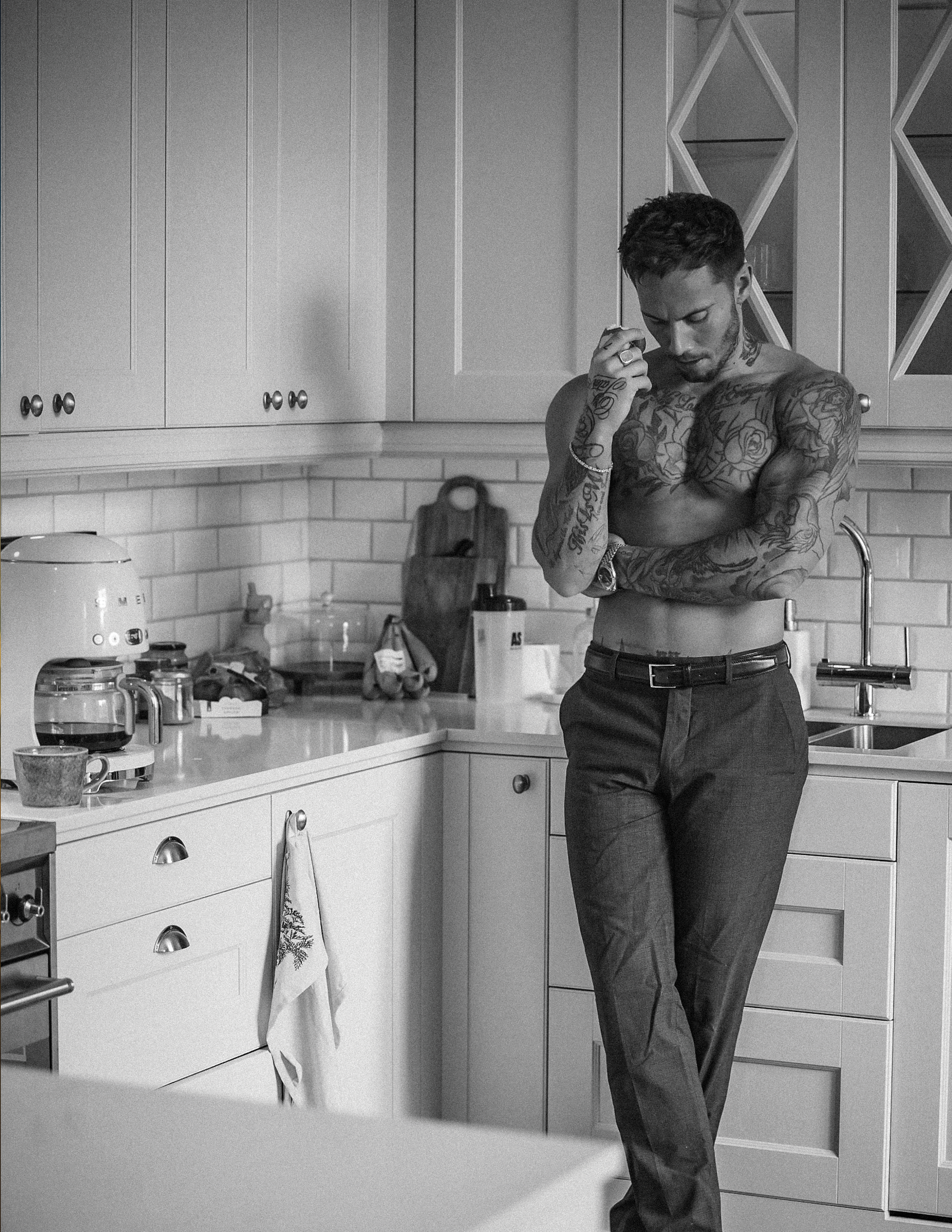
Read the JAN ISSUE #121 of Athleisure Mag and see HOT VIBE | KAAZE in mag.