A wedding can look polished without feeling over-designed. Candles help you get there. They add warmth, soften hard edges in a room, and make photos look richer. Even simple spaces feel more inviting when the light comes from a flame instead of an overhead fixture.
If you are ordering bulk candles or sourcing bulk wedding candles, the key is planning placement and purpose first. Think in layers. A few candles that do one job well will beat dozens placed without a plan. The goal is a clean, intentional look that feels effortless.
Start With Your Lighting Plan Before You Buy Anything
Candles work best when they solve a real décor problem. Identify the spaces that need help. Many venues have bright ceiling lights, dark corners, or awkward transitions between areas. Candles can smooth those issues by adding low, flattering light where guests actually look.
Map your key zones. Ceremony aisle, altar area, cocktail tables, bar, escort card table, guestbook, and reception tables. Ask where the room will be dim and where it will be bright. Then decide where candlelight will support the mood. This approach prevents overbuying and keeps the design tidy.
Match candle height to what guests need to do in that spot. Dining tables need enough light to read menus and see food. Lounges and hallway corners can stay moodier. The same candle that looks perfect at the bar might feel too dark for a place setting. Planning by zone makes every candle feel intentional.
Choose Candle Styles That Match the Setting and the Season
Shape changes the entire look. Tapers feel formal and architectural, especially in pairs or clusters. Votives feel romantic and classic. Pillars feel grounded and modern, especially when grouped in different heights. Floating candles feel airy and work well around water features or in clear bowls.
Season matters. Summer weddings often look best with lighter wax colors, clear glass, and breezy spacing. Fall and winter events can handle deeper tones, heavier holders, and tighter groupings that feel cozy. Outdoor settings usually call for thicker candles that hold up in wind, while indoor ballrooms can handle more delicate styles.
Wax type affects performance. Quality wax burns cleaner and stays more stable. Cheap candles can tunnel, drip, or smoke, which shows up on linens and in photos. If you want the look to last through speeches and dancing, pick candles known for consistent burn, strong wicks, and sturdy shapes.
Build Table Layers That Look Expensive Without Feeling Busy
The best candle tablescapes have breathing room. Start with one anchor element per table, like a floral piece, a greenery runner, or a simple linen texture. Then add candles as supporting light, not the main clutter. A good rule is to keep the surface useful for glassware and plates.
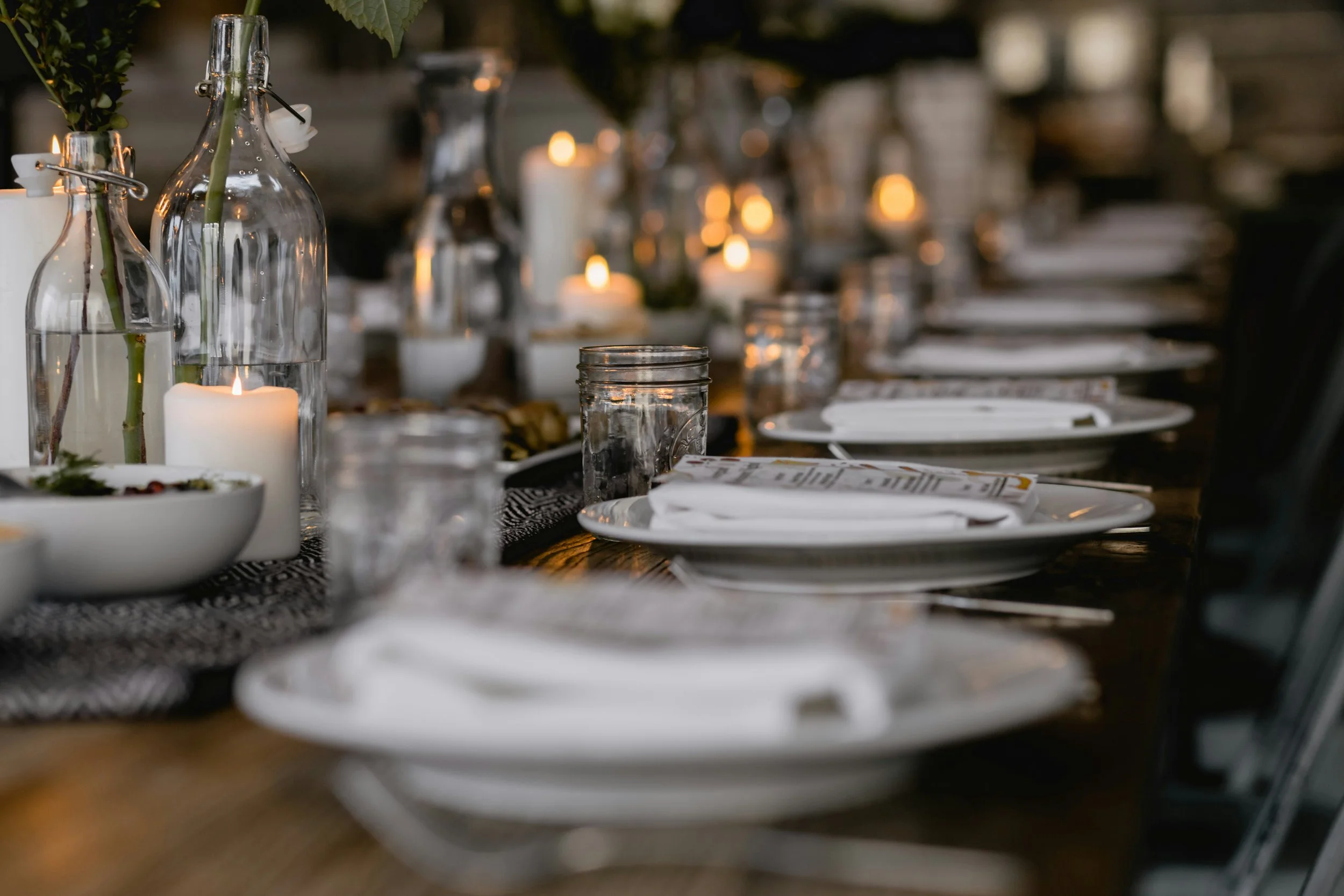
Work in groups, not singles. Three to five candles clustered at varying heights look purposeful. Mix glass and metal holders for contrast, but keep the finish consistent across the reception. If you use gold, stay with gold. If you use black, stay with black. Consistency keeps the room looking curated.
Protect sightlines. Guests want to talk. Tall tapers can stay to the edges or in the center when the arrangement is narrow. If you want tall candle drama, use slim holders and avoid wide floral mounds. Low votives spread light evenly and photograph beautifully from every angle.
Highlight Your “Moment” Areas With Candle Placement
Some spots deserve extra attention because they appear in photos all night. The sweetheart table, cake display, and entry table are prime examples. Candle placement here should frame, not compete. Use pairs on both sides to create balance, then add a few shorter lights in front to soften shadows.
For the ceremony, candles can define the aisle and draw focus to the front. Use weighted holders and secure bases, especially on grass or uneven flooring. Keep the spacing consistent so the aisle looks clean and symmetrical. If the venue has a strong view, leave the view open and let candlelight guide the eye.
In transition areas, candles help guests move through the event smoothly. A few candle clusters near doors, signs, and hallways make the space feel finished. These small zones often look forgotten. A little light here makes the entire wedding feel more polished.
Keep Safety, Venue Rules, and Weather From Ruining the Look
Safety planning protects your décor and your schedule. Confirm the venue’s policy early. Some locations require enclosed flames, LED-only candles, or specific holder types. Build your design around those rules instead of fighting them at the last minute.
Outdoor weddings need extra care. Wind will knock over tall tapers and can make flames flicker in photos. Use glass hurricanes, heavier holders, and thicker pillars. Place candles lower and closer together so they stay stable. If it is hot, keep candles out of direct sunlight so they do not soften or lean.
Assign a candle manager. This person checks wicks, lights candles at the right time, and replaces any that burn down too early. A simple schedule helps, like lighting ceremony candles ten minutes before guests arrive, then lighting reception candles right before introductions. That keeps the look consistent through the night.
Create a Clean Candle “Recipe” So Setup Is Fast, and Results Stay Consistent
A candle recipe is a repeatable plan that your team can follow without guessing. It includes how many candles per table, which holders go where, and how the spacing should look. This prevents a patchy look where some tables feel full, and others feel empty.
Standardize the key pieces. Choose one or two holder styles and stick with them. If you want variety, vary height, not chaos. For example, keep the same glass style but use three heights of votives. Or keep the same metal finish but change the taper length. Small shifts read as intentional.
Test one complete table before the wedding day. Set it up at home or during a venue walk-through. Take photos in daylight and low light. If it looks busy in photos, remove one element. If it looks flat, add height through holders rather than adding more items. A quick test saves hours of stress later and leads to a cleaner, more elegant finish.