
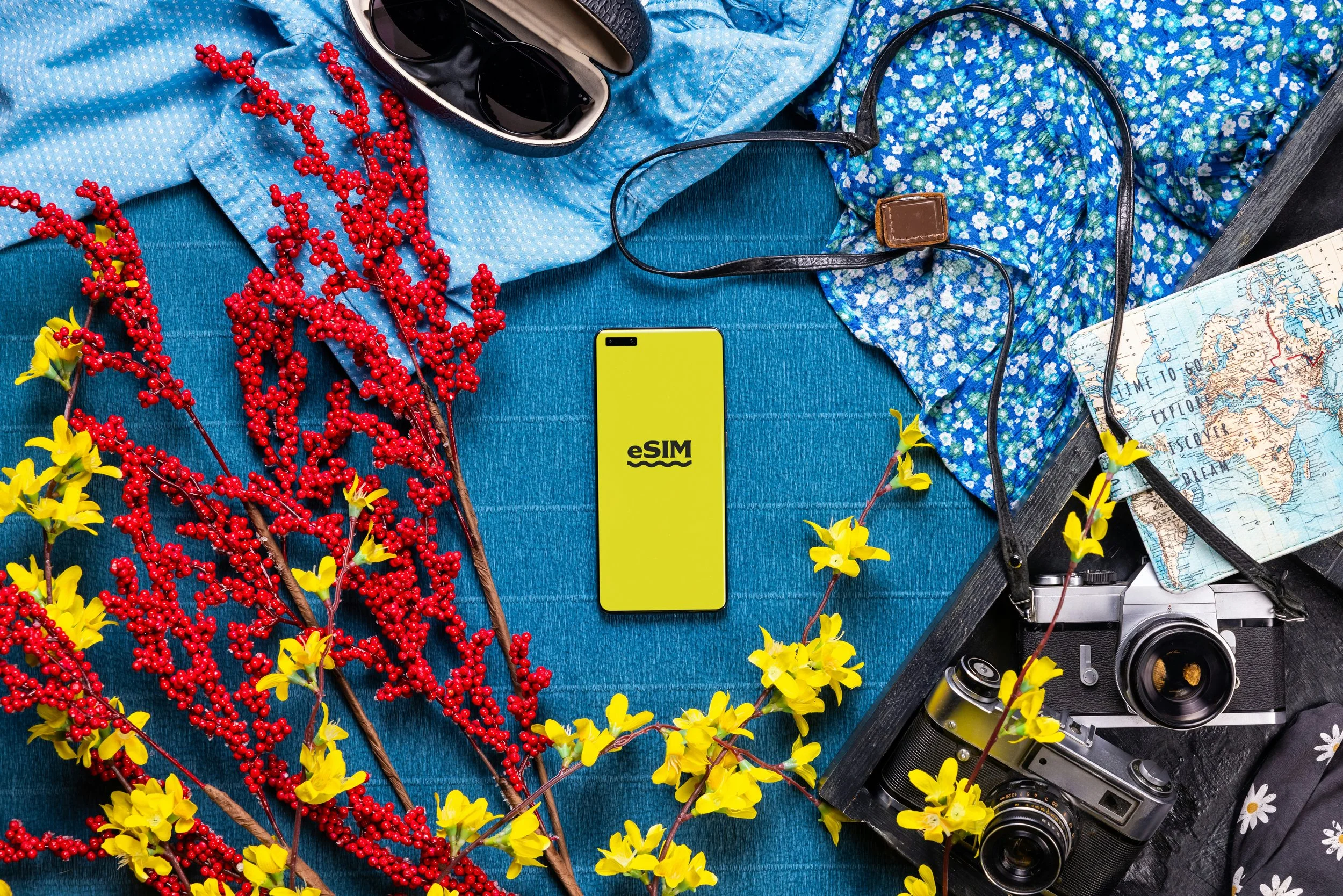
You rely on your phone for almost everything. Calls, texts, maps, payments, and work all depend on staying connected. But traditional SIM cards can slow you down. They’re small, easy to lose, and inconvenient when you travel.
That’s where eSIM technology steps up. It’s built into your mobile device, ready to connect without the hassle of swapping cards. Let’s explore what eSIM is, how it works, and how it helps you stay connected without missing a beat.
What Is an eSIM?
An eSIM is short for “embedded Subscriber Identity Module.” Unlike the plastic card you slide into your phone, an eSIM is a digital SIM profile stored on a chip inside your device. It does the same job as a physical SIM card but without the need for a slot or tray. Think of it as a digital key that unlocks your mobile network.
The difference matters. With a physical SIM, you must insert or replace the card to change carriers. With an eSIM, you simply download a profile. Your phone connects instantly, no tools or trips to a store required.
How Does an eSIM Work?
Carriers activate eSIMs remotely. You scan a QR code or follow a quick setup link. Your phone then stores the network provider profile and connects to the network. It’s fast, secure, and simple.
You can even keep multiple profiles on one device. That means you can switch between carriers or plans with just a few taps. No waiting, no downtime, no fumbling with tiny plastic SIM cards.
How eSIM Ensures Seamless Travel Connectivity
Traveling abroad often means juggling SIM cards or paying steep fees for a roaming plan. With eSIM, you can switch carriers instantly and avoid downtime. For example, if you’re flying into Beijing or Shanghai, you don’t want to waste hours hunting for a local SIM. Instead, you can set up service before you land.
The best eSIM for China gives you reliable coverage soon after activation. When you choose a trusted international eSIM provider, you can usually connect in minutes without the hassle of physical cards or long queues at airport kiosks. That means you can open maps, book rides, or check messages as soon as you arrive.
Advantages of Using an eSIM
With eSIM technology, you gain benefits that go beyond replacing a physical card. It gives you options that make connectivity smoother and more reliable.
Flexibility: You can store multiple numbers or plans on one device. That’s ideal if you balance work and personal lines or switch carriers often.
Eco-friendly: No tiny cards or packaging are needed, which reduces plastic waste and supports sustainability.
Future-ready: Your device can adopt new carriers or plans without hardware changes. This keeps you ahead as networks evolve.
Streamlined support: Carriers can troubleshoot and update your profile remotely. With this, you save time and effort.
Security features: Because eSIMs are embedded, they’re harder to steal or clone, offering stronger protection than traditional SIM cards.
Together, these advantages show why eSIM is more than a convenience. It’s a flexible, sustainable, and forward-looking way to stay connected in a world that demands speed and simplicity.
Challenges and Limitations
Even with its many strengths, eSIM isn’t without hurdles. Some issues still affect how widely and smoothly it can be used. Here are the main challenges to keep in mind:
Device compatibility: Not all phones, tablets, or wearable devices support eSIM yet. Older or budget models may still rely on physical SIMs.
Carrier adoption: Some networks are quick to roll out eSIM support, while others lag behind. Coverage can vary depending on where you live or travel.
Transition period: You may still need physical SIMs, as they remain common in certain regions or situations.
Learning curve: For users unfamiliar with digital profiles, setup can feel less intuitive than inserting a card.
These limitations don’t outweigh the benefits, but they do explain why embedded SIM hasn’t fully replaced physical SIM cards yet. As adoption grows and technology matures, many of these challenges will fade, making eSIM even more practical.
Everyday Uses of eSIM
Travel is the most obvious use case. Instead of hunting for kiosks, you can set up a travel eSIM before you arrive. That way, you’re online for the duration of your travel adventure.
Work is another. You can keep your business number separate from your personal one, all on the same phone. For a mobile workforce, this makes managing calls and messages across regions far simpler than juggling multiple devices.

PHOTO CREDIT | Unsplash/Austin Distel
In emergencies, eSIM gives you backup options. If one carrier fails, you can switch to another quickly. That flexibility ensures you stay connected when it matters most, whether you’re dealing with patchy coverage or unexpected outages.
The Future of eSIM Technology
Adoption of embedded SIM technology is accelerating worldwide, with more phones, tablets, and laptops now supporting eSIM as standard. This shift is making it easier for users to manage connectivity without relying on physical cards.
Beyond personal devices, industries are finding new applications. Smart watches use eSIM to stay connected without tethering to a phone, while automotive brands are integrating it into connected cars for navigation updates, diagnostics, and emergency assistance.
Physical SIM cards may fade out over time. For you, that means more control, less hassle, and faster connections wherever you go.
Final Thoughts
Mobile connectivity is evolving fast, and the days of juggling tiny plastic SIM cards are numbered. With networks embedded directly into your device, staying online becomes simpler, more flexible, and more secure. The benefits are already clear, and as adoption spreads across industries, the convenience you enjoy today is only the beginning.
The future of staying connected is seamless, sustainable, and designed to move with you wherever life takes you.