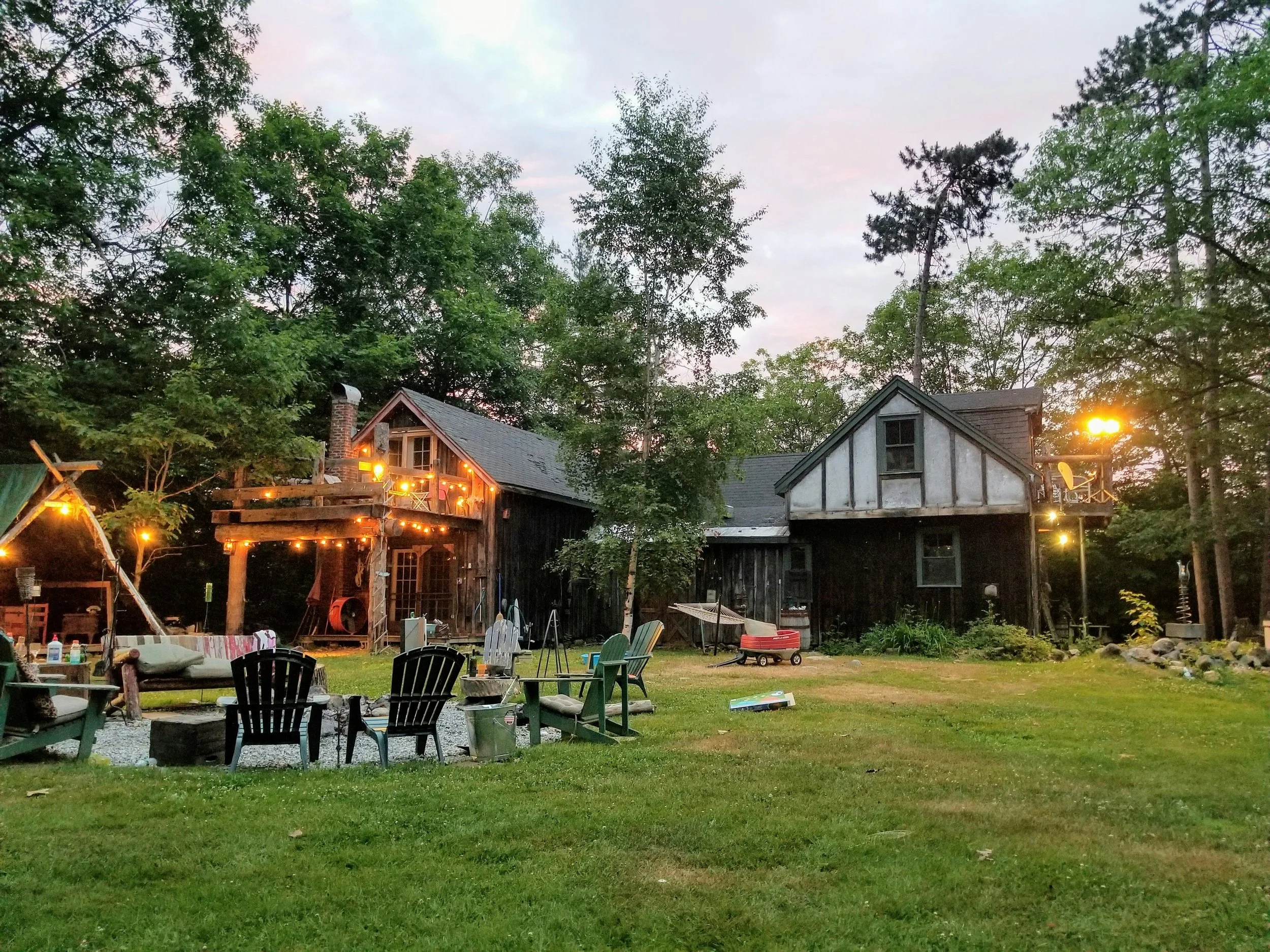
What do you do when you step outside in your backyard? Why do you even go out there? To drink coffee? Have a breath of fresh air?
If you're back inside after 10 minutes, the space doesn't feel good enough to stay.
You could say your outdoor space failed because it did.
Not in any kind of obvious dramatic way, but in details, like a chair that gets too hot, the sun hits your eyes at the wrong angle, the mosquitoes think lunch is served, the step down feels like a fight with gravity, etc. These aren't exactly problems with design; however, they control how long you stay outside.
People like to think that being outside more has to do with discipline or motivation, but it doesn't. It comes down to friction, so the easier the space is to use, the longer you want to stay there.
If you'd like to make some small changes in your backyard that will make it more enjoyable, read on.
Small Tweaks That Make You Stay Outside Longer
Here's how to be comfortable outside instead of wanting to run back inside the house.
Handle the Climate
Climate is a huge factor because where you live changes what outdoor comfort means.
For example, Pennsylvania has seasonal mosquito activity and evenings that cool down faster, so the design has to reflect that.
Ask anyone, from an outdoor living contractor in Chambersburg PA, to a random old lady in Philadelphia, and they'll tell you that you need a screen and maybe a fire to be fully comfortable.
You don't want mosquitoes, flies, no-see-ums, or sting bugs (ew!) ruining your every dinner. Get a screen on your deck/porch. And if you want that super fancy place where you can hang out with your friends in the evening, a smokeless fire pit is always a great option.
In states like Florida, where you'd struggle with heat and humidity, you'd want an open layout and opposing openings to keep humidity from becoming too heavy. Plus shade, misting systems, ceiling/patio fans – all these options would be preferred to screens and firepits.
So your outdoor options (and wants) really depend on your climate.
Surfaces That Don't Overheat or Get Slippery
How the ground feels under your feet has a bigger impact on comfort and safety than you realize.
Surfaces that absorb and hold heat make it impossible to walk barefoot, and they shorten the time you like to stand or move around.
Slick surfaces aren't ideal, either, because they're downright dangerous after rain or overnight dew. You want something neutral, that doesn't get hot or slippery, and that doesn't prevent you from wanting to be outside.
Look for a slightly textured surface that's light in color, that's about as neutral as it gets.
Shade Where You Like to Sit
One of the fastest ways to get tired of being outside is sitting in direct sunlight, even during winter.
If there's glare, it's impossible to relax or hold a conversation, and once the seat heats up, who even wants to stay? Plus, too much sun exposure (UV radiation) isn't good for you.
What you want is shade, preferably somewhere you like to sit. And it shouldn't be the kind of shade that works only at noon; you need it to do its job at all times of day.
Easy Transitions
Every single step and doorway adds a small amount of friction and effort.
One by one, those moments reduce spontaneous trips outside because you don't want to bother with any of it. If getting to your backyard is almost a process, you won't do it unless you have something planned.
Wide openings and minimal changes in level make outdoor spaces feel like a natural extension of your house, and stepping outside becomes effortless.
Gentle Lighting
Leave harsh lighting for the dentist's office; you don't want it anywhere near your backyard. When it comes to outdoor spaces, lighting should be even and soft. That means, no bright overhead lights or poorly placed lights that don't let you see where you're stepping.
Get softer lights that are spread out lower to the ground.
They'll help you see everything you need to without overstimulating anyone.
Visual Separation
If you feel like your neighbors are watching you, you won't want to spend time outside.
Another issue with a completely open space is that it keeps your attention outward, regardless of what you're trying to do.
Get partial visual barriers, like changes in height or direction, to reduce that awkward sense of exposure without closing everything off.
Room to Shift
Nobody likes to sit perfectly still for long periods of time; it's not comfortable.
And if the space is tight, you can't even stretch your legs or stand up without it feeling weird. Your backyard should allow you to move around without bumping into things; otherwise, you'll get restless.
Conclusion
Nobody thinks they use their outdoor space enough, probably because they don't. You're probably one of those people, too. Have you ever stopped to wonder why?
Most likely, because it takes effort to enjoy it, so why not think about what it is that bothers you and work on it?
As you have seen, it doesn't take a lot of work or money to have a backyard you love spending time in.