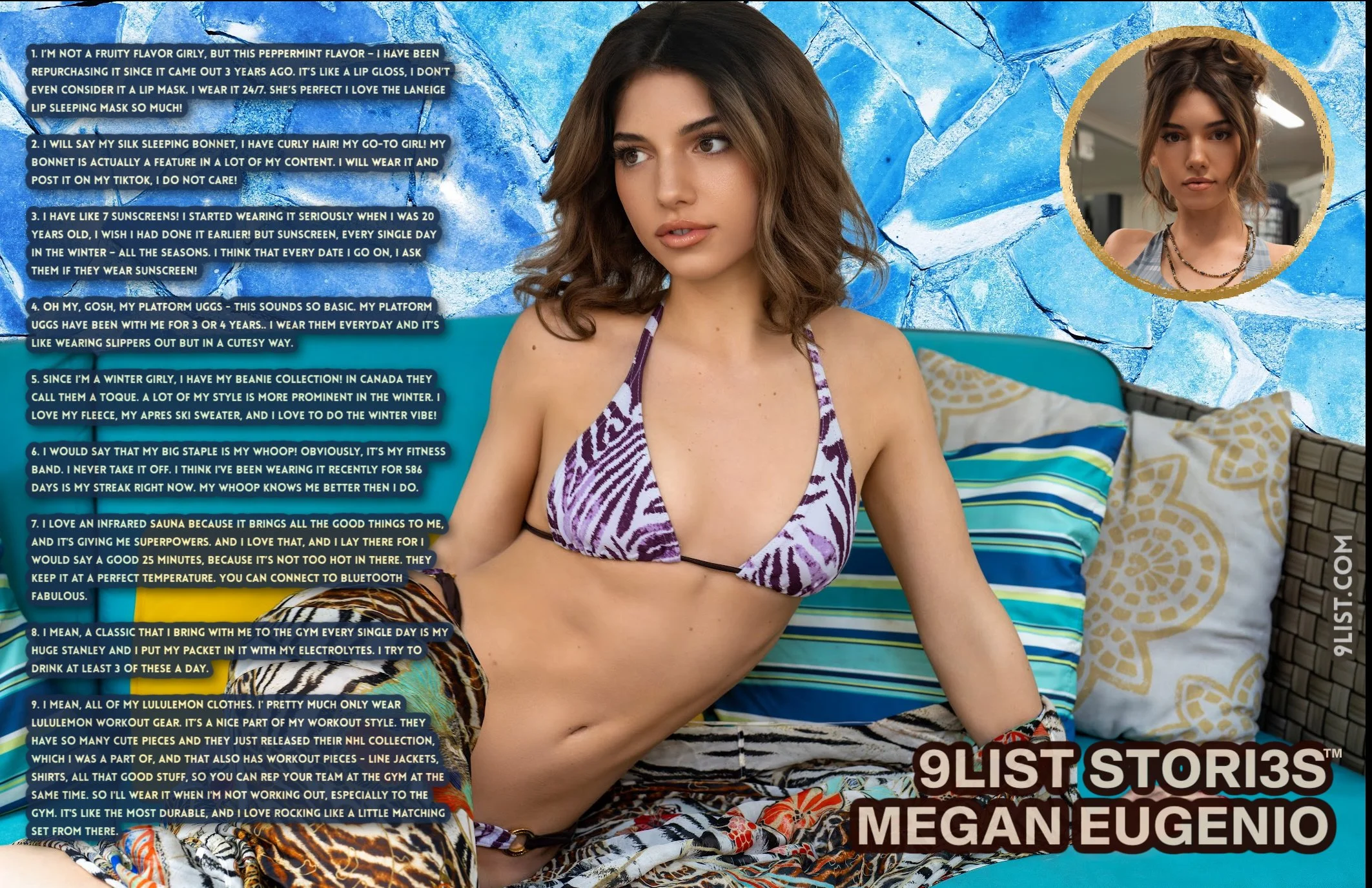
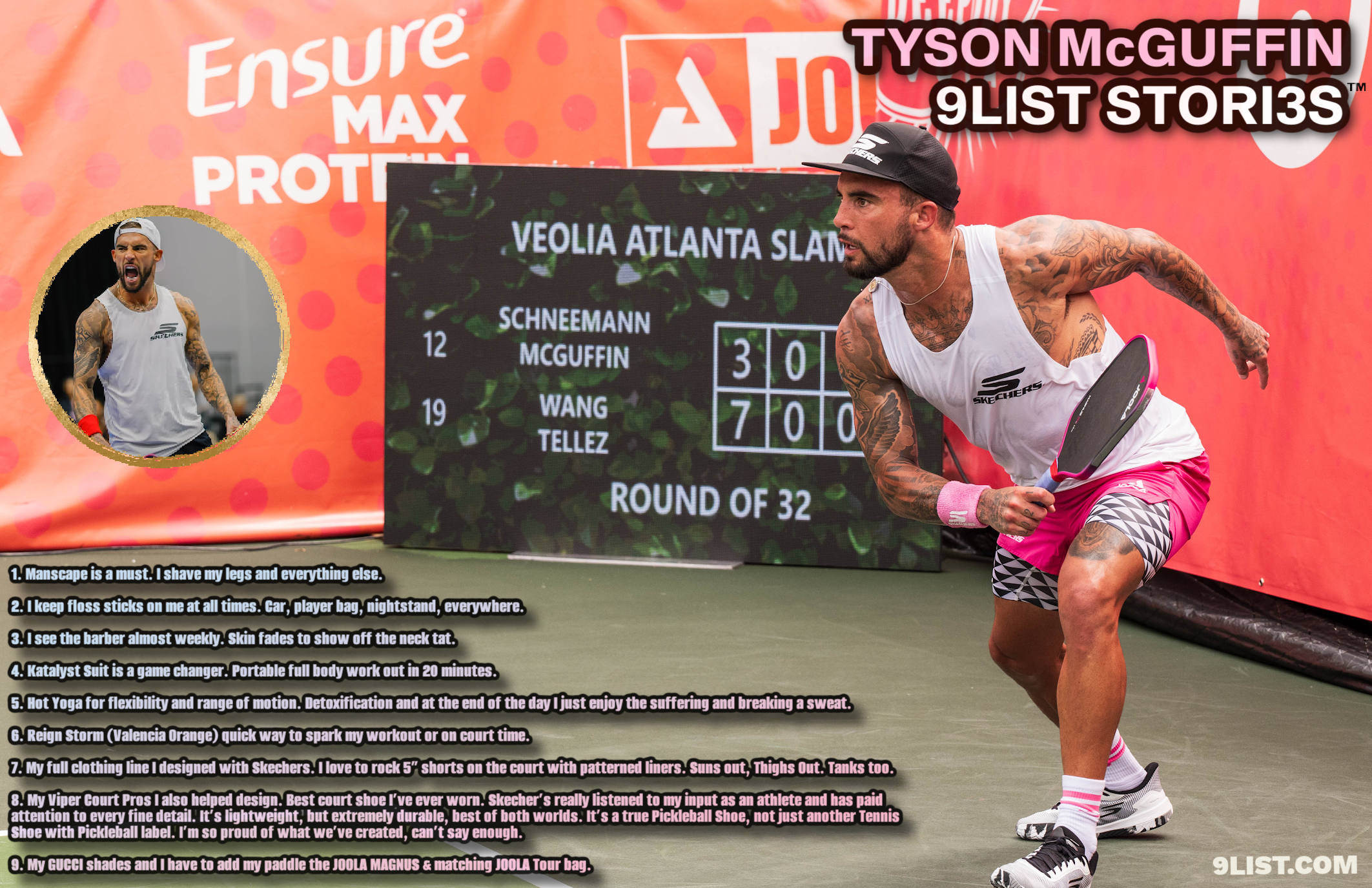
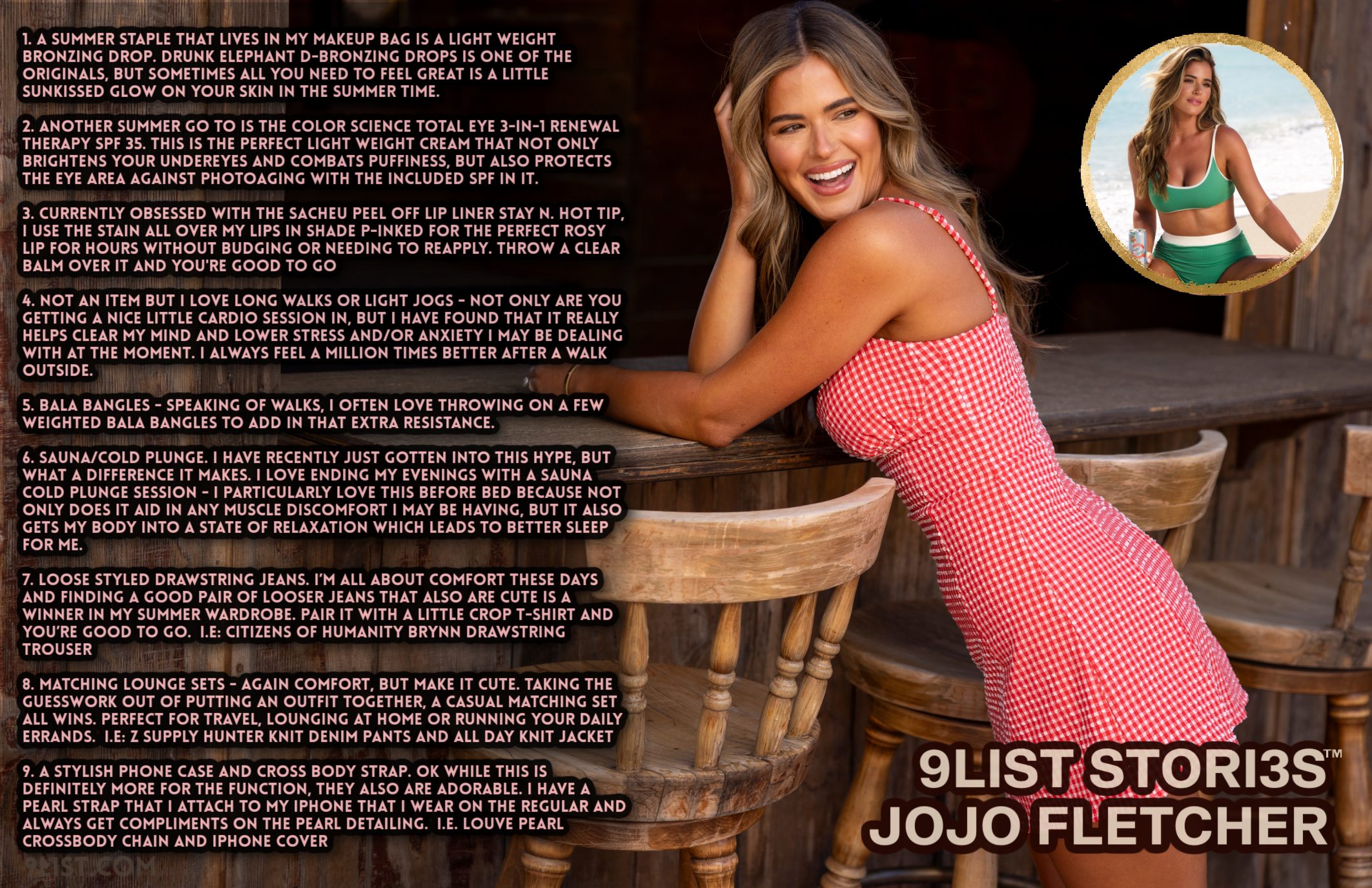
Read the Oct Issue #59 of Athleisure Mag and see 9PLAYLIST | LeBron James in mag.
Featured 9PLASYLIST
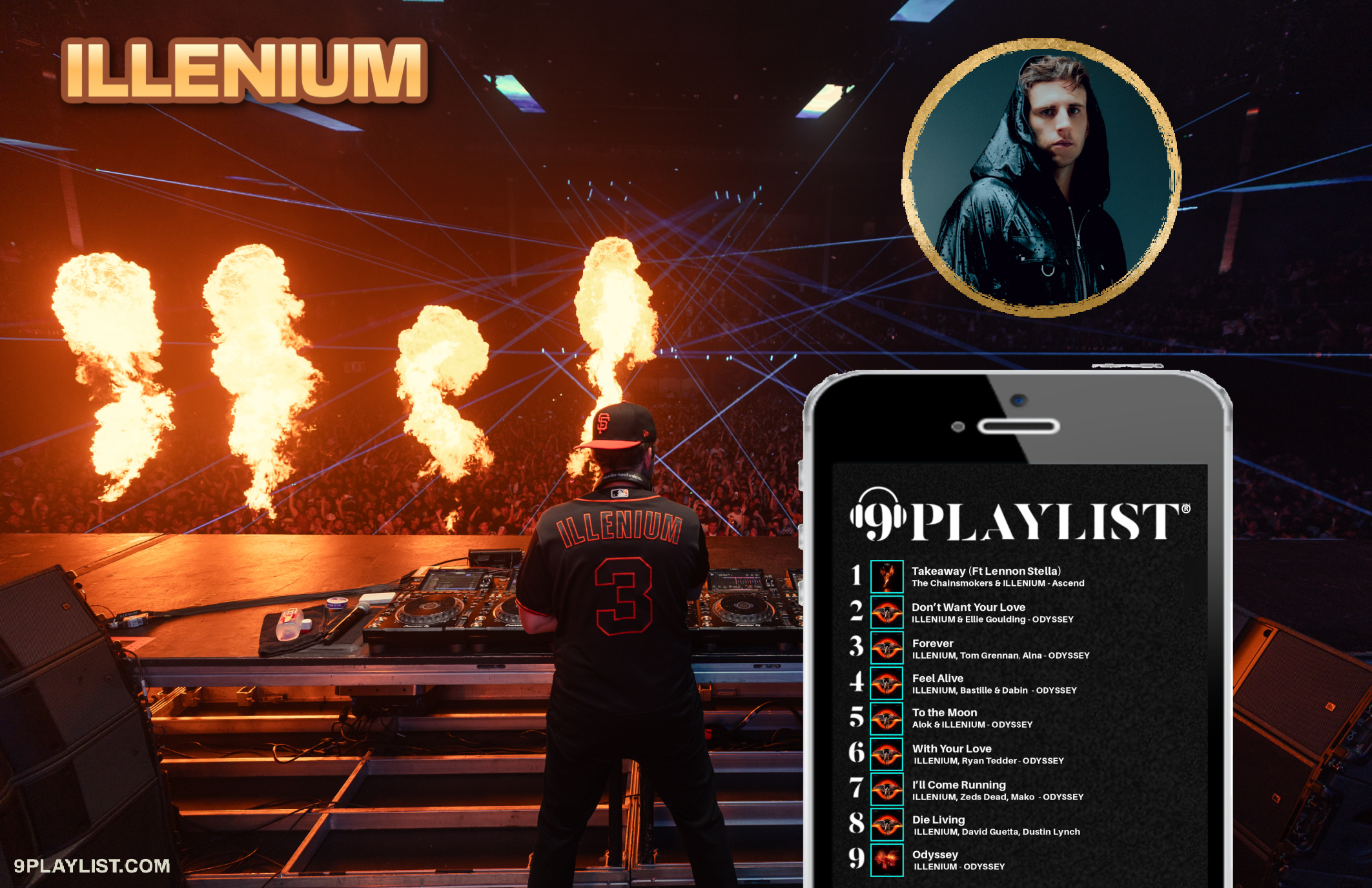





Read the Oct Issue #59 of Athleisure Mag and see 9PLAYLIST | LeBron James in mag.

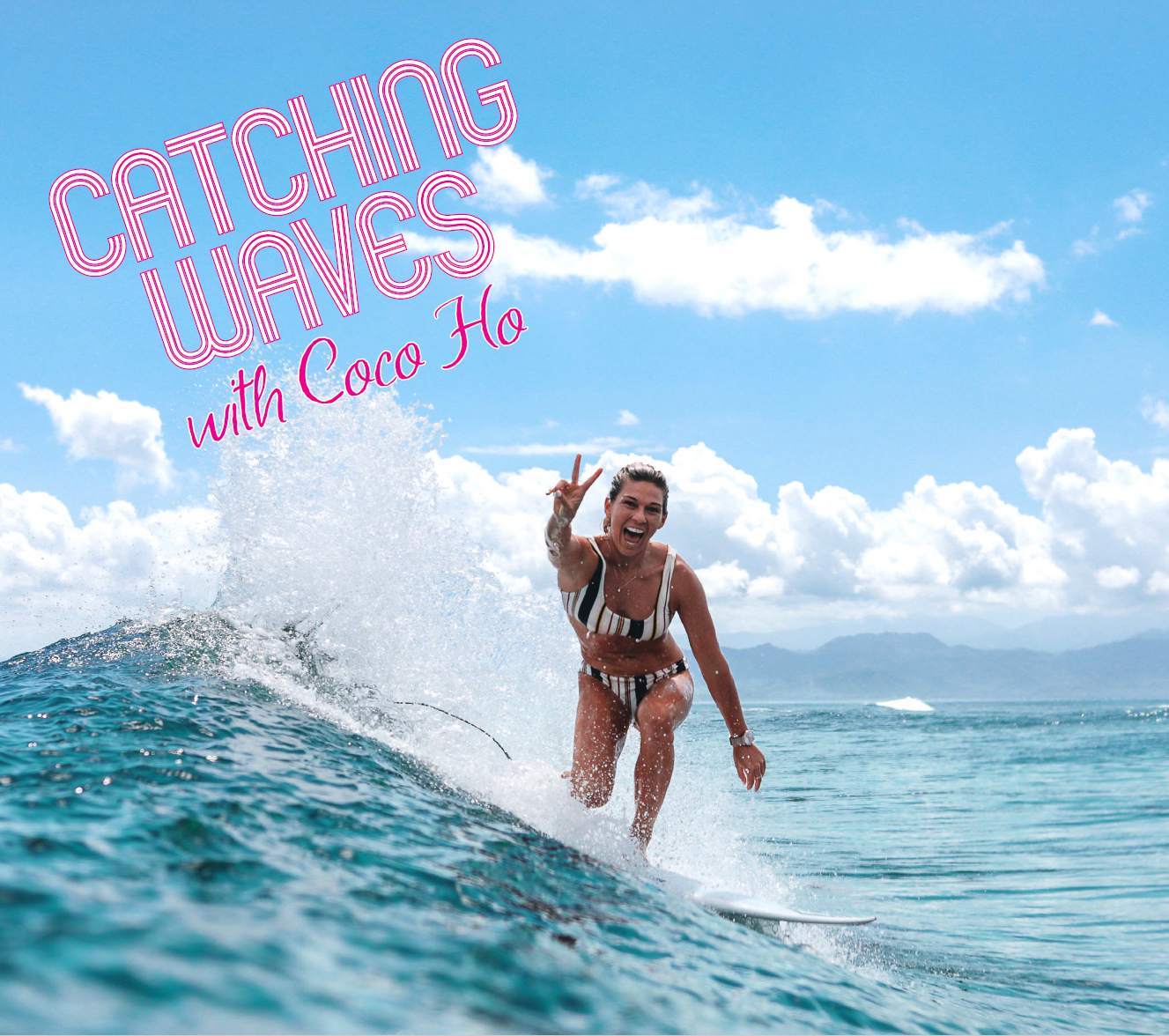
We've always enjoyed watching surfing as athletes catch each of the waves and make maneuvers that push space and time. We had the chance to catch up with Coco Ho a few weeks after her recent performance at World Surf League in California. As a member of the Hawaiian surfing dynasty family, her lineage includes her late uncle Derek Ho, who was the first Native Hawaiian to win the world championship at the age of 29. Her father, Michael Ho also grew the sport by winning the Hawaiian Triple Crown, The Duke Classic, The World Cup and the 1982 Pipe Masters. Her brother, Mason Ho is also a pro surfer.
We caught up with Coco from Oahu's North Shore to talk about her effortless style at 5'2", her focus on growing her empire within and outside of the sport as well as her passion for the ocean.
ATHLEISURE MAG: We’re excited to have you in this month’s issue. We actually saw you at the World Surf League’s a few weeks back in California. You come from this amazing Hawaiian surfing dynasty with your dad being Michael Ho, your uncle Derek Ho and your brother, Mason Ho. What was the moment when you realized that you wanted to join surfing as well and then to compete professionally?
COCO HO: I probably didn’t recognize it until I was about 8 or 9 and I was already surfing because that’s what you do when you’re growing up in Hawaii. I was surfing with my brother after school and then all of a sudden, I recognized their power and then got super consumed into the sport and their accomplishments. I kind of already drew parallels and said, “I want to go to Australia with them” and I definitely used them as my mirror of what I wanted to be.

AM: That’s insane to be so young and to know at that moment. Do you remember the first time that you were on a surf board? Was it strange for you or because you were seeing all of these people surf, that you just felt like, “yeah this is what we do?”
CH: My dad played it so cool with us when we were kids. He was so consumed in his career so it wasn’t a focused effort on us. It became a natural thing. Thankfully, I had a big brother where I was able to follow his lead and that’s kind of how I learned how to surf – just with Mason. And then, once my dad kind of paused and looked, he was like, “wait, my kids really like it.” He started giving us his time and his tips. It was never from him like, I’m surfing and I need to make sure that my kids are surfing too.” It was very natural and I think that that’s why it was so successful.
AM: Wow, that’s really cool and because of the accolades that you have received and the way that you have been able to dominate in the sport, what is the legacy that you want to leave behind in terms of surfing?
CH: I think that the most important thing is that our family just oozes the love of the sport. It’s a true passion with my dad and with Derek who were over 50 and still surfing – the best that they have ever surfed in their lives. So I think it’s definitely about a pure love for surfing and obviously, Mason and I are coming in as more of a lineage to show and draw inspiration from family, friends and cousins. It’s just a really tight bond and strong love for the sport and for each other.
AM: How would you define your surfing style?
CH: I would describe it as definitely effortless. I don’t mean for it to look effortless, but sometimes I wish it wasn’t ha. As a competitor, you need to show that grit and grunt. So a little effortless, but hopefully very strong and graceful.
AM: You do make it look so effortless and as someone who is surfing competitively, how does one go about winning this sport? Many of our readers know this sport and have seen it, but how do you accrue points and how do you know when you have won versus someone else?
CH: Yeah, I think it’s pretty broad. Speed, power and flow are a big part of that and wave maneuvers are another part as well. Wow factor is huge too. It’s pretty vague and can be anything. In my career, I have noticed that being a little smaller and sometimes making it look too easy or that I’m not trying, but I’m technically doing harder things – it’s kind of been my downfall as it’s not being recognized in terms of what I’m doing. So I’ve been learning that and just to make everything look bigger because I am only 5’2”. So that’s why on certain beaches with bigger waves, from girls that are larger then me, it may look like their maneuvers are more powerful as they are bigger then me. But I am exerting the same power and technical ability.
AM: We don’t know if we’re using the right terminology, but when we’re watching you surf through what looks like a water tunnel, how does it feel? Is it like time stops – what is going on for you when you’re in that moment?
CH: Oh yeah that’s the barrel and it’s TOTALLY a water tunnel! It’s like a silent/loud moment where time definitely does stop and it’s just the best feeling in surfing hands down. It feels like slow motion.
AM: What is the surf season like typically? Is it a year round sport because you can go to other locations and then obviously as we’re all dealing with this COVID-19 situation, are there upcoming events that you are training for that we can keep an eye out for?
CH: Surfing is 100% a year around sport. I have never actually experienced a break ever in my life until I started dating a snowboarder and I was so confused how he could take the summer off and I was like, “you can’t snowboard for a month or two?” That was like foreign to me! We have so many elements with our sport like paddling and those are things that you kind of lose if you take a month off, but in the same sense, I found that there are a lot of positives to taking even a week off. You come back so fresh and excited. It’s year around and in Hawaii, you don’t even have to leave the island and you’re going to get waves – year around. I know that some places it’s hard for them to be year around, but everyone can travel and that’s what makes it so beautiful. During COVID-19. I never stopped, I never stopped training because I wanted to be at my best, I can still film and I can always still work. Through COVID-19. I never felt any less motivation because we’re always filming. My brother is a very big YouTuber so I hopped into a lot of his projects which is very nice because I’m kind of more the competitor and he’s the free surfer guy. It’s cool to be able to experience his world.
AM: Do you have certain workouts that you do that benefit you in the sport of surfing?
CH: Definitely. Nothing beats practice in the water. I definitely learned that after my knee injury that it is also important to maintain everything that supports the knees. I train with my boyfriend’s Olympic coach and we have been doing that on Zoom since April 1st about 2-3 times a week so it has been very beneficial for me. He changes it up and does things for my core, my legs. I think that I’m strong in my shoulders and then we will do something and I’m like woah – what is that? It’s good to do everything for surfing because we paddle and we hit it all – core, back.
AM: You also have your own fragrance line, Pirette Beach. Tell us more about this and why did you want to launch this?
CH: This is such a fun project. The flagship scent already existed before I became a part of the brand and it’s interesting because I already had it and loved it. It was in my purse and I had already gotten it as a gift. Years later, the brand was doing so well without marketing and a large team as ours is skeletal. I became a co-owner and it's awesome. It came at such a good time and I was already looking at other options in surfing besides the jersey and fashion was obviously one of them. But beauty and taking care of our skin was top notch. It fell into my lap and now it’s my baby!
AM: Last year, you became the Global Footwear Ambassador for REEF. So what is it about the brand that you felt was synergistic with you and what does this partnership look like?
CH: My thing about REEF is obviously the legacy that we have had with my late uncle Derek who was on REEF as a World Champ. So obviously, that was special to me. My brother is also a part of the team. Moving forward, it’s still such a lifestyle beach brand that represents surfing and this lifestyle so well and actually represents it the best! I want to make sure that everything that I represent is the best and having REEF and Pirette Beach doing that is important to me.
AM: You have been directing people to shop from your REEF picks. What is it about the assortment of shoes that you’re highlighting and want people to get that you embrace?
CH: My 3 choices involved my goal of traveling. You can’t really bring everything and look cute at night or be at the beach. My whole goal was to make it easy and to look cute for every time of day that you’re booked. I did a casual white slide that can go from the morning heading out to the beach to at night with a cute top and a cute skirt. I tried to make everything look day to night. My favorite was a wedge platform and it kind of spiced every outfit up. Sometimes, you feel weird to dress up and I love that this shoe did that so casually and cute.

AM: How do you give back to the surfing community?
CH: I have done a lot of things in the past with the Boys & Girls Community in Hawaii. That was a lot of fun. You can surf, chat and I think giving time is the most important thing. As a little girl, I liked to be able to go and to look at my heroes, touch them and I was fortunate to be able to do that. I was under the reign of a lot of the older pro surfers. So that was my goal with the Boy & Girls Club to sit in their classrooms and to interact with them. Let them ask questions, teach me games they want to play and let their goals and dreams spiral and blossom as they hang out with me.
Lately, with all of the ways of the world and where it’s going, I have been involved with Surfrider Foundation and trying to use my platform to help the environment, awareness and it’s such a crazy time. I thought we were doing so well and now we need to circle it all back.
AM: That’s awesome. We love Surfrider Foundation’s Long Beach chapter with their initiatives to clean up the beach and to get people involved.
CH: They are so consistent!
AM: For our changemakers, we know that you inspire a number of people within and outside of your sport. We always like knowing who are 3 people that have gotten you to where you are in life?
CH: I have my family as I have explained! I think the pro surfer women that I have gotten to know and love and admire since I was 10 years old is Rochelle Ballard and Megan Abubo. They gave me that model to hang out with the generation below me and to be there and present with them. That’s how I am now here in the North Shore. I hang out with every little girl. They have done a huge number on who I am today.
Thinking huge, Beyoncé. She’s been such an inspiration in terms of how to structure your career, be vulnerable, be honest and that’s what gets people to be able to believe in you and to know who your are.
I've been obsessed with her since I was 16. I have mimicked and copied how she has gone about dropping her collections or a cool interview. I model a lot of my big career goals and interviews off of her.
Lastly, I would say, Maria Sharapova and I would say that when I was 17, I realized that she showed how you could be so strong and yet feminine. That you could also do a number of things in terms of collaboration, fashion etc. That you don’t have to be ashamed to wear heels and that you can be a bad ass athlete and still into fashion.
IG @xococoho
Hear Pro Surfer, Coco Ho on our show, #TRIBEGOALS - which is a part of Athleisure Studio, our multi-media podcast network! Make sure to subscribe to find out when the episode drops. You can hear it on Spotify, Apple Podcasts, Google Podcasts and wherever you enjoy listening to your favorite podcast.


Read Athleisure Mag’s Sept Issue #57 and see Catching Waves with Coco Ho in mag.
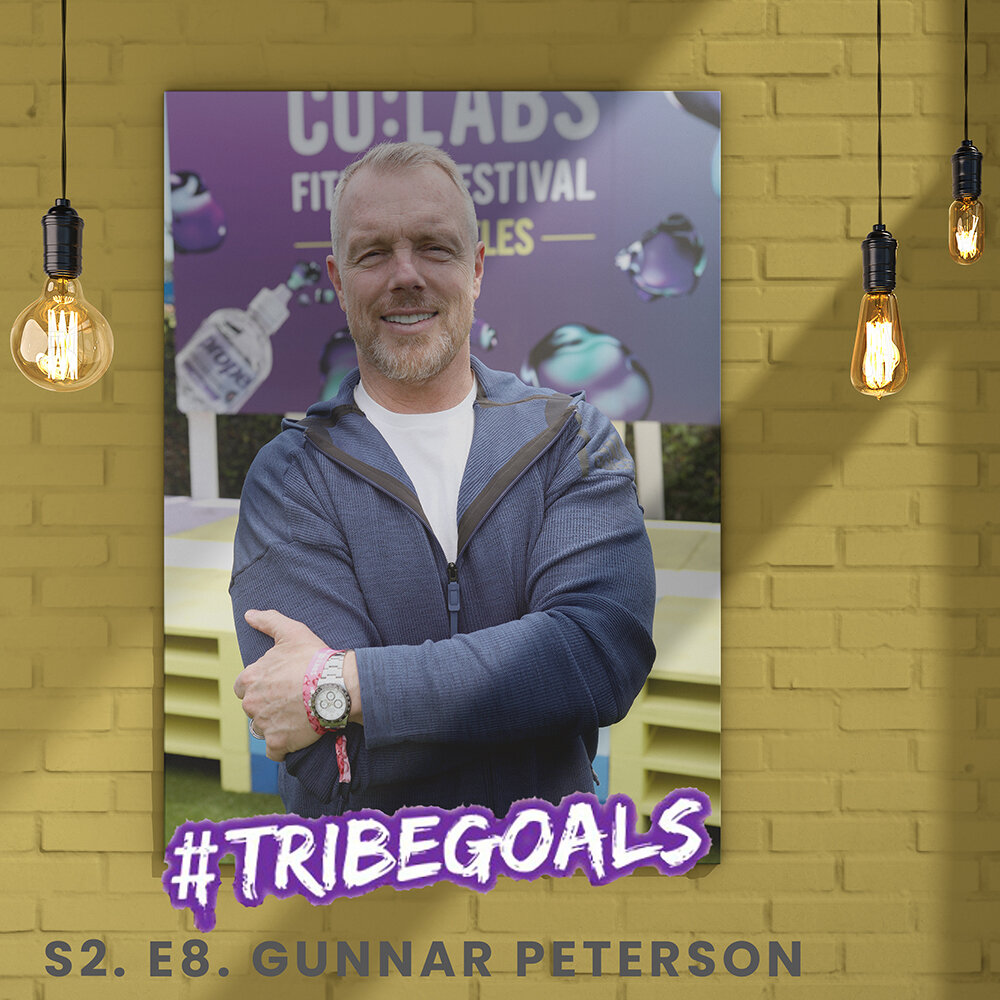
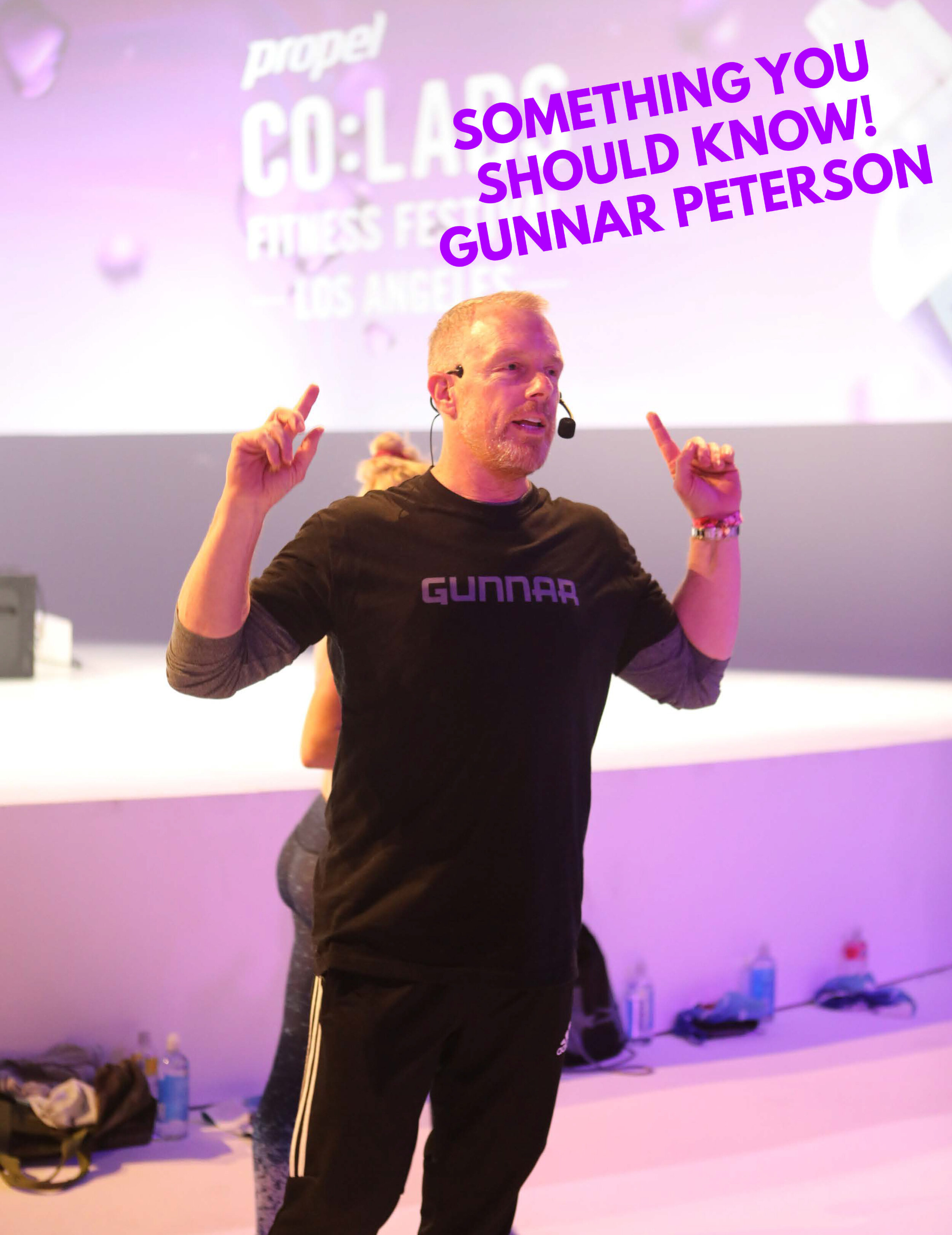
On today's episode of #TRIBEGOALS, we chatted with one of our favorite celebrity fitness trainers Gunnar Peterson who has worked with a number of our favorite personalities from Khloe Kardashian, Jennifer Lopez and more. In addition, as the Director of Strength & Endurance for the LA Lakers, we talk with him about how he has worked with his clients and the team to keep them on their routines. He also shares advice on movements that we can do at home regardless of whether we have equipment or not. He also shares his thoughts on returning to gyms and studios as the country is in various stages of reopening.
Read the latest issue of Athleisure Mag.

We're excited that we're in the midst of the playoffs for the NBA season, whether your team is playing or you're just happy to have basketball back on TV! Even though we're socially distancing, it's a way for us to feel like we're together. We caught up with Miami Heat, Chicago Bulls and Cleveland Cavaliers veteran, 3 X NBA Champion Dwyane Wade who is also commentating the games for TNT in 'Inside the NBA'. In addition to number of projects that he is working on, Dwyane is the Co-Founder of Budweiser Zero which is a non-alcohol alternative to enjoying a beer solo, with friends or after a great workout.
ATHLEISURE MAG: Prior to the launch of Budweiser Zero, tell us about your initial work with Budweiser and your synergy with the brand?
DWYANE WADE: I started working with Budweiser a little over a year ago when they did the “This Buds For 3” film for my retirement. Most recently, I was part of the Whassup reboot that came out a few months ago with DJ D-Nice, Chris Bosh, Candace Parker and my wife, Gabrielle Union, focusing on checking in on your friends when COVID first hit. I’ve always respected what Budweiser has built and their continued work with athletes. Entering the non-alcoholic market has always been of interest to me and this project seemed like a natural progression of my relationship with Budweiser.
AM: There has been a rise in the beverage industry for zero alcohol beers. Why is this important for those that are athletes or are focused on their fitness endeavors to have this as an option for their celebratory moments?
DW: The non-alcohol category of beer is rapidly growing and with Budweiser Zero, we are able to bring some familiarity into the category. Budweiser’s brewing heritage alone helps redefine pre-existing expectations and associations with non-alcoholic options.
Oftentimes, people feel like they are giving something up with a non-alcoholic option, but we are trying to change that perception and create more opportunities to celebrate life’s moments, both big and small. A focus for me when helping to develop the product was thinking about the athlete’s experiences during the season. Being in the game for so long, I can understand the need for a drink option that lets a player stay on their game but still enjoy social moments and celebrations.
AM: You are the Co-Founder of Budweiser Zero, what drew you to being involved in this and to take on such a role with the brand?
DW: It’s important for me to work with brands who have similar values and priorities that I want to accomplish. When I sat down with Budweiser to start talking about what Budweiser Zero would become, the synergy was there and felt like a great use for my platform, post-basketball.
AM: What can we expect to see for roll out of this launch and how will you be involved?
DW: Budweiser Zero started rolling out in the US in March, but officially launched at the end of July, and will soon be available in Canada and the UK. Budweiser Zero will play a huge role in the sports world, for both athletes and fans. Athletes who are in training or in season, but still want that classic, refreshing beer flavor without compromising their game now have that option. Once fans are able to return to stadiums, Budweiser Zero will become the beer of the ninth inning and fourth quarter. While alcoholic beverages can’t be served at this time, fans can continue to enjoy Budweiser Zero till the last moment of the game. Beyond athletes, I think this product will resonate with consumers looking to cut back on sugar or alcohol and those looking to participate in social occasions without feeling the effects the next morning.
Budweiser and I worked together on this from the start to bring Budweiser Zero to life and I’ll also be sharing the beverage with my friends currently playing in The Bubble.
AM: Tell us about Budweiser Zero as well as elements that you had a direct impact on in terms of bringing the product to market.
DW: Budweiser Zero is Budweiser’s first zero-alcohol product with zero-sugar and only 50 calories. Budweiser Zero is light and crisp and has the same refreshing full-flavored taste people know from Budweiser. I worked with Budweiser from the inception of the idea and helped design the attributes and packaging of the product.
IG @DwyaneWade
PHOTO COURTESY | Budweiser Zero
Read the Aug Issue of Athleisure Mag #56 and read Zeroing in with Dwyane Wade in mag.
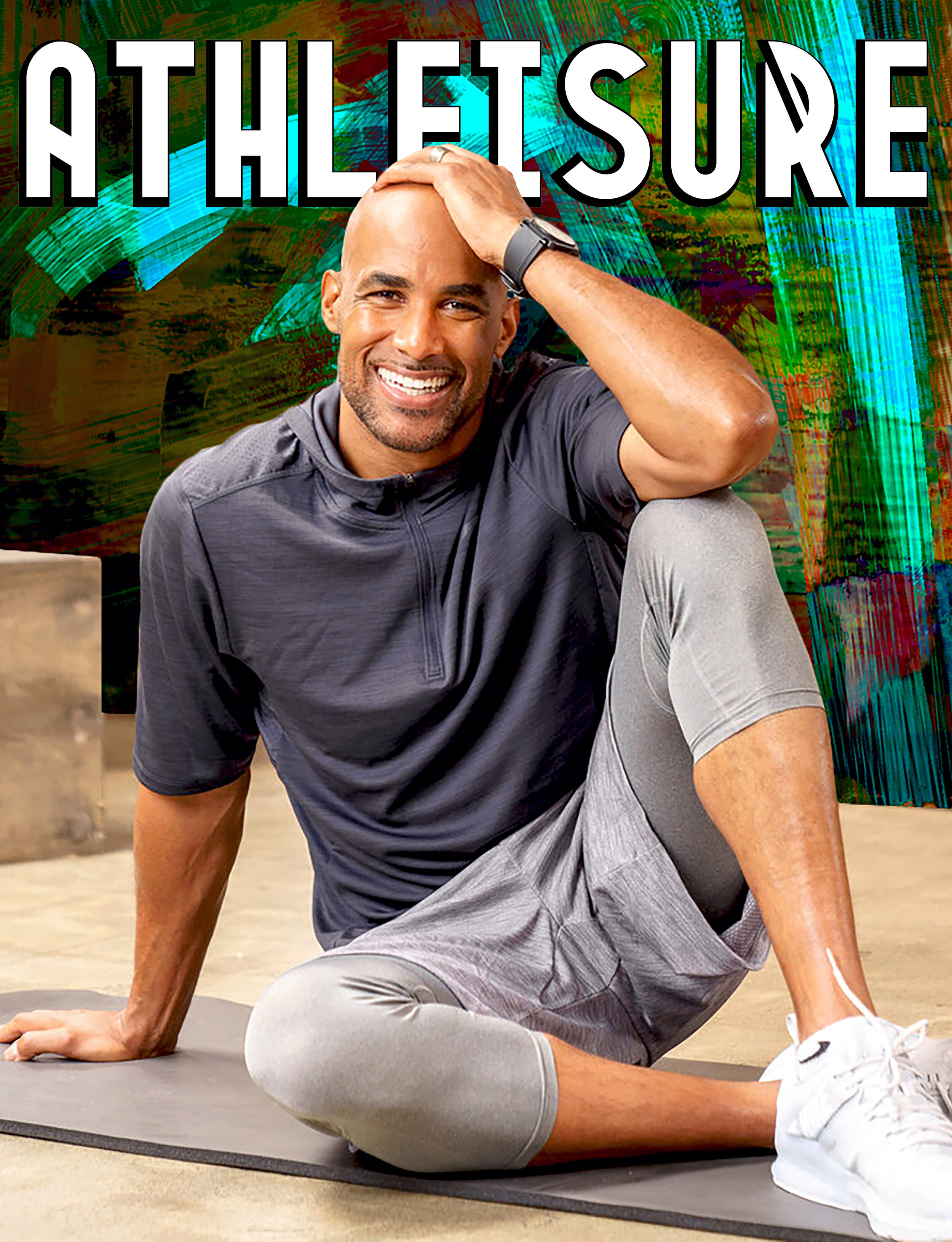
This month’s cover and back cover is ABC’s Station 19, Boris Kodjoe. Our cover shoot editorial – Living with Purpose, talks about Boris’ career, how he came into acting, preparing to shoot the upcoming season of Station 19, the importance of using your platform to raise issues regarding safety in these times as well as social justice, his fitness brand KoFit and more. This interview will also be in an upcoming #TRIBEGOALS podcast episode. We also have an interview with Celebrity Fitness Trainer Gunnar Peterson as we talk about working out from home, how he advises his clients to maintain his workouts, how he worked with the Lakers to ensure the safety and continued training of the team heading to the bubble and his thoughts on gym and studio openings. His interview will also be on an upcoming episode of #TRIBEGOALS. We check in with 3 X NBA Champion Dwyane Wade who is the Co-Founder of Budweiser Zero a non-alcoholic beverage. He talks about his work with the brand, importance of this category and more. We caught up with Celebrity Hair Stylist to a number of our faves from Beyonce, Shakira, Kelly Rowland and Mary J. Blige. We found out what Kim Kimble has been up to with a number of her projects including her hair care brand, her salons, TV opportunities and more. You can hear her episode on an upcoming #TRIBEGOALS. We also found out more about tea, how it benefits our bodies, the importance of having a ritual with the founder of Art of Tea, Steve Schwartz. You can hear his episode on an upcoming Athleisure Kitchen. We get the intel on how we can maintain our oral care with Dr. Brian Harris who is also the founder of Klen.
Read the Aug Issue #56 of Athleisure Mag here.
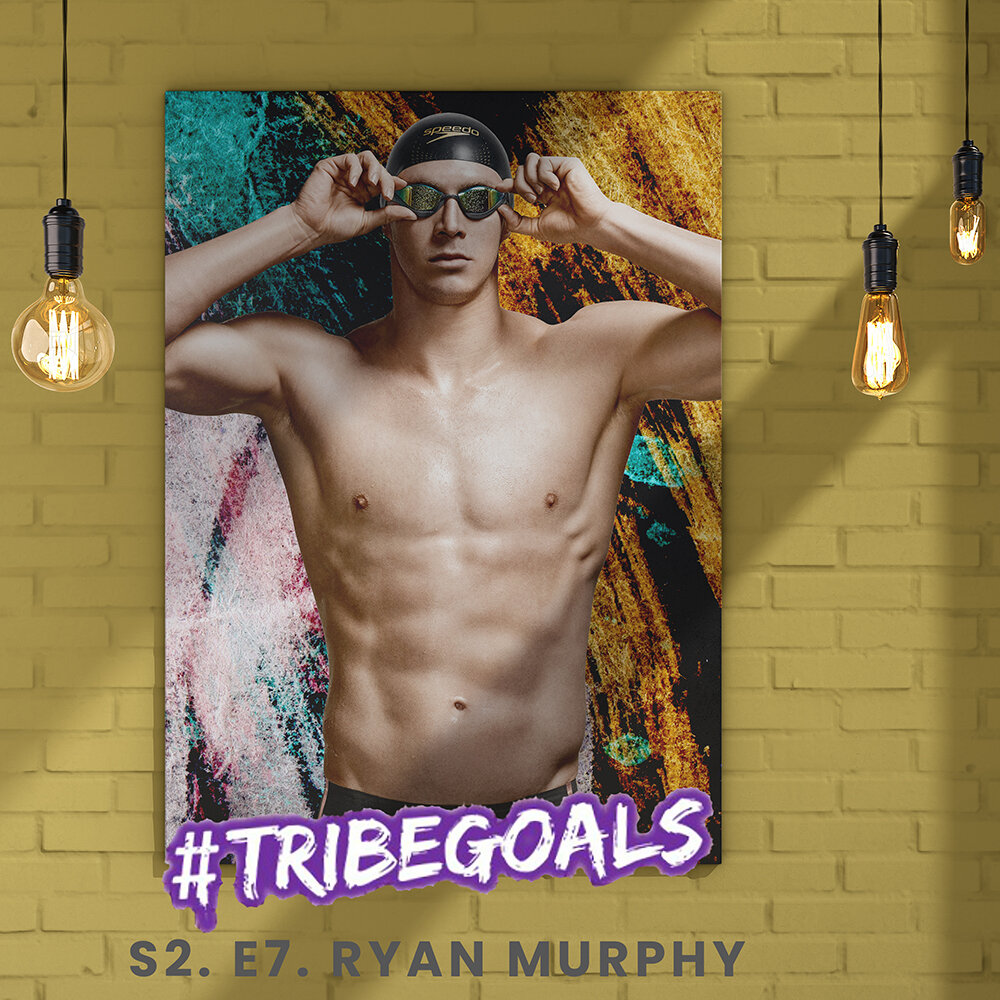
On today's episode of #TRIBEGOALS, we had the honor of having 3 X Team USA Olympic Swimming Gold Medalist, Ryan Murphy as Athleisure Mag's 55th cover. Known as a decorated backstroke swimmer who also has a world record in the men's 100-meter backstroke, we talk with Ryan about how he got into the sport, transitioning his interest to going pro, his experiences at the 2016 Summer Games in Rio as well as being part of that riveting 4 x 100m medley. As Ryan looks forward to the Olympics in Tokyo that's slated for next year, we talk about how he trains and modifies his routines as we all navigate COVID-19, the importance of mental health and how he is approaching his goals. He also shares how he is focused on impacting the sport of swimming whether as a competitor or simply enjoying water activities. He also talks about how he gives back to others and how this changemaker has been inspired by others.
Read the latest issue of Athleisure Mag.
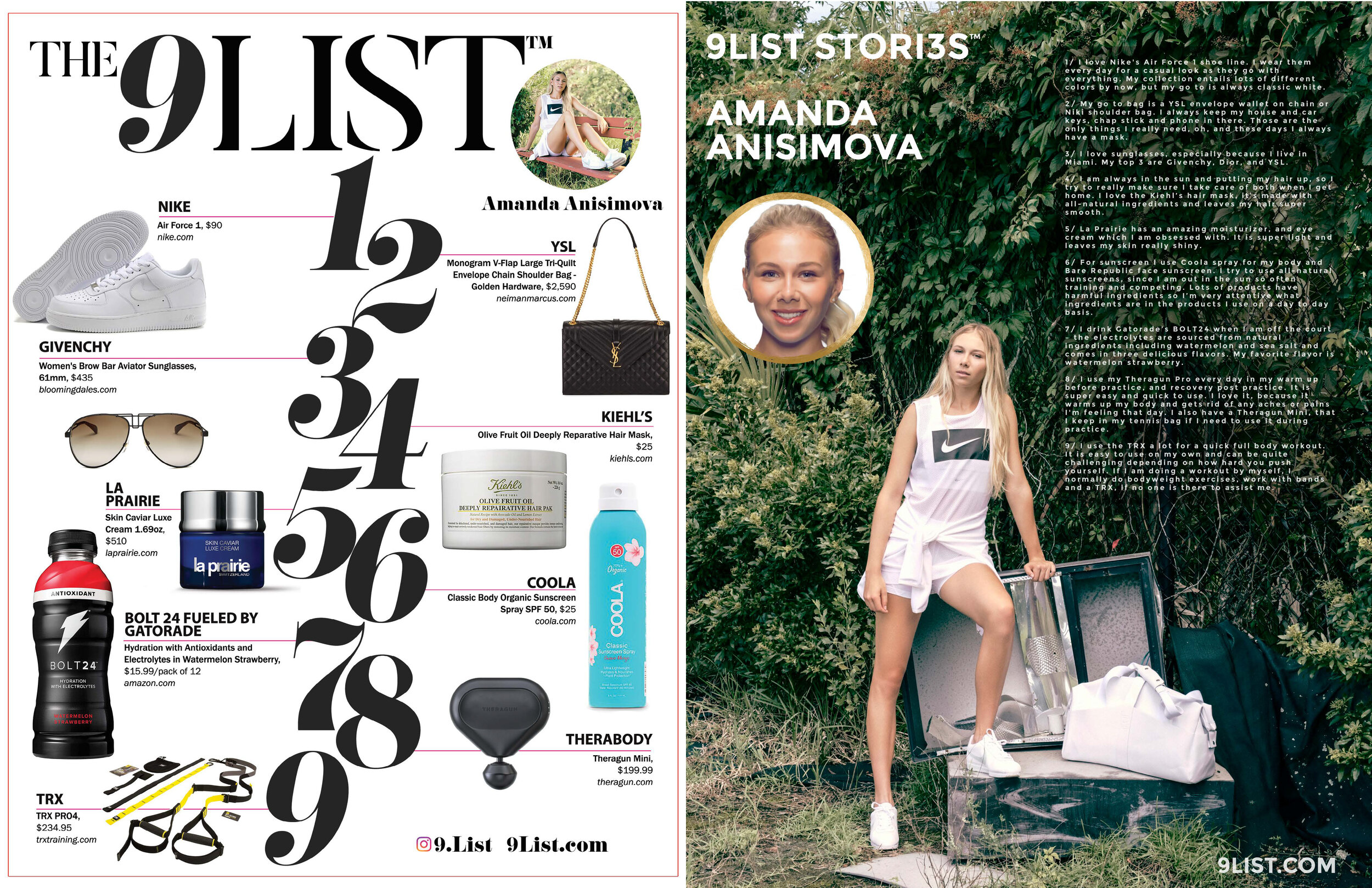
Read the July Issue of Athleisure Mag #55 and see 9LIST STORI3S | Amanda Anisimova in mag.


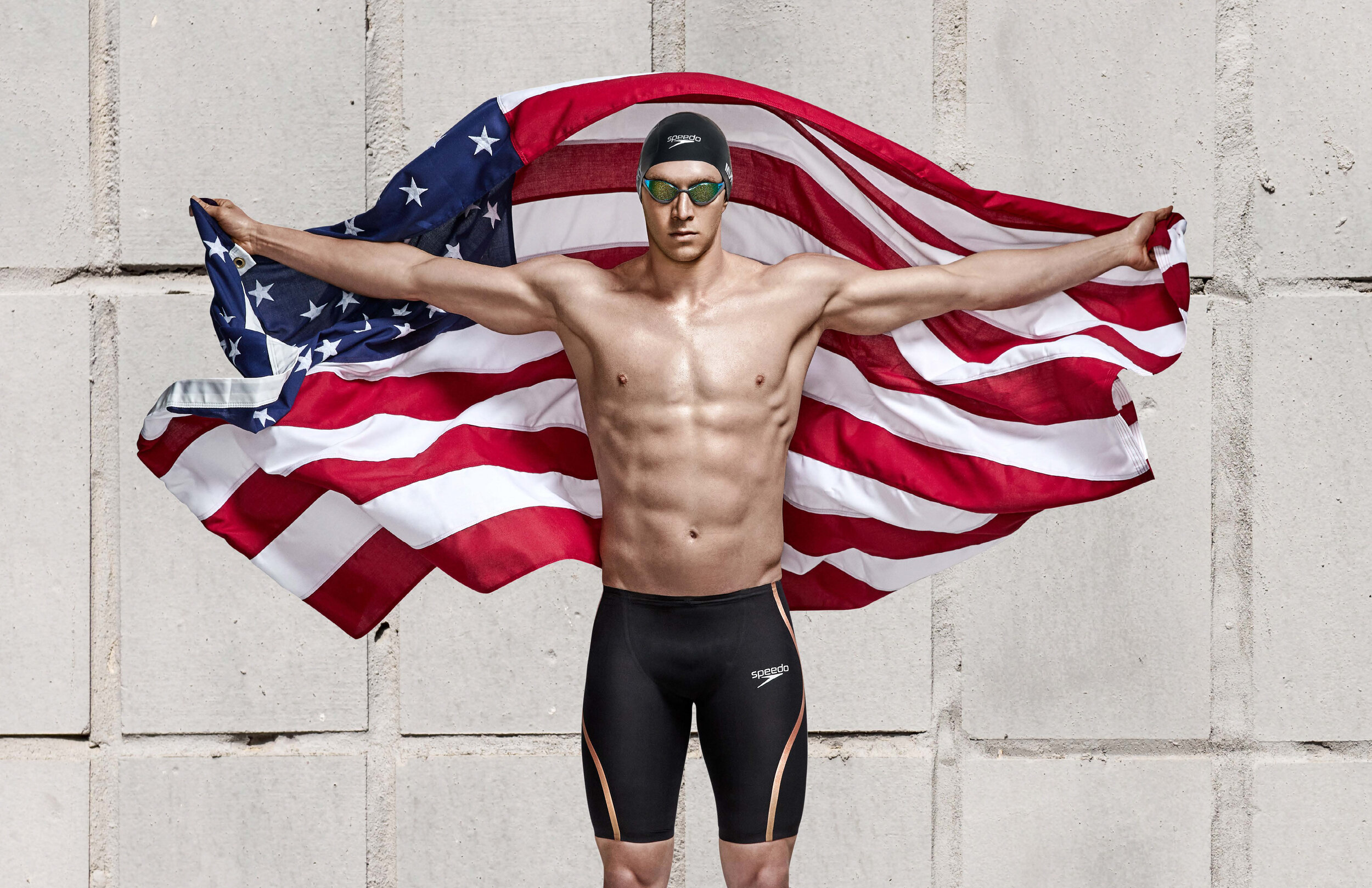
This month, we have the honor to have 3 X Team USA Olympic Swimming Gold Medalist, Ryan Murphy join us for the cover feature. Known as a decorated backstroke swimmer who also has a world record in the men's 100-meter backstroke, we talk with Ryan about how he got into the sport, transitioning from an activity to going pro, his experiences at the 2016 Summer Games in Rio as well as being a part of that riveting 4 x 100m medley. As he looks forward to the Olympics in Tokyo that's slated for next year, we talk about how he trains and modifies his routines as we all navigate COVID-19, the importance of mental health and how he is approaching his goals. He also shares how he is focused on impacting the sport of swimming whether as a competitor or simply enjoying water activities. He also talks about how he gives back to others and how this changemaker has been inspired by others.
ATHLEISURE MAG: We are so excited to have you as our 55th cover for the July issue as well as for an upcoming podcast episode of #TRIBEGOALS for our changemakers who are making an impact within and outside of their industry!
RYAN MURPHY: Thank you! I’m stoked to be a part of this awesome opportunity. Where are you guys at right now!
AM: We are based in NY.
RM: Oh wow so how has that been?
AM: Well, it’s funny. If someone said a few months ago that we would be indoors for a week – it would have been impossible! We had a number of plans that we were looking at regarding the Olympics and a number of activities that take place here across the industries that we cover and obviously some of those things are not happening this year. We did our cover shoot in mid March with Rachel Nichols host of ESPN’s The Jump. Literally, the NBA had just announced the day before that they were postponing the NBA season. We were still able to do our shoot which was great, and had a great afternoon with Rachel, and sheltered in place. Obviously, being in NY, it was just wow!
RM: Oh yeah, I mean it’s been going on for so long! I mean, I remember when we got our schedule in April, and it was like we were going to be out of the University of Caifornia, Berkeley pool through all of May. I got that schedule and I was like, what the heck and at the time, I was like “this seems pretty aggressive.” And here we are in July – still doing it!
AM: Exactly! It’s just amazing how things are being altered in so many ways so it’s very different. On the other side, the way we have been able to still enjoy, learn and connect with people such as yourself and still share your stories – but it’s strange times!
RM: Well it’s great that you guys are able to pivot – that’s a positive.
AM: Absolutely, it was about finding other ways to do it. But we thought that maybe this would be a couple of months or so honestly you just wake up and think, “this is like Groundhog Day, but there is no Bill Murray.”
RM: Haha exactly!
AM: I know that you grew up in an athletic family, how did you come to the sport of swimming? When did that transition from being an activity to one that you wanted to participate in in terms of competition?
RM: So I’m the youngest of 3. I’ve got an older brother, older sister and you nailed it. We were kind of just like that family in the neighborhood that was doing everything. So that’s how it started. We were all born in Chicago. We moved down to Florida literally when I was 6 months old and the summers in Florida are just so hot. We’d go down to our community pool and my older brother and sister were old enough to get onto the swim team and I was just that little kid running around the pool with floaties on.
So when I turned 4, I went on the Summer League team just following in their steps and it really progressed naturally. At first, I hated going to practice, I came up with an excuse every single day just to get out of practice! Until, we were at the end of summer and a week out from the big championship meet and they were like, “alright Ryan, we’re picking our 4 x 25 Free Relay and we’ve got 3 guys chosen and it’s down to you or Billy for the 4th spot. So, we’re going to do a 25 yard pre-swim off right now. If you want to be a part of it, you’re going to need to swim this right now!” So I get up out of my mom’s lap and walk up to the side of the pool, win the swim off and from there, I feel like I was just into it. That swim off taught me the love of competing and from that point on, I was into it.
So when I turned 7, I started swimming year around, when I was 12, I gave up other sports and really when I gave up other sports, that’s when it started to become a little bit more serious for me.
AM: Wow. Did you always dream of being an Olympian and at that time, what did that look like or mean to you?
RM: Yeah of course! I always dreamed of being an Olympian. I mean, I also dreamed of being an NFL player or an NBA player so I kind of dreamed of reaching the top in every sport. It just turned out that swimming and the Olympics was probably the most realistic of those goals. I do think that every swimmer grows up wanting to be an Olympian and I can remember watching the Sydney 2000 Olympics. I had just turned 5 when the 2000 Olympics were on and I have some memories of that that I can go back to right now. I remember watching the Womens 400 Free Relay and that was just the coolest thing ever. It continued to kind of grow from there. In Athens 2004, I remember watching Michael Phelps and him just absolutely crushing it! In Beijing 2008, I was 13 at that point so I was really enjoying the sport and I remember most of the races from 2008. For London 2012, I got 4th in 200 Backstroke for the 2012 Olympic Trials and 6th in 100 Backstroke and I was watching guys that I had interactions with them at that point. So that was really cool and so every Olympics was cool just to see how my perspective on the sport changed as I grew older.
AM: What is it about the backstroke that you enjoy and did you just naturally go to that part of swimming that you wanted to do?

RM: Yeah, I think inherently, you enjoy the things that you are good at. That’s probably why I enjoy backstroke more than breaststroke. Breaststroke is just not my natural stoke. I do train all of the strokes and I think that that is really good to keep it fresh. Backstroke is just different, it’s always been a little different. I remember growing up that my coaches would try to give me technique tips in every stroke and they would try to give me technique tips on backstroke and I’d be like, “mmm like you know the way I’m feeling it right now, this is better.” That was me as a 10 year old. As a 10 year old, I knew that the things that I was feeling were potentially a little different then the way that the coaches had taught technique in the past. It’s kind of weird looking back, because I have always been a very obedient and respectful kid. In my mind, I was like, ok I’ll act like I am taking this advice, but I wasn’t actually taking their advice for backstroke technique. I guess that now that you asked me that question, I never really thought about that before. But the backstroke has always felt natural and I have always felt that I have a really good feel for the stroke.


AM: Especially when you talk about a sport like that where there are different kinds of strokes, you can tell when you see someone that is hitting it and that they’re just on autopilot. It’s not about the 1, 2, 3, 4 – it’s just the natural and that’s why we wanted to know because we can tell that you really like that backstroke!
RM: It’s the same thing like when you watch a marathon. Those guys and those women that are winning the marathon, like Eliud Kipchoge is holding in like the 4 minute range for a marathon and it doesn’t even look like he’s trying! It’s like holy crap! That’s some serious talent right there.
AM: What was it like for you to be at the Rio 2016 Olympic Games from the opening/ closing ceremonies, competing, getting 3 gold medals and setting a new world record to boot for the 100m backstroke. What was that like for you especially since it was your first Summer Games that you went to?
RM: I mean, yeah it was an absolute whirlwind. I think that one of the things that I did a nice job of going into it as we talked about before was that it was always my dream. It was my dream to go to the Olympics and when you’re living your dream and when you are actually in that moment, that could be a very pressure packed situation. What I did well was to downplay the significance of the moment, a lot. That helped me a ton at the Olympics. In terms of the experience itself, it’s just absolutely unreal. When you’re there, it’s a swim meet and I have been to hundreds of swim meets in my life. So you don’t really realize it when you’re going to the ready room, you’re getting behind the blocks and you do your race. You only realize it when you get out of the pool and you’re kind of chauffeured immediately to NBC and you can literally, if you want to, talk to over 100 different outlets right after your race. That’s something that I have never had to experience and navigating that was very interesting. I think that and it's so cliché, but the thing that I appreciate most is the friendships and the memory of it. It’s really cool to think back to the conversations that you had with a guy like Phelps or Ryan Lochte – people that have been doing it for so long and are absolutely iconic in our sport and to be able to develop relationships with those guys that are lasting is really cool.
AM: We remember, watching and cheering the 4 x 100m with you guys – you, Michael Phelps, Cody Miller, Nathan Adrian – how do you from a training perspective prepare for this particular event since there are a number of people with you doing that? Is that difficult for you?
RM: I think that relays are the easiest part of the sport. I absolutely love the relays. It’s so fun to go behind the blocks with 3 other guys. You never feel more patriotic. I’m going behind the blocks and I’m wearing the USA cap. And Cody and Michael and Nathan are all wearing the same. They’re all super fired up. It’s the end of the meet, we’re super excited that we had all had great meets at that point and we’re all excited about that. We’re excited about the race and I think that the coolest part about that is that obviously you’re swimming with the most iconic Olympian of all time.
I think what’s really awesome to see is that you go and walk anywhere with Michael Phelps at the Olympics – it could be the warm up pool, the ready room, behind the blocks – every single person whether it’s a swimmer, coach, official, volunteer worker, wants to look at Michael Phelps. Everyone, for at least a split second is off their game because they’re observing Phelps. That just gave me so much confidence. It was like, “wow this guy is so iconic that everyone has to stop what they are doing and he’s on my team.” That was just a huge confidence boost behind the blocks and it totally added to the adrenaline of the moment. I was thinking, 1. I have to nail my leg, but 2. I really can’t screw this up for Michael. He’s won 23 gold medals – if he goes out on a silver medal, that’s just weird. We’ve gotta get him a gold here.
AM: We remember when we watched it live and booked our entire night around seeing that event to watch it in real time. In preparing for talking to you, we watched it again and that moment still gives you goosebumps watching it because all 4 of you are just killing it and it is one of the most iconic moments in Olympic history in our opinion. What lessons did you take away from those Summer Games in Rio?
RM: Ooo that’s a good one, I really like this question. I think that every swim meet is a really good learning opportunity. The biggest lesson that I probably learned from Rio is that when you’re in a situation like that where there is so much pressure and every emotion is going to be heightened, the highs are going to be really high and the excitement levels are going to be through the roof, but then the feelings following a bad performance are going to be really really low. I think the biggest thing is just recognizing that the entire scope of emotion is going to be felt by both yourself and your teammates and you have to be aware of that. I think that’s the biggest thing and then learning how to get in and get out. When I’m at the pool, be intense and when I’m not at the pool – let’s chill. Let’s enjoy this moment and enjoy the Olympics. You’ve gotta even during that 8 day meet, you still have to have balance. You can’t just be eyes wide open, super intense for 8 days and still be firing pretty well on day 8.
AM: Well, what’s an average training day like for you when it comes to gym time and pool time?
RM: So right now it’s a little different. When we’re in our “typical schedule,” we go 3 practices on Mon., Wed. and Fri. and then 1 practice on Tues., Thurs. and Sat. On Mon., Wed., Fri. we go from 6–7:45am in the morning, 1-2pm in the weight room and then 2:15–3:30pm in the pool. On Tues., Thurs., Sat. we just go from 8-11am in the morning as an absolute burner of a pool workout.
AM: How have you adjusted your workout because of COVID-19. We saw on Instagram that you were pushing an SUV up a hill in neutral!

RM: Yeah and I think that that particular video was in the lag time where I was training in Colorado at the Olympic and Paralympic Training Center as the Corona Virus situation was really ramping up. The Olympic Training Center closed down and so we had to fly back to Cal and there was a 6 day period between the Olympic Training Center shutting down and the Olympics being postponed. We come back to Cal, we didn’t have access to the pool or weight room. I didn’t really have any weights at our house so, we’re trying to work out, we’re trying to figure out that if the Olympics are still on, we have to be prepared, we have to be safe, we have to support our communities and we have to prepare for our dreams essentially. We did a workout in the garage and we were like, alright we feel that we have hit arms pretty well. We didn’t feel like we had hit legs super well and I’m looking around to see how I can workout my legs without any weight. I’m looking around and I see my car and Josh Prenot, who is one of my roommates he’s still swimming and he won the silver medal at the 2016 Summer Olympics for Team USA for the 200m breaststroke. I said, “ok Josh, let’s try and push my car up a hill.” We live on the top of a big hill in Berkeley. I didn’t know if we could get it very far, but it could be a solid workout. We pushed the car and the street we live on is a little more steep then what we were hoping. We didn’t get it super far, but it was cool. It was cool to get creative in this time. I think that it's so easy as an athlete to fall into a routine and stop thinking of creative ways to get better, so that is something that I have really enjoyed at this time. Getting creative, finding new ways to improve and really just pushing the envelope on performance.

AM: We know that when you’re coming into an Olympic year, there are things that you typically do in one month versus another month. How do you mentally make the change over now knowing that it has been pushed back for an entire year, how does that work for you in terms of training, your goals and just being in that mindset that it is pushed back a little bit further?
RM: I think that from the mindset, when that Olympic decision came down, there were a couple of different ways that people approached it. The way that I approached it is, “ok, that’s the end of my season.” I took a couple of weeks off, I went home and stayed with my parents for a little bit which was great. I hadn’t been able to be home in about a year. So it was cool to be able to go back to Florida, hang out with them for a little bit and then when we started to get back into it, it was like the progress that we had made in the past year that progress was made. Just because we didn’t get to see a time on a scoreboard at the end of a year, doesn’t mean that we didn’t improve. So, I was able to accept that pretty easily and going into this season, it was like, “ok we’re going to start off slow, build the intensity both physically and mentally and then we’re circling June and July of 2021 and everything is going to build towards that. It’s a bummer that the plan changed and knock on wood, the Olympics are happening next summer. We shifted and we’re prepping for that and we’re hoping to put on a really really good performance there.
AM: What are your goals that you have going into the next Olympics? Do you have certain things that you want to tick off and to achieve there beyond what you did for the last Olympics?
RM: You always want to be topping yourself and everyone else. My goals going in, I’d love to be able to defend my titles in all 3 of those events 100m back, 200m back and the 4x100m relay. They added a new event this time around. It’s the 400m mixed medley relay where you take 2 guys and 2 females and you can put them on any strokes. I’m hoping to get on that relay and I’m hoping to get on that relay and I'm hoping that the US wins the inaugural 400m mixed medley relay as well! I’m someone that totally thrives on the competition. That’s a daily motivator for me and I think that the thing that I have to be super careful of is just making sure that throughout the season that I’m still just focused on self-improvement. The competition can be a motivator for those days when I really don’t want to get up at 5:20am and get in the water. The competition is going to push me to want to do that. It’s going to push me to wake up, to get out of bed, go to practice and work my butt off. At the end of the day, I’ve got to get up and push myself as far as possible and that’s my goal throughout the year and then the hope is that that culminates and being good enough to win at the biggest stage.
AM: You have amazing brands that you have partnered with from Bridgestone and Speedo as sponsors. How do you determine the brands that you align with based on your synergy and do you kind of have a bucket list of other people or brands that you want to partner with just to expand your portfolio?
RM: I think first and foremost, I want to be with world class brands. That was a motto of ours at Cal. We wanted our aquatics program at Cal to be world class and that’s something that really stuck with me. I want to be associated with people that do things the right way and that they do it really really well. That’s what I look for and Speedo, Bridgestone and Goldfish Swim School all have that in common. They all do things super well, first class – I think that they’re all very very competitive and they want to be the best. But they also do it with class.
The executive team at Bridgestone is incredibly impressive and they flip that switch by saying that they want to be the best tire company in the world. At the same time, they are the nicest people ever. Same thing with Goldfish, same thing with Speedo.
So, that’s the biggest thing that I do look for. It also has to make sense in my daily life. On a daily basis, I drive my car everyday and I drive my car on Bridgestone tires. I live at the top of a hill so if my tires weren’t good, I wouldn’t be able to get up the hill. I wear a Speedo everyday, so that makes sense and then Goldfish Swim School, they do a ton to teach kids the sport of swimming which is something that I am super passionate about. Both from a life saving perspective because if you get swim lessons, and I don’t want to mess up this stat, you are 90% less likely to drown if you had formalized swim lessons. That is incredibly powerful.
I want to grow the sport of swimming and I also think that even if you don’t choose swimming as your sport, water activities are incredibly fun. So many of my favorite memories have come in the water both in competition and in the ocean and the river. I love the water and I want everyone to experience the gifts of the water. All 3 of those brands have made a lot of sense for me.
In terms of bucket list brands, it’s just something that’s got to be a part of my daily life. I have things that I really enjoy whether it’s going golfing or following the stock market. I’m a little bit of a nerd and I love following the stock market! I will say that I don’t splurge on a ton – I think that I'm pretty frugal, one thing that I'm willing to splurge on is watches. I absolutely love watches as an accessory piece. Any of those things that fall within my interest would make sense for me.
AM: In terms of working out as we’re always looking to add to our fitness routines, what are 3 of your go to workouts that you tend to do in a session that we should consider putting into ours?
RM: I think that first and foremost in a sport like swimming, the most important thing is abs and your stabilization muscles. So abs and back, I hammer those on a daily basis. Exercises for that I do the pretty typical crunch, side crunch, V-ups, plank and side planks. Stuff like that, it’s all pretty simple. I also really like the Olympic lifts and I love doing clean. I guess if I’m talking to someone who is less of professional athlete, I’d say that an alternative to clean would be front squats. I’m not a huge fan of back squats, it’s easy to hurt the back and I’m much more of a bigger proponent of front squats where you really have to brace the abs and hold your body upright. You can’t do as much weight, but it’s really a whole body exercise.
For an upper body one, I love pullups. You can do so many different variations of over hand and just really isolate the lats. You can do under hand and get a little bit of biceps in there. You can go wide grip and get a little bit of chest so there’s just so many different kinds of variations of pull ups. I think that that’s really a great full upper body.
AM: From a dietary standpoint, what kinds of foods do you incorporate to your regimen that fuels your workout and optimizes the goals that you’re trying to do?
RM: I try to keep the diet pretty simple. At the simplest level, most of my meals I’m looking to try to get a really healthy grain/carb, a really solid vegetable, a pretty lean protein and then like anyone else, I love avocado – throw some sriracha on top – I’m all about the sauces. At its core, I keep it pretty simple.
I like oatmeal, then I make an omelet for breakfast. For lunch, a lot of time I will make a smoothie which is essentially a vegetable smoothie to kind of throw in potentially any kind of veggie that’s in my fridge. I’ll just throw it in there and throw in some cinnamon to kind of make it taste better! I’ll drink that down and for dinner, I’ll go to your quinoa or rice, potatoes, a pretty lean protein – salmon, turkey, chicken and a healthy veggie. I mix up the veggie a lot in that one as well.


AM: When you are splurging, what are your splurge foods that you treat yourself with?
RM: Well I mean, there’s a lot! I also mix up the splurge foods. I absolutely love steak. If I’m splurging, I’ll have a big fat piece of ribeye – that’s just fantastic! Or I’ll have a pizza, a burger – I love ice creams. I mean God, you’re making me hungry when you’re asking me this question!
AM: How important is mental health? In times like this as well as when you’re training, how do you check in with yourself to ensure that you’re in the right place to be the best you?
RM: Mental health is huge. I think the biggest part of athletics and really life is being able to maintain your levels of motivation and being honest with yourself. The same way that I talked about that super scope of wide emotions at the Olympics, I feel that at a time like this, the scope of emotions has widened for a lot of people. The way I check in with myself, is that I feel that I am incredibly fortunate to have an incredible inner circle. I talk to my family all of the time, I talk to both of my parents, my brother and my sister, my inner circle of friends. We all stay in touch very frequently so, that’s what I really do. I do consider myself very fortunate and I don’t want to make myself sound like an expert on mental health. I honestly never struggled in that area, but I do consider myself very fortunate in that aspect. But I do think think that everyone could benefit having very open conversations with their inner circle which has helped me. I've never felt like very very low, but obviously, everyone has bad days and so on those days, I totally lean on my inner circle to help me out.
AM: When you’re not training, what can we find you doing when you’re just hanging out and taking time for yourself?
RM: In this time, it’s been a little tough. I’m a massive sport fan. I like watching football, basketball. I would literally set reminders on my phone when the Michael Jordan documentary came out because I was feening for sports so bad! I totally miss that aspect, but I have been into golf for a little while now, so I’m lucky that I live 5 mins away from a golf course in Berkeley. I go up there all the time and I’ve been playing probably at least 1 round a week, I go to the range probably 2 times a week. So that’s been so great.
I love following the stock market. As I mentioned earlier, I am a bit of a nerd and when I turned professional in swimming, the biggest thing I was nervous about was feeling like I was losing my mental sharpness. I wanted to make sure that I had something that was engaging my mind and the stock market is that. I find it absolutely fascinating in just looking at how everything mixes based on people’s investment horizon – how long they wanted to be in the market, whether they were looking purely at the financial statements or if they are going off of the news cycle. I absolutely love that and in this time, there has been so much volatility in the market that I think that there has been some really good opportunities to make money in these past couple of months.
I’ve been dabbling in that a lot and I know that was a little long winded but essentially, my hobbies are watching/ participating in sports with golf, hanging out with the guys and the stock market.
AM: Five of our covers at Athleisure Mag have been awesome CNBC hosts, we've spent some great times with them, so finance and lifestyle for us has been a pretty big pillar for us. Just like you said, it’s a measure of what’s going on in a given environment and what people are leaning towards and away from. We love the financial mix.
Earlier you were talking about how you help children how to swim. Are there ways that you give back to the community at large or even specifically in the swim community with kids coming up that want to be just like Ryan Murphy?
RM: I try to spread out my time pretty well in terms of the swimming community. Totally at the earliest stage at the grassroots level, I want to grow participation in the sport and that’s why I partnered with Goldfish Swim School and that’s why I am involved with USA Swimming Foundation. USA Swimming Foundation does a lot of really really good work to increase the reach of the sport. It’s no secret that minority participation in swimming is lower than white participation. So USA Swimming Foundation for the past couple of years has done a lot of work in that area to try to increase minority participation in the sport and minority ability to swim. So that is something that I am really really passionate about. As people move up in the sport, there’s a guy named Carson Foster. He’s going into his freshman year of college. He’s been someone who’s reached out and said, “hey, I’d love to pick your brain on some stuff.” I absolutely love doing that. It’s cool that now at the age of 25, I’m a veteran and that’s crazy but it’s also cool that people want to hear from my experiences and what has made a difference in my career. I’m always willing to pay that forward to the younger athletes.
Then completely outside of swimming, I have done some work with the Tom Coughlin Jay Fund. So getting back to being an avid sports fan, Tom Coughlin was the head coach of my hometown's football team. So he was the head of the Jacksonville Jaguars (he was also the head coach for the New York Giants) and an icon in Jacksonville. He has an incredible foundation that works with kids and the family of kids who have cancer. In this time, I have done a couple of Zoom calls with a couple of those kids because they’re going through cancer treatments and the visiting hours in hospitals are limited due to COVID-19. They’re really just looking for interaction and its absolutely incredible with these kids. Every single one of them is so optimistic, so fun, so outgoing, so mature while they are in the fight of their lives. Those conversations are incredibly powerful and they definitely impacted me more than I have impacted them. That’s been really cool to be involved with them for the Tom Coughlin Jay Fund as well.
AM: What is the legacy that you are looking to build whether it’s in the sport or outside of it that you want people to recognize you for?
RM: I think that the biggest thing is that it’s not about the accolades or the accomplishments. Records are going to be broken, there is always going to be someone younger – probably more talented at some point who is going to out do everything that you did at the pool. My biggest goal in terms of my legacy is that I want people to recognize that I have done and will continue to do everything in my power to reach my potential and to grow the sport of swimming. Those are my biggest goals. I want to be the absolute best athlete that I can be, but I also want to raise the profile of this sport. I view swimming as an incredible sport and I want people to be involved. Those are 2 goals of mine and I hope that people do recognize that I am doing absolutely everything in my power to reach both of those goals.
AM: As a changemaker, being someone who a lot of people look up to, who have been 3 people for you that have influenced your career or the way that you look at life?
RM: I’d say that number 1 would be my grandpa. My grandpa is an absolutely an incredible human and kind of a wizard! He has his PhD in math and so he has made his career off of writing math books. He has written over 100 math textbooks in his life and it’s absolutely insane. He’s so smart and probably one of the smartest people that I have ever met. He's an incredible mentor to me – he just has such a down to earth view on life. He has had an incredibly successful life. He didn’t come from much and he really valued his education and has now made a really solid living off of that. He is just someone that I respect so much and he has always been someone that I lean on for advice. Honestly that includes my parents as well so number 1 include my grandpa/my parents.
I guess #2 I will go more athletic. It would be Aaron Peirsol. As we have talked about it, I have always been a backstroker. When I was growing up, Aaron Peirsol absolutely dominated. He dominated from 2000 – 2010 in the backstroke events. He had a huge impact on my career. I would always be glued to my TV when he was swimming. Not because of how he swam, but his personality. He was so chill that he would be the guy that would walk out to his races with his cap and goggles in his hand. Everyone else would have their cap and goggles on and a lot of time, they were over their eyes already. He was just so chill that he would walk out as if he was going on a Sun. swim for a country club. Then he would go and dominate everyone and win gold records. I thought that that was just the coolest thing ever.
The 3rd one that I would go with is a coach. My current coach, Dave Durden, the head coach of Cal since 2007 and the head Olympic coach for the next Olympics. He’s 43, super young in the coaching world and he has such a quiet confidence about him that is just contagious. He's so calm and so measured. I've been swimming with him for 7 years and have only seen him lose his cool probably 1 time in the 7 years that I have swam with him. He’s dealing with 30+ college aged guys. We’re an all guys program and there is a lot of horseplay and personality going around and he just keeps his cool at all times. He’s another guy that I’m so impressed by his demeanor, his ability to plan and his ability to adjust. In this time through COVID-19, he has been an absolute maniac. He’s been jumping through hoops to figure out how we can train safely and just getting all of us on board for his plan. He’s an absolute incredible coach and incredible mentor. David is someone that is going to be a friend for life for me and I am super appreciative of the impact that he has had over my life and my current livelihood!
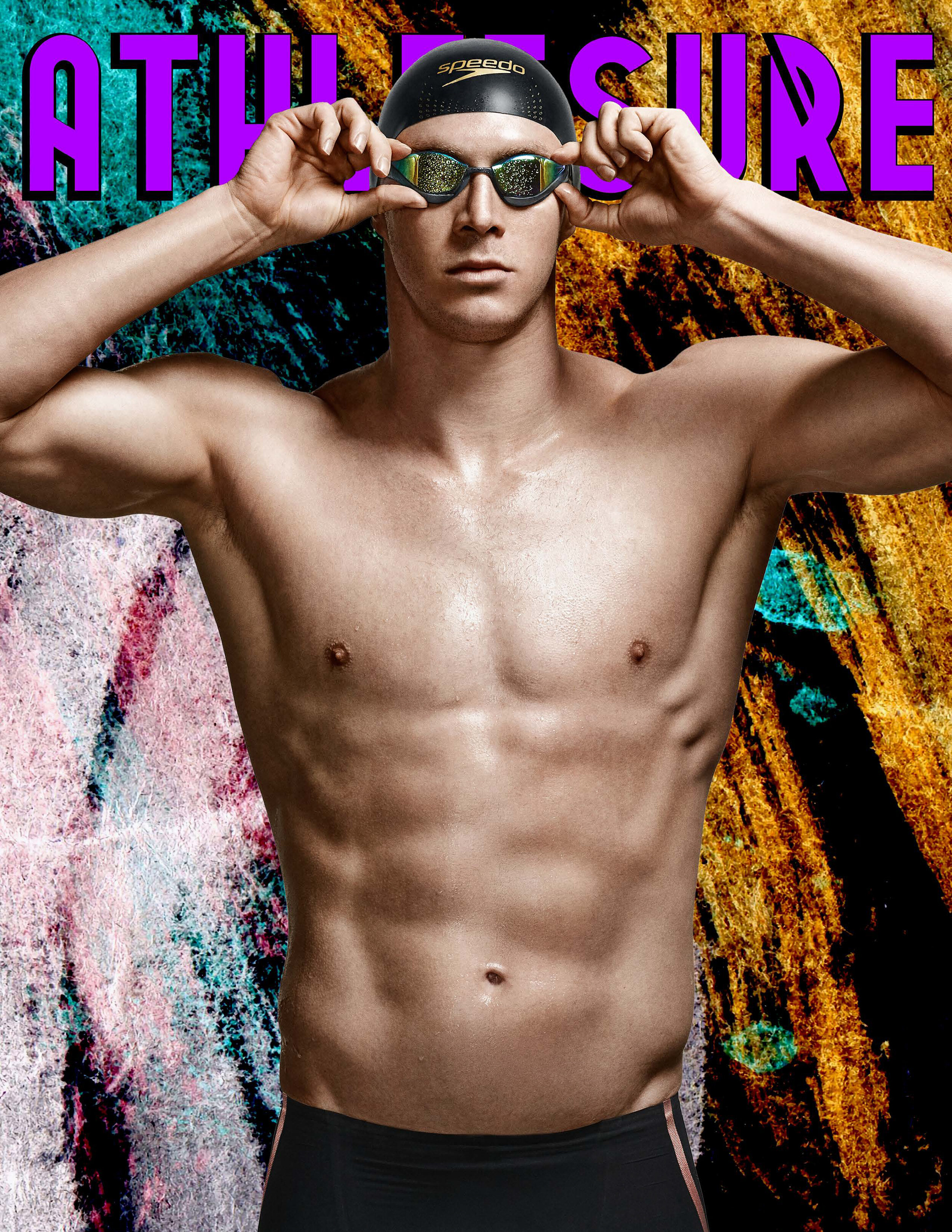

PHOTOGRAPHY CREDITS | Front Cover, PG 16/17, 28, 32, 33, 34/35, Back Cover: Speedo USA/Photographer Richard Phibbs | PG18, 21, 31, 40-41: Photographer Jack Spitser | PG 24-25: Speedo International | PG 26-27: Speedo USA/Photographer Aaron Okayama | PG 42 -45: Xinhua/Imago/Icon Sportswire | PG 46: Photographer Sean Juo | Front Cover, 16-17, 22-25, 28, 32-35, Back Cover: Editorial Design by Athleisure Mag | PG 52- 53: Photos courtesy of Goldfish Swim School |
Read the July Issue #55 of Athleisure Mag and see Always Topping with Ryan Murphy in mag.
Hear 3 X Team USA Swimming Gold Medalist, Ryan Murphy on our show, #TRIBEGOALS - which is a part of Athleisure Studio, our multi-media podcast network! Make sure to subscribe to find out when the episode drops. You can hear it on Spotify, Apple Podcasts, Google Podcasts and wherever you enjoy listening to your favorite podcast.

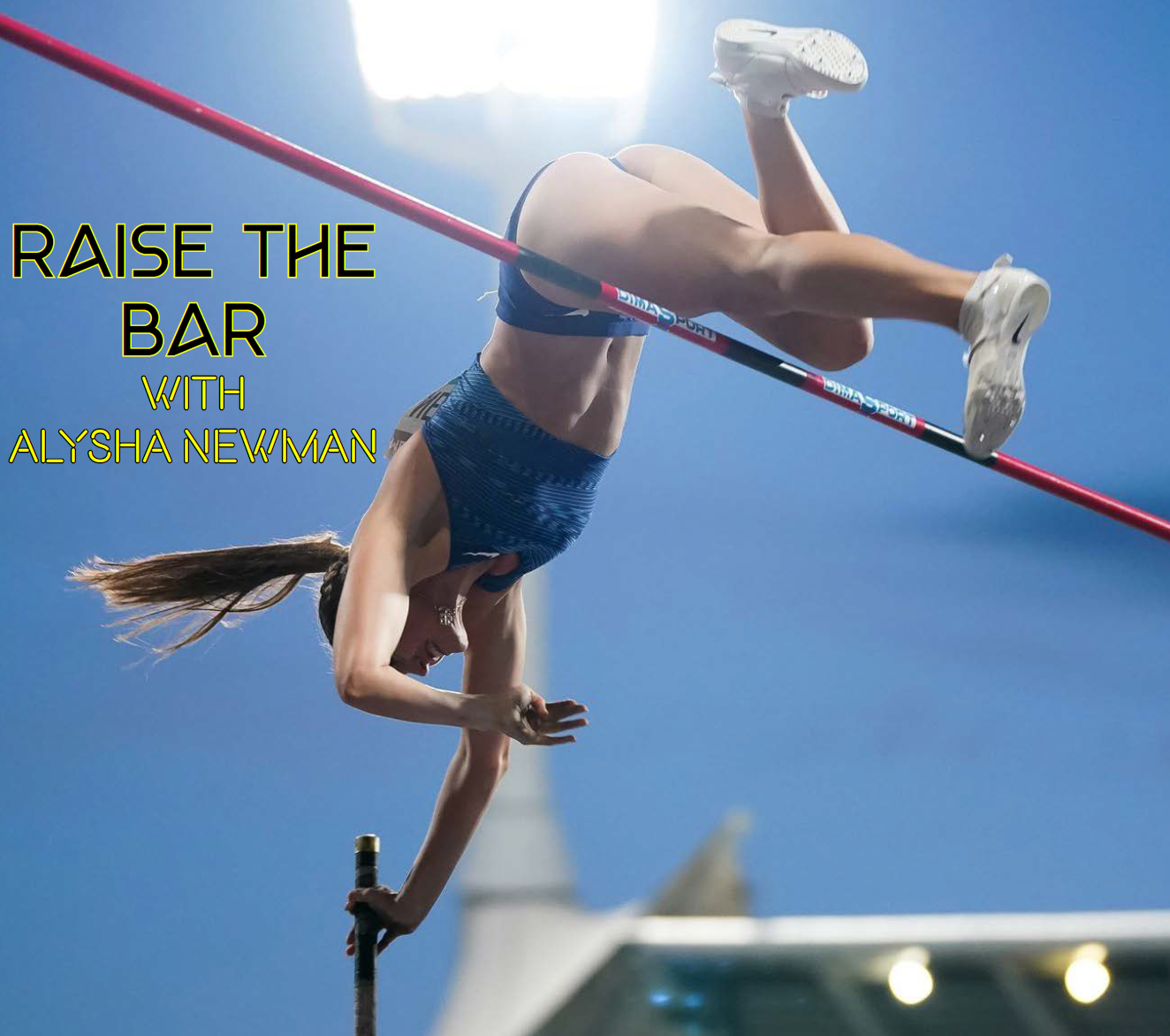
Across a number of sports, competitions are beginning to start again. We talked with Team Canada Olympic Track & Field Pole Vaulter, Alysha Newman on her sport, prepping for next year's Summer Games and Zenni Optical X ESPN's The World's Greatest USA Track & Field sanctioned event this month.
ATHLEISURE MAG: What brought you to being in Track & Field as an overall sport and specifically, the pole vault?
ALYSHA NEWMAN: Track was my second love and gymnastics was my first. I felt that gymnastics would take me to the Olympics. But when I turned 10 or 11 years old, I had a huge growth spurt and went from 5’4” to 5’8” in a couple of years! It just got hard and I fractured my L5 vertebrae and my body couldn’t keep up with it. I was forced into retirement at the age of 13. I mean, as a 13 year old, training 32 hours a week, in a gymnastics gym, going to school half days – I was having so much fun and it never felt like a job to me.
I took a year off from all athletics to heal myself, but my mom knew that I still wanted to be an athlete. She wanted to put me in diving and in swimming and in more track and field. I ended up dropping the water sports and focused on track and field. In elementary school in Canada, you do Pentathlons, so I did a number of different events. I ended up loving hurdles - the start, the finish and the training. But going from 32 hours to 8 hours a week, I was going crazy at home and wanted to be at the track more.
My manager at the London Legion club, said I should do 2 events which would give me 16 hours on the track. He felt that since I was a gymnast, pole vault would be a good idea. Within 6 months, I started competing. The very first competition that I did, I jumped 3.15m and it was the league record. From that day on, I fell in love with the sport, forgot about gymnastics and found my new passion. first competition that I did, I jumped 3.15m and it was the league record. From that day on, I fell in love with the sport, forgot about gymnastics and found my new passion.
AM: How does the sport of pole vault work in terms of the rules and how you know you have won?
AN: Every bar you get 3 attempts at each bar. Every athlete can pick at what height they want to go in. The meet usually schedules the height of the increments and after that, it’s whoever is jumping the longest. Once everyone is done, you can then pick heights that you are going for for a personal best or a national record. You can pick once everyone is done. You win by being the last man standing.

AM: How do you train for something like this? What workouts are you doing that optimize you to flow through this sport?
AN: You never want to do too much of one thing. With pole vault, it is fully head to toe – which means 90% mental, 10% physical. We’re definitely doing a lot of running, sprint workouts, plyometrics etc. Then we have the technical side which is 2-3 times a week and you are trying to get better, faster and stronger. One thing about pole vault is that it is a development. You’re not going to go in jumping on the highest pole and the stiffest pole right away! You've got to slowly get better, year after year. That’s why they say that it is important that you put in those 10,000 hours of pole vault training. This way, you’re body can get the experience and you learn mostly from your failures. If you talk to any pole vaulter, they will tell you that we end in failure every single time. That is what is so mental about it. You go to the track feeling like you can jump to the sky and because of “x” factors, it might not happen that day. It’s not because you were off your game that you couldn’t win, it could have been that your poles didn’t show up or anything. It’s one of those things that’s very mental. If you can be mentally tough in this event, you will do pole vault for a very long time.
AM: With the Summer Games in Tokyo being postponed to next summer, how are you focusing in terms of making sure that you are on track for your fitness goals and what you want to achieve to compete next year?
AN: Initially, I was really hurt. I mean every athlete waits 4 years to show the best of the best and be around the best of the best. I think what was really positive was that I had to switch it as fast as I could and to not take it as a negative. Usually, you don’t have time to work on anything you know? You put those 10,000 hours in, you go pro, and then you go to meet after meet. I competed 40 times last year and I only had 4 weeks off. You don’t have as much time to work on or change things which then may effect something else.
We have worked on my speed, listening and feeling the pole out. Doing those repetitions over and over makes me feel even better than I did 6 months ago. That’s at I'm bringing to the meet in Greenville, South Carolina.
AM: That meet is on July 15th, Zenni Optical and ESPN are presenting The World’s Greatest Live which is the first USA sanctioned Track & Field event this year with attendees that will be socially distanced, You can watch it on ESPN’s YouTube channel. Can you tell us more about the event hosted by Team USA Pole Vault Medalist, Sandi Morris who is hosting it on her custom built runway?
AN: It’s going to be a really awesome event. Zenni is providing all the athletes with eyewear. When all the girls are together with that positive adrenaline, that is when we're at our best for these meets.
Sandi has always been the leader in Women’s Pole Vaulting and has been someone that keeps pushing the bar very high. She’s a firecracker, she’s always on and always putting out high heights to keep us motivated.
AM: What’s your routine prior to a meet?
AN: I eat really healthy leading up to the meet. It’s something that I always do. The day before, I’m on the phone calling my coaches for an hour or two just to have a game plan. I will always have a glass of wine with my agent the night before I compete. I’m at my best when I’m having the most fun, relaxed and have a good sleep. In the morning, I call one of my coaches before I go out to let them know about the height increments and what we are going to do. I put my makeup and lipstick on which is like my war paint – when that goes on, there’s no looking back.
PHOTOGRAPHY CREDIT | Oscar Muñoz Badilla

Read the July Issue of Athleisure Mag #55 and see Raise the Bar with Alysha Newman in mag.
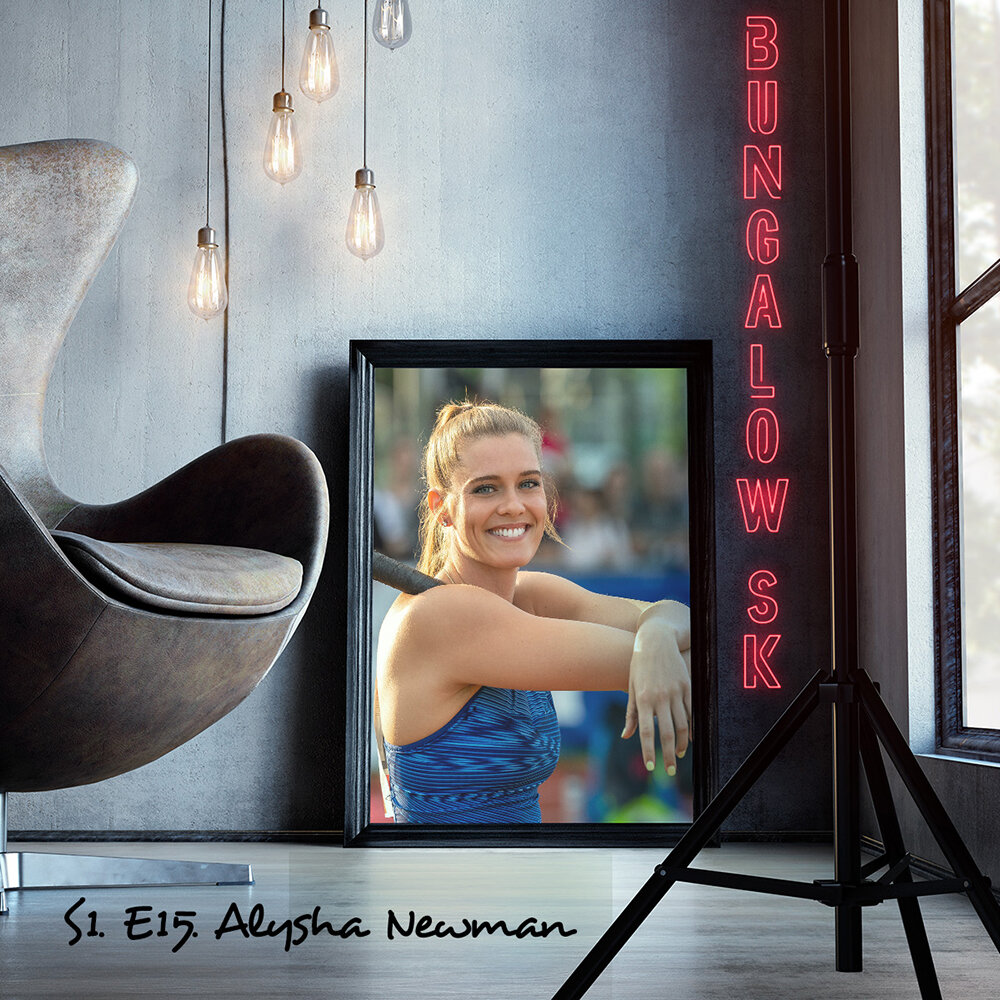
Hear Team Canada Pole Vaulter, Alysha Newman on our show, Bungalow SK - which is a part of Athleisure Studio, our multi-media podcast network! Make sure to subscribe to find out when the episode drops. You can hear it on iHeartRadio, Spotify, Apple Podcasts, Google Podcasts and wherever you enjoy listening to your favorite podcast.

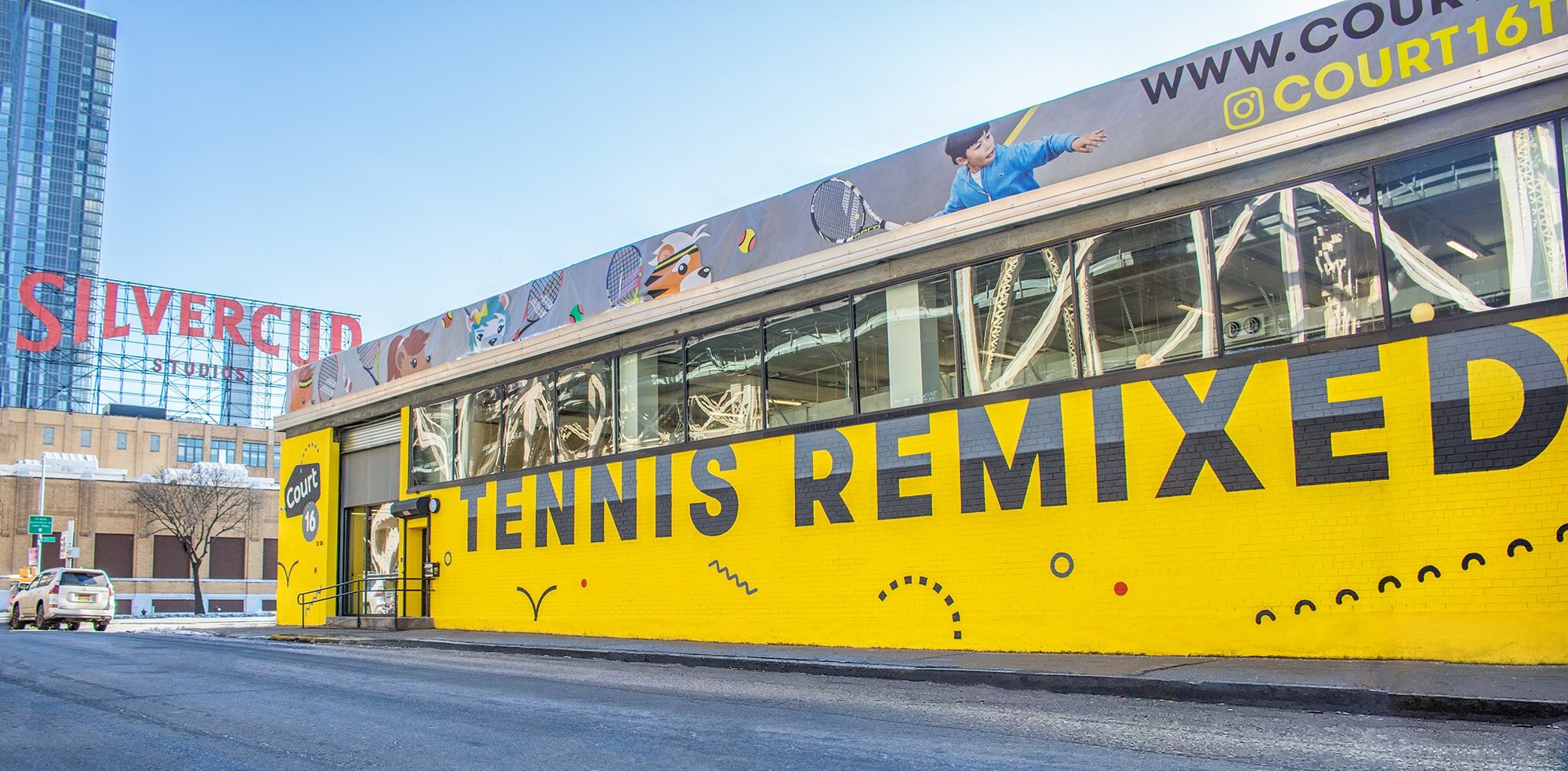
Court 16 is a contemporary tennis company remixing the sport. Its flagship opened in 2014 in Gowanus, Brooklyn and provides programs across all age groups that are designed to focus on strong integrated teaching methodology and commitment towards fostering teamwork, community and empowerment for adults and chidren.
Its second location in Long Island City, Queens opened in 2018 as the first tennis facility in the world to feature customized LED tennis courts on the most advanced flooring system in the world. Both facilities are a premier lifestyle tennis destinations for passionate players, esteemed business and organizations across several brand categories.
Court 16's name comes from the court number 16 at the Royal Leopard Club, a tennis club in Brussels, Belgium where the founder Anthony Evrard, learned to play the game with his grandfather.
His love for the sport, playing for the National Belgian Circuit in his youth, being the captain for Layola Marymount, a Division I team as well as his time as Senior Global Lifestyle Manager at Puma created the foundation for Court 16.
Their longterm partnerships with LACOSTE and Babolat (exclusive tennis equipment that is available for complimentary use at the club) have allowed them to collaborate with product launches, exclusive invite only events, off-site programming and ATP player appearances.
The club has a long standing partnership with the USTA for impact programming as well as receiving a grant during the coronavirus pandemic for each club to upgrade their safety protocols. In addition, the USTA has supported their Sound of Tennis program for blind and visually impaired players. These are just a few of ways that they work with Court 16.
Members have access to private and semi-private lessons. They also have pickleball lessons and court rentals that can be booked.
During the pandemic of COVID-19, they have focused on their innovative platform Court 16 @ Home which is aimed at providing continuity and an ongoing connection to the members of the tennis club. They have access to to adaptations of existing plans, enriching immersive content that is consistent with Court 16 experience.
526 Baltic St.
Brooklyn, NY 11217
718.875.5550
13-06 Queens Plaza S
NY, NY 11101
718.875.5550
Read the July Issue of Athleisure Mag and see Athleisure List | Court 16 in mag.

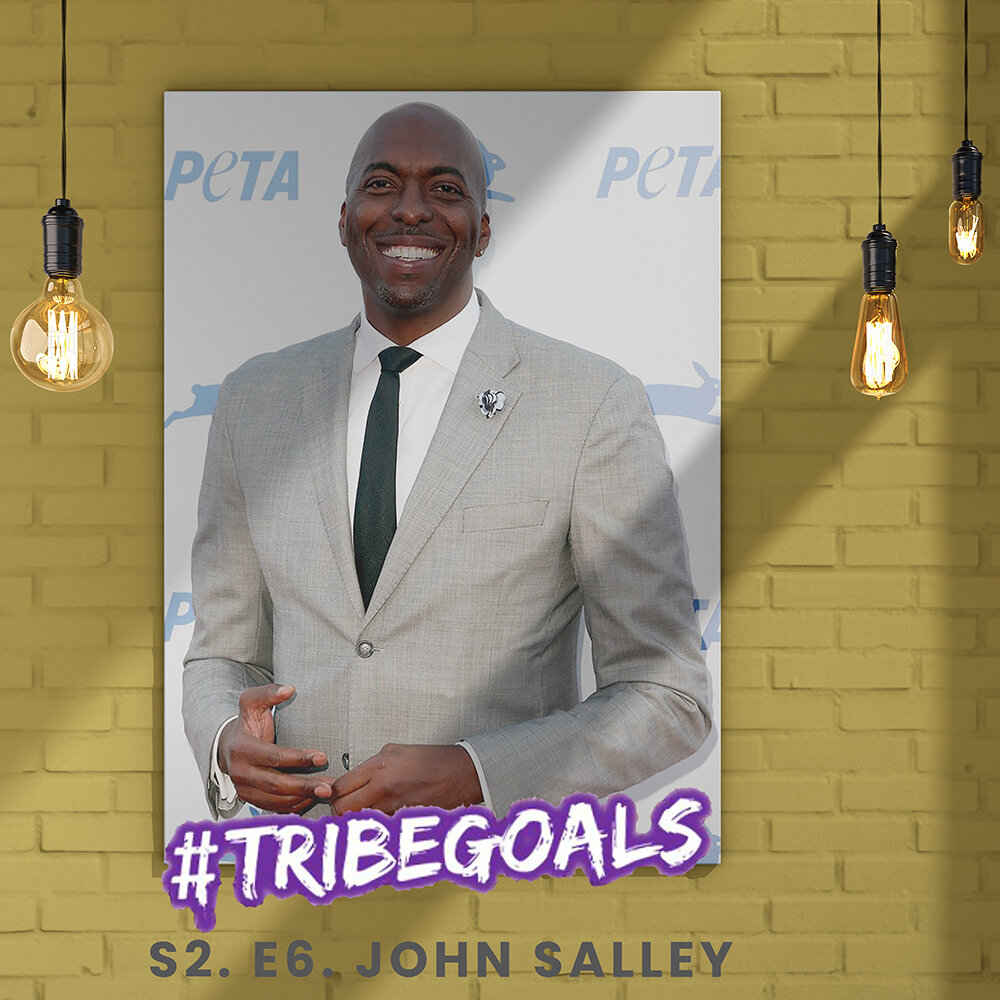
On today's episode of #TRIBEGOALS, we catch up with 4 X NBA Champion, John Salley. Avid listeners know that we spoke with him last season on this podcast show and always enjoy when we have the chance to get his thoughts. He talks about gifting for dads and grads, his appearance and commentary on ESPN's The Last Dance and words of advice as we navigate what is going on at this time.
Read the latest issue of Athleisure Mag.

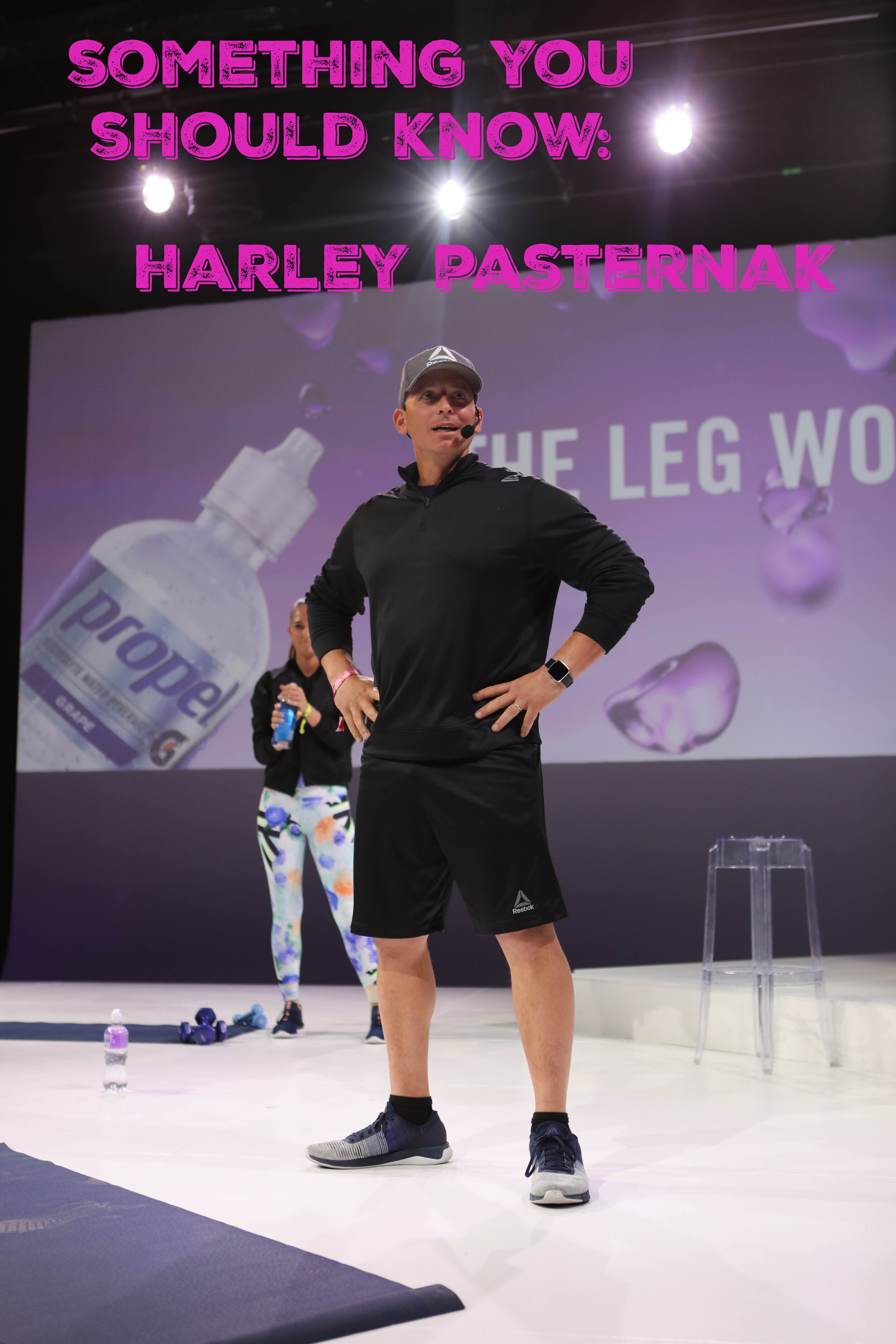
This month’s cover and back cover is 3 X Team USA Swimming Gold Medalist, Ryan Murphy. Our cover shoot editorial – Always Topping with Ryan Murphy, talks about Ryan’s career, how he got into swimming and his love of the backstroke, his success in the Summer Games in Rio in 2016, his approach to the upcoming games, how he is furthering the sport of swimming as well as encouraging others to embrace water sports. This interview will also be in an upcoming #TRIBEGOALS podcast episode. We also have an interview with Celebrity Fitness Trainer Harley Pasternak as we talk about working out from home, how he advises his clients in terms of what they needed on hand, his thoughts on gym and studio openings, a correlation between sugar and COVID-19 and how he has been passing his time for the past few months. We check in with Team Canada Pole Vaulter Ashlyn Newman who recently participated in The World’s Greatest in Greenville, South Carolina, this year’s first USA sanctioned Track & Field event. She talks about how she got into the sport, her training focus and what she looks forward to for the upcoming Olympic Games. Her interview will also be on an upcoming podcast of Bungalow SK. We check in with one of the Co-Founders of Huda Beauty, Mona Kattan. She talks about her role with the brand, their product assortment, KAYALI fragrance which is a part of this beauty empire, the power of fragrance and how she is spending her time in Dubai. We also talk to Head Winemaker of Cupcake Vineyard, Jessica Tomei. She talks about how she got into her career, harvest season, their newest line Cupcake Light Hearted and the importance of keeping it delicious. This episode will also be an upcoming podcast episode of Bungalow SK. In this month’s The Art of the Snack, we talk with James Beard Award winner, Food & Wine winner and runner up on BRAVO’s Top Chef Season 11 and Fan Favorite, Nina Compton. She talks about her culinary journey, her two restaurants, how she has navigated COVID-19 and signature dishes and cocktails that can be enjoyed there.
Read the July Issue #55 of Athleisure Mag here.


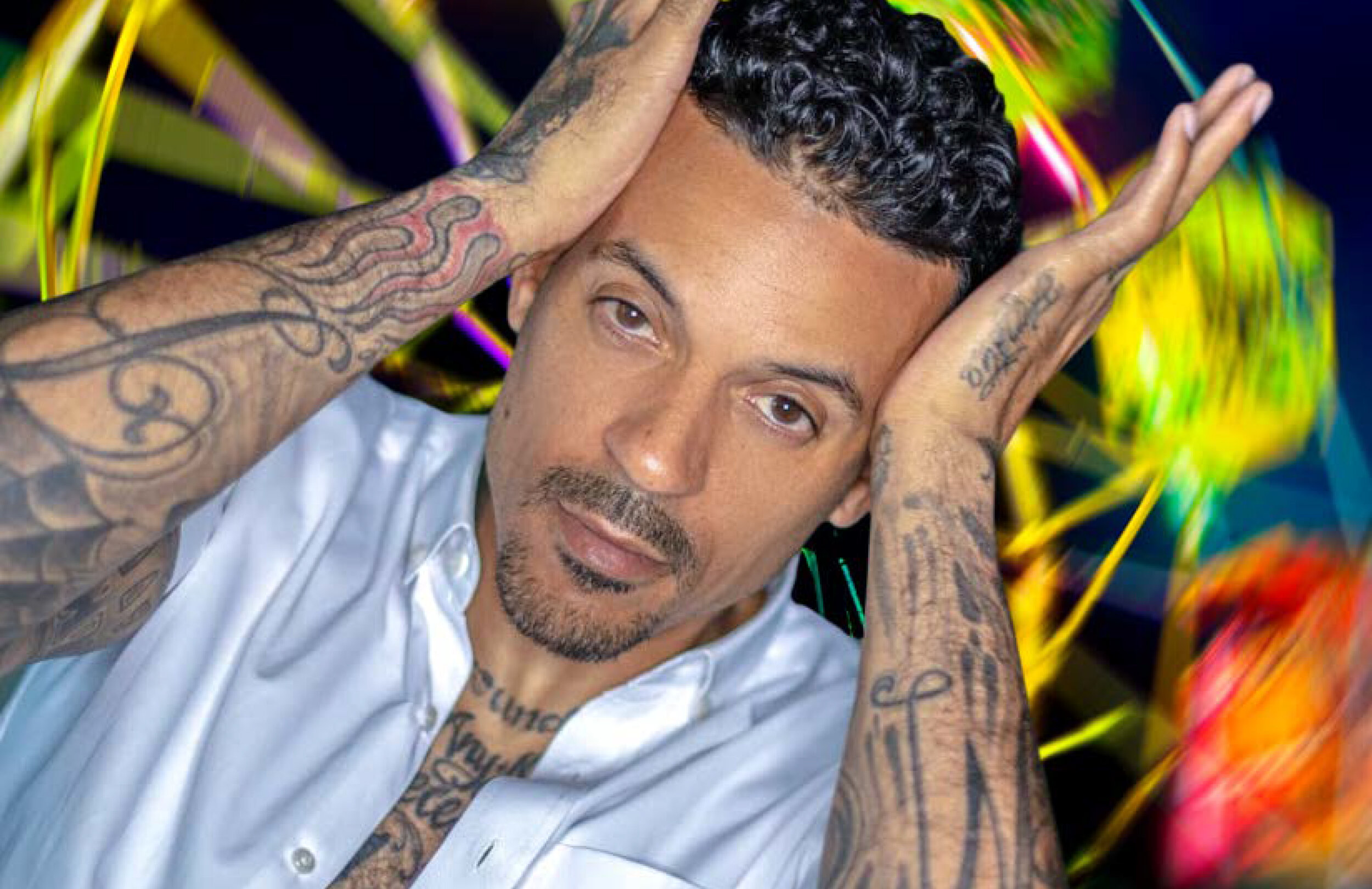
This month, we caught up with retired NBA Champion Matt Barnes who played 14 seasons in the league. His ability to bring his energy and focus to the court was seen on a number of teams from the LA Lakers, Golden State Warriors and the Sacramento Kings just to name a few. His unapologetic honesty and loyalty to himself as well as who he works with shined through on the court and continues to be seen through his philanthropy, his skincare brand HUE For Every Man, the cannabis industry, as well as his focus on social justice. With the confluence of COVID-19 and the movement of #BlackLivesMatter, he continues to be at the forefront of ensuring that voices are heard and that people understand the importance of voting at the local, state and national level for changes to be made. He has lent his voice to rally's in his hometown of Sacramento for George Floyd as well as Stephon Clark. We talk about this as well as his successful podcast All the Smoke on SHOWTIME, his enterprises and the upcoming NBA season and playoffs and the importance of sports as we navigate challenging times.
ATHLEISURE MAG: We just wanted to kick it off that we’re excited to be talking with you about your basketball career, your skincare brand as well as the current state of things that are taking place right now. We’ve always enjoyed seeing you and have been following your career since you got into the league and how unapoligetically authentic that you are as a team player and someone that plays hard and how you use your platform to benefit others and to just bring awareness to the forefront.
MATT BARNES: I appreciate that very much. I try and I enjoy it so thank you.
AM: Of course! When did you fall in love with the game of basketball and what was the moment that you realized that you wanted to play in the NBA?
MB: I’d probably say that I fell in love with the game of basketball – hmm. I actually grew up as a football fan. Football was the sport that I was better in and naturally more gifted in. But I continued to grow so basketball, I kind of picked it up and started taking it more seriously probably around 7th grade. That’s when I started really playing a lot more. But back then, we just played, it wasn’t so much working out. It was just another sport that I took seriously. It kind of took me to being lucky enough to make it to the NBA.
AM: You played on a number of teams with amazing athletes. What do you feel your legacy is in terms of the sport?
MB: Just a real guy that was a great teammate. I played as absolutely hard as I could and I never took a play off, never took a game off and I left it all on the court.
AM: In your opinion, when a player is going on in their career, what is the process like when you realize that you’re going to retire and that you’re about to transition to that next phase of life and did you find that hard?
MB: My retirement was kind of subtle. I had just signed a new contract for 3 years at the beginning of the season. I had actually just retired and it was actually just a perfect storm of winning a championship although it didn’t really pan out the way that I had planned it but, winning a championship and missing my kids – I mean, I was going through a divorce at the time when I wasn’t able to see my twin sons as much as I wanted to. I figured that I had gotten 14 years in the NBA and I wasn’t supposed to be there. I figured it was time to transition and to see what was next. I was actually excited about my transition so I ended up retiring at 37.
But I started to think about business and what was next. I mean, the average NBA career is only 3 years and I beat that. At about year 8 or 9 when I was in the NBA, I started thinking about what’s next. So I started investing in things that I kind of enjoyed, that I liked, that I could use and that I could promote. Most people think that kind of stuff happens fast – they don’t realize how long the process is until if the company actually makes it and until you start making some real money off of it. A few business decisions that I had made 4 or 5 years prior with me being in my final season when I had made the championship started coming into fruition and showing a little bit of money, so that’s when I said that now was the time to retire. My transition has been smooth for me, luckily. I’ve been able to transition into media, then social justice and all the things that I am passionate about along with first and foremost, being a single father of 3 kids. I coach my kids, and I am a very hands on dad with my 18 month old son, so retirement has been amazing and I feel like, I’m going to be able to have an impact on the world post-career than during my playing career.
AM: We love seeing you as an analyst on ESPN for The Jump (we recently had Rachel Nichols as our cover for issue #51 earlier this year) and Get Up. What do you like about sports broadcasting?
MB: What I like to do and why I got into the space, is to give them the other side from a players point of view. From what we’re thinking with 2 mins to go in the fourth quarter of a big game or overtime of a big game. How we deal with injuries or how we deal with family and travel. Like, you can be a great reporter, but would never be able to give that kind of insight or detail because you’ve never played. I think as a player, it’s our duty to give the raw and real integral details of what makes our job so unique and so special. I see these days that so often so many people that have never played the sport, want to disrespect people and talk crazy about people and kind of don’t appreciate how hard it is for us to be in that position in the first place. You know what I mean – to be a professional that’s like 1%. You have a better chance of being struck by lightening than being in the NBA. To give a clear cut understanding of what it’s like to walk in those shoes and then to be able to also talk about it for the first time – well not for the first time, it’s slowly but surely becoming more popular to have African American men that are able to get our point across. They don’t have to tell our stories anymore. You know, there are so many guys that have their platforms now that have a voice and they can tell our own stories now and sports is just part of it.
AM: What led you to being a part of HUE For Every Man which is a natural, multi-cultural brand. What stars aligned to do this and why was it so important that you wanted to be attached to this?
MB: I was always known during my career for having the best haircuts and cleanest hairline.
AM: This is true.
MB: I mean my hair, when I was approached by HUE and I found out first and foremost that it was a great product line, but then Jessica Estrada (CEO of HUE For Every Man), she has been amazing. She pours her heart and soul into this company. She’s a blue collar worker and that’s what I was in the NBA, so part of me really wanted to help her to fulfill her dream and to get this off the ground. I wanted to see what we could really do with it. On the multi-cultural side, I’m Italian and Black. Now more than ever, we’ve been divided and so many things are targeted for either a white audience or a Black audience. There’s no real in between and there are a lot of people who are in between these days. There are a lot of biracial people out there. So really, the message for every man is that at the end of the day, we’re all men, we’re all human and it kind of speaks to more of an understanding of what this country needs right now.
AM: What are your 3 must haves that are go to products within HUE For Every Man?
MB: I use the pomade but my favorite product is the awakening mist. Because, I’m a cannabis user and I smoke throughout the day and the awakening mist is always something that refreshes me. Obviously, it helps my skin and I really enjoy it and I give it to all my friends and they really appreciate it so those are my 2 favorites along with the shampoo and the conditioner. The conditioner has a really special smell to it that I really like. Most people, when you get a celebrity or an athlete, they attach their name to it and it may not even be a product that they use everyday. I’m such a person that has always been real and true and I speak my truth. This is something that I really believe in and something that I really use and I want to make it work.


AM: Are there new products that are about to launch that you can tell us about?
MB: I’m also going to get into the CBD skincare line. I’m an advocate of cannabis and realizing how amazing CBD is and educating people on the plant as a whole, I thought that this would be the perfect opportunity to jump into the space. I’ve been told that I have nice skin, so it just made sense and I also realized that there are not too many people in this space that talk to my demographic. Skincare is something that we care about, but it’s not really spoken on. So if I make it with the movement to make it cool to care about what your appearance is as many people think of it as something that only women do. Men care just as much about their appearance as women do. So, if we can do something for lines and get people on a cleansing routine, moisturizing and realizing how important moisturizing is for your skin. It’s on a personal level, but it’s also on an educating level. We need to let guys know that this is the only face that we have. You have to take care of your skin and your appearance.
AM: We recently started listening to your podcast All the Smoke with you and Stephen Jackson, it’s such a clever show. How did you come about creating the concept, the two of you deciding to work together and what’s your process like in terms of booking the people that come on your show?
MB: We were former teammates and he’s one of my closest friends. We were both respectfully working with ESPN and FOX Sports. We would always get people on social media asking if we would do something together, but we were working for our networks. One day I said that we had to do something together. With me being with ESPN/Disney and FOX – we need to kind of walk the line, but I know that the podcast – even though I didn’t really know what it was, I knew that people felt it would really speak to them. He and I would be good at. We tried it and SHOWTIME took a chance on us not really knowing what we were capable of and we struck gold! We wanted to come in as a sports podcast because obviously, that’s what we’re known as. We also wanted to shift more towards culture as a whole.
We wanted to humanize our guests and let them know the other side of their favorite celebrity, athlete, musician or whoever it may be. Everyone already knows what we’re known for. I play basketball, I rap or I play football – you know that, but what are they really like off of the court? What are they in to, what are their day to day lives like – so humanizing people was something that I wanted to do. Through our long careers, we’ve been able to make a lot of friends and connections. The majority of our guests – all of them, we have booked them ourselves based off of personal relationships as well as our ability to being real. A lot of our guests will somewhat let their walls down and really freely and comfortably speak to us. It’s worked.
AM: Well 2020 has been an interesting year between us quarantining with COVID-19, #BlackLivesMatter, tackling social justice issues and the 2020 election that is around the corner. In looking at your Instagram, you’re out there on the forefront. How important is it for you to use your platform, to push for changes and to get other people to raise awareness regardless of people’s skin tones to ensure that this movement keeps progressing?
MB: I think it’s important. I experienced a lot of racism growing up and it culminated in high school where my school was vandalized and the building was nearly burnt by the KKK. I faced racism growing up and I have always been really sensitive to the subject. Just to see the current state of America, we have never been more divided. Things have continued to happen and it’s almost normalized to where you think that this is normal – Black people being killed now. It’s unfortunate but it has been happening so much. I think what happened with George Floyd obviously boiled not only our country but the whole world to say that we have had enough. We’re upon a big change and as someone who has always been vocal, I am speaking on different matters and this is just something that I am very passionate about. I feel like that this is the first time in over 400 years that the world hears us and particularly the United States. So now, we have to have a plan and me using my platform, showing people what I am doing and trying to educate people. I think that we have to have a plan of intelligence. Now that they are listening, we have to know what we want and the only way to get what we want is to vote. It’s not just about voting for the president, it’s about your local level. People don’t know that most laws are made and passed on the local and the state level. Just continuing to educate people, trying to do my part and getting my friends to help and really understand the power of our community and when we come together that we can change the world.
AM: Being able to see how people have come together and to know that we have to follow through to continue to make our voices heard by making our votes is essential. In addition to this taking place, with the absence of sports, I’m sure you like the rest of us were riveted to ESPN’s The Last Dance as we get ready for the NBA basketball season to resume. What do you think about the format that will take place to complete the season and to head to the playoffs?
MB: I think it was great you know? Normally, when the world is having a crisis, sports is something that we can always turn to. It’s been a hell of 2020 like you mentioned, and 2020 took away sports. So for the NBA to be coming back, it’s slowly but surely becoming America’s past time. I love that they were able to come to some sort of solution or understanding to get back on the court and to really help start the world to heal. We obviously have so far to go, but sports has always been that one time that people can come together. I think that now, more than ever, that’s what we really need. I’m every excited about it and it wouldn’t seem right if we didn’t have a champion this year and now we’re going to be able to get a chance to get that.
AM: We couldn’t agree more. We’re sure that you have a number of projects going on, whether you’re talking about in front of the camera or behind it, are there things that we should be looking forward to in order to keep our eye out for it?
MB: Obviously, you can catch All the Smoke on SHOWTIME right now although we’re in negotiations for a new deal so hopefully, that happens! Also, I’m continuing to produce and create content that I’ll start really getting out there on different networks and platforms as it’s taken over my love of sports – just being able to create content and being able to share true stories, real stories and do inspirational stories. I’m starting to that and I just signed with ICM to help me build my goal and that will be cool. I’m doing a lot in the cannabis space right now trying to educate people on that. Continue to follow that. Last but not least, educating people in a fun way on politics and teaching them on how meaningful it is. Not so much about not being passionate overall in voting for the president or whatever, but finding causes that you’re passionate about and building on those. That’s a small step to getting people first and foremost to register, getting them interested and hopefully getting them all the way interested in being able to understand how powerful their voices are to this country.


AM: We always like to end our interviews asking our changemakers who you clearly are – who are you inspired by. Who are three people who have inspired you to be at the point that you are at now?
MB: Nipsey Hussle RIP. Kobe RIP. These guys because of their focus and dedication on their craft and their obsessive nature – like their beautiful mind to be great. I think that both of those guys were great in their own way and they would have only become greater before their lives were cut short. Someone else that I look up to which is a big thing – I look up to someone like Michael Strahan. Someone who is able to be a formal athlete, able to speak on sports, crossover to mainstream media as well which is something that I would like to do.
PHOTOGRAPHY CREDITS | PG 16 - 25 Matt Barnes + Editorial Design by Athleisure Mag | PG 27 + 33 Ray Chavez | PG 28 - 31 SHOWTIME |

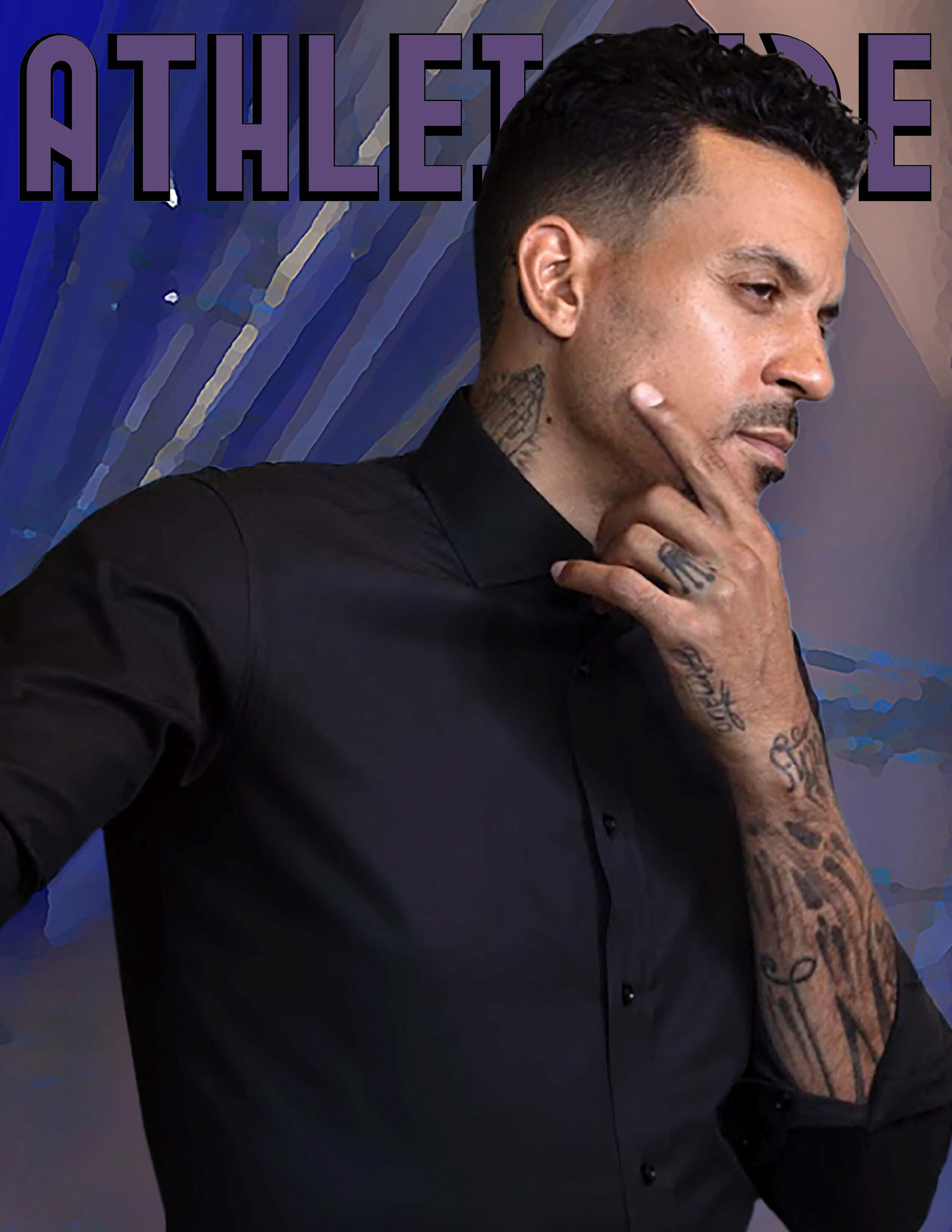

Read the June Issue #54 of Athleisure Mag and see Authentically Matt Barnes in mag.

We enjoyed talking with 4 X NBA Champion, John Salley, last year and always enjoy when we have the chance to catch up with him again. This month, we talk about gifting for dads and grads, his appearance and commentary on ESPN's The Last Dance and words of advice as we navigate what is going on at this time.
ATHLEISURE MAG: We always love being able to chat with you and love our annual Father’s Day chats while also getting your thoughts on what’s taking place at the moment!
JOHN SALLEY: I love speaking with you and thank you for having me! Hopefully I will speak with you next Father’s Day as well.
AM: It’s a date.
JS: It’s a date ha!
AM: It has been quite a year to say the least, but thankfully, we’re still celebrating and with Father’s Day coming up, what’s on your list this year?
JS: Oh my God do I have some things for you! This is the deal. I have Old Spice, they are coming out first to market with their beard conditioning set! Now you hear a lot from Old Spice talking about how it smells on you, but this – I have been sporting a beard for the last 2.5 years and I have the beard wash, beard conditioner, beard balm and I really love the beard oil as it sits around and it nourishes my beard and gives that glisten. It doesn’t look scruffy, it looks well kept and it looks organized. I love that so I’m going to tell you to get the Old Spice Beard Kit and it’s graduation season. Boys now in high school that have beards – this is going to be a big one for them too. It's not just for the dads but graduating guys as well.
I also have something else with an app that I use and get he family to use, it’s called Slickdeals. They have 12M users on the app and on the site. They vet and vote for different deals so any given time, a new deal will pop up but you know that you’re going to get a really good deal – the best of the best of the deals. They came up with a thing called the Front Page. This way, you can shop with confidence and know that you’re getting the best price. You don’t want to have to buy something and go somewhere else and see it for a less price, it makes you feel bad. You don’t run through that with slick deals. You can also take the knowledge of the community of Slickdeals and through an extension browser on Chrome and Edge, when you shop online as soon as you put the product into the cart, the code goes with it and you don’t have to look around for savings. It pops right in and it’s going to be the best deal that you can possibly get. When you go to checkout with your merchant, all of a sudden, all of the codes are in the place and you will see all of the savings. The best thing about this especially for Father’s Day is the editors over at Slickdeals have curated an unbelievable Father’s Day section so you can go in there to get tips and ideas and the best deals possible.
AM: These are definitely good things to know about especially with the quarantine going on, there are a lot of people sporting those beards!
JS: Oh I know – there is a lot of hair out there and I know! Here in California a lot of barbers and hair salons are still not open.
AM: We have been dying for our sports fix and we were so excited to see you on ESPN’s The Last Dance. How was that to be on the documentary and to provide all your insights into this show that captured everybody?
JS: It was unbelievable. I know that when they told me about it, after I did the interview they said to forget I did the interview because we weren’t allowed to talk about it. When I saw it, I was like, “wow that was a whole year ago.” I think that it was definitely needed during the pandemic because there is nothing on television to watch except for more and more of fear. Just seeing how much my friend Michael Jordan had to go through, I had no idea that he had to go through that much trauma. Having to deal with being a Bull going up against the Detroit Pistons! So I got to see the inside workings of the Chicago Bulls which we had no knowledge of. I think that if we had known that, we would have seen that as a weakness definitely. I think that they did a good job of that!
AM: With the NBA resuming the season partially as well as having the playoffs, are you excited and how do you feel about the format? Who are you cheering on?
JS: I live in Los Angelos now so I’m a LeBron – well I have always been a LeBron fan – never a Cleveland Cavalier fan. So having him wearing the purple and gold, being an established 3 X World Champion – I think it’s really important that he wins Championships here and continue the legacy. With the focus, he has had time off to – no one has had the time to grieve over the passing of Kobe, but we had time off to deal with it and time off for athletes to deal with nagging injuries of their bodies, to rest their bodies – this is the first time that this has ever happened. To be able to rest your body and not have to worry about getting traded. I think that coming back, I’m really going to be watching the Lakers to win a Championship this year!
AM: Same.
We’re huge fans of the Lakers. One of the things that we love about you is that you are such a positive person. Right now, there are so many things going on from the quarantine, protests for #BlackLivesMatter – what is a positive mantra that you are using to continue going forward that we can use in our day to day?
JS: Well I have a lot of friends talking to me – Caucasian friends asking what they can do and asking me if I see it my way and I say, this is the one time to be quiet. Don’t deal out of ego, don’t deal out of entitlement of any sort – literally listen, pay attention to each thing you say and feel. You don’t have to walk on eggshells, but check yourself to find out if you are in the right spot on this world and in the right spot in this life which is what you have to do. I say this all the time. Meditate, breathe, pray and enjoy the life that you have.
IG @JohnSalley
PHOTOGRAPHY | John Salley
Hear retired 4 X NBA Champion, philanthropist, entrepreneur, vegan and activist, John Salley on our show, #TRIBEGOALS - which is a part of Athleisure Studio, our multi-media podcast network! Make sure to subscribe to find out when the episode drops. You can hear it on Spotify, Apple Podcasts, iHeart Radio, Google Podcasts and wherever you enjoy listening to your favorite podcast.
Read the June Issue #54 of Athleisure Mag and see Something You Should Know with John Salley in mag.


As we all begin to see a number of our favorite sports come back, there is another one that we should mark our calendars for as we wait for our favorite summer sports at the Tokyo 2020 Olympic Games during the rescheduled event for next year in Tokyo. World’s Greatest Live, presented by Zenni Optical (exclusive partner that will outfit all 10 competitors with sunglasses to promote eye health with its signature Blokz line for blue light-blocking) brings the top women’s pole vaulters together. You can watch the events take place on July 16th at 6pm EST on YouTube.com/ESPN.
With ESPN, Zenni and World’s Greatest broadcasting the USA Track & Field sanctioned event where the women will compete in pole vaulting. Team USA’s USA Track & Field’s Silver Medalist Sandi Morris, is hosting the event in Greenville, SC where she created a custom runway approved for world-class events where the competition will be held. The world’s top 10 vaulters will come together for the first American sporting event to have fans back in attendance with strict safety measures that will be implemented. With 150 social distanced spectators, making it one of the first events to have fans back in attendance. All fans will be required to wear masks and temperature checked on site before being spaced in groups 12-feet apart. Each competitor will have an individual landing pad and will be spread far apart while waiting to jump in order to prevent any contact.
You can follow along on Instagram and Twitter to see what’s taking place as the event will be on July 15th and is being taped for live and will be available on July 16th at 6pm EST.
Read the latest issue of Athleisure Mag.
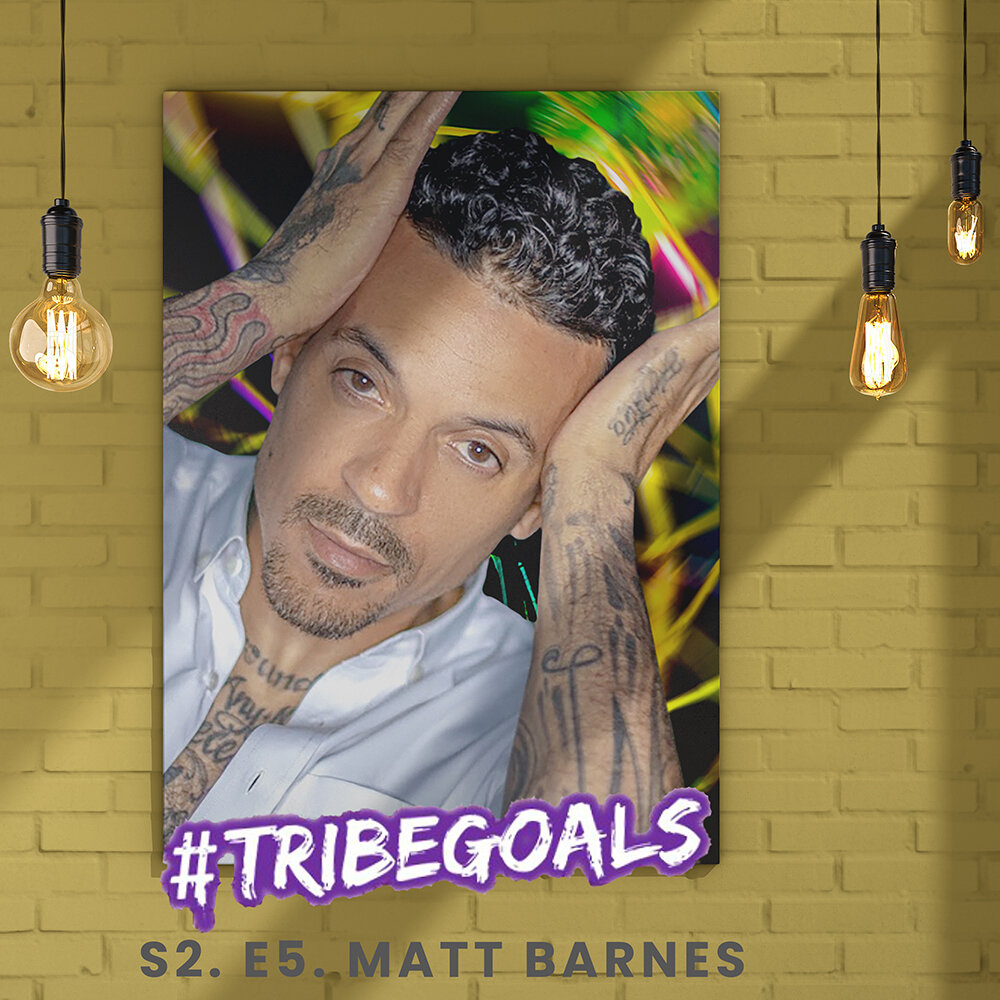
On today's episode of #TRIBEGOALS, we talk with Athleisure Mag's June cover for issue #54 veteran NBA Champion Matt Barnes who played 14 seasons in the league. His ability to bring his energy and focus to the court was seen on a number of teams from the LA Lakers, Golden State Warriors and the Sacramento Kings just to name a few. His unapologetic honesty and loyalty to himself as well as who he works with shined through on the court and continues to be seen through his philanthropy, his skincare brand HUE For Every Man, the cannabis industry, as well as his focus on social justice. With the confluence of COVID-19 and the movement of #BlackLivesMatter, he continues to be at the forefront of ensuring that voices are heard and that people understand the importance of voting at the local, state and national level for changes to be made. He has lent his voice to rallies in his hometown of Sacramento for George Floyd as well as Stephon Clark. We talk about this as well as his successful podcast All the Smoke on SHOWTIME, his enterprises and the upcoming NBA season and playoffs and the importance of sports as we navigate challenging times.
Read the latest issue of Athleisure Mag.

This month’s cover and back cover is NBA Champion Matt Barnes. Our cover shoot editorial – Authentically Matt Barnes, talks about Matt’s career, transitioning from the game, his skincare brand HUE For Every Man, the NBA season resuming and upcoming playoffs, cannabis, the importance of social justice, voting (local, state and national) and the #BlackLivesMatter movement. His interview will also be in an upcoming #TRIBEGOALS podcast episode. We also have an interview with 4 X NBA Champion John Salley in our monthly feature, Something You Should Know, as we talk about gifting for Father’s Day as well as graduating students, his appearance in ESPN’s The Last Dance and words of wisdom as we navigate COVID-19 with its quarantine as well as #BlackLivesMatter. His interview will also be in an upcoming podcast episode of #TRIBEGOALS. Charlotte Tilbury has been a brand that has been included in a number of our features as well as an interview with the namesake herself. In this month’s issue, we talk to Sofia Tilbury, her niece, who is a Brand Ambassador and Product & Content Creator at the brand. She talks about her work as a makeup artist, her work with the brand, recent product launches and her favorite products.
As usual, we have our monthly roundups including our 9LIST (Athleisure Mag’s picks that we’re loving this month in style, beauty and fitness) featured roundups. This month’s 9LIST STORI3S (picks supplied by celebrities) gives us insight into one of our favorite actresses, Laura Dern. This month’s 9PLAYLIST includes International EDM DJ/Producer Diplo who shares his favorite songs with us. As always, you can enjoy Athleisure List (Fhitting Room and Maple Leaf Farms), The Pick Me Up, Bingely Books, Bingely Streaming, Style Files, Rock This Look While You’re Working From Home in Style, Athleisure Beauty, How to Dress, In Our Bag, #TRIBEGOALS and Coconut Beauty.
Read June Issue #54 here.

Back in 2016, we interviewed 2 X Team USA Beach Volleyball Olympic Medalist April Ross after her Bronze win at the Olympic Games in Rio. Flash forward to this month's cover, we caught up with April Ross to talk about indoor vs beach volleyball, the AVP Tour and the upcoming Olympic Games in Tokyo that are slated to take place next year. We also talk about April joining the KT Tape team and how she uses her social platform to inspire and motivate her followers to stay motivated in their health and fitness journey.
ATHLEISURE MAG: When was the moment that you realized that you wanted to transition from an indoor volleyball player to a beach volleyball player?
APRIL ROSS: There was no specific moment, it was kind of a process and I had kind of given up indoor and just fell out of love with it. My big thing is that I just want to be able to enjoy my journey always. I just wasn’t enjoying my indoor journey. My teammate from USC was playing on the beach and asked me to play in some qualifying events on the beach with her to just help her out. I went out there and we didn’t do very well and I wasn’t very good, but I just fell in love with the sport of beach volleyball. I stuck with it and played it for a while, struggled for a while and I finally broke through and started to have some success and then you know, I just kept riding that wave.
AM: In your opinion, what is the biggest difference between indoor vs. beach volleyball?
AR: There are two biggest differences for me – obviously the surface, it is so ridiculously hard to move and jump in the sand – that just creates a totally different challenge in beach volleyball than when you are playing indoor volleyball. The other big difference is that you touch the ball every single play. You are involved in every single play. You can go through an entire rally during indoor and not touch the ball once. On the sand, when you want a point, you have to touch the ball. I feel like there is a lot more accountability on each player in beach.
AM: Last summer, we attended the AVP NYC Open which was a lot of fun. Obviously, you and Alix Klineman won and typically, right now you would be in the thick of the AVP schedule. How have you been spending your time since you’re not doing that at the moment?
AR: Life looks a little different right now. I’m at home pretty much all day. I’m working on some home improvement stuff that I have never had time for. That’s actually really nice. I checked out a big amount of gym equipment from the USA Volleyball Gym and I cleaned out my garage which has been full of storage stuff for the last 10 years. I created a home gym and I am able to get my full lift in there which is about 2 and a half hours. I’m going to Home Depot today to get supplies to make a wooden squat rack. Because I do a little bit of woodworking too and I am getting back into the hobby now that I have some time to explore that so I thought putting my time into making a wooden squat rack would be great. I looked at some designs online that I want to try. Working out, visioning, I’m doing a lot reading and a lot of reflectioning as well as journaling. I’ve been doing a lot of Zoom calls. I mean, everyone is doing the Zoom calls.
AM: For sure. Obviously, with the Olympics being pushed back to next year, what does this next period look like for you especially in regards to training and getting prepared for that?
AR: That’s a constant discussion with my team. We’re trying to grasp onto something in the near future that we can train for and that’s proving hard to do obviously. So, we’re kind of waiting and seeing the government guidelines are when we can get back out on the beach. We want to take advantage of this time, but it’s really hard if we can’t get out on the sand. We can do so much off of the sand, but you have to be able to practice. We’re trying to see how we can have a training camp and if we can do it safely if there is a private court somewhere and we take the proper precautions, maybe in June at some point we can get on the sand and do 3 – 4 weeks of training camp. If there is still nothing on the schedule, maybe we can take a week off. I mean, it’s tough. I’ve never ever had to do anything like this.



AM: It’s a day-by-day thing.
AR: Right, it’s literally a day-by-day thing. It’s a constant brainstorm and getting creative and with each new piece of information, it changes so we’re trying to be really go with the flow!
AM: The weekend of May 22nd, I love that you have partnered with KT Tape to do an Instagram Live event where we can train like an Olympian, actually work out with you and get off of our butts to get a good workout in. Why is this so important for you to participate in this?
AR: I’m really excited for this KT Tape Instagram Live workout. Because I’m not playing and I can’t really interact with fans to encourage and motivate people through my competitions and stuff, I love doing this and engaging people and helping them while they’re at home. Maybe I am creating a little bit motivation or making it a little bit easier for people to have access and information on how to work out and to stay healthy during this time – as well as how to do it while you’re staying at home. I feel like I’m still of service in some way and I just really like to have some kind of positive influence on whoever decides to follow me on social media. I don’t want it to just be “look at me – look at what I’m doing.” I want to give back and I want to help people accomplish their goals and to stay healthy.
AM: You just joined KT Tape earlier this year. What is it about the brand that is such a great synergy with you and how you operate?
AR: I think KT Tape is essential to being an athlete, to staying healthy in general especially in this time. I don’t have a lot of access to physical therapy and therapists. That’s essential to my program and to staying healthy as I have these aches and pains. Because I have KT Tape, I’m able to use that to support my joints and my muscles. All of last season, it was huge as it was for qualifications. I strained my quad early on in the season and it was kind of a big factor and without being able to use KT Tape and tape it all summer, I think I would have been in so much more pain. I had to tape it through World Championships and all through our biggest tournament. Throughout my whole career, I have leaned on my ability to tape myself and literally keep myself together – so it’s a natural fit. As I get older, I need it more and more.
AM: What kinds of workouts will you be including for your Instagram Live with KT Tape?
AR: Well it’s going to be a shoulder stabilization and strengthening workout. I’m trying to think of things that maybe people have not hit so far and that there aren’t a lot of information on. I think that a lot of us are probably on the couch a good amount hunched over and we’re sitting on the computer a lot with Zoom calls. To try and rectify our posture a little bit, I’m going to touch on that stuff.
AM: Who have been 3 people that have inspired you in your career whether you know them personally, follow them online etc? We like asking our changemakers this question as it’s a key one for our podcast #TRIBEGOALS.
AR: Oh wow! People that have inspired me – I would say that one person who has really helped me get through this time is Glennon Doyle. I’m reading her book and she does little Instagram TV videos daily. I love following her. I have recently been inspired by Megan Rapinoe and how vocal she has been for everything, that is amazing. Then, Dr. Michael Gervais – he is a sports psychologist. I was on a panel for Victoria Garrick, she played at USC and is kind of a mental health advocate. She has me, another athlete and Dr. Gervais on to speak to her and her following. Just listening to him, he gave me a lot of ideas that I could be doing in this time to kind of just get my vision right, my mission, my life philosophies etc. so that when we get out of this, I’m all in alignment – spiritually. He’s definitely someone that has influenced me as well.


PHOTOGRAPHY CREDITS | PG 16 - 21 + 29 Rich Graessle/Icon Sportswire | PG 22 - 27 + 30 KT Tape - Editorial Design by Athleisure Mag |

Hear 2 X Team USA Olympic Beach Volleyball Medalist, April Ross on our show, #TRIBEGOALS - which is a part of Athleisure Studio, our multi-media podcast network! Make sure to subscribe to find out when the episode drops. You can hear it on Spotify, Apple Podcasts, iHeart Radio, Google Podcasts and wherever you enjoy listening to your favorite podcast.
Read the May issue of Athleisure Mag and see To the Beach with April Ross in mag.

We're all settling into new routines and we caught up with WBA's 18-0 flyweight champion, Seniesa "Superbad" Estrada who is taking the boxing world by storm by breaking barriers one fight at a time! We took some time with Golden Boy Promotions' boxer as she is in the midst of training for her July match. She shared her journey through the sport, her passion that began for it when she watched with her father as well as how she stayed focus despite obstacles that stood in her way. We also talked about her partnerships as well as having the support of Danny Trejo noted actor of Machete and Predators as well as restaurateur of Trejos Tacos. She even shared how she wants to give back to her community and those with an interest in boxing. Finally, she shares how she has set up her training as we continue to live in these uncertain times.
ATHLEISURE MAG: When was the moment that you realized that you loved this sport and that you wanted to be involved in it?
SENIESA ESTRADA: When I was about 6 years old, I believe. I would watch boxing fights with my dad. My parents divorced when I was 1. The only time that I would see my dad was on the weekends and I would go over to his house. Every weekend, there would be a big Pay-Per-View fight that was on. He would order it for us to watch or we would just watch a classic boxing fight from an old tape that he had – Sugar Ray Leonard, Mike Tyson – all the great fighters. The first moment that I watched the fight, it would intrigue me and everything just made sense to me and I knew that that was what I wanted to do.
AM: When did you actually start and who was your coach?
SE: I started when I was 8. From the age of 6 that’s when I watched it and I really wanted to box. I spent 6-8 months just asking him if we could go to the gym and start boxing. But he was totally against it. I remember when I would ask that he would tell me that boxing was for boys and I could do cheerleading or something like that. I remember thinking, “cheerleading – that’s so boring.” My brothers played baseball from t-ball all the way to high school. I was always at the park with them and I loved baseball, it is my second favorite sport. Even for baseball, he was against that too as he felt that that was for boys.
The very first gym that I went to was just a little outside of East LA and my dad walked into the gym and the trainer said, “oh she’s too young and we usually work with people who are 13. Bring her back when she is 13 – plus she’s a girl and we don’t really train girls.” My dad got in the car and he told me what the trainer had said and I started crying. At that point, my dad realized how much I really wanted to start boxing and he took me to a local gym in the neighborhood that he grew up in at the Colmbacke center and it’s a great place with a boxing program free for all kids and it was an awesome place. The very first trainer that I had when I walked into the gym, I remember that he said, “you want to box?” The gym was filled with little boys and I was the only girl in there. He said, “ok I’m going to train you, but I’m going to tell you right now that I am going to treat you just like one of the boys. I’m not going to treat you any different.” I said, “ok” and we started from there and I haven’t stopped since.
AM: That’s a great story and at what point did you decide that you were going to go pro and what led to that decision?
SE: I would say when I was 16, I won the USA National Championship which ranked me #1 in the US. The first Women’s Olympic Boxing was going to be in 2012 which was 3 years later. At that point, I had had over 100 amateur fights already. I wasn’t sure - I didn’t want to wait another 3 years. I was tired as I had been doing a lot of traveling for tournaments. I also fractured my toe – I dropped a weight in the gym on it. The toe kind of kept me from being able to compete and there was just a lot going on from the injury as well as waiting 3 years so I decided to turn pro. Turning pro, I didn’t realize how the transition was different. When you’re in the amateurs, there is pretty much a tournament every month and you’re fighting constantly. When you turn pro, it’s not like that. Especially for women, now it’s great, but back then it was different. It was difficult to get a fight, it was difficult to get signed by a big promoter. I was fighting every 7 months and sometimes, every 8 months. So I didn’t realize how different the transition was and how dead women’s boxing was. Just to see the change now – the difference, that change has only taken place in the last 2 years. It’s insane to see the difference of where boxing was 5 years ago vs. today. It’s only getting bigger and better now which is something that I am looking forward to in the future.

AM: To know that it has only been in the last few years that these changes have taken place is really interesting. In doing our research of you as a female fighter, being Mexican-American, winning the women’s Golden Gloves match, being signed under Oscar de la Hoya’s Golden Boy Promotions – you have had so many firsts that you have broken through. What was your motivation to continue to play the sport with all of these things that could have impeded you from breaking through?
SE: My motivation, I would say that there were so many times that I wanted to give up. I knew that I didn’t want to live my life wondering if I could have done it if I gave up. That was the biggest motivator for me and kept me going.
AM: What is a typical training session like for you normally and since we’re all staying in due to COVID-19, how have you modified those kinds of things to stay fit?
SE: Typical training, I would do strength and conditioning for 1 hour to an hour and a half. Then I would go to the boxing gym and I would be there for about 3 hours. But now, it’s been a little different of course. We have been running at the parkas well as training there. I have also trained in my dad’s backyard. We got as much equipment as we could out of the gym to the backyard. So we’ve been doing that. It’s a lot different not having a boxing ring and easy access to everything, but I was talking about it with my trainer. We’re getting ready for a fight that is supposed to take place in July – what we’re getting ready fo. We’re not able to spar but I have been through so many training camps where I couldn’t get any sparring and I only sparred 6 rounds during the whole training camp which is insane. So all of the little obstacles that I have dealt with throughout my career this isn’t difficult because I have been through this before as it comes to training. We actually didn’t have a gym for awhile years back. So we trained at the park so I have done this before.
AM: What is it like on fight day for you? Are there certain routines that you have leading up to the fight?
SE: I would say that he day of the fight, I just like to be left alone. I don’t really like to have friends or family around me. I don’t like to talk. I just want to stay focused and be by myself on the day leading up to the fight. I get very nervous. So many people are surprised to hear that I get so nervous because it doesn’t show especially when I get into the ring – it doesn’t show.
Having so much amateur experience and just being as good as I am, people don’t expect that from me. But I do, my hands are just dripping in sweat and I don’t eat. I mean, you’re supposed to eat a good breakfast of course which is good for the body and to have lunch if you can, but I get so nervous that I can’t eat that much the morning of or anything.
AM: Who have been your mentors in this sport?
SE: I would say, my dad. Because he’s been through so much personally and has overcome so much. As far as him being in and out of prison, addicted to drugs and changing his life. He’s been my number 1 supporter and has always made sure that I have never gave up and I always continue to have faith in myself and faith in God. He is the one person that no matter how down I’m feeling or no matter what it is that he is there to lift me up and to put my head in the right place.

AM: You have had a phenomenal career, you’re 18-0. What do you think about that and what are your goals that you want to do in the sport as you have such a dynamic career?
SE: In the sport, I just want to continue to elevate the sport of women’s boxing to be better. It won’t be easy for all female fighters, but all I can do is continue to accomplish my goals and for people to see me and recognize me so that they can be more open minded to watching women’s boxing and supporting other women in the sport. Of course, my goal is to win multiple titles in 3 different weight divisions – which is definitely something that I want.
AM: We know that you signed with RVCA the SoCal sportswearbrand, you have partnerships with Ladder – why are these great fits for your brand and are there others that you will be apart of as well?
SE: RVCA is a great fit for me because, it’s difficult to find a brand that really supports you no matter what during the ups and the downs. I feel that there are a lot of sponsors and brands that will only want to work with you when you’re at the top and winning. RVCA has been with me even before I had a deal with them. They supported me and have always been there. Pat, who is the owner of RVCA, the way he’s so genuine and that’s what really got my attention. It was the kind of brand that I wanted to work with and the kind of relationship that I wanted to have. I didn’t just want to wear the clothing and represent them. i wanted a relationship and to have a feeling of loyalty. That’s what stood out to me about RVCA and why I liked the brand, the people, the athletes and those who work for them. Everyone is just really good people and that’s what I appreciate about RVCA. Ladder is a great company and they have been great to work with and I love the products. I have always had a hard time finding supplements that I liked. Supplements that are actually working – I have never really felt that until I found Ladder and everything tastes good which is very important and it works.
AM: That is the perfect combo. You also have a sponsorship or partnership with Danny Trejos? We love his taco destination, Trejos Tacos, his movies and his personality. How did that happen and has he given you any advice on staying motivated?
SE: He’s great! Daniel my publicist, actually worked with him when he was at the LA Rams and introduced me to him as they became close friends. He’s amazing and super supportive. He is someone that is just great to have and genuine as he cares for his close friends and his family. I am grateful to know him. I would tell people – because they ask me, “how is Danny?” I always tell them an example. If he is doing an interview, he would invite me to come along with him so that we could talk about me. Every week, I will get a random call from him on a Mon or a Wed. I would say, “hey what’s up.” I would wonder what he needed. He was like, “nothing just checking up on you.” A call to check up and not because he wants to say something or wants something specifically. I don’t even have friends or family that do those calls that are just to check up! Everytime I tell people that, they find it interesting. No matter what he has going on or movies that he’s in, he still takes the time to think about people that he cares about.
AM: When you look at goals as a brand or things that you want to be involved in to add to that – what do you envision for yourself whether it’s in the sport or an adjacent area?
SE: As far as outside of the ring, I’d like to motivate those that are in the inner city and communities that I grew up in. I’d like to open up a gym in a community like where I grew up in. I know that a lot of gyms are expensive now. Being able to start boxing back at home in the community center that was a free program. My parents couldn’t have afforded being at a gym where there was a monthly fee and I know how important that is. Especially when there is a family that 3 or 4 kids that want to box – it’s not easy to pay $125 for each kid for a gym fee. I’d like to open a gym close to my community, have it affordable and classes for counseling. That way, everyday that you’re going to the gym, it’s a place where you can feel comfortable to talk about what is going on in your life and around you.
AM: I think that it’s awesome that you would want to create that in order to merge that balance between athleticism and mental health!
SE: I think it’s really important for kids and the community to find someone or a place where they are really comfortable speaking about these things going on in their life. AM: You were saying that you are training for the fight taking place in July. Is there a place that we should keep an eye out for on your social? SE: Yes! We’re looking at July. I think Golden Boy hasn’t said a date but I know their first boxing fight will be then. So I’m just preparing for that on any date in July.
PHOTOGRAPHY COURTESY | Seniesa "Superbad" Estrada

Hear 18-0 WBC boxer, Seniesa "Superbad" Estrada on our show, Bungalow SK - which is a part of Athleisure Studio, our multi-media podcast network! Make sure to subscribe to find out when the episode drops. You can hear it on Spotify, Apple Podcasts, iHeart Radio, Google Podcasts and wherever you enjoy listening to your favorite podcast.
Read the May Issue of Athleisure Mag and see She’s Superbad with Seniesa Estrada in mag.