
Most weight loss programs still rely on a simple bathroom scale, and that's a problem. Body Composition Tracking Scanners tell a completely different story than scale weight alone, separating fat mass from muscle, flagging visceral fat risk, and giving clients real data to act on. The challenge is consistency across hydration states, client education, and upfront costs that can feel steep. After reviewing clinical validation records, client case studies, and real-world facility feedback, this guide breaks down the top three options worth considering.
Behind the ranking
Public information shaped every placement here, including product documentation, verified case studies, reviews from review platforms, and official company websites. Only companies with a demonstrated track record in the fitness technology space made the cut. Each one had to show real-world adoption, not just marketing claims.
→ See the full research breakdown
In Body USA - Best for corporate wellness programs, fitness clubs, and medical facilities
Mediana Global - Best for medical device manufacturing and AI-integrated health monitoring systems
Evolt Health - Best for gym chains and fitness facilities seeking body composition analytics
The Real Impact of Body Composition Tracking Scanners
Choosing the wrong scanner doesn't just affect data quality. It affects client trust, program outcomes, and retention. The main challenge most facilities face is measurement reproducibility, as body composition readings vary with hydration, time of day, and test conditions. Without a clinically grounded device, those fluctuations can appear to be real progress or real regression when neither is actually true.
Educating clients to look past the scale is the other hill to climb. When someone sees a visceral fat rating or a skeletal muscle mass reading for the first time, they need context, not just numbers.
The right scanner closes that gap. It gives coaches and clinicians data that holds up, session after session. And when body fat percentage accuracy sits within a tight variance of the DEXA gold standard, and skeletal muscle mass precision is measured reliably in kilograms, those numbers carry real weight in program design and client conversations.
3 Top Picks at a Glance
Note: All data in this table is sourced from review platforms and the official websites of the listed companies.
| In Body USA | Since 1996 | Cerritos, California |
| Mediana Global | Since 1993 | Seoul, Korea |
| Evolt Health | Dince 2015 | Gold Coast, Queensland, Australia |
In Body USA - Best for Clinically Validated Accuracy Across Wellness and Medical Settings
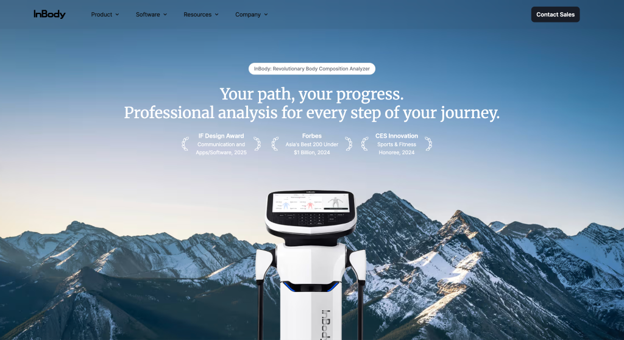
PHOTO CREDIT | In Body USA
What Services Does In Body USA Provide?
InBody USA builds advanced body composition analyzers using DSM-BIA technology and an 8-Point Tactile Electrode System. Their devices deliver a full body analysis in under two minutes, measuring body fat percentage, basal metabolic rate, skeletal muscle mass, and muscle balance. For any facility that needs an accurate body composition scanner backed by clinical validation, InBody is the name that keeps coming up. Their product line spans professional-grade clinical analyzers, consumer scales, and wearables, making them one of the few companies that cover the full range of measurement contexts.
What Sets In Body USA Apart from Body Composition Tracking Scanners?
The gap between consumer BIA devices and clinically validated analyzers is wider than most people expect. InBody closes that gap by being the only BIA device validated at 98% accuracy against DEXA by Mayo Clinic. That kind of clinical endorsement is rare in this space, and it's exactly what facilities need when clients are making decisions based on the numbers.
Real User Sentiment:
From what the case studies show, InBody has earned real trust at scale. Over 200 Restore Hyper Wellness locations, elite facilities like Michael Johnson Performance, and medical facilities like Cincinnati Children's Hospital all run InBody devices, and that kind of roster doesn't happen by accident. When medical facilities and elite performance centers both rely on the same device, that says more than any product page ever could.
2. Mediana Global - Best for AI-Integrated Health Monitoring in Clinical and Emergency Settings
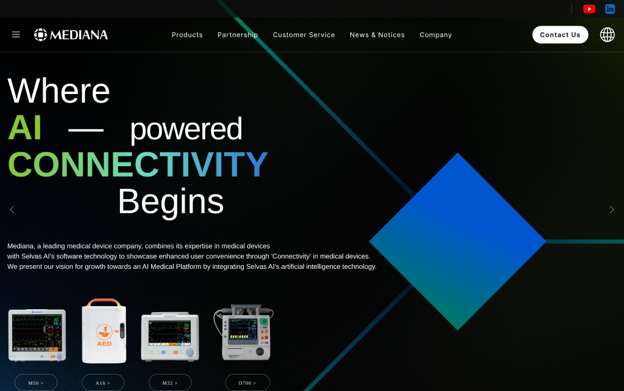
PHOTO CREDIT | Mediana Global
What Services Does Mediana Global Provide?
Mediana Global designs and manufactures Automated External Defibrillators, Patient Monitoring Devices, emergency medical systems, and body composition analyzers. Operating since 1993, they bring over three decades of medical device manufacturing experience into their product line. Their partnership with Selvas AI adds a software layer that connects devices for real-time data sharing and remote monitoring, which is a meaningful differentiator for facilities that want health data to move quickly and cleanly.
What Sets Mediana Global Apart from Body Composition Tracking Scanners?
Most device manufacturers focus on hardware alone. Mediana integrates Selvas AI's software stack directly into their ecosystem, giving operators a connected view of health signs and body composition data in real time. That combination of 30-plus years of manufacturing depth with modern AI connectivity is harder to find than it sounds, and it puts Mediana in a strong position for facilities that need both measurement and monitoring in one system.
Real User Sentiment:
Mediana's reach across 80 countries and 2,500-plus clients gives a clear signal that their technology performs reliably in diverse clinical environments. They've built trust in markets where medical device standards are strict, and adoption doesn't happen without proof. That kind of international validation (not cheap to earn, by the way) tends to reflect consistent product quality across conditions.
3. Evolt Health - Best for Gym Chains Seeking Fast, Connected Body Composition Analytics
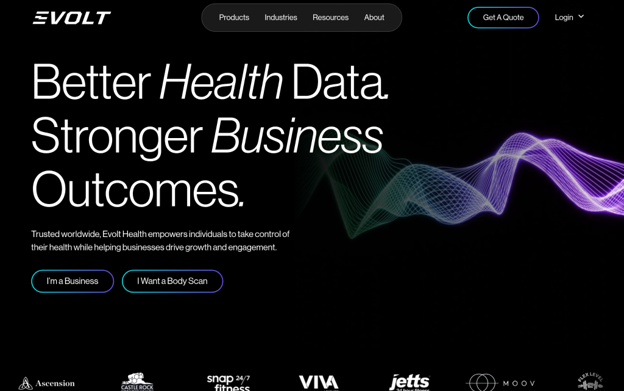
PHOTO CREDIT | Evolt Health
What Services Does Evolt Health Provide?
Evolt Health offers body composition analysis through its Evolt 360 analyzer, which measures over 40 body metrics in 60 seconds using medically graded BIA technology. Their ecosystem connects the hardware to the Evolt Active App and Evolt Insights Dashboard, giving gym operators and individual clients a continuous loop of data, progress tracking, and personalized recommendations. Major gym chains, including Anytime Fitness, Curves, and Body Fit Training, run Evolt devices, and the company generates most of its revenue through B2B machine placements across three continents.
What Sets Evolt Health Apart from Body Composition Tracking Scanners?
A lot of fitness facilities end up owning a scanner without any real system around it. Evolt solves that directly by wrapping hardware inside a fully connected ecosystem that keeps clients engaged between scans. Their proprietary Bio Wellness Index metric gives members a single benchmark to follow over time, which does a lot of the client education work that most facilities struggle with on their own.
Real User Sentiment:
Evolt has been named one of Australia's Most Innovative Companies two years running (2025 included), and their Evolt Active app picked up a Best Designed Mobile App award. Back-to-back recognition is the kind of signal that's hard to fake. The product quality is consistent enough to earn industry notice, not just client adoption.
How These Were Chosen and Verified
Gathering Information at the Outset
The research started by pulling together a broad list of body composition scanner companies from fitness technology directories, product review platforms, and publicly available case study archives. Company websites were reviewed for product documentation, feature depth, and market positioning. The goal at this stage was range, capturing enough options to make meaningful comparisons later in the process.
The Shortlisting Pass
Options without verifiable real-world deployment were removed first. Review patterns were analyzed across multiple platforms to identify consistent feedback versus isolated claims. Companies that showed strong adoption numbers in their marketing but little evidence of sustained client relationships didn't make the cut. What remained were providers with documented use cases and a pattern of repeat business.
Verification Pass
Each company's stated capabilities were cross-referenced against available third-party reviews, published case studies, and facility-level feedback. Where a company claimed clinical-grade accuracy or enterprise-scale deployment, that claim was checked against named facilities, award records, or published partnerships. Any gap between what a company said and what the external record showed flagged that option for closer review.
Industry Recognition and Authority
Award histories, peer-reviewed citations, and mentions in fitness and medical technology publications were factored into each company's profile. Recognition from credible industry bodies (think design awards, rankings, and clinical validation studies) carried more weight than self-reported metrics. Companies that appeared consistently in external records, not just on their own websites, ranked higher in overall authority.
Evidence Specific to Body Composition Tracking Scanners
The final pass focused on body composition scanning credentials. This included looking at dedicated product pages, verified facility reviews from fitness and clinical operators, and case studies tied to real outcomes. Companies that could show longitudinal tracking adherence, scan volume at scale, or documented accuracy relative to gold-standard methods received the strongest consideration. Broad health technology companies without body composition scanning evidence were excluded, regardless of their overall market size.
What to Look For When Choosing Body Composition Tracking Scanners
Selecting the right body composition scanner comes down to more than specs on a product page. The device needs to fit the facility's population, workflow, and long-term tracking goals. Here's what actually matters when evaluating options:
Industry/Domain Experience: Look for companies that have deployed their devices in settings similar to yours, whether that's a medical clinic, gym floor, or corporate wellness center. Years in the field and named client deployments carry more weight than broad claims.
Features and Service Details: Go beyond body fat percentage. The best scanners measure visceral fat area, skeletal muscle mass, and segmental muscle balance, and pair that data with software for client reporting and longitudinal tracking.
Pricing Structure: Clinical-grade scanners carry a higher upfront cost (think enterprise pricing for DEXA-adjacent accuracy). Understand whether the model is a one-time purchase, subscription, or revenue-share placement before committing.
Results Measurement: Ask how accuracy is validated. Devices benchmarked against DEXA or hydrostatic weighing, and published accordingly, give facilities a defensible baseline for client conversations.
Industry Knowledge and Compliance: Confirm that any device under consideration meets FDA 510(k) clearance or relevant CE marking standards. For medical and clinical settings, ISO 13485 alignment and HIPAA-compatible data handling matter too.
Final Take
Body composition scanning is no longer a luxury feature for high-end facilities. Clients want data that goes deeper than scale weight, and facilities that provide it see stronger retention and better program results. InBody leads on clinical validation, Mediana brings AI-connected monitoring to the mix, and Evolt delivers a fast, gym-ready ecosystem. The space is growing, and the gap between standard BIA and clinically grounded scanning is only going to matter more as client expectations rise.