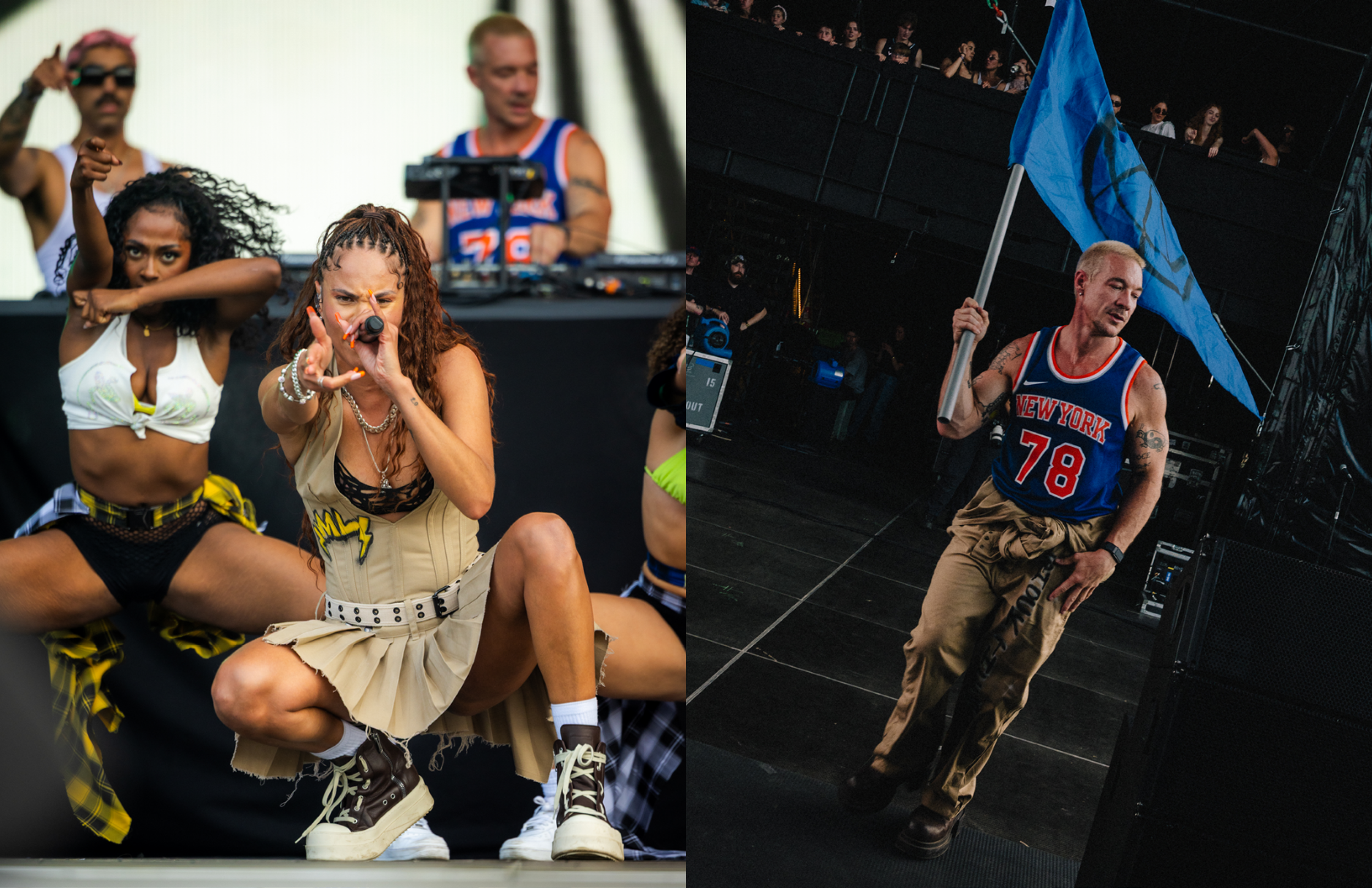
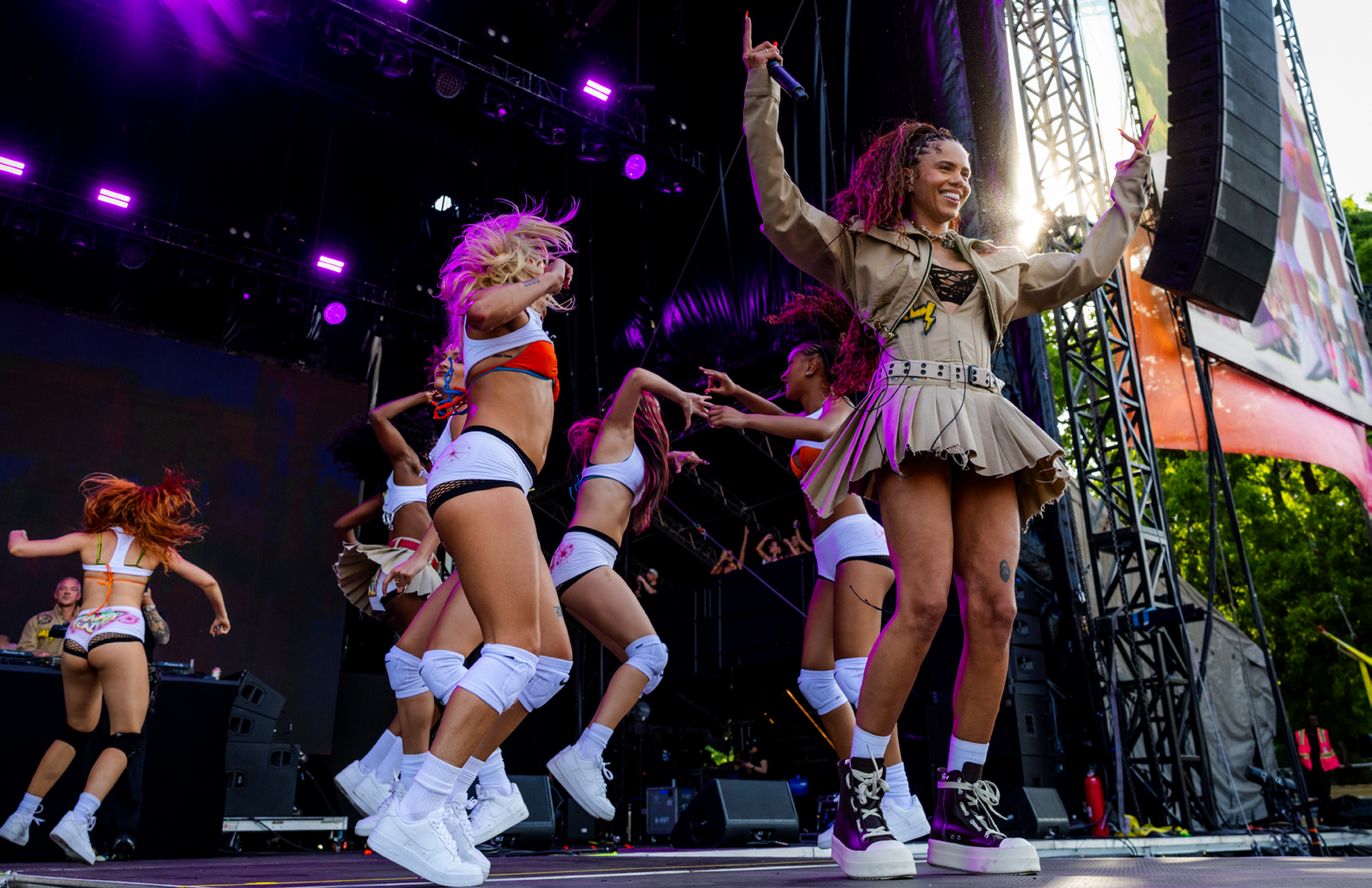
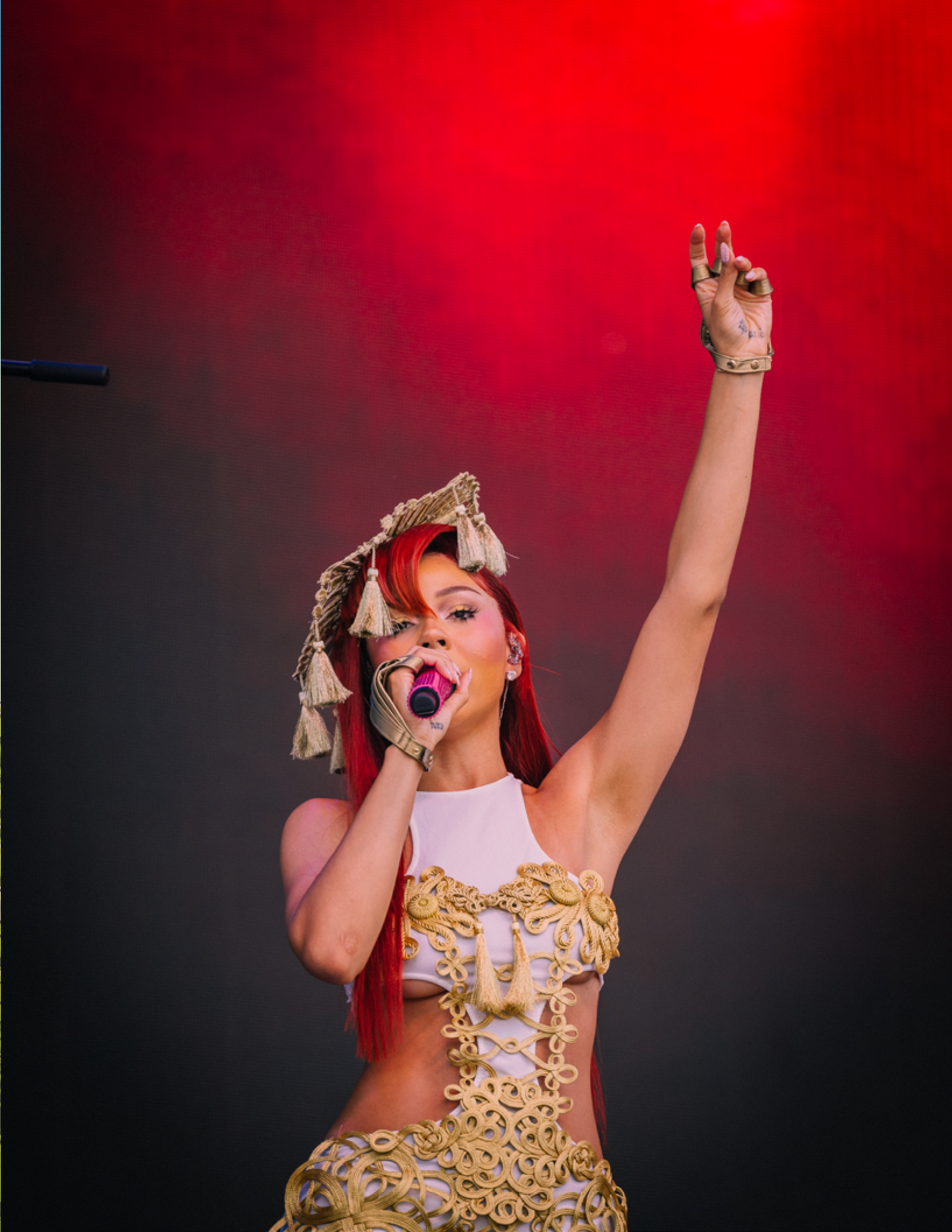
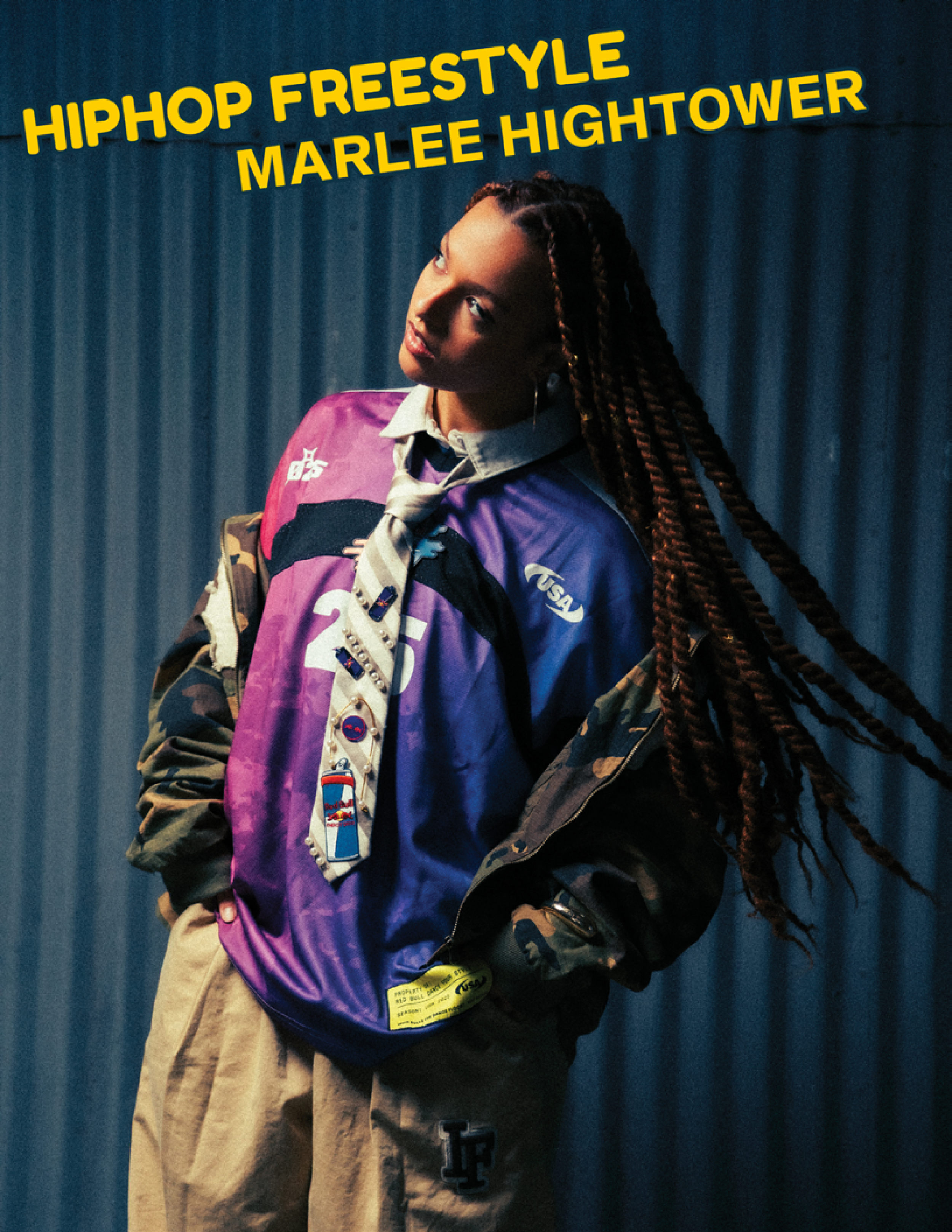
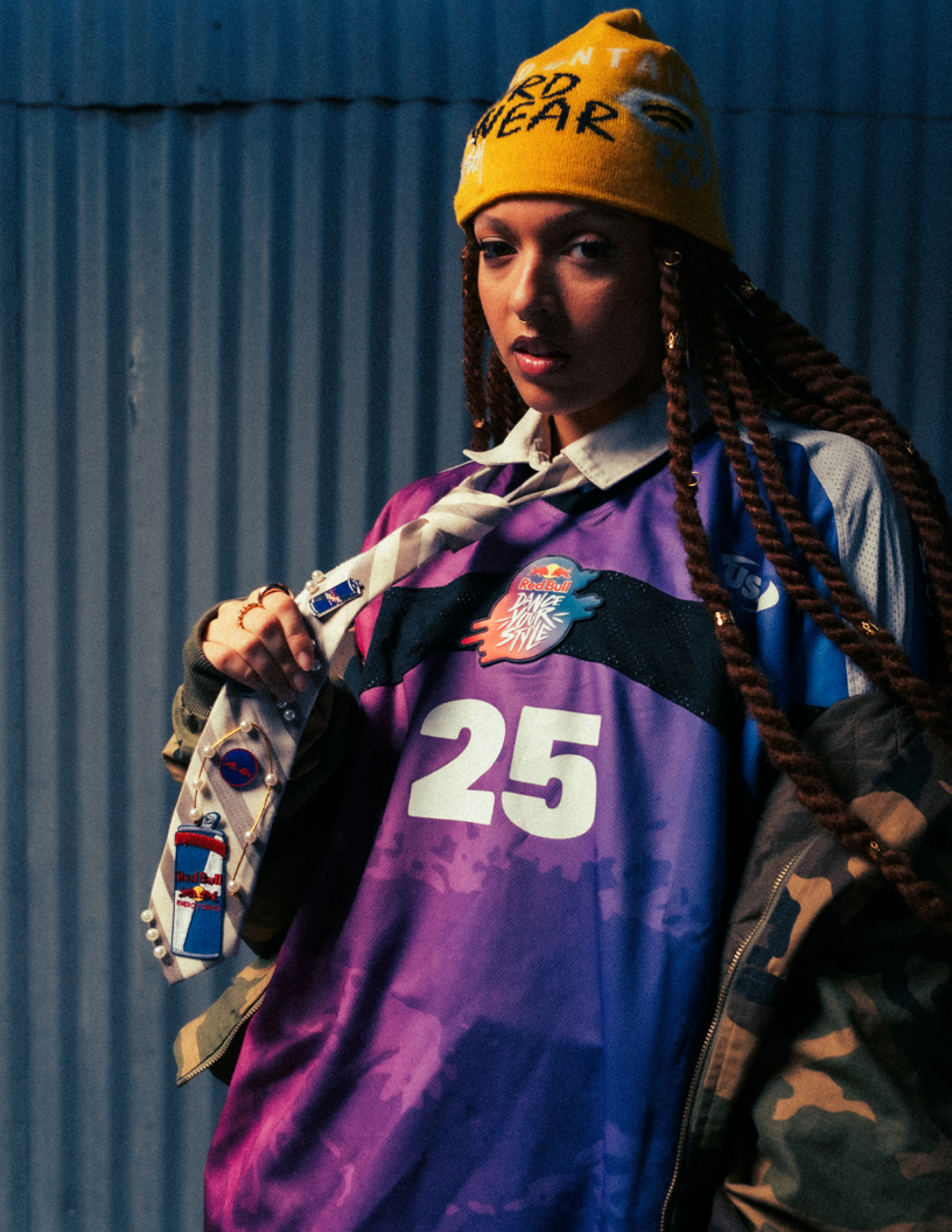
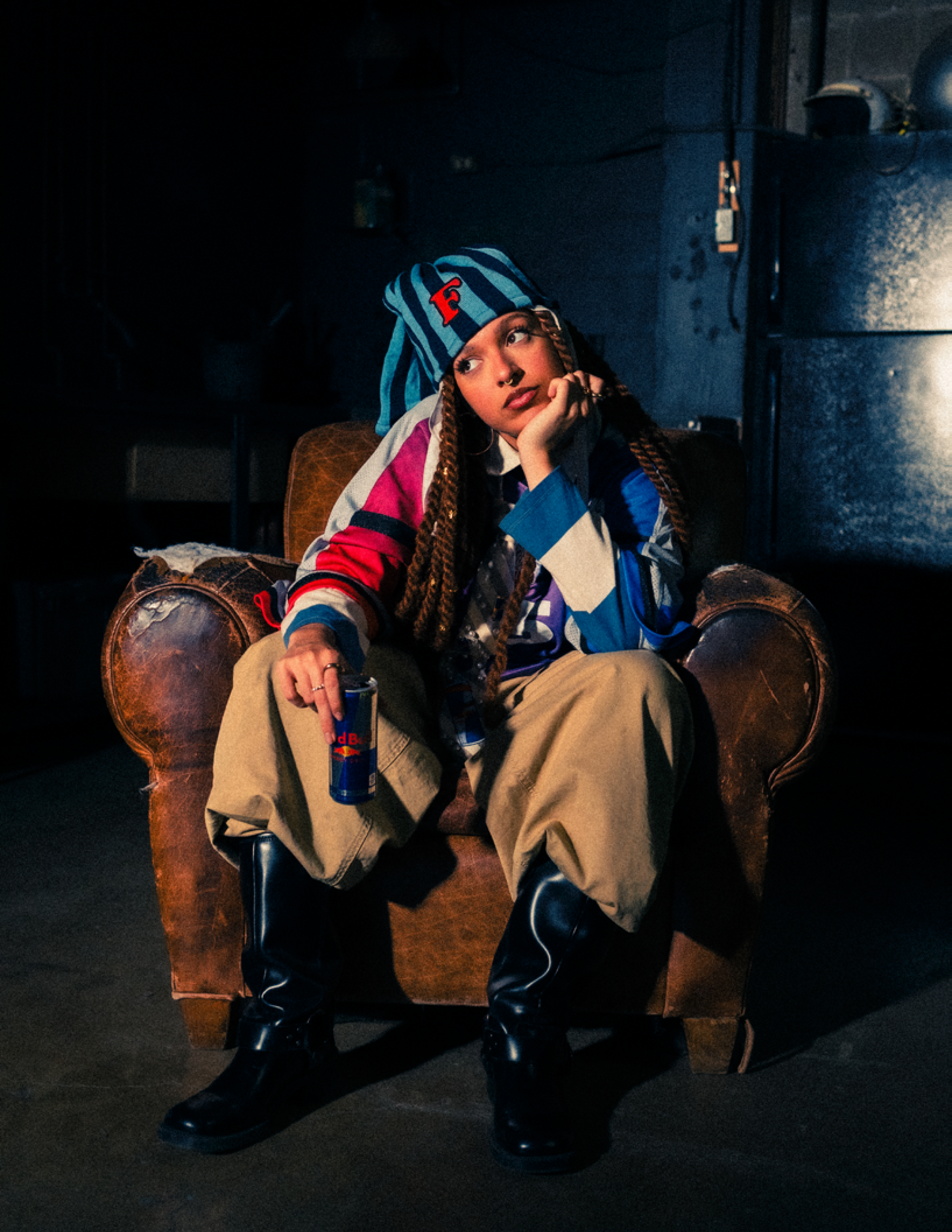
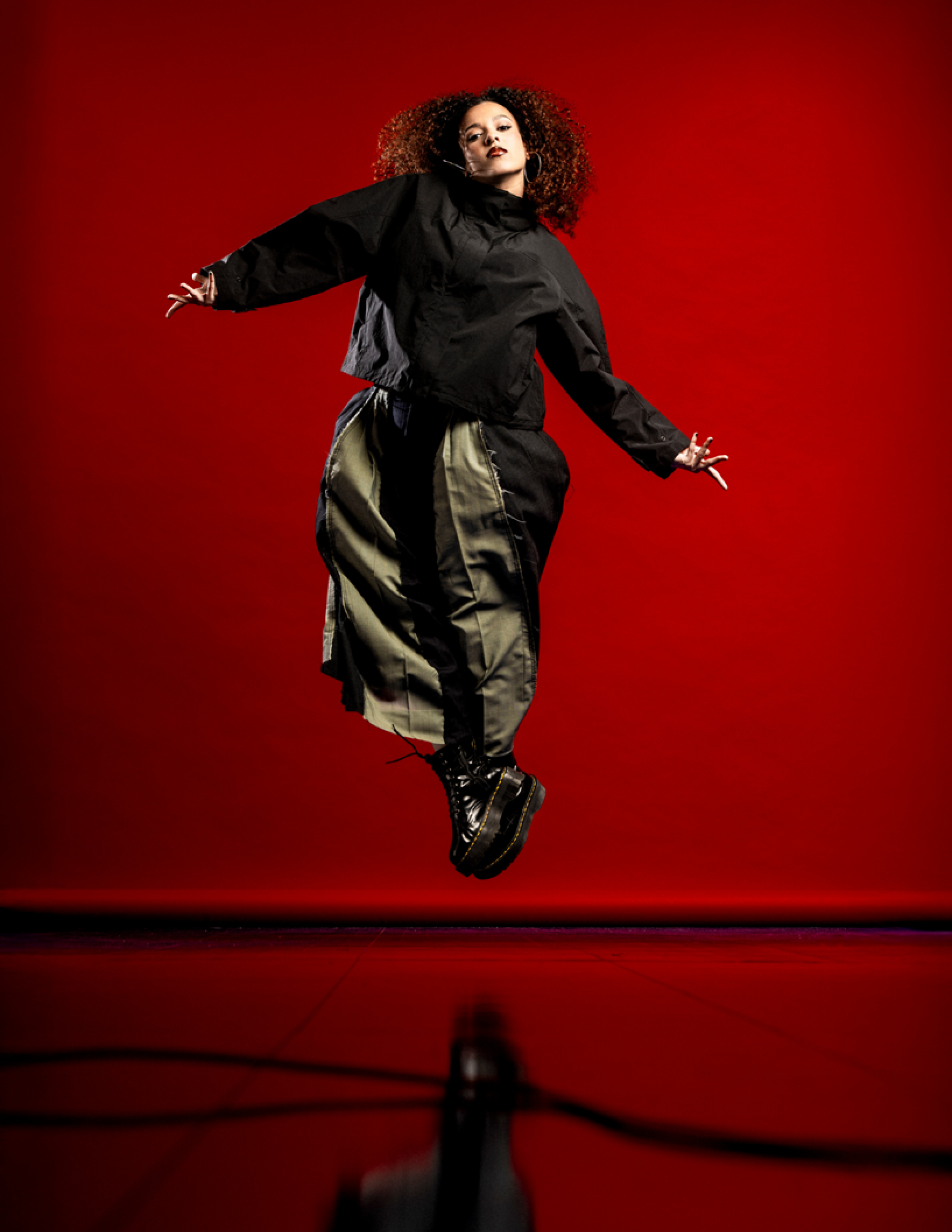
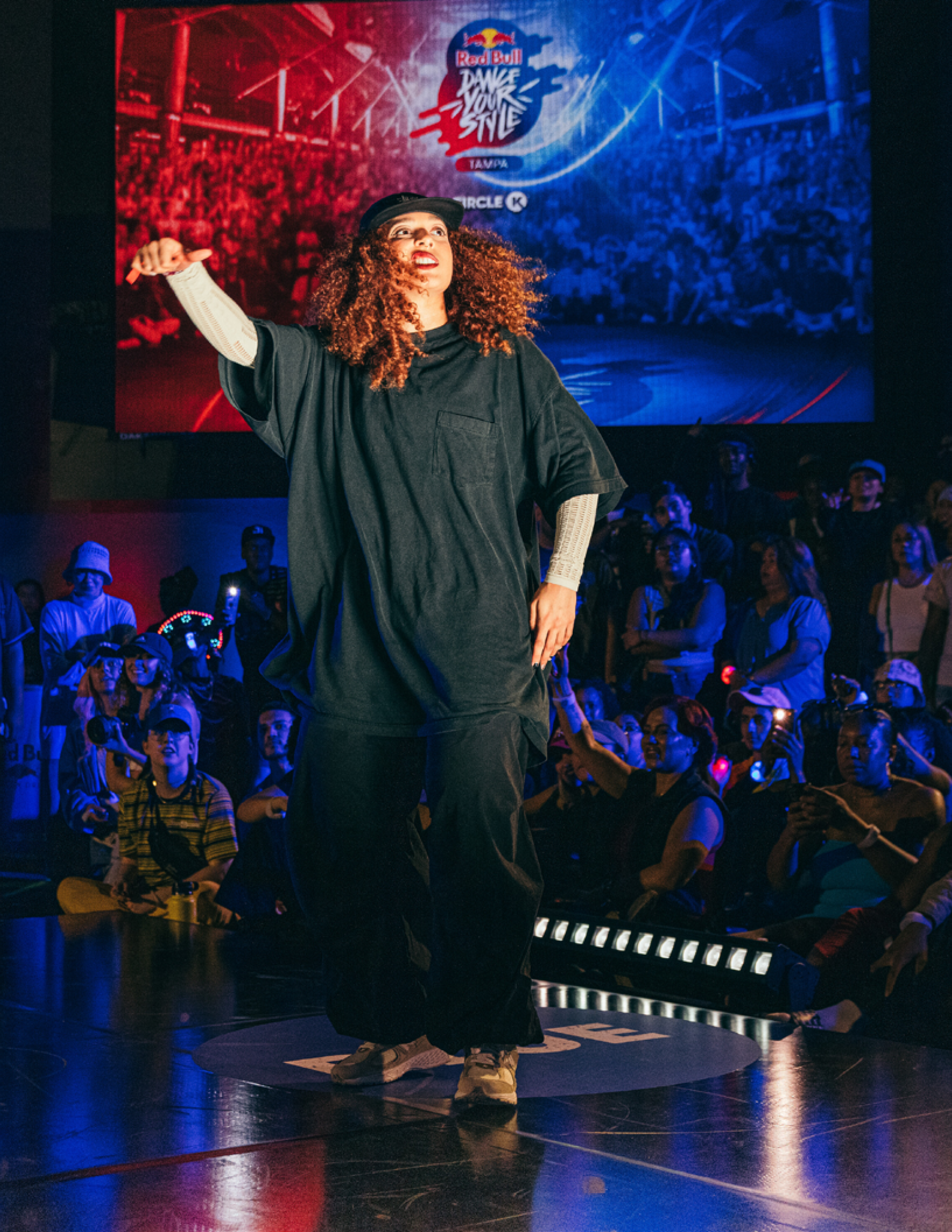
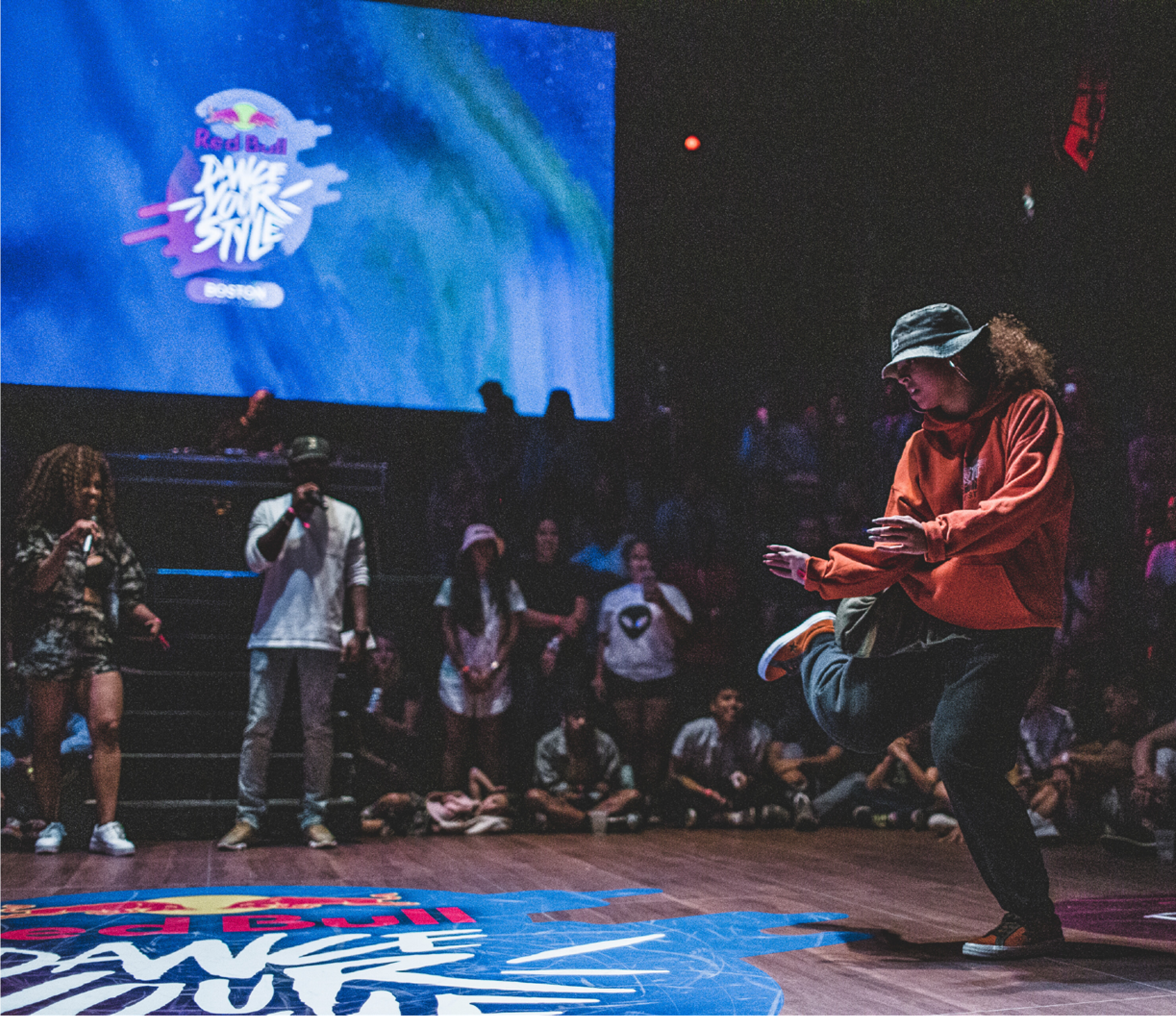
We always enjoy highlighting artists that are focused on what they create and how they make others feel. Red Bull dance athlete, Marlee Hightower has been in a number of competitive dance shows from World of Dance, America’s Got Talent, and more. From a young age, she has been working in the industry as a Choreographer and Movement Director. Her work can be seen among an array of luminaries in the industry that include Coldplay, Janet Jackson, and Pharrell Williams. She also has her MOTIV Dance Studio that she founded as well as her MOTIV Crew that works with her throughout the world. We sat down with Marlee to talk about her love of hip-hop. dance, how she approaches taking on her projects, and much more!
ATHLEISURE MAG: When did you fall in love, you know, with dance?
MARLEE HIGHTOWER: For me, I started dance when I was really little. My mom put me in dance when I was 3. So I kind of grew up into it. I don’t feel like there was this specific moment for me more so that it has just been such a big part of my identity and it’s just been a big part of who I am!
AM: What style of dance did you start with? I started at 3 with tap.
MH: Really? I did hip-hop.
AM: Oh wow so it has always been hiphop?
MH: I started out doing a little bit of everything. But, I took my first hip-hop class when I was 6. And I was like, this is what I want to do.
AM: Who is, the first dancer or show that made you realize that this is something that you wanted to do?
MH: Honestly, Beyoncé.
AM: Nice!
MH: I was, like, I’m gonna be Beyoncé. I was a kid, but I could have sworn it would be her. She was incredible and honestly the Step Ups. I was obsessed with Step Up 2. I was obsessed with the moves, it was my everything.
AM: What drew you to hip-hop and how do you define yourself? Is there a sub style even within hip-hop dance?
MH: I feel like with hip-hop, it’s interesting because there is like a very foundational version of hip-hop.
AM: Right.
MH: I think that over time, especially in the choreography space, like it has evolved and even in freestyle - it has evolved. You know, you have other styles coming into play, even in New York, you have, light feet and stuff like that.
So, yeah, there’s like, umbrellas. For me, I grew up listening to a lot of like old school, hip-hop - A Tribe Called Quest, Slum Village, and Mos Def. That’s like so much a part of who I am and even my family. My dad’s a graffiti artist.
AM: Oh wow!
MH: So hip-hop culture as a whole has been like very much a part of my life, so it just feels natural for it to also showcase itself, in my dance.
AM: When did you realize that this passion for dance should also be a career for you?
MH: I started dancing professionally at a very young. Like my first commercial, I did when I was 7 years old, then I went on America’s Got Talent. I made it to the top 10 when I was 10 years old. So, I’ve been working in the industry for a really, really long time. And then I opened up my dance studio in Orlando with my father when I was around 15. I started teaching consistently then and I think that honestly through that and honing my skills in that regard, I started taking ownership in a way that I hadn’t done before. Whereas before, I was just a kid. I think that through having the studio and running my MOTIV crew and just kind of figuring out what my voice. I realized that, I’m doing something, but I’m also making an impact that’s bigger than just me.
AM: Wow, I mean to be 15 and to decide to open your own studio.
MH: I know – crazy! It was actually my dad’s idea. I used to travel a lot back and forth between Orlando and L.A in order to train, but then also like work as a dancer. Whenever I would come back home, there wouldn’t be anything. There wasn’t really that many opportunities to train and dance at a high level and so he said, “what if we start a studio with a drop in class concept?” People could come in and just learn especially to do that with hiphop dance. A lot of what was offered in the area that I was living in was studios where you could do ballet, tap, jazz, and you had to be part of a company so you didn’t have access.
So, it was his idea, and I remember, initially, I was scared because it felt so ambitious at the time. But I was like, okay, let’s do it, let’s get on board. So my mom, him, and I just all came together to make it something. And I think also, through my traveling, I had a lot of relationships and connections with people, and so a lot of my friends were willing to come and offer classes and kind of help it move along and move forward. It was a process. We are in our 11th year, I can’t believe it.
AM: So, did you envision where you are now, with MOTIV that it would be what it is now?
MH: No, not at all. I honestly thought that this is gonna like be a thing for a couple years!
AM: Right.
MH: Maybe we’ll move on to something else. But like, I had no idea that it would be such a thing and such a staple in the community where I live, but also around the world. To be able to travel around the world, and to hear people tell me, “oh, I want to come to Florida and I want to train there, that’s crazy to hear because growing up, no one really wanted to train in Orlando. I’m really grateful. It’s definitely not what I expected at all.
AM: Do you think you’ll have other studio locations in addition to Orlando?
MH: I don’t think so, at least not right now. Just because our main focus has always been to try to bring the people to Orlando. That was kind of the the whole goal. I don’t know, maybe in the future once things continue and it can run itself potentially. This is also so much of a love letter to Orlando.
AM: You raise a good point about being part of companies and troops when you talk about ballet, tap, jazz etc. What were the types of training that you were doing when you were coming up?
MH: I was a convention kid growing up. I was a big convention kid, so I would go to these traveling conventions, one of them was called Monsters, Monsters of Hip-Hop, and so it’d be all these teachers who would come in and teach for the weekend at 6 classes a day, and I was really big on that, and then I would also travel a lot to take different workshops from different teachers. So sometimes I would go to LA for an intensive and then even for me, now I still am big on my training. If I ever get flown out to teach at a camp or something and a different teacher is there, especially like a foundational or freestyle based teacher - I’m in there. I’m trying to get as much information as I can. Even doing dancer style is a form of training for me, because being someone who started out primarily as a choreographer and with the choreography, background freestyle, and freestyle training is such a different mindset and mentality. And so, like getting to do dancer styles and getting to connect with the different dancers that are a part of that network has been such a huge game changer for me and a game changer in the way that I approach my choreography.