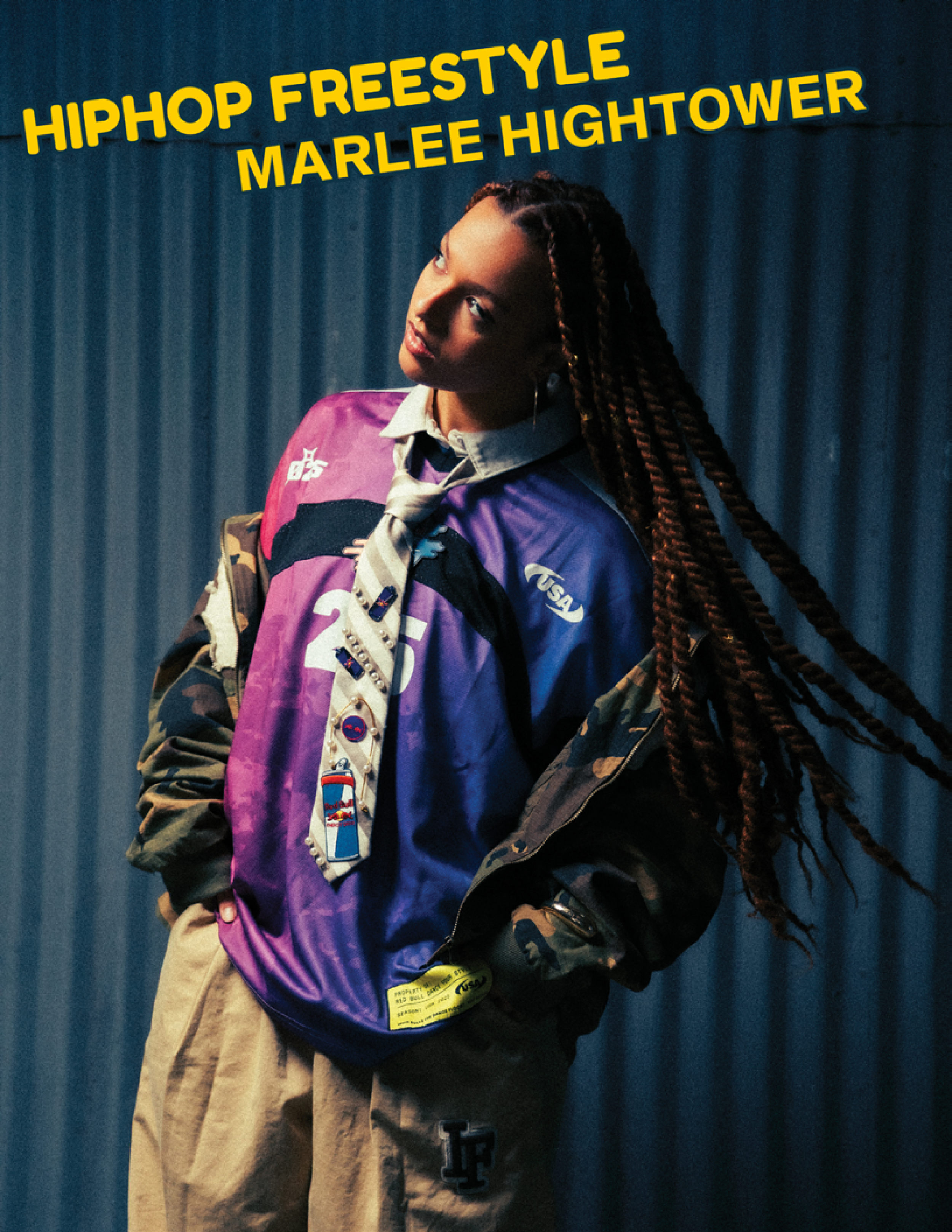
We always enjoy highlighting artists that are focused on what they create and how they make others feel. Red Bull dance athlete, Marlee Hightower has been in a number of competitive dance shows from World of Dance, America’s Got Talent, and more. From a young age, she has been working in the industry as a Choreographer and Movement Director. Her work can be seen among an array of luminaries in the industry that include Coldplay, Janet Jackson, and Pharrell Williams. She also has her MOTIV Dance Studio that she founded as well as her MOTIV Crew that works with her throughout the world. We sat down with Marlee to talk about her love of hip-hop. dance, how she approaches taking on her projects, and much more!
ATHLEISURE MAG: When did you fall in love, you know, with dance?
MARLEE HIGHTOWER: For me, I started dance when I was really little. My mom put me in dance when I was 3. So I kind of grew up into it. I don’t feel like there was this specific moment for me more so that it has just been such a big part of my identity and it’s just been a big part of who I am!
AM: What style of dance did you start with? I started at 3 with tap.
MH: Really? I did hip-hop.
AM: Oh wow so it has always been hiphop?
MH: I started out doing a little bit of everything. But, I took my first hip-hop class when I was 6. And I was like, this is what I want to do.
AM: Who is, the first dancer or show that made you realize that this is something that you wanted to do?
MH: Honestly, Beyoncé.
AM: Nice!
MH: I was, like, I’m gonna be Beyoncé. I was a kid, but I could have sworn it would be her. She was incredible and honestly the Step Ups. I was obsessed with Step Up 2. I was obsessed with the moves, it was my everything.
AM: What drew you to hip-hop and how do you define yourself? Is there a sub style even within hip-hop dance?
MH: I feel like with hip-hop, it’s interesting because there is like a very foundational version of hip-hop.
AM: Right.
MH: I think that over time, especially in the choreography space, like it has evolved and even in freestyle - it has evolved. You know, you have other styles coming into play, even in New York, you have, light feet and stuff like that.
So, yeah, there’s like, umbrellas. For me, I grew up listening to a lot of like old school, hip-hop - A Tribe Called Quest, Slum Village, and Mos Def. That’s like so much a part of who I am and even my family. My dad’s a graffiti artist.
AM: Oh wow!
MH: So hip-hop culture as a whole has been like very much a part of my life, so it just feels natural for it to also showcase itself, in my dance.
AM: When did you realize that this passion for dance should also be a career for you?
MH: I started dancing professionally at a very young. Like my first commercial, I did when I was 7 years old, then I went on America’s Got Talent. I made it to the top 10 when I was 10 years old. So, I’ve been working in the industry for a really, really long time. And then I opened up my dance studio in Orlando with my father when I was around 15. I started teaching consistently then and I think that honestly through that and honing my skills in that regard, I started taking ownership in a way that I hadn’t done before. Whereas before, I was just a kid. I think that through having the studio and running my MOTIV crew and just kind of figuring out what my voice. I realized that, I’m doing something, but I’m also making an impact that’s bigger than just me.
AM: Wow, I mean to be 15 and to decide to open your own studio.
MH: I know – crazy! It was actually my dad’s idea. I used to travel a lot back and forth between Orlando and L.A in order to train, but then also like work as a dancer. Whenever I would come back home, there wouldn’t be anything. There wasn’t really that many opportunities to train and dance at a high level and so he said, “what if we start a studio with a drop in class concept?” People could come in and just learn especially to do that with hiphop dance. A lot of what was offered in the area that I was living in was studios where you could do ballet, tap, jazz, and you had to be part of a company so you didn’t have access.
So, it was his idea, and I remember, initially, I was scared because it felt so ambitious at the time. But I was like, okay, let’s do it, let’s get on board. So my mom, him, and I just all came together to make it something. And I think also, through my traveling, I had a lot of relationships and connections with people, and so a lot of my friends were willing to come and offer classes and kind of help it move along and move forward. It was a process. We are in our 11th year, I can’t believe it.
AM: So, did you envision where you are now, with MOTIV that it would be what it is now?
MH: No, not at all. I honestly thought that this is gonna like be a thing for a couple years!
AM: Right.
MH: Maybe we’ll move on to something else. But like, I had no idea that it would be such a thing and such a staple in the community where I live, but also around the world. To be able to travel around the world, and to hear people tell me, “oh, I want to come to Florida and I want to train there, that’s crazy to hear because growing up, no one really wanted to train in Orlando. I’m really grateful. It’s definitely not what I expected at all.
AM: Do you think you’ll have other studio locations in addition to Orlando?
MH: I don’t think so, at least not right now. Just because our main focus has always been to try to bring the people to Orlando. That was kind of the the whole goal. I don’t know, maybe in the future once things continue and it can run itself potentially. This is also so much of a love letter to Orlando.
AM: You raise a good point about being part of companies and troops when you talk about ballet, tap, jazz etc. What were the types of training that you were doing when you were coming up?
MH: I was a convention kid growing up. I was a big convention kid, so I would go to these traveling conventions, one of them was called Monsters, Monsters of Hip-Hop, and so it’d be all these teachers who would come in and teach for the weekend at 6 classes a day, and I was really big on that, and then I would also travel a lot to take different workshops from different teachers. So sometimes I would go to LA for an intensive and then even for me, now I still am big on my training. If I ever get flown out to teach at a camp or something and a different teacher is there, especially like a foundational or freestyle based teacher - I’m in there. I’m trying to get as much information as I can. Even doing dancer style is a form of training for me, because being someone who started out primarily as a choreographer and with the choreography, background freestyle, and freestyle training is such a different mindset and mentality. And so, like getting to do dancer styles and getting to connect with the different dancers that are a part of that network has been such a huge game changer for me and a game changer in the way that I approach my choreography.
AM: How do you approach the choreography, whether it’s for a show or a troop?
MH: My biggest thing, is balancing feeling and then also the visual aspect of it because It ultimately is something that people are digesting and visually looking at. So, I think when it comes to a group, I love to look at shape, but then I also am really adamant on flow. Flow is super necessary because that also coincides with how I want to approach my freestyle, too. It’s like, I want the worlds to merge as best as I can, but you also in choreography, you have to have that understanding of structure.
AM: It’s like a science, but it’s a fluid science.
MH: It is! It totally is, and some of it is intuition based. Some of it is also mathematical.
AM: When you think about competition shows, I mean, I do remember seeing you on World of Dance. How do you approach the competition show environment? You have these panel of people who have varying levels of knowledge on the styles – how does that work?
MH: Dancing for so long, I feel like I was always in a position where I felt like I needed to prove myself, but I feel like going into those competition shows where you’re given such a huge platform, and the stakes also feel so high. I think that yes, it’s important to aim high, but then also don’t sacrifice who you are in the process of it.
I’ve really been like throughout everything I’ve done, like World of Dance. When I did World of Street Woman Fighter, like every single challenge, I was, like, okay, I’m gonna put my best foot forward, but I cannot shy away from who I am, so I have to dig deeper into who that is because sometimes, like, you’re given challenges where it’s a song you don’t necessarily know. Or it can be a challenge movement wise that you have to incorporate. How can I take all of this, but still remain true to me and that’s always at the forefront of those types of competitions. Ultimately, win or lose, that’s what matters most. Who you are and what you’re trying to say when you’re given that platform.
AM: You just got back from South Korea with Street Woman Fighter. Tell us about that as we hadn’t previously heard of it but it is large!
MH: Wow, it was large. It’s crazy, it was larger than I even expected it to be. Like, I didn’t realize how popular the show was in in South Korea. I feel like I was living a double life, almost like going to South Korea, and like everybody’s stopping their cars and stopping me on the street and stuff like that. The show itself, I think, is really cool because it does give dancers a platform. The fans love dance in a way that is, very unfamiliar to me, at least in the States. People like dance, but, I don’t think they see dancers, as you know this thing!
AM: We were in Tokyo and to see how dance was embraced there, we can see what you’re saying. Whether you were in Roppongi, Shibuya, or Shinagawa you could see people loving it and just breaking out into dance.
MH: Yes and they learn the dances like it is such a thing, and I, so I really, really admired how much they highly revered dance in that way. The show itself was very reality based, so that was really interesting coming to set and immediately putting on a mic, and having cameras everywhere. So I got used to being on all the time, but they also don’t want you to be on at the same time!
AM: Exactly! It’s a happy, medium.
MH: Yes, happy medium because I do know the cameras are rolling.
AM: Look at me. Don’t look at me, but look at me!
MH: We would get different missions over the course, of the competition. I always tell my friends like it felt like a combination between America’s Best Dance Crew and America’s Next Top Model.
AM: Interesting.
MH: Different challenges we were given, and I really appreciated them because it forced us to get really creative with how we are presenting who we were, especially because the show was very like K-pop based, and we’re hip-hop based.
AM: Right.
MH: So we were kind of going against the grain, the entire competition, but that was our edge.
The entire season is out now. You can watch it through Prime Video. It’s attached to the channel Mnet which is like the Korean MTV.
AM: What was your biggest takeaway from doing that show?
MH: I think my biggest takeaway was that you have to fight for artistic integrity when it comes to putting yourself out there in any room - in any space! That fight is on you.
AM: So the crew that you were with there was yours, MOTIV. What is the ethos of people who are on your crew and how do you decide who will be on it?
MH: I think mentality wise, you have to be willing and super open! You need to be kind and adaptable, because I think that even in the industry, even in my process, it’s very much like I come to the studio, and we figure it out as we go, and it’s very like organic the process. So, being malleable and just being open and willing. I love to laugh – we also have to laugh while we do it because it’s a lot of hours. At the same time, you have to strive for that excellence.
AM: Right.
MH: So I’m always trying to instill that in people. And I’m the type of person that sees potential over a perfect dancer! I’m like, no, I see where you could go as long as you see it, too, and you’re willing to get there – then I think that you’re in a good spot.
Doing the show was super special because I brought girls who I had been training over 6 or 7 years. It was incredible to see where they were to how far they have gotten to now! Getting to be able to provide experiences to my team is everything! The concept of bringing the world to Orlando and my people to the world!
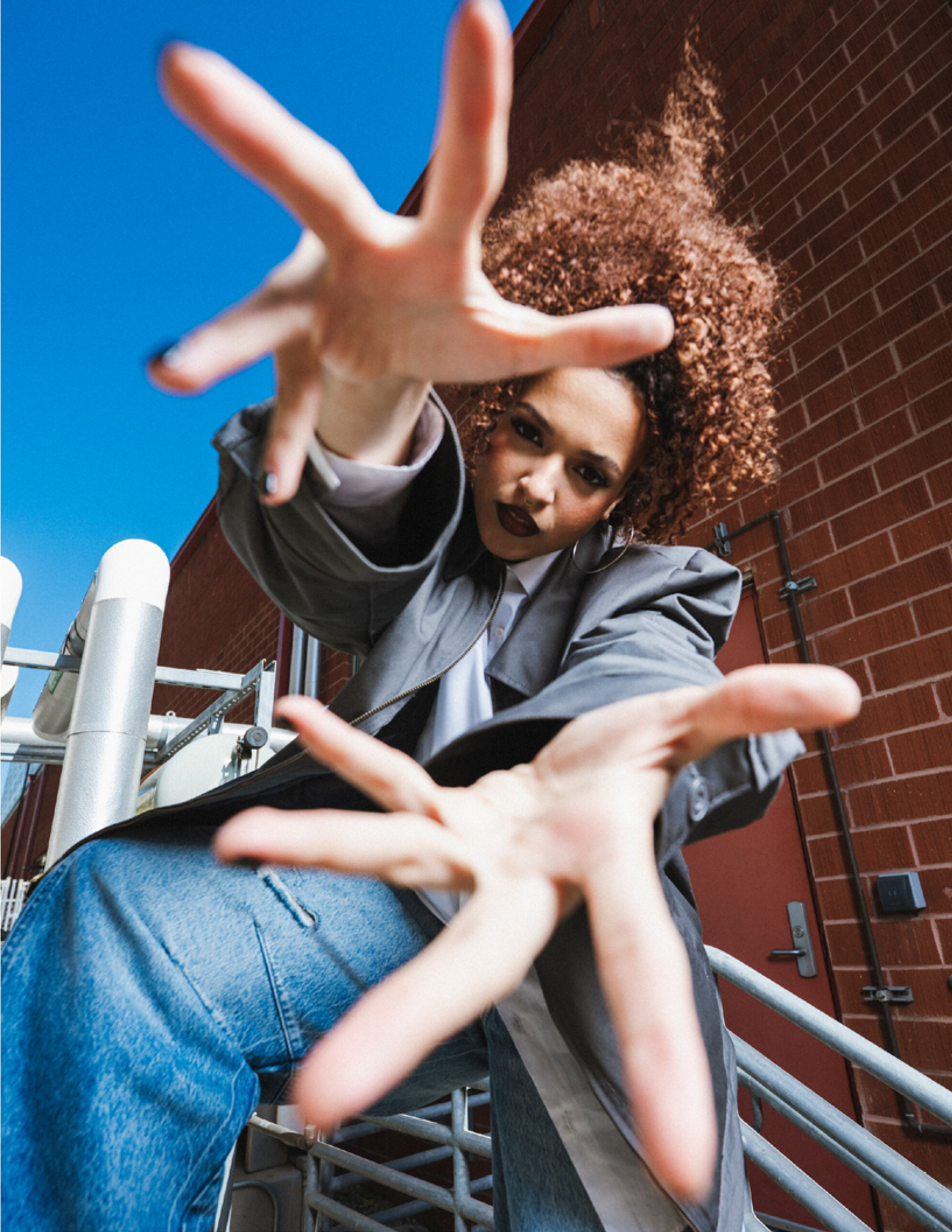
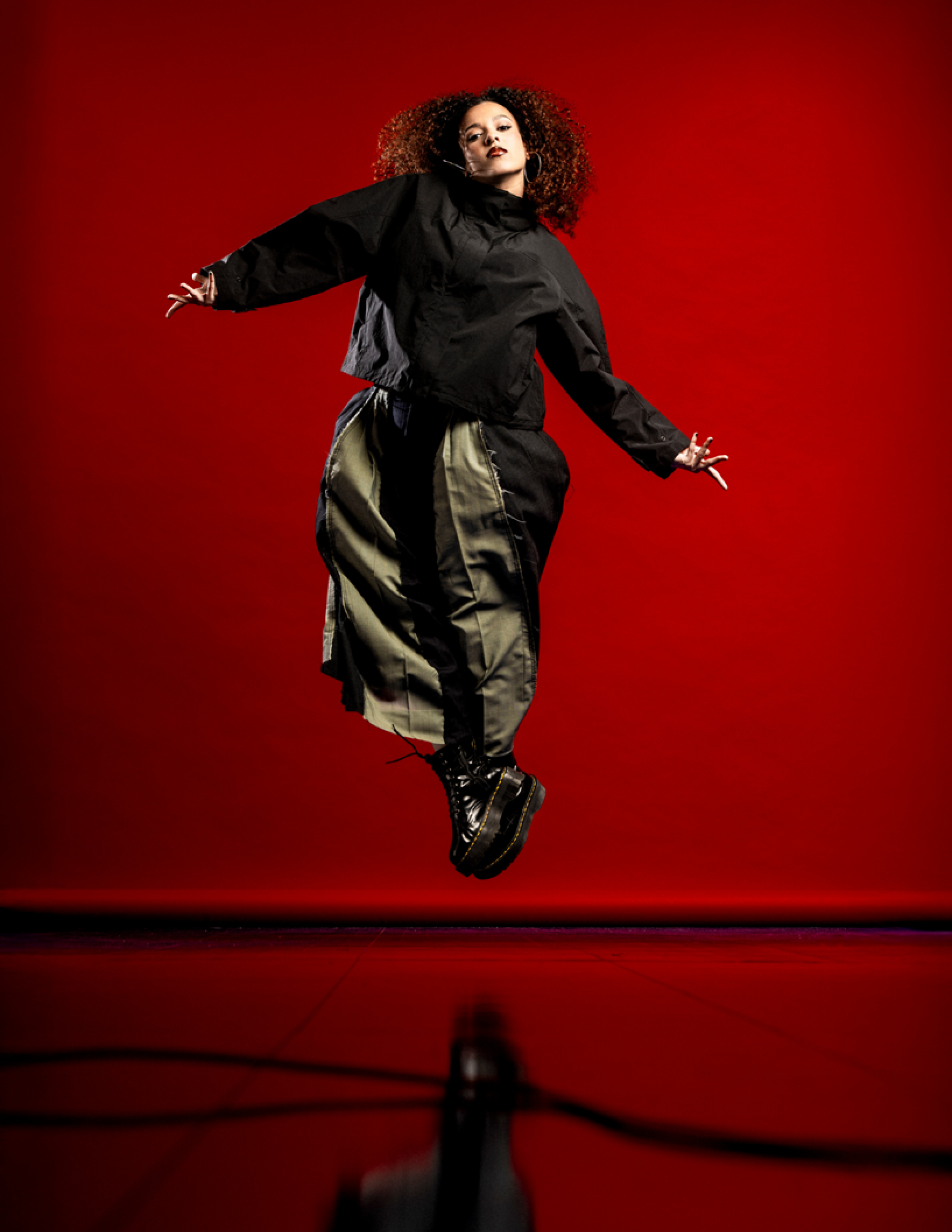
AM: You have such an impressive resume with people that you have worked with Janet Jackson and Pharrell, and Jazmine Sullivan. What have you loved most about that and what artists/talents and projects would you love to be attached to?
MH: I’ve felt really honored to dance with different people and I’ve loved being given the creative voice. I just recently did a short film for Coldplay, which was so fun. I got to be in Malta for 10 days and I mainly did movement direction, rather than full out choreography, that was really, really nice. I’m a really big lover of film. I’m such a film nerd and so anything in that vein, I’m really excited to work on and with because, dance is one thing, that creative process in that regard is another. Getting to do it alongside the DP and even the producer. Watching the way that the gaffer sets everything up!
AM: Looking at all the blocking!
MH: Yeah, I’m so enthralled with the whole process! I would love to work with more film and with more TV. An artist that I would love to work with is James Blake. I think he makes incredible music and very danceable music. But he doesn’t use dancers, I never see that. I think that it would be really interesting to do something with him. That’s my dream artist of all time!
AM: For those that don’t understand the nuance between being a choreographer and a movement coach can you share a bit about that? Only in the last few years did we understand that distinction.
MH: I think that the biggest difference between movement direction and an elaborate piece of choreography would be that for movement, it’s about understanding, shape, understanding, flow. Maybe you’re working with a model who just needs to like, figure out what poses are going to work best. Maybe you’re working with a group of people that need to walk on the street in a certain way. You’re creating things that feel natural oftentimes.
Whereas, with an elaborate piece of choreography, there’s formations and counts. Even the movement itself is dynamic and I would say that those are the biggest differences, but it’s interesting just how much still of planning and understanding your body is needed, even just in movement direction.
When I did the Coldplay job, I was like, actually, I think we might need dancers just in order for them to move their head at the right time.
AM: Right.
MH: It’s still so synchronized and intentional.
AM: How did you come to Red Bull? We’ve had the pleasure of having a number of people from Red Bull that we’ve been able to work with, whether they were athletes in surfing – Carissa Moore, Griffin Colapinto, or Caroline Marks, snowboarding – Mark McMorris etc.
There is a culture in Red Bull of having these great people who are outside of the box but they are doing things that are pushing the envelope and doing dynamic things.
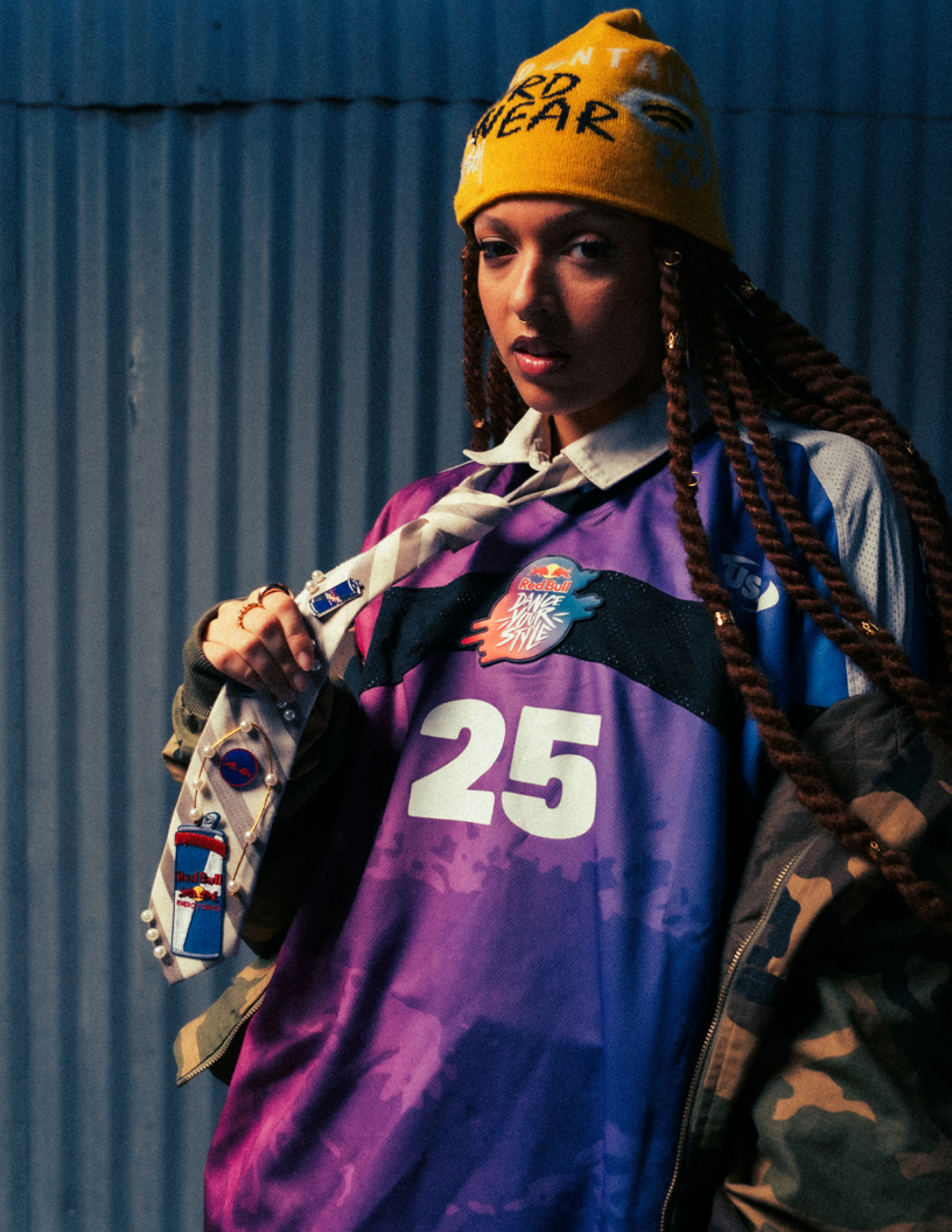
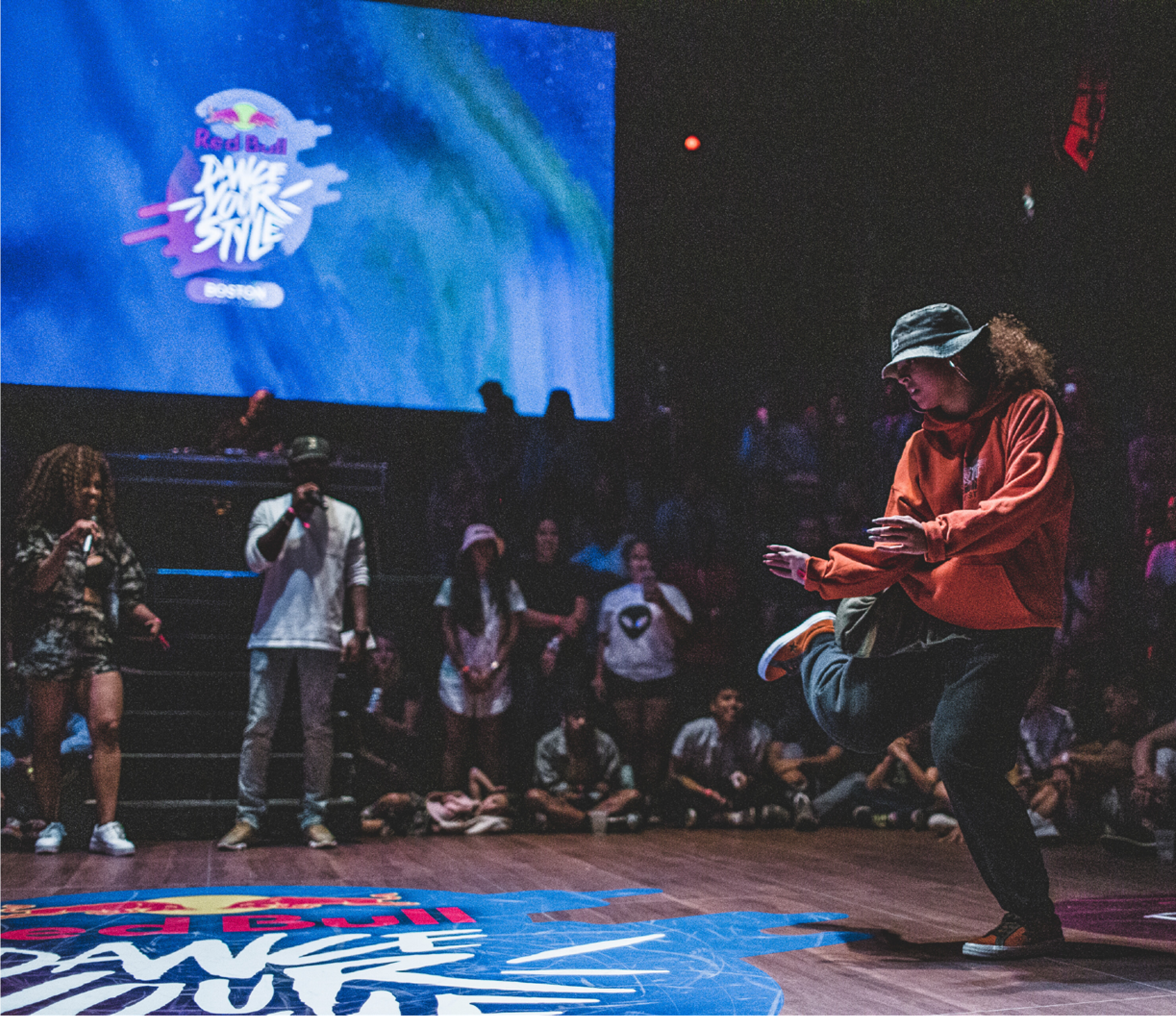
MH: My first Red Bull Dance Your Style was in 2019. I wasn’t even freestyling that much back then. I got brought on board for that and that was my first initial experience with Red Bull. Then I did a Red Bull Dance Your Style in Florida, and that’s when I made the semi-finals. Then from there, I got put on to be a representative for dancer style.
It’s been a really cool Journey for me as someone who’s working to bridge the gap between choreography and freestyle, so it’s like I’m implementing my practice into this new space and getting the platform to do so. And then along the way, I’m like able to meet up with all these different dancers with such different backgrounds as far as how they came to dance and the styles that they do. It’s interesting to be given access to a community, truly. Red Bull is really putting dancers on and more specifically, free stylers are more of an underground thing. They are being a voice in the way that is not really prevalent in the industry. Usually it’s a choreography based dancer or a modern dancer. Now, we’re thinking, street styles - street style based dancers. We’re being given the microphone and that’s what I appreciate the most about being a part of Red Bull.
AM: Are there any projects that are coming up specifically with Red Bull that you’ll be doing that you can share?
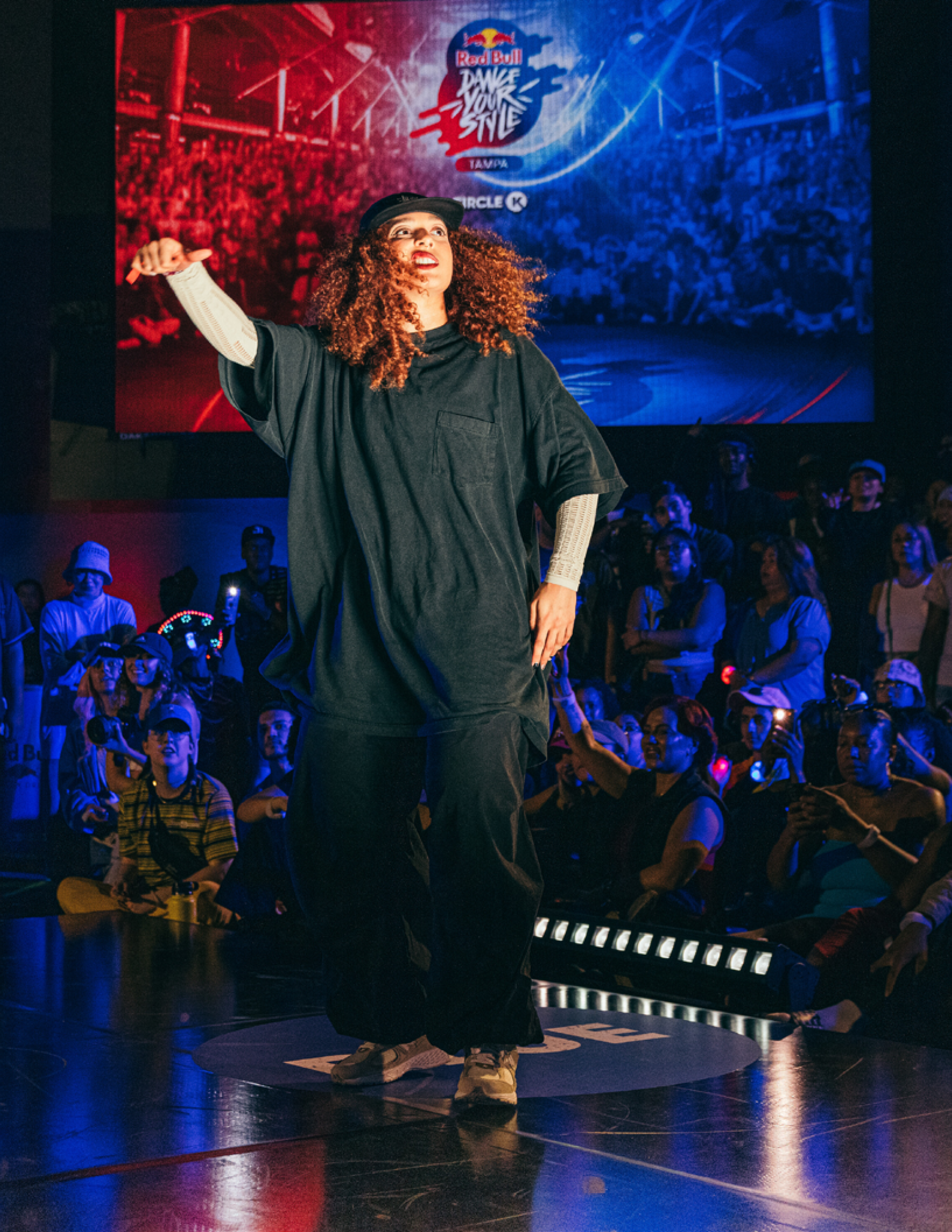
MH: Not anything in particular. Obviously, last year, was the release of The Can coming out, which was an incredible experience. It was all in promotion for the World Finals in the US. This year, I have a film project that I’m doing that Red Bull really helps me in terms of any ideas that I have, helping me connect with different artists, not just even the dancers, but there’s also like different artists that they work with that I’ve been able to connect with as well. I have the National Finals coming up in Tampa that I’m gonna be a wild card for, so I’m excited about that, and then hopefully that takes me to the world finals in Zurich!
AM: Oh wow!
MH: Fingers crossed!
AM: What is the dancing schedule of sorts in terms of, if you think of the Olympians right different things that happened there, obviously NBA, they have their season. What is the season for hip-hop/freestyle dancers?
MH: I feel like it depends on the dancer and the person. It depends on their schedule as well, I think. Dance is such a free thing. For me, specifically, I had to really and still have to really be diligent with how I train, because sometimes I don’t have all of the time. I started implementing training practices in the classes I would teach, or the dances I was creating. Even being here, I know that there’s certain dancers here. I’ll give them a message - let’s dance, let’s dance for a few hours. You know, I’m gonna learn stuff from you. You’ll learn stuff from me. So, it’s very much, just a matter of like figuring out what your schedule is and how you train. I know some people are very methodical about it, whereas I think I’m more free and I find it along the way.
AM: What does an average week look like for you?
MH: It changes every single week and I’m grateful. My everyday feels like a different day. But I would say, an average week if I’m lucky, I get Monday off. Maybe I find myself at home in Florida on a Monday and then I’ll teach my weekly class on a Tuesday at MOTIV Dance Studio. I’ll run rehearsal with my crew. Maybe Wednesday, I get off if I’m lucky. I’ll teach Thursday if I’m still in town also at MOTIV. Then the weekends is usually when I’ll go somewhere in the world. Maybe it’ll be an international trip to teach at a dance camp, or maybe it’ll be something like this where I’m making an appearance or judging a competition or doing a battle that weekend. Then I’ll come back home and reset and do it all over again!
AM: In general, are there projects or things that you want us to know about and keep our eye out for.
MH: Later in the year, I’m going to be coming out with another dance film. I’ve done a few. I did a dance film titled Blackbird, and then I did another one, titled We, the People, which was in connection with Street Woman Fighter that Red Bull helped me out with as well. That did really well and made a big impact. I’m just excited to work on a new film, and to bring it out into the world later this year.
AM: That’s amazing.
What do you want your legacy to be known as? You’re bridging a lot of things, the culture of hip-hop, and being a woman that has been trailblazing and the way you’ve done it, giving love to Orlando - it’s not just Disney and Universal.
MH: Yes – Facts!
I ultimately just want to be what I wanted to see growing up. I think representation is really important and I think that growing up as a young black girl, I didn’t see a lot of myself in people in the dance community, but then also on TV and in movies. I think expressing as much of the different facets of myself is important for other people, to know they don’t have to box themselves in to any one thing, whether that be their pursuit within dance or even just their pursuit within art in general. I think that’s the biggest thing is just to be open and honest about my process and to provide inspiration, but then also representation and for people to feel seen and heard in a way that I wanted to feel growing up.
PHOTOGRAPHY COURTESY | PG 108 - PG 112 + PG 122 Digital Branded/Red Bull | PG 115 + PG 116 Little Shao/Red Bull Content Pool | PG 119 Daniel Zullani/Red Bull Content Pool | PG 122 Kien Quan/Red Bull Content Pool |
Read the MAY ISSUE #125 of Athleisure Mag and see HIPHOP FREESTYLE | Marlee Hightower in mag.