AM: Very true. So I know you’ve been asked a lot about Jerry Maguire in the past. It really hit me hard when I got to see it, so I wanted your impression by being an advisor, by being the inspiration and also the memo and the infamous tagline - I’d love to hear your thoughts about it.
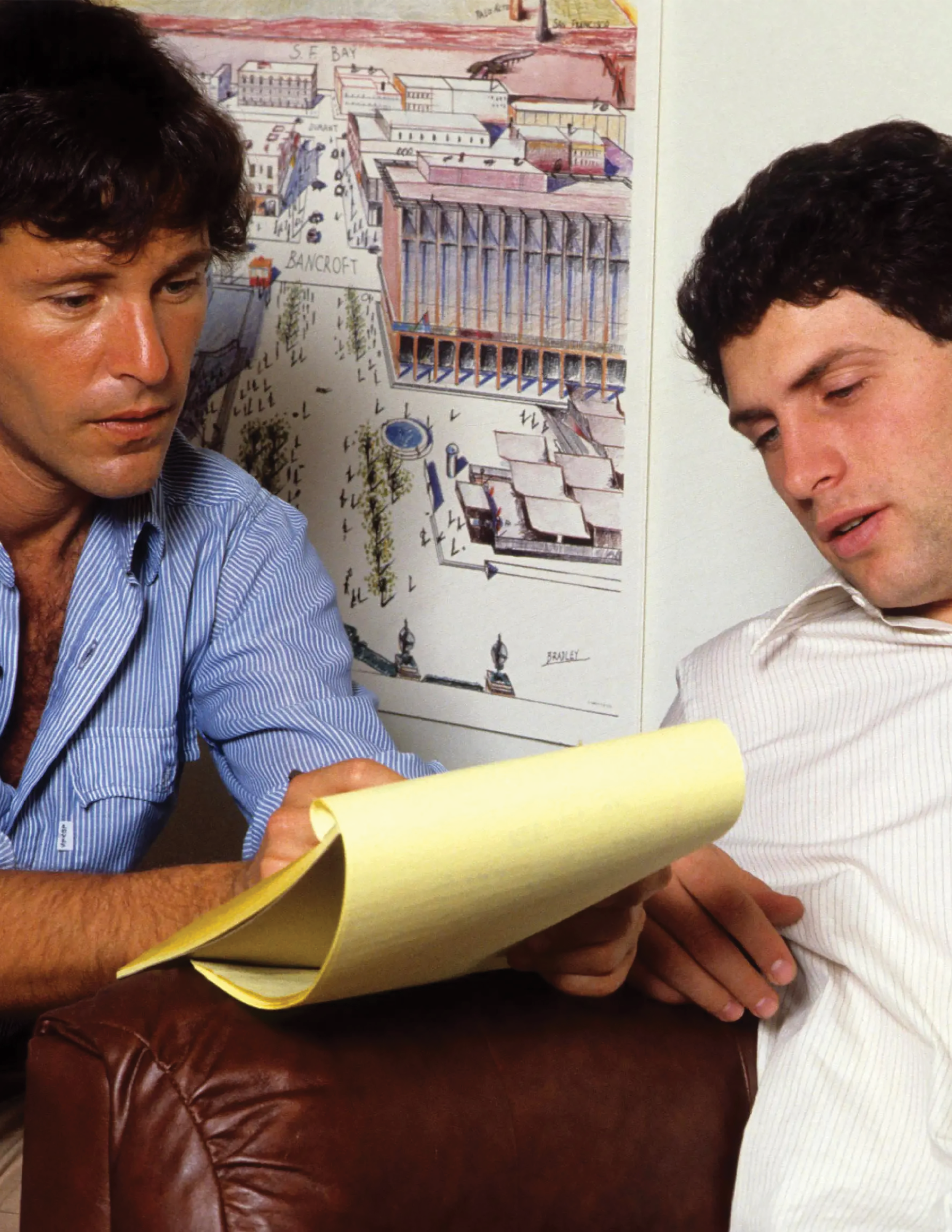
LS: Well for the memo as you know, our concept is role modeling making a difference in the world. So it’s a boxer Lennox Lewis cutting a public service announcement that says real men don’t hit women and that could trigger behavioral attitude in rebellious adolescents more than a thousand authority figures ever could. So Cameron Crowe (Almost Famous, Vanilla Sky, Fast Times at Ridgemont High) called me up, the writer/director in ‘93 and asked if he could follow me around for a film that would be based on a sports agent. So he went to the NFL draft with me in New York. He went to league meetings in Palm Desert. He went to Super Bowl. He came to a series of games with me and went to pro scouting day at USC. He was like a fly on the wall and I told him stories.. lots and lots of stories and what part of those stories went into it, I’ll leave to Cameron, but then I was technical advisor so I had to vet the script to make sure [there was] the willing suspension of disbelief that holds you in the picture, and that the dialogue seems real, that the look is authentic and didn’t get tampered with, and then I worked with the actors.
I took Cuba Gooding, Jr. (Men of Honor, Boyz N The Hood, Selma), who played the wide receiver down to Phoenix for the Super Bowl and made him pretend he was a wide receiver client of mine all week and he hung out with Desmond Howard and Amani Toomer. I actually had to show the quarterback in the film played by Jerry O’Connell (Stand By Me, Las Vegas, Scream 2) how to throw a spiral because he had gone to NYU and they didn’t have a football program. So anyway it’s been 27 years and still every time I go to an airport or go out to dinner someone runs up to the table and either asks me to say those four words or says them to me that start with ‘Show Me The..’
AM: And is it taken well by you for the most part?
LS: Sure I think that I believe the film humanized sports agents and showed some of the true caring that goes into the relationships and you know it was the highest grossing sports film of all time until The Blind Side came along.
AM: Hmm, well we love that movie and thank you for being part of it and being an inspiration. It’s also inspiration for business people on passion, ethics, discipline and holding on; it’s an inspiration for people in romance - I mean the movie does go beyond sports too.
LS: So it’s really cool one of the reasons it was popular was the relationship, yeah romantic relationship. I have a new book coming out at the Super Bowl and it’s about resilience. It’s called The Comeback and it comes from the realization that life will frustrate us all at some level, hopefully minor and not catastrophic, but in many cases because of divorce and relationship problems and financial problems and substance abuse, people hit a situation where they lost their way and and they seem to be destructive. So the question is not whether that’ll happen in some form, it happens to us all. It’s how do you come back from that? How do you find resilience seeing the light at the end of the tunnel? So, it’s stories of resilience, including my own story.
AM: That’s really cool, looking forward to reading it. A lot of people need comebacks and you know as you’re speaking I think there is also a big epidemic right now of people functioning in their jobs or tasks or relationships but silently maybe not liking it or fitting where where they’re they might be just accomplishing the status quo but they need that pivot or growth that we kind of all need a comeback.
LS: Right, so sometimes not the most devastating moments, but it could be assessing yourself every now and again and making sure that you’re on the right path that’s where that internal assessment tool where you know short-term economics, long-term economic, profile making a difference in the world autonomy - you know vacation, whatever it is it’s having the most pristine clarity as what really will bring fulfillment to a person.
You know it’s fair to say, I battled with alcohol and crashed back in 2010, and so you know people are out there still suffering. The first key is breaking denial. OK, alcohol and addiction is a disease that tells you that you don’t have a disease, so it’s having some clarity about the fact that you’ve hit bottom. You don’t want to live this way for the rest of your life and you’ll take action. My action was a 12-step program, with a unique fellowship and the point is there is light at the end of the tunnel. I mean I just turned 15 and a half years continuously sober, so the point is for people out there despairing, who are confused and despondent - reach out! There’s help available and you can turn your life back into the fulfilling journey that you hope for that’s great.
AM: Let’s discuss the groundbreaking Mahomes deal, so how is it going through all that when you land that deal in 2020 with the Chiefs? What were you feeling when you closed the deal? What did it take to get there? How did Patrick feel and I guess you guys were on top of the world then!!
LS: Again, I think it’s understanding every client and to Patrick what was important was winning and wanted to go to the super bowl. In other words, it wasn’t enough to be the highest paid player on a team that was losing or under, so it’s part of what’s different about representing athletes, is that you’re not representing a corporation or a pig iron manufacturer or some commercial, and they’re a human being, so that you start to grow and care for the person you become bonded with. So being able to guarantee lifetime security felt really good.
AM: You have been a such a pioneer involved with endorsement deals. You know it’s great, that in the endorsement deals that you advocate and close for like-minded values between the players and hopefully the brand at the time and continuing. How is it finding those relationships between athlete and brand and showing athletes that they don’t just have to do things for money, that they could do things with money and values attached.
LS: Well one of the things I’ve tried to be careful of is advising clients not to do all that many endorsements [until] they’ve established a sports career. So to sort of take it easy so Mahomes didn’t do endorsements his first year, he wasn’t a starter and the second he was at the end of that year it was fine, but you want to prove to the fans of the city, to the ownership, to the other players that you’re serious about football or baseball or basketball, and you’re committed. Also hopefully set up a charitable foundation that shows you’re serious about being involved in that community, so a lot is about values, it’s about understanding that high profile is a role model and that your associations with products and and companies in the world ought to do what you suggested, which is to share the same values about what’s important. If you believe in helping people, then there’s a component there and each of the deals can actually have a structure where they go back to help the charity.
AM: Then sometimes you’re involved with helping athletes give back just to a disaster and being involved with the situation. How do you help facilitate those positive impact scenarios?
LS: I remember Ben Roethlisberger donated when they had the big tidal waves in Thailand. He donated a game check to relief, so it’s having an awareness of the time and place. One of the things we’ve been able to do at our Super Bowl party which I hold every year, is to address problems. So for example, back in Miami around 2008 or 2009, we shipped the water machine to Haiti. They had just had an earthquake and cholera problems with impure drinking water, we were able to ship a water machine that purified the water for 140,000 people. So it’s when we had troops in the field, we did a live hookup with troops between the Super Bowl party and Afghanistan and Iraq, so it’s having an awareness of what’s going on societally.
Years ago I created something called the Sporting Green Alliance and it took sustainable technology and wind, solar, recycling, resurfacing and water to state the arena and practice fields to drop carbon emissions and energy costs and it transformed them into teaching platforms. So the millions of fans that go could see a waterless urinal or solar panel and think about how to integrate those concepts into their homes and businesses.
AM: Then there’s also the Leigh Steinberg Foundation, so that’s where you’re helping educate about head trauma and CTE.
LS: I had a crisis conference back in the 1980s because I’m representing half the starting quarterbacks and they keep getting hit in the head and we would go to doctors and ask how many is too many? What’s the number that should contemplate retirement and they had no answers. So we started holding brain health summits back in 1994, and the first one here in Newport Beach had Troy Aikman, Steve Young, Warren Moon, and Drew Bledsoe, all came and listened to neurologists. By the time we got to about 2006, doctors like Bennett Amalu told us that three or more seemed to be the magic number, and after that you had an exponentially higher chance of Alzheimer’s, Parkinson’s, premature senility, chronic traumatic encephalopathy, and depression. So I call this a ticking time bomb. We’ve continued to have those brain health summits. We did two hours in New Orleans at our Super Bowl party, and I thought why not establish a foundation to raise money for research into brain health. There are two new modalities, one’s called RTMS and the other is neurofeedback. They can actually through neuroplasticity rehire a concuss rewire a concussed brain, so we’re making some progress and I have a series of neurologists on the board of the foundation and some iconic athletes.
AM: You’ve done so much, including golf tournaments and youth support for talented youth to get sponsorships. What is it that drives you to do so much good in the world beyond being an agent?
LS: So my my dad used to say if you see a problem in the world as tiny as picking up a piece of trash or as big as racism or climate change, and your tendency is to wait for they or them to solve the problems, older people, political figures, you know someone else, he would say, you could wait forever son, ‘the they is you,’ ‘you are the they.’ So it’s just a sense of responsibility, that’s part of why I’m in this world, is to heal pain to help people who can’t help themselves, to try, and be as active as I can in bringing hope and healing into the world.
AM: What is one lesser known story in either closing a deal, or in working with a top client - our community would certainly love it.
LS: So Ben Roethlisberger, Super Bowl winning quarterback of the Pittsburgh Steelers, was very superstitious, and so he had a routine he did before every game. So it came time to see the AFC championship, which was Pittsburgh versus Denver in Denver, and usually players will reserve tickets for you as an agent and everything. So I called Ben before that game about tickets and there was silence on the other end of the line, and I said is there a problem? He said, ‘yeah well, last year you came in Pittsburgh to the AFC championship game, and we lost.’ I said, well Ben there were 70,000 other people there too. He says, ‘I don’t know,’ but I said you mean I can’t come to the game? He said, well you could go to willcall, but you’ll be waiting for hours. So at any rate, they played, they won. So go back to the Super Bowl, which was played in Detroit, and I’m on the bus on the way back with him, and I said, ‘Ben guess what? You just won the Super Bowl, and I’m here, so I guess I get to go to more Super Bowls?” And he says, “Yes, but never an AFC championship game.”
IG @leighsteinberg
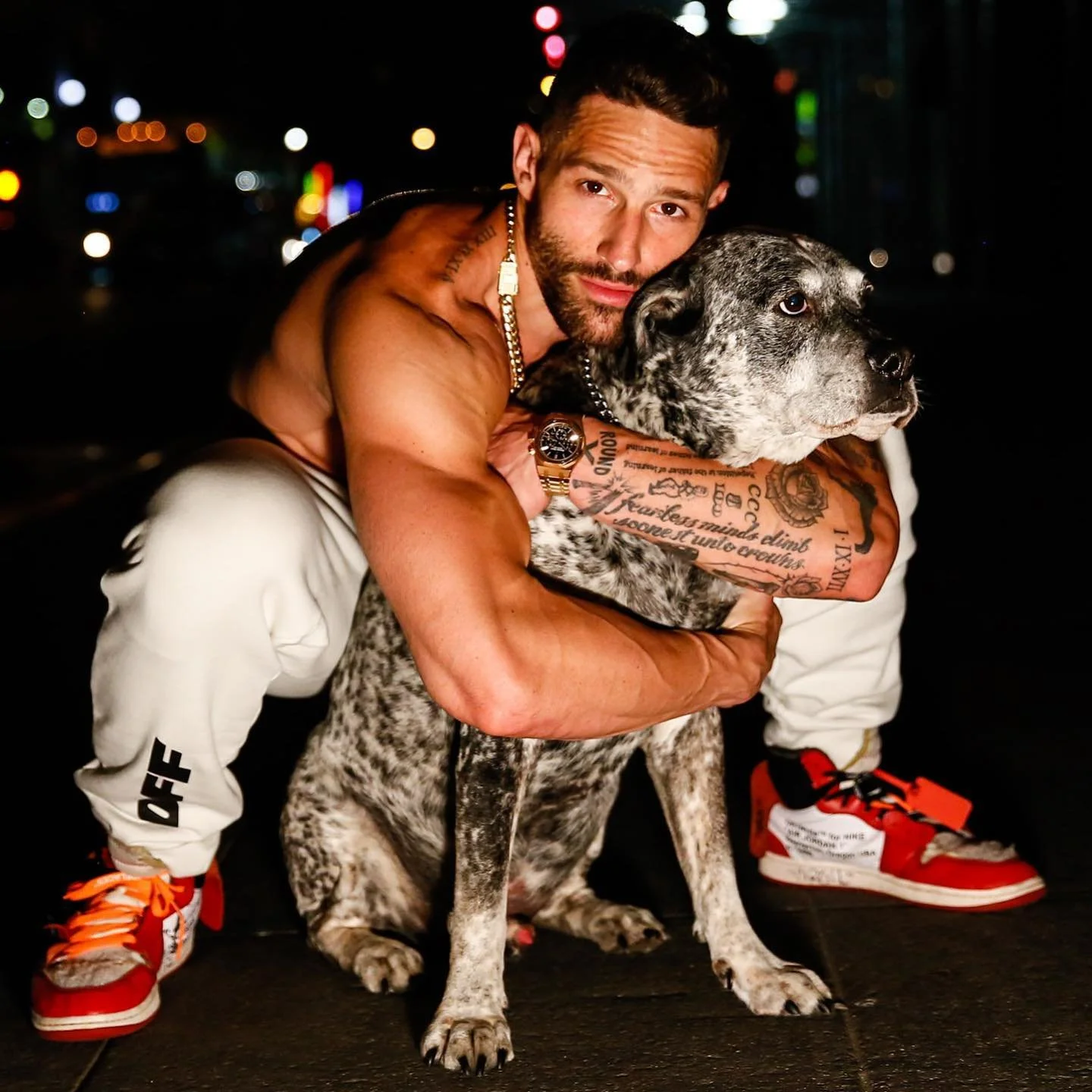
PHOTOGRAPHY COURTESY | Leigh Steinberg
Read the OCT ISSUE #118 of Athleisure Mag and see THE SUPER AGENT | Leigh Steinberg in mag.