Read the APR ISSUE #112 of Athleisure Mag and see THE PICK ME UP in mag.
Featured





Read the APR ISSUE #112 of Athleisure Mag and see THE PICK ME UP in mag.

Read the APR ISSUE #112 of Athleisure Mag and see #TRIBEGOALS in mag.

Read the APR ISSUE #112 of Athleisure Mag and see GOJI BERRY BEAUTY in mag.



PHOTO CREDIT | Unsplash/Edgar Chaparro
Muscle recovery is an integral aspect of any fitness regimen. Optimizing recovery can enhance performance, reduce injury risk, and improve long-term results. While protein shakes and branched-chain amino acids (BCAAs) are popular recovery aids, collagen supplements are gaining attention for their unique benefits.
Collagen is the most abundant protein in the body, playing a key role in skin, joint, and connective tissue health. In this article, we’ll explore how collagen supplements can help with muscle recovery.
Collagen is rich in glycine, proline, and hydroxyproline, amino acids essential for tissue repair. After intense exercise, muscles experience micro-tears that require proper nutrients to rebuild stronger. Studies suggest that collagen peptides can stimulate muscle protein synthesis, aiding recovery by promoting the regeneration of muscle fibers. Additionally, collagen supplementation has been shown to increase lean muscle mass when performed with resistance training, making it beneficial for both recovery and performance gains.
For those looking to maximize benefits, choosing the best collagen supplements with hydrolyzed collagen ensures better absorption and effectiveness, as the peptides are broken down into smaller, more digestible molecules.
High-impact workouts can strain joints and ligaments, leading to discomfort and reduced mobility. Collagen helps maintain cartilage integrity, reducing joint pain and stiffness by replenishing the natural collagen lost through wear and tear.
Athletes can experience to significantly reduce joint discomfort, allowing for more consistent training. Furthermore, collagen’s anti-inflammatory properties may help decrease post-exercise soreness, enabling faster return to training.
Tendons and ligaments, composed mainly of collagen, are prone to overuse injuries, especially in high-intensity sports. Supplementing with collagen may improve their elasticity and strength, lowering the risk of strains and tears. Collagen supplementation can increase tendon stiffness and resilience, which is crucial for explosive movements like sprinting and jumping.
Collagen contains arginine, an amino acid that enhances nitric oxide production for better muscle blood flow. Better circulation means faster oxygen and nutrients- delivery to fatigued muscles, speeding up recovery and reducing fatigue. Additionally, collagen’s glycine content supports the production of creatine, which aids in replenishing energy stores post-workout.
Be mindful of bloating or abdominal distension caused by bacterial overgrowth, as it can significantly impair digestion. Collagen strengthens the intestinal lining, which helps prevent leaky gut syndrome and improves nutrient absorption. This ensures your body fully utilizes the nutrients from food and supplements. Additionally, by promoting a balanced gut microbiome, collagen may help reduce inflammation linked to poor recovery and prolonged muscle soreness.
Intense workouts generate free radicals, leading to oxidative stress and delayed recovery. Collagen’s amino acids, particularly glycine, act as antioxidants, neutralizing free radicals and reducing muscle damage caused by intense physical activity. This protective effect helps maintain cellular health, allowing for quicker regeneration of muscle tissues after strenuous exercise.

PHOTO CREDIT | Unsplash/Gorilla Freak
As a key connective protein, collagen enhances skin strength and elasticity, helping it withstand friction and pressure during training. This reduces the risk of abrasions and tears—particularly vital for endurance athletes and contact sports participants, where skin injuries can hinder performance and delay training on recovery.
Studies using blood samples have shown that collagen protein ingestion supports natural collagen production, improving skin resilience. Additionally, different types of collagen (like I and III) contribute to connective protein synthesis rates, which influence tissue repair. For athletes focused on fat-free mass and myofibrillar protein development, collagen supplementation may also play a role in supplementation on body composition, though its primary benefit lies in structural support.
Collagen shouldn’t replace whey or plant-based proteins but can complement them by providing specific amino acids that support connective tissue remodeling and joint functionality. Since it lacks tryptophan (an essential amino acid), pairing it with complete proteins ensures adequate protein intake for muscle repair and recovery from exercise. Combining collagen with a post-workout protein shake (providing grams of protein) can enhance overall recovery, muscle synthesis, and deliver positive effects after a bout of resistance exercise.
For optimal results, consider your overall dietary intake and consult a healthcare professional to assess the effects of collagen supplementation on your individual needs, especially if you have concerns related to human blood markers or connective tissue health.
Quality sleep is essential for muscle repair, collagen synthesis, and overall recovery. Research highlights that the amino acid composition of collagen, particularly its high glycine content. It plays a key role in improving sleep quality. Glycine acts as a calming neurotransmitter, supporting deeper, more restorative sleep, which enhances recovery, hormone regulation, and athletic performance.
A systematic review on the effects of collagen peptide supplementation suggests that bioactive peptides may help reduce muscle damage and support tissue repair in the human body. Different collagen types contribute to joint health and connective tissue strength, while bioactive peptides on muscle damage recovery further highlight collagen’s multifaceted benefits.
Collagen’s amino acids, particularly proline and glycine, play a role in maintaining skin and tissue hydration. Proper hydration improves muscle function and recovery, as dehydration can lead to cramps, fatigue, and delayed healing. Some collagen supplements also contain electrolytes, further aiding in post-workout rehydration and muscle function.
Collagen supplements support muscle recovery by aiding tissue repair, reducing joint pain, and improving recovery time. While not a substitute for a balanced diet or other proteins, they can enhance post-workout recovery, especially for athletes.
For best results, choose hydrolyzed collagen peptides (the most bioavailable form) and combine them with vitamin C to increase collagen production. Whether recovering from a workout or preparing for competition, collagen may help speed recovery and optimize performance.


In this month’s issue, our front and back cover story is with Restaurateur Master Chef Masaharu Morimoto who we first saw via Iron Chef Japan and then continued to Iron Chef America. Whether he is judging, participating in culinary competitions, opening more restaurants, or more - he is always focused on the power of food and how he can continue to entice us with flavors! On May 10th, he will be the Grand Marshal of the Japan Parade on Japan Day in Central Park West. We caught up with him to find out how he got into the industry, his passion for cooking, upcoming projects, and more!
Last month we had an incredible series of conversations with Co-Creator/Executive Producer, and writer Chris Brancato as well as cast members from MGM+’s Godfather of Harlem. We caught up with 2 additional cast members of this series, Elvis Nolasco and Erik LaRay Harvey.
We had the pleasure of chatting with Chef Esther Choi about her passion for Korean cuisine, her restaurants, and her upcoming season of Food Network’s 24 in 24: Last Chef Standing where she serves as co-host for this competition series. She also shared why she partnered with LISTERINE for a fun immersive culinary experience that we enjoyed as well.
This month, the NFL Draft took place and many people that we have enjoyed watching throughout their college career found out where they will be playing this season. We had the pleasure of connecting with QB Dillon Gabriel who played for the University of Oregon days before the draft to talk about his love for the game, how he trains, his partnership with Echelon Fitness, what the NFL Combine is, and what he is looking forward to in terms of the draft. We look forward to seeing him on the Cleveland Browns!
We caught up with noted designer Lele Sadoughi who collaborated with CHLOE Wines on a stunning bottle that we can enjoy. We talk about her line, creative process, and upcoming projects.
For over a decade, we have enjoyed seeing Titus Welliver playing Harry Bosch in Prime Video’s BOSCH and BOSCH: LEGACY! With BOSCH: LEGACY streaming its final season, we sat down with Titus to talk about how he came to this series, what it’s like to play this character, how he prepares, and the takeaways he learned from being in this series. We look forward to the spin-offs from this franchise.
We’ve been fans of Bachelor Nation from the first season and when we were first introduced to JoJo Fletcher in The Bachelor we knew that she was someone who we would continue to see - especially when she became The Bachelorette. Since then, she continues to share her entrepreneurial world with us. We talk with her about what it means to be part of Bachelor Nation, being an entrepreneur, and her latest project - Saint Spritz!
We’ve been a fan of WTA #2 doubles tennis star Taylor Townsend for years! When we caught up with her, we wanted to know more about what she loves about the game, how she trains, what it’s like playing singles vs. doubles and the legacy that she wants to leave!
We head to Singapore for this month's The Art of the Snack which takes us to 3 Michelin Star Zen. We chat with Chef TC and Chef Martin Ofner to find out about their culinary backgrounds, the ambiance of their restaurant, and what we can expect when we come in to dine there.
This month's Athleisure List comes from member’s only The Ra Ra Room located in Phoenix, Arizona - it’s definitely a culinary experience that you will want to know more about! We also talk about one of our favorite places to pop into after a day of running around - Tacombi. With multiple locations including a number here in NYC, it’s always an easy vibe.
This month we have our 9CH3F ROUTIN3S from our cover star, Chef Morimoto who talks about what he does Morning, Afternoon, and Night. This month's 9PLAYLIST MULTI comes Pro Surfer Brianna Cope who shares what she enjoys listening to, streaming, and reading. Our 63MIX ROUTIN3S comes from Dillon Gabriel and from Team USA Olympic Volleyballer Kelly Cheng they share what they enjoy having, doing, and being Morning, Afternoon, and Night. This month’s THE 9LIST STORI3S comes from JoJo Fletcher as well as Taylor Townsend. This month's THE 9LIST 9M3NU comes from Chef Johnny Chan Boon of The Ra Ra Room in Phoenix Arizona, Restaurateur and TV Personality Chef Esther Choi of Mokbar and GAHM, and Restaurateur, TV Personality, Author, Master Chef Morimoto - who shares with us what they enjoy about the Spring, ingredients that they enjoy cooking with, and what dishes we should try when we are at their restaurants.
Of course, we have a number of roundups that you can also check out from our must-haves to yours!
Read the APR ISSUE #112 of Athleisure Mag.

The tennis schedule continues as the Mutua Madrid Open 2025 is taking place Apr 21st - May 4th! We’re looking forward to enjoying great matches between my favorites as we navigate the season. Check out who is playing who and when by visiting the schedule.
Read the latest issue of Athleisure Mag.

PHOTO CREDIT | Unsplash/Irina Savcenko
Peru is a dream destination for active adventure seekers, offering a diverse landscape of towering Andes peaks, dense Amazon rainforests, and ancient ruins. From heart-pounding treks to adrenaline-fueled water sports, the country can provide endless opportunities for thrill-seekers. Whether scaling high-altitude trails or exploring remote jungles, Peru’s adventure travel scene is unmatched.
Read on to learn top nine thrilling experiences in Peru.
The Inca Trail is one of the world’s most famous hikes, a four-day journey through cloud forests, past ancient ruins, and over high mountain passes. The trek culminates at the Sun Gate, where hikers are rewarded with a breathtaking sunrise view of Machu Picchu. However, permits are required and sell out quickly, so booking in advance is essential. The physical challenge and rich history can make this a must-do adventure.
Furthermore, travelers wondering how to get to Machu Picchu quickly may consider getting reliable travel services to ensure an unforgettable expedition in Peru.
The Ausangate Trek is a breathtaking 70-kilometer journey around the sacred 20,945-foot Nevado Ausangate, offering one of Peru's most challenging and rewarding alpine experiences. Hikers and trail runners can traverse high-altitude passes above 16,400 feet, passing surreal rainbow-colored mountains, glacial lakes, and geothermal springs while encountering roaming vicuñas and traditional llama herders. The six-day circuit also demands proper acclimatization but rewards it with unparalleled Andean scenery far from tourist crowds, with nights in rustic mountain refugios or under star-filled skies.
The Apurímac River, known as the "River of the Gods," delivers world-class white-water rafting with relentless Class III to V rapids. Cutting through steep canyons and untouched wilderness, the river can offer multi-day expeditions where rafters navigate thrilling drops and camp on remote banks, surrounded by Peru’s rugged natural beauty. The combination of adrenaline, isolation, and stunning scenery can make it a top-tier adventure.
Huacachina's massive dunes—some reaching 500 feet—can create the ultimate desert playground. Adrenaline seekers can sandboard face-first down steep slopes at 40+ mph or hold on tight during wild dune buggy ascents up near-vertical faces. As the sun sets, the landscape glows golden, with buggies carving dramatic shadows across the rippling sands. The nearby oasis lagoon can also provide a surreal contrast to the surrounding sea of sand, making this South a perfect destination for a thrilling adventure trip.
Peru’s Amazon basin teems with biodiversity, offering unparalleled wildlife encounters. Guided jungle treks can reveal vibrant macaws, playful monkeys, and elusive jaguars, while night safaris uncover nocturnal wonders like caimans and tree frogs. Canoe trips along winding rivers also immerse travelers in the rainforest’s rhythm. Lastly, remote eco-lodges can amplify the adventure, blending sustainability with deep wilderness immersion.
Scaling Huayna Picchu's ancient stone staircases rewards adventurers with Machu Picchu's most spectacular vantage point. The approximately 45-minute climb winds through cloud-kissed terraces, culminating in 360-degree panoramas of the citadel between emerald peaks. With just 400 daily permits issued, this vertigo-inducing ascent remains one of Peru's most exclusive - and breathtaking - archaeological experiences. The dizzying heights and Incan engineering marvels can create an unforgettable adventure trip.
Peru's northern coast serves up world-class surfing conditions year-round, with Mancora standing out as the crown jewel. This tropical surf paradise offers warm waters, consistent beach breaks, and long right-hand point waves suitable for beginners to experts. Beyond the surf, Mancora's energetic vibe shines through its oceanfront cevicherías, bohemian beach bars, and pulsating nightclubs that keep the party going until dawn.

PHOTO CREDITS | Unsplash/Wallace Fonseca
Paragliding from Miraflores' coastal cliffs offers a breathtaking aerial perspective of Lima's dramatic shoreline. Tandem flights launch from the Parque del Amor, where thermal winds carry adventurers 1,000 feet above the Pacific. As you glide past Larcomar's seaside mall and along Costa Verde's beaches, pilots often perform thrilling maneuvers for an extra adrenaline rush against Lima's stunning urban-ocean backdrop.
The 15-minute flights can showcase Peru's capital in its full coastal glory, best experienced at sunset when golden light washes over the city.
Soaring across the Sacred Valley on zip lines offers an exhilarating way to experience the Andes' majesty. Adventurers can reach 60 km/h speeds while flying over steep gorges, ancient terraces, and the rushing Urubamba River. Many operators can combine this with via ferrata climbs up sheer rock faces, creating a perfect adrenaline-packed duo. The longest cables stretch nearly half a mile, delivering extended thrills with panoramic views of snow-capped peaks and traditional Quechua villages below.
With the information presented above in mind, Peru’s diverse landscapes and rich culture heritage can make it a top destination for thrilling adventure travel. Whether trekking ancient trails, rafting wild rivers, or soaring over deserts, the country delivers unforgettable experiences for thrill-seekers. However, proper planning, physical preparation, and respect for local environments ensure a safe, rewarding, and unforgettable journey.

PHOTO CREDIT | FreePik/MacroVector
In today’s world, electronics are a big part of everyone’s life, so protecting your equipment is more important than ever. That’s where a good quality surge protector cord comes in.
These cords can seem like another accessory until a sudden power spike burns your smart TV, freezes your gaming console, or even destroys your home office setup. However, not all surge protectors are created equal.
Some offer the bare minimum, while others have smart features and a solid defense against voltage spikes. Also, if you're a tech lover, remote worker, or want to keep your appliances safe, the right surge protector will save you time, money, and frustrations.
That said, the trick is figuring out what to look for so you can buy the surge cords with confidence. Here are 7 smart tips for choosing the right surge protector cord for your setup.
It’s not right to assume that every power strip offers surge protection. Rather, a basic power strip adds more outlets but does not protect your devices from sudden surges in voltage.
On the other hand, a surge protector extension cord is specially created to protect your electronics from electrical surges resulting from lightning, outages, or overloaded circuits. On that note, always look for labels that state “surge protection” or “surge suppressor” when choosing this device.
If it doesn’t have such a label, you’re not really getting the safety you want. Further, don’t skimp on quality, as a low-cost surge protector may appear to be effective. However, when it comes to functionality, they are not.
For this reason, opt for a premium surge protector extension cord from a trustworthy brand. It’s not just about convenience; it’s about protecting your valuable electronics and ensuring peace of mind when you use them.
Joule rating is worth considering when choosing a surge protector extension cord. This rating is the amount of surge energy the protector can withstand until it stops working.
Think of it as a shield, i.e., the higher the joule rating, the stronger and more lasting will be the protection.
Here’s a simple guide:
q Up to 1,000 joules – Fine for small, low-power gadgets like lamps or alarm clocks
q 1,000 to 2,000 joules – Great for home office devices like computers, routers, and printers
q 2,000 joules – Best for protecting expensive gear like TVs, gaming systems, and home theater setups
Remember, don’t cut corners if you’re protecting high-value or sensitive electronics. Plus, for long-term safety, always select a surge protector extension cord with 2000 joules or more.
The best surge protector is as good as the standards it meets. In this context, UL (Underwriters Laboratories) or ETL (Electrical Testing Laboratories) certified reliable units should be used. These independent organizations test products to determine their safety and performance.
Specifically, check for “UL 1449” when buying, as this is the standard for surge protectors. This certification guarantees the device has been tested and is safe against surges. This safety consideration should never be avoided or skipped.

PHOTO CREDIT | FreePik/Rawpixel.com
Looking only at the number of outlets isn’t the whole picture. Don’t forget to think about its spacing and orientation.
It is a necessary consideration because if the outlets are too close to each other, they won’t be usable. For this reason, look for surge protectors with widely spaced, rotating, or pivoting outlets and a mix of standard and USB ports.
For example, some premium models come with USB-C ports for modern charging needs. In other words, pick a surge protector that works with your setup, not just the outlet count.
Cord length may seem trivial, but it’s not when your surge protector won’t reach the nearest wall outlet. Surge protector cords usually come in different lengths (3 feet to 12 feet or so on).
When choosing it, think about:
q Where your devices are located
q Location of the power source that is nearby
q How flexible or maneuverable the cord should be
That said, a longer cord is helpful for work-from-home setups or entertainment center components to prevent tripping or awkward furniture placement. Further, if you value neatness, some models incorporate flat or right-angle plugs that can align seamlessly with the wall.
Most modern surge protectors are very well equipped with extra features that do not seem like gimmicks at all. These features can be very convenient and safe.
Look for features like:
q Surge Protection Indicators: Lights or alarms that show that your unit is still protecting the connected device
q Grounding Indicator: Check if your wall outlet is grounded properly.
q Resettable Circuit Breakers: Automatically shut off power when overloaded and can easily be reset
q Timer or Remote-control Functions: Allows you to automate or control power to devices
Some surge protectors even have Wi-Fi, so you can control your devices remotely or track energy use. As a result, these features showcase the ideal surge indicator for use.
If you’re plugging in electronics such as speakers, audio gear, or a home theater system, ensure to get a surge protector cord with EMI/RFI noise filtering.
This feature serves to prevent electromagnetic and radio frequency interference, which can cause static, hums, or signal disruption. It also guarantees cleaner power delivery and better performance for good audio and video quality.
The best surge protector cord provides the needed safety features and long-term reliability for powering your electronics.
For this reason, you should follow the mentioned tips, like understanding its functionality, checking joule rating, preferring standard certifications, considering outlet layout, and so on, to select the right surge protector cords.
So, the next time you plug in, you can do it with confidence and assured safety.
Shipping your car isn't as tricky as it seems. It doesn't matter whether you're moving across the country or selling a vehicle to a buyer out of state. There are many ways to find reliable car transport that safeguards your car without draining your wallet. The best vehicle transport companies make things simple for their clients. You should always seek a company that provides the communication, transparency, and services you deserve (and pay for).
Below, we provide critical tips for protecting your vehicle during professional auto transport. We show you how to prepare, research, and budget for a successful car shipment.
1. Pre-Transport Vehicle Inspection: A Crucial Step

PHOTO CREDIT | Unsplash/lucas clarysse
You should always prepare yourself and your car for a car shipment. After all, your vehicle is an extension of you and a big part of your life. To ensure you get reliable car transport services without hiccups, you should always complete your own pre-transport auto inspection.
Professional drivers must usually complete their inspections at pickup and delivery. However, due diligence allows you to compare notes, sidestep scams, and cultivate evidence for claims in the unlikely event of an accident.
Here's how to complete a proper pre-transit inspection:
Wash your vehicle thoroughly – Clean all vehicle surfaces to reveal and highlight dents, dings, and scratches.
Take high-resolution photos—include wide shots and close-ups of all existing cosmetic and structural damage. Add timestamps and organize them in an easy-to-access album or folder.
Pay attention to the interior – Check for interior damage and document premium accessories for potential theft or damage claims.
Check tire pressure and battery – Proper tire inflation and a charged battery ensure safer loading and unloading onto a car hauler.
Top off fluids and check for leaks – Minor leaks can snowball into major issues during transport. Fix these ahead of time.
Remove personal belongings – Items inside the car are rarely insured during transport and may shift, causing damage.
Insider Tip: Try to be present when the transporter completes their official inspection at pickup. Compare notes and only sign if everything matches your records.
2. Choosing the Right Car Transport Service for Your Needs
The vehicle transport carrier you choose can be the difference between a calm shipping experience and a logistical nightmare. Accept only professional auto handling conducted by a fully certified, experienced company.
In the search for the right car shipping provider, look for:
FMCSA registration – Ask for a valid Motor Carrier (MC) number. You can verify it at https://www.fmcsa.dot.gov.
Tailored experience – If you're transporting a luxury, classic, or electric vehicle, find a company with the expertise to match. Ensure the company you're working with knows what you need and can execute your wishes.
Enclosed vs. open transport –
Enclosed carriers offer added protection from the elements. Choose enclosed shipping for high-value vehicles priced at $70,000 or more.
Open carriers are the most budget-friendly form of shipping and are suitable for most standard vehicles. We recommend open shipping to 95% of auto transport customers.
Customer care—Ensure the company you're working with prioritizes client experience. A reliable car transport company delivers on its promises without being pushy, overly salesy, or intentionally vague.
Transparent reviews – Look beyond Google. Check key sources like the Better Business Bureau (BBB) and Trustpilot for unbiased feedback about the company.
Avoid overly low quotes – If the quote seems too good to be true, it probably is. Hidden fees, poor service, and many other issues usually accompany bargain-basement quotes.
Red flags to avoid:
Requiring full payment upfront
Reluctance to share information when asked
No physical address or verifiable business information
Few reviews or unclear web presence
3. Navigating the Financial Aspects of Vehicle Transport
Understanding what influences the cost of vehicle shipping is the best way to avoid costly mistakes and surprises. Car transport pricing varies depending on multiple factors, so it pays to be aware of the conditions that cause the shipping market to fluctuate.
What affects transport pricing?
Current driver supply against current consumer demand
Distance and route popularity
Time of year – Summer and holidays are peak times.
Vehicle size and weight
Transport type – Enclosed is pricier than open.
Pickup and delivery location
Flexibility of pickup schedule
Key financial tips for auto transport customers:
Request at least three car shipping quotes – Compare services, not just prices.
Ask for a complete breakdown – Include surcharges, tolls, or extra fees.
Clarify payment methods – Most companies require a deposit and balance upon delivery. Use traceable payment methods like credit cards.
Clarify cancellation policies – Get terms in writing before booking.
For budget planning guidance, check out the American Automobile Association (AAA):
4. Preparing Mentally and Logistically for Car Shipping
Vehicle shipping has many moving parts. A reliable car transport company can do everything right, but it can still be beset by delays due to road closures, inclement weather, mechanical failures, and more.
Here's how to mentally and logistically prepare for your upcoming car shipment:
Look for transport windows, not fixed times – Pickup and delivery are usually presented as 1–3 day windows.
Stay flexible – Weather, traffic, and other customers’ schedules may affect delivery timing.
Strategically pick your pickup & drop-off locations – Choose convenient spots safely accessible by truck.
Create a backup plan – Some drivers may ask to meet at a nearby parking lot or open space.
Keep a spare key handy – The driver must start and steer the vehicle unless it is inoperable.
Deactivate alarm systems – This prevents issues while your car is being moved.
Remove toll passes – These can trigger charges while on the carrier.
Things to pack (or remove) before transport:
Toll tags and electronic passes
Registration and insurance (leave only copies if necessary)
Personal belongings (they're not covered by insurance)
Custom accessories or valuables (spoilers, bike racks, etc.)
5. Tips for Effective Communication Throughout the Transport Process
Open, consistent communication is one of the most misunderstood yet important aspects of a reliable car transport experience. A clear line of contact helps stop misunderstandings before they start. It also makes it much easier to coordinate and execute your order.
Some excellent practices for communication:
Ask for everything in writing—verbal promises aren't enforceable. Confirm pickup/delivery dates, prices, and terms via email or contract.
Designate a single point of contact – Ask who will be handling updates and their preferred contact method.
Set expectations early – Find out:
Will you receive text updates?
Can you call the driver directly?
What happens in case of a delay?
Notify the company of any changes – Whether your location changes or you’ll have someone else accept delivery, communicate this ASAP.
Follow up regularly – Especially on pickup day and during long-haul transports.
Don't hesitate to ask questions – A reputable car transport company will welcome them.
The National Highway Traffic Safety Administration (NHTSA) offers tips on consumer rights and safe vehicle handling practices:
Final Thoughts: Protecting Your Investment
Reliable car transport services come from trustworthy companies. They are also the result of informed customers making the best choices for their vehicles, schedules, and budgets. The more dedicated you are to effective communication and planning, the happier you will be with the entire auto-shipping experience.
A vehicle is more than just metal and wheels—it represents freedom, responsibility, and often a significant financial investment. Whether you're transporting your daily driver, a collector's gem, or a new purchase, these tips will help you ensure reliable car transport from start to finish.

PHOTO CREDIT | Unsplash/Christoph Schulz
Dubai is a city where history and innovation coexist, creating a destination that captivates travelers with its contrasts. From ancient trading routes to towering skyscrapers, the city offers an immersive journey through time. Visitors can explore remnants of the past in traditional souks and historic districts while marveling at futuristic landmarks that push the boundaries of architectural design.
When planning for Dubai tours, take a look into the city’s past, where its roots as a fishing and pearl-diving village still linger in the historic districts. A stroll through the Al Fahidi Historical Neighborhood reveals a quieter, more traditional side, with narrow alleyways, wind-tower houses, and charming courtyard cafés that reflect life before the city’s rapid transformation. At the National Museum, housed in the Al Fahidi Fort, exhibits and artifacts tell the story of how a humble desert settlement grew into a global metropolis. Just across the creek, the bustling souks of Deira invite visitors to experience the sights and scents of a traditional marketplace, with vibrant stalls filled with gold, spices, and textiles.
The city’s connection to the sea remains an integral part of its heritage. A ride on an abra, the traditional wooden boat that ferries passengers across Dubai Creek, provides a moment of reflection on the trade routes that once defined the region’s prosperity. The creek itself has been the lifeblood of commerce for centuries, linking it to merchants from across the Middle East, Africa, and Asia. Today, the Al Shindagha Museum and Heritage Village offer deeper insights into maritime traditions, showcasing how pearl diving and fishing sustained early communities.
The iconic Burj Khalifa, soaring at an astonishing height above the city, symbolizes the emirate’s ambition. Visitors can ascend its observation decks for panoramic views, witnessing firsthand how the city extends from golden deserts to the azure waters of the Arabian Gulf. The Palm Jumeirah, an artificial island shaped like a palm tree, is another testament to the city’s innovative vision. It offers luxurious resorts, waterfront dining, and exclusive residences.
While this city embraces the future, it remains deeply connected to its cultural roots. This fusion is evident in attractions like the Al Seef district, where traditional architecture blends with modern waterfront developments. The Dubai Opera, designed to resemble a dhow—a traditional wooden boat—hosts world-class performances in a setting that reflects the city’s maritime heritage. Even in contemporary attractions like the Museum of the Future, which explores cutting-edge technologies, visitors will find themes that connect innovation to the region’s history. This balance between past and present ensures that the city remains a city of contrasts, offering something for every traveler.
Exploring Dubai’s diverse attractions becomes seamless with expertly curated travel services designed to cater to different interests. Visitors can embark on guided tours that highlight the city’s heritage, providing in-depth insights into historic landmarks and cultural sites. Desert excursions featuring dune bashing, camel rides, and Bedouin-style dinners allow travelers to experience the natural beauty surrounding the city. Whether seeking historical discovery or contemporary indulgence, these services ensure a well-rounded and memorable journey.
From the bustling souks of Deira to the heights of the Burj Khalifa, every corner of the city tells a story of transformation and ambition. The right itinerary when planning for Dubai tours can offer a gateway to this dynamic world, allowing travelers to immerse themselves in rich traditions while embracing the excitement of modern-day luxury. Whether exploring its historic waterways or witnessing groundbreaking architecture, this journey through Dubai is a passage through time—one that leaves a lasting impression.

PHOTO CREDIT | Unsplash/Aarón González
Slot machines have come a long way from the classic one-armed bandits of the far past. Pop culture, technological advancements, and large payouts influence today’s slot games. Nowadays, slot machines have something for everyone, whether they’re looking for familiarity, accessibility, or fortune. It’s easy to see why slots have become much more popular, thanks to the trends of this day and age. With that said, here are some common themes and trends slot games are using.
One way celebrities have impacted the world is through slots, specifically celebrity-themed slots. Celebrities from film, music, sports, and other entertainment industries bring players a sense of familiarity and excitement. That said, when a player sits on a celebrity-themed slot machine, they are not just playing a random slot machine but also, in a way, interacting with their favorite celebrity.
Because of this, casinos like FanDuel Casino MI, New Jersey, and New York, feature games that employ high-profile celebrities who have become a household name over the years. This list includes Elvis Presley, Michael Jackson, Brad Pitt, etc.
However, not all slots are solely about the identity of the celebrity. Some slots are also about a celebrity’s iconic moment or something they are popular with. For example, a slot’s theme could be around Michael Jackson’s hit song Thriller, with the slot centering visuals around its music video, MJ’s outfit, etc.
So why do casinos do this? Celebrity endorsements are nothing new in the showbiz industry. However, in the context of slots, it’s not just endorsement; it’s also about appeal. Slot machine developers understand that celebrities and the things they’re associated with, significantly influence people, making products and services more appealing.
As technology advances, casinos adapt, aiming to make casino games like slot machines more immersive, alluring, and fun for their players. That said, today’s developers are working hard to make this happen, adapting to whatever trends this age’s technological advancements offer.
Mobile gaming has profoundly influenced online gambling today, including slot machine gaming. With the popularity of smartphones, more and more people have access to the internet anywhere and anytime, which means they can also play online slots whenever they feel like it.
This shift has prompted online slot machine developers to take advantage of it, creating more and more online slots with the same themes and even new ones for mobile audiences. They also aim to make mobile slot machines smoother for easier gameplay and more immersive to make players feel like they’re in a real-life casino.
Due to different devices having varying capabilities and features, some games may perform poorly or not run at all on certain hardware. Cloud gaming addresses this issue by allowing users to play games without being limited by their device's specifications.
With cloud gaming, players stream and interact with games over the internet. Since the games run on powerful remote servers, there’s no need for a physical copy or high-end hardware. The game's video and audio are streamed to the player’s device, while the player's inputs—such as button presses—are sent back to the server in real time. Developers use cloud technology to make games more accessible across a wide range of devices.
Cross-platform gaming has become increasingly popular lately, thanks to its accessibility. Nowadays, players expect to be able to access their accounts and play across multiple devices, and cross-platform gaming provides those features.
This trend is particularly popular in slot games, where it’s often common for players to change their devices while playing. That said, developers responded to this by creating games compatible with all platforms, whether a desktop, smartphone, or tablet. This enhances the player experience and increases the potential for growing their audiences as more and more people will get to play the game, no matter their device.
Progressive jackpots are a unique and popular feature in casino gaming. A slot feature whereby a portion of each bet contributes to an ever-growing prize pool. This jackpot grows every spin until a fortunate spinner is lucky enough to hit the jackpot, which often results in life-changing sums of money.
Progressive slots have two types: standalone, which is limited to a single game, and networked, which includes several slot machines across websites and casinos. The attraction of progressive slots is the potential for a big win. We’re not just talking about a few thousand here but hundreds of thousands and even a million.
For players, the appeal is obvious. For a relatively small amount of bet and just a single spin, they can win money that will change their lives. That is, of course, if they’re lucky enough to win the jackpot.
The world of slot machines is constantly evolving. Nowadays, it’s directly influenced by celebrity-themed slots, cutting-edge technology, and the allure of progressive slots. Today’s players enjoy experiences that are full of familiarity, accessibility, and the potential to change their lives through huge sums of money, which is why slot machines are more popular than ever.
Whether you’re chasing nostalgia through celebrity-themed slots, entertainment through immersion, or life-changing jackpots, today's slot machines have something for everyone.

For us, you know the Summer is around the corner when you hit Derby Week! It’s a series of events that begin Apr 26th and culminates through an array of experiences that end with the Kentucky Derby! With the 151st running taking place whether you’re watching it at Churchill Downs, at home, or your favorite lounge, you can still get in on the fun by having your preferred Woodford Reserve cocktail and to dress up for the occasion.

PHOTO CREDIT | Pixabay/Heung Soon
The Professional Golfers’ Association of America (PGA) Tour 2025 is set to dazzle. It’s packed with exciting tournaments, from THE CJ CUP Byron Nelson this May to the Hero World Challenge this December. This year’s calendar undoubtedly promises more than just spectacular drives and nail-biting putts but also offers unforgettable moments for golf aficionados and savvy bettors alike.
But beyond the leaderboard, there’s a subtler game unfolding: the ever-shifting landscape of golf odds. In this article, we’ll explore how golf odds work, the factors that influence them, and how you, as a fan or bettor, can elevate your experience of the PGA Tour by tuning into this fascinating, often overlooked part of the game.
Have you been following Scottie Scheffler or Rory McIlroy lately? If you have, you’ll know their recent performances have been nothing short of remarkable. That’s what player form is all about. It reflects how consistently a golfer has been delivering good results, which is why it’s a key factor in shaping odds.
Take Rory’s Masters win. It’s the kind of performance that puts a golfer in top form and impacts their odds in a big way. Then there’s Scottie, who’s been turning heads with his steady top-five finishes, proof that he’s in control and capable of competing at the highest level. You can see this reflected in their rankings and odds on many platforms, such as the FanDuel golf odds page.
Course history is a bit of a mixed bag when it comes to understanding golf odds, and that’s where the debate comes in. On one side, there’s the argument that past performances on a particular course are a strong indicator of future success. That’s why fans and bettors feel confident betting on golfers who know the course’s quirks, which makes sense, right? Familiarity often breeds success.
But then there’s the other side of the argument. Golf isn’t a static game, and neither are its courses or conditions. A player who thrived on a course in the past might not replicate that success if they’re out of form, dealing with an injury, or if the course conditions change significantly. So, it boils down to how much weight you give to the past versus the present when making your picks. It’s not always clear-cut!
As stated, course conditions can change, and one primary reason for that is the weather. A rainy day can turn fast fairways into slower, more manageable surfaces, while strong winds can transform straightforward shots into tricky challenges. These shifts force even the most seasoned golfers to adapt their approach, regardless of their familiarity with the course.
This is where things get interesting. A player might have an excellent course history but struggle if the greens are soaked or the wind picks up unexpectedly. In contrast, golfers who thrive in unpredictable weather conditions might gain an edge. If you’re keeping an eye on the odds, it’s worth noting how well players handle harsh conditions. It’s a simple way to make smarter calls and stay ahead of the game.
Competing in high-stakes tournaments is a different ballgame, even for the most seasoned golfers. The pressure to perform can weigh heavily on them and often tests their mental toughness and ability to stay focused during the game. A golfer may have a great form or a strong course history, but under the intense spotlight, even the most minor mistakes can be magnified.
Then again, some players thrive in these high-pressure situations. It’s often about their experience and composure, two qualities that separate the good from the great. Such players are often featured on platforms like FanDuel PGA News Hub, not only for turning high-pressure situations into defining performances but also for having shorter odds (smaller payouts but higher chances of winning).
Some rivalries are just electric, aren’t they? Watching two top players go head-to-head can elevate the tournament into must-watch territory. Rivalries fuel competitive fire up to the point where golfers bring their A-game and sometimes even step outside their comfort zones. Plus, you can almost feel the tension in the air, making golf drama so irresistible.
But there’s more to it than just the thrill of the showdown. Player rivalries can also shake up the odds in fascinating ways. They spotlight how golfers handle pressure, especially when facing specific opponents. They also test mental strength and consistency, which are huge factors in high-stakes moments. All of these play into the odds and add an extra layer of excitement for fans and bettors.
Understanding the factors that shape the PGA Tour odds is just the starting point. To sharpen your strategy, continue learning how to read odds effectively, follow expert analysis, and don’t hesitate to seek professional advice from trusted platforms. Staying curious and informed helps you make smarter, more responsible choices, turning every event into both an exciting and well-considered experience.

We're few months out from the NFL being back, and athletes across the league are putting in the work to be ready for the upcoming season as they look at how they will achieve their goals individually as well as on their teams. With that in mind, we're excited to have LVIII Super Bowl Champion Rashee Rice of the Kansas City Chiefs as this month's cover star!
We sit down with him to talk about his love for the game, what it's like playing his position, being on the Chiefs, playing for this team, looking at the season ahead, and what he does entrepreneurially as well as philanthropically off the field!
ATHLEISURE MAG: When did you first fall in love with football?
RASHEE RICE: When I was about five years old, I played for my local community team in Philly called the Island Eagles.
AM: When did you realize that you wanted to play football professionally?
RR: I realized I wanted to play professionally when I got my first college offer. It was
like a testament to me - getting a full ride scholarship showed me that I was good enough, and I felt like I could take it even further.
AM: What can you tell us about being a Wide Receiver?
RR: I think the number one thing is that all eyes are always on you. It’s always you versus the man in front of you. So, you get a lot of one-on-one opportunities to prove yourself. You have to make the most of every opportunity you get when the ball's coming your way.
AM: What does it mean to you to play for the Kansas City Chiefs?
RR: It means everything to me. I have the best quarterback in the NFL, the best tightend, and the right guys around me. I also have the best coach - someone I looked up to as a kid growing up in Philly and an Eagles fan. I love playing for KC because the city doesn’t have a NBA team , so we are all they got to represent the city right now and I really enjoy that. We love that and we continue to embrace that.
AM: You played at SMU and had an amazing rookie season which culminated in a Super Bowl ring! What can you tell us about your football career and what the first year meant to you?
RR: I can tell you it wasn’t easy. It took a while for me to get situated and comfortable with who I wanted to surround myself with on the team and learn from. It was a grind - it was the longest season I have ever experienced, transitioning from college to the NFL. Dealing with the transition and training was hard, but paid off.
AM: You're entering your 2nd year in the NFL with this team, what are you looking forward to?
RR: I’m looking forward to competing and showing the the world that I am one of the top receivers in the NFL.
AM: What is it like playing with Patrick Mahomes II as well as other members from this championship caliber team and what have you learned from them?
RR: Playing with Pat and the rest of the guys has been amazing. They already had that championship mindset that I wanted to learn from. So coming in, working and being able to be around them showed me I am capable of being a champion - all I have to do is follow their lead.

AM: What are 3 workouts that you do to optimize yourself in the sport that would be great for our community who are interested in adding items to their routines?
RR: Ladder drills – These help keep your feet quick and ready.
Catching tennis balls – The smaller ball forces you to focus on the catch, improving hand-eye coordination.
Conditioning – Running and endurance training help me stay in shape and prepare for any route I have to run.
AM: What have the past few months been like for you as you have been preparing for your second season?
RR: I’ve been focusing on by making sure my body and mindset are where they need to be. I have been focusing on my training and workouts, also spending time with my close family and friends.
AM: With the 2025 season coming up, what can you tell us about what game day is like for you in terms of things that you do on Sunday ahead of hitting the field and what you do after finishing your game?
RR: On game day, I wake up and pray, then start to get ready to head to the stadium,
depending on game time. When I get there I usually have some type of meeting or walkthrough. Overall, game day is a relaxed day for me. The most important thing for me is music – it’s everything. I listen to music all day getting my mindset right before hitting the field.
AM: Outside of the game, how do you take time for yourself when you're not training, preparing for the next game etc?
RR: I really love being in the crib and I love watching movies. My perfect day off is sitting on the couch, having some good food and watching a good movie.
AM: Tell us about Sun Walker, your clothing line!
RR: Sun Walker is my passion outside of football. It’s my clothing line that I recently dropped, that symbolizes my life. The sun represents the spotlight, and the Sun Walker represents me - everything I have overcome and will continue to overcome.
It reflects my journey and the transition of becoming the person I always hoped to be.
AM: How do you give back philanthropically?
RR: I do a lot for my community, I try to give back to every city that has been a part of my journey thus far. This past season, I held a Thanksgiving Drive for the families of Kansas City. I held a Christmas Drive for the children of Big Brother, Big Sister of Dallas. We were able to take them shopping at Target for some gifts. In April, I’m having an event for the kids of North Richland Hills, the city where I went to middle school and high school, to come out and have fun. In May, I’ll be having a free football camp in Dallas/Fort Worth, the city I attended college. So, I’m definitely doing some things to give back and going to continue to do some more initiatives in the future.
IG @doub11e_r
PHOTOGRAPHY CREDITS | FRONT + BACK COVER, PG 17 - 21 AFTR-DRK | PG 24 Scott Winters/Icon Sportswire | PG 26 + 28 Rashee Rice | PG 26 Rich von Biberstein/Icon Sportswire |
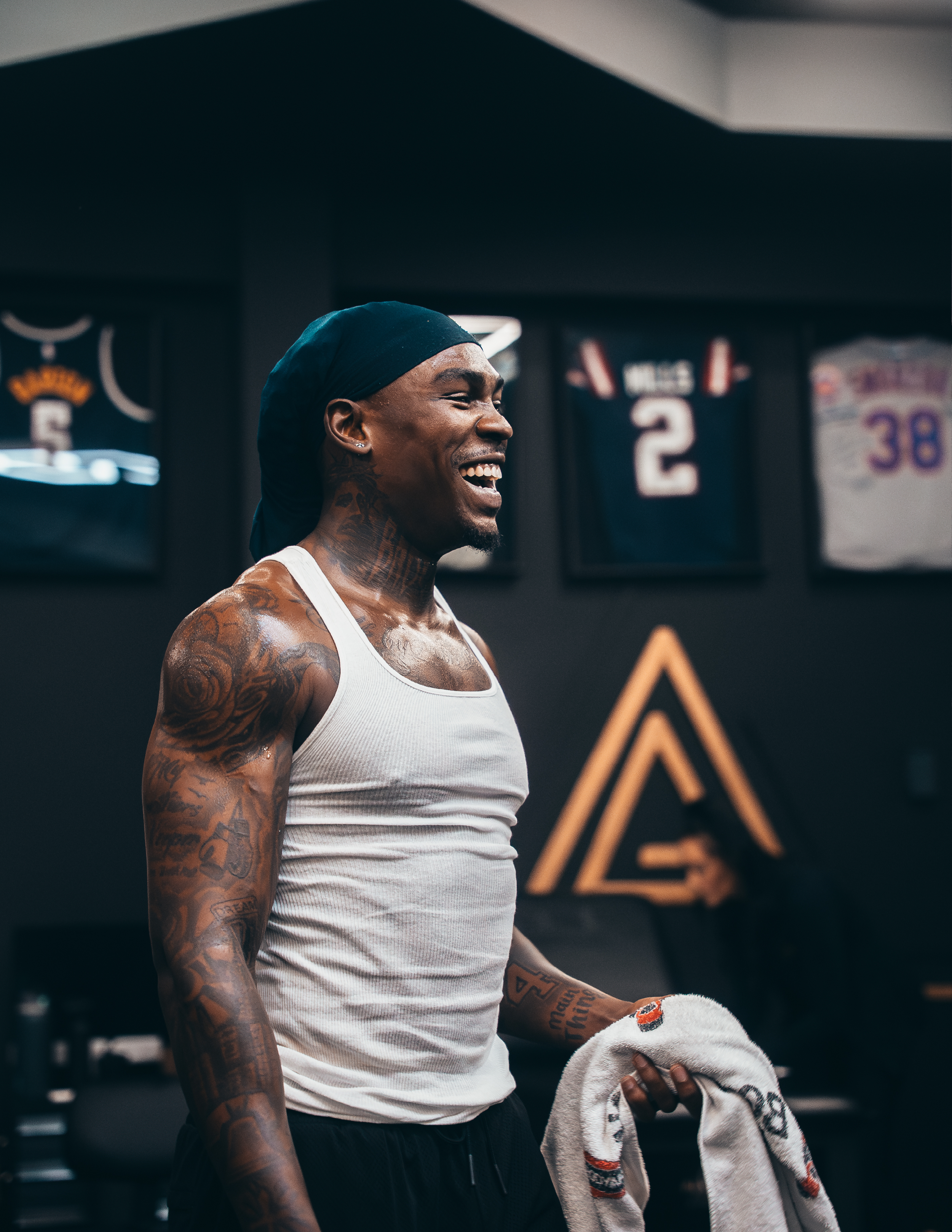


Read the MAR ISSUE #111 of Athleisure Mag and see UNSTOPPABLE | Rashee Rice in mag.

We have been fans of Godfather of Harlem since the first episode premiered in 2019. This historical fiction brings an array of iconic figures in the 60s from Ellsworth "Bumpy" Jackson (Forest Whitaker), Malcolm X (Nigél Thatch/Jason Alan Carvell), Vincent "Chin" Gigante (Vincent D'Onofrio), Rev Adam Clayton Powell Jr (Giancarlo Esposito), Joeseph Colombo (Michael Raymond-James), and more. We get to see Harlem during a pivotal time in American history while also understanding how communities navigated various topics of the time.
We sat down with Creator, Executive Prodducer and writer Chris Brancato (Narcos, Narcos: Mexico, Hotel Cocaine) to talk about the show, its intracicies, and what to expect from S4 launching April 13th on MGM+.
ATHLEISURE MAG: Chris it is so good to see you again! I had the pleasure of interviewing you a few months back for Hotel Cocaine which I loved and I told you then that I love Godfather of Harlem as well. So it’s so great to connect with you again!
What drew you to create Godfather of Harlem. It’s incredible prestige TV, it’s always great to see the depth of characters, dynamics, and interactions!
CB: First of all, that’s entirely due to my friend Paul Eckstein (First Wave, Narcos, Law & Order: Criminal Intent) who passed last year. He was my best friend and Paul told me about Bumpy Johnson who put his grandmother through secretarial school. He told me that Bumpy was this gangster/philanthropist in Harlem and over the course of time, we developed several projects – the movie Hoodlum in the 90s with Laurence Fishburne (What's Love Got To Do With It, The Matrix franchise, John Wick franchise) playing Bumpy in the 1930s and then 20 years later, Markuann Smith (King of Paper Chasin', The Hit Boys Redemption, The Realtor) and Jim Acheson (Numb3rs, For the People, By Whatever Means Necessary: The Times of Godfather of Harlem) producers came to me and Paul and said are you interested in doing Bumpy in the 60's?
Ultimately we decided yes – let’s do it. They were bringing Forest Whitaker (The Last King of Scotland, Southpaw, Black Panther) to the table. So lo and behold, we develop the show Paul and I and there you have it! Godfather of Harlem which we wanted to make it different in the way that we sought to do that was that Bumpy and Malcolm X were friends. So the friendship and the ability to explore both gangsterism and also the Civil Rights Movement was something that we felt was going to give us a fresh angle.
AM: It’s amazing because as you’re watching it, it’s like you have 80 onions that are all unlayering. You have these iconic people from so many sociodemographic areas layered in – it’s truly amazing. The styling of the show, the setting – what do you love most about it?
CB: I think that I love most about it is the actors that we have brought to the table. In other words, when you have Forest Whitaker playing the lead role, that’s when you can get a Vincent D’Onofrio (Law & Order: Criminal Intent, Daredevil series, Daredevil: Born Again series), a Giancarlo Esposito (Breaking Bad, The Mandalorian, The Residence) etc. etc. Watching these people – obviously writing this show, is difficult to blend all of these historical characters into this story, but then watching the actors make it come to life is my greatest pleasure!
So I love editing the episodes because I’m looking at the footage of the actors and the work that they have done.


AM: What should we keep an eye out for in S4?
CB: S4 is explosive if I do say so myself! We’ve got Frank Lucas coming to town straight off the bus to basically challenge Bumpy Johnson before they end up becoming pals. Then, Bumpy’s daughter Elise (Antoinette Crow-Legacy) joins the Black Panther movement in the wake of Malcom’s death and Bumpy isn’t too cool with that! He supports what the Panthers are doing, but not so much his daughter doing it!
AM: Right!
CB: So that’s going to create some friction! So we feel like we have 2 driving story lines this year. The introduction of Frank Lucas and Bumpy’s continued fight against the Italians and then on the Civil Rights side, we have Elise joining the Panthers and participating in their actions!
AM: We truly appreciate you taking the time! It’s an incredible show and anytime your name is on a project, it’s going to be amazing!
CB: Thank you! I appreciate that!
IG @cbrancato86
After chatting with Chris Brancato, we wanted to speak with the cast. We started by talking with Rome Flynn (How To Get Away with Murder, Grey's Anatomy, Chicago Fire) who is joining the cast as Frank Lucas. We wanted to know what he enjoys about this series, what it's like to play this notable figure, and what he hopes fans will walk away with after seeing this season.
ATHLEISURE MAG: We have been fans of yours since How To Get Away with Murder so it’s so nice to talk with you today!
ROME FLYNN: It’s nice to talk with you.
AM: What drew you to Godfather or Harlem?
RF: I mean, I couldn’t find a reason not to! It was a lot of positives you know - working with Forest Whitaker was at the top of the list and then working with Chris Brancato because I knew his work from Narcos and also just being a fan of the show in general. I was like, to be on a show like this would be a dream as an actor.
AM: You’re playing Frank Lucas which is amazing and exciting. How did you approach playing him?
RF: Yeah, it’s a different process to playing someone who lived and breathed on this Earth and left an impact whether it’s good or bad. There was a heavy sense of responsibility, care, and just an attention to detail on discovering who Frank was and trying not to necessarily imitate who he was but finding his essence and bringing that which was extremely important to me because I don’t think that we have seen a version of him like this.
I was afforded an amazing opportunity to play a character that people know, good or bad – we’ll see.
AM: What did you enjoy about playing him, bringing him to life, making him your own especially because regardless of what you know about him, if you think about American Gangster for example – there is that version of Frank Lucas. So it’s exciting to see it and what did you like about doing that?
RF: Yeah, I got to step into the shoes of a man who was equally charming, but also cutthroat and also unpredictable and dangerous. He was also troubled too. As an actor, you want to play a character who is fully dimensional and is carrying a lot of baggage, trauma, and who is still struggling with their purpose and why they are where they are in life. That’s just really fun and rich to play.
It wasn’t just about being a gangster or playing someone who is put in those situations. It was about playing a man who is navigating his life who is in these situations and trying to find the commonalities with a person like this.
AM: What do you want fans to walk away from after seeing S4 and getting to see Frank Lucas and his interactions and dynamics with everyone else this season?
RF: I just hope that the moment that the season is done that the people are clamoring for another one! That’s how I felt just being a fan of the show too! But yeah, I think that there is still so much story to be told. You guys when you love this show, you should talk about it and share it! There is no other show on TV like it that has this sort of historical precedence and is really honoring the details and honoring people during that time. We’ve got to keep this show going! We have to make sure that people see this show because it’s important.
IG @romeflynn
We were excited to sit down with Lucy Fry (Wolf Creek, Mr. Church, Bright) and Michael Raymond James (True Blood, Jack Reacher, See) who plays Stella Gigante and Joseph Colombo respectfully. Lucy has been in the world of Godfather of Harlem since the inaugural season and Michael came into this series during S3. As they have a number of scenes together, we wanted to know more about how they came to the show, what they love about it and more.
ATHLEISURE MAG: It’s so great to connect with you guys as I’m a fan of your work as well as the show!
What drew you guys to want to be part of Godfather of Harlem?
LF: When I first read the script, I guess I really wanted to get into the world of the 60s, gangsters in NY, I thought it was really cool. I'm a fan of Forest Whitaker, so I was really excited to be able to work with him. Yeah that was about 6 yars ago when I first joined. My reasons for loving it have continued to evolve over the seasons, but that was the initial impulse.
MRJ: Yeah, for me, when I got the offer, and when I heard that Forest had asked for me, you know when Forest Whitaker says that he wants to work with you, run you don’t walk. For me, it was kind of a no-brainer.
and when I heard that Forest had asked for me, you know when Forest Whitaker says that he wants to work with you, run you don’t walk. For me, it was kind of a no-brainer.
AM: Obviously you guys play Stella Gigante and Joseph Colombo. How do you approach playing these characters?
LF: I guess there is a mixture of reality and fiction for me anyway with both of us as the story is inspired by real events, but it’s fiction and Stella is a fictional character. So I approached it by looking at the context of the time and the world of NY in the 60s and the gangs and reading the Chin’s – one of his kids actual autobiographies. But then finding the things that are personal to me to fill the fictional world with.
MRJ: You know, Joe Colombo, was a real person and there is an element of – you want to be sort of respectful of that and stay honest to some of that. But, we are doing a show that is historical fiction as Lucy talked about and so it really is all about the material. As an actor, you get the material, you break down that material as opposed to me having to do an impersonation of Joe Colombo. We’re creating a whole new Joe Colombo and Stella Gigante based on the pages that we get.

AM: What have you loved about playing these characters and bringing them to life?
LF: I’ve really loved Stella’s journey over the 4 seasons. She’s really come into herself and grown into a woman that is hungry for power and manipulating the men around her and playing the game that she has learned from her father (Chin Gigante played by Vincent D’Onofrio). It’s been really fun to go from pushing her father away and having all of these romance things to someone who is taking power for herself.
I think that her relationship with Colombo is very informative in that development.
MRJ: Playing the game as Lucy said is really fun and there’s so much nuance and so much in between the lines where it’s not really just the words that you say. It’s the 4 moves ahead that you’re kind of playing. It’s like 3-Dimensional chess with every script. So that’s always fun to play things where there is a lot of nuance and subtext to kind of put your shoulder behind.
LF: I think that the gang world, it kind of gives you a lot more subtext than most genres.
AM: Right.
MRJ: Right.
LF: Because it’s like are they going to kill me? Aren’t they going to kill me? It’s kind of like a constant subtext ha!
MRJ: Ha – but also the people man! Lucy and I show up on set and it’s giggles immediately and sometimes it’s hard to break free from that, but what’s always fun is that the giggles are always just underneath.
LF: Right
MRJ: And you see it come out a little bit in the work. Just a little bit – like holding back laughs and it’s a very serious scene where we’re talking about murder.
LF: It’s quite fun and you can tell that our characters really enjoy the game!
IG @lstowell
PHOTOGRAPHY CREDITS | MGM+/The Godfather of Harlem

Read the MAR ISSUE #111 of Athleisure Mag and see MGM+ GODFATHER OF HARLEM | Return to Harlem in mag.
It starts with a familiar story: an old sports injury flares up again during a jog, a knee twinges awkwardly halfway through a yoga session, or your shoulder starts complaining during an overhead press. You ice it, stretch it, maybe take a break—but the pain sticks around. Traditionally, the next step might’ve involved MRIs, a lot of waiting, and eventually surgery. But things are different now.
For active people trying to stay moving, surgery isn’t always the only (or best) option anymore. Clinics like Regenexx Pittsburgh are showing how non-surgical orthopedics—especially regenerative treatments—can offer long-term joint relief without going under the knife. It’s a game-changer for folks who’d rather spend their weekends hiking than healing in bed.

PHOTO CREDIT | Pexels/Kindel Media
Surgery used to be the go-to fix for everything from torn ligaments to arthritis. But the rise of non-surgical orthopedics is flipping that idea on its head. Today, there are minimally invasive procedures that don’t require incisions, overnight stays, or months of downtime. These treatments aim to support the body’s own healing abilities using biologics—materials that come from your own body, like platelets or bone marrow.
Here’s the thing: the goal isn’t just pain relief. It’s functional recovery. It’s helping you get back to squats, swims, and long walks with your dog—without relying on pain meds or risking complications from surgery.
Let’s break down the most common non-surgical treatments that are redefining orthopedic care:
PRP therapy starts with a simple blood draw. Your blood is spun in a centrifuge to separate out the platelets, which are then injected into the injured area. These platelets are rich in growth factors that support tissue healing and inflammation reduction. It’s a go-to for tendon issues, ligament strains, and mild arthritis.
Stem cell therapy often uses cells taken from your own bone marrow. Once extracted and concentrated, they’re injected precisely where you need them—whether it’s a knee joint or a torn rotator cuff. The idea is to boost the body’s ability to regenerate cartilage, reduce pain, and improve mobility. It’s especially promising for people who aren’t ready for joint replacement but aren’t finding relief with physical therapy alone.
Accuracy matters. Clinics using real-time imaging—like ultrasound or fluoroscopy—can pinpoint the exact area that needs treatment. This minimizes risk and maximizes results. It’s not just about injecting something somewhere near the pain—it’s about targeting the real source of the issue.
Let’s be real: the average person isn’t looking to win the Olympics—they just want to walk without limping, lift their kid without wincing, or run a 5K without regretting it later. That’s where non-surgical orthopedics shines.
For example, say you’ve got nagging knee pain that’s been brushed off as “just aging.” A traditional route might have you resting indefinitely or prepping for arthroscopic surgery. A regenerative approach, however, might combine PRP therapy with physical rehab to rebuild strength, reduce inflammation, and get you back to your routine—faster and with far fewer complications.
The same goes for shoulder injuries, hip discomfort, or even spine issues. Instead of one-size-fits-all procedures, non-surgical orthopedics aims for personalized plans that meet you where you are—whether that’s halfway up a trail or back at square one.
Non-surgical treatment isn’t just about fixing what’s broken—it’s about supporting how you want to live. That’s why a lot of these solutions are embraced by fitness-minded folks, from CrossFit athletes to cyclists and pickleball fans.
Here’s what makes this approach so appealing:
● Minimal Downtime: You’re typically back on your feet within days, not weeks.
● No General Anesthesia: Most treatments are done under local anesthesia with minimal risk.
● Functional Focus: It’s not about immobilization—it’s about careful movement and progressive return.
● Long-Term Payoff: Many people report lasting improvements in pain and mobility, not just temporary relief.
For the person who uses a standing desk and tracks their macros, it just makes sense.
If you're considering regenerative orthopedics, here’s a quick look at how the process usually works:
Consultation and Assessment
You’ll start with a full evaluation that may include physical exams, imaging (like an MRI or ultrasound), and a discussion of your goals.
Custom Treatment Plan
Based on your condition, your provider may recommend PRP, stem cell therapy, or another image-guided injection. Sometimes, these are used alongside physical therapy or bracing.
Outpatient Procedure
Most treatments are done right in the clinic, often in under an hour. You’ll be walking out the same day.
Recovery and Rehab
While there’s little downtime, structured rehab is often part of the plan. Think guided exercises, check-ins, and gradual increases in activity.
Results Over Time
Improvements aren’t always instant, but many patients report reduced pain and better movement within weeks. More substantial gains often show up around the 3–6 month mark.
While non-surgical options are gaining traction, they’re not a magic wand. They work best for:
● Mild to moderate osteoarthritis
● Chronic tendon or ligament injuries
● Joint instability
● People avoiding or postponing joint replacement
It’s worth noting that not everyone is a candidate. Advanced arthritis or significant structural damage might still require surgical intervention. But for many, especially those who are active and health-conscious, regenerative care offers a safer, smarter first step.
One of the biggest misconceptions around joint pain is that you have to wait until it’s unbearable—or until something “tears”—before seeking help. But the earlier you explore non-surgical options, the more likely you are to avoid surgery altogether. Whether it’s a dull ache that’s messing with your morning runs or stiffness after a long workday, getting a professional opinion can make all the difference. Proactive care isn’t just smart—it’s empowering. You don’t have to settle for “just living with it.” You’ve got options, and they’re a lot more active than you might think.

PHOTO CREDIT | Pexels/Kampus Production
We’re moving away from the idea that healing means halting everything. Regenerative orthopedics is about meeting people where they are—whether that’s training for a half-marathon or chasing after grandkids—and offering a solution that supports how they want to live.
No overnight stays. No stitches. Just science-backed treatments tailored for motion, not restriction.
So if you’ve been benched by joint pain or sidelined by injury, it might be time to consider a comeback—no surgery required.

PHOTO CREDIT | Unsplash/Marc Wieland
Otoplasty might seem like a minor procedure, but for many, it brings big changes. Whether it’s about achieving a more balanced look or addressing discomfort, knowing what’s ahead can ease a lot of worries. From pre-surgery prep to the recovery phase, understanding each step helps set the right expectations. If you’ve been thinking about otoplasty surgery, this guide breaks it down simply so you know what to expect and can feel more at ease with the process.
Various steps are involved in preparing for otoplasty surgery. The first step is an evaluation with a trained surgeon. During this meeting, you will discuss goals, health history, and details of the surgery. A detailed test can assess what kind of surgery is best suited for each person.
They provide pre-op instructions to ensure the best success. This may include avoiding blood thinners such as aspirin and smoking cessation. It is important to follow these guidelines to avoid unnecessary complications. Moreover, having someone pick them up and help them after surgery is also best, since patients will most likely feel groggy following the surgery.
On the day of otoplasty, patients usually come to the surgical facility dressed in comfortable attire. The medical team will give the final clearance for surgery. Local or general anesthesia is given to ensure that the individual undergoing the procedure does not experience any pain. The type of anesthesia used (general vs. local) depends on the surgeon, the type of surgery, and the patient.
During the procedure, the surgeon makes incisions behind the ear or within the natural folds, minimizing visible scarring. Cartilage may be reshaped, reduced, or repositioned to achieve the desired outcome. The surgery generally lasts a few hours, with the time varying based on the extent of correction required.
The recovery process starts right after the surgery. Patients are transferred to a recovery area where professionals monitor vital signs and ensure patient comfort. Slight discomfort, swelling, or tenderness around the ears is expected and can usually be managed with pain medication that the patient will be given.
Dressings or bandages will be affixed to aid in the healing process and to keep the ear in its new position. You will be given instructions regarding care and cleanliness, e.g., dressings need to remain dry and clean. Normally, patients can be released the same day when they are stable and awake.
Recovery from otoplasty requires rest and compliance with postoperative instructions. A few weeks of swelling and bruising may remain, but these gradually reduce. Elevating the head during sleep is a natural healing process to reduce the swelling. During the healing process, it is recommended that patients refrain from strenuous activities and contact sports.
You have follow-up appointments to see how you are progressing. During these visits, the surgeon assesses healing, removes stitches if necessary, and addresses any concerns. These visits are key to adjusting your recovery trajectory.
Otoplasty results are more noticeable as swelling subsides. Many people speak about feeling more confident and content with their appearance. Along natural folds, scars will fade to leave little evidence of surgery.
Having a realistic expectation is essential. This common deformity of the outer ear is a common issue with which otoplasty helps provide a dramatically improved appearance, but the absolutely perfect ear may not exist. Speaking frankly to the surgeon about expectations can crystallize the goals and assess realistic results.
Aside from the physical change, otoplasty can also help improve self-confidence. For most, it enhances their confidence and makes them feel at ease in social situations. Aesthetic issues can simply make an individual anxious, and treating them can help improve the quality of life.
However, emotional responses differ. We can be cautious or in a rush to recover. Having close friends, family members, or support groups listening to you can spur you on and reassure you.
Knowing the otoplasty process, from pre-op simple tips to post-op recovery, will help you properly schedule the procedure. Understanding the physical and emotional changes that can occur can help prospective patients feel more confident about the procedure. Keeping expectations in check and complying with the protocols is the key to being effective; the process results in increased confidence and contentmen