Avid readers of Athleisure Mag know that a few months back we had an article that was focused on fitness and menopause where we talked with Dr. Jessica Shepherd, Board-Certified OB/GYN, Chief Medical Officer at Hers, and Pvolve Advisory Board Member for Women’s Health & Longevity. It was the first time that we covered this topic.
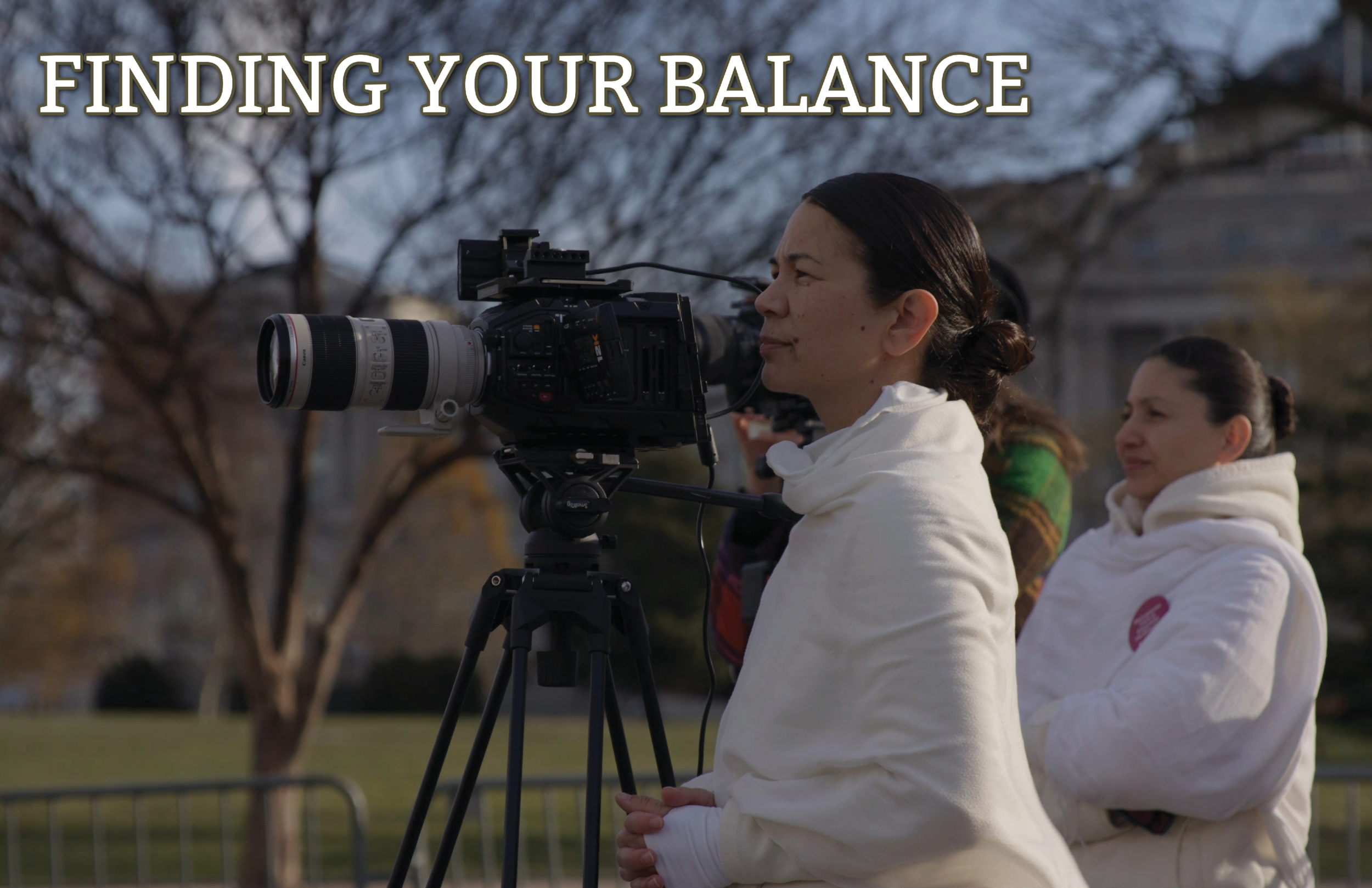
She shared how menopause is comprised of perimenopause, menopause, and post-menopause. She also talked about symptoms that many of us may be familiar with from hot flashes, irregular periods, brain fog and more. We know that this tends to happen to women between 40 and 50. Although a number of elements of menopause seemed to be new to what we knew about, we were not prepared to learn so much more in Balance: A Perimenopause Journey which is a docuseries created by 2 monastic filmmakers, Sadhvi Siddhali Shree and Sadhvi Anubhuti, who not only started their menopausal jounrey, but wanted to share their experiences and how they are approaching it as they found that there was quite a bit of misinformation, lack of research/education, and stigme around this portion of a woman’s lifecycle. This docuseries premieres on Jan 30th on Apple+ and Prime Video.
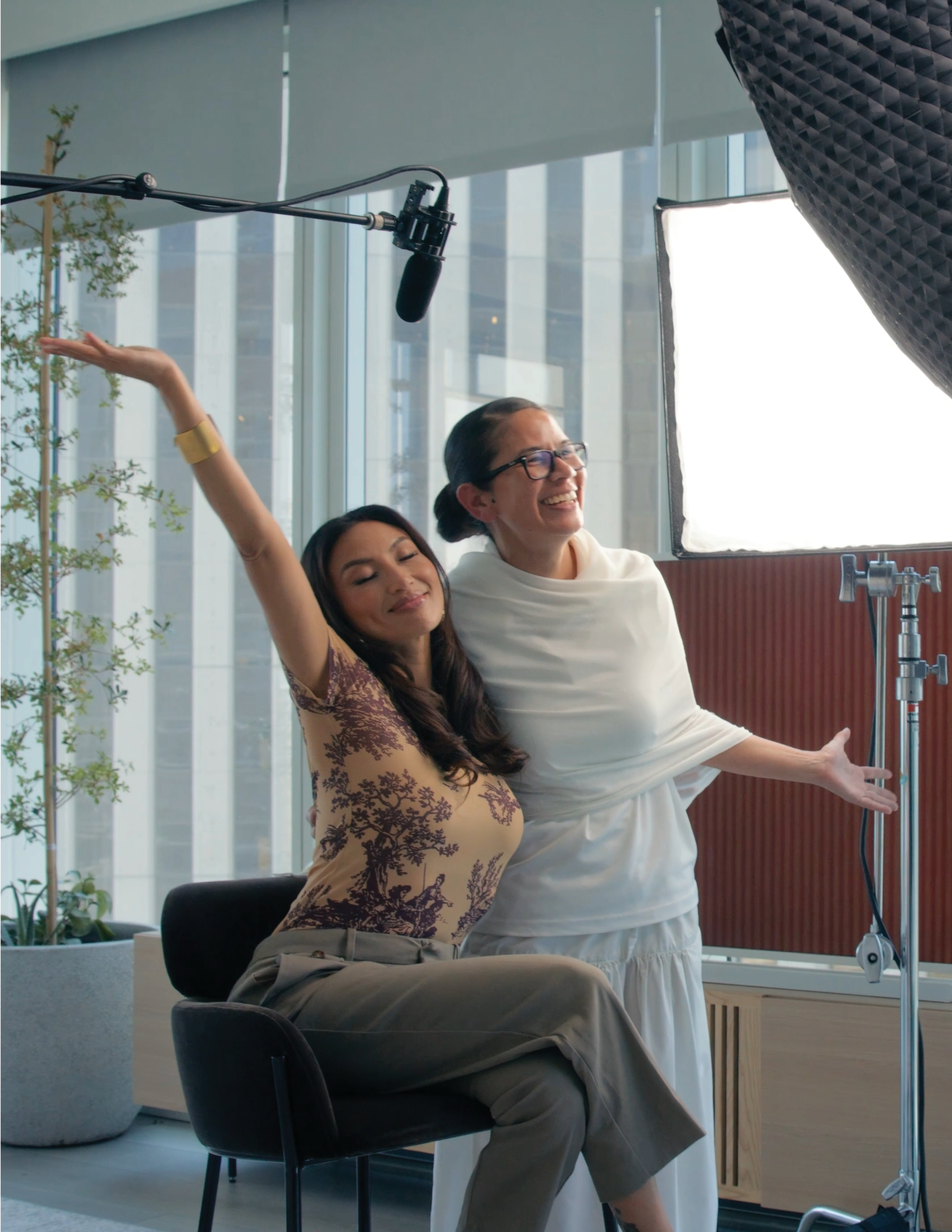
We do not only hear from them and the doctors that are treating them as one focuses on Hormone Replacement Therapy (HRT) and the other opts to do so utilize natural remedies. They also have medical professionals who have varying opinions, regular women along with their partners who weigh in, and even Executive Producers Alyssa Milano (Who’s the Boss, Charmed, Spin City) and Jeannie Mai (The Real, Raid the Cage, America’s Test Kitchen: The Next Generation) share their accounts as well. In watching this 4-part docuseries, we were constantly reminded of so many aspects that people don’t talk about and why we need to do the research necessary to assist us as we navigate this time as for many, this journey start 10 years prior to the target age of menopause which is in the 30s for many of us!
ATHLEISURE MAG: First off, we have to say that we’re positively frustrated in watching this docuseries. That is to say that this is an incredibly informative docuseries where we learned a number of things that we didn’t know about the menopausal journey and that it makes us want to do more research and yet to see the gaps that exist that shouldn’t be. We could go on and on but I am excited to sit with you to hear from you as filmmakers and women navigating the menopausal journey.
Why did you want to make this docuseries?
SADHVI SIDDHALI SHREE: We wanted to make this docuseries Balance, because we wanted to educate women. We are not prepared and because we’re not prepared, we don’t know what we’re going through. We often criticize ourselves, we blame ourselves and we feel all kinds of frustrations because we are going through this transition but no one told us how to navigate. So, to reduce that suffering is important to us as monks and filmmakers.
AM: What’s really impressive in this docuseries are the different voices that you have coming together to talk about this topic. You have different kinds of medical professionals, those who are pro HRT, as well as those that aren’t, I was so excited to see Dr. Jessica Shepherd who I met a few months ago and I had interviewed her about menopause as the event was on the topic, having regular women, Alyssa Milano, and a former cover of ours – Jeannie Mai – both who serve as Executive Producers of this docuseries. So why did you want to approach it in this way by having those on various sides of the issue for, against, and those in the grey area?
SADHVI ANUBHUTI: You said it right! We wanted to make sure that we covered everything. When you are treating perimenopause and menopause, you want to treat it holistically. So we wanted to make sure that we had nutrition, activity, and a full understanding of what is happening to us from the OB/GYNs and a full scope of everything. So it was very important that we included trusted voices.
AM: Why do you think that there is such a stigma around the transition of menopause from the awareness, the marketing aspect, the fact that there is this timeline of life prior to menopause, 1 day which is the actual menopause, and then after. I’m 46 and I will be 47 in Sept. When I went to my first menopause event last Fall I remember thinking well that is for people in their 50s and 60s – is this even a fit? Then learning about the menopausal journey, it was like, “oh no you are in that mode and you need to learn about this!”
SA: You are right! It’s that misunderstanding of what is happening in this space. It’s the fact that women have not been included in that research and we have been underfunded, under researched, and misunderstood. That needs to change. So information needs to be out there and that is why this series needs to be there.
AM: It covers so many things from the social, emotional, and physical aspects of this journey. How long did it take you to think about creating this, doing this, traveling all over the world, and the research? What was the process in creating this?
SSS: I would say, that we were going through the early perimenopause symptoms for a few months and as filming was going on, we realized that no one knew about this. We were researching for ourselves and so we knew we had to do a docuseries in 4 parts so that it would cover everything. So the whole process took about 2.5 years. So as soon as we knew that we could film our appointments because we wanted to show this raw and honest from the very get go.
AM: It took 2.5 years and it’s now coming out Jan 30th, the same day that our JAN ISSUE #121 drops, what Jan 30th, what has been the response that you have received from those with early previews/screenings? Even for those that have participated in it as we get to see other people’s journeys along with their spouses as well and how they are doing. You also have your journeys as well.
SA: I think that for the first time, many women are starting to feel seen, validated, believed, they’re not crazy – this is something that all women go through. I think that we are building our own community of women who are saying that they are not going to suffer anymore, they’re not going to go through it like their mom did, and so it is very empowering to see that response.
AM: Where should people go to find out more information about the movie as well as this journey of menopause? In watching this and hearing certain responses in the docuseries, I think about things I have noticed and just attributed it to other things. I’m someone who eats healthy, works out etc, but maybe something I felt that I just assumed I was tired could be a symptom so I know I will be rewatching and taking personal notes to get to the bottom of things that I didn’t know could be more aligned to this and not just something that is about age or being tired. So where can people go to find out more about this?
SSS: Our viewers can go to the Balancedocuseries.com website where there we will have resources and viewers can follow all the doctors that they resonate with featured in our series because they have education on this, they are posting all of the time on social media and you can always go to the Menopause Society as well. It’s one of those things that you need to go to a trusted resource so that you have the right guidance as that is critical in this time and that’s why Balance is such a trusted resource because it is raw and it is real and we’re not holding anything back.
AM: You guys are filmmakers and I have enjoyed seeing other documentaries that you have done. What do you enjoy about storytelling, and how was it to do this particular story because it is personal? You’re telling this story and you have also injected yourself in this as well as we’re following your journey, as well as others in this docuseries as being objective must have been something that was always in mind in navigating telling this story.
SSS: I think that it comes from our experience of being monks and filmmakers on 3 other films – 2 on human trafficking and another one on animal cruelty. So, these are very dark and human subjects and we are passionate people. What we practice in our system is that there are so many sides and you have to see them and there are various truths to those sides and how do you do it – no pun intended, in a balanced way? That is really important because you have to honor all voices and as you have seen in this series, I have taken the hormone therapy path and she (name) has taken the natural approach which will resonate with audiences and we have our own questions so it kind of covers the whole spectrum of the topic.
PHOTOGRAPHY CREDITS | Balance: A Perimenopausal Journey
Read the JAN ISSUE #121 of Athleisure Mag and see Finding Your Balance in mag.