
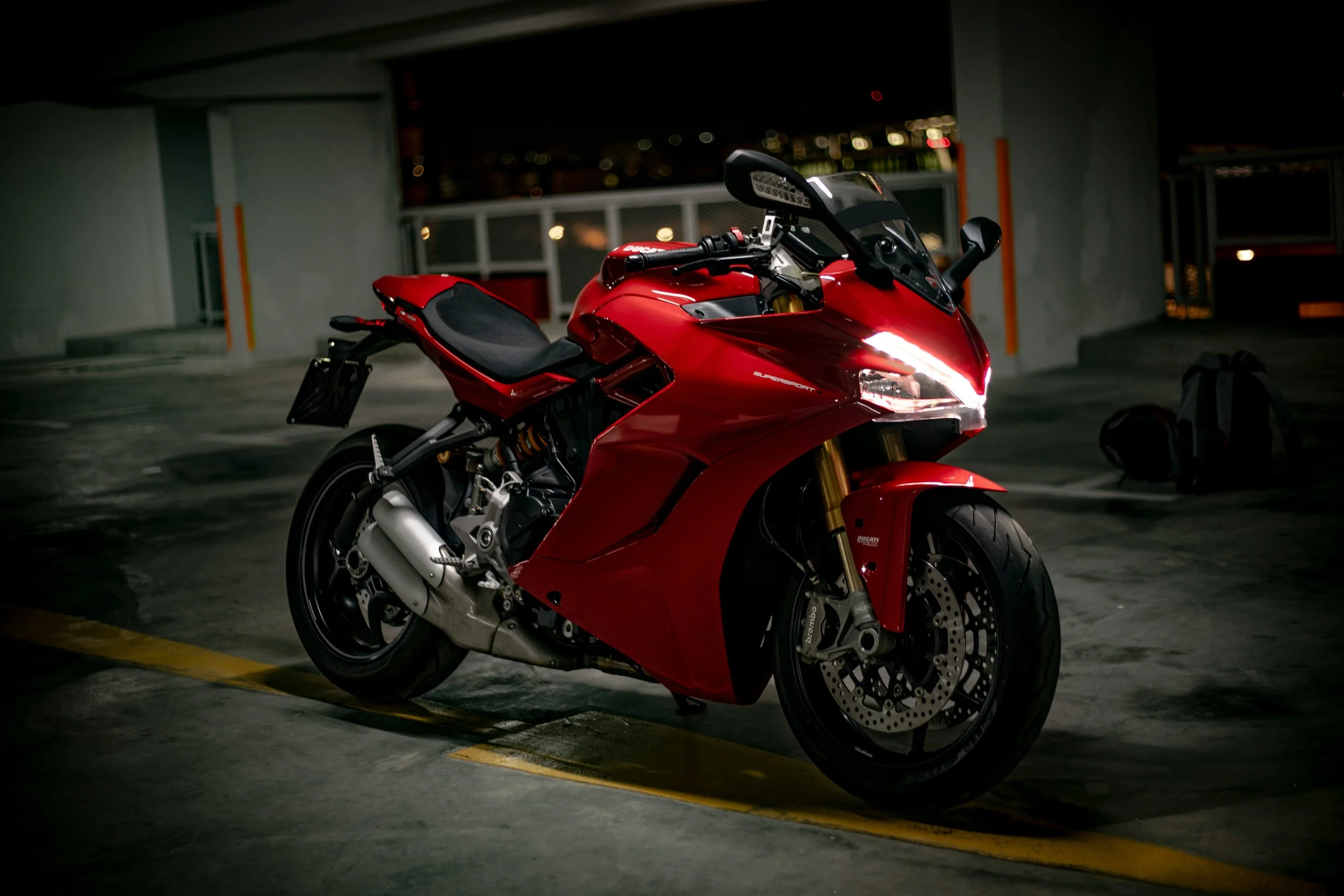
Motorcyclists face much more danger per mile than other people using the road. The National Highway Traffic Safety Administration reported 6,335 motorcyclists killed in crashes in 2023, which made up 15 percent of all traffic deaths. Per vehicle mile traveled, the motorcyclist fatality rate was almost 28 times the rate for passenger car occupants.
Determining who is at fault for a motorcycle accident is usually very complicated. It requires examining the accident scene measurements and each party’s actions before and after the crash. Lastly, state laws governing cases where more than one person is at fault must be factored in. Each point should be carefully reviewed.
What Evidence Shows Fault
The best time to gather evidence to prove fault is at the scene of the accident. The relevant evidence necessary to move a motorcycle accident case comprises a police report, witness accounts, citations, photos of the scene, video footage, and statements from everyone involved.
Evidence can help recreate the scene as accurately as possible. Taking pictures is a valuable way to recreate what happened in the accident and to position the vehicles involved. Video proof is more helpful because it helps determine the correct facts about the drivers’ speed and their signaling.
Evidence is temporary. Skids fade, repair shops fix cars, and witnesses leave. This situation makes the initial hours after a crash critical to preserving evidence. Each state handles liability and damage sharing differently. The circumstances and conditions that led to the crash become significant once the jurisdiction is established. Connecticut residents who have trouble proving liability can seek help from lawyers like New Haven motorcycle accident lawyer James G. Williams. A lawyer can provide riders in Connecticut with more details on how to collect evidence. Riders can use the law firm’s website to learn about different types of motorcycle crashes, including drunk and distracted driving crashes, and crashes involving trucks and cars.
Crash Patterns Investigators See Often
Many motorcycle accidents happen in the exact same way. One such way, according to a study by the Insurance Institute for Highway Safety, involves motorcycle accidents where a vehicle turns left and hits the motorcyclist. The institution studied crashes from 2017 to 2021.
The study results show that the most frequent type of fatal two-vehicle motorcycle crash involved another vehicle turning left in front of an oncoming motorcycle. Drivers in these crashes will sometimes say they did not see the motorcyclist. Officers then cross-check the drivers’ claims against other details, such as speed, lighting at the scene, and whether the driver had a clear line of sight. Officers also examine where the two vehicles made contact.
According to the North Carolina personal injury website https://omalleytunstall.com, motorcycle crashes typically happen when another driver fails to see the rider, and common examples of driver negligence include making an illegal turn or failing to yield the right of way.
How Shared Fault Changes Recovery
Very few crashes are the result of just one driver's actions. Most people agree on this point. The comparative negligence overview dictates that injured plaintiffs lose money as a result of their own actions. As an example, the injured plaintiff may be assigned 40% responsibility for the crash. In this case, they would be unable to recover 40% of the damages. They would only receive 60% of their claim.
States have varying fault laws. Some states allow an injured person to receive a recovery if they were at fault for an accident, even if they were more than fifty percent responsible.
A majority of states prevent injured people from recovering anything if they were responsible for fifty or fifty-one percent of the fault. Only four states and Washington, D.C., have contributory negligence laws. These states prevent injured people from receiving a recovery if they were responsible for an accident at all.
Rider Conduct Under Scrutiny
Insurance companies are also auditing motorcycle riders, just as much as anyone else. NHTSA’s 2023 data reported that 36 percent of motorcycle riders involved in a fatal crash were speeding, while 22 percent of passenger vehicle drivers were speeding. NHTSA’s 2023 report on motorcycles states that 34% of motorcyclists in fatal crashes were riding without valid motorcycle licenses, and 26% of riders killed were alcohol-impaired.
Also, 51% of motorcyclists who died in 2023 in states without universal helmet laws were riding without helmets. Only 10% of those operators who died in states with universal helmet laws were riding without helmets. These figures describe riders in fatal crashes generally and do not decide fault in any single crash, but insurers may still point to speeding, licensing, impairment, or helmet use when arguing that a rider shares fault.
Winning a claim is dependent upon the quality of the record and the application of laws of each state. Evidence clearly left at an accident scene, along with an accident statement from a rider whose driving history is impeccable, will stand up better than sparse evidence. Each state has its own system for deciding how evidence should be weighed.