
Do your legs feel heavy by 3 PM? Does getting out of your chair take a lot of effort? It’s probably because you’ve spent too much time sitting still at your desk. Your calf muscles work like a pump. Each time they tighten, they push blood back up your leg veins toward your heart. When you sit still for hours, that pump barely runs, and blood moves more slowly through your lower legs.
So if you want to improve circulation at a desk job, start by getting that pump going again. Stand up, take a short walk, or flex your ankles every 30 to 60 minutes. It works whether you sit at an office desk or at your kitchen table.
Below, you'll learn how sitting all day affects your blood flow and eight simple ways to support it at work. Rest assured, you don't need a gym, special gear, or a big block of free time.
How Circulation Works
Your circulatory system is a delivery loop that never stops. The heart pumps oxygen-rich blood through the arteries; your tissues take the oxygen and nutrients they need, and the veins carry the used blood back to the heart and lungs to be refilled.
The National Heart, Lung, and Blood Institute describes that loop in three stages:
Pick-up. Blood collects oxygen in the lungs and returns to the heart.
Delivery. The left side of the heart pumps that blood into a large artery called the aorta, and on to the rest of the body.
Return. Veins bring the oxygen-poor blood back to the heart, and the trip starts again.
Your blood vessels are flexible tubes that change width through the day. Nitric oxide signals the vessel walls to relax. A relaxed vessel widens, so blood passes through more easily, like opening an extra lane on a busy road.
Your arteries release more nitric oxide when they sense exercise. That connection helps explain why so much advice on improving circulation starts with movement.
What Long Hours of Sitting Do to Blood Flow
Sitting for hours slows the blood moving through your legs. A small trial in Physiological Reports measured the effect. Fifteen adults sat for four hours without a break, and blood flow in a main leg artery had dropped by the end of the session.
The heart easily sends blood down to your feet, and gravity helps. The trip back up is harder. Veins in your legs rely on the surrounding muscles to squeeze and push blood toward the heart, so your calves act like a second pump.
When you sit still, that pump goes quiet. The trial's authors link the drop in leg blood flow to lower muscle activity. They also note that blood may pool in the lower limbs when the muscles stop contracting.
The volunteers repeated the four-hour session on two more days with walking breaks, and the pattern of those breaks changed the result:
No breaks: blood flow in the leg artery fell.
An 8-minute easy walk every two hours: blood flow held steady.
A 2-minute walk every 30 minutes: the benefit was less clear than with the longer walks.
The study was small and short, so treat it as a pointer. It still shows that light movement keeps the leg pump working during a long day in a chair.
8 Ways to Support Healthy Circulation at Work
If you're looking to improve circulation during office hours, start by breaking up sitting with leg movement, then support it with water, food, and regular exercise. These eight habits fit into a normal workday. Begin with the first two, since they get your leg muscles working.
1. Stand or walk every 30-60 minutes
Get out of your chair at least once an hour. Harvard Health suggests setting a timer to remind you to move. Turn a few of those breaks into a proper walk of several minutes, since longer walks held leg blood flow steady in the sitting trial.
2. Desk stretches and calf raises
Calf raises switch the leg pump back on. Stand behind your chair, rise onto your toes, lower slowly, and repeat for about a minute. While seated, circle your ankles or tap your feet.
Even fidgeting counts. In one experiment, moving the legs for one minute out of every four kept blood flow steady in a leg artery during three hours of sitting.
3. Stay hydrated
As the British Heart Foundation points out, around half of your blood is water, so steady fluid intake helps you through a long day. Mayo Clinic estimates a healthy adult needs about 11.5 to 15.5 cups of fluid daily, with food providing about 20%. Keep a bottle on your desk, and let the refill trips double as walking breaks.
4. Walking meetings / post-lunch walk
Turn one call or one-to-one meeting a day into a walk. An easy post-lunch stroll does the same job. Both give you the longer leg movement a quick stand-up misses.
Aim for around eight minutes every couple of hours at an easy pace.
5. Elevate legs when resting
On a break or in the evening, prop your feet up on a stool or a cushion. Cleveland Clinic explains that once your legs sit higher than your hips, gravity helps blood flow back to your heart. Lying above heart level works even better if you have room to lie down.
6. Eat nitrate-rich foods (beets, leafy greens)
Beets and green leafy vegetables are natural sources of nitrate, which your body can turn into nitric oxide. Add a handful of spinach to a lunch salad, or roast a tray of beets on Sunday to use through the week.
7. Keep up regular exercise
Desk breaks help during the day, and regular exercise builds on them over time. The CDC recommends 150 minutes of moderate activity a week, such as a brisk 30-minute walk five days a week. Regular activity also strengthens the heart muscle, helping it pump blood throughout the body.
8. Consider supportive nutrition
Food comes first, and some people add a supplement for convenience on busy weeks. Some blood-flow-support products combine beetroot with grape seed extract. The National Center for Complementary and Integrative Health notes that grape seed extract has been examined in some well-controlled human studies.
Talk to your doctor before starting any supplement, especially if you take medication.
Beet Root and Circulation Support
Beets support healthy circulation and blood flow because they are rich in natural nitrate. Bacteria on your tongue turn that nitrate into nitrite, and your body then converts nitrite into nitric oxide.Fresh beets typically contain about 250 mg of nitrate per 100 g, although the exact amount varies depending on growing conditions and the variety of beet.
A review in the journal Nutrients traces that path step by step. The authors report that the body absorbs nitrate from beets well.
Each form trades convenience against sugar:
| Form | Convenience | Sugar to consider |
| Whole beets | Needs washing, cooking, and storage | Natural sugars only |
| Beet juice | Quick to drink, harder to carry | Can be relatively high in sugar |
| Beet gummies | Pocke-sized, no prep | Varies by brand, so check the label |
One of the best beet gummies is Natrava BEETS+ Gummies. Each 2-gummy serving contains 350 mg of beet root extract (20:1, from 7,000 mg of whole beet root), 100 mg of CoQ10, 15 mg of grape seed extract (10:1, derived from 150 mg of grape seed), and 30 mg of vitamin C.
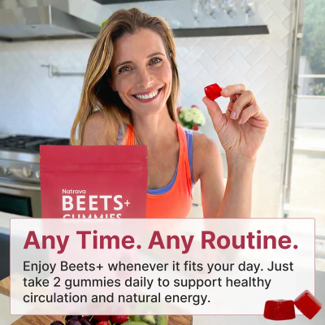
PHOTO COURTESY | Natrava
Natrava markets the formula for blood flow support and keeps sugar low, at 2 g of added sugar and 20 calories per serving. The cherry-berry gummies are sold only through the Natrava website and Amazon, where stock can sell out.
When Circulation Concerns Need a Doctor
See a healthcare provider if swelling, pain, numbness, or changes in skin color in your legs, feet, or hands keep coming back or do not go away. Healthy lifestyle habits support circulation, and a medical check is the right step when something feels wrong.
You can discuss any circulation symptoms with your doctor. Please don't try to diagnose yourself from an online list. A provider can examine you and explain what is going on, and sudden or severe symptoms require urgent care.
Frequently Asked Questions
How often should I get up from my desk?
Every 30 to 60 minutes is a good target. Harvard Health suggests taking phone calls standing up, which builds the breaks into your day without a reminder. Short stand-ups keep you from sitting for hours on end, and a few longer walks of several minutes help most with leg blood flow.
Does drinking water help circulation?
Yes, drinking water helps. Blood is roughly half water, and dehydration can thicken it, according to Mass General Brigham. Plain water is the best choice for meeting your fluid needs, so sip through the day and drink more when it is hot or when you exercise.
Are beets good for blood flow?
Yes, beets can help support healthy blood flow*. Their natural nitrate is the reason, and green leafy vegetables such as spinach supply the same nutrient. One practical note: antibacterial mouthwash can reduce the nitrate-to-nitrite step because bacteria in the mouth drive that conversion.
Is a standing desk enough?
A standing desk helps most when you pair it with movement. Cleveland Clinic advises avoiding long spells of sitting or standing, so an adjustable desk that lets you alternate is the better setup. Switch positions throughout the day and take walking breaks to improve blood flow.
Conclusion
Improving circulation at a desk job starts with moving your legs often. Stand up every 30 to 60 minutes, take a few minutes to walk when you can, drink water, and keep up your weekly exercise. Nitrate-rich foods such as beets and leafy greens can also support you from the kitchen.
For a convenient option, Natrava BEETS+ Gummies combine beet root extract, CoQ10, grape seed extract, and vitamin C in a low-sugar gummy. Talk with a healthcare provider before adding a supplement, and book an appointment for any lingering concerns.
Disclaimers
This article is for general information only and is not medical advice. NATRAVA BEETS+ is not intended to diagnose, treat, cure, or prevent any disease. Consult a qualified healthcare provider about your own health.