
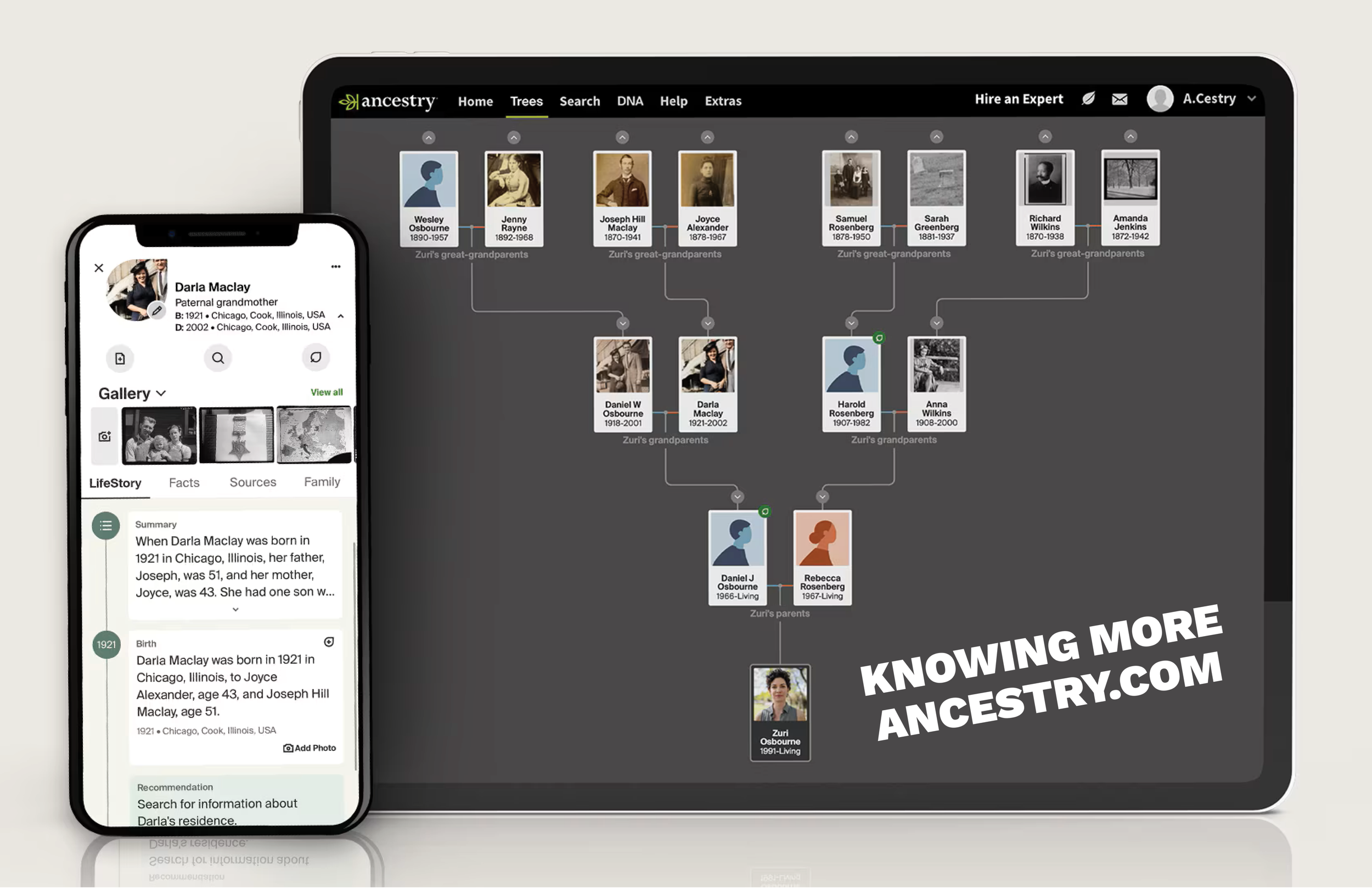
We have always been fond of the quote, “to know where you’re going, you have to know where you have been.” Not only does that include your personal journey, but we also believe it includes insights from your ancestors as history tends to repeat itself. We enjoy mapping out our family trees, hearing stories and seeing how we are connected to others. We have used Ancestry.com for years to create our tree and to see records as they have become available. Recently, we sat down with Nicka Sewell-Smith, Sr. Story Producer to find out why finding your family history is important, tips we can use, and how best to navigate the site.
ATHLEISURE MAG: There is always someone in the family who takes on the role of being the person collecting the stories of the family. So Ancestry.com is a site that we have been a long time fan of because of the vast amount of records and layouts. We’re very well aware that your background is phenomenal in this space so this conversation feels like years in the making that we’re finally connected to you to talk to you about getting tips when you are going into this kind of research for your family history.
So when did you fall in love with genealogy and realize that you wanted to do this as a career?
NICKA SEWELL-SMITH: You know, I don’t necessarily think that about this as a career. I think that, you know, if you think about that movie Crash, where I don’t know if you’ve seen it, where like everybody had to be at a particular place at a particular time. That’s kind of how stuff operates for me.
AM: Same, love a Crash reference!
NSS: I come from a family of storytellers and I don’t necessarily think that I thought about it from that vantage point - just folks who you know innately had a knowledge of the beginning, middle, and the end and how to add all the details. When you have 2 parents that come from storytelling backgrounds like that, it just makes the perfect storm for somebody to enter this world. So it was that, it was the fact that, you know, one branch of my family, we’ve had family reunions longer than I’ve been in the world. So every two years we were coming together for the common purpose of our family, connecting and doing all that.
You know, the early work that was done on that side on family history - that first family tree is one of the first things I remember sitting down reading by myself as a kid. I would just ask my mom all these questions about everybody that was there and then I went to college for journalism. Wrapped into journalism is the need to search and find stories. So I think that’s actually what made me a great researcher is always trying to find the angle of history, a person’s story, something that will like resonate with this specific person that I’m talking to or whatever the campaign is that we’re working on. I think that’s definitely what gave me a good skill set.
AM: Tell us a bit about your background and how you came to Ancestry.
NSS: I’ve been in the Ancestry family for close to a decade now, but more formally for the last three years. Ironically, I got to Ancestry because of my cousin Crista Cowan. Me and her had actually met at a genealogy conference probably about 12 years ago when I discovered her mom was among my DNA matches. And I was like, wait a minute. This is Crista. Am I related Crista? So we were at the same event and we were just like, okay, we’re going to meet there. It’s so funny. If you actually go on Ancestry’s YouTube channel, you can see the video when me and Crista first met in person. She’s white and I’m Black. How are you guys related? We know now, we know exactly how we’re related. Crista was just like, “you would be an excellent, asset for our team.” I had never even entered the world of consulting, I didn’t even know that I had the ability to do that or that I had the ability to knowledge. Sometimes when you’re meant to do a thing other people see it before you do!
Within weeks of me signing on, I was doing a virtual interview with Essence Magazine, which you already know for Black women, that’s like the like thing. And I’m like, “oh my gosh!”
AM: It better be right because you know that everybody, Grandma, etc is reading that!
NSS: Right! It’s a mainstay. Within like two weeks after that, I was on set in New Jersey. I had never been in New York before. I was sitting there with Dionne Warwick.
AM: Ok, now.
NSS: Like literally that happened! This is fun. I like the variety. Every day is different and that is what I like so much about it is that I can nerd out on content and help our content acquisition team develop the descriptions for the different collections we have. I can be working on a Hackathon project um or I could be interviewed like this or leading a bus tour! I cannot forecast what we’re going to be doing. I have no idea. Just like, I have no concept of every set of set of records that are on the site. I’m constantly coming across stuff where I’m like, we have this?
AM: What is your official title at Ancestry?
NSS: So my official title is Senior Story Producer. So in essence, we work with our marketing colleagues, programming colleagues, and we work with pretty much all across the business, helping people to unearth stories, to bring them to life so that people can see the power of what Ancestry is.
AM: And for those who aren’t aware, how do you define genealogy or being a
genealogist?
NSS: I think that the term or anything with an “ologist” intimidates people.
AM: Right.
NSS: You know, it doesn’t matter is what it is. I’m a Crayonologist!
AM: You’re like, whoa, put your crayons away.
NSS: There probably is somebody that is a Crayonologist.
AM: Crayola does have someone like that actually – there was a press release a few years back.
NSS: I need an Instagram BTS on the Crayolologist.
For genealogy, and we typically use the term genealogist and family historian kind of together. It’s just literally the study of pedigrees and family trees. Most peers will say genealogists. I like family historians. I feel like family history is, what I say is - it’s the dash between the dates that is where you get the most information. You are getting information around when a person was born, where they were born. Same thing for where they died and when they died. But that dash between those dates is the context. How did they get that job? Why do they live in that environment? That’s where I like to live. I think that that dash is family history.
AM: We’ve been working on our family tree over 15 years or so. It came out of a curiosity in terms of how far could we go back? It would be challenging due to being Black when you hit certain areas in time.
Why is it important for someone to begin to engage in this activity and to put it upon themselves if no one else in their family has done it?
NSS: I think for Black Americans in particular, starting is the most important thing and the reason why is as we allow more time to elapse the stories, the facts, the documents, the pictures, start to become fewer and fewer. When someone becomes intentional about documenting it in the time in which they live and they pass it to someone else to that next person, they don’t have as much work to do.
As time goes on and as we get access to more records and the way that records are discovered changes, there’s going to be more things that are going to open up that weren’t available when the initial person first started to do research. I think it’s the fact that for me, you know, my grandparents, their grandparents were enslaved. So where I have that phenomenon, my son and the generation after him, for them, the context is, oh, my grandparents lived through segregation. So what’s going to happen for them when they’re grandparents? For them, it’s going to be, we were alive for the first Black President. So you have to keep sort of these milestones and the stories related to it. You have to keep it at the forefront and I think for that one branch of the family that I talked about, I had a cousin who pre-computers started doing this research, they were going to the archives and doing all this kind of stuff - I had that head start there. When I got into it, my research questions were different.
His were just, can I put a tree together? Mine was, can I find the last slaveholder? For other branches of my family, I was the, can I just get a tree together person? That’s the thing, because we’ve got 4 grandparents, 8 greats, 16 great greats. Your work is never done. And as I always say, if people keep being born and dying, you’re never finished. You never will be.
AM: What are some general tips that we should keep in mind before we embark upon setting our family tree? What should we kind of be doing?
NSS: Really, the most important thing is utilizing the living resources you have around you. I think a lot of people just forget that they have living history and individuals who were alive before them who remember those folks or got the stories that you didn’t get. I think that also is the beauty of when you work in community and in concert with others on Ancestry. You start to find other family members that are building their trees out and researching the same people. I remember in one branch of my family where I have so many pictures, you can literally correlate it to how early on people attained property and land. Wherever that generation is, that was their goal. They met it. Then the next generation, they don’t have that goal anymore. For them, it’s a matter of well, we don’t have that goal, so we can afford to buy a camera or afford to go get photos.
So I have this one picture of my great grandmother and her sister-in-law, it’s gorgeous. It’s like a postcard essentially. I’m an AKA and I love the fact that it was literally on Founder’s Day which is the date of this photo.
AM: Oh, wow.
NSS: So I was like, oh my gosh, this is interesting. So I uploaded the picture and I didn’t know I had a cousin who had been trying to find a photo of her great-grandmother. The only picture she had was one where she was to the side. She wanted to know what she looks like. Then when she’s found the picture, it’s her great-grandmother and my great-grandmother. So my great-grandmother’s sister-inlaw was her great-grandmother. It’s literally, she looks just like her. I was like, so here you were, trying your best to get a picture of a woman and all you had to do was look in the mirror! So when we met in person, I was like, okay, we have to take a picture and we both look just like them. I’ll have to send you like a picture so you can see. I remember I posted that on social and people were like, this is so crazy that you all look just like them. It’s just one picture of sepia and the other one is in color. So I would say, that’s the reason why you’ve got to connect with other people in your family first. It’s because they have those pictures, they have those stories. You might have walked away with one thing or your side walked away with one thing and their side walked away with something else.
I think another tip is your home and what you have in your possession. I think people don’t really think they have anything. No, actually you do. You know, one of my grandmothers was like the funeral maven. I promise that lady went to funerals with people she didn’t even know. I don’t understand it to this day, but she was totally like a funeral maven and she would just keep these programs. You know you’ve just got to save the program. We lived miles away from her. So she would periodically, like quarterly, she would send my mom a stack of obituaries of people who had died. So I remember being the one who would go to the mailbox and I’d be all excited to go and get this package of obituaries from my grandma. Like what teenager is like that? That was me. I remember the first time I saw a color one. I don’t even know what my mom did with all of those because some of them were family, but some of them were just like friends. But like it’s those things where we’re in a culture now where the mortuary has a website with the information. You have to think about what we have already in our possession and sometimes those things can answer the questions that we have around what’s going on with our family trees. And that might be the only thing we have that substantiates that.
AM: What we love most about Ancestry is everything is so organized. You have the newspaper documents and when you roll your cursor, it’ll enhance the document so you can see what it says as sometimes the incursive may be tough to read. As the family historian, you feel like Carmen Sandiego!
NSS: So I actually brought her up during a meeting yesterday. And I was like, do you guys even know who that is? That show was like the journey and return. If you were into that, you got it.
AM: So what are the kinds of items that you generally can find when they access it between the Newspapers.com and other resources?
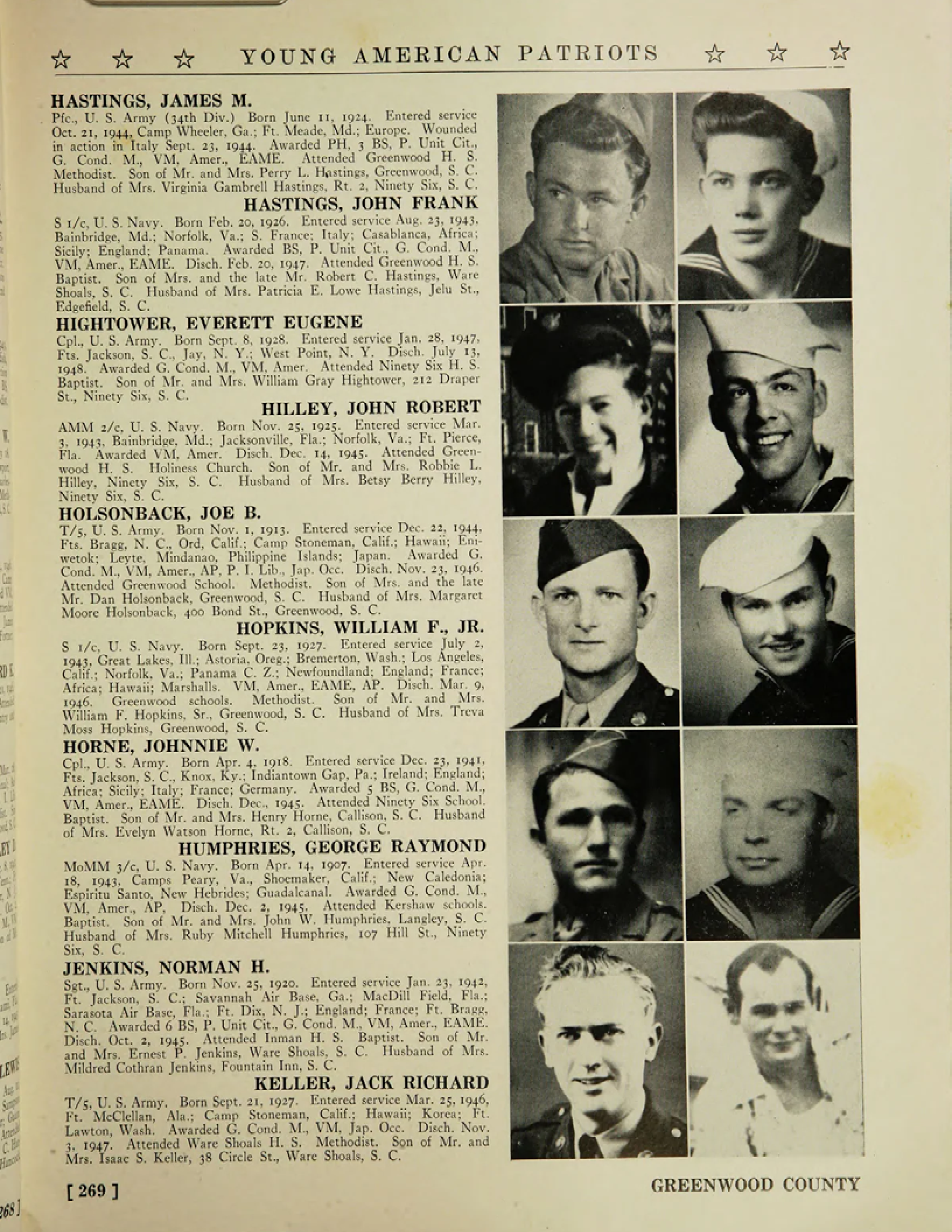
NSS: So Ancestry, we are a company of many aunts and uncles. You know, that’s one of the ways that I describe to people who I report to is I say who my grandmother is, who my parent is. Everything from Fold3, which is military records, Newspapers.com, which is the newspaper’s archive, Find A Grave, Virtual Cemetery, where volunteers go around to cemeteries around the world and photograph headstones.
There’s just Ancestry in general. I think also people don’t know or aren’t aware because we’ve got really great marketing that Ancestry DNA and Ancestry are both still Ancestry. People think that you can just DNA test and that’s all we have. No, there’s 70 billion plus historical records on the side. Most folks, it’s the U.S. Census. That’s probably the number one record that they’re going to use because you can go back in time every 10 years. You can see family groups together. One of my favorite things is the multi-generational household where you’ve got the parents and the kids and the grandparents and sometimes the great-grandparents. I’ve even seen great-great-grandparents in the same house. There’s that there’s a draft cards, you know, that’s one of my favorite things to share with folks where they can see the signature of their, their male an cestors or, a vital records like births, marriages, and deaths from the actual certificates to indexes. All these things, you know, really come together. And really, again, it just broadens out what we know about folks. And then within each of those records, you get a bunch of different things. In the 1950 census, it will tell you things like, or actually 40 will tell you the highest level of education a person has. Where they were living five years earlier or where they were living the year prior. You get their occupation. Did they own their land? Even like crazy stuff like, did they own a radio? Could they read or write? There’s all kinds of stuff like that where if you’re just focused on the names and the dates, you’re going to miss all that additional contextual information. So, yeah. So we have so much stuff. Sometimes there’s unique state specific stuff where we tell you, here’s the history of this collection. Here’s where we got it from. Here’s what you can find. Here’s maybe a way that you can go and get more information based off of what you find here. Like that part too is important because the collection I’ve been talking about most recently are like the cosmetology licenses in California where they say she could pin curl. In that collection there’s a lot of immigrants who were starting their own businesses and literally trying to make themselves in a new place. And so you’ll see them, you’ll see Black folks. It’s a great genealogical source.
AM: What should we be mindful of? We had this happen in our family this weekend. You’re told certain stories in your family that become canon. It is great that you hear those stories. But then when you start looking at the documents, you’re like, wait, the story that was being told and what the paperwork is saying doesn’t match up. So we were told that there was a certain celebrity that was in our family and we wanted to know from what branch. When the branch was mentioned, that didn’t align with the documents. It became a long conversation and number people on speaker phone to get to the bottom of it because people remembered conversations that were said but the documents are the documents in many respects. It’s not to say that someone couldn’t have said something in a document that could be in question. What should we be mindful of in knowing that, yes, people are telling us these stories, but maybe these stories might be twisted for whatever the reason it is and aligning that with what the actual historical record is saying?
NSS: Yeah. I think about the game telephone. You’re doing team building and the first person says the thing and then it gets passed and then people think they hear one thing, but they don’t and it ends up getting transposed. It happens quite often. You know, it’s not that the person was lying. It’s just that they just got the stories confused. You’ve got to remember, again, you’ve got 2 parents, 4 grandparents, 8 great-grandparents, 16 great-greats. And, you know, for your mom, that’s just my side of the family as opposed to, actually, it’s my dad’s side. So people don’t kind of know where the off-ramps are. People come to genealogy and family history trying to substantiate stuff that you’re talking about. Generally, what I tell them is, run into it. Do not chase the proverbial we’re related to and the reason why is sometimes you get confirmation bias. Oh, look, this name matches - actually, hold on, step back - That might not be that person and here’s why. This and this are not quite lining up.
I’ve been there, so there’s a branch of my family that has around our origins in Africa. I was like, listen guys the 6 pages of records that I have with regard to enslavement do not go back to Morocco. The oral history you all have about us not being enslaved – no. What I have, that’s not it. It’s not my job t say you’re wrong. I’m going to let you believe whatever you want to believe. Then I have other branches in my family where it was spot on!
There were no deviations, the names matched and it’s like how did the story stay intact like this? I have one infamous ancestor that I often talk about it and I say that he is the ancestor that if he is going to be in a debate on who my favorite one is – it’s him. He’s the one where we are all related through our dads but it’s our moms who have passed on the stories as our dad’s have passed. It always blows my mind, because our moms shared the stories and that’s how we all found each other. Then we started going online and searching, and one found me, the other one found me. I would say don’t throw out the baby with the bathwater on the story because some people do. At the same time don’t lean so heavily in on them either. It’s research, but there’s a human and emotional component to it and there’s an identity component to it is where things get murky because we process in our own way.
I give people permission to seek this information out because sometimes folks need a vote of confidence. They need someone to say it’s okay and and you know it’s it’s okay to go and search the information out. Maybe it is a journey you take for yourself and once you have absorbed it, you can share it with others and let them sit with it.
AM: That is a great point.
One of the things, once you start delving into the rabbit holes is you learn terms. There is a termthat to this day it baffles when the site notes that a family member is x amount removed. When we first read this, we thought oh this person and then divorced, but we now know it doesn’t mean that. Can you define what it means when we see this?
NSS: Imagine that your family is represented in a multi-story building. Your earliest ancestors are on the first floor - those are your great great grandparents. Then when you move up to the second floor that’s where your great grandparents are. The third floor is where your grandparents are. The fourth floor is where your parents are. And the fifth floor is where you are at in the building. If you want to go and visit your parents or their first cousins, you have to go down the next floor.
AM: Right.
NSS: That’s what once and twice removed is. So, you know, it’s like, they’re still in the building, but I have to go to the floor. So if I want to see mom’s first cousin, I got to go down the floor. If I want to see grandmother’s sister, I’d go down to three. If you’re on five, you want to go see your grandma’s sister or anyone on that generation, you’ve got to go two floors down.
AM: What is a DNA cousin because when you’re watching Finding Your Roots, every now and then, he lets you know about your DNA cousin. What does that term mean?
NSS: So DNA cousins, are folks who have had their DNA and we test them compared to your DNA. We have identified that you all share segments of DNA so you’re related genetically and then you have to go about the work of trying to figure out exactly how. For the example I gave with me and Crista me and her mom share I think 20 cinnamorgans or something like that. Cinnamorgans is the degree of relatedness and then it was using deductive reasoning - who’s in common with me and her mom on my side? It’s my grandmother my paternal – for her it’s her maternal grandfather so it’s opposite sides. From there, who’s living where – where is the relationship at and we got back to I think it’s my fourth parents or fifth grade parents - it’s back that far, but it was traceable. The closer the relationship, the more dna you share with the person. The further out, the less amount of DNA that you share.
AM: For those that may be hitting a brick wall on Ancestry, are there services that a person could use professionally to get the information?
NSS: So one of the parts of Ancestry is called Pro-Genealogists, and there are a whole team of professional genealogists who are certified, and they work and specialize in specific areas around the world, not just the United States. So if someone got stuck and was not sure what to do, they could connect with Pro-Genealogists. Also, we have a whole section of learning that we have on the site. If you go to ancestry.com/education, we do weekly webinars. Those are free for the public that teach you how to use the site and how to delve into collections. Plus there’s the wiki.
AM: For those of us that are Black, being able to search family origins becomes a little tougher as you keep going further back. What are some of the resources that we should be using?
NSS: I think the number one thing is your timeline. I think folks ignore this because we want to get back as quickly as possible. But having a timeline, meaning who’s in play, where are they at, where are they living? This is key especially prior to 1900 - even though that sweet spot we want to really contextualize where folks are at between 1865 and 1870 we really need to qualify the reconstruction time period and you know post-slavery time period you know to 1865 to 1899 to be honest right because folks were moving around, they were assuming what their identities were. They could have gone by one surname in 1870 with another one in 1880. They could have moved to different counties. They could have been involved in transportation.
I was just with some folks last week where a friend of mine, her family’s from King Street, South Carolina. And there were a group of more than 400 newly emancipated folks who were taken by the Freedmen’s Bureau. They were taken from King Street to Texas. So here’s the thing. If somebody found them, this was before 1870. So if someone found them in 1870 in that Texas county and saw that they were born in South Carolina - they may make the mistake of thinking, oh, well, they were brought here by their slaveholder. They were not brought there by the slaveholder. They were brought there by the Freedmen’s Bureau. So having that timeline is important. You’ve got to know who’s there, what they’re doing, who they’re involved with. And then I think it’s really mining through the records. And especially when you get between 1865 and 1870, it’s so key. Who were they working for? Were they involved in land leases or labor contracts or supply contracts? Who were those conglomerates that they were involved with? Were those potentially the people who enslaved them prior to, you know, have you searched for them as free people of color before 1865? We can’t figure out that, you know, 10% of the population of black folks in the U.S. were free before the Civil War. And then it’s like the clues are there and sometimes they’re hard to see. Sometimes you find them genetically. It may be that you have a bunch of DNA matches from a county or a state where you’re like, we have no connections to these folks, but this is when I would say that’s your ancestor screaming very loudly to pay attention to this.
AM: We enjoy when Ancestry provides hints. It’s the first thing we do after logging in. How important is it for you to check your hints?
NSS: People get used to it when they first start building their tree out. But I think people also forget because we are constantly adding stuff to the site. Then there are also things that we do as well where like if you’re logged in on the homepage, you will see hints that are targeted to Black History Month or Women’s History Month.
When 1950 Census came out, we had a whole tab under all hints that was literally just the 1950 Census. So you could just mine through that. So hints are super important because they’re doing the work for you.
AM: We love when see that little green leaf which let’s us get that information!
NSS: What I love to see too, there are when people upload their own stuff that they have in their own collection, like pictures, funeral programs, things like that, that hints as well. People who also are building out trees with the same folks. It’s giving you a nudge to go check those things out.
AM: For those who are just starting out, what is the reasonable expectation of how long you’ll take or spend time finding your person. When you watch Finding Your Roots, it’s an hour but the research is so much longer! When we started our tree we did it in 2004 and continue to spend hours each week combing through new records that have become available.
NSS: I mean, it’s kind of hard to tell. Here’s the thing. If you’re in my family, you’re going to look out because my tree is there. I mean, and once you get back, it’s going to go. You know what I mean? And for other people, they’re the first folks starting out. It’s kind of hard to prescribe how long it is but you’re right in your assessment that you know we love our partnership with Finding Your Roots you know like that’s a very corralled show that shares the details in 1 hour. The way that the show is framed, it’s two people in the episode and they have to hone in on a limited amount of stories so even in that hour you’re still not getting the whole tree!
You’re going to spend the time it takes to do this. I also think it bears repeating slow down do not feel like you gotta get back to the beginning of time the first time that you sit down because you’re likely missing so much context with your ancestors that you just miss because you’re speeding through, you’re not reading through everything, and you’re missing crucial important stuff that you’re going to need later. And the other thing I’ll also mention is people just say, like, what’s the most underutilized record set? And I always tell people, it’s the stuff you already have. That’s the most underutilized stuff. Because your perspective on a person, an event, It’s based on what you know at that moment when you encounter it. When you learn more, your perspective generally is going to change and shift in time. And you’re going to read through the same subject. It’s going to feel like you’ve done it 700 times. And you’re going to have 700 different thought processes.
AM: For those of us who have accounts, how are we able to like share that information?
NSS: So there’s lots of ways. You can share your tree directly. So anyone with a registered free account can look at and can view a tree. The subscription comes into play when you’re accessing certain record collections. But there are still a ton of records on Ancestry that are free. There’s also when you have things like Pro Tools, you can report where they can start from your perspective and then go to the earliest ancestors or vice versa starting from the earliest ancestors down to you and then you also have charts and things that you can print out like pedigree charts right.
AM: Is there anything coming up in Ancestry.com that we should know about in terms of certain collections you guys are going to be focused on?
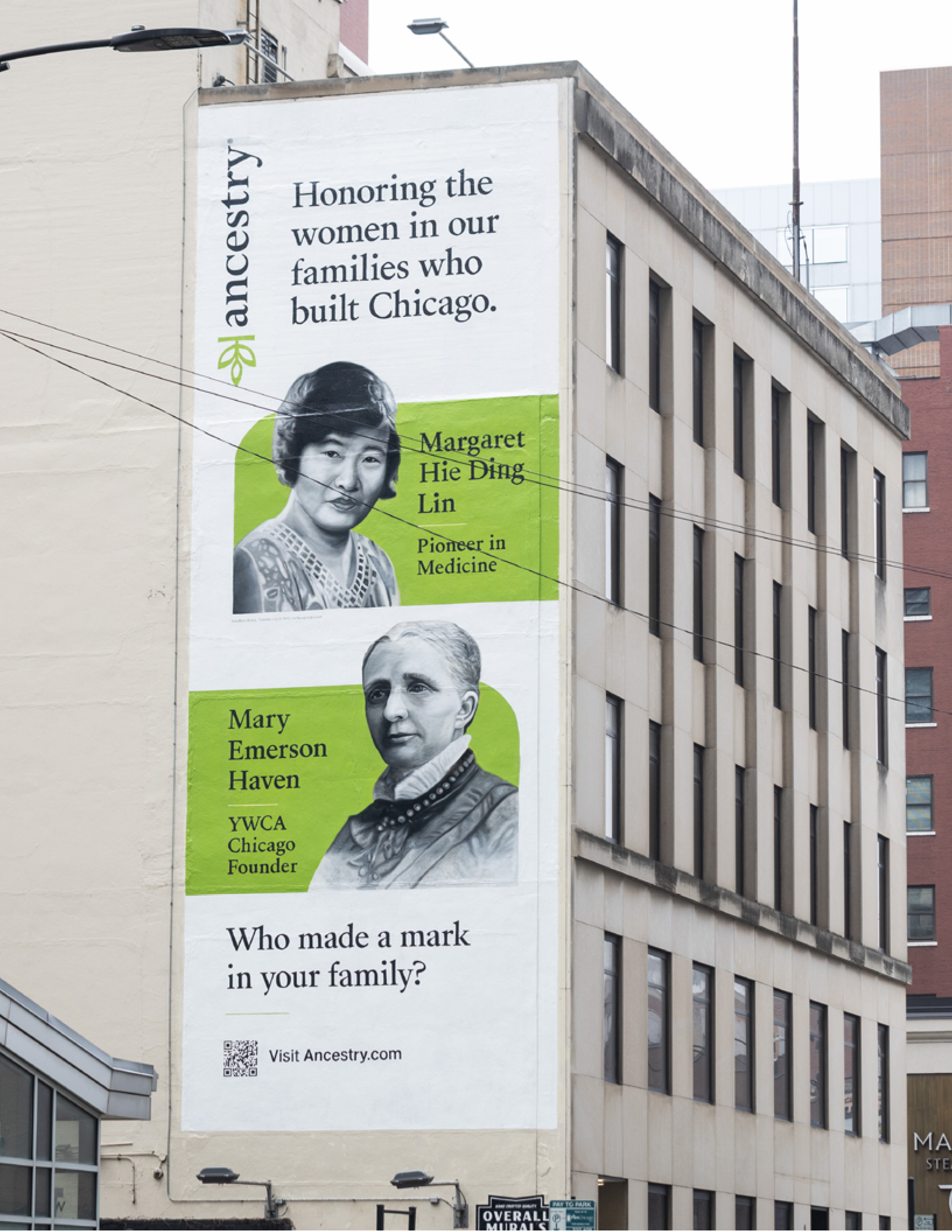
NSS: There are so many things I’m thinking of but the one that is coming to mind due to the timeliness - it’s America’s 250 years coming up. We have our Whole Stories On Us Campaign and we collected stories all across the United States for every state for the known and unknown figures in the US. So that campaign rolled out in January of this year. We’ve had murals commissioned in two different cities in Chicago and in New York to commemorate stories that we were telling there. So the one in New York featured the first Black Chief in the Fire Department of New York along with a photo of a woman and her children that he saved from a burning building in 1929 and what we were able to do was bring the descendants of the firemen and the descendants of people who survived the fire together so they could meet. They had never met.
Then we had another thing that we did in Chicago where we focused on Women’s History of the statues in Chicago as 95% honor men they don’t honor women and we worked on that and we did a bus tour that told the story of women who helped build the city of Chicago and so the mural that we have in Chicago I think it’s still up to the end of March. It features Mary Emerson Haven who was one of the founders of the YWCA along with Dr Margaret Lynn who was a Chinese doctor in Chicago and then the bus tour stops go all over the city.
AM: That’s cool.
NSS: We have one more tour that’s in a couple days and then we have a connection program with YWCA and we sponsor their Tech Girls Program. So we have a whole tour that we did specifically for them and then we’re continuing to expand out throughout other geos across the country to continue to tell those stories but the landing page is there. What I think it does really effectively is it tells you who the person is and it shows them in Ancestry records so that you can see that these notable people and some people who may not necessarily be as notable in records.
IG @ancestry
PHOTOGRAPHY CREDITS | Ancestry
Read the APR ISSUE #124 of Athleisure Mag and see KNOWING MORE | Ancestry.com in mag.