
Here is the thing nobody tells you when you buy the watch: the watch is the part that lasts. The band is the part that quits.
Anyone who trains four or five days a week knows the arc. Week one, the band feels great. Week six, it has gone slightly grey at the fold, holds a faint smell after hot yoga, and leaves a pink rectangle on your forearm every time you finish a treadmill session. You end up loosening it mid-workout, which is exactly when the sensor stops behaving.
So this is less a gear list than a materials argument. Below are ten picks that survive real sweat, plus a simple way to think about what you are actually buying.
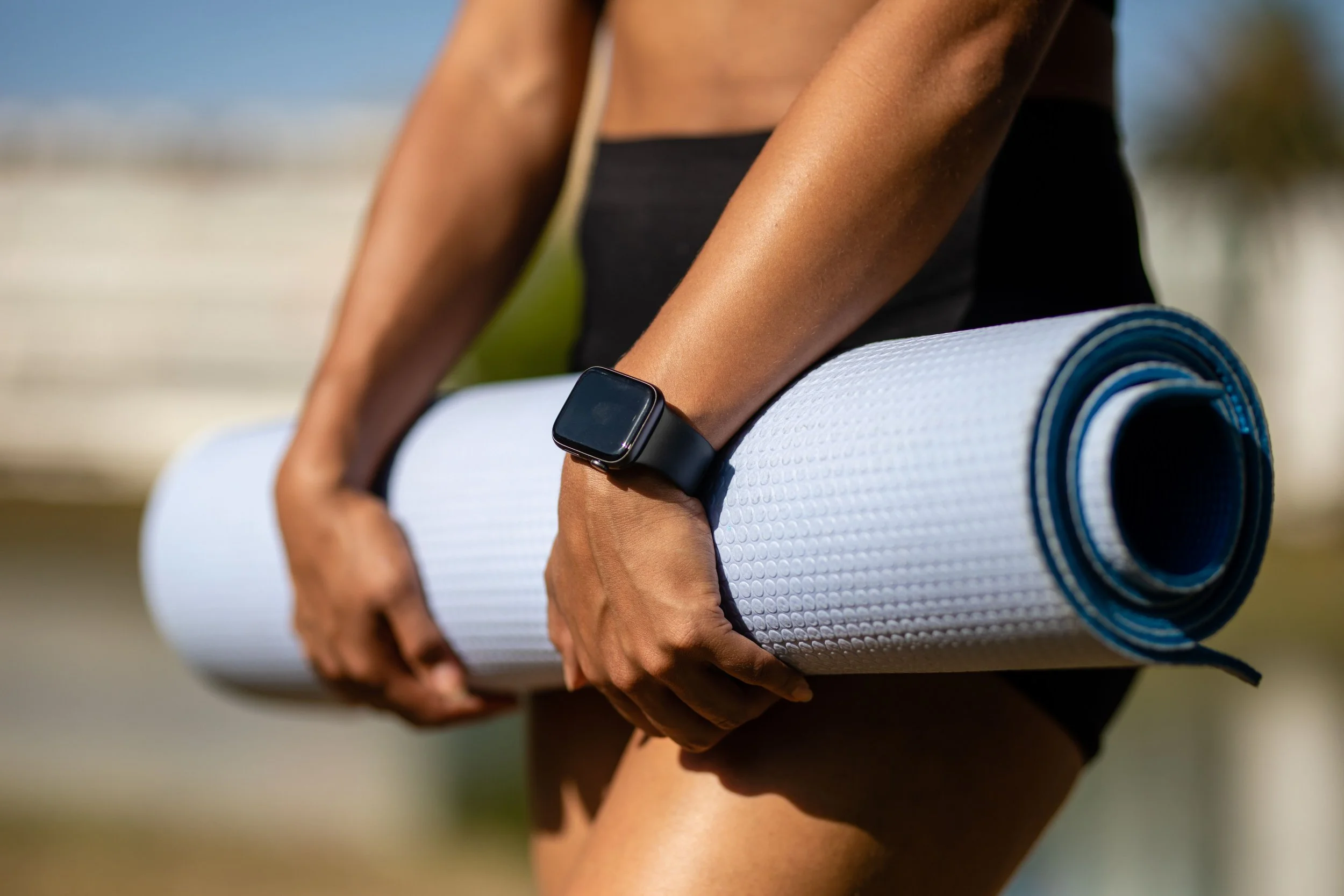
PHOTO CREDIT | Pexels/Ketut Subiyanto
What Sweat Actually Does To A Band
Three things separate a band you keep from one you quietly retire.
Dry time. Nylon and woven fabrics wick and dry fast, usually within an hour of a hard session. Silicone and fluoroelastomer do not absorb anything at all, which sounds better until you realize the sweat has to go somewhere - and that somewhere is the seal between rubber and skin.
Behavior under load. A band that feels perfect at rest can chafe badly once your forearm swells during heavy pressing or a long climb. Perforations and stretch weaves matter more than thickness.
Sensor contact. This one is underrated. Apple's own guidance is that the watch should sit snug but not tight, above the wrist bone, with the back in contact with skin, and that you may want to tighten the band for workouts and loosen it afterward. A band that stretches out over time quietly degrades your heart rate data. You will blame the watch. It is the band.
The 10 Picks
1. The Everyday Woven Band
Woven nylon is the sleeper category for people who train and then go straight to a meeting. It dries fast, it does not trap heat against the wrist, and it does not read as gym gear the second you push your sleeve up.
The aftermarket has gotten good here, which is where a smaller family-run label like Solace Bands has built a following, offering woven, leather, and metal Apple watch bands in colorways that sit closer to accessory than equipment. Worth noting: woven does hold moisture longer than rubber, so this is a rinse-and-air-dry band, not a swim band.
2. The Apple Sport Band
Still the default, still fine. Fluoroelastomer is soft, genuinely waterproof, and the pin-and-tuck closure does not snag on a barbell. The complaint is real though - it can feel clammy in humidity, and the closure creates a pressure point on smaller wrists.
3. The Nike Sport Band
Same rubber compound, but perforated throughout. Those holes are not decoration. They vent, and on a summer run the difference is obvious within twenty minutes. Downside: the holes collect lint, sunscreen, and salt, and cleaning them properly takes a soft brush.
4. The Trail Loop
Built for distance. It is thin, stretchy nylon with a pull tab, so you can micro-adjust mid-run without stopping. Runners love it. Lifters generally do not, because the stretch means the watch shifts slightly under sudden load.
5. The Ocean Band
Overkill for most people, and that is sort of the point. Tubular elastomer with a titanium buckle, designed for water. If you swim, surf, or do anything where the watch goes fully under, this is the one that will not slip. It is bulky under a jacket sleeve. Accept that.
6. Nomad's Sport Band
FKM rubber, which is a step up from standard silicone in both feel and durability. It has a ventilation channel on the underside that actually reduces the sweat-trap effect. Priced above Apple's own band, a tough sell until you have worn one for a year and it still looks new.
7. A Rugged Case-And-Band Combo
For CrossFit, obstacle racing, or anyone who has already scratched a screen on a rack. Spigen's rugged line wraps the case and integrates the strap, so there is no lug gap collecting chalk dust. Bulky, unapologetically so, and it will not pass at dinner.
8. Budget Silicone From The Big Accessory Brands
Elago, Alpine, and similar labels sell perfectly serviceable silicone bands for a fraction of first-party pricing. The quality gap has narrowed a lot. What you give up is finish consistency at the connector, so buy from sellers with a return policy.
9. Elite Silicone With Quick-Release Hardware
Barton and a handful of others make silicone bands with genuinely good buckles and a quick-release system that lets you swap in under ten seconds. If you rotate bands daily, the hardware matters more than the strap.
10. The Armband Workaround
Twelve South's ActionSleeve moves the watch off your wrist entirely and onto your forearm. Sounds strange. Then you try front squats, or push-ups, or anything requiring a flat wrist, and it makes complete sense. Not an everyday solution, but the best answer for lifting-heavy training blocks.
Build A Rotation, Not A Collection
The rule: rubber for water and heat, woven for everything else. One fluoroelastomer or FKM band for swimming, hot classes, and outdoor summer training. One woven or nylon band for the gym floor, the commute, and the rest of your day. That covers roughly ninety percent of what most people who follow fitness editorials do in a week.
Add a third only if you have a specific reason - a leather or metal option for evenings, say, which is really a styling decision more than a performance one. If you have been following how June Ambrose thinks about building a wardrobe around a few strong pieces, the logic transfers neatly to wrists.
For travel, pack the rubber one. Hotel gyms are unpredictable, and you want the band you can rinse in a sink, which is also the band that survives a beach day on any destination worth the flight.
Clean It More Than You Think
This is the part everyone skips. A Florida Atlantic University study tested wristbands worn by active people and found that 95 percent of them carried bacterial contamination, with rubber and plastic bands showing the highest counts and metal showing almost none. Gym-goers had the worst numbers. Not surprising, but worth sitting with.
The fix is boring and effective. Rinse rubber bands under warm water after any sweaty session and wipe them dry. Wash woven bands weekly with mild soap, then air dry fully before wearing. Do not put a damp band back on your wrist - that is how you get irritation, and it is also how a band starts smelling in a way that never fully goes away.
The Bottom Line
Match the material to the sweat, not to the outfit. Rubber and FKM for anything involving water or serious heat. Woven nylon for daily training and everything after. Armband if you lift heavy and your wrist needs to stay flat.
Wearables have quietly become part of how people manage their whole day rather than just their workouts, and the role they play in daily routines keeps expanding - which is precisely why the strap deserves more thought than it usually gets. You wear it sixteen hours a day. It touches your skin the entire time. It determines whether your heart rate data is worth anything.