• FITNESS
  • Food
  • Beauty
  • Sports
  • Travel
  • Athleisure Studio
  • Athleisure List
  • THIS ISSUE
  • Athleisure TV
  • The Latest
  • ARCHIVE
  • About
  • Press
  • Connect
Menu

Athleisure Mag™ | Athleisure Culture

ATHLEISURE MAG™ | Athleisure Culture
  • FITNESS
  • Food
  • Beauty
  • Sports
  • Travel
  • Athleisure Studio
  • Athleisure List
  • THIS ISSUE
  • Athleisure TV
  • The Latest
  • ARCHIVE
  • About
  • Press
  • Connect

SOUND MEETS STORY | LINDSAY GRAHAM

September 23, 2025

Podcasting has been around for 20 years, but it has been in the last 10 years where there have been a number of platforms, series, and networks that everyone talks about. Whether you’re into True Crime, Reality, Business, TV Commentary, etc there is a genre there to suit your interests. In the last 6 or so years, we came across Lindsay Graham who’s shows forcus on historial, business, and variations of True Crime as it pertains to history and/or business.

For years, we have heard his voice as he talks about various times in history and businesses that we engage with. We sat down with him to talk about his array of successful series, the final episodes of Business Movers, his production company Airship, how he came to his partnership with Wondery and his thoughts on podcasting as an industry that continues to eovolve.

ATHLEISURE MAG: It’s definitely a pinch me moment as we have enjoyed listening to your and your portfolio of podcasts for years!

We can’t remember which podcasts we started listening to that you created, but we think it was American Scandal with its first season which focused on BALCO. We tend to listen to shows that focus on True Crime and business so the intersectionality of those verticals is what drew us into that season and ultimately enjoying the other ones as well.

Before we start to delve into your podcasts. What is your background and how did you get into the podcast industry?

LINDSAY GRAHAM: It was by total accident! I have no business doing what I am doing right now. By education, I have an MBA in Marketing right?

AM: Right!

LG: So that is what I was doing for most of my working life really. I worked in non-profit marketing and I also worked in an insurance company. It was at that insurance company when I got fired and that was fine because I didn’t like them either. But as you can tell, you notice the guitars over my shoulder here, I have always been interested in music and in audio. I guess my dream job would have been Record Producer.

So, I have this little studio that I am still in. I thought after this moment of losing my job, I went to my wife and said, why don’t I try and do something with my life that I actually enjoy? So I tried. I cofounded a little audiobook company based out of Dallas here.

We put out a lot of audiobooks, but along the way that caught the attention of Hernan Lopez who was the Founder and CEO of a very young company called Wondery at the time.

One of the best decisions that I ever made in my life was that because it was a fictional show and because we were ad sponsored, we didn’t have a host. Most podcast ads are host read ads. So I decided to be the host! I figured that I would put my marketing degree to work. Well Hernan just really enjoyed how I wrote and read my ads. Then even though I gave up that audiobook company and crawled back to the world of Marketing, Hernan called me up and said, “hey, I’ve got this problem. We have a brand new podcast coming out and it’s hosted by a journalist who can’t do personal endorsements – would you do it? It’s called Dirty John.” In the same phone call, he also asked if I was a history buff and would I want to host and sound design a new concept for a show there that they were calling American History Tellers. I like to joke that these are not questions that you want to say no to! You say yes to all of them!

AM: Exactly.

LG: So I did! All of a sudden, I was a podcaster, but I was a part-time podcaster. There was no way that I was going to suddenly quit my job again and go back to this fantasy world of being in audio. So for a long time, I did History Tellers part-time on nights and weekends and it was rough with a full-time job, and a young daughter at home. But it was really rewarding and I was actually making more money then I was at my day job. So I said, “I’m not going to quit for 1 podcast. But what if I had 2? Because then I can distribute the risk and it’s a portfolio of revenue. So I went back to Wondery and I said that I had an idea for American Scandal. It’s very much so the formula of American History Tellers show but leans into the True Crimeish, but not so True Crime. They bought the rights to that show – I really wish that I didn’t sell all of it because who knows and who knew how successful it would be? But what I did was secure my place in podcasting. I had 2 successful chart topping shows with a young network on the make and I got to quit the day job to become a full-time podcaster.

Yeah, I’m here by accident sort of, but you take the reigns at some point.

AM: Your podcasts have gotten us through running around the city, heading to events, coming from showrooms, heading to set, navigating layouts for when the issue is about to drop and more! We started listening in 2018/2019, so for a period of time we were able to just go from one season to the next in a number of series. The sound production is just incredible. As a Telecom major with a focus in production, my ears are always enjoying the audio quality in each episode.

LG: Thank you! We put a lot of effort into it and I guess that is the audio background coming to the fore right?

AM: Exactly.

What are the kinds of stories that you are drawn to when you are coming up with the different podcasts? Are there subjects that you naturally lean towards?

LG: Yeah. At this point, these shows are run by talented and sort of medium sized teams. So, I don’t even know some of the topics that are being worked on until they are really far down the pike. But in the beginning when it was a smaller endeavor and we were all working together to try to figure this thing out, the thing that was most helpful was to try to find the central question of the rubric that this show is centered around. What is the kernel? For American History Tellers, we put you in the shoes of everyday ordinary people as history is being made. That’s kind of what we are trying to do. We try to stay out of the Halls of Power as much as we can. It’s not all Oval Office and Congressional floor. We really do try to put you at the kitchen table of when these things are happening. So that’s what makes that show special and when we started, it was a good question – what do we start with? What should be our debut topic? This was early on in the first Trump administration. If you remember, there were these weird sabor rattling moments with North Korea and Putin. I thought that we should remind the American public about the Cold War and how terrifying it was for a lot of people especially us Gen Xers who had to hide under our desks or whatever to some how avoid a nuclear apocalypse – that was going to protect us.

AM: They were thick tables!

LG: Oh yeah!

But it was always how did this affect the average American at that time and how does that reverberate now?

American Scandal was actually pretty similar although this one is very POV centered show. We follow certain characters and we try to anchor it in their perspective. It always comes down to and I think this is why it is such a character driven show because that is what we try to bring to that show.

All of my shows have some sort of center or central question to them that we use as sort of a touchstone to remind us of how we are telling the story.

AM: Where do you start creatively whether it’s a new season or an entirely new podcast series. What do you do when you may have such wide lanes?

LG: There are editorial discussions and marketing considerations like Oct is around the corner, do we have a spooky story? We’re in the media business so we try to do our best with calendarization and things like that.

How do we tell is to our audience in a manner that adds value to someone who may know a lot about it and is also unique to us and I think that that is how we go about it. We get so many suggestions from our listeners, our writers, and our researchers, and they don’t just quite fit.

AM: Tell us about Airship. How did it start and what are all the podcasts and projects that are involved in this company.

LG: So Airship is my production company that I founded really to just house my increasing podcast activities right? So it started with American History Tellers, then once American Scandal came along, then American Elections Wicked Game, then 1865, then History Daily, and so I knew that I needed a structure.

It’s a small podcast production company. We do our best to keep our output up with our resources lean. At our height, we were putting out 11 episodes a week for my shows and other shows. We kind of specialize in the history niche and we have recently taken over the entire turnkey process of American Scandal so that now includes scripting, that was something that previously Wondery did. So yeah, it’s just a little company that could.

AM: Do you guys have from an American Scandal perspective, do you guys have a soundboard so that people can give feedback? How does that work from thinking about a topic and making it an actual season?

LG: Yes, I have a critical employee, my Chief of Content, William Simpson, he actually works in the UK. A lot of that gets filtered to him first. So, all of the ideas will go into some document and we’ll get some form of vetting together. It does require some fair amount of effort to see which of these stories has the legs. We’re not in the enviable position to do any original reporting – we’re not diving into the archives with a weekly show or 4 or 5 weekly shows – how could you?

We need to rely on the existing reporting and the existing sources and that still requires a lot of effort to find out what’s out there and to validate it as well as we take truth telling very seriously. We want to make sure that the story can be told without bias. But then there are considerations of how we can tell the story that is unique to us. I have writers, a bunch of freelance writers, I have freelance showrunners and producers, I have my Chief of Content, I’m involved all of the time – it will all go through it’s filtering and funneling process and then we will come up with ideas.

AM: I love History Tellers and I also love History Daily. I’m always amazes about some item or event that happened on this day that I didn’t know about. How do you decide that? There doesn’t seem to be overlap and there is a new fact to uncover and listen to for that day.

LG: Well the good thing about history is that it is pretty old! There has been a lot of days. Even though that is true, I will back up and say that since you have listened to it, you realize that there is a recency bias. There’s a lot more 20th century stuff than there is 19th century stuff and that is again because of sourcing and other things. We don’t know what really happened in 4500BC – no one was writing it down, but I’m sure it was interesting. The point remains that so much was happening that we have the entire globe to cover! This isn’t American History Daily, it’s History Daily. We don’t choose days like this person was born or this person died. Those aren’t actually interesting days that’s just kind of an anniversary of something – it’s what that person did in their life that’s important. So we have all sorts of options. We get to find a date, anchor an episode around that date, but also storytell from both sides of that date. We’re not just a page a day kind of calendar that gives you a sentence or 2 on what happened.

AM: We’re bummed that Business Movers will end at the end of this month. It was really a series that we have enjoyed listening to as it is in that vein of The Men Who Built America on History Channel and those kinds of docuseries are always fascinating and it’s great to be able to deep dive into those companies and industries. How did that podcast come about and what do you want the legacy to be for that particular series?

LG: To tell you how these things get decided, their Sales team said that they were selling the crap from their business program ming. “Does Lindsay have any interest in a business show?” I thought it was perfect because I have a business degree as I’m a history podcaster with a business degree so the ingredients for that show started pulling together. Talking about the rubic or the central kernel of that show, that one has always been as I have articulated – there is a Character, a Crisis, and a Business Concept. In every episode, we will explore those 3 things. This character dealing with this crisis as it relates to this business concept. We’re not explicit about that, like we’re talking about inventory management or inflationary pressures or whatever the business concept is. Hopefully you pick it up and under every single episode, it is there. Can I just tell you that I had some of the most fun in that show because the personalities are so big, so dynamic, and they are consequential in our everyday lives. There is not a company that we covered that you don’t have some sort of personal relationship with whether it’s Disney, or Pepsi, or Microsoft. Even the ones that you think didn’t touch your lives, you would be captured by their journey as well. It was a fun show and I really enjoyed it. I am sad that it reached its end.

AM: We saw it on your LinkedIn when you announced it and that’s what made us reach out after being long time listeners! We listen to it to as there are so many nuggets to learn and apply it to things that we are working on or how we engage with other businesses. A number of those businesses have been those that we have worked or partnered with and it was great to hear things that we may not have known about their backstory or event looking ahead to where they planned to go. It was an enjoyable and invaluable podcast that will be missed for sure.

LG: Thank you very much, that is exactly the reaction that I would hope for from my listeners. That it is entertaining, but also surprisingly useful resource.

AM: 1865, we don’t know how we found out about it, it could have been a cross promotional episode that was somewhere else or an ad but it was enthralling to listen to, the sound, the voices – super immersive! How did this come about and what was your involvement in it?

LG: That came on the heels of the very first podcast of the fictionalized presidential elections so a friend of mine who was living in LA and he’san actor and writer and was trying to make things work, he had a play about 1865. It focused a little more on John Wilks Booth, but he had an idea for an adaptation and was pitching it around Hollywood to try and get a TV series. He heard Terms which was the audio drama that I made, and said why don’t we make an audio drama around this subject. It worked perfectly as I was already making a brand around history podcasts so we decided to partner on that and he is the Co-Creator and Head Writer of that show and I am the Co-Executive Producer as well as I composed all the music and did the sound design of that show as well.

AM: It was incredible to listen to and an audible delight.

LG: Well thank you again! Audible delight – I like it! Well it was a real labor of love. It tells a very important story that starts with the assassination of Abraham Lincoln and the immediate first days of Reconstruction and how difficult this period will be without Lincoln around. It is semi-dramatized, but everything that is said in there is true.

AM: Are there upcoming podcasts that you are able to share to keep an eye out? There are probably 5 names whether it’s the host or a production company but when I see them pop into my feed or I’m aware of a project that is coming up from them I follow immediately because if I hear your name or Airship I know it will be something I will enjoy from an audio perspective as well as the subject that is being presented.

LG: Probably not -

AM: That’s what we thought you would say.

LG: Nothing is fully greenlit at this point. The uncertainty at Wondery has certainly made it difficult to announce or do anything for sure right now. The changing nature of the podcast industry has also altered how I view my work. So, I don’t know. It’s not even a matter of us vetting it with legal yet. It’s a little uncertain right now. However, I will guarantee that there will be more stuff from me and my partners in the next 12-18 months.

AM: That’s great!

Just as you said, the podcasting landscape – I mean this industry has been around for quite some time. There are many people that feel that they can just jump in and make a podcast and that is debatable. But for those who do want to embark in this area, what are some tips that you have regardless of their genre – what are things that they should be thinking of?

LG: The barrier to entry to not just podcasting but to a bunch of New Media – short form video, or you could sign up for Substack right now and have a paid newsletter. All of it remains the same I think. There are tactics for hooking people or marketing to them and extracting economic value from their audience and I think that the only way to do that is in a world of increasing authenticity is to be yourself or to do what you do. You may not know what you do, and that is a hard question to answer and I don’t know if I have the fullest idea of what I do. No one is going to have a career if they approximate viral moments or they just start replicating other success. If you think back in every piece of media that is hailed as something worthwhile or is a watershed piece, it has no resemblance to what came before it, it broke the mold, it changed things, or twisted things or was so outrageously original that is forced itself into the world. I’m not saying that you have to be so violently original, but you do have to be authentic. In a moment where we are all reckoning with AI and it’s very slippery and seductive inauthenticity. I think that we will more and more be drawn to these small and obviously human moments.

AM: 100%.

Do you have any podcasts that you enjoy listening to?

LG: Here’s the secret!

AM: We know where this is going, but we just wanted to hear it directly from you ha!

LG: Once you make podcasts and enough podcasts for 8-10 hours a day, I drive home with the radio off. I really appreciate just the silence of driving home. That doesn’t mean I don’t enjoy podcasts, I’m just not the inveterate consumer that you might think that I am.

You know, I once visited a very famous celebrity chef at his home and his refrigerator was filled with champagne and an expired tin of caviar and nothing else!

AM: Yup!

LG: I think that there is a certain bit of the cobbler’s kids (Editor’s Note: this is a Spanish proverb that means that someone with a specific skill is often so busy assisting others that their own affairs go unattended) here. But Revisionist History is always one that I enjoy. Malcolm Gladwell has an amazing, quirky, and impish way of looking at the world and I just find him captivating. Even if he is wrong about his big point or is demonstratively apprehensive of the facts, it still is really entertaining and thought provoking.

A recent winner in the history podcast universe has been The Rest is History out of the UK. They have hit upon a formula that their parent company has been replicating quite a bit. They came out with The Rest is History and then all of a sudden, there is The Rest is Politics, The Rest is Politics: US, The Rest is Football, The Rest is Entertainment and the formula works! But it is rooted in 2 people who authentically enjoy each other and authentically know what they are talking about even if they just researched it and they are able to bring their own expertise to it. It’s not a new formula of 2 people talking about a subject, that is as old as podcasting. There is something where there is a chemistry between these 2 hosts and the way that they tackle topics is persistently interesting.

AM: Are there subjects that you have yet to tackle that you would love to see in a podcast where it’s a series or just an episode?

LG: I’m sure there are! I mean yes absolutely. I have a document hidden somewhere in the cloud of every single one of these ideas. Just at this moment, I can’t think of any of them!

There is 1 story that I am dying to tell and I do hope that I get to tell it and I want to do it in a live show setting. There was a man named Danny Faulkner that lived here in Dallas. Presumably, he was an illiterate house painter. But he started finding wealth and success in real estate deals and building condos. This is in the mid 80s and all of a sudden, everyone was buying, building, and swapping these condos. A lot of people were getting rich and it’s not surprising that is becomes an entire house of cards and a big Ponzi scheme – trading amongst each other, bidding the price way up there and then selling it to a rube! But, this illiterate house painter was the ring leader of it all and he crashed a bank! He pretty much started the real estate depression of the 1980s and it had a great affect on my family because my father was a home builder and all of a sudden, we had to move out of our house and find a new place.

It’s one of those stories that would be really good for American Scandal because it is very character forward, but it is pretty small and pretty localized, and is not international, but it meant a lot to a lot of people and it has a personal connection to me and that is why I want to do it in a live show setting where I can drive the personal connection!

AM: Wow!

When you were talking about it it sounded like something out of Texas Monthly.

When you’re not working on your podcasts, what do you like doing in your personal time?

LG: I just yesterday saw a clip from the comedian Jimmy Carr, and he was asked, what are your hobbies. He gave this response, “I’m lucky that my work is more fun than anything else than I can think of.”

AM: We have said that on a number of occasions.

LG: That’s kind of, sort of true for me. Of course, I have enough of it, I drive home in silence, I get to come home and spend time with my young daughter who is 11 and my wife. I play guitar. I love to cook. If there is ever a guitar playing cook podcast, I would be ready!

AM: That’s a nice little intersection there.

LG: I live a fairly quiet – well you know what? I’ll tell you this! For the last 7 or 8 weeks, I’ve been taking improv classes!

AM: What, oh wow!

LG: Yeah! Way back in the day, I used to run the tech, sounds, lights, and used to play music for an improv troop. I never got on the stage myself. I enjoyed it then and then I grew up. But recently I thought, I need to for my own benefit grow, step outside of myself, and to be silly! This is terrifying to me to get up on the stage and be silly and put on a voice or to move my body in an odd or awkward way! I don’t dance like no one is watching – that doesn’t make sense to me and I’m not going to dance at all! So I figured that I’m too locked up. So I have been taking this improv class and I have really been enjoying it and I signed up for level 2.

AM: Wow and is the goal to maybe have a small group of family and friends to watch the joys of what you have learned?

LG: No. That’s not the goal. I have enough things that my family and friends can consume if they want to hear what I’m doing. The improv is really just for me and I might get comfortable enough to enjoy it as well from a performance aspect. But it is really a brand new and very rewarding way of thinking.

IG @notthatlindsaygraham

PHOTOGRAPHY COURTESY | Lindsay Graham

Read the AUG ISSUE #116 of Athleisure Mag and see SOUND MEETS STORY | Lindsay Graham in mag.
Featured
TULSA KING_.jpg
Nov 16, 2025
BINGELY TV/STREAMING
Nov 16, 2025
Nov 16, 2025
BLACK RABBIT.jpg
Oct 15, 2025
BINGELY TV/STREAMING
Oct 15, 2025
Oct 15, 2025
AM AUG ISSUE #116 LG 1.png
Sep 23, 2025
SOUND MEETS STORY | LINDSAY GRAHAM
Sep 23, 2025
Sep 23, 2025
In AM, Aug 2025, Bingely, Bingely TV/Streaming, Bingely Streaming, Podcast, Wondery, Streaming Tags Sounds Meet Story, Lindsay Graham, Business Movers, Airship, Wondery, American Scandal, BALCO, Podcasts, True Crime, Business, MBA, Marketing, Hernan Lopez, Dirty John, American History Tellers, History Tellers, American Elections Wicked Game, 1865, History Daily, William Simpson, The Men Who Built America, History Channel, Disney, Pepsi, Microsoft, Terms, Substack, New Media, Revisionist History, Malcolm Gladwell, The Rest is History, The Rest is Politics, The Rest is History: US, The Rest is Football, The Rest is Entertainment, Texas Monthly, Jimmy Carr
Comment

IT'S ALL JUST STORY | RODNEY BARNES

May 21, 2022

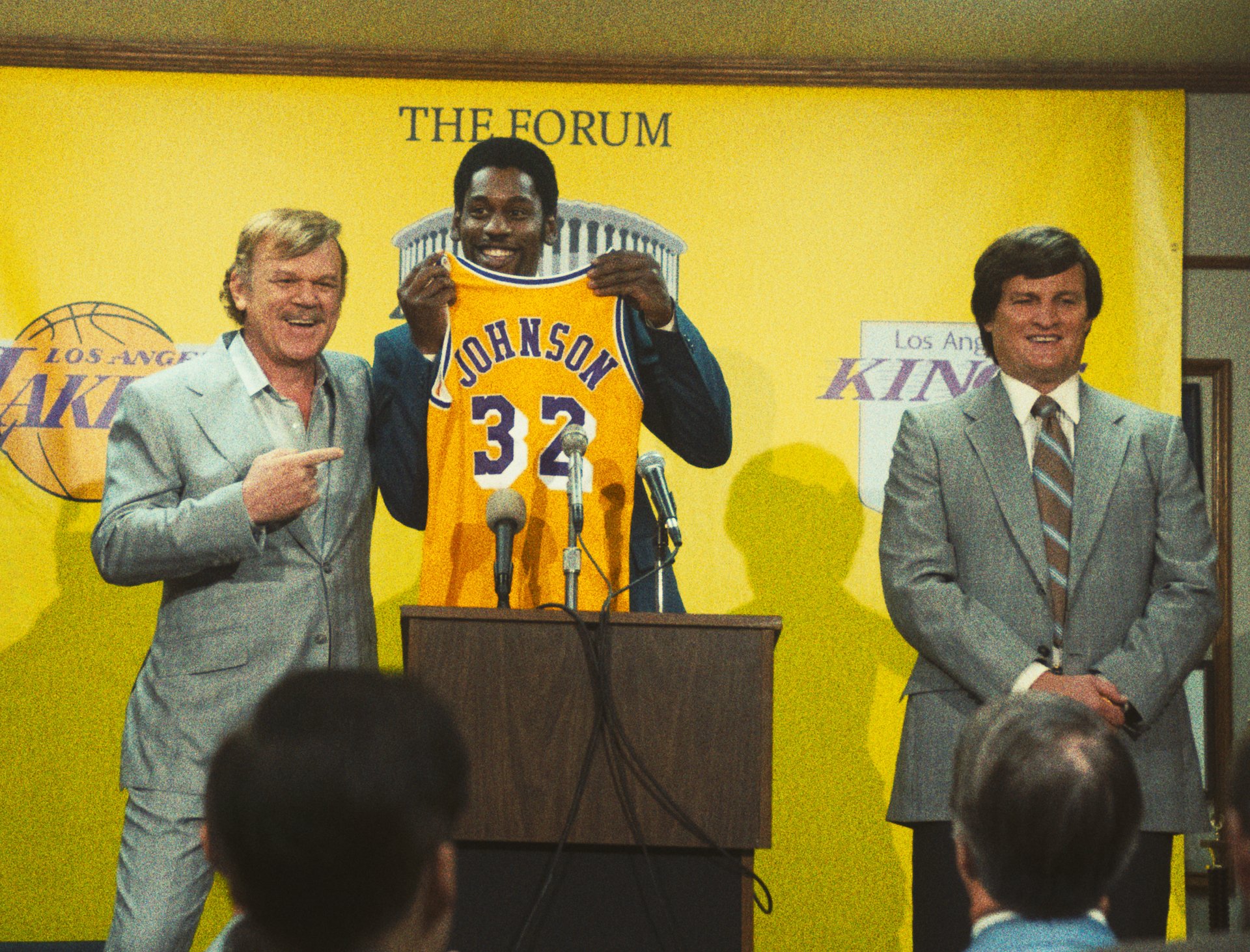
This year when the NBA unveiled their 75th Anniversary Team of retired and active players, it included 17 members who played for the Lakers which includes the Showtime era of the 70/80s with players Kareem Abdul-Jabbar and Magic Johnson. To understand the importance of this era and what it did to how we enjoy the game, and how it moved the game forward in terms of commerce and making players brand, Winning Time: The Rise of the Lakers Dynasty illustrates the dynamics at play.

We talked with Rodney Barnes, who has written for STARZ Heels, STARZ American Gods, Everybody Hates Chris and more. He shares how he got into the industry, the positions he has held, his approach to his work, being the Executive Producer and writer for Winning Time, Zombie Love Studios and his passion for comic books and graphic novels.

ATHLEISURE MAG: You’ve worked in various positions in the entertainment industry as a Production Assistant, showrunner, Executive Producer and an award-winning screenwriter. With all of these roles, what was the moment that you realized that you wanted to work in this industry?

RODNEY BARNES: I was going to Howard University and I was in the School of C (Howard University Cathy Hughs School of Communication) and I was working at Georgetown Law Center as a campus cop at night and I found out that the movie The Pelican Brief was coming to my job to film some scenes. So I was really excited because it’s one thing to go to school for this and it’s another thing to actually be able to see it up close. So I signed up for all of the overtime details and I got them all. I started watching the movie being put together and it was so exciting! So I met a guy and he was the PA, he was a Key Set PA. So I asked him how I could get a job doing what he did. He said that that weekend, they had some big scenes that were taking place at the Washington Monument and that if I wanted to come and do it for a day, they'd be happy to have me.

So I did it and it was the most exciting, fun and best $100 that I ever made in my entire life! It was something about it that felt right. I felt more purpose in doing that and being close to this thing that I wanted to be close to then I did doing anything else that paid a lot better. I quit my job at Georgetown and started working as a PA full time.

AM: What a story, we always tell people that we embrace the multi-hyphenate. As someone who has worked in a number of roles and continues to do so from writing and producing, when did you know that you wanted to take on these areas and what the specific area was that you wanted to start in first? Or was there just a confluence that took place to make all of this come together?

RB: I knew I wanted to be a writer, but I knew what I didn’t know. I knew that I didn’t understand how any of this worked and I had a very fundamental understanding of what writing was and telling stories. Quite frankly, emotionally and psychologically, I wasn’t mature enough or evolved enough to be able to take on the big job. So, working as a PA, I look at it as being an apprentice. I had an opportunity to meet people, to sort of find my tribe, to figure out the psychology of how it would work and to just get my legs under me which was a bit like bootcamp. It was always writing, but I had to build up to the idea of being able to take my shot at it because it just felt too big.

AM: What do you think was the biggest thing that you learned from being a PA that has helped you with your career or was it just being able to see all the parts that were moving and to be able to understand how they connect?

RB: There was that. I think that the thing for me was that I always had this idea that everybody in Hollywood must be a genius and I haven’t met a genius yet. But, what I have met are some folks that have worked really really hard at their craft. It sort of demystified the entire process for me in being able to see it up close and to be able to observe. I wouldn’t say that I was a vital part although I know that some people would disagree. It was sort of the type of thing where getting to know people as friends and mentors even though that’s a problematic word as no one put their arm around me and said, “son this is what you do.” But they allowed me to be in their circle and to be able to see how the sausage is made. I got an opportunity to be able to just see things up close and to decide whether or not I could do it, if I wanted to do it and the closer I got to the thing that I wanted, the better that things got for me, but I wouldn’t have been able to do any of it if I hadn’t been a PA.

AM: From a screenwriting aspect, you have written a number of things. I loved your work in American Gods which I loved that show and obviously Winning Time and then you look at shows like Everybody Hates Chris. How do you get inspiration to write and then where do you start from when you’re trying to put words to paper to create these worlds for us?

RB: I never looked at it from a place of inspiration because if I need the emotional investment to do it, then I’m not going to be inspired some of those days and I’m still going to have to do it. For me, the difference was, approaching every day like I’m at work which was no different then when I was at Walmart or Target or any of those places that I worked at along the way. I had to get up, I had to work, I didn’t feel like it and then somewhere midday or so, it got a little bit better and then a little bit better. I sort of approach writing in the same way. I have a lot of resistance on the days that I don’t feel like doing it, but it needs to be done because I have a deadline. 78% of the time, I’m able to be disciplined and I’m able to get it done and the other times, I might go to the movies, sit and watch a game or do something else when I’m supposed to be writing. But I think it’s more of a discipline of doing the thing than an emotional component to it. There are days where I feel it and if I'm writing something like a horror driven thing like in my graphic novels, I'm enjoying it a great deal so it’s easier to do, but whether I feel it or I don’t feel it or am some place in between, I still do it.

AM: Just to circle back to American Gods, one of my minors in college was Classical Civilization so it covered mythologies of the world in addition to Greece and Rome and included African and Asian nations. So when I watched it, I loved seeing all of these stories that came to life. What was it like writing for that?

RB: It was great! The best thing that came out of it was my relationship with Orlando Jones (Sleepy Hollow, American Gods, The Good Lord Bird) who played Anansi/Mr. Nancy on our show. I had a similar thing as you, I didn’t do it in college but I studied a lot of different types of mythology and some of these characters like Anansi and Bilquis and others, you don’t really get to hear a lot about them. Because of comic books, you get Thor and Zeus, Odin and Hercules and those guys but oftentimes, Gods of color don’t get a lot of love. Even when they do, it’s in secondary roles. Working for American Gods and I’m a huge Neil Gaiman fan. So to be able to play in that sort of world and get some genre credits under my name was great as I have a comic book company and I also tell a lot of genre driven stories so being able to legitimize that beyond wanting to do it was always something that I wanted to do.

AM: It was such a phenomenal series. I remember seeing the episodes and being able to see some of these characters that I had read about being brought to life so fully, it kept me glued and it was truly incredible.

So as a screenwriter, what is that process like in terms of getting attached to a project and how does one pitch themselves to get into this work?

RB: Well my agents do a lot of my pitching. They typically open doors, but I’d say that about 75% of the work that I get, outside of the things that I create, really comes from via word of mouth. Right now it’s a good time because of Winning Time and people seemingly are enjoying it and you get a lot of offers to do things because they like it which I am grateful for and it is a blessing. More often than not, it’s about putting yourself in the right position you know? People know that I write graphic books and comic books so whenever a project like that comes around and it seems like they can use a writer like me, oftentimes, they’ll call or not so much now because I have been doing it for awhile but maybe 7 or 8 years ago, if it was something that I had heard about that was coming down the pike, I would tell my agents to keep an eye out on it and then see if maybe they could get me up there to be considered.

AM: Is it a different flow for you when you’re writing for the BET Awards or the Oscars – is there a different approach because it’s a live audience or a different format then just a show or even the comic books?

RB: Not really, I look at all of it like it’s story whether it’s writing a joke, Chris Rock or one of his specials or whoever I’m working for for the Oscars or an awards show. Even a joke is a story. It has a beginning, a middle and an end. Whether I’m telling a funny story or a horrifying story or a dramatic story, at the end of the day, it’s all a story. So, I approach it all the same way. The biggest thing for me is really understanding who’s going to be interpreting the words. Like, I work a lot with Chris Rock, and I know him really, really well so if I’m going to pitch something to him, I incorporate that knowledge into the pitch. Like, I can sort of filter myself and know that he wouldn’t like this or he would really like that part. In writing the shows, I have built a great relationship with a lot of our cast and so, I try to write to their strengths as well as to the story that I am trying to tell. When I am saying that I’m writing to their strengths, I'm talking dialogue. There is a cadence to how people talk and if you can make it easier for them to interpret the words, I think that they become more comfortable with it so it's really more so about having familiarity with it for the task at hand.

AM: Also in your body of work, you have been a co-producer and a producer in shows like Heels, Winning Time and Wu-Tang: An American Saga. We’ve had a number of WWE wrestlers as our cover and shared their stories so seeing Heels was another show that we enjoyed. When did you realize that you wanted to add these roles into your body of work and how does that change your perspective especially when you're also writing the show as well?

RB: Well it’s funny, those titles of producing can mean a lot of different things. Earlier in my career, say on My Wife and Kids, when I was a producer, it wasn’t really a lot more to do than sitting in a room and writing. It’s sort of like the government, government jobs they have G-1, G-2 as you work up and it’s sort of like that in television in writing as well. If you do it long enough, you start out as a staff writer and then you move up to a story editor and then an executive story editor and then you go up through the WGA (Writers Guild of America) classifications that go with moving up. But then, in certain gigs like in Everybody Hates Chris, I was in the writer’s room and wrote a number of episodes, but I also produced the voiceover that you would hear in every show. So I would write the lines and go with Chris Rock and go record the lines together and then I would place them in the show in editing. So, to me that was actually the beginning of actually producing and so on different shows, that idea of what a producer means is something different.

On Winning Time, I actually work with the actors whether it’s working on set with their lines, working with the director to see whether or not a shot is sort of lining up with how we saw it when we were writing the show – it can mean a lot of different things. There are some shows where I have been an EP and it didn't mean anything more than just writing a show and putting it together or on some shows I'm actually tangibly doing something different. On American Gods, I wrote and also worked on the set with the actors and the director as well and putting it all together. On Heels, not so much. Marvel's Runaways – not so much. But it’s different with each one, so it’s a classification that comes with being a TV writer and as the responsibilities go, it has more to do with what that show requires.

AM: When I first heard about Winning Time last fall, I knew I was going to love it, I remember as a kid in 1986 loving this team even though I grew up in Indiana and it continues even though I live in NY now. So seeing this story, hearing about this story and getting this inside scoop of what was going on has made it really enjoyable to watch. How did you get attached to this project and what made you want to be involved?

RB: Max Borenstein (Kong: Skull Island, Worth, Godzilla vs Kong) who is our showrunner and the other Executive Producer as well, he and I have been writing together for about 10 years and when Jim Hecht (Fairly OddParents, Ice Age 2: The Meltdown, The Ice Age Adventures of Buck Wild) first optioned the book, he got the book to Adam McKay (Talladega Nights: The Ballad of Ricky Bobby, Vice, Don’t Look Up), and he got it to HBO and they said they would do a pilot I believe, I don’t know if the project was picked up then. They hired Max, Max called me and I said yes that I would want to be a part of it. That’s how it started.

AM: It’s an incredible cast and I love McKay films and the people that are in it. In terms of writing this where you had Jeff Pearlman’s book Showtime: Magic, Kareem, Riley and the Los Angeles Lakers Dynasty of the 1980s, how much source material did you have as I know players of that time as well as the franchise didn’t reach out to you on this. How did you coalesce these things all together to create this story and to provide that insider feel?

RB: Well we were really fortunate that book. So we studied a lot of books and Rick Fox, former Laker was our technical advisor, we talked to a lot of folks who were around the team at that time who worked for the organization, YouTube – we did a lot of research everywhere – articles anything that we could find. We sort of incorporated into the narrative and some stuff we had to tie in together for dramatization purposes.

AM: Obviously with the people that were involved, John C Reilly (Gangs of New York, The Aviator, Anchorman II: The Legend Continues), Jason Clarke (Brotherhood, Chappaquiddick, Silk Road), Rob Morgan (Stranger Things, The United States vs. Billie Holiday, Don’t Look Up), Jason Segel (How I Met Your Mother, Dispatches from Elsewhere, Hotel Artemis) and Adrien Brody (The Grand Budapest Hotel, Peaky Blinders, Succession) etc, there are actors in there where there is a lot of secret sauce. You have actors who were athletic but didn’t play basketball and having to do so for this role, having Quincy Isaiah play such a key and iconic person who was new to this platform, how did all of this come together to get that energy, to make an audience believe that these people who be playing this game even though they didn’t necessarily have this background?

RB: Francine Maisler (Uncut Gems, Being the Ricardos, Dune) is our casting director and she did a great job finding folks. Sometimes you get lucky like in the case of Quincy who is from Michigan and was an athlete – a football player. He had to lose 80lbs or so to come down to being able to have a Magic Johnson-like look. Solomon Hughes who plays, Kareem Adbul-Jabbar is an educator, is 7-feet tall, plays jazz and he played basketball on a professional level before. You just get lucky sometimes. I think that that’s across the board in finding people that not only have the talent but also the emotional stuff.

If you think about our players, they have to learn how to play the game because some had never played the game before, they had to be convincing to learn how to play a particular way that their character played, they had to go through physical training everyday and then they had to learn their lines and then they had to act. So there would be times when they would have to come from training, be on set, leave their work, leave set and go and play basketball everyday for however long – for a year or so. Then there is the training that went into it before hand and always having a good attitude about it as they were going. We got really really fortunate to find the folks that we found.

AM: When did you realize that you were going to be Maurice?

RB: I’ll tell you when I was working, Max was working on a movie called Worth in NY that’s on Netflix now. I was working on the first season of Wu-Tang: An American Saga. I was in Staten Island, he was in Manhattan. We would meet on the weekends and we would go over it with Jim Hecht and Rebecca Bertuch (Worth) and we would work on putting the show together. Every now and then, this name would pop up, Maurice, Maurice, Maurice – like who the hell is Maurice? Oh, you’re going to see and it was like an inside joke. They knew that I didn’t know. When we were officially on board and we started in the writer’s room in LA, we had all the pictures up of the actors on the wall and then there was a picture of me. I was like, “why is my picture on the wall?” They said, you’re going to play Maurice and I was like, “oh, ok – haha Maurice.” So Max actually wrote Maurice’s lines and the only scene that I had at one time was the scene with Pat Reily where I don’t let him in The Forum. I thought, “ok, I can do that, I’ve been a security guard my whole damn life!” I know how to say you can’t come in. You don’t even need to even write out the lines just let me stand there and I know how to not let you in some place. Then, all of a sudden, I started seeing Maurice pop up in other scripts! He's like a leprechaun where he sort of shows up in different places and I'm like, "why am I popping up?” and then I had a walk and talk which is very difficult as an actor because you have to walk, you have to think and you have to move which was in episode 5 where I had that scene. I was nervous about that scene. Actually, I messed up the scene that is on. I messed up a line but Gabby Hoffman (High Maintenance, Girls, Transparent) who plays Claire Rothman is so great, you would never know because she kept going and I kept going and so that was it and they cut and we went on with the day – but I messed up.

It's cool, the network likes it, everyone likes him and I think that Maurice is going to come back and probably say more words.

AM: We always like when he pops up!

RB: Well, thank you! As long as I stay big and relatively menacing and intimidating, Maurice will probably be around.

AM: What has been your biggest takeaway of being part of this particular project, seeing it come together and the reception of people loving this?

RB: Anytime you work hard at a thing for a long time that is intended to entertain people, you always want that to land the way it is intended so that people are entertained. I think that we’ve got a great reception and that people really seem to like it and it’s sort of gratifying because I and a lot of people give a lot when you do these sort of things and it’s not easily assembled. For me certainly being able to talk about African American culture as it pertains to sports in a way that is sort of elevated is always an honor. It’s a good thing.

AM: Well, you guys have been greenlit for a second season. What does that look like, what do you want to tackle – will it continue with these same players or will it be another part of Laker history or even another time in NBA history for a Winning Time situation?

RB: As of the moment, the plan is to continue on in the same narrative and to just keep telling the story as we have been. Even now, when we first started the process before, we were going in the third or fourth iteration of what you see on screen now – we were going to go a lot faster. Then, the decision was made during COVID to slow down the process of storytelling and we had to go back to the drawing board a couple of times to slow it down. I say all of that to say that you never know. We could speed up a couple of seasons, we can keep going the way that it is, but I think that the plan for now is to continue going in the direction that it is.

AM: One of the things that I enjoy especially with a lot of the HBO shows is that there is a companion podcast and literally, I can’t wait until Mon to listen to the show which drops right after the episode airs on Sun. I listen to JB Smoove and then I listen to your podcast. It’s great to get your insights, what’s going on – the Rob Morgan episode was really great to hear. Every episode is great as there are so many tidbits that can be enjoyed. How did you get attached to hosting this podcast and how much input do you have over who ends up being on the episode with you?

RB: Very similar to how I became Maurice. Somebody thought that it would be a good idea to have me do it and my first reaction was, I have never done a podcast before and they were like, “oh you can do it.” I think that I tried to back out a couple of times and they were like no just give it a shot. I think that I got better as time went on which is sort of the course of life, the more you do it, the better you get at the thing that you do. But, it also helps that I know everybody. Everybody that I have had on so far whether it was Snoop Dogg, Rob Morgan or Quincy, or Max or whoever, I know them. It’s like having a conversation with someone who is a friend and not so much like talking to someone who is a stranger.

They always ask me who I would like to have on and I try to spread it around between the cast members, but also the people behind the scenes. I had Todd Banhazl (Janelle Monae: Dirty Computer, They Call Me Magic, Hustlers), I had Max, I had Jim Hecht, Rebecca, I had Sarah Scott (Pam & Tommy, The Offer, The Flight Attendant) our intimacy coordinator. I had Idan Ravin whose the basketball coordinator. I had our director Salli Richardson (The Chi, Altered Carbon, The Wheel of Time) and Tanya Hamilton (Big Sky, The Deuce, Snowfall). I try to mix it up where you have one of the cast members and then someone who is a technical part of the team so that for people who are interested in being part of the business as one time I was, you can actually hear some of what they do and realize that there are a number of jobs besides the big 4 or 5 at producer, director, writer. There are a lot of other things to be done and some things may spark to someone and hopefully that podcast can help a little bit.

AM: We love seeing the birth of the NBA as we know it today as this entertainment platform with next level dancers, club lounges and had this came together with Dr. Buss. This has become the standard for what it means to go to a NBA game. Being able to hear more about Jack McKinney and his time with the Lakers. I knew he was a coach for the Pacers, but I didn’t know about his backstory. What is it that you want audiences to walk away with after watching this season or subsequent seasons?

RB: Always with our show, we have what you know and the thing that you can Google and find out. Who won the game, who lost the game and those types of things. But there’s also those things that you didn’t know. Like in the case of Jack McKinney, a lot of people had forgotten not just him, but the accident that he was in – the basketball accident and how that changed the course of the Lakers coaching dynamic. So, being able to tell some of those stories and show the Shakespearean dynamic of the coaching system with Paul West head and Pat Riley, most people know Pat Riley being the Lakers coach and they sort of identify with just him, but there were other guys too.

I think that the other side of that coin is Spencer Haywood who was a big part of NBA free agency and a lot of how we look at basketball today in the fact that we can look at James Harden and see him go from team to team to team or LeBron just being able to go to the Heat and all of that – a lot of that has to do with Spencer Haywood and going to court to battle for free agency rights for players. When I was growing up watching the NBA, I’m from Maryland so we had the Bullets, now the Wizards. Usually if a player got drafted, he played with one team for his entire career. It was big news when a player would move from one team to another.

Now, when you look at the change and the evolution both in the style of play when you look at the Showtime offense of Jack McKinney that evolved and to Spencer Haywood’s contribution, that you see in these 2 gentleman, it has a lot to do with the way that the game is played and it’s rarely recognized over the course of history. Anytime we can incorporate things that folks don’t know, it’s always a treat!

AM: Usually, when an episode concludes, we’re usually Googling about 4 things! It becomes a great way to understand how far the game has come in really such a short period of time and how things are so different and the shoulders that people stood on to get to where we are now.

RB: Exactly.

AM: Where did your love for comic books come from. You have Killadelphia that you’re writing, Marvel, Star Wars universes and Lucas Film Studios – where did this come from?

RB: The only inciting influence that I can find in my mind and my heart was that my mother was a school teacher. Before computers and all of that stuff, she would go to the public library to do her lesson plans and she would bring me. There was always this area where you would have kids like in a pen, your Cat in the Hat, Curious George books etc. I had no interest in any of those books because under those books was a box and in that box was comic books. I knew exactly where it was and I don’t think that they ever changed them in all the years that I went. I would just sit in the corner and read them for hours. It sort of became a thing where it was infectious you know? The moral throughline and some of the stories were more evolved than what my 5 or 6 year old mind could handle but I was intrigued by that idea. Then later, people would give them to me and my grandfather would call them funny books back then. They would give me a stack of them and it was a way to keep me quiet. Later on, when I would have odd jobs, I would buy them. This was during a period of time where you could get comic books anywhere – the convenience store, liquor store, virtually any place that had a spinner rack full of comics. Now, you have to go to a comic shop on Wed to get them. But back then, they were readily available and they were only 20 cents or a quarter. Now they’re $4 if not more.

It was just a love that just evolved along with my life. In the beginning, it was mostly about the art and the story. Then in my teen and later years, there were guys like Alan Moore (Watchmen, V for Vendetta, Swamp Thing) and Grant Morrison (Doom Patrol, New X-Men, Fantastic Four 1234) and Frank Miller (Daredevil, The Dark Knight Returns, Sin City), they sort of made it like literature and evolved into something that was more serious and that kept me involved and then later television and film like most people. So there has always been this relationship.

When I was younger, I tried to write comics professionally, but couldn’t find a way in. Like a lot of things that I’m sure people feel with television and film, it’s a tough nut to crack. But even more so back then, there weren’t a whole lot of African American characters and there wasn’t a big indie space when I was coming up. It was just Marvel and DC and every once in a while there’d be a new company that would pop in. They didn’t have the same distribution chain as DC so you were relegated to those 10 characters maybe if there were 10. I think that a lot of times, companies back then felt like unless you were writing for a character of color, what’s the point of hiring this person? So for me, I wanted to take a shot at writing a comic so when I was on the show Runaways which was a Marvel show, they liked my work and I sort of leveraged the appreciation of my work to say, “hey if you guys have any relationship with Marvel Publishing, I’d love to write a comic book.” They gave me Falcon. I quickly realized that I had no idea what the hell I was doing or how to write a comic book. I just took my shot. It was received ok-ish. Then again like the podcast, I kept doing it again and again and again and I got better and better and better at it and then I had the idea for Killadelphia and started a whole new thing. Now I write 10 books a month and I have my own company and it’s taken on a life all of it’s own.

AM: Which is amazing and I know in looking at your IG, you were talking about The Mandalorian which I’m a fan of. You have a project coming out in June – can you tell us more?

RB: Yes, it’s June the 22nd, The Mandalorian adaptation of the TV show and it’s the first adaptation that Marvel and Lucas Film have done with a project. It’s basically straight adaptation of that story. They don’t let you deviate too far from the story because it’s Star Wars cannon and you can’t really interfere or add new things because it’s connected to the television show. So I basically do my version of the television show would be.

AM: It’s still very cool though!

RB: Yes, it’s an honor to play in that space.

I just finished IG-88 Star Wars: War of the Bounty Hunters and I did Lando Double or Nothing earlier. I love to play in the space. I have a Luke Cage short that’s coming up and maybe a Luke Cage miniseries coming up for Marvel. So anytime you get to play in that space, it’s always fun because it’s such a big fan base that you get to connect with that many people is always an honor.

AM: You created Zombie Love Studio which deals with creating original graphic novels and things of that nature, what are some things coming out of there that you want to highlight?

RB: The first book is Blacula, a reboot of the Blacula character from Blaxploitation era in Oct/Nov which should be dropping then. I also have another book, Florence and Normandie and alien attack story that takes place on the corner of Florence and Normandie famous because of the Rodney King riots that started from there. I’m writing that with Xzibit. I have Tales from the Crip with Snoop Dogg which is the Crip Keeper. I have a book called Crownsville which is set in one of the first black mental asylums in America that’s a ghost story.

There's a bunch of other things that we’re developing that are moving along. There aren’t enough hours in the day, but I’m really excited about it all and it’s coming together slowly but surely.

AM: The depth of what you’ve done is truly phenomenal. What are things on your bucket list that you have yet to do or areas that you want to put into that body of work that you haven’t but that you’re still interested in tackling.

RB: Well certainly, developing the Zombie Love books and Killadelphia and things like that into my Substack page where I do 4 of the books. 3 that are connected to the Killadelphia world which is the book that I do at Image. There are 3 books that I do at Image, Killadelphia, Nita Hawes’ Nightmare Blog and Monarch an alien attack miniseries that I am doing. My Substack page has 3 other series, Johnny Gatlin who is a gun slinger in hell and hell is like the Wild West. 20 Degrees Past Rigor which is a zombie story set in Flint, Michigan where zombies are connected to the polluted waters of Flint. The Butcher of Black Bottom which is a serial killer story set in 1920’s Black Bottom section of Detroit. Then there’s Elysium Gardens which is in the back of Killadelphia which has an ongoing story on a Substack page. So, there are those books as well. There’s a lot of stuff and next, I hope to adopt a lot of those things into other forms of media whether it’s animated, live action or television or those kinds of things.

AM: Because you have so many projects that are just in constant rotation, how do you deal with the overlap? Do you have to be at a certain point before you take other things on – do you slice it up like a pizza and mix it the best that you can?

RB: Ha! That’s basically it. I try to tackle each thing as the day comes at me. I usually get up at 4 in the morning and then I start writing and I get the comic book stuff done in the morning. Then I tackle my day jobs like Winning Time or anything else that I have in front of me and I take it as the day comes. Whoever is yelling the most that is owed the thing to them – so yeah! Whoever’s voice is the loudest at the moment!

AM: I think that the time that we’re living in right now, although there is still a need for a lot more representation, to think of myself now versus the younger me who wouldn’t have thought to know that there would be an Ava Du Vernay (A Wrinkle in Time, Queen Sugar, Girls Trip), yourself, Shonda Rhimes (Bridgerton, Inventing Anna, Grey’s Anatomy) all these people that are moving storytelling forward. How important is it for you to reflect that in your work and to have POC be able to see themselves as well as for others to understand why they need to be an ally and to make these spaces more open?

RB: Well I think it’s important because the world doesn’t connect in the same way anymore like physically. We don’t talk to each other the way that we used to and it wasn’t perfect back then either. It’s more important than ever to be able to tell stories that have a ring of truth or some semblance of honesty. That way you get to see people as they are good, bad and indifferent more so than as a caricature or something that feels contrived in some way. I think that a lot of the biases that we hold with each other comes from those depictions. I know since 1619, a concerted effort was made speaking directly to African American culture to make us less than human. There’s one idea of being less than human, but you have to reinforce that on a regular basis. So you either make them caricatures or villains – one extreme or the other. If that idea has the ability to sort of ferment for 400 years or more then you’re at a place where it almost becomes truth because you’re so used to seeing that be the case.

So when you have this culture that is fighting for a slice of the pie or some semblance for respect and dignity, living in a culture and you’re sort of burdened by living with that depiction. It's really a hard thing to overcome because then even the culture itself starts to believe it – is this who I am and some people do. That can be problematic in its own way because you start to devalue yourself and people who look like you.

So I think that the more folks that can get in for various gender, sexual orientation, race or whatever it may be – to be able to speak to your truth in an honest way cannot only help you and the group that you’re in but also people outside of that group so that they have a better understanding of who you are and the struggle that you navigate just to be a human being and to have a human experience.

AM: Who are 3 people that you feel were profound, instrumental or helpful to be in your career?

RB: Damon Wayans (My Wife and Kids, Lethal Weapon, Major Payne) is always first! He was the first person that gave me an opportunity to work on a television show. Were it not for him, I wouldn’t be here. Don Reo (Everybody Hates Chris, Two and a Half Men, The Ranch) who was the showrunner and creator with Damon on My Wife and Kids. He helped take whatever raw ability I had and allowed me into a space in a way that pushed me to a space where I was able to see for myself what I had to do. I’m eternally grateful to him as well. I have to say that there is a tie for number 3 Allen Hughes (Dead Presidents, Menace II Society, The Book of Eli) of the Hughes Brothers, a director. He helped me to bridge art and commerce. He gave me an opportunity to write in a different type of way and helped me find my way of doing art. He was very supportive in that. Then, Max Borenstein who is our showrunner on Winning Time who sort of did the same thing but in a different way. There’s a push sometimes that you need to get out of where you have been to where you want to be and Max was very helpful in being able to push me. Beyond him pushing me, was me pushing me as well. There are a lot of other people and if you had given me 10 or 20, I could have continued on with other people who have helped me even if it was just survival – that’s important as well. So when it comes to writing and being a professional writer, those people come to mind.

IG @therodneybarnes

PHOTOGRAPHY CREDITS | PG 78 Warrick Page/HBO MAX | PG 81 - 85 STARZ/American Gods | PG 87 + 88 STARZ/Heels | PG 91 -102 HBO MAX/Winning Time |

Read the APR ISSUE #77 of Athleisure Mag and see IT’S ALL JUST STORY | Rodney Barnes in mag.

Featured
OS Food Network (1).png
AM, Celebrity, Food, Oct 2025, TV Show, Travel
FOOD NETWORK NYCWFF 2025
AM, Celebrity, Food, Oct 2025, TV Show, Travel
OS Megan Eugenio (2).png
AM, Oct 2025, Fashion, Fashion Editorial, Travel, TV Show, Sports
FOR THE LOVE OF THE GAME | MEGAN EUGENIO
AM, Oct 2025, Fashion, Fashion Editorial, Travel, TV Show, Sports
OS Leigh Steinberg (1).png
AM, Athletes, Oct 2025, Sports, TV Show
THE SUPER AGENT | LEIGH STEINBERG
AM, Athletes, Oct 2025, Sports, TV Show
In AM, Apr 2022, TV Show, Editor Picks Tags Rodney Barnes, NBA, 75th Anniversary Team, Lakers, Magic Johnson, Kareem Abdul Jabbar, Winning Time: The Rise of the Lakers Dynasty, STARZ, Heels, American Gods, Everybody Hates Chris, Zombie Love Studios, Production Assistant, Showrunner, Executive Producer, HBO, HBO Max, Howard University, School of C, Cathy Hughes School of Communications, Georgetown Law Center, The Pelican Brief, Orlando Jones, Sleepy Hollow, The Good Lord Bird, Neil Gaiman, Anansi, Mr Nancy, Bilquis, Zeus, Odin, Thor, BET Awards, Oscars, Chris Rock, Wu-Tang: An American Saga, WWE, My Wife and Kids, WGA, Writers Guild of America, Marvel, DC, Runaways, Max Borenstein, Kong: Skull Island, Worth, Godzilla vs Kong, Jim Hecht, Fairly OddParents, Ice Age 2: The Meltdown, The Ice Age Adventures of Buck Wild, Adam McKay, Talladega Nights: The Ballad of Ricky Bobby, Vice, Don't Look Up, Showtime: Magic Kareem Riley and the Los Angeles Lakers Dynasty, Rick Fox, John C Reilly, Gangs of New York, The Aviator, Anchorman II: The Legend Continues, Jason Clarke, Brotherhood, Chappaquiddick, Silk Road, Rob Morgan, Stranger Things, The United States vs Billie Holiday, Jason Segel, How I Met Your Mother, Dispatches from Elsewehre, Hotel Artemis, Adrien Brody, The Grand Budapest Hotel, Peaky Blinders, Succession, Francine Maiser, Uncut Gems, Being the Ricardos, Dune, Solomon Hughes, Netflix, Rebecca Bertuch, Gabby Hoffman, High Maintenance, Girls, Transparent, Claire Rothman, Dr Buss, Jeanie Buss, JB Smoove, podcast, Rob MorganTodd Banhazi, Janelle Monae: Dirty Computer, They Call Me Magic, Hustlers, Sarah Scott, Pam & Tommy, THe Offer, The Flight Attendant, Idan Ravin, Salli Richardson, The Chi, Altered Carbon, The Wheel of Time, Tanya Hamilton, Big Sky, The Deuce, Snowfall, Jack McKinney, Pacers, James Harden, Heat, LeBron, Spencer Haywood, Wizards, BUllets, Killadelphia, Star Wars, Lucas Film Studios, Cat in the Hat, Curious George, Alan Moore, Watchmen, V for Vendetta, Swamp Thing, Grant Morrison, Doom Patrol, New X-Men, Fantastic Four 1234, Frank Miller, Daredevil, The Dark Knight Returns, Sin City, Marvel Publishing, The Mandalorian, IG-88 Star Wars: War of the Bountry Hunters, Lando Double or Nothing, Luke Cage, Blacula, Florence and Normandie, Xzibit, Crownville, Substack, Nita Hawes' Nightmare Blog, Monarch, Johnny Gatin, 20 Degrees Past Rigor, The Butcher of Black Bottom, ELysium Gardens, Shonda Rhimes, Girls Trip, Queen Sugar, A Wrinkle in Time, Ava Du Vernay, Bridgerton, Inventing Anna, Grey's Anatomy, Damon Wayans, Lethal Weapon, Major Payne, Don Reo, Two and a Half Men, The Ranch, Allen Huges, Hughes Brothers, Dead Presidents, Menace II Society, The Book of Eli
Comment

GET ATH MAG

Read the NOV ISSUE #119.

GET YOUR COPY OF NOV ISSUE #119

Personal trainers
Personal Trainer Jobs

Sign up for our newsletter!

Sign up for our newsletter!


PODCAST NETWORK

ATHLEISURE STUDIO SLATE.jpg
LISTEN TO ALL OF #TRIBEGOALS’ EPISODES ON SPOTIFY, APPLE PODCAST, GOOGLE PODCAST AND MORE

LISTEN TO ALL OF #TRIBEGOALS’ EPISODES ON SPOTIFY, APPLE PODCAST, GOOGLE PODCAST AND MORE

LISTEN TO ALL OF ATHLEISURE KITCHEN’S EPISODES ON iHEARTRADIO, SPOTIFY, APPLE PODCAST, GOOGLE PODCAST AND MORE

LISTEN TO ALL OF ATHLEISURE KITCHEN’S EPISODES ON iHEARTRADIO, SPOTIFY, APPLE PODCAST, GOOGLE PODCAST AND MORE

LISTEN TO ALL OF BUNGALOW SK’S EPISODES ON iHEARTRADIO, SPOTIFY, APPLE PODCAST, GOOGLE PODCAST AND MORE

LISTEN TO ALL OF BUNGALOW SK’S EPISODES ON iHEARTRADIO, SPOTIFY, APPLE PODCAST, GOOGLE PODCAST AND MORE

LISTEN TO ALL OF THE 9LIST’S EPISODES ON iHEARTRADIO, SPOTIFY, APPLE PODCAST, GOOGLE PODCAST AND MORE

LISTEN TO ALL OF THE VOT3D IO’S EPISODES ON iHEARTRADIO, SPOTIFY, APPLE PODCAST, GOOGLE PODCAST AND MORE


TRENDING

Featured
AM NOV FRONT COVER 3.png
AM, Ath Mag Issues, Nov 2025, Editor Picks
ATHLEISURE MAG #119 | JJ JULIUS SON
AM, Ath Mag Issues, Nov 2025, Editor Picks
FITNESS ANGELS WITH KIRK MYERS
AM, Fitness, Oct 2025, Wellness, Wellness Editor Picks, Editor Picks
FITNESS ANGELS WITH KIRK MYERS
AM, Fitness, Oct 2025, Wellness, Wellness Editor Picks, Editor Picks
THE ART OF THE SNACK | JACK & CHARLIE'S 118
AM, Food, Oct 2025, The Art of the Snack, Editor Picks
THE ART OF THE SNACK | JACK & CHARLIE'S 118
AM, Food, Oct 2025, The Art of the Snack, Editor Picks
ATHLEISURE MAG #118 | CHEF JEAN-GEORGES VONGERICHTEN
Editor Picks, Ath Mag Issues, Oct 2025
ATHLEISURE MAG #118 | CHEF JEAN-GEORGES VONGERICHTEN
Editor Picks, Ath Mag Issues, Oct 2025
AM SEP ISSUE #117 CND 1.png
AM, Sep 2025, TV Show, Celebrity, Editor Picks
BACK TO THE CUL-DE-SAC
AM, Sep 2025, TV Show, Celebrity, Editor Picks
NYFW SS26 EDIT
AM, NYFW SS26, Fashion, Fashion Week, Editor Picks
NYFW SS26 EDIT
AM, NYFW SS26, Fashion, Fashion Week, Editor Picks
AM SEP FRONT COVER.png
Sep 2025, Editor Picks, Ath Mag Issues
ATHLEISURE MAG #117 | JAY "JEEZY" JENKINS
Sep 2025, Editor Picks, Ath Mag Issues
OS AM AUG ISSUE #116 OS US Open.png
AM, Aug 2025, Celebrity, Athletes, Food, Sports, Tennis, Editor Picks
WELCOME TO US OPEN 2025
AM, Aug 2025, Celebrity, Athletes, Food, Sports, Tennis, Editor Picks
OS AM AUG ISSUE #116 OS Chef Christina Tosi.png
AM, Aug 2025, Food, Editor Picks, Wellness, Wellness Editor Picks
BAKE CLUB RULES (NO RULES!) | CHRISTINA TOSI
AM, Aug 2025, Food, Editor Picks, Wellness, Wellness Editor Picks
ATHLEISURE MAG #116 | ROB THOMAS
AM, Aug 2025, Ath Mag Issues, Editor Picks
ATHLEISURE MAG #116 | ROB THOMAS
AM, Aug 2025, Ath Mag Issues, Editor Picks