
We caught up with The Daily Pour (formerly Bottle Raiders) Founder/Publisher, Dan Abrams, and VP Marketing, Amanda Paul-Garnier, to chat about the exciting Drinks With Benefits, the first Zero Proof Festival, coming to New York (Altman Building, September 27, 2025).
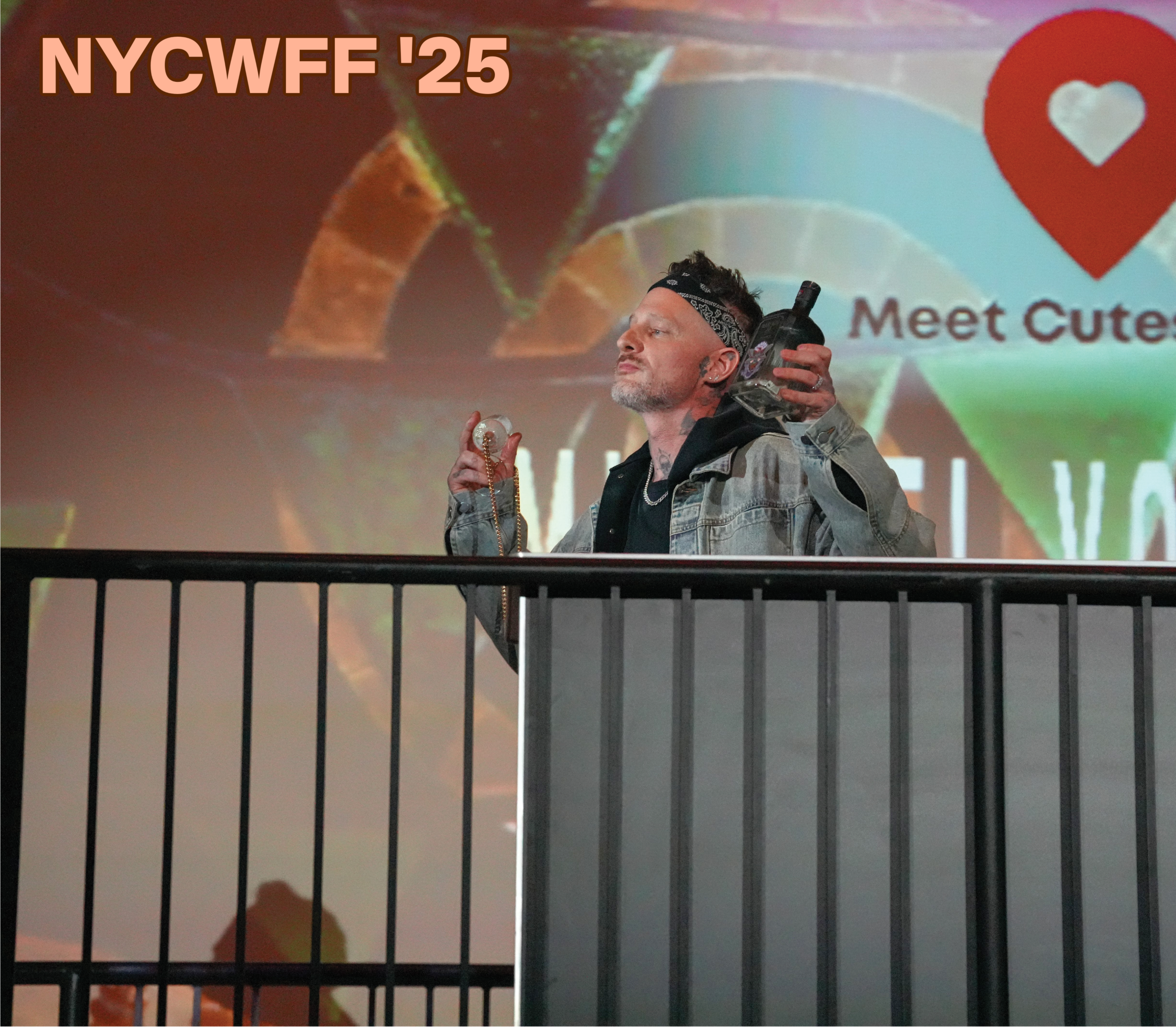
At Drinks With Benefits Festival guests discovered 50+ Non-Alc brands to sip and savor. They tasted innovative and sophisticated non-alcoholic beverages, botanical spirits and functional elixirs in the Tasting Gallery, and met and connected with industry innovators. Attendees strolled through the Non-Alcoholic Beer Garden and Hemp Beverages with music. They experimented in the interactive Mixology Lab, with non-alcoholic cocktail mixing demos. Guests took in the immersive experience in the Drink Rhythms Lounge DJ Sets, Podcasting Lounge, and mindful experiences in the Meditation Tent. They paired their drinking journey with 3 Omakase-style courses by top chefs for VIP Ticket-holders. In the Cipriani Cafe, their Chef will serve up complimentary pasta tastings. Reknowned for pioneering the Bellini, Cipriani paired these dishes with their Bellini Zero Cipriani! The Drinks With Benefits Festival also featured the Zero Proof Choice Awards, crowning the best winners in Non-Alc and Functional beverages. Prior to the event, we sat down with them to talk about this inaugural event.
ATHLEISURE MAG: So what led you to start the first Zero Proof Festival in NYC?
DAN ABRAMS: We had started a spirits media company that was initially focused on whiskey. And we were planning on expanding, and we did, to gin and rum and tequila. And as we were building out the business, we realized that functional beverages are becoming just an enormous part of spirits. And we can't really create a forward-thinking spirits business without making functional beverages a serious part of what we're doing.
And so as we came to that realization, we started talking about and thinking about events, in addition to doing content. Because we had acquired a company that was doing at the time 12 events around the country for whiskey and tequila. We've now expanded that to 15, so events were in the DNA of the business.
But now we were thinking, let's go big! We were stunned considering how significant a business non-alcohol and functional beverages have become, that there hasn't been a major awards in New York. There hasn't been a major event in conjunction with wellness in New York, almost anywhere. And so we thought, what a great opportunity to be on the forefront of this. And those were the seeds behind Drinks With Benefits.
AM: So what types of non-alcoholic or functional beverages would be showcased at this specific event?
AMANDA PAUL-GARNIER: So we have over 60 brands covering non-alcoholic wines, non-alcoholic beers, functional hemp and functional non-hemp products. Brands, probably, you know, like Ghia, Kin Euphorics, Athletic Brewing Company, Bero, But also brands you probably don't know that are very high quality, like Opius Elixirs, which is probably one of the best brands out there.

AM: Yeah, I would say on a personal note, I was diagnosed with gout in the middle of college. Beer is my kryptonite. So I've had to drink clear alcohol spirits or non-alcoholic beverages personally. So when I tried Ghia, for example, I couldn't believe the complexities that they put into a beverage like that.
So the space is growing. But in addition to growing, the formulations are getting better and better. Isn't that true?
APG: Yeah, I would definitely agree with that. We actually just talked with Melanie Masarin, from Ghia. And she was talking about her inspiration for starting the product. But just her integrity in terms of the quality of the ingredients she uses, she's very inspired from the Mediterranean, but she's also French and Italian. So nothing in Ghia is fake or superficial. But she also teases the whole concept that, you know, of like fake ingredients or say, people concerned about the sugar content with non-alcoholic beverages. But she was like, there's a difference between synthetic sugar and actual real sugar. And, you know, what she's trying to create and she believes the next forefront of the frontier for non-alcoholic beverage will be with people seeing those quality ingredients, real ingredients over anything processed. And I think that's one of the driving forces behind this, is that we're seeing in the non-alcoholic spirits industry that people are clamoring for an evaluation of quality. And they're basically the industry folks are saying we care about quality.
DA: This isn't just non-alcoholic wine. We want people to be thinking about what are our ingredients? How are we doing this? How are we distilling this? The same way people do with spirits. And I think that's why both our awards and Drinks With Benefits are really resonating.
AM: And, you know, in preparing for discussing the event, so I came up with the notion of things need to be tasty, but also things need to be useful or new and exciting also. So what kind of categories or different types of vendors or drinks are there available at this Drinks With Benefits Festival as this is new to a lot of communities.
APG: The festival is tiered as far as different categories with the space laid out exactly to respond to that, as for a lot of consumers, this is new and we wanted to kind of guide them through the experience.
So upon arrival, they'll get a consumer discovery map where all the non-alcoholic wines are in one area, all the non-alcoholic spirits and bitters are in one area. And then as you go downstairs, you will find the alcohol-free beer garden and then the hemp and functional space. So we've set this up so that they can discover it by category.
AM: That's great. And then there's also immersive wellness experiences as well, right?
APG: Yes. So we partnered with Sage and Sound, whose Upper East Side wellness studio has a meditation experience. And that will be led by Dara Hart, who's a Reiki master and spiritual guide. So we wanted to have, you know, something wellness adjacent within the experience to really bring to life that, you know, drinking less but better is about overall wellness. It's not just about drinks, even though they're a huge part. It's an overarching thing.
And additionally, we will have live podcasting with Samantha Feher from the podcast Caps Lock, who will be covering different topics on wellness; helping educate the consumer on different aspects of wellness; and transparency and ingredients.
AM: And what types of attendees do you foresee coming?
DA: You know, we see it being a mix. This is not an industry event, but we certainly expect some industry folks will be there. But this is primarily a consumer event. We're targeting a bit of a younger demographic. I mean, that's part of it. We just did a big redesign for our website and our app, now called The Daily Pour. And part of the reason for that is our doubling down in the Non-Alc space, but also the fact that we really are trying to target the 25 to 40 year old demo of people, who have expendable income but who care about health and wellness.
And by the way, it doesn't mean that they don't drink alcohol. Right. It just means that for a lot of them, they do drink alcohol. They just are trying to drink less.
AM: That actually leads me into my next question about Gen Z and millennials in particular and whether they're seeing this as a specific intentional choice versus a substitute. So as people are looking to what to imbibe or include in their lifestyle routines, how do you see the difference if there are between different types of consumers that some are just looking for this and others maybe are moderating alcohol consumption?
DA: So we think the targeting is the same. Which is, it's about quality beverages. Whether you are trying to drink less; whether you don't drink at all; whether you are moving from alcohol to hemp; whatever the case may be - we think that the piece that's been missing is focusing on the quality. And that's how we started this business.
We started this as a consumer facing business to say to people, we're going to help you drink whiskey and tequila and rum smarter and better. All we're doing is applying that same philosophy to non-alcohol and functional beverages. So it applies to all of them with regard to and again, that's why I think it's so important that I keep emphasizing that we're doing these awards in conjunction with the event. Because it's the same focus, which is quality. What is the quality? What are the ingredients? Because that's what drinking fine spirits is all about.
AM: And you guys are having a Omakase Food Hall at the event, which I think would get us to go to most events. What's involved with that?
APG: So we wanted to recreate experiences for consumers where they would normally have alcohol, but really show them they could have fun with non-alcoholic and alternative beverages. So we created a pairing experience with well-known restaurants in New York, including the Butcher's Daughter, Ado Lei, and Seatopia. Basically with that VIP ticket, consumers will get to go to two different counters and have a pairing experience where they have a light bite paired with an alternative beverage.
AM: There's also a mixology area for the Drinks With Benefit Festival. What kinds of things would guests be able to mix?
APG: So yes, we have the mixology lab. And we really wanted to bring to life, have a space within the event that made education fun. So The Pathfinder, For Bitter For Worse, FLUÈRE, those are some of the brands that have taken over the space. And they'll be doing education, cocktail making sessions, guided tastings.
The Alchemist Kitchen, which is in Soho, they will do a lot of elixirs, and a guided education with how to make cocktails with different plants and herbs and things like that. It'll be a really fun space for consumers to have a hands-on education or edutainment experience.


AM: For non-alcoholic consumers, are they generally narrow-minded towards the areas they're focused on? Or are they very open-minded, where they would like to try the different categories from beer, to a CBD, to maybe a sparkling spritz or something?
DA: So look, yeah, obviously, it completely depends on the person. There are some people who simply don't want anything that is in any way mind-altering, right? So they don't want functional alternatives. They don't want alcohol. That's one. And that's probably a much smaller base of consumers. There's still people we're appealing to, but they are a much smaller group. The much larger group are the people who drink a little.
They also try functional beverages. They try non-alcohol. They're interested in different areas. There are some folks who only want functional beverages and not alcohol. So it really depends. But what we're finding, based on the studies, is that most of the people who drink these non-alcohol and functional beverages also drink alcohol.
AM: That's super interesting. The space is definitely booming as consumers are finding multiple winners, in multiple categories, as open-minded in trying new things. And there might even be new categories that come out in the future. What are some untapped areas you could see now? Or do you think pretty much we're hitting where we would be for several years to come?
DA: I'd say the untapped is really the increase in the quality and the focus on ingredients. In a way that’s 10 years, 15 years ago, it was, ‘oh it's just a non-alcoholic wine.’ Or hey, I mean, ‘you probably know this from it as a non-alcoholic beer or whatever it is.’ And it's like, ‘OK, is it good? What is it made from?’ So that's the difference.
And I think that's the future in terms of where people are going, which is why we're trying to ride that wave of particularly younger people who have been brought up, focused on quality in a world where the evaluation of quality hasn't been so focused on non-alcoholic spirits.
AM: Sure. And do you see that a lot of these consumers are somewhat sophisticated where the benefits will be worth the price points?
DA: They're becoming more sophisticated. And I think that is the whole philosophy behind what we're doing, is that we're trying to help them become more sophisticated. We're the place that can say to them, we know you want to be more sophisticated. Now let us help you get there in a really accessible way.
AM: Yeah. Master edutainer, Dan. I see that totally. I learn stuff from all your other groundbreaking shows, I just know a couple of things what to do, not to do now because of you.
DA: My strengths are condensing complicated information into a pretty simple and accessible way to say it. We're kind of doing the same thing here with drinks. We are taking a confusing world of drinks and trying to make it a lot more understandable and to help them make choices.
And that's not completely dissimilar from what I do in my TV world. Sure. And then also some humor here and there.
AM: Totally. So and then after New York, are there other cities you're looking to take this festival to?
DA: Yeah, we haven't figured it out. I mean, we definitely are thinking about doing more. We want to first get this one under our belts before we start actively planning the next one. We want to see what went right, what went wrong, where could we improve? And that will help us determine, should we do another one in New York? Should we think about one in a different city? Our whiskey and tequila events, we're seeing great success recently in launches in some smaller cities like Scottsdale, Arizona or Austin, Texas and places like that. And so would that be our next? I don't know yet.
New York is a big swing. You know, and honestly, if we weren't kind of first to market on this, we probably wouldn't have started in New York. But I think that's why we felt comfortable starting in New York, because we were stunned that this hasn't existed yet.
AM: Tell us more about The Daily Pour, the organizers of the Drinks With Benefits Festival.
DA: Yeah, it's a consumer guide to drinking better. And so it has what we do - we have an app that aggregates reviews and ratings, some of which we do, some of which is from other places. But it allows it to be a kind of one stop shop to tell you, is this any good? I mean, I use it all the time when I'm thinking about buying a whiskey or something, because it allows me to see numerous aggregated reviews. And a lot of these are enthusiasts who've done reviews who might not have put a number on it. And we translate it into a number.
So the app is very useful. The website covers different issues in the spirits industry. We've recently been focusing on one particular beverage in a particular week or a particular month, which is another new thing we've done.
But, you know, the Daily Pour literally went live two days ago (formerly Bottle Raiders). And it's just a fundamentally different vibe. Bottle Raiders was initially designed based on a whiskey drinker.. And now you're in a much brighter, more vibrant place because we want it to be more inclusive of the non-alcoholic and wellness community as well.
APG: I think The Daily Pour is meeting the consumer where they are today, covering cross categories. So it's covering ‘I do still want to drink, but I want to drink better.’ So it's covering spirits. Also, it’s ‘I want to have that great margarita, but I don't want to have that during the week.’ Additionally it’s covering functional beverages, ‘and I want to learn about Non-Alc.” So I think that a lot of the other websites treat Non-Alc and alternative beverages like a footnote. Like it's really hard to find them. If you go to certain websites, they have it hidden under culture. I'm like, I don't know how anyone would find that. So we don't want to treat it like that.
I think about the scoring. I think that's extremely helpful to have this kind of meta score, our signature rating system that aggregates everyone's point of view and just gives space that is sometimes hard to understand.
AM: And the app is free. Are there premium plans to it or features?
APG: Yes, and then if you get the premium subscription, that's like $5 a month. And what are the benefits of that, so it saves your taste list. You get access to certain events and kind of discounts on certain things that we offer, exclusive content, things like that.
AM: That's terrific. And I also wanted to ask about Ev & Em Vineyards, Dan.
DA: So Ev & Em is a winery that I acquired in early 2021. It was right in the heart of COVID and the winery owners had kind of given up in COVID. And I had a friend who is one of the pioneers of the North Fork wine scene who called me and said, hey, you mentioned that you were interested in buying a winery. Were you serious? And I said, yeah, I was serious. Because I told you if I ever saw something really interesting that I would let you know.
And this is really interesting. It has one of the oldest planted vineyards on the North Fork. It has a beautiful location. It just needs some love. It needs some new thoughts about how to do the winemaking. And you could have an A-list vineyard.
And he was right. Even by the ‘22 Vintage, which was released in some of it in ‘23, some of it only now for the Reds, we're creating luxury wines in Long Island. So these are wines that we think can compete with California, Oregon, Washington, et cetera, in really all varietals. And so that's been super exciting!
AM: And there are multiple offerings. There's a Reserve, correct?
DA: There is. Yeah, we're making everything from Cabernet, Merlot, Pinot Noir, Chardonnay, Sauvignon Blanc, Gewürztraminer, Pinot Gris. I mean, we've got a whole range of offerings.
And in some of those, we have a Reserve. So depending on the year, for example in ‘22, we had a number of Reserve wines on the Reds, some of which actually haven't even been released yet. But our Reserve Red ‘22, super proud of that.
‘23 was a tougher year for us, but ‘24 was amazing. So we're very confident about that ‘24 Vintage that's coming out. And ‘25 looks great as well.
Stay tuned for an upcoming THE 9LIST of some of our (new) faves. We especially enjoyed Non-Alc Mixed Mocktails from The Pathfinder, Mad Flora, Junglee; Non-Alc Sparkling Wines from Society De La Rassi and Wölffer Estate; THC/CBD Gummies and Drinks from Studio TBD, Ayrloom, and Wynk; and Alice Functional Mushrooms Functional Mushroom Chocolates.
Please use responsibly. Follow the age, laws, and other restrictions in your state. Do not drink and drive while empaired.
PHOTOGRAPHY CREDITS | Paul Farkas